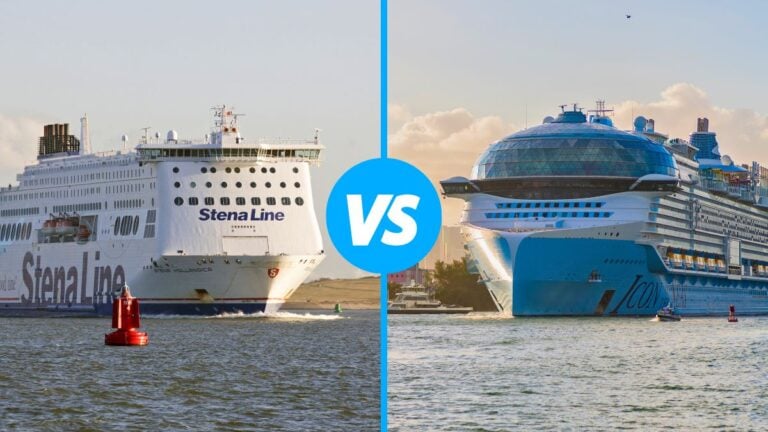
Even though ferries and cruise ships can look somewhat similar, they have very different purposes. While both carry passengers, a ferry is a purely utilitarian vessel that is designed to move people from one destination to another.
A cruise ship, on the other hand, is designed for leisure, so the journey itself is the primary focus. To help you avoid booking the wrong type of trip, I’ll break down the differences in ship design, function, and what the experience is like for passengers.
In This Article:
Size and Stats
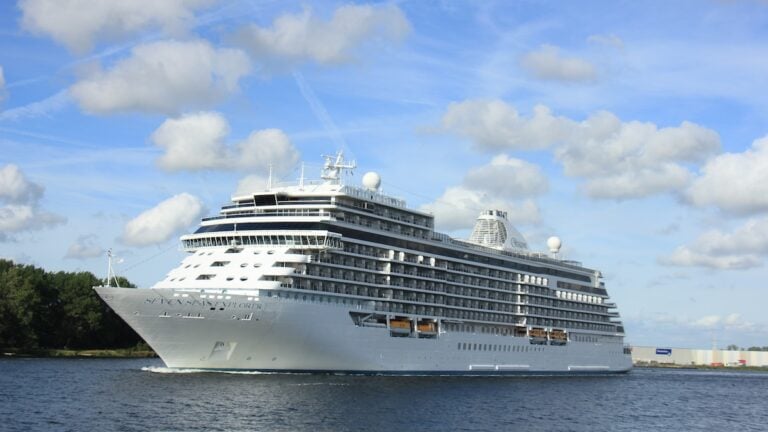
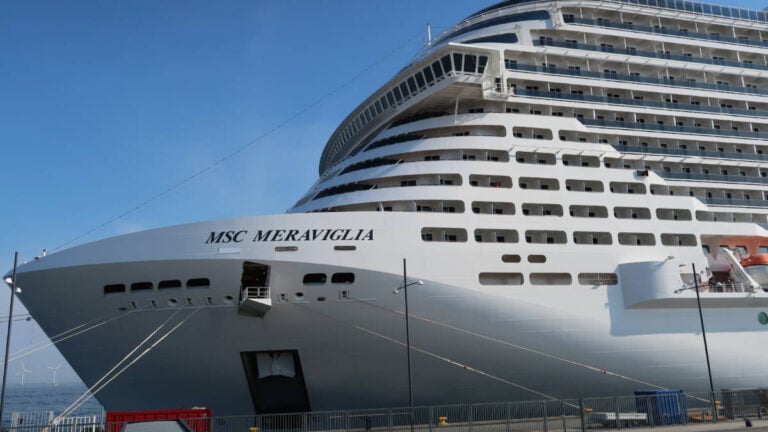
The most obvious difference between cruise ships and ferries is their respective sizes. While river cruise ships and smaller adventure cruise ships are the exception, when you compare the average cruise ship and the average ferry, the cruise ship will dwarf the ferry.
Cruise ships are almost like floating resorts, while even a large ferry is more like a floating version of a big public bus.
Passenger Capacity Differences

Cruise ships tend to carry between 16 and over 7,000 passengers, depending on their size and intended itineraries.
On the other hand, ferries differ in passenger capacity depending on their route, with most having a capacity of around 300 people. That said, the largest ferry in the world can carry nearly 5,200 passengers and vehicles.
Regarding the number of crew members on either type of ship, cruise ships usually have a ratio of around 2.5 passengers for every crew member.
More luxurious cruise ships will have an even closer ratio, as the vast number of crew members is needed to ensure all guests receive a high level of service from the attentive staff.
Since ferries are designed less for luxury and more for basic transportation, the ratio of passengers to crew members is very different.
Even large ferries will have fewer than 50 crew members, with the smaller vessels operating with a crew of roughly 25 individuals. Again, rather than providing high levels of service, the crew is there more for the vessel’s safe operation.
Physical Size Differences

When you look at gross tonnage, average cruise ships weigh close to 100,000 GT, whereas a typical ferry sits around 15,000 GT. As I’ll explain in more detail, these differences become even more drastic when you look at the largest versions of either type of vessel.
Take Royal Caribbean’s Symphony of the Seas, which weighs 228,081 GT, has a maximum passenger capacity of 6,680, and a crew capacity of 2,200. A mega ship like this can carry more than 10 times the population of Gustavus, Alaska, which has a permanent population of 612.
When you compare that to a major passenger ferry, like Color Line’s Color Magic, which can carry nearly 2,500 passengers and comes in at 75,000 gross tons, you realize even at the upper end of the scale, cruise ships dwarf ferries.
Comparing the Largest Cruise Ship to the Largest Ferry
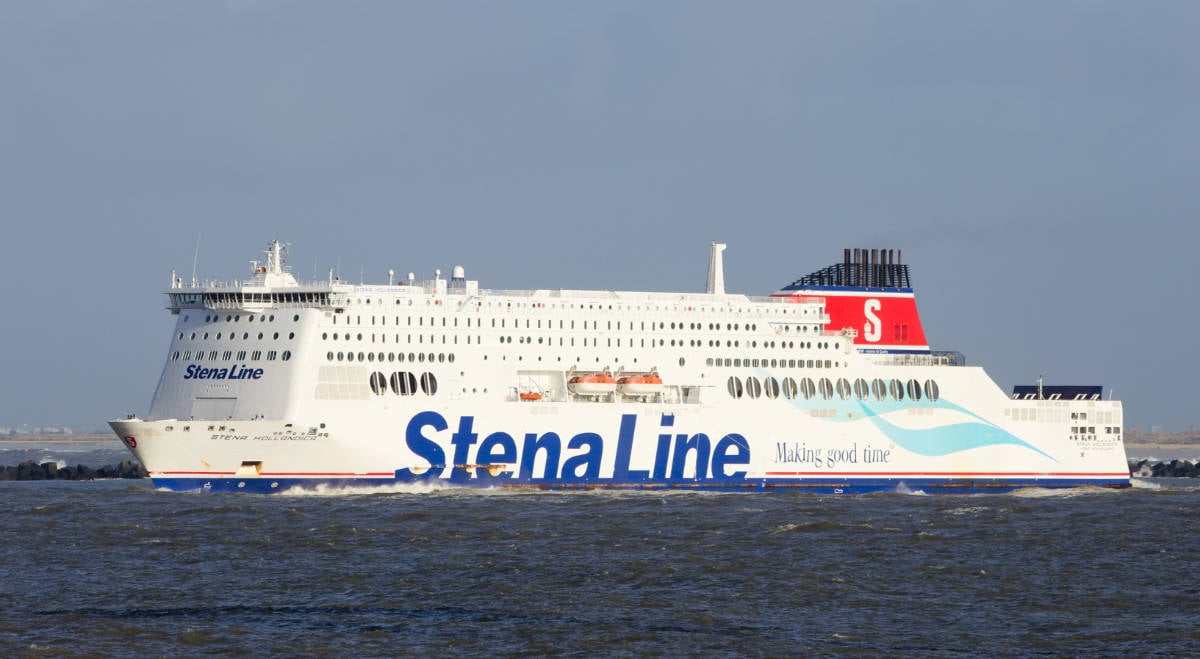
To help you visualize just how drastic the size difference can be, let’s look at the differences between the world’s largest cruise ship and the current largest passenger ferry.
The largest cruise ship in the world is Royal Caribbean’s Icon of the Seas, while the largest passenger ferry is the MV Stena Hollandica Superferry.
Icon of the Seas is an enormous Icon-class cruise ship, while MV Stena Hollandica is a combined ferry and freight ship that transports people, passenger vehicles, and goods between England and the Netherlands.
Here’s a quick breakdown of how these two mega ships compare:
| Metric | Icon of the Seas (Cruise Ship) | MV Stena Hollandica Superferry (Ferry) |
| Gross Tonnage | 248,663 | 64,039 |
| Maximum Passenger Capacity | 7,600 | 1,200 passengers |
| Crew Capacity | 2,350 | 85 |
| Length | 1,196.7 feet | 790.3 feet |
| Height | 159 feet | 167.25 feet |
| Maiden Voyage | January 27th, 2024 | June 8th, 2010 |
| Typical Journey Duration | 7 days | 7 hours |
Remember that huge passenger ferries like the MV Stena Hollandica Superferry are relatively rare and are only seen operating between high-traffic areas, like the waters separating Sweden and Norway.
On the other hand, most cruise ships are enormous, as they are designed to carry a high number of passengers and ensure those guests have their own private quarters and plenty of shared space to explore.
In other words, the largest cruise ships are much bigger than the largest ferries, and even average cruise ships are larger than the largest passenger ferries.
Purpose
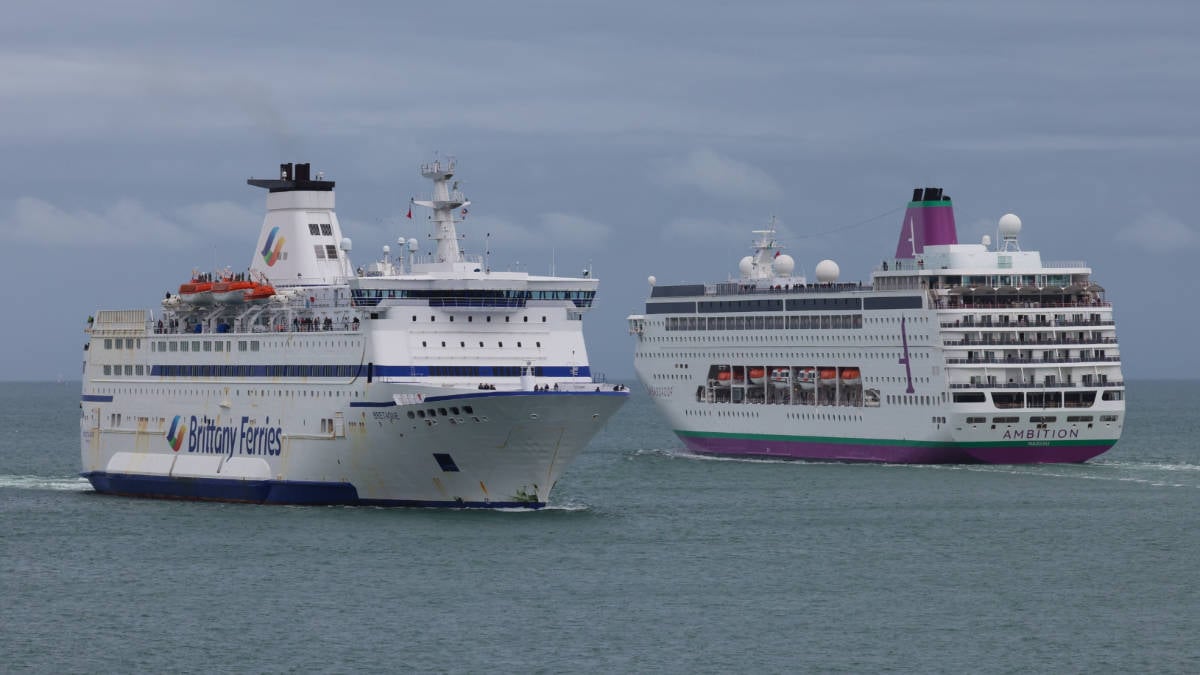
As you can see, cruise ships are much larger than ferries, but that is not by accident. The real reason for the drastic differences between the physical size of the two types of ships and the numbers of guests they can carry is simply down to the fact that ferries and cruise ships serve very different purposes.
Basically, the difference between the two types of ships can be summarized as practical transportation vs. leisure travel. To help you understand that key difference, I’ll provide a quick breakdown of the primary purpose of each type of ship, starting with the primary use for ferries.
The Purpose of Passenger Ferries
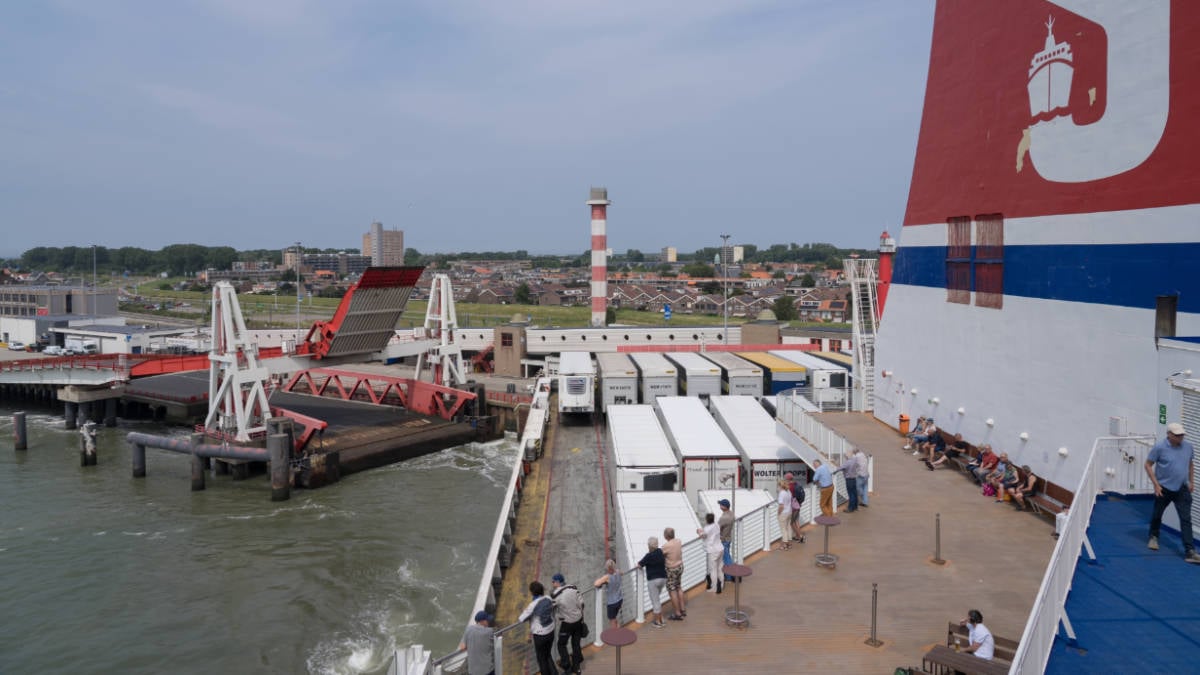
Think of a ferry as more of a functional transportation service that moves people and their vehicles from one place to another.
In some ways, a passenger ferry acts like a moving bridge that connects two pieces of land separated by a body of water. These can connect parts of the same city, state, or country, like the Washington State Ferries (WSF), which runs 10 distinct routes that connect various terminals throughout the state.
Like public buses, these ships are owned and operated by the Washington State Department of Transportation, and connect various terminals in places like Seattle to other destinations in the state, like Bainbridge Island.
The focus of ferry ships like these is to provide passengers with convenience and direct transportation, rather than focusing on luxury and providing a leisurely experience.
As you can probably guess, you tend to find ferries in places dotted with islands or where large rivers and fjords separate them. This explains why you find them in places like Alaska, BC in Western Canada, Norway, the United Kingdom, Japan, and the Greek Isles.
What Are Passenger Ferries Like?
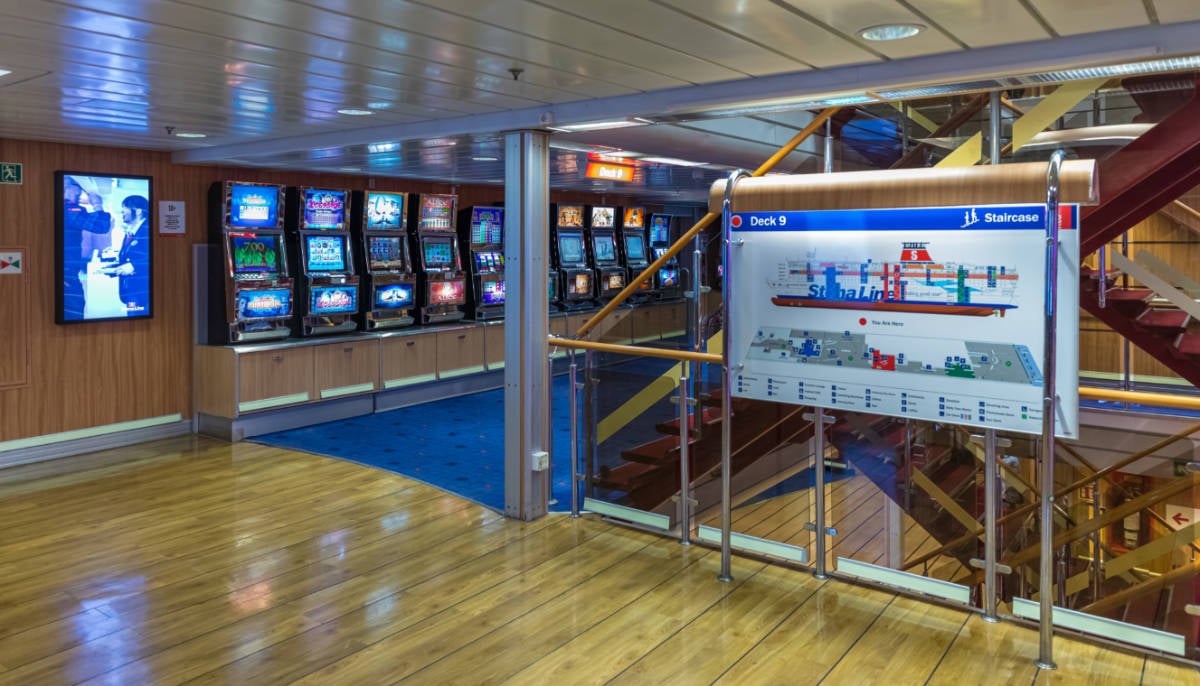
I’ve personally taken plenty of ferry trips. While they’re usually just something I use for shorter journeys where taking a flight would be unnecessary, I have taken some lengthier ferry trips—the longest being an overnight ferry from Hull in England to Rotterdam in the Netherlands.
While you could pay extra for a small cabin, most people, myself included, simply passed the time in the main seating area.
The trip took roughly six hours, so it wasn’t the most exciting, but the ship did have a cafeteria, televisions, comfortable seats, washrooms, and the advantage of transporting my car in the vehicle hold down below.
This was hugely convenient, as I didn’t have to worry about renting a vehicle when I arrived and could explore everything the Netherlands and Belgium had to offer from the comfort of my own vehicle.
The Purpose of Cruise Ships

Cruise ships focus more on enjoying the journey rather than just providing transportation from one point to another. They offer relaxation, entertainment, luxury, and exotic destination visits. In other words, the journey itself is the main focus.
Cruise ships can also deliver a wide range of different types of experiences. From short-duration cruises that allow their guests to have a relaxing getaway to 10-day-long voyages that visit numerous ports of call, there are cruise itineraries that match all preferences.
Since the primary focus is on delivering a positive experience for all passengers, most modern cruise ships are designed like a floating version of a hotel, resort, and theme park all wrapped into one.
With incredible amenities that can include water parks and Broadway-style theaters to luxury spas and gourmet restaurants, a cruise ship is designed to keep guests entertained for multiple days, regardless of their entertainment preferences.
What Are Cruise Ships Like?

At this point, I’ve taken almost more cruises than I can count. I can’t get enough of them because they combine all types of travel into one easy-to-book vacation.
You get thrilling amenities, the best food you’ll find anywhere, the opportunity to visit countless exciting destinations, and the opportunity to spoil yourself.
With that said, one of the most memorable cruises I’ve ever taken was one of the least indulgent. I booked a last-minute, affordable Alaska cruise package on a Princess Cruises ship called Royal Princess.
While the ship still had plenty to offer, I kept costs low by booking the cheapest cabin I could and tried to save as much money as possible by keeping my onboard spending to a minimum.
The cruise departed from Seattle and visited Juneau, Sitka, Ketchikan, and several other Alaskan towns. Taking in the incredible scenery and the sense of isolation was the real show, even though I still enjoyed visiting the ship’s gyms, spas, and theatres and spoiling myself on a few occasions by checking out the more gourmet dining options.
Ferries certainly serve their purpose and can be practical, but the experience you get when traveling to exciting destinations in a floating resort really can’t be beat.
Trip Length and Schedules
Another significant way that ferries and cruise ships differ is in how frequently they are scheduled and how long the trips are.
Typical Ferry Trip Durations
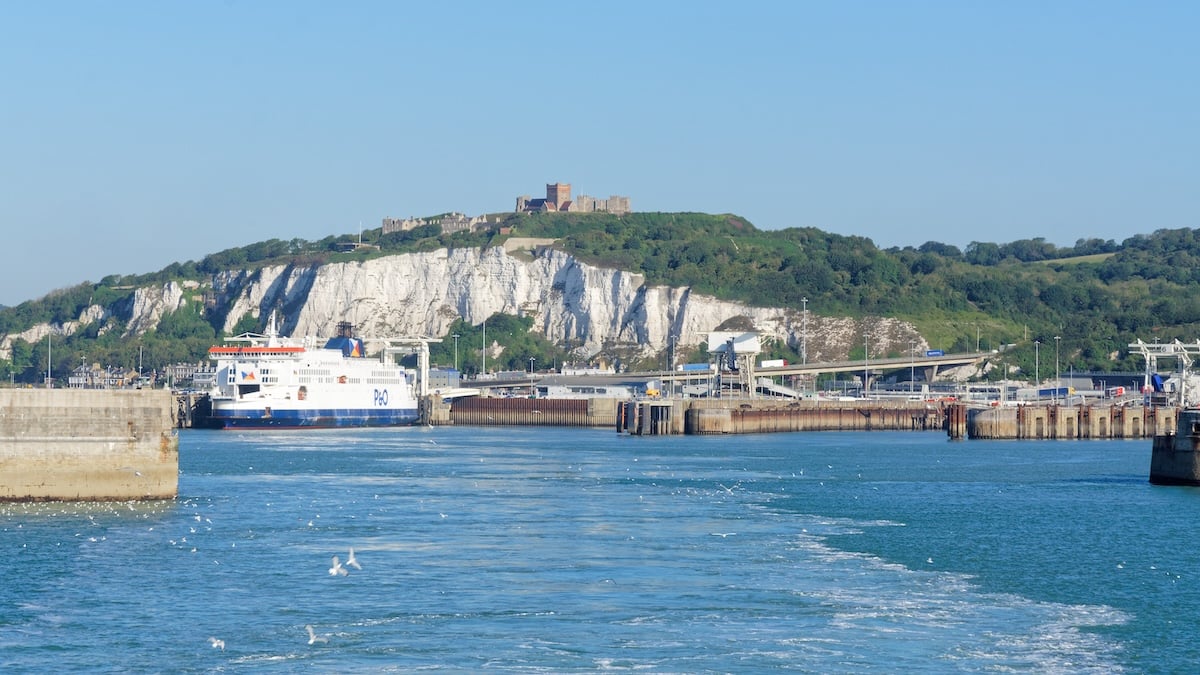
On one hand, ferries are designed to provide quick and frequent trips on fixed schedules. Think of a ferry as just another form of public transportation.
From one-way rides that last just 15 minutes and connect one side of a river to the other, to more elaborate overnight ferries that can take people and their vehicles from one country to another, the schedule for a ferry is predictable. Most have set departure and arrival times that repeat every single day.
While the duration of the trip can vary depending on where the ship is going, most ferries have fixed routes that run at set times throughout the day and week.
Here are just a few examples of route durations for different ferries:
Bellingham, WA to Juneau, AK
The Alaska Marine Highway System is an interconnected ferry system connecting 35 ports along Alaska’s Inside Passage. These ferries depart daily and run a 3,500-mile route, with the full route taking roughly 38 hours.
Stockholm, Sweden to Helsinki, Finland
The Viking Line Ferry System connects these two Scandinavian countries, allowing travelers to book low-cost transportation for themselves and their vehicles. Multiple ships ensure the route is traveled daily, and this overnight ferry takes roughly 16 hours to get from one destination to the other.
Dover, United Kingdom to Calais, France
P&O Ferries operates a cross-channel ferry that departs 15 times per day. The entire trip only takes 1.5 hours, with crossing times varying slightly during periods of severe weather.
Toronto Island Ferry System
For an example of how brief a ferry ride can be, the City of Toronto runs a ferry route from downtown Toronto, Canada, to Toronto Island Park, a small island just off the city’s coast. Ferry rides take roughly 20 minutes and operate almost like a city bus.
Typical Cruise Durations

Since cruise ships are designed to provide passengers with a multi-day vacation experience, itineraries usually range from three nights to two weeks. Most include port-of-call stops at several destinations along the route.
So, cruisers have an opportunity to depart and then reboard the same ship after spending time exploring a destination outside of their original embarkation or debarkation point.
Here are just a few examples of the types of cruise itineraries and durations that are out there.
Alaskan Cruises

Plenty of Alaska cruises travel along Alaska’s Inside Passage, with stops at ports of call like Skagway, Juneau, Ketchikan, and Seward. Most depart from Vancouver, British Columbia, or Seattle, Washington, and seven, ten, and even 14-night itineraries are common.
Mediterranean Cruises
For those looking to enjoy the old-world charm of Europe, 10-night cruises around the Mediterranean are incredibly popular. Some depart from Rome and visit Barcelona, Marseille, Cannes, Malta, and the Greek Islands.
Baltic Sea Cruises
Ten to 12-night cruises exploring the ports along the Baltic Sea are also popular for European cruisers. While itineraries vary, these voyages will have stops in Copenhagen, Oslo, Stockholm, Helsinki, and Saint Petersburg.
Western Caribbean Cruises
Cruises in the Western Caribbean are incredibly popular, with most departing from Florida’s Port Canaveral or PortMiami. With so many different destinations, the ports of call vary, as well as the duration.
Visiting exciting destinations, like Cozumel, Grand Cayman, and Jamaica, these cruises can run between four and 14 nights, depending on what you book.
Ship Design
Given that they’re designed for completely different purposes, let’s examine how that impacts their design.
Ferry Design
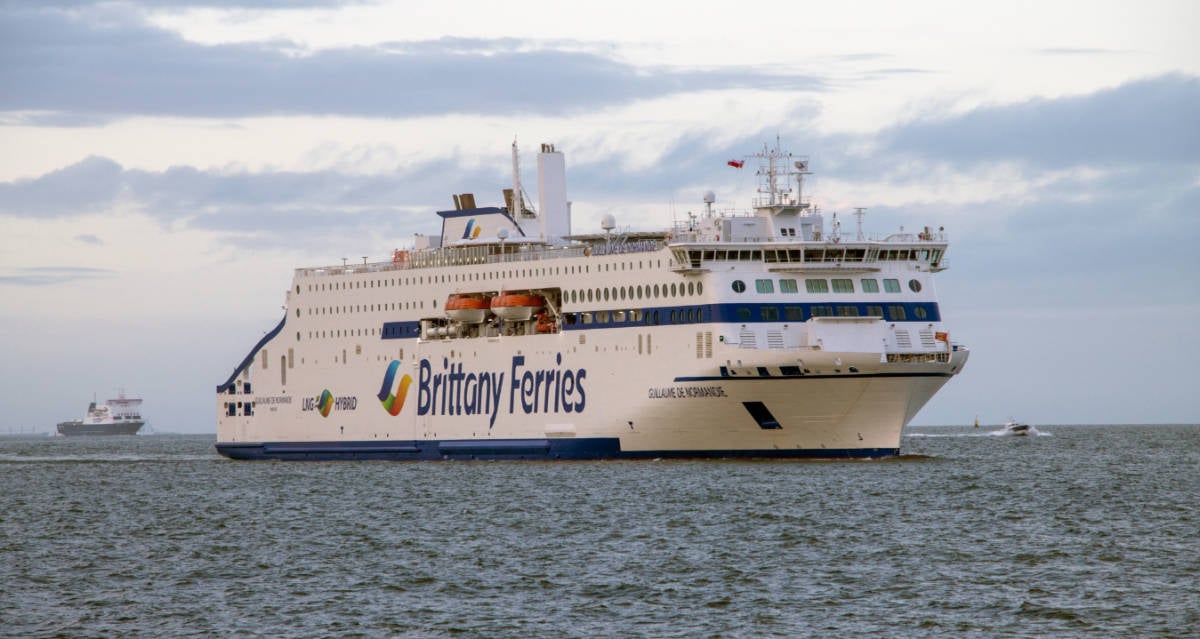
Given their intended purpose, ferries are almost always designed to be practical and efficient. Their utilitarian design can include open-air car decks, ramps, wide openings for below-deck car storage, and even huge holds if they are designed to double as cargo vessels.
For short-duration ferries, the common areas feature basic seating, such as benches and rows of chairs. Some ferries provide vending machines, small cafés and snack bars, and restroom facilities.
For overnight ferries, like those that connect different countries or islands, passengers usually have the option to book private cabins for an additional fee, but these are very basic. Small beds, a tiny desk, and maybe a toilet and sink.
These larger ferries usually have cafeterias and basic entertainment options, like airplane-style TV screens and maybe a small gift shop.
Ferries also tend to be much smaller and more susceptible to wave movement, as they are not outfitted with the sophisticated stabilization technology found on cruise ships.
Cruise Ship Design

Since cruise ships are designed more like floating resorts than utilitarian modes of transportation, they are true engineering marvels that feature a luxurious interior, themed shared spaces, nicely outfitted private staterooms and suites, open-air swimming pools, and plenty of other impressive amenities.
The most sophisticated cruise ships have multi-purpose live entertainment theaters, spas, gyms, numerous restaurants, bars, clubs, casinos, and even more elaborate entertainment options, like go-kart tracks, waterslides, bowling alleys, and ice rinks. There really is no shortage of options for onboard activities on a modern cruise ship.
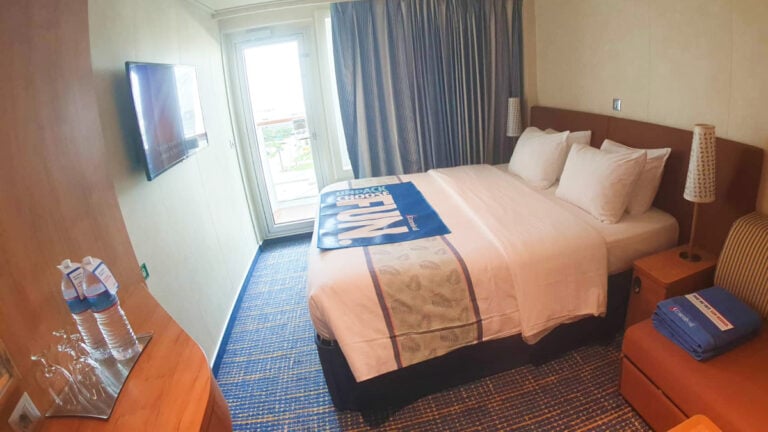
Accommodations vary depending on what you decide to book, but even the most basic interior cabins will be more comfortable than the private cabins found on overnight ferries. Suites and cabins with private balconies, even the private sections of cruise ships, are designed with comfort in mind.
Beyond the features that have to be incorporated into the design of a cruise ship, the ship itself also has to have an extremely durable hull, as they are designed to travel through rough waters and open seas.
Rather than focusing on speed and efficiency, the design ensures the ship provides guests with a stable and comfortable journey.
Onboard Experience
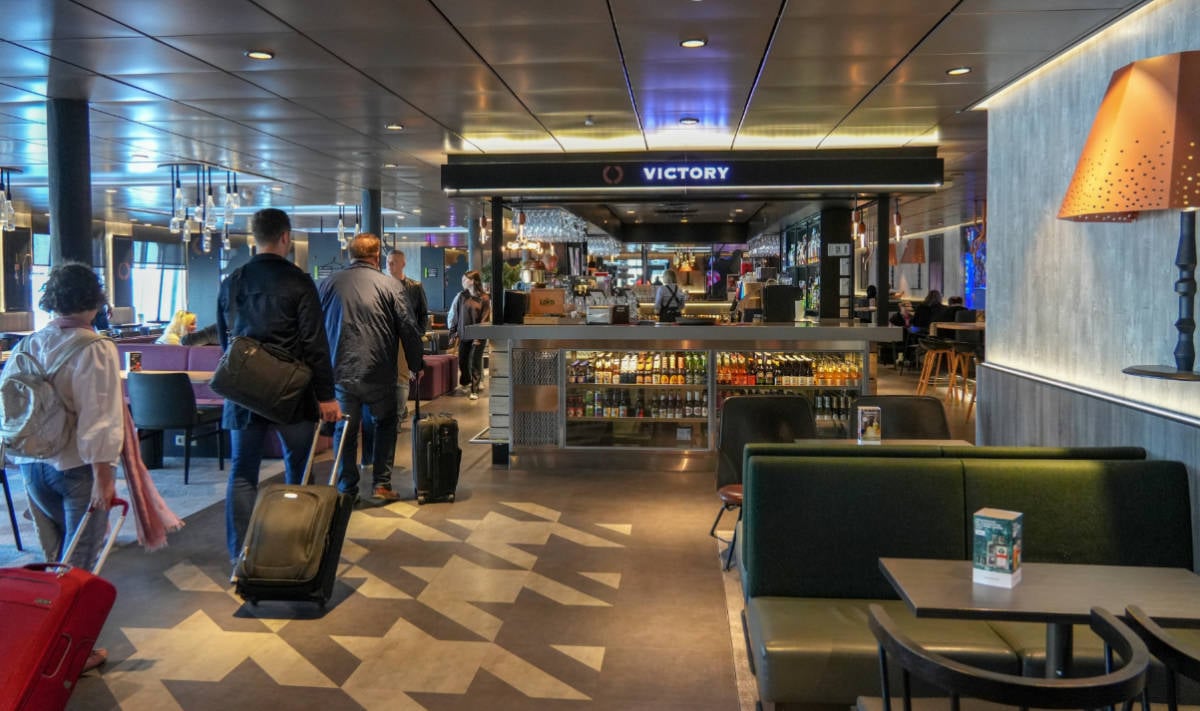
You’re probably getting the impression that ferries are bare bones, which is actually a pretty accurate description. They’re just designed to get passengers and sometimes their vehicles from point A to point B as efficiently as possible.
Since the main purpose of ferry travel is to deliver passengers to a set destination, the ships do not need to be overly elaborate, which actually helps keep fare costs down and the overall cost of building the ship down.
Still, you might find indoor and outdoor seating, restrooms, Wi-Fi (if you’re lucky), vending machines, and maybe a hot food café.
It’s pretty much the same for overnight ferries, but they’ll feature a cafeteria where you can purchase meals and the option to book a private cabin if you want somewhere to lie down and a degree of privacy.
The Cruise Experience

When you book a cruise, you’re paying for an incredible and varied onboard experience. Cruise lines compete with one another to outfit their ships with the most impressive amenities possible, but even a basic cruise ship will feature swimming pools, hot tubs, specialty dining venues, saunas, a casino, gyms, live entertainment, and more.
Worth Reading: Incredible Cruise Ship Amenities You Really Need to Experience
Plus, the onboard experience is only half the fun, as most itineraries feature stopovers called port of call visits, where passengers can explore a port and its surroundings or book shore excursions. Afterwards, you board the ship and get to enjoy the onboard facilities again.
Think of a ferry like taking a plane, where most of your entertainment options are designed to kill time. By contrast, cruise ships are massive entertainment venues designed to give all passengers their ideal vacation.
You must also remember that you will have to pay out of pocket for anything extra on a ferry, whereas cruise ships include meals at specific venues, access to pools and other amenities, and much more.
Accommodations

Not all ferries have private accommodations, but those designed for long-haul or overnight travel will have optional cabins. These usually consist of a small bed or bunk, a chair, and maybe a tiny restroom with a sink and toilet. An average cabin is generally around eight square feet, with some even smaller.
Cruise ships have private accommodations for all guests, with passenger capacity dictated by the number of beds the ship can provide. Guests can also book the type of accommodation that suits their needs and budget, with even basic interior cabins around 150 square feet.
Oceanview cabins and private balcony cabins take things further, with most providing around 200 to 300 square feet of private space, comfortable beds, and seating areas.
Then you get into private suites, which take luxury to the next level. Designs can vary drastically, but most feature plenty of floor space, comfortable beds, and plenty of high-end features.
When you get into the upper tiers of suite design, like Royal Caribbean’s Ultimate Family Suite, you get crazy features, like jacuzzi tubs, table tennis, and even an in-suite slide!
Motion at Sea

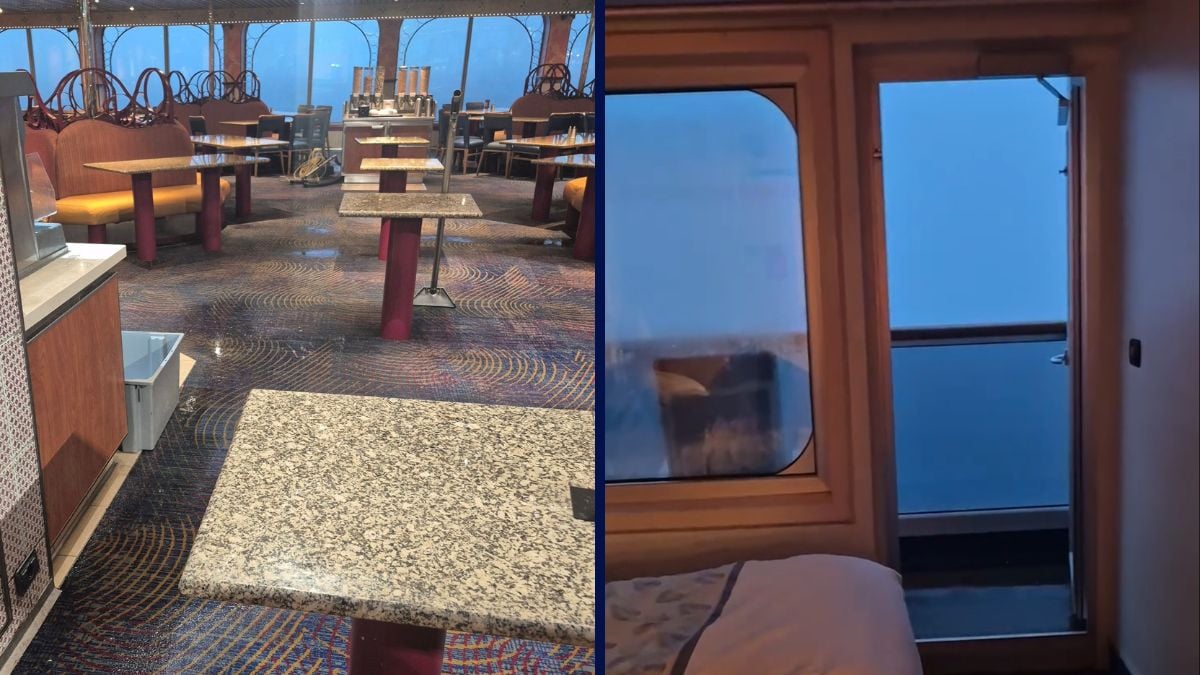
If you’re susceptible to seasickness, you’ll want to pay attention here. Most ferries are designed to be purely functional, so less money is invested in providing a stable passenger experience. Since they also tend to operate near the shoreline, the waters can be rough.
In other words, you can expect to feel that signature side-to-side motion, especially if you are taking a ferry across rough waters, like the English Channel, or traveling on a day with bad weather.
Read Also: The 10 Roughest Seas in the World for Cruise Ships
By contrast, cruise ships are engineered to provide a smooth onboard experience for passengers. With stabilizer fins and a hull design that prioritizes stability, the motion is minimal.
Just think, almost all cruise ships are designed with open-air swimming pools, and, trust me, they aren’t wave pools; they look just like any swimming pool you’d find at a resort on shore.
Beyond ship design, the two types of ships also travel in different waters. Ferries stay close to land or travel across turbulent channels and rivers. Cruise ships travel in deep water, where the rolling effect is far less noticeable.
Cost
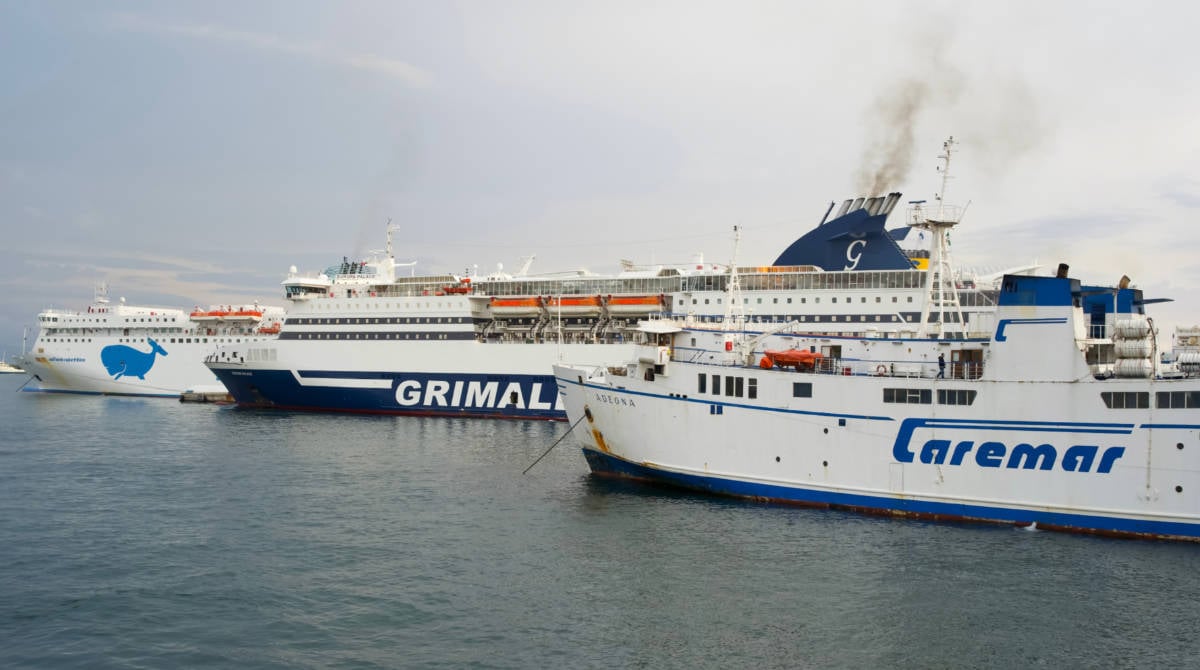
By design, taking a ferry is meant to be a practical and economical way to travel. Prices vary by route and whether you bring a vehicle, but here are a few examples:
Taking a ferry from Seattle to Bainbridge Island will cost just $10.35 per adult passenger, or $18.65 for one adult and a standard vehicle. For a ferry that connects two countries and takes almost two hours, prices are higher.
For example, going from Dover, England to Calais, France by cross-channel ferry will cost between $100 and $200 USD, depending on if you are traveling with a vehicle and your departure time.
Why Cruises Cost More

Naturally, cruises tend to cost more than ferry journeys, as you’re paying for a longer journey and a far more luxurious experience. Prices vary, depending on the ship, the destinations, the length of the journey, and the time of year when you book, but here are some basic prices you can expect:
A seven-night Princess Cruises voyage from Seattle to Alaska can cost roughly $750 to $1,000 per person, with prices increasing depending on your accommodations and onboard spending. Ten-night Mediterranean cruises are a bit pricier, with most costing around $1,300 per adult.
Again, prices can also increase beyond basic fares, as you’ll have to pay daily gratuity fees, which can cost about $15 to $25 per day. Specialty dining venues, Wi-Fi access, shore excursions, and paid entertainment amenities can also increase the total cost of the journey.
Plus, you can purchase all-inclusive drinks packages, which allow you to pay a set daily fee for unlimited paid drinks and food.
Keep in mind that even a minimal cruise package will still cover your private accommodations, meals at included dining venues, and access to plenty of entertainment venues and amenities, like swimming pools, live shows, and more.
When you compare it to the fact that ferry fares include nothing more than your travel, you realize that cruises are more expensive, but you get a lot for your dollars.
Shall I see You on a Ferry or Cruise Ship?
Ferries and cruise ships are both designed to carry passengers, but how they do so is very different. This is mostly because the two types of ships are designed to serve very different purposes.
Worth Reading: Are Smaller or Bigger Cruise Ships Better?
Where ferry travel is based on practical transportation from one place to another, cruise ships provide a luxurious vacation experience, with varied entertainment venues, comfortable accommodations, and delicious food.
Since they’re designed to serve completely different purposes, one isn’t necessarily better than the other, but I definitely know which type of journey I prefer!