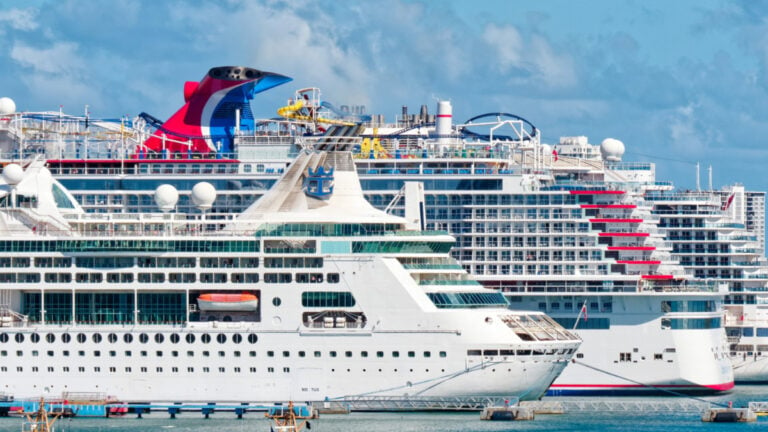
A total of six cruise ships remain stuck in the Middle East, which has turned into a war zone following the joint US and Israeli attack on Iran on February 28, 2026. The situation has only escalated, with Iran retaliating violently.
Vessels cannot sail to safer waters without entering the Strait of Hormuz, which is dangerously close to Iran and is currently closed to shipping.
Current guests also remain stuck onboard as attacks on airports and airspace closures make flying home impossible, through the impacted cruise lines are working to secure safe transport to get them home.
These are the latest updates for the impacted cruise ships as of March 3, 2026, and Cruise Hive will continue to share more information as it becomes available.
MSC Cruises
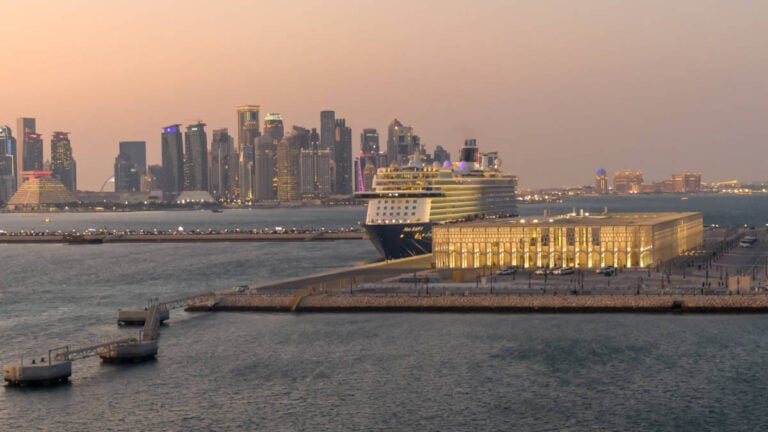
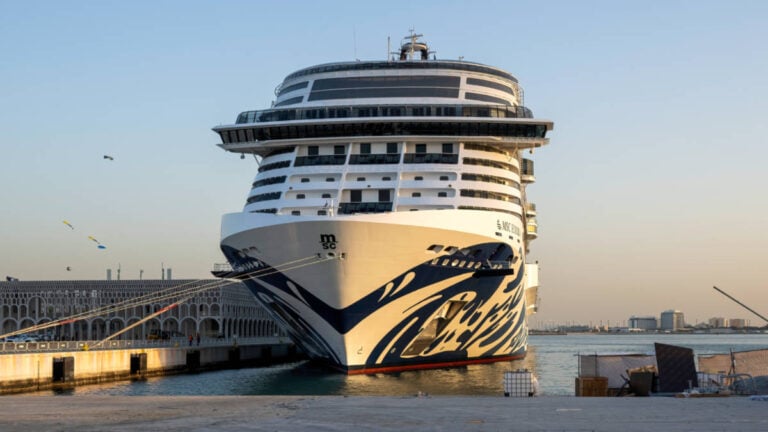
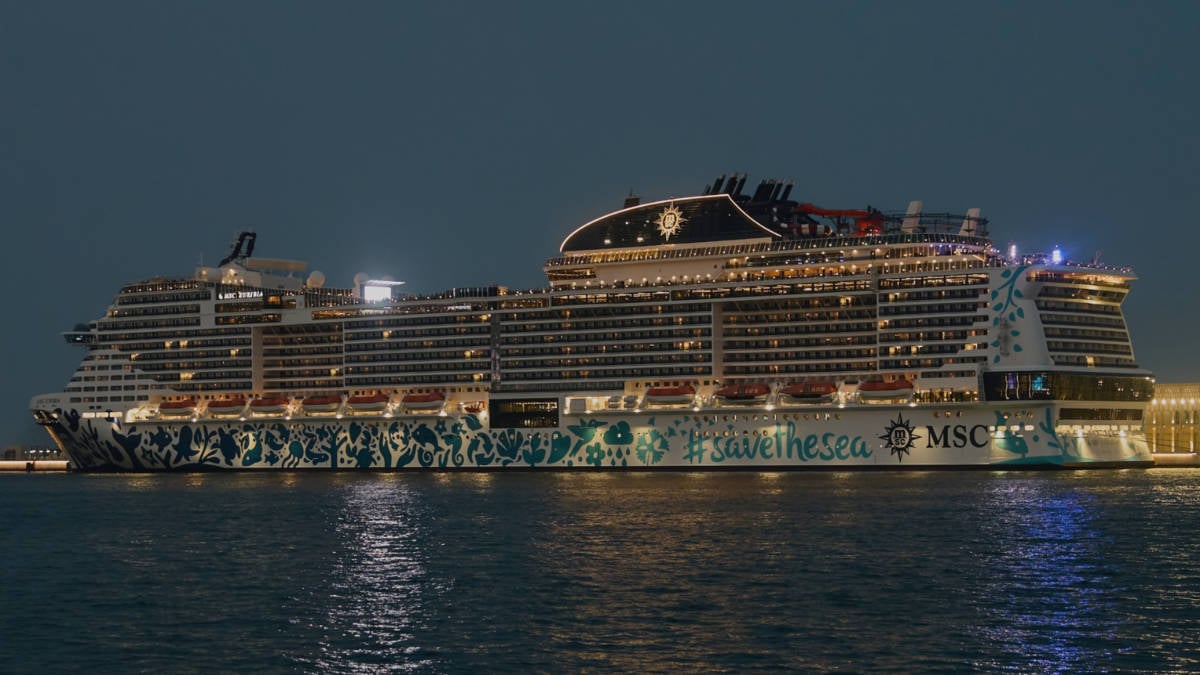
MSC Euribia remains hunkered down in Dubai, where it was originally only scheduled to visit from February 27 to 28.
While the cruise line initially took a wait-and-see approach to the conflict, it has now cancelled all remaining sailings from Dubai.
This includes the 7-night sailings scheduled to embark on March 7, March 14, March 21, and March 28, as well as shorter segments from Doha and Abu Dhabi that would have been operated within those voyages.
The cancelled itineraries would have visited Kalifa Bin Salman, Bahrain; Sir Bani Yas Island, a private island destination in the UAE; as well as Doha and Abu Dhabi.
“Following the sudden security events that began this Saturday in the Middle East, we must cancel your upcoming cruise,”the cruise line said in a letter to booked guests, which was obtained by Cruise Hive.“Your safety and wellbeing are always our highest priority.”
At this time, it’s unclear when the 6,327-guest ship will be able to safely leave Dubai or when and how the passengers that remain onboard will be helped home.
The 183,500-gross ton ship is expected to resume normal operations with her upcoming Europe season, which begins on May 2 in Kiel, Germany.
TUI Cruises
This cruise line has not one, but two ships that have been impacted by the attacks on Iran.
When the conflict escalated, Mein Schiff 4 was in Abu Dhabi, UAE, and Mein Schiff 5 was in Doha, Qatar, which is where they remain. Both ships should have been operating multiple Middle Eastern itineraries simultaneously.
As of March 3, 2026, the cruise line has issued more cancellations and an update on how passengers will go home.
Given the escalating situation, TUI has now cancelled the March 3, March 8, and March 9 sailings for Mein Schiff 4, which had preciously scrapped its March 1 and March 2 departures.
Similarly, Mein Schiff 5 has now cancelled its March 5 sailing, which is in addition to the cancellation of its February 28 departure.
It also doesn’t help that current guests still need a way to be safely disembarked before crew members can even think about welcoming new passengers onboard.
The need to disembark current guests is being felt with increased urgency following a scare in Abu Dhabi on March 1, when a missile crashed in Port Zayed near the 2,506-guest ship.
To the relief of all involved, TUI has begun arranging flights home for the thousands of impacted passengers, which will be a slow process given very limited flight availability.
As a first step, some passengers from Mein Schiff 4 are being transferred from Abu Dhabi to Dubai, where the Dubai International Airport has resumed operations at an extremely limited capacity.
A family hotline has also been established for loved ones on land to inquire about their relatives and to receive real-time updates.
Celestyal Cruises
Similar to MSC Cruises, Celestyal Cruises is taking a wait-and-see approach for its ships based in the Persian Gulf.
The cruise line has decided that Celestyal Journey will stay put in Doha and Celestyal Discovery will hunker down in Dubai for at least 24 hours while the powers that be figure out the safest next steps.
“We are closely monitoring the evolving situation in the Middle East in coordination with the relevant authorities…Both ships will remain in port for 24 hours while the situation is assessed,” Celestyal Cruises stated.
Guests with upcoming embarkations have also been told to look out for communication regarding potential delays and cancellations.
The 1,260-guest Celestyal Journey had embarkations for 7-night sailings scheduled for February 28 and March 2, which are not possible.
Celestyal Discovery, which has a capacity of 1,360 passengers, was supposed to begin a 7-night sailing in Dubai on February 28 and a 4-night sailing from Abu Dhabi on March 2. These sailings have, understandably, been cancelled.
As of March 1, the initial 24 hours in port has expanded to a full week, at least for Celestyal Journey. However, guests may choose to disembark sooner if they feel they can do so safely.
“Celestyal Journey will remain alongside in Doha until March 7. Subject to operating conditions, we then plan to resume our scheduled Desert Days itinerary,” Celestyal Cruises shared on social media.
“Guests currently onboard may choose to remain on Journey until March 7 or disembark in Doha in the interim.”
A timeline has not yet been determined for Celestyal Discovery, and guests are still not permitted to disembark.
“Celestyal Discovery is currently alongside in Dubai. At present, in line with instructions from local authorities, we are unable to disembark guests,”the cruise line added.
Assistance will be provided to all impacted guests, and cruisers on cancelled sailings will receive full refunds or a future cruise credit to reschedule.
Aroya Cruises
Aroya Cruises is a smaller, Arabian cruise brand that currently operates one vessel, Aroya Manara, out of Abu Dhabi, Doha Qatar, and Dubai.
While the cruise line has not issued any official itinerary changes or cancellations just yet, guests have been warned that updates may be coming very soon.
AROYA Cruises
“The safety of our guests is our absolute priority…We will keep you informed of any further updates or changes,”the cruise line said in a social media post.
As of the time of publication, cruise tracking data shows the 3,362-guest ship hunkered down in Dubai with MSC Euribia and Celestyal Discovery.
Saga Cruises
The small-ship cruise line does not currently have any vessels stuck in the Middle East, but still issued its own pledge to safety to reassure guests.
The boutique brand does occasionally operate cruises and tours that include Jordan, which is still too close to the conflict for comfort and will be skipped.
“Further to the disruption in the Middle East, we would like to reassure you that the safety and wellbeing of our customers if of paramount importance,”Saga Cruises said in a March 3 update.
“All our holidays are operating as normal with the exception of Jordan, which has been changed to all but essential travel as per revised FCDO Foreign Office advice,” the update noted.
Guests who were supposed to visit Jordan will be contacted to discuss their travel arrangements, starting with the soonest departure date and working down the list.
More Updates to Come
The situation in the Middle East is still very tense and uncertain, and more changes and cancellations are likely to come for cruise ships deployed to this region.
Guests who are currently onboard impacted ships or are planning to embark soon should follow the instructions of the relevant authorities and look out for updates from their cruise line.
Cruise Hive will continue to keep our readers informed as more information becomes known, and we are wishing everyone who has been impacted by safety in their travels.
MSC Cruises has cancelled the remainder of MSC Euribia‘s Middle East season from Dubai.
Three 7-night cruises are now cancelled, including departures from Doha and Abu Dhabi.
The ship will be repositioning to northern Europe as planned for the summer season.
Given the ongoing instability in the Persian Gulf (Arabian Gulf) and the safety concerns for guests, crew members, and ships, MSC Cruises is now proactively cancelling the remaining sailings for MSC Euribia‘s winter season from Dubai.
In total, three 7-night sailings are cancelled: the ship’s March 14, March 21, and March 28 departures. This includes all shorter segments from those sailings, including departures from Doha and Abu Dhabi.
“Following the sudden security events that began this Saturday in the Middle East, we must cancel your upcoming cruise,”the cruise line said in a letter to booked guests.“Your safety and wellbeing are always our highest priority.”
MSC Cruises will be fully refunding all guests booked on those now-cancelled sailings. Travel costs outside of MSC Cruises’ responsibility, however, are not refunded. This would include independently-arranged airfare, hotels, or other expenses. Guests will need to reach out to those travel providers for applicable cancellations or other options.
These further cancellations come while MSC Euribiaremains docked in Dubai, where the ship has remained since arriving on schedule for an overnight stay on Friday, February 27, the day before the violence erupted with the joint US-Israel strike on Iran.
The impacted cruises were to have visited Kalifa Bin Salman in Bahrain and Sir Bani Yas Island, a private island destination in the UAE, along with Doha, Abu Dhabi, and Dubai.
MSC Euribia in the Middle East (Photo Credit: Creativity lover)
Just a few days ago, the cruise line cancelled the March 7 embarkation. It has now become clear that the rest of the ship’s winter season of Middle East cruises will not be able to operate safely.
TUI Cruises is making arrangements to fly guests home from those vessels. MSC Cruises has not yet released details about how guests currently aboard MSC Euribia will be helped home.
The Meraviglia-Plus Class ship can welcome as many as 6,327 guests per sailing and is also home to 1,711 crew members. It may take some time to be able to assist all travelers with their plans.
Where Will MSC Euribia Go?
At this time, there is no change to MSC Euribia‘s European cruise season. The ship is scheduled for her first departure from Kiel, Germany, on May 2, 2026.
The vessel will offer departures from both Kiel and Copenhagen through mid-October. The 7-night Northern Europe itineraries will visit Hellesylt, Alesund, Geiranger, and Flam in Norway, though the exact ports for each cruise depend on the sailing date.
On October 10, the ship will leave Kiel and move to Barcelona to begin Mediterranean sailings through early April 2027. Departures are available from most of her port visits, including Marseille, Genoa, Naples, and Palermo, and MSC Euribia will also be visiting Tunis, Tunisia.
In spring 2027, MSC Euribia will return to Kiel and Copenhagen for another season, visiting Norway. At this time, the ship is not scheduled to deploy to the Middle East at least through December 2027. No itineraries have yet been released for her past that date.
Instead, MSC World Europa is scheduled to sail in the Middle East from late November 2026. At this time, there is no change to that deployment, though changes may be necessary if the violence in the region has not cooled ahead of her scheduled arrival.
TUI Cruises has cancelled further departures for both of its ships currently holding position in the Persian Gulf.
Mein Schiff 4 is docked in Abu Dhabi and Mein Schiff 5 is docked in Qatar.
The cruise line is now beginning operations to fly guests home, but that may take several days.
With the ongoing tensions in the Persian Gulf (Arabian Gulf), TUI Cruises is electing to completely cancel several upcoming voyages for both Mein Schiff 4 and Mein Schiff 5. Guests currently onboard both vessels will be flown home, though the operation will take some time.
Mein Schiff 4 is currently docked in Abu Dhabi, while Mein Schiff 5 is docked in Qatar. The two ports are approximately 185 miles apart, but the erratic situation in the region means both are in precarious positions.
Cruise Hive has previously reported on the two missile-armed drones that crashed in Port Zayed in Abu Dhabi on March 1, close enough for guests aboard Mein Schiff 4 to witness the explosion and resulting fires. Emergency safety protocols were activated and guests were told to avoid the ship’s outer decks and windows.
As there is no telling when tensions may ease, it is important that TUI Cruises keeps both guests and crew members safe.
“The TUI Cruises Crisis Team is working continuously and in close coordination with the relevant authorities, the Federal Foreign Office, the responsible embassies, international security experts and the security teams of our shareholders, TUI AG and the Royal Caribbean Group, on an ongoing assessment of the situation and the measures derived from it,”the cruise line stated.
A key feature of those safety measures is now the cancellation of additional departures for both ships.
For Mein Schiff 4, which had already cancelled the March 1 and March 2 departures, the March 3, March 8, and March 9 sailings are now also cancelled. Likewise, Mein Schiff 5 had already cancelled the February 28 sailing, but the March 5 sailing is now also cancelled.
At this time, TUI Cruises is asking that guests not attempt to contact the cruise line about upcoming individual sailings, but the situation is being closely monitored.
“Our crisis structures are activated and our teams on board and land are working around the clock,”the cruise line said on Facebook.
If further cancellations are necessary, the cruise line will contact the affected guests.
Guests Onboard to Be Flown Home
While onboard operations for both Mein Schiff 4 and Mein Schiff 5 are proceeding as normally as possible in the current situation, the cruise line is making arrangements for guests to fly home.
Because the situation is so dynamic, however, with limited flights available, it may take time to make suitable arrangements for the more than 5,000 passengers between the two ships. This is especially challenging with closed airspaces and limited flights, and individual planes can only carry roughly 200 individuals at a time.
As a first step, some passengers from Mein Schiff 4 are being transferred from Abu Dhabi to Dubai.
The cruise line has also established a Family Hotline for inquiries, operating from 8 a.m. to 6 p.m. daily. While this hotline will not directly connect family members to their loved ones onboard either ship, it is a way to stay updated.
In the meantime, onboard operations including dining, entertainment, and youth programs continue as normal as much as possible. Some outer deck activities are being limited for safety and further precautions are sure to be taken if necessary.
Under the plan, Regent Seven Seas Navigator will leave the luxury brand in 2028.
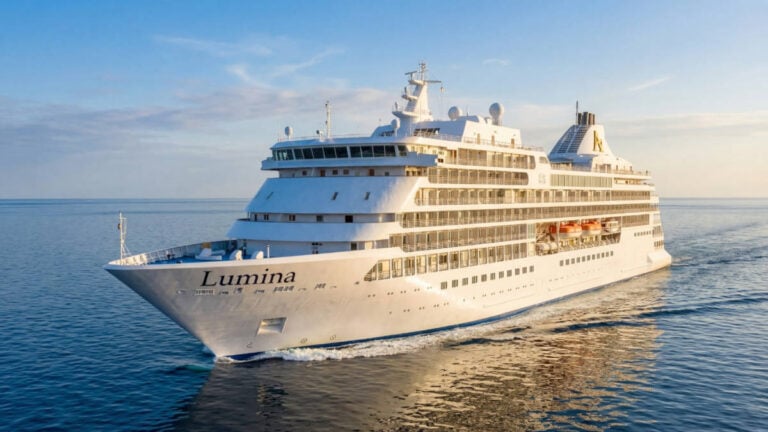
The vessel will be renamed Avora Lumina.
Norwegian Cruise Line Holdings, parent company of Norwegian Cruise Line, Oceania Cruises, and Regent Seven Seas Cruises, has agreed to a nine-year charter of Seven Seas Navigator, a 490-guest ultra-luxury ship.
The deal involves a nominal purchase option with buyer Avora Residences, which plans to turn the vessel into a high-end residential cruise ship. Avora is owned by Residential Cruise Holdings, the same company that created Villa Vie Residences and operates Villa Vie Odyssey.
Seven Seas Navigator’s name will change to Avora Lumina when the ship joins the new brand in January 2028 and undergoes a major renovation. Until then, Seven Seas Navigator remains under the Regent brand and will sail cruises in Europe, the South Pacific, and East Asia.
Upgrades planned for the ship, which originally entered service in 1999, include public spaces designed for residential living, as well as a full business center.
“Avora Lumina represents the next evolution — purpose-built for long-duration global living, expedition capability, and a more refined residential experience,” said Mikael Petterson, founder of Avora Residences.
The residences will vary in size, from 300 to nearly 1,200 square feet, with high-end finishes and plenty of ocean views.
Seven Seas Navigator is an all-suite ship with 244 cabins. Roughly 90% of the suites have balconies. But aboard Avora Lumina, the focus will be on individuality, allowing residents the option to personalize their living areas.
“These are not cruise cabins. They are designed as floating homes — primary residences that travel with their owners for years at a time,” Petterson explained.
The statement from Avora indicates the ship will have 242 living spaces, two less than the vessel currently has.
Ship to Sail Continuous World Voyages
Like its sister brand, Villa Vie Residences, which launched its ship in 2024, Avora Residences will send its ship on three-year-long continuous world cruises, visiting some 140 countries and more than 400 port calls.
Lumina Cruise Ship (Formerly Seven Seas Navigator)
Avora Lumina will feature long stays in port, up to five days, allowing residents to immerse themselves in local cultures. The vessel is also appropriate for expedition voyages; its polar-certified status means it can sail to extreme destinations such as Antarctica.
The ship will place a special focus on culinary programs as it sails from region to region, offering seasonal menus, freshly harvested local ingredients, and wine and food tastings.
Here’s What a Residence on Avora Lumina Will Cost
While sister brand Villa Vie Residences offers multiple purchase and rental options for living spaces onboard Villa Vie Odyssey, Avora will feature just two.
A Life-of-Ship Ownership will range from $545,000 to $4.2 million. The second option is a five-year ownership plan, with costs starting at $219,600. According to Avora Residences, the suite prices were set to be competitive with traditional homes in major cities across the globe.
Sale of Oldest Ship Makes Way For New-Builds
The decision to sell Seven Seas Navigator, Regent’s oldest ship, follows the brand’s creation of a new class of ship, the Prestige class. With its fleet currently consisting of six ships, the first in the new class, Seven Seas Prestige, is under construction and due to launch in December 2026.
Three additional Prestige-class vessels are set to be built and to debut in 2030, 2033, and 2036. The latest order, announced in February 2026 by Norwegian Cruise Line Holdings (NCLH), included one additional ship for each of its brands. All of the new-builds will be constructed by Italy’s Fincantieri shipyard.
Meanwhile, NCLH is under new executive management. On February 12, 2026, the company named board trustee John W. Chidsey as chief executive officer, replacing Harry Sommer. The holding company’s largest stakeholder, Elliott Investment Management, recently criticized the firm for what it called a lack of strategy and leadership.
However, it is likely that the charter-to-sale deal with Avora Residences was in the works long before Sommer was ousted.
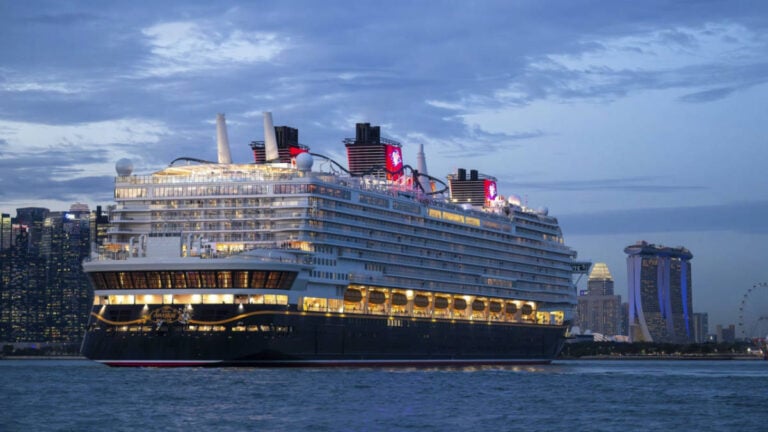
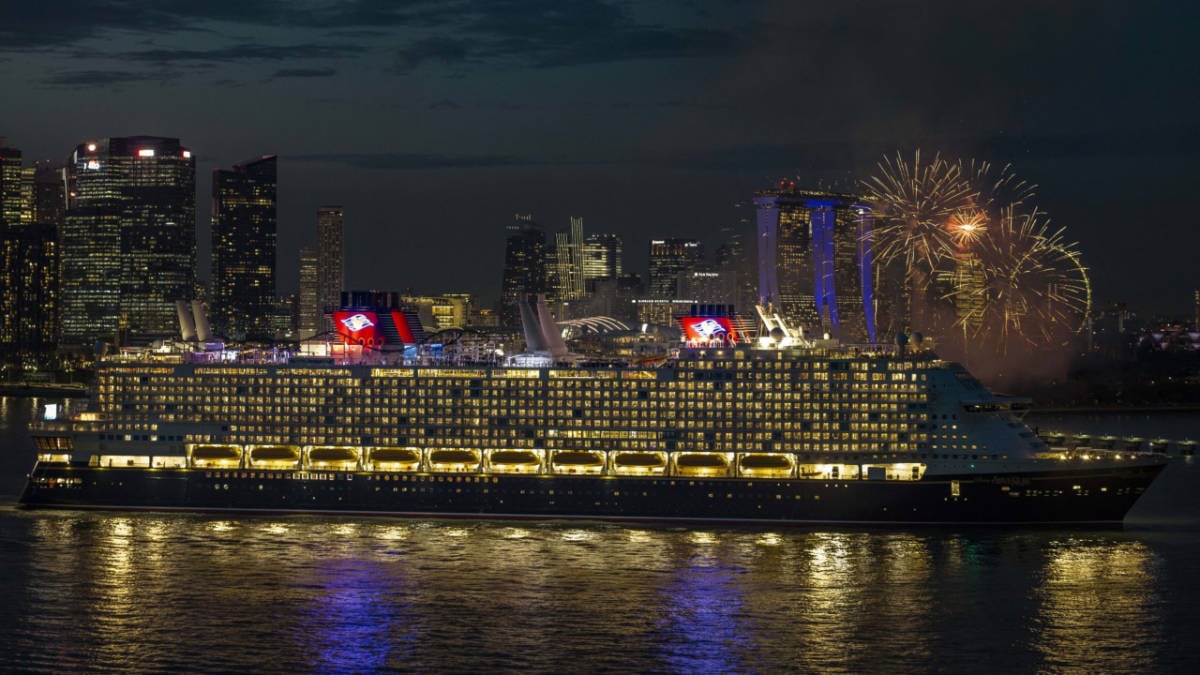
Disney Adventure arrived at her homeport in Singapore on Tuesday, March 3.
The ship was greeted with traditional ceremonies, but her first sailing is still two days away.
Disney Adventure will remain homeported from Singapore for at least five years.
Following an outstanding 58-night journey to reach her homeport, Disney Adventure reached Singapore on Tuesday, March 3, 2026, two days ahead of her maiden voyage.
Cruise Hive has previously reported on the ship’s journey, including her first visit to Florida, and just days ago, the reveal of her new godfather, Robert Downey Jr.
The ship was welcomed to Singapore with great fanfare, including the traditional water cannon salute and a dazzling fireworks display as she pulled into the Marina Bay Cruise Centre in Singapore Strait.
The bursts of fireworks were particularly appropriate, as Disney Cruise Line is the only cruise line to offer special “fireworks at sea” shows, typically as part of the line’s iconic Pirate Night festivities.
Onlookers cheered as the beautifully illuminated Disney Adventure docked, with crew members on the massive vessel waving to those onshore.
The next two days are sure to be a flurry of activity onboard the ship as she takes on supplies and her final crew members arrive ahead of guests in preparation for her inaugural cruise, a 4-night sailing departing on Thursday, March 5.
The “official” maiden voyage is a 3-night sailing departing on March 10. It’s not unusual for new cruise ships to offer several preview cruises before an official maiden voyage with all its celebrations and ceremonies. This gives crew members the chance to refine onboard operations as the ship enters service.
Disney Adventure Arrives in Singapore (Photo Credit: Steven Diaz)
That does not mean, however, that the first sailings of Disney Adventure will be any less special. Guests are sure to be treated to very memorable events and activities, exclusive merchandise, outstanding entertainment, and much more.
Disney Adventure will be sailing 3- and 4-night roundtrip voyages from Singapore for at least five years, though the ship will not be visiting any ports of call. Instead, her onboard experiences are designed to be immersive and offer guests a true getaway with all of Disney Cruise Line’s signature magic.
New Adventures for a New Ship
Disney Adventure is perhaps the most ambitious vessel ever built for Disney Cruise Line. At 208,108 gross tons, the Global Class ship is certainly the largest: a whopping 44% larger than the Wish Class ships, Disney Wish and Disney Treasure.
Up to 6,700 guests will be able to set sail for adventure aboard the new ship at full capacity, with 2,300 crew members to ensure every cruise is indeed adventurous. In fact, Disney Adventure‘s crew complement is larger than the double occupancy guest capacity of the cruise line’s two oldest ships, Disney Magic and Disney Wonder.
Onboard, guests will enjoy exclusive new spaces and classic favorites. For example, the ship still offers the iconic Bibbidi Bobbidi Boutique makeover experiences, but is also the first vessel to have a Marvel Style Studio for superhero (and heroine) makeovers.
Exclusive shows include “Captain Jack Sparrow & The Siren Queen” for a treasure-hunting interactive adventure, as well as a sea journey stage show, “Duffy and the Friend Ship” with Duffy the Disney Bear, a popular character in the company’s Asian theme parks.
Disney Adventure is also home to the first-ever castle onboard a Disney ship, a 186-foot-high art installation in the Disney Imagination Garden space.
Other spaces include the Disney Discovery Reef underwater-themed space, the high-energy San Fransokyo Street entertainment area, and the Marvel Landing themed play area with exciting thrill rides, including the Ironcycle Test Run, the longest rollercoaster at sea and another first for Disney Cruise Line.
Celebrity Solstice has returned to sea following an extensive renovation.
The vessel now features eight new onboard experiences, including four venues new to the cruise line.
The ship’s revitalization added 54 staterooms, bringing total capacity to 1,479 cabins.
Passengers boarding Celebrity Cruises’ newly refreshed Celebrity Solstice this week will find more than a coat of paint.
The 15-year-old ship set sail from Singapore on March 2, 2026, following a major bow-to-stern revitalization, the first of a $250 million investment to the cruise line’s Solstice-class vessels, first reported by Cruise Hive in March 2025.
On its 12-night sailing to Hong Kong, passengers are uncovering eight new experiences and four venues new to the brand: Trattoria Rossa, Sunset Park, The Parlor, and Boulevard Lounge.
Sunset Park, a new open-air venue on the top deck, has been designed for daytime programming and evening gatherings. The space hosts yoga sessions, lawn games, and live music, and includes private cabanas with dedicated attendants.
A new Sunset Park Café accompanies the space, serving breakfast and lunch with sandwiches, quiches, pastries, salads, and wraps, along with charcuterie boards available throughout the day. Meanwhile, the adjacent Sunset Bar has been expanded.
For new dining, Trattoria Rossa brings Roman and Southern Italian dishes to the forefront. The Italian restaurant serves seafood, meat entrees, and house-made pastas. Meanwhile, Fine Cut Steakhouse, previously available on Celebrity Cruises’ Edge Series ships, has also been added, bringing 30-day dry-aged steaks and seafood to Celebrity Solstice.
Boulevard Lounge, a new 125-seat venue, will host piano singalongs, karaoke, and game shows, while next door, Boulevard Bar will offer a new cocktail space.
The vessel has also debuted two new productions in its main theater with “Smoke and Ivories” centered on 1950s-era music and “Rockumentary” offering a concert-style rock show. A candlelit string concert series has also been introduced.
Also debuting on Celebrity Solstice is The Parlor, a sports and gaming lounge with billiards, darts, and board games, along with a menu of shareable dishes and desserts.
“Celebrity Solstice launched our Solstice Series ships and defined a generation of Celebrity Cruises travel,” said Laura Hodges Bethge, president of Celebrity Cruises.“The reimagination honors that heritage while setting a new standard for what an elevated vacation can be.”
Hodges Bethge continued promoting the changes, saying every new experience was designed around how guests want to spend their time on board. “Backed by the unmatched hospitality that defines every Celebrity Cruises sailing,” she added.
Stateroom and Suite Upgrades
The update to Celebrity Solstice also includes redesigned accommodations, expanded suite areas, refreshed wellness-focused cabins, and the addition of 54 staterooms to bring the ship to 1,479 cabins.
New Deluxe Panoramic Ocean View on Celebrity Solstice (Photo Credit: Celebrity Cruises)
The 121,878-gross-ton vessel now features the Panoramic Infinite Veranda Suite, which introduces a redesigned front-facing layout that blends indoor and outdoor space through a reconfigurable window system.
Two new Panoramic Ocean View Suite categories provide expanded living areas and forward-facing views, while the Deluxe Panoramic Ocean View offers a non-suite option.
AquaClass staterooms, which focus on wellness, have been refreshed with updated spa-inspired amenities. Enhancements include massaging showerheads, aromatherapy diffusers, in-room yoga mats, upgraded robes and slippers, and a pillow menu.
Guests staying in AquaClass also receive access to Blu, the exclusive restaurant for the category, as well as the Persian Garden thermal suite within the spa.
The Retreat, the ship’s suite-only enclave, has also been reworked. The redesigned sundeck now features an oversized hot tub, additional shaded seating, and expanded outdoor lounge areas reserved for suite guests.
The private Retreat Lounge has been updated with new furnishings and finishes, with Luminae, the dedicated restaurant for suite passengers, remaining exclusive to guests staying in The Retreat.
After completing sailings in Asia and Australia, Celebrity Solstice will sail in Alaska for the summer 2026 season before departing on what the cruise line is calling its Grand Voyage.
The 110-night sailing begins September 13, 2026, and includes more than 55 unrepeated port calls across Alaska, the South Pacific, Australia, New Zealand, and Asia. The voyage is scheduled to conclude with a New Year’s Eve arrival in Hong Kong.
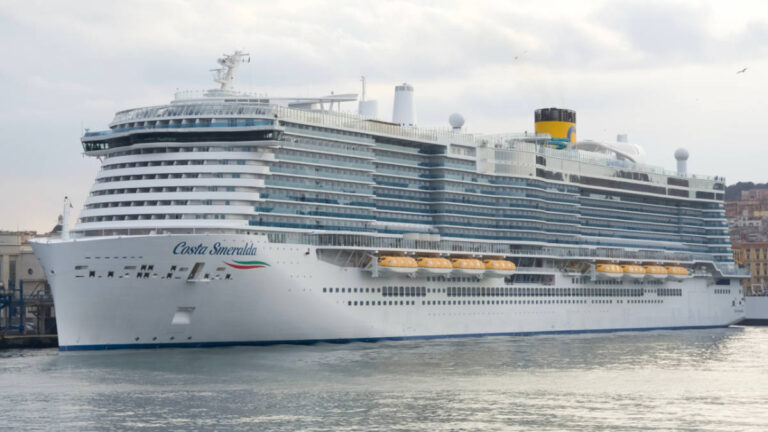
Costa Smeralda has cancelled its call to La Goulette on March 4 due to anticipated strong winds.
The forecast calls for big gusts and swells that exceed the wind limits set by the port to ensure safe cruise ship operations.
Naples, Italy, will now welcome the Costa Cruises ship on Wednesday, March 4.
La Goulette-Tunis, Tunisia, is certainly getting a reputation for turning cruise ships away due to strong winds.
MSC Cruises’ MSC Splendida has already had to skip the port twice this year due to dangerous weather conditions, and now Costa Cruises’ Costa Smeralda has had to make the same call for its planned visit on March 4, 2026.
“The weather forecast for Wednesday, 4 March at La Goulette indicates adverse conditions, with strong winds and gusts expected in the area,” Costa Cruises wrote in a letterto current guests, which was obtained by Cruise Hive.
“As a result, the ship’s passage through the access channel cannot be carried out safely, making docking impossible as originally planned…the scheduled stop at La Goulette has been cancelled,” the update continued.
Costa Smeralda is currently operating several Western Mediterranean itineraries simultaneously out of Marseille, Barcelona, Rome, Savona, and Palermo.
Thankfully, La Goulette is not one of the embarkation and debarkation ports for the 5,224-passenger vessel, meaning guests’ travel plans shouldn’t be interrupted too significantly.
All shore excursions booked for La Goulette through Costa Cruises will automatically be cancelled and refunded to the original payment method without any action needed from guests.
Naples Substituted As Replacement Port
While they won’t be stopping in La Goulette, guests are still in for a treat. The 185,010-gross ton ship will call at Naples, Italy, on March 4, which is not normally part of its Mediterranean itineraries.
Aside from Tunisia, the itineraries do not typically deviate outside of the ship’s departure ports (Marseille, Barcelona, Rome, Savona, and Palermo).
Photo Credit: maudanros
“As an alternative, we will arrive in Naples on Wednesday morning at 08:00 for a full day stay,” Costa Cruises confirmed.
“We believe this decision is the most appropriate given the maritime conditions forecast in the area, in order to avoid a last-minute cancellation and offer you the opportunity to enjoy an exceptional stay in a fascinating destination like Naples,” the cruise line explained.
Tours for Naples are already available to book through the Costa Cruises app or by visiting the My Tours Desk on Deck 6.
How Much is Too Much Wind?
Generally, sustained winds of 34-46 miles per hour are generally considered too strong for a cruise ship to dock safely.
As of the morning of March 3 (local time), wind gusts in La Goulette were averaging at 26.8 mph, which is already getting a bit too strong for comfort. But by March 4, wind gusts are expected to exceed more than 40 mph.
“The currently forecast weather conditions exceed the wind limits set by the port to guarantee fully safe operations,”the cruise line stated.
Due to its coastal location, La Goulette is known for strong winds over the winter months and early spring, which are typically at their worst in February based on historical data. If weather patterns remain similar, the windy conditions should start to ease up later in spring and summer.
Costa Smeraldawill be able to attempt to visit the port again (hopefully in calmer conditions) several more times this month, with visits planned for March 11, March 18, and March 25.
Cruise Hive will continue to monitor for itinerary changes and will share updates if more weather-related changes are made in the future.
MSC Euribia, which has now been docked in Dubai for several days, has cancelled another upcoming sailing.
The March 7 embarkation, which was a 7-night cruise around the Middle East, has officially been scrapped.
It’s unclear when current guests will be able to disembark to go home.
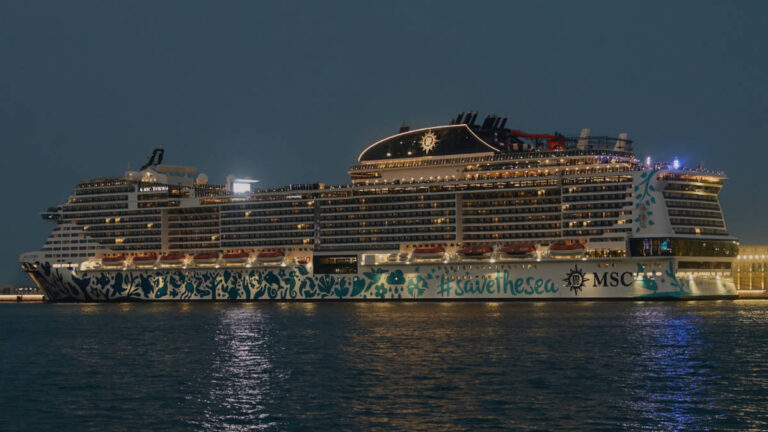
MSC Cruises’ MSC Euribia remains stuck in the port of Dubai as the conflict in the Middle East continues to intensify, which is leading to more cruise cancellations.
The Meraviglia-Plus class cruise ship has been stuck in Dubai since it arrived for an overnight call on February 27.
It then hunkered down in the UAE port following the joint military attack on Iran that unfolded on February 28, taking a wait-and-see approach to the situation.
As the conflict continues to escalate with Iran taking retaliatory action, it’s become clear that the 6,327-guest ship will not be departing Dubai anytime soon. This has prompted MSC Cruises to cancel several upcoming embarkations, and the list grew longer as of March 1, 2026.
MSC Notifies Guests of Cancelled Cruises
The cruise line already cancelled the embarkations on February 28 and March 1, which would have been overlapping 7-night Middle Eastern itineraries. The March 4 departures, which consisted of a 3-night getaway cruise and a 7-night sailing, were also nixed for safety reasons.
Now, guests booked on the March 7 embarkation, which was another 7-night sailing from Dubai, have been told that their sailing is also officially cancelled.
Like the other sailings that were scheduled to be operated simultaneously, guests would have visited Doha, Qatar, Sir Bani Yas Island, Abu Dhabi, and Khalifa Bin Salman, Bahrain.
MSC Euribia in Cadiz, Spain
“Due to the current situation and the closure of airspace across the Middle East region, your cruise aboard MSC Euribia departing from Dubai, United Arab Emirates on 3/7/2026 has been cancelled,”MSC sent in an email to current guests, which was obtained by Cruise Hive.
“Your safety and satisfaction remain our top priority, and we are here to support you during this time,” the cruise line continued.
In light of the cancellation, guests will automatically receive refunds of their full cruise fare within 30 days. No further action is required on the part of the guests.
Are More Changes Coming?
The situation in the Middle East is dangerous and continues to evolve, which means more embarkations could be impacted. After March 7, MSC Euribia has more embarkations scheduled for March 8, March 11, March 14, March 15, and March 18.
It would not be surprising if these sailings, all of which are 7-night itineraries, also ended up on the chopping block in the coming days.
For now, the 183,500-gross ton vessel is one of six cruise ships that are stuck in the Middle East. It’s joined by Celestyal Cruises’ Celestyal Discovery and Aroya Cruises’ Aroya Manara in Dubai.
Mein Schiff 4 is stuck in Abu Dhabi, while Mein Schiff 5 and Celestyal Journey round out the list in Doha.
Cruise ships cannot sail to safer waters because they would have to pass through the Strait of Hormuz, which is dangerously close to Iran at only 21 to 33 miles wide between Iran to the north and Oman/UAE to the south.
Even if ships wanted to brave the waterway, it is closed to all shipping and civilian vessels until further notice.
At the same time, the ships in Dubai have not been given permission to disembark current passengers due to safety concerns in the port and mass flight cancellations.
Guests have been given permission to go ashore to briefly stretch their legs during this waiting period, but have been asked to go no further than the cruise terminal area. Wi-Fi has also been made available to all onboard at no charge.
This is still a developing situation, and Cruise Hive will continue to share updates as more information becomes available.
Family-friendly cruise lines like Royal Caribbean, Disney Cruise Line, Carnival Cruise Line, Norwegian Cruise Line, and MSC Cruises are all strong contenders, but the best cruise line for your family depends on the ages of your kids, the type of activities you enjoy, and how structured you want your days at sea to be.
$0 to $130 (premium dining) Approximately 10 to 20 total restaurants on each ship, with at least seven included in the dining package price.
Kids Club
Yes
Teen Activities
Yes
Water Park
Several per ship, plus the Thrill Waterpark at Cococay (not on board ship)
Childcare Available
Yes, for a fee. Some childcare services are included in the cost of your cruise.
Royal Caribbean may be the best option for families seeking a kid-friendly cruise that isn’t overtly geared toward children. It’s a great option for families with children who want to pack plenty of adventure and variety into their days at sea while still enjoying the cruise experience.
Royal Caribbean is my pick for family-friendly cruising that isn’t over-the-top or overtly designed for kids. Your kids will have plenty to enjoy, but you won’t feel as if you’re on a kiddie cruise.
My favorite thing about Royal Caribbean is the selection of onboard recreational activities for both kids and adults, including rock-climbing walls, ice-skating rinks, zip lines, and the Ultimate Abyss, the tallest slide at sea.
Family-Friendly Features
All Royal Caribbean ships offer family-friendly dining options, incredible entertainment, and memorable onboard activities, all of which are part of your all-inclusive price.
Additionally, the cruise line offers a range of programs for young children and lounges designed specifically for older children. Teenagers have access to a wide variety of activities on board, with younger and older groups able to participate in ice skating, table tennis, rock climbing, and more.
The ships also offer opportunities for parents to enjoy some time alone dancing, dining, or visiting the onboard casino, while younger kids are supervised in the Adventure Ocean kids’ care program. The program’s Late Night Party Zone provides after-dark supervision for children ages 3 to 11 from 10 pm to 2 am, allowing parents to enjoy a kid-free evening.
Kids Pool on Oasis of the Seas (Photo Credit: Solarisys)
The most popular excursion for cruisers is a Perfect Day at CocoCay, Royal Caribbean’s private island located in The Bahamas. Guests enjoy free entry to five stretches of beaches and unlimited dining at five island food spots.
A favorite feature of the island for the whole family is the Oasis Lagoon, the largest freshwater pool in the Caribbean. Upgraded amenities are also available for an extra fee.
If you prefer to swim onboard your ship, Royal Caribbean’s Icon of the Seas‘ 40,000-gallon Royal Bay Pool is the largest freshwater pool you’ll find on a cruise, perfect for a refreshing plunge, relaxing, or playing games on the pool deck. And the line’s Star of the Seas invites cruisers to visit the biggest waterpark at sea, Category 6.
Dining
Dining on Royal Caribbean cruises is flexible and family-friendly, with options that work for different schedules and picky eaters. Programs like My Family Time Dining help younger kids finish their meals without frustration, so parents can relax and enjoy their vacation.
View of the Boardwalk From Giovanni’s Italian Kitchen & Wine Bar
Families can choose from casual buffets, main dining rooms, and specialty restaurants, making it easy to find something everyone enjoys. Whether your children want familiar favorites or want to try something new, the Royal Caribbean dining plans have you covered.
Most meals are covered in the cost of your cruise, but some specialty restaurants and premium dining experiences cost extra, and certain drinks or menu items may also have additional charges.
Best Ships for Families
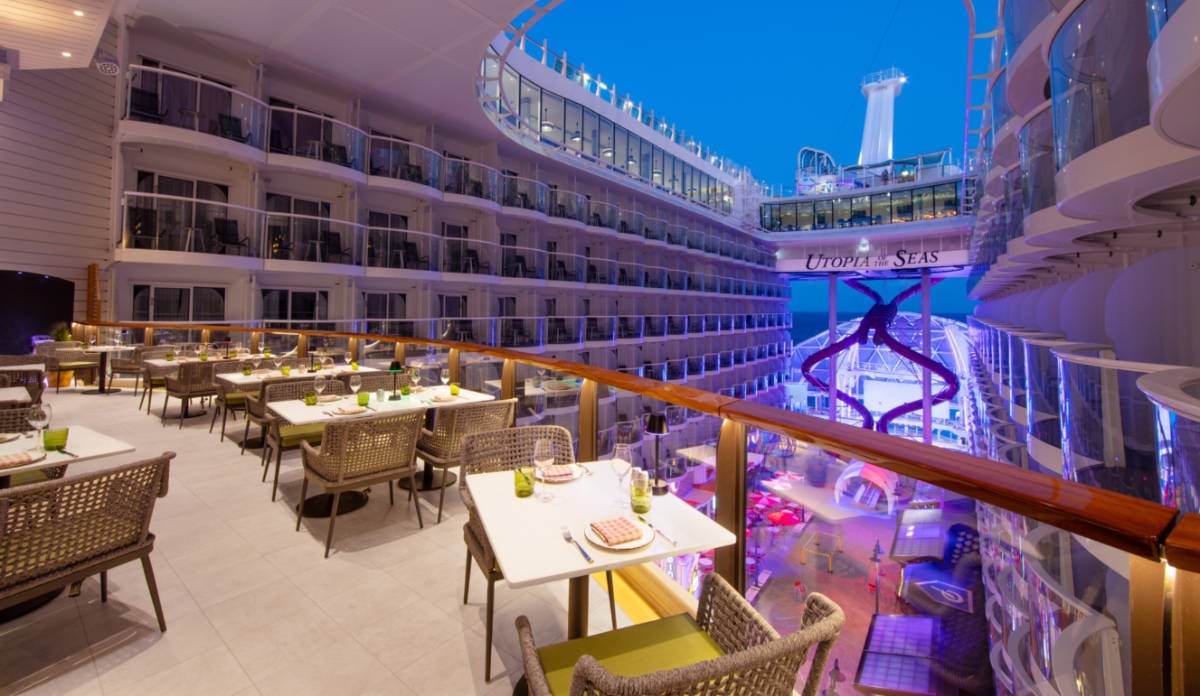
Royal Caribbean’s most kid-friendly cruise ships include Utopia of the Seas, Icon of the Seas, and Star of the Seas. Other Royal Caribbean ships considered great for families include Oasis of the Seas, Mariner of the Seas, Harmony of the Seas, Symphony of the Seas, and Navigator of the Seas.
Disney Cruise Line
Feature
Availability
Best Family-Friendly Feature
Disney Live Shows
Price
$$$ – $$$$
Dining
$0 to $145 (specialty/premium dining)Approximately 10 to 20+ total restaurants on each ship, with three main dining rooms included in the dining package price.
As you might expect, Disney Cruise Line is one of the best when it comes to family-friendly cruises. It’s obviously the best option for Disney fans of all ages, but it’s also great for family cruisers, whether they’re dedicated fans of the brand or not.
In a nutshell: Families will have plenty to do on a Disney cruise, even if indifferent to princesses and woodland creatures. However, it might not be worth the extra cost if you and your kids aren’t Disney enthusiasts.
Family-Friendly Features
Disney cruise ships offer a range of age-based kids’ clubs, along with character experiences and family entertainment. If you’ve ever wondered what it would be like if the Disney theme parks were on water, that’s exactly what you’ll get with a Disney cruise.
My favorite feature on Disney cruises is the shows. You can see a live performance of Beauty and the Beast on Disney Treasure and Disney Dream, or a live performance of Frozen on Disney Wonder, Disney Fantasy, or Disney Destiny.
Open Deck of the Disney Treasure Ship (Photo Credit: Carolyne Parent)
In addition to Disney-themed entertainment and endless ways to enjoy the brand, cruisers find staterooms that are typically more spacious and comfortable than on most cruise ships. The rooms are well-suited for traveling with children, featuring privacy curtains, storage space, and divided bathrooms with separate sinks.
There are also plenty of features you’ll find on Disney cruises that are similar to what you’d find on other cruises.
For example, Disney Cruise Line has a private island called Castaway Cay, similar to Royal Caribbean’s CocoCay. Additionally, Disney Cruise Line’s newest private destination, Lookout Cay at Lighthouse Point on the island of Eleuthera, opened in 2024 and features Bahamian-inspired design and cultural elements.
Disney Cruise Line also makes it easy for parents to have some alone time while at sea. For an added fee, they can enjoy a romantic dining experience at one of the ship’s fine dining restaurants while kids of all ages are safe and supervised at one of the ship’s kid or teen clubs.
Dining
Meals are included in the cost of most Disney cruises. Your cruise fare covers breakfast, lunch, and dinner each day, plus snacks, soft drinks at beverage stations, and ice cream. Dining on Disney Cruise Line’s private island is also included.
Arendelle Dining Room, Disney Wish (Photo Credit: Melissa Mayntz)
As you might expect, Disney Cruise Line offers plenty of kid-focused dining touches, from familiar favorites and flexible menus to themed restaurant experiences designed to keep the littles cruisers engaged and entertained at mealtime.
Keep in mind that Disney Cruise Line’s dinner-and-a-show experiences can extend dining times. There are some specialty dining experiences, as well as alcohol and certain extras that cost more.
Best Ships for Families
Disney Cruise Line offers Caribbean, Bahamian, and European cruises. There are currently eight ships in the Disney fleet, including Disney Wish and Disney Treasure, and every one is designed for family travel.
While Disney Cruise Line is a great option for “Disney families,” it may not be the best choice for those who aren’t brand enthusiasts. These cruises are geared toward children and may lack some traditional cruise features that adults value.
Carnival Cruise Line
Feature
Availability
Best Family-Friendly Feature
BOLT: Ultimate Sea Coaster
Price
$ – $$$
Dining
$0 to $150 (specialty dining)Approximately 8 to 15+ total restaurants on each ship.
Kids Club
Yes
Teen Activities
Yes
Water Park
Yes
Childcare Available
Yes, with a fee for the Night Owls program.
Veteran cruisers consider Carnival Cruise Line as the fun party cruise line, and it shouldn’t come as a surprise that they offer plenty of features for people of all ages. I consider Carnival Cruise Line the best option for families looking for onboard fun at an affordable price.
Family-Friendly Features
Family-friendly features on Carnival ships include trampoline parks, ropes courses, and water parks. Carnival Cruise Line ships offer kids’ clubs for younger cruisers, separated by age group: Turtles for children under two, Penguins for ages two to five, Stingrays for ages six to eight, and Sharks for ages nine to eleven.
One thing I love on Carnival ships is the Family Feud Live game show. Groups of five or more must audition for a chance to be contestants, but everyone is invited to join the audience during the games. Family Feud is available on non-European, non-Australian, and non-South Pacific seven-day-plus cruises.
Carnival Cruise Line Ship (Photo Credit: Melissa Mayntz)
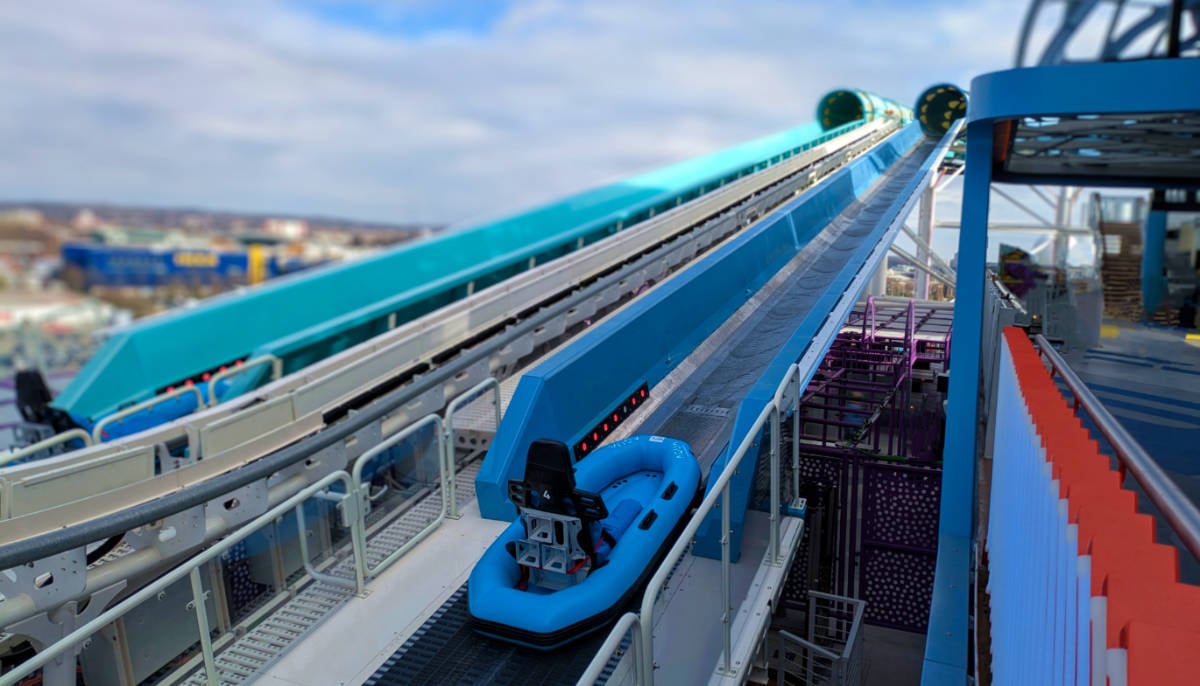
If you’re sailing on Carnival Celebration, Carnival Jubilee, or Mardi Gras, make sure you set aside time for you and the kids to ride the Bolt: Ultimate Sea Coaster. As if it wasn’t thrilling enough to ride a roller coaster while sailing, this coaster is special. Riders control their speed while enjoying a 360-degree view of the ocean.
There’s also the Carnival SkyRide. It’s a suspended, pedal-powered bike ride located high above the top deck on select ships like the Carnival Vista and Carnival Horizon. The cost of this attraction is included in your cruise fare.
Dining
Dining Carnival is designed to be flexible and family-friendly, with many meals included in the cruise fare, except for Steakhouse Selections, Bonsai Sushi Ship, and certain drinks.
Guests can enjoy complimentary breakfast and dinner in the main dining rooms, along with changing menus, kid-friendly options, and casual buffet choices. Ships also offer Sea Day Brunch on days the ships are at sea.
In addition to the standard menus in the main dining rooms, children’s menus are also available.
Best Ships for Families
Some of Carnival Cruise Line’s ships, like Carnival Panorama, Carnival Horizon, and the larger ship Carnival Vista, are more kid-friendly, while the SEA line of ships is designed for cruisers 21 and older.
Norwegian Cruise Line might not be the first one that comes to mind when you think “family friendly,” but they’re a great option for families who want affordable cruising.
They often run deals that allow second, third, and fourth cruises to sail for free, and their Free at Sea program lets you customize your experience with specialty dining, excursion credits, and more.
Norwegian Aqua Slidecoaster (Photo Credit: Paul Bartlett)
Additionally, ships offer a variety of “thrills at sea.” This includes activity zones with various attractions like go-kart racetracks, waterslides, laser tag, ropes courses, and more. Two of the best-loved experiences are the Ocean Loops in the Aqua Park and the Galaxy Pavilion virtual gaming wonderland.
The Norwegian Aqua features the Aqua Slidecoaster, the world’s first hybrid rollercoaster and waterslide at sea.
Dining
In addition to basic dining options, the Free at Sea program allows cruisers to include one or more specialty dining experiences depending on the length of their cruise.
Le Bistro on Norwegian Aqua (Photo Credit: Paul Bartlett)
Upgrading to Free at Sea Plus means you get the usual program inclusions, as well as 50% off the cover charges of additional specialty dining nights. Cruisers 13 and under dine for free when they order from the kids’ menu.
Family-Friendly Features
Of course, Norwegian Cruise Line also offers a variety of family-friendly activities you’ll find on other ships, including ropes courses, kids’ clubs, and kid-friendly entertainment.
Splash Academy offers supervised activities, such as scavenger hunts or arts and crafts, for younger children ages 3 to 12. Entourage is the perfect solution for older kids ages 13 to 17, as they can hang out, play video games, or have fun at the teens-only nightclub. Kids can also enjoy theme nights, including Glow, White Hot Party, and College Night.
Norwegian Aqua Deck at Night (Photo Credit: Paul Bartlett / Cruise Hive)
Parents can also have some evening time alone while their kids are supervised at the Late Night Fun Zone, available from 10 pm to 12 am.
Best Ships for Families
NCL’s most family-friendly ships include Norwegian Breakaway, as well as Norwegian Encore, Norwegian Escape, and Norwegian Bliss. Norwegian Spirit does not offer youth programs.
MSC Cruises
Feature
Availability
Best Family-Friendly Feature
Themed play zones and kid-friendly excursions
Price
$ – $$$
Dining
$0 to $80 (specialty/premium dining). Approximately 10 to 20 total restaurants on each ship, depending on ship size.
Kids Club
Yes
Teen Activities
Yes
Water Park
Yes, but with limited features
Childcare Available
Yes, for an extra fee
MSC Cruises blends affordability and onboard entertainment for a family vacation that offers fun, memorable activities.
As Europe’s largest cruise line, MSC Cruises takes parents and kids to more than 200 destinations throughout the world. Trips often include a visit to the Ocean Cay MSC Marine Reserve, the line’s private island located in The Bahamas.
Family-Friendly Features
MSC Cruises’ ships offer exclusive family decks, as well as splash parks and themed areas for kids. Some ships also have virtual reality and simulator games. The company has also partnered with LEGO and Chicco to create play zones and spaces designed for children as young as toddlers.
LEGO Parade on MSC World America (Photo Credit: Catie Kovelman / Cruise Hive)
Accommodations are also family-friendly, featuring interconnecting cabins or family suites for larger families and multiple families traveling together.
In addition to the onboard family-friendly amenities, MSC Cruises offers kid-friendly excursions. Excursions are led by professional guides and include visits to historical monuments and natural attractions designed to be engaging, educational, and accessible for all ages.
MSC Cruises ensures excursions are affordable for families by offering discounted rates for children ages 3 to 13 and free admission for children ages 2 and younger.
Dining
Dining on MSC Cruises offers a wide range of options. Main dining rooms and buffet restaurants serve international and Mediterranean cuisine and are typically included in your cruise fare, with meals offered daily across multiple venues.
Butcher’s Cut on MSC World America
Families will also find kid-friendly menu choices and flexible dining settings that make mealtimes easy and enjoyable for younger guests. For an additional cost, specialty restaurants and dining packages offer upgraded culinary experiences with diverse global menus.
The cruise line’s most family-friendly ships include MSC Meraviglia, MSC Seaside, and MSC Bellissima. All three ships offer dining, activities, and amenities suitable for people of all ages.