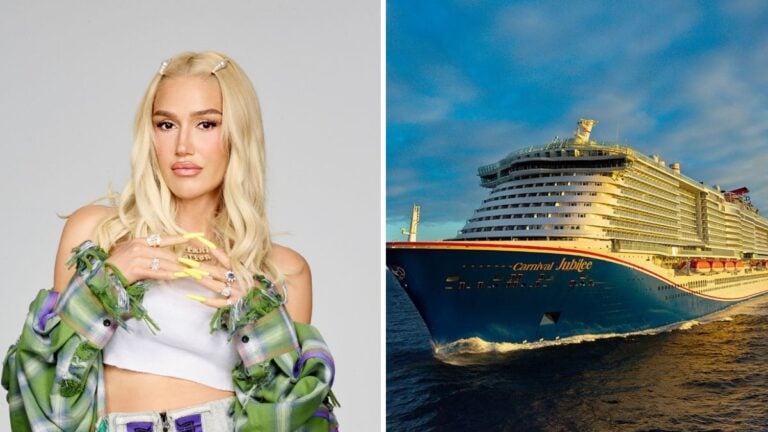
Carnival Cruise Line has announced the opening of its 2025-26 cruise season, featuring expanded itineraries from its Australian homeports in Sydney and Brisbane. This latest offering includes new sailings to Fiji and New Zealand aboard the Carnival Splendor, as well as cruises to Fiji and Papua New Guinea onboard Carnival Luminosa.
Additionally, both vessels will host several cruises exploring the majestic Great Barrier Reef.
Carnival Splendor From Sydney
Carnival Cruise Line has announced a new series of cruises from Brisbane and Sydney for 2025 and 2026, now open for bookings onboard Carnival Luminosa and Carnival Splendor.
The Concordia-class cruise ship Carnival Splendor sets sail from Sydney, offering a variety of itineraries. These cruises range in length from short three-day escapades to extensive 12-day voyages.
Guests can explore Australian destinations such as the Great Barrier Reef and Moreton Island, Tasmania. The ship will also sail on a special Melbourne Cup cruise, the world-famous horse race. Beyond Australia, the ship will sail to the pristine environments of Fiji, the South Pacific islands, and New Zealand.
Photo Credit: Jon Ingall / Shutterstock
Carnival Splendor‘s cruises to New Zealand, ranging in length from ten- to twelve days, are all Carnival Journeys, the cruise line’s special cruises that offer an in-depth experience of the destination. Ports of call include Wellington, Lyttelton, Dunedin, and a scenic cruise in the Fiordland National Park, amongst others.
During their time onboard Carnival Splendor, guests can enjoy various activities and popular venues like Guy’s Burger Joint, Pizzeria del Capitano, and the Alchemy Bar. The 113,300 gross tons cruise ship also boasts the WaterWorks aqua park and the Serenity Adult-Only Retreat, ensuring a diverse experience for all guests.
Carnival Luminosa Offers Exciting New Destinations
From Brisbane, the 92,600 gross tons Carnival Luminosa offers its 2,260 guests an equally enticing selection of destinations. Itineraries include six-, seven-, and eight-day trips to Airlie Beach and the Great Barrier Reef, alongside cruises to tropical havens like Fiji, New Caledonia, and Vanuatu.
However, perhaps most interesting are two 11-day Carnival Journeys that will take guests to Papua New Guinee, an area few cruise ships venture to.
Carnival Luminosa will sail to the Conflict Islands, an area of outstanding natural beauty; Alotau, steeped in World War II history; Rabaul, situated on the edge of a flooded caldera; and Kiriwina Island, renowned for its beautiful beaches and crystal-clear waters; and back to the Conflict Islands.
The two cruises promise an extraordinary journey through some of Papua New Guinea’s most stunning destinations. For those guests looking for a shorter cruise, Carnival Luminosa also offers a wide range of 3-day cruises where the ship stays at sea and 4-day getaway cruises sailing to Arlie Beach.
Carnival Luminosa originally sailed under the Costa Cruises fleet, as Costa Luminosa. In a move to optimize the fleet, Carnival Corporation decided to transfer the Costa Luminosa to Carnival Cruise Line.
The transition of the Costa Luminosa to become the Carnival Luminosa took place in 2022. This shift marked a significant expansion of Carnival Cruise Line’s offerings, and one that kickstarted the Carnival Fun Italian Style program, although she is not officially a part of that program.
With bookings now open, these new itineraries present an exciting opportunity for guests to explore the wonders of the Pacific onboard Carnival’s Fun ships.
Holland America Line has opened for sale an exciting series of South America and Antarctica voyages with departures in 2025 and 2026. Operated aboard the Vista-class Oosterdam, three unique itineraries will offer guests access to more than a dozen UNESCO sites.
Oosterdam Itineraries to Visit Iconic Landmarks
Holland America Line’s 1,964-guest Oosterdam will deploy to South America from November 2025 to March 2026, offering three itineraries of 14 to 22 days. The ship will sail between either Fort Lauderdale or Buenos Aires, Argentina, and San Antonio (Santiago), Chile.
Guests will explore iconic South American destinations such as Iguazu Falls and Machu Picchu, and experience scenic cruising in the Antarctic region’s Drake Passage, Beagle Channel, and Glacier Alley. A naturalist will accompany each Antarctic voyage.
Across the series of cruises, Oosterdam will bring guests to 16 UNESCO World Heritage sites and UNESCO Biosphere Reserves, including the Galapagos Islands via an optional overland tour.
Holland America Line in Antarctica (Photo Courtesy: Holland America)
“South America is a vibrant region that offers contrasting experiences within one cruise, sailing from the tropics to glaciers and busy cities to some of the most remote places in the world,” said Dan Rough, vice president of revenue management at Holland America Line.
“Our mid-sized ships make it possible to craft itineraries that feature an exciting collection of South American ports; and our menus, enrichment and entertainment on board ensure guests come away feeling deeply connected to the places they visited,” added Rough.
Three Unique Itineraries Offer In-depth Explorations
Guests aboard Oosterdam’s 14-day “South America Passage” will cruise between Santiago and Buenas Aires, spending an overnight in the lively Argentina port city at the beginning and end of the voyage.
Port calls will be made in Chile, Argentina, Falkland Islands, and Uruguay, with scenic cruising in the Chilean Fjords, the Strait of Magellan, and around Cape Horn, plus other areas. Three departures are scheduled for December 4, 2025, and February 22 and March 8, 2026.
The ship’s 17-day “Panama Canal and Inca Discovery” cruise will sail between Fort Lauderdale and Santiago. A two-night call at Lima, Peru, will allow time for an overland tour to Machu Picchu and the Galapagos Islands. The ship will transit the Panama Canal and call at ports in Grand Cayman, Panama, Ecuador, and Chile.
An overnight is planned at Fuerte Amador, Panama, located at the Pacific Ocean entrance to the canal. Two departures are scheduled on November 17, 2025 and March 22, 2026.
Holland America Line at Elephant Island (Photo Courtesy: Holland America)
Oosterdam’s longest voyage in the region, the 22-day “South America and Antarctica” cruise, operates between Santiago and Buenas Aires. An overnight in Buenas Aires will either begin or conclude the sailing, while other port calls will include destinations in the Falkland Islands, Chile, and Uruguay.
Guests can interact with a naturalist guide while viewing wildlife such as penguins and whales as the ship cruises the Antarctic regions of the Drake Passage, Beagle Channel, and Glacier Alley, plus the Chilean Fjords. Three departures are set for December 18, 2025, which is a holiday cruise, and January 9 and 31, 2026.
The “Panama Canal and Inca Discovery” and “South America Passage” cruises can be combined to create a 31-day voyage.
Guests who book any of the new South America and Antarctica cruises are eligible for the line’s Have It All premium package. For a limited time, cruisers can receive several key inclusions, such as shore excursions, dining and drinks packages, a WiFi plan, and crew gratuities.
In April 2023, Holland America had unveiled its 2024-25 South America voyages. Some of the itineraries are similar, however, next year the line will deploy two ships to the region, Oosterdam and the 1,432-guest Zaandam.
The newly-opened 2025-26 cruises are in addition to the cruise line’s much-anticipated “Pole to Pole” grand voyage, setting sail aboard the 1,432-guest Volendam on January 25, 2025. The 133-day sailing, roundtrip from Fort Lauderdale, will visit both Antarctica and the Arctic Circle.
A 28-year-old male guest has been reported overboard from Carnival Cruise Line’s Carnival Glory, and the US Coast Guard is engaged in extensive search operations involving multiple assets.
The ship is currently continuing on its itinerary, as the time of the guest’s disappearance is unclear. This also makes search efforts more complicated.
Man Overboard From Carnival Glory
Carnival Glory departed New Orleans on Sunday, November 12, 2023, for a 7-night Western Caribbean sailing. On Monday afternoon, a male guest – identified by family members as Tyler Barnett from Houma, Louisiana – was reported missing. Details about why he was reported missing or the timing of the report have not been released.
Crew members aboard the 110,000-gross-ton, Conquest-class ship immediately began emergency measures, including accounting for everyone aboard. When Barnett was not located, the US Coast Guard (USCG) was contacted to begin a search.
Two aircraft have been engaged to search more than 200 miles along the ship’s recorded voyage path. The extensive search area is necessary because the exact location where the guest may have gone overboard is not precisely known.
Messages have also been broadcast to other vessels in the region to keep a lookout for the missing passenger, as is standard procedure during any search and rescue operation.
Carnival Glory is not involved in the search – again, owing to the lack of information about exactly when the passenger may have gone overboard – and is continuing on its itinerary.
The ship’s next stop, the first port of call for the cruise, is Montego Bay, Jamaica on Wednesday, November 15 from 8 a.m. to 5 p.m. At this time, there are no reports of delays for the visit.
The remainder of the ship’s itinerary includes visits to George Town, Grand Cayman as well as Cozumel, Mexico, before Carnival Glory returns to New Orleans on Sunday, November 19.
Weather Complicates Search
Dangerous conditions in the search area, including gale wind strength and seas reported with 8-12 foot (2.4-3.7 meter) waves have forced a pause in the search operations, as it is unsafe for USCG craft to continue their efforts. The search will resume as soon as it is safe to do so.
US Coast Guard Search of Missing Carnival Passenger
As of late Tuesday morning, winds in the region range from 13-27 knots (15-31 miles per hour / 24-50 kilometers per hour) and higher, conditions that make it impossible for aircraft to safely operate for low-level searches. Furthermore, rough seas would cut visibility even more, making search efforts ineffective.
Sadly, rough weather would also impact the survivability of anyone in the water. The USCG will remain alert and continue the search when possible, accounting for possible drift with respect to weather conditions.
Yet sometimes emergency response can be initiated quickly enough to rescue an overboard individual. On Royal Caribbean’s Symphony of the Seas in late October, swift actions by the crew rescued an individual overboard near the coast of Spain.
Other overboard incidents have been reported this year from Royal Caribbean’s Spectrum of the Seas, Wonder of the Seas, and Quantum of the Seas; Princess Cruises’ Emerald Princess; AIDA Cruises’ AIDAperla; Carnival Cruise Line’s Carnival Elation and Carnival Magic; and other vessels.
While it may seem like overboards are frequent, it is important to remember that thousands and thousands of guests sail safely every week without any concerning emergency calls that denote these unfortunate incidents.
Cruise Hive’s thoughts are with the missing guest’s family members and friends at this troubling time, as well as the crew members of Carnival Glory as they cope with such a somber situation.
Whether you are new to cruises or have set sail many times, you might be wondering, are cruises safe? After all, nobody wants to risk injury or worse while enjoying their vacation. This is why we have provided this in-depth, behind-the-scenes look at cruise ship safety.
As you will discover, all cruise lines have a moral and legal obligation to ensure the safety of all passengers they are responsible for. While there is no such thing as a completely risk-free form of travel, modern cruise ships are much safer than you may assume.
So, if you are ready to discover the truth about safety standards within the cruise industry, let’s dive right in!
Given that cruise ships travel some of the roughest bodies of water on the planet, you may assume that they would be inherently dangerous. The truth is that modern cruise ships are statistically one of the safest forms of travel.
At the end of 2023 alone, there was an estimated total of over 31.5 million cruise ship passengers worldwide! With this many people choosing to book a cruise vacation, you would expect travel-related injuries and fatalities to be relatively high, but that is not the case.
Recent statistics clarify that the odds of dying on a cruise ship are just 1 in 6.25 million. For comparison, the National Safety Council (NSC) claims that your odds of dying in a car crash are roughly 1 in 103.
Put simply, the vast majority of cruise vacations are accident-free. Even amongst those injured while on board a cruise ship, many incidents are coincidental, meaning that the passenger suffered a health-related issue or had an accident that was not explicitly related to the cruise ship itself.
Even the International Maritime Organization (IMO) reports that the number of accidents per million passengers on cruise ships is significantly lower than on other passenger vessels.
What Types of Incidents Can Occur on a Cruise Ship?
When it comes to passenger safety, there are four main categories that most cruise lines and safety regulators look at: overboard incidents, onboard fires, illness outbreaks, and large-scale ship disasters.
Passenger Overboard Incidents
All cruise lines do everything they can to limit the risks associated with having passengers or crew members fall overboard. While man-overboard incidents are always a risk whenever any vessel leaves the harbor, they can be particularly risky for cruise ships given their massive scale, high number of passengers, and the types of waters they traverse.
Photo Credit: @johnnytrupp (Twitter)
To reduce the chances of these incidents, most cruise ships are designed so that falling off the ship accidentally would be almost impossible. All open-air areas of the ships are protected with high railings and more sophisticated safety measures, like motion sensors and cameras that would detect any such incident.
Cruise ships are also incredibly stable compared to other vessels, which helps reduce the risk that a passenger could be tossed overboard due to the ship’s movement.
Fire-Related Safety Risks
Cruise ship designers and safety regulators are also incredibly mindful of fire risks. Not only are modern cruise ships designed so that any fire can be compartmentalized immediately, but they also have a variety of fire safety measures in place to deal with these types of incidents should they occur.
Carnival Freedom Fire
For every 2,800 passengers, an average cruise ship will be equipped with the following safety measures: five firefighting teams, 4,000 smoke detectors, 500 fire extinguishers, 16 miles worth of fire sprinkler system piping, and six miles of fire hose.
On top of all of these safety measures, furnishings and décor are made from non-flammable materials wherever possible, so even in the unlikely event that a fire does occur, it cannot spread easily.
Illness Outbreaks
Cruise lines also place a great deal of emphasis on preventing outbreaks of illnesses, both contagious and food-related. All cruise ships have extremely rigorous health protocols and sanitation measures to minimize the risk of sick passengers and crew members. Strict hygiene standards concerning food preparation and storage also reduce the risk of food-related illness.
Photo Credit: bear_productions / Shutterstock.com
All cruise ships are also equipped with effective medical resources, like licensed physicians and registered nurses, available at all hours. Full-sized cruise ships even have sophisticated medical facilities with lifesaving equipment, like X-ray machines, cardiac monitors, defibrillators, and more. All crew members are also given first aid training and public health and fire prevention training.
Cruise ship disasters, like a full or partial sinking, are extremely rare. These events almost always get global media attention, which only stresses how uncommon they actually are.
Serious incidents, like the capsizing of the Costa Concordia, can usually be boiled down to human error. The ships have incredibly sophisticated safety and navigation systems that help automate many actions.
Cruise Ship Tipped Over (Photo Credit: MZeta / Shutterstock)
In the extremely rare situation where an emergency has occurred, the entire crew is professionally drilled in how to react, and ships are equipped with lifeboats. Even passengers must complete mandatory muster drills and evacuation training sessions.
Mandatory Safety Regulations Cruise Ships Must Follow
To ensure the safety of passengers and crew, all cruise ships are subject to various safety regulations. These minimum safety requirements are incredibly stringent and heavily enforced, so all cruise ships adhere to impressive safety standards.
International Safety Standards
For starters, the International Maritime Organization (IMO) is a global authority that regulates safety standards throughout the entire industry.
All cruise lines must follow the standards outlined by the International Convention for the Safety of Life at Sea (SOLAS), which covers everything from ship construction and stability to the quantity and types of safety equipment that must be on board the ship. SOLAS is continuously updated to ensure that all ships feature the latest safety technology and follow the most up-to-date safety measures.
International Maritime Organization (IMO) (Photo Credit: cktravels)
Failure to live up to SOLAS mandates, including meeting lifeboat and lifevest requirements, can result in extremely heavy fines for the cruise line. Cruise ships are subject to evaluations from SOLAS representatives, so they are not examined internally. This means the evaluators are impartial and will not hesitate to penalize a cruise ship for any infraction.
Local Regulations
Cruise ships must also abide by their nation of origin’s local regulations and safety requirements. For example, all cruise ships operating in the United States must meet the U.S. Coast Guard’s strict safety regulations. Regular inspections ensure that all passenger vessels meet these stringent safety requirements.
Even foreign-owned and registered cruise ships operating in the United States would still have to abide by the Passenger Vessel Services Act (PVSA), which has strict mandates regarding safety standards and lifesaving equipment that must be carried.
Photo Credit: Jim Lambert / Shutterstock
The same is true for cruise ships departing from other nations. Sometimes, a single cruise ship could be subject to local safety regulations. For example, Carnival Corporation & plc is a joint British and American company, meaning all of this significant cruise line’s ships must meet the strict safety standards of both the United States and the United Kingdom.
How Else Do Cruise Ships Keep Passengers Safe?
While mandatory safety regulations ensure that all cruise ships meet specific standards for passenger safety, most cruise lines go above and beyond these mandates. This is because it is in their best interest to minimize safety risks.
A major accident that results in injuries or fatalities can be extremely damaging to a cruise line’s reputation, and the ensuing legal actions could be financially ruinous. This is why you will find that most cruise lines voluntarily enact the following safety measures for all of their ships:
Advanced Safety Training for All Crew Members
All reputable cruise lines prioritize crew training and emergency readiness. All crew members undergo extensive safety training, including fire safety lessons, first aid certification training, and evacuation drilling.
Cruise Ship in Port During Drill (Photo Credit: natatravel / Shutterstock)
Even crew members with service-related jobs take the same training exercises to ensure that they can effectively respond in the rare event of an emergency.
During a cruise and when the ship is in port, guests may come across a crew drill, including crew members donning their life jackets and heading to their crew muster station.
Well-Equipped and Fully Staffed Medical Facilities
As mentioned, cruise ships also feature fully staffed and equipped medical facilities. They can handle everything from minor slip-and-fall injuries to serious health issues. This ensures immediate and professional healthcare for all passengers, even if the ship is far from the nearest port.
In the rare event that a passenger needs specialized medical attention, cruise ships feature helicopter pads that can accommodate airlift medical evacuations.
Equipping Cruise Ships with Advanced Safety Technologies
Cruise lines also invest heavily in the latest safety technology for their ships. Sophisticated radar and weather detection systems help ships avoid rough waters and storms, while sonar systems and sensors help them avoid various obstacles.
Photo Credit: Dave R
Even if a ship is forced to navigate through adverse weather conditions, modern cruise ships are equipped with advanced stabilization systems that can minimize the impact of rough seas. Cruise ships are also outfitted with onboard motion sensors, smoke detectors, internal and external video monitoring systems, advanced communications systems, and more. These modern systems and precautions are designed with passenger safety in mind.
On top of that, many of these systems are automated, meaning that there is a reduced risk of human error that could lead to a safety issue.
Final Wordson Cruise Safety
While there is nothing wrong with being cautious while booking any vacation, you can rest assured that cruise vacations are incredibly safe. For cruise lines, passenger safety is always one of the top priorities.
Not only does passenger safety protect a cruise line’s reputation and bottom line, but mandatory safety regulations and sophisticated safety technologies ensure that cruise ships are an incredibly safe form of travel. All crew members are incredibly well-trained in protecting the safety of everyone on board.
Even when incidents have occurred in the past, the lessons learned help to spur innovation and safety standards so it never happens again. Even some of the most famous maritime disasters, like the sinking of the Titanic, revolutionized safety standards and regulations for all passenger vessels.
If you have any questions about safety standards, contact the cruise line you are traveling with. They will be happy to provide you with a detailed breakdown of their safety measures and the peace of mind you need to book a safe and enjoyable cruise vacation.
Royal Caribbean International is setting a new standard in cruise ship design with the introduction of the AquaDome on Icon of the Seas. This innovative concept, a blend of the AquaTheater and Solarium, is a revolutionary addition to Royal Caribbean’s fleet.
The AquaDome, located at the front of the ship, offers a transformative experience, evolving from a tranquil oasis by day, to a vibrant entertainment hub at night. However, putting the massive structure onboard proved to be an engineering feat rarely seen before.
Another Royal Caribbean First
The engineering behind building and lifting the massive new Aquadome onboard Royal Caribbean Internationa’s newest cruise ship, Icon of the Seas, is something that defies belief.
The numbers alone are staggering! 33,000 square meters, extending from Deck 14 to 20, weighing in at 367 tons, and built up from multiple modules made out of steel, glass, and aluminum panels, all in all, the entire structure took eight months to finish. However, after all that, it still needed to be put onboard.
Royal Caribbean International released a new video on November 13 showing viewers just how massive and complicated the lift has been:
“The Aquadome is probably the most complex space we have ever built. This is one of the biggest milestones. It’s the largest lift ever in the shipbuilding industry. It’s a testimony to the innovation and creativity of the teams. It is everything that we’ve ever wanted to create. And the incredible feeling that wow, we did it together,” Royal Caribbean said.
By day, the AquaDome serves as a serene space akin to the Solarium on the Quantum-class cruise ships. Guests are treated to 220-degree ocean views in a fully enclosed area, complete with comfortable seating.
As night falls, the AquaDome shifts its ambiance dramatically. It becomes the stage for aquatic performances, surpassing the aquashows of the Oasis-class ships. This transformation is made possible by high-tech features like aerialists flying through the space using winches and ropes, dual 60-foot-high diving platforms, and a new water feature that creates stunning effects when illuminated.
The back of the theater also includes covers that can open or close to provide natural light during the day or serve as a backdrop for projections during performances. Guests will have a range of food and beverage options while in the Aquadome, from the AquaDome Market to Hooked Seafood, and Rye & Bean.
The Progress of Icon of the Seas
Icon of the Seas has recently returned from its second set of sea trials, a critical phase in the ship’s development. These trials, which took place in the Baltic Sea south of Finland, tested various operational systems, including navigational controls, safety responses, and the ship’s speed and maneuverability.
Icon of the Seas now approaches the final stages of construction, with more than 90% of the ship complete, with construction crews now putting the final touches on the vessel’s interior outfitting and design details.
Royal Caribbean’s Icon of the Seas
The ship will debut on January 27, 2024, with a 7-night Eastern Caribbean & Perfect Day at CocoCay itinerary, offering guests new experiences like the adults-only Hideaway Beach expansion on CocoCay.
Icon of the Seas, which will be homeported in Miami through at least April 2026, boasts a capacity of up to 7,600 passengers and over 2,300 crew members. At 250,800 gross tons she is the largest and most innovative cruise ship in the world.
The release of the short video on the Aquadome is part of a wider web series, called “Making an Icon.” This series offers an inside look at the journey of creating the groundbreaking cruise ship, featuring insights from industrial engineers, interior designers, architects, artists, and more.
Each episode showcases the collaborative efforts of teams that envisioned and built the upcoming biggest cruise ship in the world.
At a time when many cruise lines are relaxing dress codes onboard and formal nights have long since become optional, Carnival Cruise Line is taking steps to be sure guests are aware of restrictions on what to wear in certain ports of call.
Because there are different laws in different countries, guests should be aware of such policies and be sure they pack appropriate clothing for their cruise vacation.
Camouflage Clothing Not Permitted
Carnival Cruise Line brand ambassador John Heald recently responded to a concerned guest who had their visit to Barbados interrupted due to inappropriate attire.
The incident happened on the October 28, 2023 sailing of Carnival Venezia, a 12-night roundtrip Southern Caribbean voyage from New York.
Along the way, the ship visited St. Thomas, Dominica, Barbados, St. Lucia, and St. Maarten, before returning to New York on Thursday, November 9. After the cruise, the upset guest reached out to Heald to describe what happened.
“On November 3rd while on Venezia I was marched back to the ship like a common criminal by the Barbados police! Why!!? Because I was wearing camo shorts and a camo backpack. Where was Carnival’s notice on this. Nobody told us at all. No compensation given. We were not rebels or terrorists to the government but were made to feel like we were,”the unidentified guest explained.
Multiple other passengers onboard the same sailing dispute the claim that there was no notice of the attire restrictions. The guideline was printed in the ship’s onboard newsletter, mentioned in several announcements by the ship’s cruise director, and mentioned in the onboard shore excursion and shopping presentations.
Carnival Venezia Cruise Ship (Photo Credit: Mariusz Lopusiewicz / Shutterstock)
Heald was diplomatic with the complaint, promising to speak with the cruise line’s executive team to be sure announcements are made.
“Thank you and I am sorry that this happened and I will speak with the beards to see if we can add some kind of notice,”Heald said.
Heald also noted that any camouflage or military-style clothing is not permitted in various Caribbean nations, including the Bahamas, Jamaica, Barbados, Grenada, St. Lucia, and Dominica.
“It is better to leave this kind of clothing at home,”Heald stressed.
It must be noted that Carnival Cruise Line does not set the attire guidelines for the ports the cruise line visits. Just as different destinations have different laws, each country may have its own requirements for appropriate dress code. As guests in those countries, travelers must always obey local laws.
Why Is Camouflage Clothing Banned?
Different countries have a variety of reasons for banning camouflage clothing. The reasoning can related to fear of confusion with authorized military personnel or law enforcement officers, or the possibility of terrorist activities.
Because styles can vary, bans on camouflage are generally broad and cover all types of attire, even clothing such as swimwear that couldn’t possibly be confused for official military attire and even if the camouflage pattern is in an obvious non-camouflage color, such as pink.
Camouflage Clothing (Photo Credit: MatrixMuse)
Even small articles of clothing – a scarf, shoes, belts, or cloth face mask, for example – may not have camouflage patterns. Similarly, bags or purses are also prohibited in camouflage patterns.
Anyone caught wearing camouflage clothing may be subject to steep fines, interrogation, or even imprisonment, depending on the country and the individual circumstances of any incident.
In addition to several Caribbean ports of call, camouflage clothing is also forbidden in Nigeria, Saudi Arabia, Antigua, Ghana, and various other countries.
Other Clothing Restrictions to Be Aware Of
While the overall restrictions on camouflage clothing may seem extreme to travelers accustomed to many individual freedoms, different types of clothing are actually prohibited in many areas.
When cruising the Mediterranean and visiting cathedrals in Italy, for example, guests must be dressed modestly with covered shoulders, and short-shorts or miniskirts are not permitted. Similarly, guests to very conservative nations such as Bermuda will want to restrict swimwear to the pool or beach, as it cannot be worn in other public areas.
Different shore excursions or activities may also have restrictions on attire, such as requiring long pants and close-toed shoes for horseback riding. Even onboard, such restrictions are common – guests onboard Mardi Gras, Carnival Celebration, or the upcoming Carnival Jubilee cannot wear skirts to ride Bolt: The Ultimate Sea Coaster for example.
Ultimately, guests are also responsible for knowing – and obeying – the laws of the countries they visit. In the weeks leading up to a cruise vacation, travelers should learn about possible restrictions at ports they will visit, and plan their cruise attire and packing accordingly.
Carnival Cruise Line’s popular “Behind the Fun” tour may soon be available for pre-cruise purchases if a current test proves successful.
At the moment, pre-cruise purchases are only available on one ship, but will be rolled out to additional vessels and eventually fleet-wide if it works.
Buy the Behind the Fun Tour Before Sailing
Guests booked on Carnival Horizon have noticed the ability to purchase the ship’s limited “Behind the Fun” tour before setting sail, a change to the usual availability of the exclusive tour. Normally, this unique onboard tour is only available for purchase onboard.
Carnival Cruise Line brand ambassador John Heald has confirmed testing of the pre-cruise purchases, noting that the eventual plan is to roll out the pre-cruise availability of the tour to all ships in the Carnival fleet.
“We have some news on Behind the Fun. We are testing a pre cruise online purchase of this excursion for one ship at the moment, Carnival Horizon,”Heald explained.“It is only for this ship at the moment. It is being tested and if it works (I am sure it will) we will roll it our for other ships in the days and weeks to come.”
There is no indication of how long the test period of pre-cruise purchases may be, nor have dates been announced for when different ships may begin to offer Behind the Fun tours for sale prior to sailing.
Rolling out the opportunity to different ships is likely to be done in a phased manner, perhaps by ship class or homeport, depending on what arrangements need to be considered to ensure efficient service.
Why Pre-Booking Matters
The ability to purchase Behind the Fun before boarding one’s ship can help more guests have the opportunity to enjoy the tour.
Because the tour has only been available for booking onboard, interested guests may not be able to secure reservations if they happen to embark on the ship later in the day, depending on their travel arrangements to reach the ship.
Carnival Crew-Only Area (Photo Credit: Ihor Koptilin)
The Behind the Fun tour is limited and is only offered once per sailing for a small group of guests, typically fewer than 20. Because of the exclusivity, the tour sells out quickly and is often full even before all guests have embarked on the first day of their cruise.
Furthermore, long lines at the Shore Excursions (now called Carnival Adventures) desk and the general chaos of embarkation day as guests first find their way around a ship, complete their muster drill, and settle into their vacation routine can make it more difficult to book the tour onboard.
About Behind the Fun
Behind the Fun is a behind-the-scenes look at how a cruise ship operates, with visits to crew-only areas such as the bridge, engine control room (not the actual engine room, but where the ship is controlled), main galley, staff dining areas, storeroom, laundry, and other spaces guests do not generally see. Exact areas visited may vary depending on the ship and ongoing operations.
Carnival Behind the Fun Tour (Photo Credit: shorex.koss)
As part of the tour, participants also receive limited edition souvenirs and commemorative photos, as well as light snacks.
The length of the tour is approximately 3 hours and 45 minutes. Guests interested in the experience should note that some parts of the tour are only accessible by steep stairs, and all participants must wear close-toed shoes or sneakers. Bathing suits and skirts are not permitted, and the minimum age is 8 years. All guests under the age of 18 must be accompanied by an adult.
An accessible version of the tour is also available with similar experiences, but visits fewer spaces in person due to mobility limitations. Instead, passengers on the accessible tour will view a video showing additional behind-the-scenes areas they aren’t able to visit in-person.
No cameras or other kinds of recording devices, including cell phones, are permitted on any Behind the Fun tours.
Have you enjoyed the Behind the Fun tour? Share your experiences on the Cruise Hive boards!
MSC Cruises has confirmed that two new World-class vessels have been ordered with the Chantiers de l’Atlantique shipyard, with prospective delivery dates of 2026 and 2027.
These new ships would be some of the most energy efficient in the world, both while sailing and while in port, and would join their sister ships, the already sailing MSC World Europa and the upcoming MSC World America.
New Ships on Order for MSC Cruises
At a time when some cruise lines are being cautious with new build orders, MSC Cruises is surging ahead with two new World-class ships that will join MSC World Europa and MSC World America in the next few years.
The new ships have been ordered through Chantiers de l’Atlantique in Saint-Nazaire, France; the same shipyard that has already built MSC World Europa and is currently building MSC World America, which will join the MSC Cruises fleet in April 2025.
“We are proud to continue our 20-year partnership with the Chantiers de l’Atlantique, with whom we have already built 18 ships with our 19 under construction. The World Class is a truly innovative prototype and together we are building some of the most advanced ships in the world,” said Pierfrancesco Vago, Executive Chairman, MSC Cruises.
Many cruise lines are slowing down their new ship orders as they struggle to pay off shutdown-accumulated debts amid rising global inflation. MSC Cruises, however, is ensuring that they stay at the forefront of new ships and innovations.
MSC World Europa Cruise Ship (Photo Credit: Solarisys)
“At a difficult time for the European shipbuilding industry, MSC Cruises has shown its confidence in our abilities and skills with this order. We would therefore like to express our gratitude to MSC Cruises for its renewed confidence at this crucial time,”said Laurent Castaing, GeneralManager, Chantiers de l’Atlantique.
In addition to the two new World class vessels, MSC Cruises also has five Explora-class vessels on order through Fincantieri for their Explora Journeys luxury division. Explora I began sailing in August 2023 and just recently made her maiden voyage to PortMiami.
Green Goals to Meet
The new vessels have not yet been named and are only referred to as World Class 3 and World Class 4. Both will incorporate many of the green innovations of their sister ships, including being powered by liquefied natural gas (LNG) and being equipped with shore power connectivity.
These and other innovations improve the vessels’ energy efficiency and ensure they are operating as sustainably as possible, which is critical for MSC Cruises to meet its environmental goals.
“We are committed to researching and investing in future environmental technologies as they become available, to ensure we continue progressing on our decarbonisation journey to reach net zero greenhouse gas emissions by 2050,”said Vago.
Image: Courtesy MSC Cruises
MSC Cruises is paying a premium to ensure they are at the forefront of environmental innovation.
“MSC Cruises, always seeking to reduce the environmental impact of its ships quickly and significantly, has accepted a significant cost premium to improve the energy efficiency of these new ships which, according to the IMO’s EEDI index, will emit 50% less CO2 than the IMO’s 2008 benchmark,”Castaing confirmed.
Innovations planned for the new World-class vessels include not only LNG-powered engines and shore power connectivity, but also the most advanced wastewater treatment systems possible as well as new advances in overall waste management.
Both ships will also feature onboard energy efficient equipment to ensure optimal engine use. Even small details – more energy efficient lighting or stateroom televisions, for example – can make a difference in overall efficiency when multiplied by the more than 6,700 passengers each ship will carry.
Carnival Cruise Line’s recent announcement of a new, earlier inaugural cruise for the upcoming Carnival Firenze is causing significant controversy for many guests who feel they have had a once-in-a-lifetime type of sailing taken away. But what is an inaugural sailing, really, and is it worthwhile to set sail on one?
Carnival Firenze to Debut Earlier Than Planned
Carnival Cruise Line has announced that the new-to-Carnival Carnival Firenze, being transferred from Costa Cruises and updated with Carnival style, will now be debuting one week earlier than initially planned, bringing about an earlier “inaugural” sailing date.
Originally, the ship was scheduled to welcome her first Carnival guests, with a departure on May 2, 2024. That cruise – roundtrip from Long Beach, California – is a 5-night Mexican Riviera sailing, visiting Cabo San Lucas and Ensenada, before returning to Long Beach on May 7.
Now, the ship will actually be sailing from Long Beach one week earlier, with a 7-night cruise departing on April 25, 2024, with port visits to Puerto Vallarta, Mazatlán, and Cabo San Lucas.
This is a shock and a disappointment to many guests who had specifically booked the May 2 sailing because it was advertised and promoted as the ship’s inaugural cruise, an event that is a special one in any ship’s operational lifetime. Now, those guests find themselves booked on the ship’s second sailing instead.
Upcoming Carnival Firenze Cruise Ship (Photo Credit: Mlle Sonyah)
Furthermore, the original inaugural, now the ship’s second cruise, is a shorter sailing, and only has a first visit to one port of call – Ensenada, Mexico – as Carnival Firenze will visit Cabo San Lucas the week before on the new “first” cruise.
Carnival Cruise Line brand ambassador John Heald has responded to guest outcry with reassurances that both sailings will be equally special, with the same inaugural activities and celebrations onboard.
“Both the first two cruises will be very very special and on a very special ship,”Heald said.“I realize some of you feel a little disappointed that you are no longer on the first cruise but the second cruise will be equally as special.”
Heald has promised to work on the details for both sailings and communicate with guests about what to expect onboard to celebrate Carnival Firenze joining the Fun Ship fleet.
What to Expect on an Inaugural Sailing
A cruise ship’s inaugural sailing is much more than just a first cruise. There is prestige and distinction attached to the idea of the being the “first” to set sail aboard a new vessel, and many celebratory activities are generally planned for an inaugural voyage.
This may include special guests and cruise line executives onboard, as well as one-time-only shows or performances, celebratory menus, and other distinctive events. Passengers often receive commemorative gifts for inaugural sailings, and there may be ceremonies and other festivities arranged at ports of call the first time a new ship visits.
Render Courtesy: Carnival Cruise Line
So, can a ship have two “inaugural” cruises? By definition, the word “inaugural” means first or beginning. Some interpretations might include a full season of cruise ship sailings as a vessel’s inaugural season, or that different types of a cruises – a first 7-night and a first 5-night – both have elements of an inaugural voyage.
By a very strict definition, Costa Cruises travelers could argue that the ship’s inaugural voyage was actually in July 2021 when the vessel first welcomed guests as Costa Firenze. While the ship is being transferred between fleets and restyled as Carnival Firenze, the hull is not being substantively changed, only some interior details and venues are being rebranded.
Different ships often undergo similar changes through different dry dock upgrades years after first setting sail. For example, Carnival Freedom recently underwent a 16-day dry dock that changed her hull livery, gave her a new whale tail funnel, expanded the onboard casino, and added the Heroes Tribute Bar & Lounge to the vessel.
Yet Carnival Freedom is not enjoying a new inaugural cruise despite such changes. Guests have been able to enjoy the first post-dry-dock cruise, but it is not considered an inaugural sailing.
Should You Book an Inaugural Cruise?
It is not uncommon for inaugural cruises to be changed. While more often, an inaugural voyage will be postponed due to delays in a ship’s construction and delivery – delays which may be announced only weeks before sailing, with no time for booked guests to reschedule – there are times when a ship can enter service sooner than expected, and inaugural cruises are moved up.
Guests booked on first-ever sailings should be aware of the possibility of such changes, and be flexible with their travel expectations.
Furthermore, inaugural cruises may not be as glamorous as envisioned, as it is not unheard of for some of a ship’s details to be incomplete even as she sets sail.
Render Courtesy: Carnival Cruise Line
For example, when Norwegian Viva first launched in August 2023, her main production shows were not ready for performances, and though the ship was welcoming guests, those first travelers did not get to enjoy the vessel’s full experiences.
And of course, the most famous inaugural sailing of all was also one no cruise guest wants to try for themselves, when the infamous Titanic sank on her first cruise. Carnival Firenze is sure to deliver more fun and amazing experiences for her guests, whenever they set sail!