While no one expects to become ill during their cruise vacation, or while working aboard a cruise ship, sometimes these things just happen. Luckily, cruise ships are equipped with their own mini urgent cares.
But sometimes, passengers or crew members end up in situations that require more help than the onboard medical center can provide, which is exactly what happened to an unidentified crew member on Carnival Sunshine during a 5-night sailing to the Bahamas. While details of the employee’s condition have been kept private, qualified personnel on board decided their condition was serious enough to require urgent hospitalization.
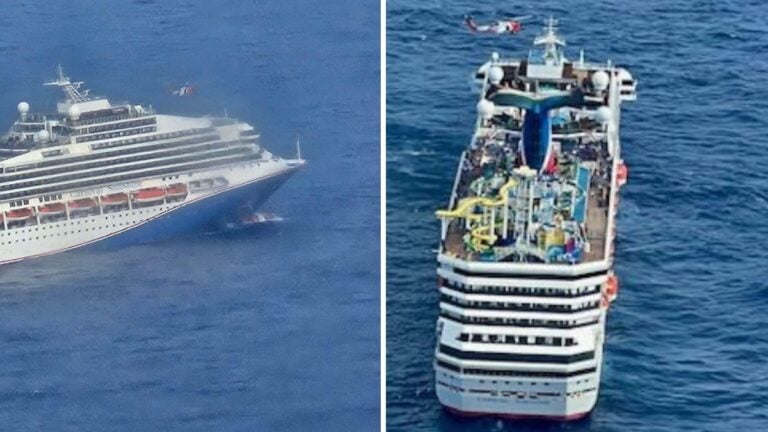
On the afternoon of April 27, 2024, only one day into the sailing, the 35-year-old crew member was taken to the hospital via a Coast Guard airlift. First responders from the U.S. Coast Guard met the Sunshine-class ship about 160 miles east of Jacksonville, Florida, while the ship was heading in the general direction of Port Canaveral (Orlando), Florida.
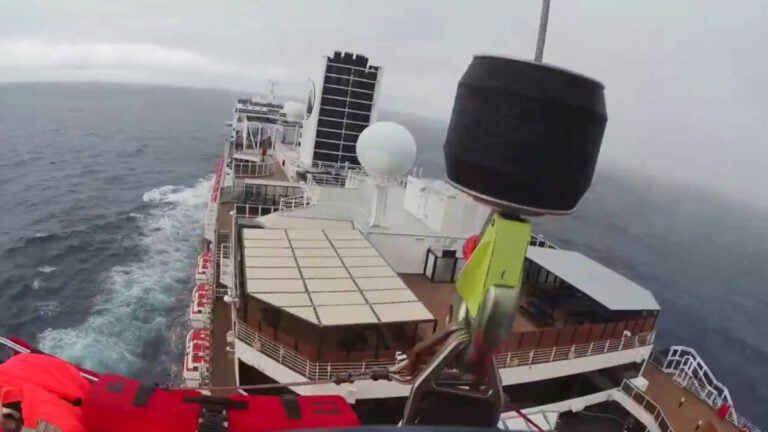
A helicopter could be seen hovering overhead as the crew member, along with a nurse, were hoisted onboard. The pair were then safely transported to Home Regional Medical Center in Melbourne, Florida, for the employee to receive further treatment.
Carnival Sunshine US Coast Guard Airlift (Courtesy: US Coast Guard)
“Earlier today, a U.S. Coast Guard Air Station Clearwater MH-60 helicopter crew medevaced a 35-year-old crewmember from the cruise ship Carnival Sunshine approximately 160 miles east of Jacksonville, Florida. The helicopter crew hoisted the ailing man along with the ship’s nurse and safely transported them to Home Regional Medical Center in Melbourne, Florida,”the U.S. Coast Guard Southeast posted on Facebook.
While the hope is that emergencies like this will never occur, it’s reassuring to see how cruise lines, like Carnival, and the U.S. Coast Guard have a strong working relationship to perform airlifts like this quickly when the need arises – allowing passengers and crew to receive proper care timely.
Carnival Sunshine Continues On With Bahamas Sailing
When the crew member became ill, the 102,853-gross ton vessel had only just embarked on a 5-night sailing the day prior on Saturday, April 27, 2024, from Charleston, South Carolina. But the rescue didn’t have any impact on this sailing’s Bahamas itinerary.
The medical evacuation occurred during a sea day, with the first port call still scheduled as planned for April 29 at Half Moon Cay, Carnival’s private island destination in the Bahamas. The 3,758-guest ship will also call on Nassau, Bahamas, before returning to Charleston on May 2 for the current passengers to disembark and to welcome a whole new round of cruisers.
Carnival Sunshine has been alternating between a series of four to 5-night round-trip sailings from Charleston, South Carolina, where she will be homeported through the end of the year, with the shorter version of the itinerary only calling on Nassau and forgoing the stop at Half Moon Cay.
With the exception of an 8-night Eastern Caribbean sailing that embarks on May 11 and a 6-night Bahamas cruise beginning on May 19 that includes an extra stop at Bimini Islands, Bahamas, the itineraries do not vary much.
It’s also worth noting that this sailing was not the first time this month that the Coast Guard had to intervene to make sure a passenger received the treatment they needed. On April 15, a pregnant woman sailing onboard Disney Fantasy was successfully evacuated about 180 miles northwest of Aguadilla, Puerto Rico, after onboard doctors felt she would receive better care on shore.
Even more recently, a 65-year-old male passenger was airlifted from Holland America Line’s Koningsdam on April 25 as the ship was sailing approximately 201 miles west of Tillamook, Oregon, en route to Victoria, British Columbia. The passenger had been injured several days previously, and his condition continued to worsen, although the details surrounding his injury have not been publicized.
In all of the recent incidents, the ailing passengers and the crew member were able to be transported to the nearest hospital safely and efficiently with the help of the U.S. Coast Guard.
A cruise vacation is an opportunity to unwind, relax, and indulge. With that said, cruises can get fairly pricey if you don’t know how to get the best deal. Knowing when to book your trip and how to save money while you are on board can greatly reduce your overall cost.
We will take an in-depth look at one of the most frequently purchased packaged deals on Royal Caribbean cruise ships – drink packages. Drink packages help passengers maximize their onboard experience while simultaneously staying within their vacation budget.
To help you, we’ll dive into the intricacies of Royal Caribbean drink packages, offering insights into the different types of packages that are available, when to purchase them to get the best deal, and how they can be such a savvy financial choice for cruisers who are planning to indulge.
The Best Time to Buy a Royal Caribbean Drink Package
Before we jump into the different drink packages Royal Caribbean offers, let’s determine when you can land the lowest prices. While it may surprise you, the best time to buy a Royal Caribbean drink package is right now.
This is due to the simple fact that you can cancel any package without penalty and repurchase it if the price goes down. While it’s true that Royal Caribbean offers sales and discounts throughout the year, these offers are never guaranteed. If a blowout deal is announced, just cancel your current package, then buy one offered through the sale.
Essentially, as long as you have purchased your drink package before boarding the ship, you will almost certainly end up saving money. Just keep an eye on price drops leading up to your cruise; this way, you can guarantee that you have got the best deal possible.
Sales on Drink Packages
With Royal Caribbean, drink packages tend to go on temporary sale through the Cruise Planner portal every few weeks. This is why it is so important to keep an eye on prices in the buildup to your trip.
Typically, discounts amount to 10, 20, or 30% off the regular price of the package, with particularly good sales emerging close to major shopping weekends, like Black Friday and Cyber Monday.
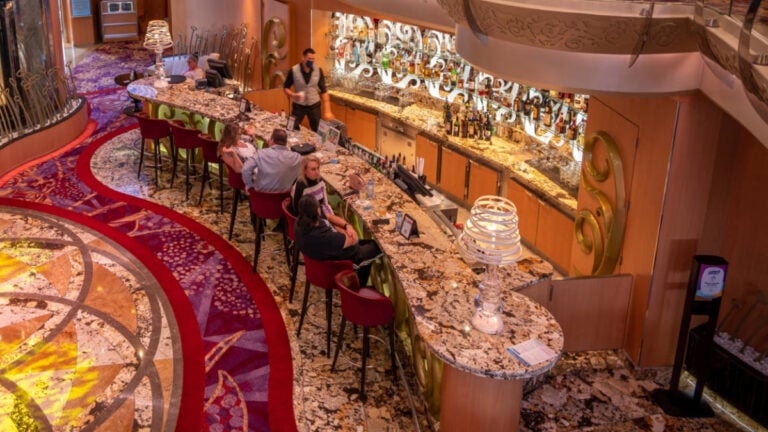
Drinks Bar on Royal Caribbean Cruise Ship (Photo Credit: Jeff Whyte / Shutterstock)
Different Drink Packages Available on Royal Caribbean Cruises
Like other cruise lines, Royal Caribbean offers several drink packages tailored to various preferences and budgets. Some packages cover non-alcoholic drinks alone and packages that include alcoholic beverages.
When you purchase one of their three drink packages, you get the benefits at every single restaurant and bar while you are on board the ship. The only exception is that some licensed Starbucks stands do not recognize drink packages; however, some restaurants serve Starbucks coffee, which would be covered by your drinks package.
Deluxe Beverage Package ($56 to $105 per person per day)
Coca-Cola Freestyle Beverages
Included
Included
Included
Fountain Sodas & Refills
Included
Included
Included
Reusable Coca-Cola Souvenir Cup
Included
Included
Included
Premium Coffees and Teas
Not Included
Included
Included
Fresh Squeezed Juices
Not Included
Included
Included
Bottled Still & Sparkling Water
Not Included
Included
Included
Non-Alcoholic Cocktails / Mocktail
Not Included
Included
Included
Milkshakes
Not Included
Included
Included
Alcoholic Cocktails, Spirits, Liqueurs, & Beer
Not Included
Not Included
Included
Wine by the Glass
Not Included
Not Included
Included
Additional Bundles
In addition to the three main Royal Caribbean Beverage Packages, you can upgrade your cruise experience in a few other ways. These packages allow you to customize your experience, as they bundle drinks with other upgrades, like Wi-Fi Internet access and bottled water that will be your cabin or suite.
Café Select Coffee Card
Designed for coffee lovers, passengers can buy this card to get their choice of 15 different espresso-based drinks anywhere onboard the ship. Plus, cardholders get a 50% discount on all specialty coffees not covered under the 15 drinks the card entitles them to.
Evian Bottled Water Package
This package ensures that Evian bottled water will be waiting for you in your stateroom when you board. You choose whether you want 12 or 24 one-liter bottles. If you want to enjoy a bottle of water in your cabin, these are well worth the upgrade.
Classic Soda + VOOM Single Device Package
Combine the benefits of the Classic Soda Package with unlimited VOOM high-speed Internet while you are on the ship. This package only covers one device.
Deluxe Beverage Package + VOOM Single Device Package
Get unlimited cocktails, domestic and imported beers, and a wide selection of wine, plus unlimited high-speed Internet on a single device.
Real-Time Drink Package Prices
Since prices vary according to when your cruise sets sail and whether or not Royal Caribbean is having a sale or promotions event, it’s essential to check real-time prices. Luckily, Royal Caribbean is fairly transparent with pricing for their drink packages.
Drinks on Royal Caribbean Cruise Ship (Photo Credit: Solarisys / Shutterstock)
Pre-cruise deals and live prices on drink packages can be found by signing into the My Royal Cruise Page on the Royal Caribbean website or by downloading and signing into the Royal Caribbean App.
Remember, even if you have already purchased a drink package, it’s important to continuously check package prices in your cruise buildup. This is the only way to secure the best deal on your preferred package. If you find a lower price, you can cancel your existing package and then purchase the same package at a lower price through the website or app.
How to Use the Royal Caribbean Cruise Planner
Royal Caribbean Cruise Planner is where you can book various add-ons, including drink packages and shore excursions. It is worth familiarizing yourself with how it works if you are looking to get the most out of your trip and maximize what you can get out of your budget.
Royal Caribbean’s Mariner of the Seas (Photo Copyright: Melissa Mayntz / Shutterstock)
To start, go to the Royal Caribbean Home Page and create an account. From there, click “Sign In” in the screen’s top right-hand corner. Once you have signed in, you can see the details of your upcoming cruise. From there, click “Plan My Cruise,” which will open various options you can click, including adding drink packages.
You’ll also be able to add other packages and credits, like pre-paid arcade tokens, VIP seating for events, spa treatments, and shore excursions. Browse around regularly in the buildup to your cruise, as prices can change, which will help you get the best deals.
When to Avoid Buying Your Drink Package
Waiting until the last minute to purchase your drink package is never a good idea, as you have far less flexibility. There isn’t enough time for the prices to go down, and most cruise lines, including Royal Caribbean, do not offer last-minute deals.
Sky Bar on Royal Caribbean’s Navigator of the Seas (Photo Credit: Darryl Brooks / Shutterstock)
You should also avoid buying a drink package while on the ship to avoid inflated prices. Buying ahead of time will almost always result in savings. Again, the best time to purchase a drink package is as soon as possible.
Royal Caribbean allows passengers to cancel and rebook drink packages before boarding without penalty, so buying early gives you the best possible chances of securing a good deal, especially if the cruise line decides to hike its prices before you sail!
Drink Prices Without a Drink Package
To illustrate the value of purchasing a drink package ahead of time, let’s look at typical prices for individual drinks on board a Royal Caribbean cruise ship.
It’s important to remember that drinks can be even more expensive in certain venues, and the following prices are listed before gratuity:
Type of Drink
Typical Price
Beer
$7.49 (Domestic), $7.99 (Premium / Import)
Glass of Wine
$9.00 – $25.00 (Depending on Type of Wine)
Bottled Water
$2.25
Mixed Drink / Cocktail
$10.00 – $15.00
Hard Cider
$7.25 – $8.50
Soda or Lemonade
$3.50
Specialty Coffee (Latte, Cappuccino, etc.)
$4.25 – $6.00
Fresh Squeezed Juice
$5.25
While these prices might not seem too bad in isolation, it is essential to remember that you will be on the ship for multiple days. In most cases, cruise passengers enjoy week-long trips, so drink prices can quickly add up.
If you remember, we discussed the prices of Royal Caribbean’s three main drink packages and the types of drinks each package covers. Even if you go with the most expensive option, the Deluxe Beverage Package, which can be as little as $56 per person, you can see how it wouldn’t take long to come out ahead financially.
For example, let’s say you are enjoying a specialty coffee, a glass of freshly squeezed juice, and a bottle of water with breakfast; you will have racked up $13.50 in drink charges before you start your day. Add in drinks at lunch and dinner, poolside refreshments, or even a night out at one of your ship’s many bars, and the total price can easily exceed the cost of your drinks package.
Remember, all three main drink packages are accepted at every restaurant and bar on the ship. Beyond the financial savings, think how liberating it would be not to worry about costs. Instead, you could order exactly what you want when you want it. Your cruise budget would stay the same.
Rules for Bringing Your Own Alcohol on a Royal Caribbean Cruise Ship
Across all Royal Caribbean vessels, guests are prohibited from bringing beer, hard liquor, or any other type of alcohol onboard for personal consumption.
Any alcoholic beverages seized on embarkation day will be returned at the end of the trip if they were unopened. Security can even inspect non-alcoholic containers to check if they contain alcohol.
Gangway for Royal Caribbean Cruise Ship in Port (Photo Credit: Felipe Sanchez / Shutterstock)
If you have purchased alcohol for souvenir purposes while visiting a port of call, you can voluntarily turn it in to be stored until the end of your journey. If guests are found hiding alcohol they purchased in port for personal consumption, they will have violated Royal Caribbean’s Guest Conduct Policy, meaning they could be at risk of being denied the ability to board the ship. This would be at the guest’s expense, so it is not worth the risk!
For the Water Drinkers
You can buy bottled water just about anywhere on the ship, but an easy way to save money is to get free glasses of water at buffets and dining rooms. Savvy cruisers can order this free water and then use it to fill personal reusable water bottles. You can also have bottles of water delivered to your stateroom or suite at a fee.
Tips for Saving Money on Drinking
Beyond weighing up whether or not a drink package makes financial sense and making sure that you purchase one before boarding if you plan on buying one, there are a few other tricks you can use to save money on drinks.
One strategy a lot of seasoned cruisers will use is to make sure that they enjoy alcoholic beverages while they are in port. Prices are almost always cheaper for drinks in port than they will be on the ship, especially if you visit countries with lower GDPs, like many of the Caribbean island nations.
Bar on Royal Caribbean’s Oasis of the Seas (Photo Credit: Solarisys / Shutterstock)
Royal Caribbean also allows two standard-sized bottles of wine or champagne per stateroom to be brought onboard. This is a one-time strategy when you board the ship; however, unlike many other cruise lines, like Carnival Cruise Line, Royal Caribbean International does not charge a corkage fee for these two bottles. Since you can easily purchase bottles of wine for less onshore than you can onboard, you should take advantage of this.
Unfortunately, Royal Caribbean does not offer “Happy Hour” discounts on alcoholic beverages, which is a common way to save money on alcohol while traveling with other cruise lines.
Drink Gratuities on Royal Caribbean
Gratuities of 18% and other service charges are automatically applied to drink packages during the final checkout stage. While you can always choose to pay additional gratuities while you are onboard, this is not necessary.
Pool Bar on Royal Caribbean’s Independence of the Seas (Photo Credit: Joni Hanebutt / Shutterstock)
For those not choosing to purchase a drinks package, an automatic service gratuity of $18.00 per person per day is charged in non-suite staterooms or a $20.50 charge for those staying in suites. This helps reward the staff, and the funds are shared equally.
Special Memberships for Free Drinks
Like other cruise lines, Royal Caribbean rewards guests with certain memberships. For example, Crown and Anchor Society Members will get vouchers for free drinks. By joining these membership programs, frequent cruisers can enjoy other perks and savings opportunities during their onboard experience.
Diamond, Diamond Plus, and Pinnacle guests also receive vouchers for complimentary drinks each day of their trip, with guests receiving four, five, and six drinks per day, respectively.
Alcoholic vs. Non-Alcoholic Drink Prices
As you would expect, alcoholic beverages are almost always priced higher than non-alcoholic drinks. While prices will vary from drink to drink, you can count on spending more money on alcoholic beverages than non-alcoholic ones.
For example, a frozen cocktail made with alcohol costs between $10 and $15, while a non-alcoholic “mocktail” version of the same frozen drink would cost $6 to $8.
Sports Bar on Royal Caribbean’s Independence of the Seas
For those looking to indulge in alcoholic drinks regularly during their cruise, it is a good idea to purchase a drink package that covers alcoholic beverages, as you will almost certainly save money.
Whether or not you choose to purchase a drink package will depend upon your personal budget and how much you plan on drinking while you are on board the ship; however, there are some basic pros and cons that can help make the decision easier:
Advantages of Drink Package
Potential Financial Savings: Most people save money on drinks by purchasing a drinks package.
Convenience and Ease of Budgeting: Not having to worry about mounting costs or adding up the price of each drink can enable a more carefree and convenient cruise experience.
Opportunity to Indulge: When you know the drinks are already paid for, you will be more inclined to indulge and make the most of your trip. Try different drinks and leave your financial worries behind you.
Disadvantages of a Drink Package
Risk of Overindulging: If you don’t want to over-consume alcohol, purchasing a drink package that covers alcoholic beverages might not be a good decision
Waste of Money if You Don’t Drink Enough: If you don’t drink enough, you may have spent more on your package than it would cost to purchase the drinks separately.
The pros outweigh the cons for most people, so drink packages are very popular on cruise ships. Weigh them up for yourself, and if you decide that purchasing one makes sense for your needs and budget, buy one as soon as possible!
Frequently Asked Questions (FAQs)
How can you get a Royal Caribbean drink package at a lower price?
Purchase your preferred package beforehand, then watch promotions and sales events for a cheaper price. If you find one, cancel your existing package and repurchase it at a reduced price.
Is it cheaper to buy a drinks package on board?
No, drink packages are rarely cheaper onboard the ship. Buying in advance is the most affordable way to get a drinks package.
What is the 3-1-1 Rule on Royal Caribbean?
You are allowed to bring a quart-size clear zip-lock bag of liquids and gels as carry-on items. These combined items need to be less than 3 ounces in total. The TSA introduced the 3-1-1 Rule, so it is not unique to Royal Caribbean ships.
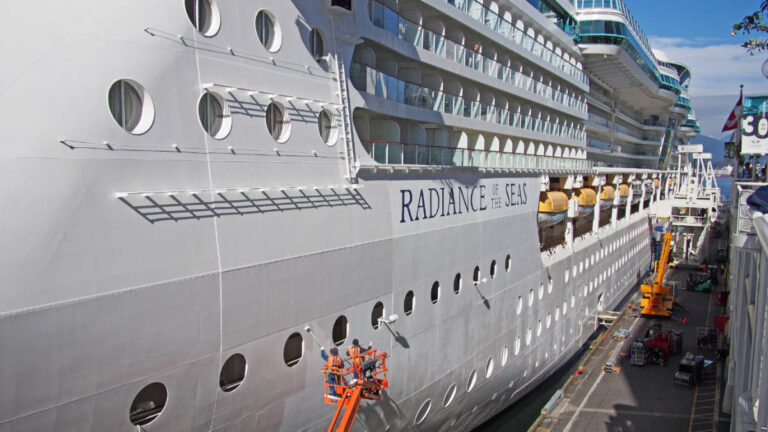
Royal Caribbean International has just notified guests onboard Radiance of the Seas that the ship will not, in fact, be departing as hoped for an abbreviated Alaskan sailing. The voyage is now cancelled and guests will be debarking the ship to be sent home.
As originally planned, the ship was to have departed from Vancouver, British Columbia on Friday, April 26, but an earlier adjustment due to technical difficulties meant that guests were permitted to board on embarkation day while the ship was to spend two days in port undergoing repairs.
The revised plan was to have the ship depart on Sunday, April 28, with an adjusted route and calls to Icy Strait Point and Ketchikan, along with scenic cruising in the famed Inside Passage, before returning on May 3 as per the original schedule.
Now, the entire sailing has been cancelled while the ship continues to undergo repair for a technical issue impacting its propulsion.
“Despite our best efforts, circumstances beyond our control have delayed our sailing further,”the letter delivered to guests’ staterooms said.“Your patience throughout this time [has] not gone unnoticed, and we are immensely grateful for your understanding.”
To compensate for the difficulties and late change of plans, all passengers will be provided with a 100% refund of their cruise fare as well as a 100% future cruise credit (FCC) that may be applied to any future Royal Caribbean sailing.
Internet service onboard the ship is also open and complimentary to permit guests to more easily arrange onward travel plans, and the ship is offering an open bar – no charge for drinks – until debarkation. Reimbursement is also being provided for change fees for airline reservations, as well as to help cover hotel costs.
The 90,090-gross-ton ship first developed propulsion difficulties on her repositioning cruise from Los Angeles to Vancouver just days ago. Visits to Astoria, Oregon and Victoria, British Columbia were scrapped to accommodate the ship’s slower cruising speed, and so she would reach Vancouver with extra time to implement repairs before her first Alaska cruise of the season.
Radiance of the Seas Cruise Ship (Photo Credit: VIDEOVISTAVIEW / Shutterstock)
That first cruise was then shortened as more time was needed to complete repairs.
“While repairs for the technical issue that we encountered on our previous sailing are still underway, we discovered that we’re going to need some extra time to get the ship in tip-top shape for you,”the notification letter for shortening the cruise read.
Guests were still permitted to board, with the expectation of finally setting sail and leaving Vancouver on Sunday, April 28. It should be noted that due to US Customs and Border Protection restrictions, travelers have not been permitted off the ship to explore Vancouver once they boarded the vessel on Friday.
Two days, however, does not provide enough time to implement appropriate repairs. Now, the entire cruise is cancelled, and guests will indeed be off the ship in Vancouver – to head home on Sunday. Passengers were notified of this decision on Saturday afternoon, just 24 hours before they will be required to debark the ship.
Eerie Similarities to Earlier Problems
These problems, including the shifting plans, shortened cruise, and last-second cancellation are eerily similar to propulsion problems Radiance of the Seas experienced at the end of August 2023.
Royal Caribbean’s Radiance of the Seas (Photo Credit: meunierd / Shutterstock)
For those cancellations, Radiance of the Seas was undergoing repairs in Seward, Alaska, as she had been alternating northbound and southbound cruises for the Alaska season, just as is planned for her 2024 season in the Last Frontier.
While there is no word yet on the ship’s next planned departure – the May 3 departure, a one-way voyage from Vancouver to Seward – guests booked on that sailing will want to stay alert for potential adjustments or possible cancellation in the days to come.
Radiance of the Seas is one of the older ships in the Royal Caribbean fleet, having first debuted in 2001. The vessel can welcome 2,143 travelers at double occupancy, or up to 2,466 guests when fully booked with all berths filled. She is scheduled to remain in Alaska through the end of September, then will make her way to Tampa to offer Bahamas and Western Caribbean itineraries.
While many assume that Bermuda is one of the many island nations in the Caribbean, it is actually a British Overseas Territory located in the North Atlantic Ocean.
Unsurprisingly, Bermuda is also a popular destination and departure point for many cruise lines. If you are considering booking a cruise in Bermuda, you will almost certainly stop at the Bermuda Cruise Port. To help you know what to expect, we will explain everything you need to know about the port. From the port’s location to descriptions of nearby attractions, this guide will equip you with all the essential information you need.
Do you want to learn how to make the most of your time in Bermuda? Let’s get started!
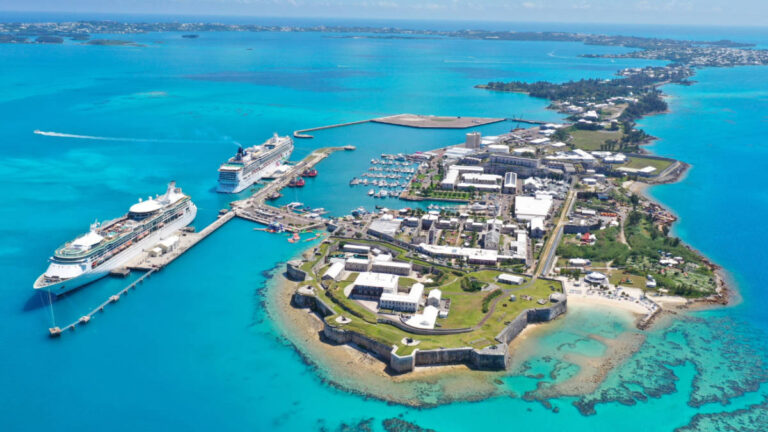
The Bermuda Cruise Port is a part of Bermuda’s historic Royal Naval Dockyard. The port was first built by Britain’s Royal Navy in 1795, so it almost acts as a fully functional naval museum. In addition to acting as Bermuda’s busiest cruise ship port, it is also home to the Bermuda National Museum and two major piers – King’s Wharf and Heritage Wharf.
Cruise ships almost exclusively dock along Kings Wharf, located along the small island nation’s western edge at 5 Freeport Drive, Sandys MA 01, Royal Naval Dockyard, Bermuda.
When discussing the location of anything in Bermuda, it’s important to remember that it is a tiny nation, so everything is relatively close. In fact, the entire land area of the entire archipelago is just 21 square miles.
The port’s cruise terminals are approximately 20 miles from Bermuda’s L.F. Wade International Airport, which cruise passengers can easily access via taxi, shuttle, or rental car. This drive usually takes about 45 minutes, mainly on the country’s main transitway, Middle Road.
Royal Caribbean Cruise Ship Docked in Bermuda (Photo Credit: Wangkun Jia / Shutterstock)
For perspective on just how small Bermuda is, the airport is on the other side of the country, but you can still easily reach it in under an hour. Although you can take the island-wide public transit bus, we recommend taking a taxi to and from the airport, as you will save a lot of time.
While traveling to and from the airport via taxi or rental car, you will enjoy some truly stunning views of the country’s coastal beauty. Once you arrive at the cruise port, you will have no trouble finding one of the three public parking lots within a short walk of the two main wharves.
Parking is also free; however, those leaving a car overnight must use the long-term lot beside the Clocktower Mall, a duty-free shopping destination built directly into an old British Navy facility.
Cruise Lines Operating Out of Bermuda Cruise Port
Since Bermuda is uniquely and conveniently located off the United States East Coast, it is an incredibly popular stop for many of the world’s most reputable cruise lines.
Photo Credit: Darryl Brooks / Shutterstock
Most of the major cruise lines offer itineraries that either visit or depart from Bermuda, including Royal Caribbean International, Celebrity Cruises, Carnival Cruise Line, Norwegian Cruise Line, and Disney Cruise Line.
Terminal Facilities and Services
Despite its small size, Bermuda punches above its weight economically. With one of the highest GDPs in the world, it is no surprise that Bermuda’s main port boasts modern infrastructure and well-equipped cruise terminals.
Expect a wide range of amenities to ensure you can enjoy a seamless and comfortable embarkation and disembarkation process. With spacious, air-conditioned waiting areas, modern restrooms, and public Wi-Fi, you will not have trouble navigating the terminals. With that said, Wi-Fi is not free, but multi-hour packages can be purchased through your device.
Bermuda Cruise Port and Terminal Facility (Photo Credit: Viktor Hladchenko / Shutterstock)
The cruise facilities are also designed to be mobility scooter and wheelchair-friendly, so all passengers can enjoy a convenient experience in the port. There are also well-marked taxi pickup lines just outside of the port facility.
As we will discuss in greater detail, there are also plenty of restaurants, convenience stores, duty-free shops, and even a museum located within the 24-acre Royal Naval Dockyard where the cruise terminals are situated, so there is plenty you can do if you arrive too early to board your cruise ship.
Seasonal Weather Conditions in Bermuda
Bermuda is a year-round travel destination, but knowing what temperatures and weather conditions you should anticipate is important. Not only will this help you decide when to book your cruise, it will also help you pack appropriately. Here’s a quick breakdown:
View of Bermuda Cruise Port from Cruise Ship (Photo Credit: Nazar Skladanyi / Shutterstock)
Summer Season (June to August)
Daytime temperatures usually range between 75° to 85° F, providing visitors with warm and pleasant conditions for exploring the island.While this is the most popular time to visit, the summer months also happen to be Bermuda’s wet season, with brief showers occurring at least once per week. Thunderstorms also occur; however, Bermuda rarely experiences serious tropical storms or hurricanes during the summer.
Pack light, breathable clothing. Don’t forget sun protection, as the UV rays can be quite intense during the summer in Bermuda.
Fall Season (September to November)
Bermuda cools off during the fall, with average daytime temperatures ranging from 70° to 80° F. The weather is still comfortable for outdoor exploration and activities, but it can cool off a bit at night, so you may want to pack warming clothing for the evenings.
Rainfall decreases, but showers can still occur. Light layers are recommended if you plan on being outdoors.
Winter Season (December to February)
While the temperature drops slightly, winters are still mild in Bermuda, especially compared to New York City, USA, where many visitors fly in from. Expect daytime temperatures between 65° and 70° F, with it dropping a further 10° F in the evenings. Rainfall is rare during the winter, but gusty winds can make it feel cooler than it is.
Light jackets and sweaters are a good idea; however, you may want short sleeves and light pants for the daytime.
Spring Season (March to May)
Temperatures slowly warm throughout the spring, with the average sitting between 70° and 75° F. With these warmer temperatures, tourism begins to ramp up. Rainfall also increases during the spring, but showers are brief and shouldn’t impact your outdoor plans.
While major storms are rare, it’s still a good idea to keep an eye on notifications from your cruise line about potential departure delays. Make sure you pack light, comfortable clothing and a sweater for the cooler evenings. Packing a rain jacket is also a good idea if you spend time outdoors in Bermuda.
Nearby Amenities and Attractions
We have already discussed the fact that it is possible to drive across the entirety of Bermuda in less than an hour, so it’s likely to enjoy everything the island has to offer, even if you are only there for a short time.
The Royal Naval Dockyard, Bermuda (Photo Credit: Gemma Fletcher / Shutterstock)
With that said, visiting cruise passengers can enjoy a wide array of shops, restaurants, cafés, and more just within walking distance of the port. The port serves as a gateway to Bermuda’s rich and unique history, with the Royal Naval Dockyard and the National Museum of Bermuda sitting directly beside the cruise port.
The Royal Naval Dockyard is Bermuda’s most visited site, which is unsurprising when you learn just how much you can do within the grounds.
History buffs can discover the important role the Dockyard played for the British Empire, as well as the role it played during the War of 1812 and the American War of Independence, by visiting theNational Museum of Bermuda. This vital link between the New and Old World functioned as the Royal Navy’s supply and staging point.
National Museum of Bermuda (Photo Credit: Wangkun Jia / Shutterstock)
The museum is less than a 10-minute walk from Kings Wharf and built into an oceanside fortress. The gardens and grounds surrounding the museum are well-maintained, and you can read plenty of outdoor exhibits to discover the island’s rich maritime history. The museum has two playgrounds on its grounds, so it is also a kid-friendly way to spend an afternoon.
If museums and statues aren’t your thing, there are plenty of other ways to stay entertained. Dolphin Quest Bermuda is beside the museum, making it closer to the cruise port.
Here, you can watch dolphin shows, feedings, and even pay extra to swim with dolphins! We highly recommendbuying your tickets online ahead of time, as they are in high demand.
By walking 10 minutes in the opposite direction of the museum and dolphin park, you can visit the Clock Tower Shopping Mall for duty-free shopping. There’s also the Bermuda Craft Market, Bermuda Fun Golf Park, and FryDay’s Trampoline Park.
Take time to try some Bermuda favorites at Anchor Restaurant, Bar & Lounge or Frog & Onion Pub. You’ll also find plenty of stands selling ice cream, cold drinks, and various other treats.
Port Distance from Popular Bermuda Attractions
If you want to go beyond the Royal Naval Dockyard and see more of the island, you can easily take a taxi or shuttle bus to some of the island’s most iconic sites and attractions.
We highly recommend visiting the picturesque town of St. George’s. Here, you’ll find the first English settlement and a functioning town that acts as a UNESCO World Heritage Site. Given that the town and its well-preserved colonial buildings are just 12 miles from the cruise port, it is worth visiting.
Gibb’s Hill Lighthouse (Photo Credit: Hillbillypirate / Shutterstock)
Horseshoe Bay Beach and Gibb’s Hill Lighthouse are both about 8 miles away, so even with Bermuda’s notoriously slow speed limits, you should be able to reach them with a 20-minute cab ride.
Turtle Hill Golf Club can also be found here, so if you’d like to rent some clubs and enjoy golfing island-style, the area is a great place to spend the day.
We also recommend visitingthe Crystal Caves to see one of the island’s most incredible natural features. This underground cave system has inspired artists for centuries. Even though it is on the other side of the archipelago, it’s still less than an hour’s drive.
Popular Beaches and Transportation to Them
Beachgoers will rejoice when they discover just how many pristine beaches Bermuda is home to.
Snorkel Park Beach is located within walking distance of the cruise port, while others will require taking a taxi or shuttle. Horseshoe Bay Beach is renowned for its pink sand and turquoise waters. As discussed, it’s about a 20-minute cab ride.
Elbow Beach is another popular spot, as it’s just outside Hamilton, the capital city of Bermuda. Hamilton and the beach are about a 30-minute cab ride away, so they’re easily accessible.
Horseshoe Bay Beach, Hamilton, Bermuda (Photo Credit: Deron Levy / Shutterstock)
If you really want to explore the full breadth of the island, you can find your way to Tobacco Bay Beach, which is on the other side of the island. While quieter than the other beaches, it offers amazing snorkeling and unique rock formations.
The rocks protect the beach from major waves, making it a breeding ground for tropical fish and sea turtles. It may be nearly an hour’s drive away, but the beach is also bookended by Fort St. Catherine and the Five Forts Golf Club, so there is plenty to do nearby.
Transportation in Bermuda
Bermuda may be small, but there areplenty of ways to get around. One of the most interesting ways to explore the island is to rent an electric microcar. These little cars are an affordable and fun way to whiz around the island and explore everything it has to offer. Rentals are available just outside of the cruise port.
Bermuda Cruise Port (Photo Credit: Gemma Fletcher / Shutterstock)
You can also download the Hitch App, a Bermuda-specific ride-share app that functions like Uber. You will get fare estimates and live updates on arrival times. You’ll also notice plenty of taxis hanging around the ferry terminals, and they can take you anywhere on the island.
There are also four public ferries that can take you around Bermuda. They save time and offer a unique way to get around. A major ferry terminal is right beside the cruise terminals, so you can easily get from one side of the island to the other.
Shopping Near Bermuda Cruise Port
Unlike many of the islands in the Caribbean, Bermuda has a high standard of living. This means the island is covered with stores and shops selling designer clothing, jewelry, and accessories.
If you want an iconic memento of the island, visit stores carrying Bermuda’s most notorious exports. Lili Bermuda Perfumery has been selling locally-made perfumes in St. George’s since the 1730s.
Downtown Hamilton, Bermuda (Photo Credit: Colin N. Perkel / Shutterstock)
No visit to Bermuda is complete without picking up a pair of Bermuda’s most iconic fashion stable – Bermuda shorts. TABS Bermuda is known to carry the most authentic pairs and is located in the heart of downtown Hamilton. However, you can find TABS shorts in just about any clothing retailer on the island.
Remember, shoppers don’t have to travel far, as there is a full-scale mall right inside the Royal Naval Dockyard.
Dining Near Bermuda Cruise Port
Again, Bermuda has a high GDP, so dining out at restaurants is normal for residents and visitors alike. You’ll find upscale restaurants scattered throughout the island, especially in the main population centers.
If you want to try a true taste of the island, fried fish sandwiches are a national obsession. Art Mel’s Spicy Dicy arguably serves up the most authentic Bermuda-style fish sandwich, and it is located in Hamilton. There’s also The Swizzle Inn, the oldest pub in Bermuda.
The Swizzle Inn Pub, Bermuda (Photo Credit: Big Blink Creative / Shutterstock)
For a more formal dining experience, check out Village Pantry Restaurant. With locally sourced ingredients and a refreshingly unique atmosphere, this island favorite can also be found in Hamilton.
For those not looking to travel far, Anchor Restaurant Bar & Lounge or Frog & Onion Pub are great options located within the Royal Naval Dockyard just steps away from the cruise port. Make sure you order a Rum Swizzle, the official cocktail of Bermuda.
Frequently Asked Questions (FAQs)
Can you walk to the beach from Bermuda cruise port?
Yes, Snorkel Park Beach is just a short walk from the cruise port, while other beaches require transportation via taxi, ferry, or microcar rental.
What part of Bermuda do cruise ships dock?
Cruise ships dock on the island’s western end in the parish of Sandys. It’s the same port the British settlers and navy used for hundreds of years.
Do you have to book an excursion in Bermuda?
While booking ahead of time isn’t mandatory, it’s a good way to ensure that you get to experience the exact type of excursion you would like. Bermuda is a popular destination, so certain activities can be booked ahead of time. Most cruise lines allow you to book through them, which is a good idea, as it ensures you will be returned to your ship in time for departure.
As with the majority of the mainstream cruise lines, Carnival Cruise Line has been prioritizing sustainability measures, including moving up its greenhouse gas reduction goal of 20% by four years from 2030 to 2026.
Of course, one of the best ways to combat pollution-induced climate change is by planting trees, which remove carbon dioxide from the air and release clean oxygen back into the atmosphere. This is something Carnival is keeping in mind for its new private destination in the Bahamas, Celebration Key.
The 27-ship cruise line has completed the first phase of its ‘Plant a Tree’ initiative, which launched in October of 2023 and has met its goal in April of 2024, taking just about six months.
Throughout the process, the company has been collaborating with local farmers and growers to beautify its part of Grand Bahama Island while also supporting the local economy. During Phase One, the company bought 5,000 palm trees, all of which were grown on the island from seed, with 40% coming from small-scale community growers.
Throughout Phase One, Carnival also hosted a tree planting event weekly, during which top growers involved with the initiative were given awards for their contributions and gifted commemorative shirts and free dinners. All honorees will also be invited to visit the fruits of their labor in Celebration Key when the private destination opens in 2025.
“We are very thankful for this initiative as it has allowed us to profit from working on the land. I want to thank Carnival for believing in Bahamians and supporting the efforts of local growers in a meaningful way. It is also a source of pride to know that the development will be beautified by native plants, born and raised in Grand Bahama,”said Leslie Saunders, a local grower who has sold more than 200 plants to Carnival Corporation through the initiative.
Tree Planting at Celebration Key
Carnival is now kicking off Phase Two of its program, and is seeking a variety of 200,000 locally grown plants to continue to bring Celebration Key to life. Instead of palm trees, the cruise line is shifting its focus to gathering Gumbo-Limbo, Seagrape, Silver and Green Buttonwood, Green Island Ficus, and Bougainvillea in different colors.
“Once again, we are calling on the Grand Bahama community to participate actively. “We are looking for plants with good foliage and roots, among other quality requirements so bring us your best green thumb efforts,” said Raquel Mota, Senior Port Services Manager with Carnival.
“We want to showcase the very best of the natural splendor of Grand Bahama at Celebration Key to our guests, while also creating economic opportunities for Bahamians. Together we can create a vibrant, sustainable environment that benefits both locals and visitors alike,”added Mota.
Phase two of the ‘Plant a Tree’ initiative will officially kick off on May 9, 2024, with Carnival encouraging local growers to reach out in advance to start discussing landscaping needs and what they can offer to the project.
Carnival’s New Private Destination Is Expanding Before It Even Opens
Guests will get the chance to enjoy the beautiful foliage, as well as a variety of luxurious experiences and amenities, when Celebration Key opens in Summer of 2025.
Carnival’s new flagship cruise port destination, which is located on Grand Bahama about 200 miles west of Nassau and 55 miles from Southwest Florida, will likely be very popular from the get-go.
Carnival has already unveiled itineraries that include more than 500 visits to the Bahamian destination across 12 ships, with sailings scheduled from the beginning of July 2025 and into 2026. The cruise line expects to welcome 2.2 million guests to Celebration Key in its first year, and estimates that number will rise to as many as 4 million in 2028 – largely because an expansion for the island is already in the works.
In addition to the $600 million (USD) the cruise company has already invested in the island destination, it’s already shelling out another $100 million to extend the pier so that it can accommodate up to four ships at a time, including the extra-large members of the Carnival Excel-class.
Carnival Cruise Line’s Celebration Key
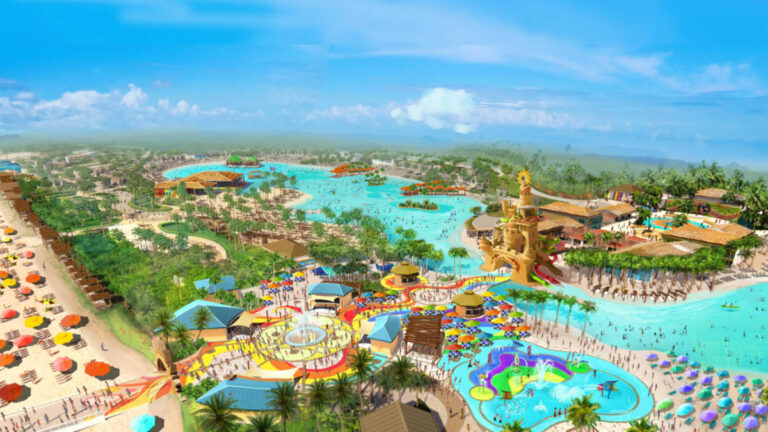
In addition to enjoying the locally grown plant life, visitors to the island will get to experience different aspects of Bahamian culture through five unique portals. Guests will enter the destination through the first portal, Paradise Plaza, which is a boldly colorful entryway that leads the way to idyllic vacation selfies and waterslides galore – including the 10-story high “Suncastle” from where the slides will originate.
Adults will also be able to enjoy the water or relax on loungers or in cabanas at Calypso Lagoon, which will also feature private restaurants, casual snacks, and Bahamian food trucks.
Meanwhile, those looking for authentic souvenirs to take home can pay a visit to the marketplace in Lokono Cove, which will offer a variety of souvenirs, jewelry, and art meant to allow guests to take a piece of Grand Bahama’s rich heritage and creativity home with them.
However, as guests enjoy the island, Carnival will continue to work to support the local economy. To start, 75% of all Celebration Key outlets will be owned and operated by Bahamaians, including those in Lokono Cove.
Additionally, Carnival expects its new destination to provide over 700 permanent jobs for locals in food and beverage, retail, and transportation – adding to the more than 2,500 jobs already created as part of Celebration Key’s development and construction.
A 65-year-old male guest was successfully evacuated from Holland America Line’s Koningsdam on Thursday, April 25 as the ship was sailing approximately 175 nautical miles (201 miles / 324 kilometers) west of Tillamook, Oregon, while the ship was en route to Victoria, British Columbia. The guest had been injured several days earlier and required greater continuing medical care than was available on the ship.
Other passengers onboard Koningsdam reported that there had been announcements made seeking blood donors, though the nature of the guest’s injury was not disclosed.
The US Coast Guard 13th District Pacific Northwest sector responded to the call for an evacuation and dispatched an aircrew from Astoria, including two members from the Life Flight Network, to meet the ship and airlift the guest while an aircrew from Sacramento provided support.
The challenging operation was carried out safely, and the guest was transported to Oregon Health & Science University Hospital in Portland. Details on the guest’s condition have not been released in order to safeguard his privacy and that of his family members and traveling party.
Holland America Coast Guard Airlift (Credit: US Coast Guard)
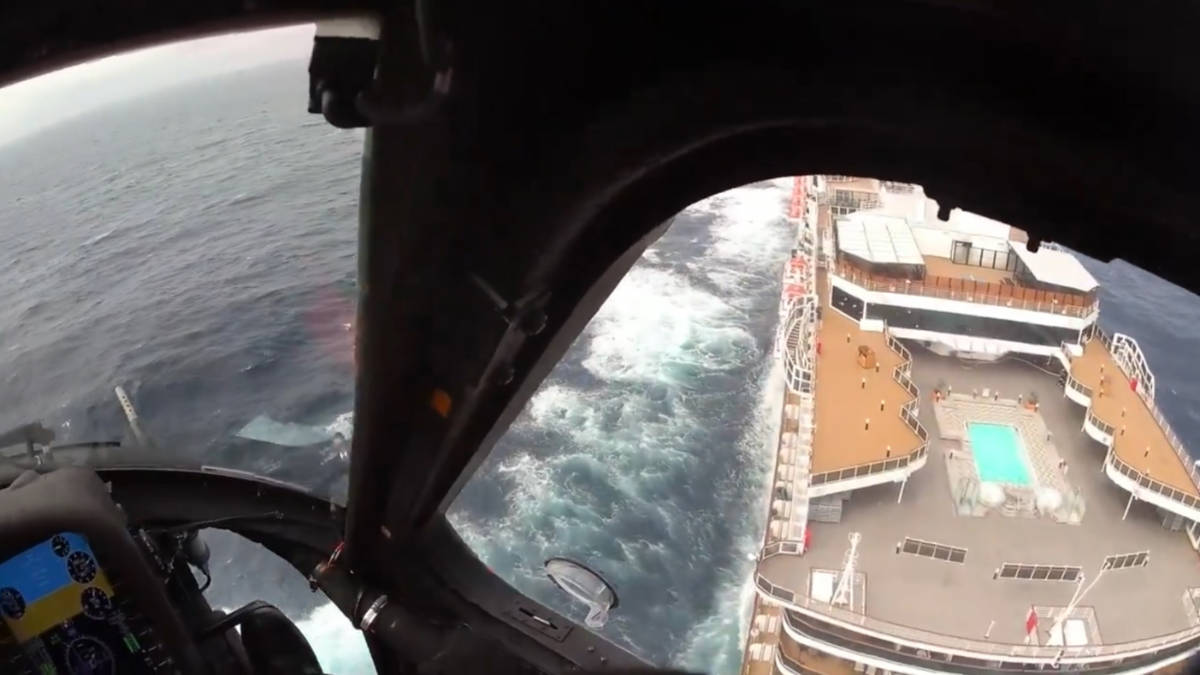
Outstanding video footage of the incident was captured by the rescue and evacuation team, giving a firsthand perspective of what these operations entail and how difficult maneuvering safely can be. At all times, however, the patient’s safety and that of the team remain a top priority.
“We were onboard and witnessed the professionalism and precision as both the Crew and Coast Guard coordinated this operation,”passenger Cindy Gilbert posted with another brief video of the incident.
Koningsdam was nearing the end of her 22-night sailing that departed from San Diego on Friday, April 5. The ship visited Cabo San Lucas and Mazatlan in Mexico before heading to Hawaii for several days, then turning north toward Canada. The call to Victoria on Friday, April 26 is the last on the current itinerary, and the ship will arrive in Vancouver as scheduled on Saturday, April 27.
We were onboard and witnessed the professionalism and precision as both the Crew and Coast Guard coordinated this operation….well done team 🇺🇸 pic.twitter.com/BqIdbn1cnT
Despite the slight diversion for the medical evacuation, the ship did turn toward the coast to meet the USCG team as quickly as possible, and there was no delay in reaching Victoria. The ship’s arrival in Vancouver is also unaffected.
This sailing is Koningsdam‘s repositioning voyage to put the ship in position for the Alaska sailing season. The 99,863-gross-ton ship will remain homeported from Vancouver through September, offering 7-night Inside Passage cruises with visits to Juneau, Skagway, Ketchikan, Glacier Bay, and other top Last Frontier destinations. The Pinnacle-class ship can welcome 2,650 guests aboard for each sailing.
Amazing At-Sea Rescues
Several notable at-sea rescues have been carried out in recent months, showcasing the dedication and skill of USCG rescue teams.
In May 2023, a hazardous rescue was safely accomplished when a 76-year-old man was airlifted from Carnival Dream on rough seas. Conditions for that incident were so treacherous that the aircrew had to abort the first rescue attempt and another crew returned when the weather eased.
While no cruise traveler expects a medical emergency during their oceangoing vacation, those that do find themselves in dire circumstances can rely on the expertise and dedication of cruise ship medical personnel and USCG rescue teams to ensure that safe evacuations are possible when necessary.
Venice, Italy, has introduced an access fee for day tourists to manage over-tourism on its busiest days. The fee aims to reduce crowds in the historic city and preserve its fragile sites. This also includes visitors coming from cruise ships.
Venice’s New Strategy Against Over-Tourism
Starting April 25, 2024, Venice has implemented an access fee for tourists visiting the city on select high-traffic days, aiming to mitigate over-tourism. This fee applies to all day visitors, including cruise ship passengers, except those exempt, such as local residents, minors under the age of 14, and cruise passengers staying overnight.
Tourists will need to register online and obtain a QR code, paying €5.00. This initiative is part of a broader strategy to encourage visits during less congested periods and ensure the preservation of Venice’s cultural heritage as a World UNESCO site.
However, there is no cap on the number of people who may access the city each day. Venice has witnessed surges of 30,000 to 40,000 people arriving daily during spring and summer months. The majority of traffic descends upon the main island, Centro Storico, nearly doubling the population of the island, measuring just over one square mile.
“The whole world would like to visit Venice, and this is an honor for us. But not everyone in the world is able to do so on the exact same day,” stated Simone Venturini, the city’s tourism councilor, to CBS News.
Venice has implemented an access fee for day visitors (Photo Credit: Oleg Senkov)
The fee will not apply to travelers from late afternoon until the next morning, allowing flexibility for visitors arriving or departing outside peak hours. The fee does, however, affect cruise passengers who arrive for a day on ships calling in the area.
Understanding the Tourist Fee Implications on Cruise Passengers
The Venice Access Fee is operational from 8:30 a.m. to 4 p.m. on 29 designated days in 2024. These periods are peak times for ships to call in a port and for passengers to go ashore for excursions.
Passengers arriving between April 25 through May 5; May 11 and 12, 18 and 19, and 25 and 26; June 8 and 9, 15 and 16, 22 and 23, and 29 and 30; and July 6 and 7 and 13 and 14 will have to pay €5.00 per person.
Exemptions are available for cruise passengers embarking or disembarking in Venice who have proof of overnight accommodations, as well as persons with disabilities and their travel companions.
The first cruise scheduled to arrive during the designated days are MSC Cruises’ MSC Sinfonia and MSC Lirica, each weighing just over 65,000 gross tons and calling on April 27.
MSC Lirica in Venice
Sinfonia accommodates 2,646 passengers and 721 crew members, many of whom also go to shore during calls. MSC Lirica houses up to 1,984 passengers and 721 crew. If every person on a sold-out cruise were disembarking for the day, it would result in €23,150 in access fees.
The introduction of the fee has been met with mixed reactions, with many arguing it will not significantly deter tourists from arriving in the city. Protestors argue the fee without limitations to the number of visitors will turn Venice into a “theme park.” Residents marched through Venice’s main bus terminal and entryway as the fee was implemented with banners reading, “No to Tickets, Yes to Services and Housing.”
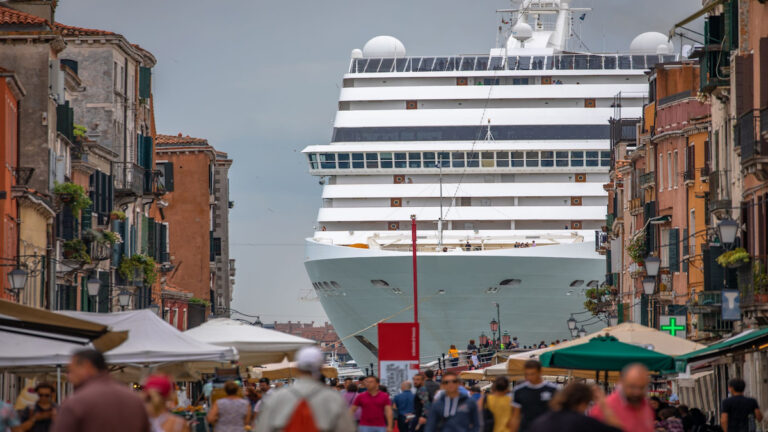
This isn’t the first time Venice has made significant adjustments that have affected cruises. In August 2021, the city imposed a ban that specifically stops ships over 25,000 gross tons, longer than 180 meters, and taller than 35 meters from docking in the historical city center.
This regulation affected a broad group of cruise lines, particularly Norwegian Cruise Line, MSC Cruises, and Royal Caribbean. The ban redirected the cruise lines’ large vessels to nearby Porto Marghera.
The Radiance of the Seas sailing scheduled to depart from Vancouver on April 26, 2024, has been postponed, with a new departure set for April 28. However, passengers have been asked to board the ship as scheduled and spend the first two days of the cruise in port.
Royal Caribbean Alters Schedule of Radiance of the Seas
Royal Caribbean International has announced a change to the Radiance of the Seas departure schedule. Originally slated to set sail from Vancouver, British Columbia, on April 26 to start a summer season in Alaska, the ship will now depart on April 28.
The postponement is due to ongoing propulsion repairs that caused Radiance of the Seas to cancel port calls on this week’s repositioning journey from Los Angeles to Vancouver.
Royal Caribbean said in a letter to booked guests, “While repairs for the technical issue that we encountered on our previous sailing are still underway, we discovered that we’re going to need some extra time to get the ship in tip-top shape for you.“
The ship cancelled port calls in Astoria, Oregon, and Victoria, British Columbia, to head straight to Vancouver to address the issue, but repairs are taking longer than anticipated to correct. With continued propulsion issues, the ship’s maximum speed of 25 knots was drastically reduced to 16, delaying the repositioning cruise’s arrival.
Royal Caribbean added, “We’re terribly sorry for this last-minute change. We understand this news is disappointing, but we hope you’ll join us on the alternate itinerary planned.”
Itinerary Changes Will Keep Passengers on Board Docked Ship
The revised 7-night Alaska itinerary will see Radiance of the Seas spend two extra days in Vancouver, with passengers aboard the ship while it remains in port for repairs. The ship will depart at 4 p.m. on April 28 to begin its journey.
Originally slated to sail to Juneau, Hubbard Glacier, Icy Strait Point, and Ketchikan on the roundtrip voyage, Radiance of the Seas will now offer a scenic cruising of the Inside Passage before reaching Ice Strait Point, Alaska, on April 30 and Ketchikan on May 1.
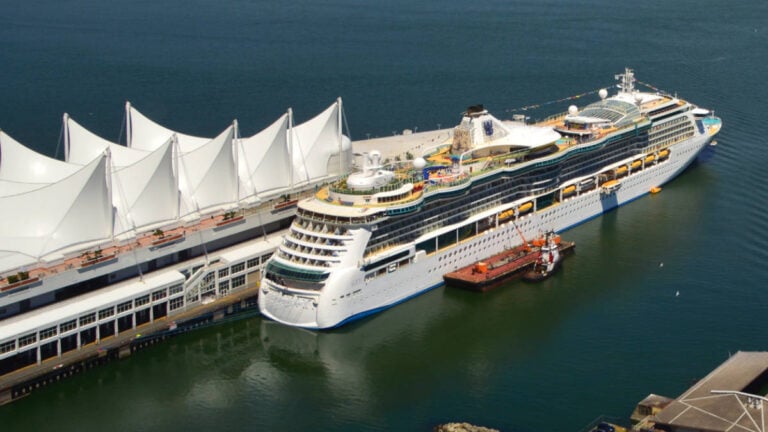
Radiance of the Seas In Vancouver (Photo Credit: Macklin Holloway / Shutterstock)
The ship will cruise through the Inside Passage a second time before concluding in Vancouver on May 3. This altered route eliminates the call in Juneau, initially slated for April 28.
The delay is compounded by U.S. Customs and Border Protection restrictions, necessitating the terminal’s closure at 5 p.m. on boarding day. While the boarding process is not be affected and proceeded as planned on April 26, guests cannot leave the ship once they have checked in and are boarded.
In response to the delay, the cruise line has extended activities available to guests. These include special curated programs to entertain guests staying on the ship during the extended stay in Vancouver. The opening of the onboard shops and casino will occur after setting sail on April 28.
“Our Activities Team is putting together some incredible programming to entertain you,” said the cruise line.
Radiance of the Seas (Photo Credit: Stories In Light)
The original setback for Radiance of the Seas began on April 23, forcing the ship to bypass stops and head directly to Vancouver in hopes of arriving ahead of schedule. The early arrival was planned to allow for the necessary maintenance and repairs before the Alaskan sailing.
Passengers currently onboard the weakened ship have been assured the ship remains seaworthy and safe, albeit slower, and were provided full refunds for pre-shore excursions in the missed ports as onboard credit, as well as a 50% refund of the cruise fare, also as onboard credit.
Passengers aboard the Alaskan cruise have not been offered compensation or refunds.
Following a successful winter series of Caribbean cruises from Florida, Celebrity Ascent, the newest Celebrity Cruises’ ship and fourth in the line’s popular Edge class, is about to arrive in Europe for her inaugural summer season. Itineraries will feature exotic destinations across the Mediterranean, with multiple embarkation ports.
Celebrity Ascent Will Spend Summer 2024 in the Med
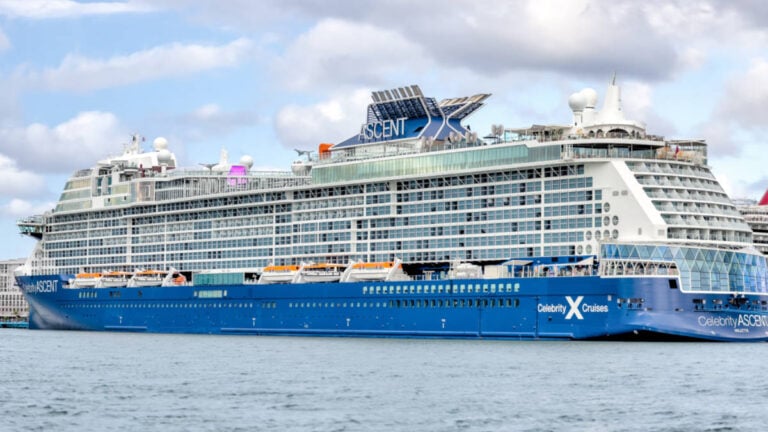
Celebrity Cruises’ newest ship, the 3,260-guest Celebrity Ascent, is completing a transatlantic crossing from her winter homeport of Fort Lauderdale, Florida, and is due to arrive in Barcelona on April 27, 2024.
The fourth in the line’s Edge class, Celebrity Ascent offers guests a premium experience, with high-end dining venues, entertainment, and The Retreat, an exclusive, luxury area with spacious suites and private sundeck, restaurant, and lounge spaces.
Her first sailing in the Mediterranean will be a 9-night Italian Riviera and France itinerary, departing on April 27, 2024 and featuring an overnight at La Spezia, where guests will have ample time to tour Florence and Pisa, Italy.
“We’re bringing our latest and greatest Edge Series ship to Europe, enabling guests to discover this diverse region with its stunning coastlines, while enjoying Celebrity Ascent’s premium facilities, elevated food and drink experiences, and wonderful entertainment.” Said Laura Hodges Bethge, president of Celebrity Cruises.
Celebrity Ascent will operate 7- to 12-night voyages in the Western and Eastern Mediterranean, and the Aegean, while offering three embarkation ports — Barcelona, Rome (Civitavecchia), and Athens (Piraeus).
A 7-night Greece, Turkey, and Italy cruise, for example, with two departures in July, will depart from Rome and call at Naples, Italy; Mykonos and Santorini, Greece; and Kusadasi, Turkey; before concluding in Athens.
Celebrity Ascent Resort Deck
The ship has a special connection to Greece since the vessel’s two co-captains are Greek — and they are brothers as well. In an industry first, Captain Dimitrios Kafetzis and Captain Tasos Kafetzis each will serve three-month rotating assignments at the helm of the ship.
In another industry first, Celebrity Ascent had two godmothers when she was christened in December 2023 at Port Everglades. The co-godmothers were Captain Sandy Yawn, from the well-known TV series “Below Deck,” and her sister Michelle Dunham, the founder of the Jacksonville School for Autism.
The ship will sail European itineraries until October 26, 2024, when she departs on a transatlantic voyage back to Fort Lauderdale. Her winter 2024-25 season from the Florida port will feature 7- and 9-night Caribbean and Bahamas itineraries. The ship is scheduled to return to Europe for summer of 2025.
Celebrity Ascent Features Edge-Class Favorites
Celebrity Ascent offers guests a choice of 32 dining venues, bars, and lounges. Known for its cuisine, the cruise line partners with celebrity chef Daniel Boulud, who serves as the line’s Global Culinary Ambassador.
Boulud has created many of the fleet’s menus and launched the restaurant at sea called Le Voyage, which debuted onboard Celebrity Beyond, the line’s third Edge class ship that launched in 2022. The fine dining venue was given a new look for Celebrity Ascent.
Celebrity Ascent Cruise Ship
New experiences aboard Celebrity Ascent include a plant-based tasting menu at the Eden dining venue and an outdoor space that was added to Blu, the restaurant reserved for AquaClass guests.
AquaClass is a premium accommodations option that provides guests with access to the ship’s SEA Thermal Suite and a spa concierge, plus a free fitness pass, special rates on spa packages, bottled water service, and other perks.
The new ship also features another Edge-class favorite — The Magic Carpet, a cantilevered multi-purpose space that serves as a bar and al-fresco dining venue offering scenic views of land and sea. It is a popular spot for sailaway events as well.
Entertainment options include three theater productions, nightclub-style deck parties, a Las Vegas-style casino, and a variety of performances featuring singers, dancers, and other artists.