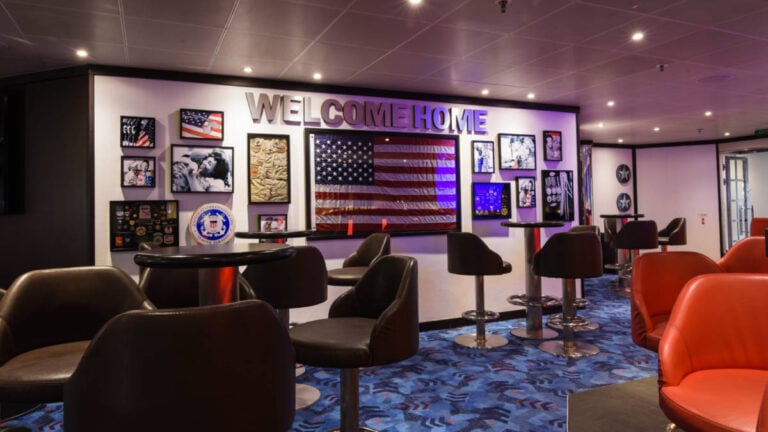
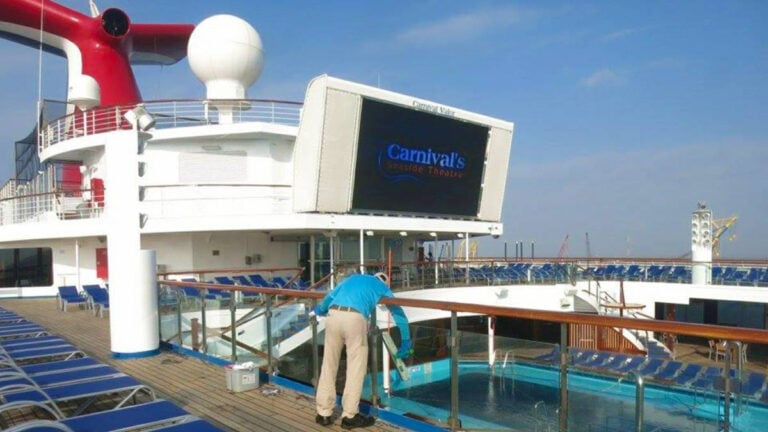
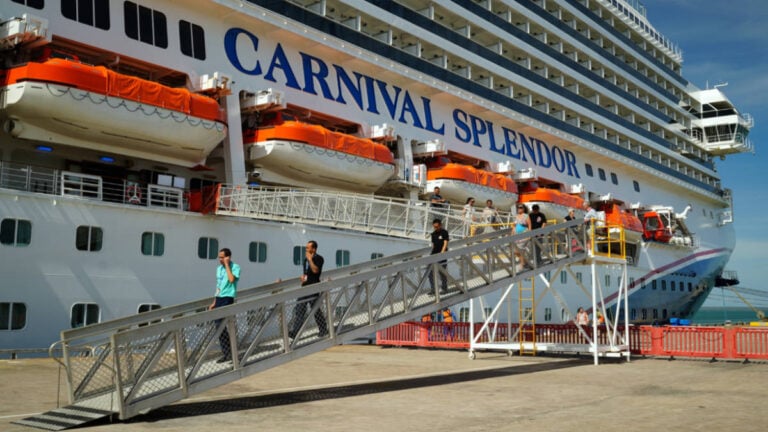
As a brand, Carnival Cruise Line deeply respects its guests who have served in the military, are actively serving, or are part of military families – which is why a Military Appreciation Gathering is held on every single sailing.
However, one veteran – who was clearly misinformed about Carnival’s policies – took it as an insult that non-military passengers were allowed to attend the gathering to show their respect for current and past service members.
He made his anger known in a rather hostile message to Carnival Brand Ambassador John Heald on his Facebookpage.
“Having not been informed of this at the time of booking I find this extremely disappointing that Carnival Cruise Lines have made the deplorable decision to allow non serving passengers to walk into the military veterans event,”the unidentified veteran wrote.
His top complaint was that this enabled non-service members to enter the raffle for a free cruise – through which Carnival awards a lucky veteran or active service member with a free cruise on a monthly basis. All qualified guests have to do to enter is swipe their Sail & Sign card at the Military Appreciation event.
“This does thin out the chances of decorated military veterans entering the win the cruise raffle when any common Joe can enter a ticket…Perhaps if you had not been a coward and had served your country when it needed you then you would be more sympathetic. Carnival in recent years has reduced its Veterans gathering to almost nothing,”continued the angry cruiser.
Heald responded with much more respect than he was given – but made it a point to correct the misinformed guest.
“Thank you sir and thank you for your service and for the courage you had to do so. We only allow military veterans to take part in the raffle and the winners’ military credentials are checked before we award the cruise,”Heald replied.
Indeed, the winner of the free cruise must submit documentation to prove they have or are currently serving before Carnival hands over the award. If the person is not eligible to receive the free cruise, a new name is drawn.
Should Non-Military Guests Be Allowed at Military Events?
As recently as the end of October, another cruiser was frustrated by what he perceived as “stolen valor” when non-military passengers attended the Military Appreciation Gathering.
“I am curious Heald if you are aware of something that is everywhere in these United States. Stolen Valor. This is when someone is a military imposter. He will wear a uniform to get attention because they are sick in mind and soul. My relevancy here is about your raffle for veterans to win a free cruise,”the guest wrote at the time.
Carnival Cruise Line Veterans Event (Credit: Carnival Cruise Line)
Heald, of course, confirmed that proof of service had to be verified before the prize would be awarded – and likely thought he was done with the matter until the latest incident with the angry veteran.
This latest complaint also re-raises the question of if non-military personnel should be allowed to attend the events – if only to express their gratitude to service members and their families.
“We always attend the military appreciation event when we cruise. We want to show our gratitude, respect, and pride in the sacrifices made by those who served and their families. My husband and I never served, but have had multiple family members that have,”one cruiser replied in the comments section of Heald’s latest post.
At the time of the October controversy, Heald also put a poll on his Facebook page to ask his followers if non-military guests should be allowed to attend.
Within just about an hour of posting the poll, more than 7,000 votes agreed with the idea that “the veterans gathering should be for all guests to attend” while just over 2,100 votes preferred “the veterans gathering should only be for veterans and not open for everyone else.”
On December 12, 2024, a popular cruise vlogger named Rinell Banda made waves by calling for crew members to get one day off per month – which he says is necessary for the mental and physical well-being of the employees.
“I think it should be taken into consideration, each Carnival employee get one full day off work per month to recharge and feel their best. Right now they work seven days a week for months and months with just a few hours off here and there,”one of Heald’s followers wrote to the brand ambassador.
But while Heald appreciated the care and consideration for the crew members, it simply isn’t practical to give everyone onboard a full 24-hours off – especially for particularly busy positions like cabin attendants and waiters.
“It depends on the position of the crewmember. They all have blocks of time off and if we’re referring, for example, specifically to a cabin attendant or a waiter, we cannot give them one [full] 24 hours day off. This would severely impact the guest service,” Head wrote in response.
In response to Heald’s comment, some insisted that there must be a way to accommodate a single day off for all crew members – implying the cruise line wasn’t willing to put in the effort to do so.
“I’m sure they can figure that out so they don’t have to work so hard. It’s really not asking for much,”another one of Heald’s followers chimed in.
However, cruise ships operate in a unique way where it really isn’t doable – largely because they can’t bring in additional staff to cover the days off.
They simply don’t have the space – as each vessel has a maximum capacity for the number of crew members it can accommodate and provide housing for.
Are Carnival Crew Members Overworked?
Carnival employs around 88,000 crew members from countries all over the world with jobs at sea – all of whom lead a somewhat unusual life.
For the typical 9-5 job on land, most people will work Monday-Friday and then get a break over the two-day weekend. Even people with untraditional jobs typically get at least one full day off.
But people who choose a life at sea work really hard without a full day off for anywhere from four to ten months – and then typically get at least 60 days off to go home and rest between contracts.
That said, crew members do get some time off – but usually not a full 24-hour period. The amount of time off and when those breaks will be depends on the specific role.
Carnival Crew-Only Area (Photo Credit: Ihor Koptilin)
Heald also confirmed that all Carnival employees do get blocks of time off where they are able to rest and unwind.
“At least once a week, the cabin attendants and waiters and other crew members, well as I said, have a block of time off,”Heald confirmed on Facebook.
The time off has to adhere to guidelines set by the Cruise Lines International Association (CLIA), which represents and advocates for crew members.
These rights state that crew members may not work more than 14 work hours in any 24-hour period. During seven days, they may not exceed 72 hours. Those same rights also state that “minimum hours of rest shall not be less than 10 hours in any 24-hour period and 77 hours in any seven-day period.”
But when this time off occurs will vary based on the employee’s job function.
For example, entertainers who perform at night and retail workers whose stores close while in port may get more flexibility during the day to explore the destinations their cruise ship calls upon. Meanwhile, waiters and cabin attendantsare in demand 24/7.
Some crew members may also work two shifts in one day with a long break in between them. For example, a waiter might work both a breakfast and a dinner shift.
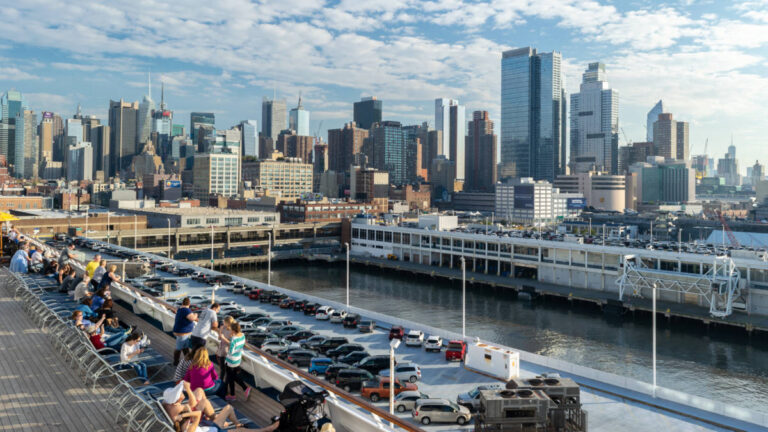
The Manhattan Cruise Terminal may not be the busiest cruise ship terminal in the United States, but it still sees a fair amount of cruisers embarking on itineraries with Carnival Cruise Line, Norwegian Cruise Line, Oceania Cruises, Silversea and more.
If you plan on cruising out of this Manhattan cruise port, New York City officials do recommend taking public transportation like the subway to the port, to avoid traffic congestion, but if you’re determined to drive to the terminal and park, here’s what you need to know.
The cruise terminal does have its own parking on-site. Reservations are highly encouraged and parking works on a revolving system.
Cruise ships arrive in the morning, passengers depart, and as they’re departing, that’s just about when passengers getting ready for embarkation arrive — which basically means you should be able to get parking. (Again, though, reservations are wise.)
All cars enter the terminal from the north, at the intersection of 55th Street and 12th Avenue (State Route 9A).
On-site parking opens at 8 a.m. (but porters aren’t available until 9 a.m.) and you have to be out of the parking lot by 3 p.m. the day of your debarkation. The later you arrive at the parking lot, the more parking will be available.
No vehicles taller than 8 feet 3 inches can park on-site, but there’s one flat fee for all vehicle types and sizes otherwise. Payment is due upon arrival at the parking facility and only credit cards are accepted.
Once you’ve parked and entered the terminal, you’ll have access to all its amenities, such as restrooms, WiFi, etc. Note that the on-site parking is open only to cruise passengers; no one else can park here.
If you’re shopping around and hoping to find cheaper rates for parking options before your cruise, you can find other, unofficial parking options near the Manhattan Cruise Terminal. Many are located within walking distance of the terminal.
Manhattan Cruise Parking
Manhattan Cruise
The aptly named Manhattan Cruise Parking is located at 670 W 43rd Street, which is near the terminal, but you still won’t need to walk.
The parking provider offers a valet service wherein a valet will drive you and your luggage (in your own car) to the terminal entrance for drop-off, before taking your vehicle back to the parking facility.
The indoor parking garage is open 24-7, which is a nice perk if you don’t want to immediately leave with your vehicle upon arriving back from your cruise (say, if you want to stay in the city for a few hours or even a few days, post-cruise).
When you are ready to get your car, you can have the parking service bring your car to the terminal exit for pick-up (this white glove service does come with a $40 fee).
You can also take taxis to the parking facility, and the facility will refund you part of the cab fare, if you parked longer than a week. You’ll also get a discount on overall parking fees if you park longer than a week. There’s no upcharge for sport utility vehicles at this lot.
What’s the rate? Starting at $27/day (subject to change).
ParkWhiz
ParkWhiz, Parking Near Manhattan Cruise Terminal
ParkWhiz is an excellent app for any traveler to use for finding parking spaces in large cities. When parking near Manhattan Cruise Terminal, you’ll find a huge number of options to choose from, via the booking platform.
To use ParkWhiz, all you do is search for parking in an area, with your arrival and departure dates, and then you can sort parking options by location and price.
The platform compiles all available parking facilities within your search parameters, so you can choose the parking garage or lot that’s best for you. Options near the cruise terminal are available at just a third a mile away.
Before booking, you’ll be able to see each facility’s details, including max vehicle height, up-charges for larger vehicles and amenities such as accessibility features like elevators.
What’s the rate? Dependent upon individual provider, but you can easily find rates at less than $30/day (subject to change).
Spot Hero
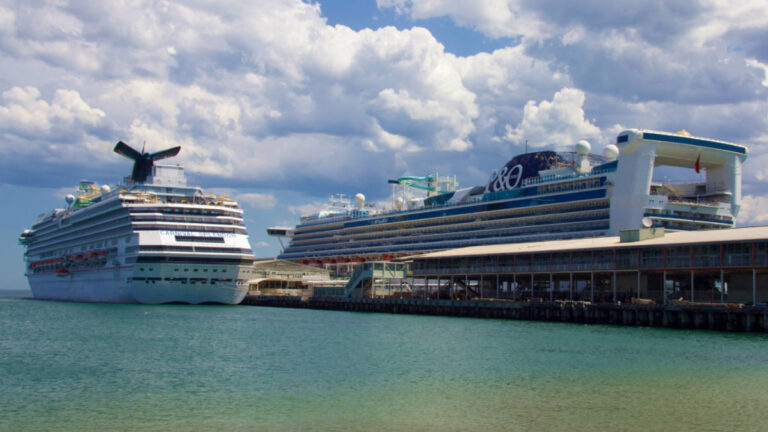
Norwegian Breakaway Docked in Manhattan (Photo Credit: EWY Media)
Spot Hero is a very similar platform, allowing you to search for parking near a point of interest in New York City, based on your embarkation and debarkation dates and times.
You can narrow down your search parameters by vehicle type so you avoid up-charges or arriving at a garage to find your vehicle simply won’t fit.
Then, you can view nearby parking options by distance from the terminal and price, with listings showing you ratings, photos, how far a walk it’ll be to the terminal, amenities, hours and more.
Search results show you your subtotal, too, so you can instantly see how much you’ll spend on a week’s worth of parking versus just a per-day or per-hour fee.
You can find parking options listed on Spot Hero that are as close as a third-a-mile walk from the terminal. However, you can easily find an Uber or similar to help you cross the short distance with your luggage.
What’s the rate? Dependent upon individual provider, but you can easily find rates at less than $30/day (subject to change).
Parking at Manhattan Cruise Terminal Can Be Sone — But it Can Also Be a Headache
Disney Ship Docked in New York (Photo Credit: Debbie Ann Powell)
While the above options — plus plenty of other individual independent lots and garages — can provide you with parking near the Manhattan Cruise Terminal, just driving through Manhattan can be a stressor for some.
Consider your other options before driving into NYC, whether that means taking the subway or an Amtrak train in from a nearby city or suburb, or flying from somewhere further afield, into Newark International Airport or JFK, and then getting to the cruise terminal via public transit.
Whatever option you choose, go with what you feel will be the least stressful route, and get your cruise vacation off on the right foot.
Now, further exciting details of that integration have been released, and Australian cruisers have a lot of signature Fun! to look forward to.
As P&O Cruises Australia’s Pacific Adventure and Pacific Encounter are rebranded into Carnival Adventure and Carnival Encounter, Carnival Cruise Line will double its presence in Australia.
Carnival Adventure will sail year-round from Sydney along with Carnival Splendor, while Carnival Encounter will be homeported year-round from Brisbane. Carnival Luminosa also sails from Brisbane during the summer season, though she spends Australian winters in Alaska for the northern hemisphere’s summer.
The new fun will begin in March 2025, but there is a great deal of redesign and new fun to be brought to the ships before their first sailings as part of the Carnival fleet.
“This transition presents a unique opportunity to combine the best of P&O Cruises Australia and Carnival Cruise Line as the brand expands its footprint in Australia,”said Kara Glamore, VP of Sales and Marketing.
First, signature Carnival experiences will be brought onboard both vessels. Leading the charge will be the iconic Fun Squad, a dedicated team of activities leaders who host games, contests, trivia, dancing, and more for all travelers to enjoy.
It should be noted that as of this writing, no cruise directors have yet been assigned to the two new ships, but there is plenty of time for those positions to be filled with CDs ready to ensure every guest has a great time onboard.
Tremendously popular theme nights with energetic dance parties will also be part of each ship’s new offerings. This will include the intensely neon 80s Rock-N-Glow Party and the ultra-sensory Silent White-Hot Night. Guests will also be able to enjoy an Elegant Night, which is traditional on all Carnival ships.
To fuel up for the fun, new free, unlimited daily pizza will be available from 11 a.m. to 4 p.m. Guests should note that outside those hours, an additional charge will apply for pizza.
The youngest guests aboard the newest Carnival ships will be welcomed into the Turtles program, offering special activities and enrichment for travelers under two years old. Parents are welcome, or for a small fee, can drop their small sailors off for some alone time.
Other great Carnival favorites coming to Carnival Adventure and Carnival Encounter include the Build-a-Bear activity, KultureCity sensory kits, and much more.
Returning P&O Cruises Favorites
The two ships, while they will have some familiar Carnival fun, won’t just abandon their P&O Cruises history.
“P&O fans will recognise many of their favourite dining and entertainment options, while experiencing the added fun and flair that Carnival is famous for around the world,”said VP Guest Experience Deborah Cogin.
Luke’s Bar & Grill and Luke’s Burgers will remain onboard the rebranded ships, and guests can still enjoy a sweet treat with New Zealand Natural ice cream (extra charges do apply).
For thrill-seekers, the Edge Adventure Park will continue to offer zip lining, balancing, and climbing skill tests, or for relaxation, check out the exclusive Byron Beach Club available to guests in suites and selected mini-suites.
Photo Courtesy: P&O Cruises Australia
Passengers can also continue to enjoy the award-winning, glamorously vintage Blanc de Blanc show and the intoxicating energy it brings to every performance.
In 2025, Carnival Cruise Line expects nearly 600,000 guests to sail from Sydney and Brisbane combined.
“Carnival Cruise Line remains the only cruise line globally to demonstrate this level of commitment to Australia, sailing year-round and supporting thousands of local jobs while delivering unforgettable holiday experiences in Australia and the South Pacific,”said Glamore.
Carnival Adventure will be offering diverse itineraries from Sydney, visiting Vanuatu, New Caledonia, Queensland, Willis Island and more, as well as 3-night cruise-to-nowhere sailings with comedy themes.
Meanwhile, Carnival Encounter will be offering similar itineraries but with different departure dates from Brisbane. Of particular interest will be the ship’s Barrier Reef Discovery sailings, as well as visits to Papua New Guinea and longer sailings to Fiji.
Through March 2025, bookings for both new ships can be made through the P&O Cruises Australia website or with experienced travel agents.
Is it rude to allow children and families to use smartphones and tablets while sitting at the dinner table together on a cruise?
One recent passenger sailing on Carnival Cruise Line’s 3,646-guest Carnival Dream thinks so.
The passenger, identifying as a parent of three children aged 7, 11, and 15, shared their views in a message to John Heald, the cruise line’s brand ambassador.
“We are a good Christian family. We do not allow [our children] to take their phones or tablets to the dining room for any meal,” the parent said.
“Seeing families all on their phones at dinner is appalling. Carnival should enforce a no-phones and no-tablets rule at the dinner table,” the guest continued. “Carnival should set a precedent that would set it apart from other cruise lines.”
The parent also emphasized the importance of fostering face-to-face communication during family meals, writing, “It’s so important for children to communicate verbally, learn eye contact, and feel like they’re listened to.”
In response, Heald acknowledged the challenges of balancing differing parental styles and said parenting “is a personal thing and not for us as a cruise line to decide if children should be allowed to use their electronics in the dining room.”
As a parent, himself, Heald shared his own struggle with technology with his kids but also noted the difficulty of enforcing a universal rule across the fleet.
It is worth noting that no other cruise line implements a technology-free dining experience, and that all cruise lines have been implementing improvements to their Wi-Fi packages to help keep families connected through their phones and tablets.
Passengers Seemingly in Agreement
Of course, the comment sparked a debate on Heald’s Facebook page with hundreds of responses. Those who are pro-technology during dinner said they often use the family time to share photos and moments they caught while separated during the day aboard the ship.
One passenger said it’s also when they review Carnival’s FunTimes schedule of daily activities to choose what they want to do next together. “This is our time to connect with each other. How we do that is no one else’s business,” she added.
Carnival Magic Dining Room
Another said, “Phones do not mean we’re not communicating. I have so many funny memories recorded on my phone and my kids’ phones and us in the dining room having a blast together on our cruises.”
Other passengers pointed out that many menus on ships are only accessible by the Carnival HUB app and that having a phone is a necessity for choosing a meal.
Plus, cruise lines – and their chefs – love when passengers take photos of the meals and anything else they may be enjoying and share them on social media. Not only is it free marketing, but it lets the ships know what guests like and what they don’t.
Still, even those who agreed that electronics should be limited support the right of a parent to make their own decisions.
“Wonderful values you are teaching your children about those phones,” said one. “Only person who should be teaching values to our children are us, not Carnival.”
Added another, “I think no devices at the dinner table is a good policy. But a personal policy. It is not Carnival’s place to set this type of standard, not enforce it.”
The discussion follows recent bans on other technology items on Carnival Cruise Lines, including Bluetooth and portable speakers, to limit disruption to other passengers. Other cruise lines also have banned some devices, such as baby monitors and travel routers.
Guests wondering what they can and cannot take onboard a Carnival cruise will find a list of prohibited items on its website.
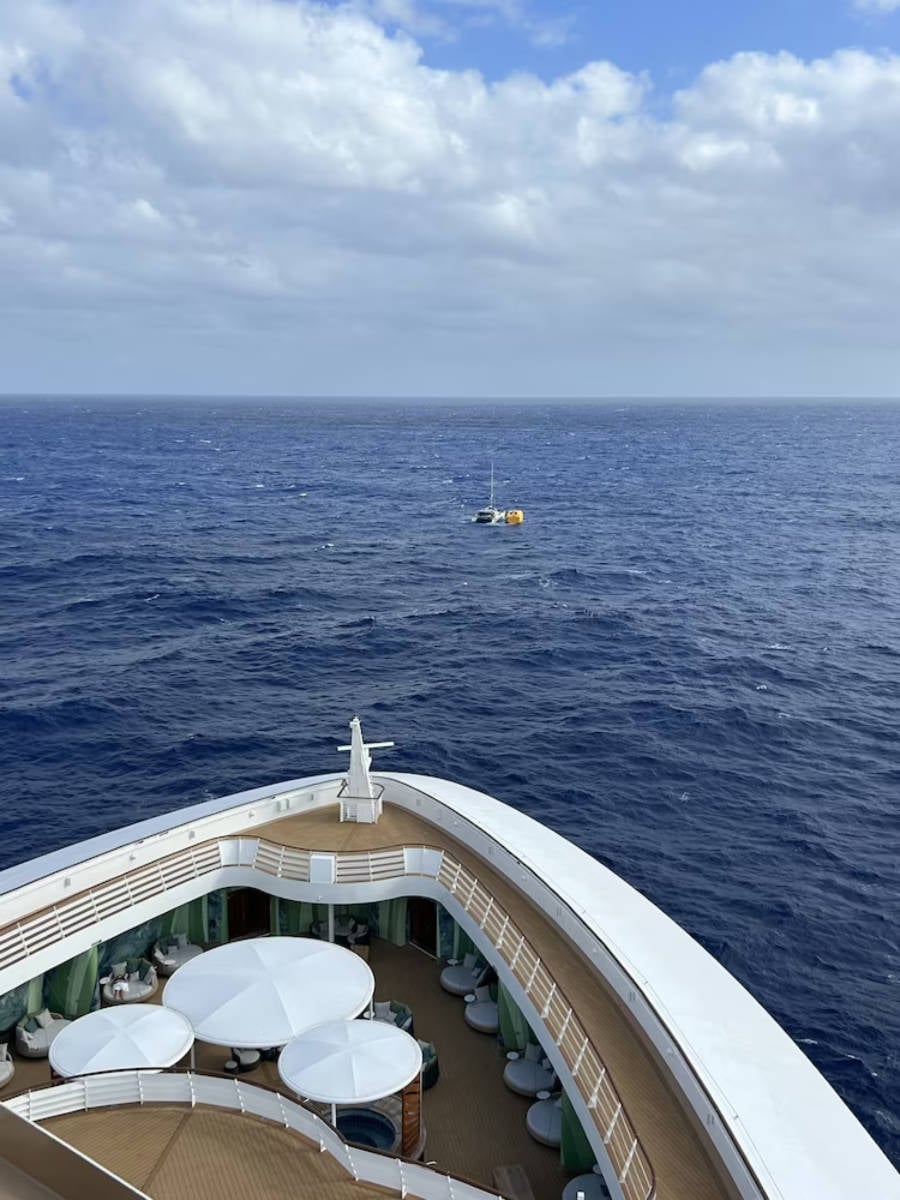
Costa Cruises Costa Fascinosa was able to aid a stranded sailing yacht with a fuel transfer on Saturday, December 14, 2024, as both vessels were in the midst of their respective transatlantic crossings.
The distress call came at approximately 5 p.m., at which time Costa Fascinosa immediately turned to the south-southeast to reach the Canadian-registered yacht Elefance.
The yacht is a private pleasure craft and was making her way from Lanzarote in the Canary Islands to St. Martin when she experienced a “major mechanical failure” that compromised her ability to sail.
Without enough fuel to engage her engines for the entire trip across the Atlantic Ocean, the stranded yacht was adrift and facing a potentially hazardous and life-threatening situation.
Fortunately, the 114,500-gross-ton Costa Fascinosa was reasonably nearby and able to respond to the distress call.
It took three hours for the cruise ship to reach the yacht, at which time a lifeboat was quickly dispatched to render aid. The sailing vessel was successfully refueled and able to resume her journey. No individuals were transferred to the cruise ship, and no injuries were reported at the time.
The crew of the Elefance shared their thanks and gratitude to Costa Fascinosa via social media, noting that the aid ensures they are able to safely make landfall as planned.
“A huge thank you to the crew of the Costa Fascinosa for the heroic fuel transfer mid-Atlantic!”they posted.“We are very grateful for the assistance and wish everyone a fabulous journey.”
Costa Fascinosa was quickly able to resume her own transatlantic cruise and there is no expected delay to the cruise ship’s voyage.
The Carnival-owned ship departed Savona, Italy on Thursday, December 5, 2024 on her way to Pointe-a-Pitre, Guadeloupe. During the 14-night journey, the ship has calls in France, Spain, the Canary Islands, and Barbados. She will arrive in Guadeloupe on Thursday, December 19.
Costa Fascinosa can welcome 3,780 travelers aboard for each sailing. From Guadeloupe, she will be offering diverse Caribbean sailings visiting top destinations such as Antigua, Grand Turk, the Dominican Republic, and more.
In mid-March 2025, the ship will return to Europe to spend the summer in the Mediterranean.
Unique Cruise Ship Rescues
While migrant refugee rescues are the most common type of distress calls cruise ships respond to, all vessels are obligated under international maritime law to render aid to any type of craft in distress. At times, this means cruise ships offer assistance in very unique situations.
For example, the new Disney Treasure has already performed her first rescue even before officially entering service. The ship rescued four individuals from the catamaran Serenity that was taking on water 230 miles off the coast of Bermuda on November 10, 2024.
Another unique rescue was conducted by P&O Cruises’ Pacific Explorer in October 2023, when a young man hoping to break a world record for rowing across the Pacific Ocean was in distress with an overturned boat. The rescue was near Vanuatu, just short of his goal of reaching Australia.
Regardless of the circumstances, nationalities, or individual situation, cruise ships will always respond to those who require assistance. The safety of all life at sea is always the priority, and so long as a cruise ship can offer aid without endangering itself, that help will be available.
A classic experience on any cruise vacation is enjoying delicious meals in the Main Dining Room. Carnival Cruise Line uses the familiar early and late seating time arrangements for diners, as well as the popular “Your Time Dining” flexible option.
When passengers don’t plan to eat in the Main Dining Room, however, is there a protocol for how to inform wait staff not to expect them for the seating?
Carnival Cruise Line’s official Brand Ambassador, John Heald, has offered advice about the issue in response to guest inquiries through his popular Facebook page.
“If we are booked in to the early dining for dinner in the main dining hall but decide for that particular night that the buffet may be more suitable for that day, do we need to notify the main dining hall that we won’t be needing our table that evening?”a concerned guest asked.“What is the protocol for this?”
Heald answers hundreds of dining-related questions each week, assisting travelers with getting the dining time they prefer, reserving a specific table location within the dining room, or ensuring dietary needs can be addressed.
This particular question is a unique one, but very helpful for the cruise line’s dining teams.
“Thank you for asking sir and it is a good question,”Heald said.“If you know in advance that you will not be at dinner the following evening because perhaps you are going to one of the specialty restaurants then yes, I do think it is nice if you tell your waiter/waitress. If it is a spur of the moment thing there is no need to go and tell anyone.”
To ensure the speediest, most efficient service in the dining room, dining teams often group their assigned tables together, submitting orders for appetizers, entrees, and desserts altogether rather than for individual tables.
When some guests are absent, however, the dining team may delay submitting orders for several minutes as they wait to see if the missing guests are simply delayed.
Furthermore, if guests are seated at a larger table with other travelers, servers will typically wait until everyone has arrived before collecting orders. If some guests are not dining that evening, the entire table could be delayed.
Letting the servers know in advance about any absences permits easier communication with the kitchen for smoother meal preparation, as well as easier serving when all dishes are available at the same time.
Many other commenters also responded to the inquiry, noting that it’s always polite to offer notification if they know they won’t be attending their assigned dining time.
“Nothing different than making a reservation at a land based restaurant. The right thing to do is to call and cancel the reservation,”one guest noted.
How Late Is Too Late?
In addition to addressing the idea of notifying wait staff about planned absences, Heald has also opened discussion about when diners should arrive to their assigned dining time.
It can be frustrating when dining companions may be late, holding up service for an entire table. While a few minutes’ grace is offered for each dining time, how long should the dining staff wait?
Carnival Cruise Line Dining Room (Photo Credit: gary yim)
Heald offered up a poll on the issue, noting if a 10-minute wait time is acceptable or if guests should be directed to the buffet instead.
Of more than 40,000 votes cast, 30% (approximately 12,200) agreed that 10-15 minutes is still an acceptable delay and travelers should be allowed in the Main Dining Room. After 15 minutes, they ought to be asked to go to the Lido Marketplace buffet instead.
Only 4% of responders (approximately 1,600 votes) believe that 10 minutes is already too late and those guests should be directed to the buffet rather than be seated at their assigned tables.
Of course, there are always extenuating circumstances that could make guests late for their assigned dining time. No matter when they arrive, the wait staff will do their best to accommodate everyone. If it isn’t possible, however, guests should be gracious and enjoy the other dining options available at any time.
Royal Caribbean’s Icon of the Seas cost roughly $2 billion to build, making it the most expensive cruise ship ever constructed. This massive investment reflects its innovative design, tremendous scale, ground-breaking amenities, and the boldness of Royal Caribbean’s vision.
Discover why this ship cost so much to build, how much it costs to sail on it, and much more!
From the initial napkin sketches that gave the enormous vessel its nickname, “the white paper cruise ship,” the vision for Royal Caribbean International’s Icon of the Seas was incredibly ambitious.
The design team wanted to construct a cruise ship that would be record-breaking in its scale but also revolutionary in its design and passenger features.
The plans were to build not only the largest ship in the Royal Caribbean fleet but also the biggest in the world. The design also called for it to become the “world’s best family vacation at sea,” meaning it would be outfitted with family-friendly amenities on a scale never before seen on the water.
Icon of the Seas would also become the first in Royal Caribbean’s brand-new Icon Class, which would become the cruise line’s signature type of ship. With a focus on family-oriented accommodations and amenities, as well as environmentally friendly technology, it was to be immense from the very beginning.
While the physical size and scale of the ship would be one of its most eye-catching features, Royal Caribbean also worked meticulously on a design that would exceed the expectations of all types of passengers.
Focusing on finding a balance between family-friendly excitement and more adult-oriented relaxation and luxury, the design needed to be different from that of any cruise ship that preceded it.
Icon of the Seas Under Construction at Meyer Turku (Photo Credit: Finmiki)
To achieve this, the innovative neighborhoods concept was introduced into the design. This concept involved dividing the ship’s interior and decks into unique themed areas, such as the adrenalin-boosting Thrill Island and the more relaxed, pool-covered Chill Island.
Creating dedicated spaces for all age groups while still offering a diverse range of activities was a huge achievement in itself. As we will discuss in further detail, some of these “neighborhoods” and amenities had record-breaking features on their own, only adding to the immense magnitude of the Icon of the Seas project.
Once the design was finalized, the ship was constructed at the Meyer Turku Shipyard in Turku, Finland, with the enormous building project commencing in June of 2021.
With a final gross tonnage of 248,663 GT, 20 decks, and a completed length of 1,198 feet, this was also the largest ship ever constructed at the Meyer Turku Shipyard.
Icon of the Seas Size Facts and Stats
Completing the huge project required thousands of skilled workers working in tandem on different segments of the ship, from laying the enormous keel with a 3,000-ton crane to building and testing the record-breaking amenities, like the iconic AquaDome glass and steel dome structure and the largest water park on the water.
Beyond the amenities, the vessel also marked a significant leap in cruise line innovation from an environmentally friendly perspective, featuring ground-breaking technologies like the LNG (liquefied natural gas) powered propulsion system and the latest fuel cell technology.
By making huge strides towards reducing carbon emissions and promoting clean transportation, the Icon of the Seas project was truly unprecedented and represented a huge step forward for the entire industry.
Icon of the Seas Cost Breakdown
Icon of the Seas Docked in Miami (Photo Credit: Just dance)
Designing and constructing such a momentous cruise ship came at a tremendous financial cost.
In all, the project cost Royal Caribbean $2 billion, more than $500 million more than the previous record holder, Allure of the Seas, which cost $1.43 billion to build.
Breaking down the various construction costs will help reveal where the funds from this significant investment actually went:
Designing and Engineering the Ship
Photo Credit: Royal Caribbean Group
While the original napkin sketches cost nothing to dream up, turning that original vision for the world’s largest cruise ship into reality required considerable financial and creative resources.
Constructing a cruise ship that would push not only cruise industry boundaries but also shipbuilding standards for complexity, sustainability, and scale was always going to require careful planning from skilled ship designers.
Not only did the ship itself need to be designed, but record-breaking features, like the tallest indoor waterfall, the tallest cruise ship water slide, and the largest water park on any cruise ship, also needed to be built into the design.
Estimates suggest that design and engineering might represent roughly 15 to 20% of the project’s total cost, which would translate to around $300-400 million USD.
In addition to designing the keel, hull, propulsion system, and more, this phase also involved crafting intricate deck layouts, space optimization, and integrating cutting-edge amenities and over 40 dining venues. It was a complex project that needed to be done correctly, which was always going to be expensive.
Labor Costs
Icon of the Seas at the Shipyard
Labor always represents a significant proportion of total costs when constructing a new cruise ship, but they can become incredibly high when you are talking about a ship on the scale of Icon of the Seas.
The entire project took just over 900 days to complete, with almost all aspects of the construction taking place at the Meyer Turku Shipyard. Thousands of skilled workers were required to work long hours.
From structural engineers and safety specialists to interior designers and welders, these professionals were brought in from throughout Finland and beyond.
The project required almost the entire full-time staff of the shipyard to work around the clock, while other professionals were also brought in on contracts from throughout Europe and beyond.
On top of that, the COVID-19 pandemic also delayed construction, creating costly logistical problems when it came to organizing and employing a team of nearly 3,000 shipbuilders and other laborers.
In all, labor costs for constructing Icon of the Seas likely ranged between $400 and $600 million.
Materials and Technology
Courtesy: Royal Caribbean
Naturally, constructing the world’s largest cruise ship required significant investments in materials. German steel manufacturer Metalcolour Group supplied over 350,000 square meters of high-quality DOBEL film laminated steel for the ship, which would have come at a tremendous cost.
Substantial investments in materials were then required for the ship’s six multi-fuel Wartsila engine propulsion systems, luxurious interiors, numerous amenities, furnishings for the ship’s 2,805 staterooms, and more.
The material and technology budget alone is estimated to have reached as high as $600 million. This would include the specialized marine gas oil and propulsion system, which would allow the ship to lower its life-cycle greenhouse gas emissions.
In addition to these costs, Royal Caribbean had to contend with material damage when a fire broke out in February 2023 while the ship was being constructed at the Meyer Turku Shipyard. While Royal Caribbean did not release the cost of the fire, materials were damaged.
Interior Design and Amenities
Royal Promenade on Icon of the Seas
Given that the completed ship is equipped with numerous record-breaking amenities, Royal Caribbean spared no expense on outfitting the ship’s interiors.
The costs to create the neighborhood spaces, including the prominent AquaDome, the New York City-themed Central Park neighborhood, and the lavishly decorated Royal Promenade, would have been immense.
The same is true for the numerous amenities, like Category 6, the largest water park at sea. Other amenities, including the mini-golf course, the first suspended infinity pool on any cruise ship, the FlowRider Surf Simulator, live performance venues like Lou’s Jazz Club, and numerous other restaurants, bars, and cafés, could have easily cost hundreds of millions to design and install.
While these costs may seem outrageous, the amenities were installed to enhance guest experiences and contribute to the vessel’s allure as a luxury cruise ship, helping to draw in crowds and create a buzz.
Royal Caribbean correctly predicted that the money spent on constructing Icon of the Seas would allow the ship to become profitable and help the cruise line cement its position as one of the industry’s leaders and innovators.
Why Did Icon Cost So Much to Build?
Several unique aspects contribute to the high construction cost of Icon of the Seas:
The Size and Scale of the Project
Icon of the Seas at Meyer Turku (Photo Credit: Meyer Turku)
Constructing the world’s largest cruise ship was no easy feat, nor was it inexpensive. From start to finish, the project required enormous resources, including advanced design and construction techniques, like reinforcing the dry dock, where most of the project was completed.
Even the decision to hire the Meyer Turku Shipyard for the project was not the most budget-friendly decision, but the famous shipbuilders are internationally known for their expertise in building large, complex vessels.
In addition, the cost of importing materials to this relatively remote location in Finland, combined with the enormous skilled labor force, only added to the final expense.
The Innovations in Fuel Efficiency and Sustainability
Credit: Royal Caribbean
When Royal Caribbean Group decided that their flagship vessel would adhere to the industry trend of moving towards more environmentally sustainable cruising, it meant that they would have to invest heavily in LNG technology, a cleaner marine fuel, and expensive fuel cell technology.
While decreasing carbon emissions was seen as a positive move and one that helped create a positive image for the ship in the eyes of the general public, it was not cheap.
Unique Features and Their Costs
While the enormous size of Icon of the Seas usually steals the headlines, the ship is also notable for its unique features, many of which were record-breaking when they were added to it.
Unsurprisingly, all of these headline-catching features came at a high cost, helping to contribute to the overall price tag for the ship. Here are just a few of the ship’s major features and estimates of how much they cost.
The AquaDome
Courtesy: Royal Caribbean
This enormous enclosed glass and steel dome, which gives one of the ship’s eight neighborhoods its name, offers panoramic ocean views and serves as a multi-purpose venue for dining, entertainment, and relaxation.
Aligning and installing the world’s single largest glass and steel structure on the water was an 80-hour nonstop process requiring a team of over 300 specialists.
The cost of developing such a versatile space was just shy of €8 million, or $8.5 million, which makes sense when you consider the material costs and the incredible amount of engineering required to make it functional, visually appealing, and safe.
The World’s Largest Water Park at Sea
Royal Caribbean’s Icon of the Seas During Sea Trials
The ship’s Thrill Island Neighborhood’s record-breaking water park, Category 6, also includes six full-size water slides, making it the most impressive at sea.
Building and maintaining a water park of this scale involves high costs, both in initial construction and ongoing maintenance. The company had to bring in several expert water slide design firms to design the park in a way that would allow it to be technically sound and completely safe without compromising on the original vision.
The slides were constructed off-site and transported to Meyer Turku. The design had to account for the weight of the three deck-high slides and the water they would hold.
While Royal Caribbean did not release a final total for the Category 6 Water Park cost, it would have been one of the most expensive amenities to design, build, and test.
The Eight Neighborhoods
Dividing the ship into eight distinct areas was another ambitious decision intended to enhance guest experiences by offering something for every age group. For Icon of the Seas, the eight neighborhoods are:
The AquaDome
Chill Island
Thrill Island
The Hideaway
Surfside
The Royal Promenade
Central Park
The Suite Neighborhood
Each of these areas features unique amenities, decor, layouts, and accommodations that would have raised the overall construction costs for the ship.
To meet these standards, the ship was designed to meet rigorous and international safety standards and all environmental requirements.
Compliance with maritime safety requirements meant outfitting the ship with advanced navigation and communications systems, acquiring 17 lifeboats to accommodate the ship’s total maximum capacity of 9,950 people, and much more.
Again, all of these safety measures would have contributed substantially to the ship’s final cost, but failure to meet safety requirements would have jeopardized the ship’s ability to sail.
Cost to Cruise on Icon of the Seas
Royal Caribbean’s Icon of the Seas (Photo Credit: lightmax84)
Now that Icon of the Seas is in service, passengers can enjoy cruising on the world’s largest and most expensive cruise ship.
Given the wide range of accommodations available, the price of a voyage on Icon of the Seas can vary. While a top-tier, seven-night cruising experience in one of the ship’s many suites could cost over $7,000 per person, a basic seven-night Eastern Caribbean & Perfect Day at CocoCay Cruise could cost as little as $1,600 if you chose to stay in one of the most affordable interior cabins.
While these prices may seem expensive on the surface, it’s important to remember how much the ship has to offer. Not only do guests get a lot for their money, but when the ship is fully booked, the voyages generate the millions of dollars in revenue required to help Royal Caribbean recoup its substantial investment.
Final Thoughts on the Cost of Icon of the Seas‘ Construction
Not only did the completed ship redefine what a cruise ship could be, but it also showed how ambitious and expensive a project building a record-breaking vessel had to be.
From its ground-breaking amenities and eye-catching features to its enormous physical size and $2 billion price tag, Icon of the Seas is a true achievement and the type of ship all cruise enthusiasts should be excited to experience first-hand.
‘Tis the season for gift giving, and homemade baked goods – cookies, fudge, candies, and other snacks – are a popular treat that offer a sweet taste of home.
On a cruise, such gifts may seem to be the perfect choice to offer crew members who themselves are far from home and away from their families at this special time of year.
Carnival Cruise Line has a strict policy on such treats, however, and wants passengers to know that homemade items are not permitted.
Furthermore, crew members cannot accept alcoholic gifts of any kind, including bottles of wine or champagne that may have been bought onboard the ship.
The clarification comes via John Heald, Carnival Cruise Line’s official Brand Ambassador, following inquiries from a guest who wants to offer treats to crew members.
“Would you please clarify once and for all whether staff members are permitted to keep unopened, new food items that are gifted to them (like chocolate candy, cookies, etc.)? Also bottles of wine or champagne?”the guest asked.“We were told they cannot during our behind the scenes tour, but there is an ongoing debate about the issue.”
Many cruise guests do want to offer something special for crew members, but they need to be careful what they offer.
“Alcoholic beverages of any kind cannot be gifted to the crew,”Heald confirmed.“It is not possible for them to accept this, and they would be in trouble for doing so.”
Guests should note, then, that it may be best not to leave any bottles of wine or champagne in their staterooms at the end of the cruise if they do not want them. This includes any bottles that may be given as prizes or recognition at different onboard events.
Instead, gifting those bottles to other passengers is a great way to share, or they could be turned in to the Guest Services desk or the onboard liquor store to be sure they are taken care of.
As for any snacks, crew members are only permitted to accept certain items.
Carnival Cruise Line Crew Members (Photo Credit: Melissa Mayntz)
“If you’re going to kindly provide any snacks or cookies or chocolate, it must be in the original factory packing,”Heald explained.“That means the original box or packet and no home-baked goods are allowed.”
While most Carnival cruise guests would be generous and well-meaning with the treats they might offer to crew members, Heald has previously explained that the risk of homemade goods being contaminated with potential allergens (or worse) is why the cruise line does not permit such gifts.
What Gifts Crew Members Want Most
Of course it can be difficult for cruise crew members to be hundreds or thousands of miles from their family members and friends during the holiday season. A nice gift from guests can help brighten the season, especially on Christmas cruises.
While edible gifts – chocolates, cookies, candies – are always welcome, other popular gifts include pre-paid phone cards or internet cards, gift cards to shops crew members can visit in port, or small items from guests’ home cities as fun collectibles.
Some crew members also collect cruising ducks, so a special one just for them with a thank you note can be a wonderful gift option.
The very best gift of all is a kind word and a genuine expression of appreciation for all that crew members do to make a cruise vacation memorable. An extra gift of cash – above standard gratuities – is also very welcome and lets crew members choose how they spend it.
Taking steps to make work easier – such as putting away personal items in one’s cabin or minimizing special orders in the dining room – can also be a way to help hard working crew have a great holiday season.