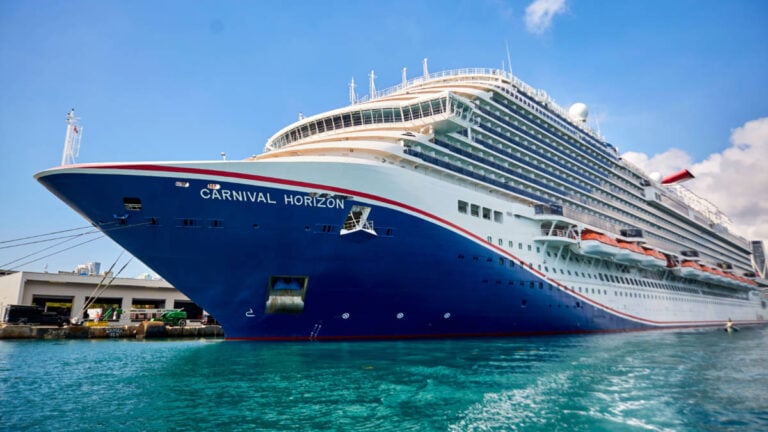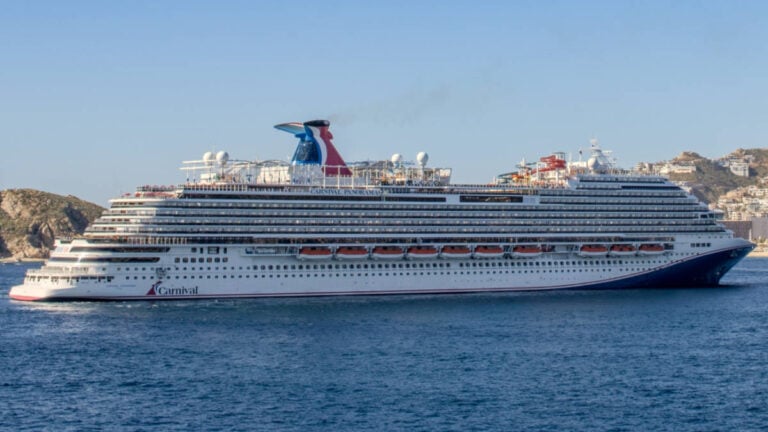
We’ve all heard someone say it at some point: Cruise ships are filled with germs. However, while cruise outbreaks may make headlines, do you know what doesn’t?
The thousands of other cruise ship sailings go on without a problem whatsoever. The truth is, cruise ships are perfectly safe and there’s really little risk of falling ill when taking a cruise. Here’s why.
In This Article:
- 1. Cruise Ships Don’t Actually Account for All That Many Norovirus Outbreaks
- 2. The CDC Regularly Inspects Cruise Ships
- 3. Cruise Lines Put Hand Cleanliness Front and Center
- 4. Industry Oversight Encourages a High Level of Cleanliness
- 5. Cruise Ships are Cleaned Extensively Following Any Outbreak
- 6. Passengers are Becoming More Aware
- 7. Ships are Becoming Larger and More Spacious
- 8. Crew Members are Well Trained to Put Public Health First
- 9. Cruise Ship Technology is Evolving to Keep Cruisers Safer
- 10. Cruise Ship Illnesses Seem So Prominent/Common Because They Must Be Reported
- 11. The CDC Will Make a Ship Stop Sailing if It’s Risky
- 12. The Cruise Line Requires Sick Passengers to Isolate
- Cruise Ships are Just as Safe as Any Other Mode of Travel — Maybe Even More So!
1. Cruise Ships Don’t Actually Account for All That Many Norovirus Outbreaks
According to the Centers for Disease Control (CDC), norovirus is the most common cause for gastrointestinal distress-related illness outbreaks on cruise ships. However, while norovirus may be what’s most likely to get you sick during a cruise, it doesn’t actually impact all that many cruises.
The CDC estimates that, when you look at all the reported norovirus outbreaks and all the ways you’re likely to get it, cruise ships only account for a mere 1% of the country’s norovirus outbreaks.
You’re far more likely to encounter this illness in other places that you frequent far more regularly than a cruise ship. Schools, childcare centers, college campuses, restaurants, catered events and healthcare facilities are of more concern, says the CDC, than cruise ships.
2. The CDC Regularly Inspects Cruise Ships
While we’re on the topic of the CDC, did you know that the CDC actively inspects cruise ships to ensure that they don’t pose any risks to cruisers’ health?
According to the organization, cruise ships under the CDC’s jurisdiction must be inspected twice per year, while the ships are in port.

The very thorough inspections can take as long as eight hours and cover eight key areas: the ship’s medical center, drinking water, galleys and dining rooms, swimming pool, housekeeping, pest control, children’s areas and HVAC.
Along the way, inspectors are doing things like taking water samples to test. They’re ensuring food is stored and prepped properly. They’re even looking at crew members’ personal hygiene and interviewing crew members to see if they know the safety precautions they should be taking.
In short, these inspections are incredibly detailed and thorough.
3. Cruise Lines Put Hand Cleanliness Front and Center
While cruise lines can’t really force you to wash your hands a lot, they certainly will do their best to remind you to do so. After all, hand washing is one of the most important things you can do to prevent the spread of illness.
For example, on some Royal Caribbean ships, there’s a crew member character called Washy Washy, who sings hand-washing-focused remixes of popular songs outside dining venues, near the hand-washing stations. While it might seem a little cringeworthy at first, the songs have actually gone viral on social media in the past.

In one interview, crew members who’ve played Washy Washy said they would start their jobs singing hand-washing tunes as early as 6 a.m., so they can catch the early birds at breakfast, with other crew members on the job right up until dinner ends.
Furthermore, with COVID times, many cruise ships began installing hand sanitizer stations throughout public spaces, so even those who aren’t swayed by a dancing crew member to wash their hands have an easy way to cut down on any potential germ-spreading.
4. Industry Oversight Encourages a High Level of Cleanliness
It’s not just the CDC and national bodies that pressure cruise lines to keep things clean, though. Within the industry, organizations further press cruise lines to keep their ships clean and safe for human health.
For example, there’s the Cruise Lines International Association (CLIA), which boasts more than 50 cruise line members. Among these are probably some of the cruise lines you cruise with frequently, such as Carnival Cruise Line, Celebrity Cruises, Disney Cruise Line, MSC Cruises, Norwegian Cruise Line, Royal Caribbean and more.

The CLIA requires all of its members to meet certain cleanliness standards. Crew members must regularly clean cabins, restaurants and common areas.
After every cruise, crew members must use specific cleaning products and protocols to clean the entire ship top to bottom. Crew members must be trained in public health, etc.
5. Cruise Ships are Cleaned Extensively Following Any Outbreak
While cruise lines obviously clean the ships’ public areas throughout the day, and staterooms once per day, with more extensive cleaning conducted between cruises, if there ever is an illness outbreak on a ship, cruise lines really go above and beyond.
For example, following a Coronavirus outbreak in 2020, Princess Cruises cleaned not just staterooms and public areas as normal. Crew members sanitized all soft furnishings (like carpets and drapes).
Any removable soft materials, like shower curtains and linens, even down to mattresses, were literally thrown away. HVAC systems were disinfected.

Similarly, following a norovirus outbreak, Royal Caribbean went over Explorer of the Seas with extreme attention to detail. High-touch areas like elevator buttons and railings were bleached. Carpets were soaked in disinfectant.
The cruise line didn’t just clean the ship once, either. Explorer of the Seas was cleaned top to bottom three times total, before it was put back into commission.
As such, even if there is an outbreak, by the time the next cruise leaves on the affected ship, it’s like that outbreak never even happened.
6. Passengers are Becoming More Aware
While this is more so a result of misinformation in the media regarding cruise ship safety and the incorrect assumption that cruise ships are floating petri dishes, it still results in less risk of illness overall. Fearing getting sick, cruise passengers are now more aware of their habits than ever and are taking steps to reduce germ spread.
Look to just about any blog or website that covers cruising and you’ll find articles about how to stay healthy during a cruise.

Even the CDC offers a guide for cruisers, recommending preventative steps to take like washing your hands often, taking care of your immune system, reporting to the ship’s medical center immediately if you do feel ill, and notifying a crew member if you see anyone that’s ill.
In short, more people are being mindful of keeping themselves healthy during their cruise, which benefits everyone aboard the ship.
7. Ships are Becoming Larger and More Spacious
Yes, as some cruise ships have gotten bigger and bigger, they’ve just packed on more passengers. However, some cruise lines have, in contrast, realized that more space per passenger is a good thing.
People want to be able to spread out — and when you can spread out on a cruise ship, you can put distance between yourself and any potentially ill cruisers.

To find out which ships will give you the most breathing room, you can calculate a ship’s space per passenger ratio by looking at the ratio between the gross tonnage and passenger capacity.
Using this formula, you’ll see that Disney Cruise Line ranks very well in terms of space per passenger. However, larger cruise lines also rank well, including Norwegian Cruise Lines and Royal Caribbean.
As you could possibly expect, Carnival Cruise Line’s space per passenger ratio isn’t very good, as the budget cruise line attempts to cram in as many cruisers as possible.
8. Crew Members are Well Trained to Put Public Health First
Crew members often go through training that helps them comply with CDC vessel sanitation standards. This training might be provided from the CDC itself, but there are other, third-party organizations that likewise provide training related to health and safety.

Additionally, there’s an actual crew member whose entire job is dedicated to public health. The ship’s Public Health Officer ensures that crew members are complying with all public health standards, and oversees responding to any issues. They also train other crew members in public health.
So, you can rest assured that the crew isn’t just winging it — they’re fully prepped to keep you as healthy and safe as possible.
9. Cruise Ship Technology is Evolving to Keep Cruisers Safer
When we talk about cruise ship technology, a lot of cruisers are more so interested in the tech that’s going to make their experiences a little cooler. Think VR entertainment or an outer facing stateroom wall that disappears at the touch of a button.
However, behind the scenes, other evolving technology is just as important, especially when it comes to keeping your cruise safe and healthy.
For example, Norwegian Cruise Line began using an innovative electrolyzed water-based cleaner, or hypochlorous acid (HOCI). This cleaner was only made possible in recent years thanks to the development of tech that could produce HOCI in large quantities suitable for a cruise ship’s use. The cleaner is safer than traditional disinfectants but provides a bleach-like cleaning power that can fight off viruses, bacteria and fungi.

MSC Cruises, meanwhile, introduced new advanced air sanitation technology, called Safe Air. The sanitation system uses short-wavelength light to clean air flow within the ship’s air conditioning system, preventing the spread of viruses and bacteria.
Many of these new tech developments were pushed into use in 2020, with the cruise industry eager to get back to business, but they’ve just further made cruising even safer and healthier in the years to follow.
10. Cruise Ship Illnesses Seem So Prominent/Common Because They Must Be Reported
If the entire staff at a local business is out sick, you’re probably not going to hear about it. If a bunch of people at an all-inclusive resort become ill, you may not see it in the headlines.
However, everyone knows if a cruise ship outbreak occurs. It’s everywhere. It’s on all of the news TV stations, on all of the major news websites, on social media, etc. You may not have any interest in cruising whatsoever, but you’ll still hear about it.

This makes cruise ship outbreaks seem pretty common, but it really just seems that way because of the stringent reporting requirements at play. That information about outbreaks is readily available to news outlets.
As soon as a crew member feels ill on a cruise ship, they’re required to report it to medical staff. Then, if a confirmed illness — crew or cruiser — is confirmed, cruise ships must report it to the authorities.
These requirements are in place to help minimize an outbreak’s damage. However, all that reporting puts that info out into the world, making it look like outbreaks are the norm.
11. The CDC Will Make a Ship Stop Sailing if It’s Risky
Remember how we discussed the CDC’s stringent inspection requirements? Well, if the CDC decides that the cruise ship isn’t up to snuff, and that it poses an imminent public health risk, the CDC will order a cruise ship not to sail until those risks are addressed.
However, the CDC assures that this is rarely ever an issue, because the inspections are so thorough that they get ahead of any potential risks before this is even the case.

Problems that would cause the CDC to recommend a cruise ship not sail include the inability to chlorinate drinking water, inability to keep food at a safe temp, inability to keep facilities clean, inability to control infectious disease, and inability to dispose of waste.
12. The Cruise Line Requires Sick Passengers to Isolate
Another way that cruise lines are keeping cruisers safe? If there’s a guest that’s deemed too ill to be around the general public, and contagious, the cruise line will make that cruiser isolate in their cabin.
For example, if you’re cruising on a Royal Caribbean ship, and you feel ill and go to the medical center, if the medical staff say you’re infectious, you’ll have to remain in your cabin until you can disembark at a port of call and take other transportation home, or until the cruise is over.

You may be moved to a stateroom close to the medical center as well, so that the medical staff can keep an eye on you. Don’t worry, though — Royal Caribbean will cover the costs for all of your in-room dining and WiFi.
Cruise Ships are Just as Safe as Any Other Mode of Travel — Maybe Even More So!
All in all, while cruise ships may get a bad reputation as a germy place to be, they’re really not all that much of a threat. There are many other places and modes of travel (airplane, anyone?) where you’re at a higher risk of contracting an illness.
More From Cruise Hive
When you add in cruising’s low safety risks overall, beyond illness, it’s easy to see: If you’re worried about your health and safety, you should be going on a cruise for your next trip.