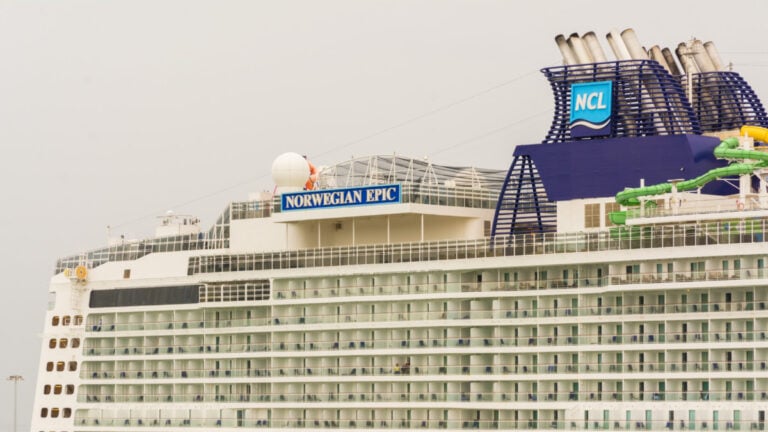
In a fresh update, Norwegian Cruise Line has changed its tax payment protocols on board for guests sailing through European waters, at least for one cruise onboard Norwegian Epic.
The changes primarily focus on Value Added Tax levied on purchases made during the voyage through pre-purchased beverage packages and purchases through pre-packaged specialty dining.
Adjustments to VAT Applications
Norwegian Cruise Line has sent a letter to guests informing them of a change in the additional VAT charges that were announced some weeks ago.
In September 2023, NCL notified its guests about being forced to include VAT on beverage purchases, specialty dinner packages, and drinks obtained through beverage package purchases while cruising in Europe, especially when the voyage touches Spain and other subsequent countries on the same itinerary.
The tax was to be applied to all on-board purchases made during the time the ship sailed through Spanish waters or docked at Spanish ports. This fiscal measure extended to other European countries like France and Italy, where each country’s respective VAT rates were to be applied.
However, a recent development has seen NCL taking a guest-centric approach, particularly for its voyages touching French shores. The cruise line has graciously decided to absorb the VAT charges for those guests who had pre-purchased specialty dining and beverage packages, albeit for the French leg of the voyage.
The move comes as a relief to guests but leaves questions open for similar tax coverages in other countries.
Guest Communication and Implications
On October 7, 2023, during the October 2, 2023, sailing for Norwegian Epic, NCL sent out a letter to its guests.
The letter states: “After careful consideration, we have decided to remove French VAT from qualifying beverage and dining consumption for all guests who pre-purchased these packages for Norwegian Epic’s October 2, 2023, sailing.”
Guests who have already paid VAT charges over all-inclusive consumptions ordered in France will receive a full VAT refund from NCL.
Although the letter states the removal of French VAT from purchases made through beverage and dining packages, it only applies to those guests who pre-purchased these packages. Guests who purchased packages while onboard are not exempt.
The itinerary includes visits to Marseille and Cannes, now exempted from VAT payments, and visits to Barcelona and Palma De Mallorca, Spain, Naples, Civitavecchia, and Livorno, Italy. The VAT charges would likely still be levied for the ports in Spain and Italy.
Photo Credit: RVillalon / Shutterstock
While guests onboard will be happy that they won’t be charged VAT over the drinks they order in France, it’s still only two days out of the cruise. Adding to that, the confusion that has been building over why these taxes are levied and will now include why and when the taxes are and are not included.
The 155,873 gross tons Norwegian Epic will remain in Europe longer than usual, with the ship only sailing its Transatlantic voyage on December 1. This cruise will sail from Civitavecchia to Naples and Livorno, Italy; Marseille, France; Barcelona and Cadiz, Spain; Lisbon, Portugal; Ponta Delgada, Azores, and arriving in its winter homeport of Port Canaveral, Florida, on December 17.
From Port Canaveral, Norwegian Epic will sail seven-day cruises to the eastern and western Caribbean, including calls to Great Stirrup Cay, Cozumel, Ocho Rios, San Juan, St. Thomas, and more.
Is Europe Now Turning Against Cruises?
The announcement of the VAT application to pre-purchased packages echoed a broader change in Spain and potentially other European countries in how cruise tourism is regulated.
The addition of VAT is not a new thing, and guests have had VAT added to onboard purchases while in Europe for decades. However, the situation becomes more complex when it comes to purchases made outside of Europe.
Generally, pre-cruise purchases are exempt from VAT, especially when these purchases are made from the US for European cruises. This exemption applies to drinks, internet, and specialty dining packages purchased from home.
This could be why NCL removed the French charges, as the French government does not have the same policy as the Spanish. The original aim of the Spanish government was to align the tax payments of guests on board with those vacationing ashore.
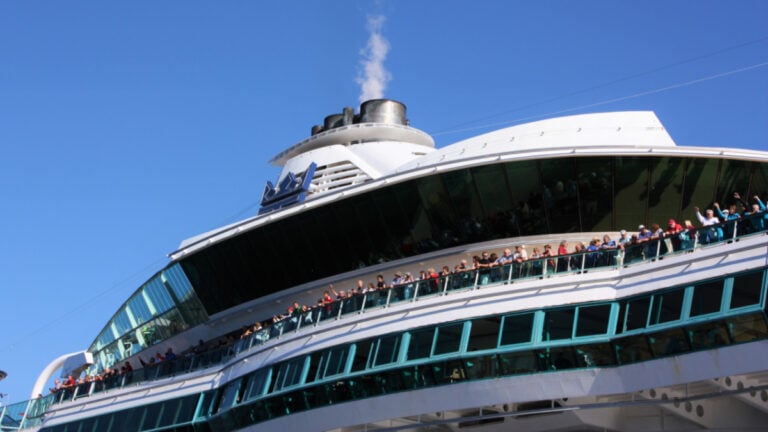
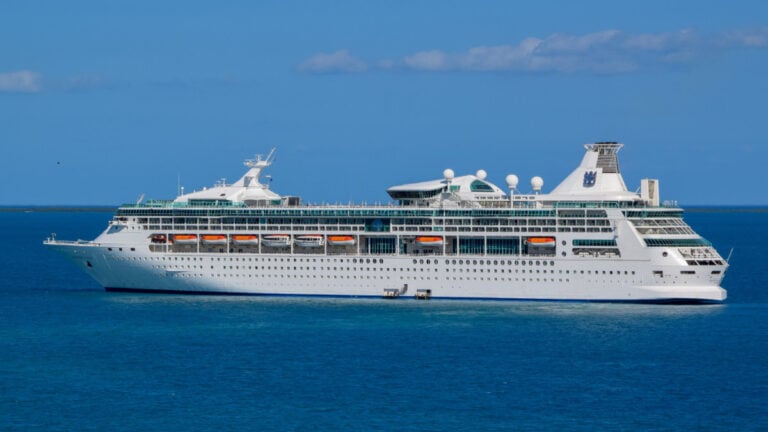
Royal Caribbean International’s Radiance of the Seas is currently sailing a 16-night, one-way repositioning cruise after the end of the Alaska sailing season, but this one cruise has been impacted by multiple factors causing delays, port cancellations, and port time changes.
First Issue: Delayed Embarkation
The Saturday, October 7, 2023 departure of Radiance of the Seas from San Diego, California got off to a slow start as fog delayed the vessel’s arrival into the port.
Guests embarking the vessel that day were asked to shift their arrival to the cruise terminal one hour later than originally planned to accommodate the delay. Everyone was required to arrive no later than 2:30 p.m. so they could be checked-in and onboard by 3 p.m. for the ship’s 4 p.m. departure.
Fog often causes delays at some cruise ports, when low visibility makes channel navigation or docking operations unsafe. This is particularly common in San Diego, Galveston, and Tampa, though any port can have temporary delays for poor visibility.
Second Issue: Tidal Adjustments
The second issue on Radiance of the Seas‘ current sailing was a necessary adjustment for the visit to Puntarenas, Costa Rica, which is planned for Saturday, October 14.
Royal Caribbean’s Radiance of the Seas (Photo Credit: meunierd / Shutterstock)
Initially, the ship was scheduled in port from 12 p.m. (noon) until 10 p.m. but guests were notified onboard that local tidal conditions required an earlier arrival, and the ship will now be in port at 8 a.m., four hours earlier than the original schedule. The 10 p.m. departure time remains unchanged.
This does give guests more time to explore the dynamic port of call without feeling rushed or needing to cut short any time on shore. Guests who have booked a shore excursion can enjoy a morning shopping or otherwise enjoy the port of call before a tour without missing out.
Third Issue: Cancelled Port of Call
As guests set sail on the ship, they quickly learned of a third issue – a port of call cancellation due to the influence of Tropical Storm Lidia. Rough seas expected in Cabo San Lucas early in the week made it necessary to cancel Radiance of the Seas‘ visit to that Mexican destination, which had been planned as an overnight call from 11 a.m. on Monday, October 9 until 2 p.m. on Tuesday, October 10.
Instead, the ship will now be enjoying those days at sea. This means during this 16-night cruise, the first 6 full days of sailing are all at sea as Radiance of the Seas heads for Costa Rica.
Tropical Storm Lidia
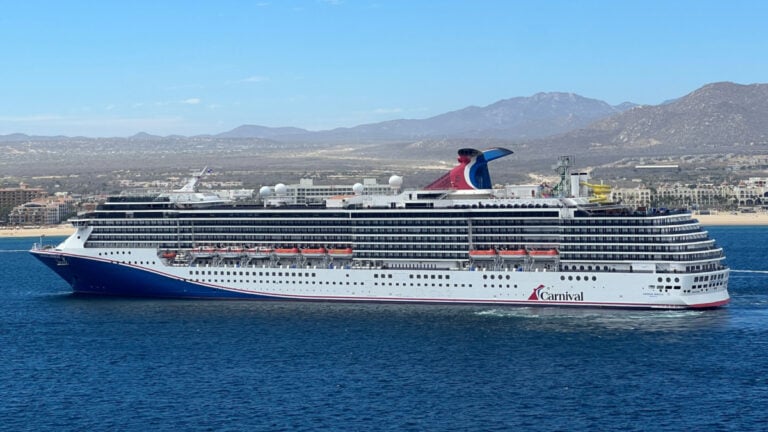
Other cruise ships have also cancelled or shifted calls to Cabo San Lucas because of the storm, including Carnival Panorama‘s 8-night Mexican Riviera sailing as well as Carnival Miracle‘s 6-night Mexican Riviera cruise, both of which have implemented changes to steer clear of the storm.
Because Cabo San Lucas is a tender port that requires guests to be ferried from their cruise ships to the dock via smaller boats, rough weather can more easily impact this destination even when a storm is well south of a direct impact on the Baja Peninsula.
Rough Year for Radiance of the Seas
Radiance of the Seas has been having a tough time lately. Not only is this repositioning cruise impacted in multiple ways, but the ship’s final southbound Alaska sailing of the season, which was scheduled to depart Seward, Alaska on September 15, had to delay that departure for two days and cancel 4 out of 5 planned Alaska ports of call due to foul weather.
Here’s hoping that the 90,090-gross-ton Radiance of the Seas has smooth sailing through the remainder of her repositioning cruise as she transits the Panama Canal and calls on Panama City, Cartagena, and Cozumel before arriving in Tampa on Monday, October 23.
From Tampa, the ship will be offering primarily 4- and 5-night Western Caribbean cruises to Cozumel and Costa Maya with occasional Bahamas sailings or longer cruises in her schedule. In April 2024, the ship will head back to Vancouver to begin another Alaska sailing season.
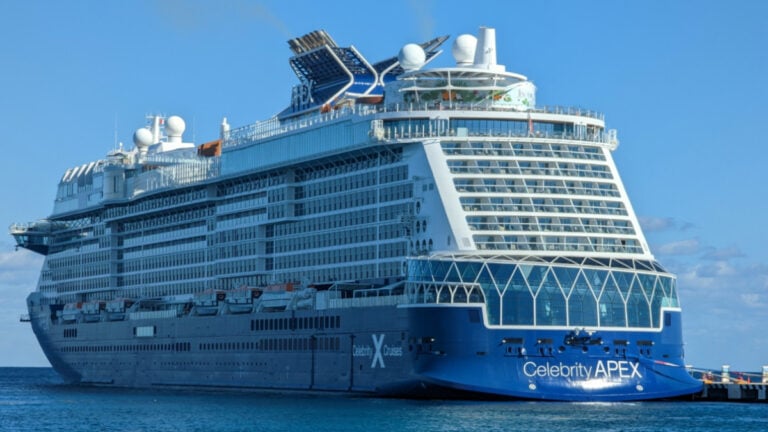
Due to escalating tensions and dangerous situations in two different countries, Celebrity Cruises has dramatically altered the next sailing of Celebrity Apex to ensure a safer experience for everyone onboard.
This means the ship will no longer be visiting either Israel or Egypt as originally scheduled, but guests do have cancellation options because of the drastic changes.
Another Celebrity Apex Itinerary Change
Guests booked on the October 16, 2023 departure of the 130,818-gross ton, Edge-class Celebrity Apex have been notified that the original itinerary is no longer feasible due to ongoing developments in Israel and Egypt. A new itinerary visiting Greece, Cyprus, and Turkey has been arranged.
“As our global security team continues to closely monitor the evolving situation in Israel and the surrounding regions, we have been alerted to further situations unfolding in Alexandria, Egypt. Due to these developments, our experts have made the decision not to visit Alexandria, considering the safety and security of our guests and crew as our number one priority,”the letter explains.
“This in mind, our staff have worked quickly to secure an alternate itinerary we believe you will enjoy thoroughly. Your new itinerary now includes a beautiful selection of stops in Greece, Cyprus, and Turkey.”
Celebrity Apex Cruise Ship (Photo Credit: GEORGE STAMATIS / Shutterstock)
The original itinerary for the 10-night cruise had included port visits to Ashdod and Haifa in Israel; an overnight visit in Alexandria, Egypt; and a stop in Ephesus, Turkey before the ship would return to Piraeus, Greece.
Now, the only days of the sailing that remain the same are a day at sea on Saturday, October 21 and the call to Ephesus on Wednesday, October 25.
Celebrity Apex will instead be visiting the following ports of call, with each destination offering generous in-port time for guests to explore and enjoy each stop:
Mykonos, Greece – Tuesday, October 17, 8 a.m. to 10 p.m.
Santorini, Greece – Wednesday, October 18, 8 a.m. to 10 p.m.
Rhodes, Greece – Thursday, October 19, 8 a.m. to 6 p.m.
Chania, Crete – Friday, October 20, 8 a.m. to 6 p.m.
Limassol, Cyprus – Sunday, October 22, 7 a.m. to 5 p.m.
Bodrum, Turkey – Tuesday, October 24, 7 a.m. to 6 p.m.
Ephesus, Turkey – Wednesday, October 25, 7 a.m. to 4 p.m. (as originally scheduled)
While these are all fine ports to visit, guests will be understandably disappointed to lose the opportunity to visit either Egypt or Israel. Though the decision is made with the safety of the guests and crew in mind, it is always frustrating to miss out on such once-in-a-lifetime destinations.
“We thank you for your cooperation and understanding as we continue to navigate this unexpected situation,”the notification to guests concluded.“As we do so, our thoughts remain with everyone in the region affected by these terrible events.”
Celebrity Apex can welcome 2,918 guests when booked at double occupancy, and is also home to just over 1,300 international crew members.
The ship’s current sailing, a similar 10-night itinerary that was to have called on Egypt and Israel, has already been altered as well.
Shore Tours
All shore excursions booked through Celebrity Cruises for Egypt and Israel are being automatically refunded to guests’ original form of payment. Tours for Ephesus remain as booked, as that port of call visit has not been changed.
The cruise line is working as quickly as possible to confirm tour options for the new ports of call, which will be available to book through the Celebrity Cruises App or onboard at the Shore Excursions desk on Deck 4, starboard, near the Celebrity Shops and the Future Cruise Vacations desk.
Celebrity Apex Cruise Ship
Guests who have booked independent tour options for the now-cancelled destinations will need to contact their tour operators or, if applicable, work through their travel agent for cancellation and refund options as available. Guests with travel insurance may also have some option for reimbursement there, depending on the exact coverage and policy terms.
Are Refunds Possible?
Guests impacted by this drastic change in itinerary are reporting some discrepancies for refund options.
While the initial notification letter does not offer any refund or future cruise credit possibilities, guests are noting that the cruise line is offering a 100% future cruise credit (FCC) for guests who choose to cancel their October 16, 2023 sailing but who rebook a new Celebrity Cruises vacation at the same time. If guests do not rebook immediately, a 90% FCC is reported to be offered.
There does appear to be differences in the offer based on how guests may have booked their cruise, as well as their nationality as applies to different terms and conditions of the cruise contract in different countries.
These reports are not confirmed, and any impacted guests should contact their travel agent or Celebrity Cruises for updated details that fit their exact situation and booking.
Cruise Hives’ thoughts are with everyone impacted by the ongoing violence in both Egypt and Israel, as well as all cruise ship crew members from those regions who are apart from their families and friends at this troubling time.
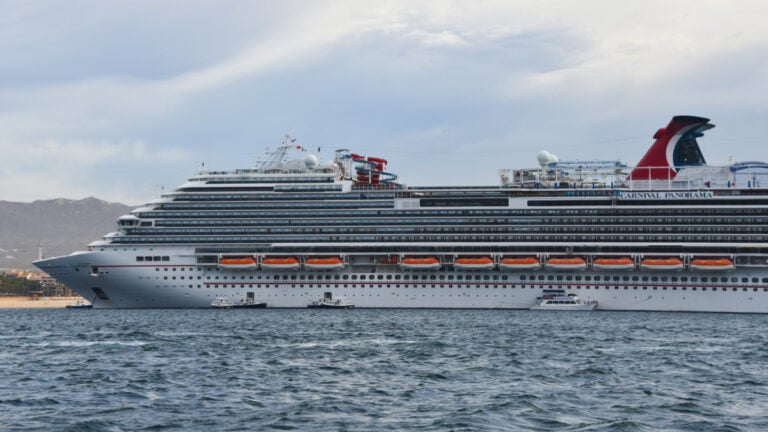
Due to Tropical Storm Lidia, which is forecast to become a hurricane in the next day, guests aboard Carnival Panorama are not having the cruise itinerary they originally booked.
The ship’s Mexican Riviera itinerary has had to be drastically altered with one port cancelled and others rearranged to avoid the worst weather and provide the safest, smoothest sailing.
Itinerary Change for Carnival Panorama
The Vista-class Carnival Panorama departed Long Beach, California on Saturday, October 7, 2023 for an 8-night Mexican Riviera cruise that was to have visited Cabo San Lucas, La Paz, Mazatlan, and Puerto Vallarta.
Because of Tropical Storm Lidia, however, the ship is unable to maintain the original itinerary and some changes have been necessary. Guests onboard were notified of the adjustments just hours before they were to have called on Cabo San Lucas, the first port on the original itinerary.
“Unfavorable weather is forecasted for Cabo tomorrow. The conditions would make it unsafe to conduct water shuttle operations and dampen your experience in port,”the letter explained.“Further, we will not be able to safely sail to Puerto Vallarta and must cancel the visit.”
Photo Credit: NoyanYalcin / Shutterstock
Instead, the revised itinerary is that the ship will remain at sea on Monday, October 9, and will visit La Paz and Mazatlán on Tuesday and Wednesday as originally scheduled.
The visit to Cabo San Lucas has been moved to Thursday, October 12 from 7 a.m. to 6 p.m., and to make up for missing Puerto Vallarta, a second day will be spent in Cabo San Lucas on Friday from 6:30 a.m. to 1 p.m., giving guests more time to enjoy that energetic and beautiful port destination.
“We were looking forward to delivering the itinerary you had expected and share your disappointment for this weather-related change,” the letter concludes.“We apologize for this change of plans and thank you for your understanding.”
Carnival Panorama is not the only cruise ship impacted by this Pacific storm. Carnival Miracle has also radically altered the current cruise to avoid the worst of the weather, and ships from Royal Caribbean International and Holland America Line sailing in the region may also change itineraries as needed.
Shore Tour Options
All pre-purchased shore tours booked through Carnival Cruise Line for Puerto Vallarta are automatically cancelled and refunded to guests’ onboard accounts, while tours for Cabo San Lucas are being moved to the appropriate day and time as necessary.
The Shore Excursions team is also arranging additional tours in Cabo San Lucas for the ship’s extended time in port. Guests can book those tours through the Carnival Hub app or by visiting the Carnival Adventures desk on Deck 3 (Lobby Deck), forward, near the Panorama Atrium.
Guests who may have made independent tour arrangements should contact their tour providers for options for refunds or rescheduling as available.
The 133,500-gross-ton Carnival Panorama can welcome 4,008 guests at double occupancy, or up to 5,146 travelers when fully booked. The ship is homeported year-round from Long Beach, California, offering a variety of Mexican Riviera itineraries.
Tropical Storm Lidia
Tropical Storm Lidia is currently located approximately 340 miles (547 kilometers) southwest of Cabo San Lucas and is moving northeast at 5 miles per hour (8 kph). The storm currently has maximum sustained winds of 65 mph (105 kph), though gradual strengthening to a full hurricane is expected on Monday.
A gradual shift to an east-northeast track is also expected on Monday. This will position the storm to make landfall on the central Mexican west coast, most likely somewhere between Mazatlán and Puerto Vallarta late on Tuesday, October 10. Hurricane and tropical storm watches have already been implemented in the coastal areas most likely to be impacted.
Carnival Miracle’s current Mexican Riviera itinerary must be radically modified due to the influence of soon-to-be Hurricane Lidia.
Guests onboard have been notified of the change, and Carnival Cruise Line continues to monitor the storm’s progress to keep everyone safe and comfortable.
Carnival Miracle Itinerary Change
The 88,500-gross-ton, Spirit-class Carnival Miracle is sailing from Long Beach, California on an 6-night Mexican Riviera sailing, departing Sunday, October 8, 2023.
The ship was scheduled for an extended, overnight visit in Cabo San Lucas at the tip of the Baja Peninsula, as well as a call in Ensenada before returning to Long Beach on Saturday, October 14.
Because Tropical Storm Lidia is forecast to strengthen into a hurricane and come close to Cabo San Lucas, however – and rough weather from the storm will likely cause coastal impacts hundreds of miles away from the storm’s eye – the ship must sail a modified itinerary instead. When boarding the ship, guests were given notification of the altered itinerary.
“Our Fleet Operations Center continues to monitor Tropical Storm Lidia, which is forecasted to become a hurricane by tomorrow,”the notification explained.“Given the projected path of the storm and for everyone’s safety, we must modify our itinerary. Regrettably, we will not be able to visit Cabo San Lucas.”
Cabo San Lucas is a tender port, requiring the use of smaller boats to ferry guests to shore from the cruise ship. As rough waters can make tendering hazardous, cruise lines are especially cautious when poor weather is likely to impact the port. While the chance of tropical storm force winds in Cabo San Lucas remains slight, it is enough to cause the itinerary change.
Instead, Carnival Miracle will be visiting both San Diego and Catalina Island. The visit to San Diego will be from 8 a.m. to 5 p.m. on Tuesday, October 10, while the call on Catalina will be from 8 a.m. to 5:30 p.m. on Thursday, October 12. The visit to Ensenada remains as originally scheduled from 8 a.m to 5 p.m. on Friday, October 13.
“We were looking forward to delivering the itinerary you had expected and share your disappointment for this weather-related change,”the letter continued.“We apologize for this change of plans and thank you for your understanding.”
All pre-purchased Carnival shore tours for the now-cancelled stop in Cabo San Lucas are being automatically refunded to guests’ onboard accounts, and tour options for both San Diego and Catalina Island are being made available through the Carnival Hub app or by visiting the Carnival Adventures desk on Deck 2 (Promenade Deck), portside mid-ship in the Metropolis Lobby.
Furthermore, as compensation for the dramatic change, all staterooms are receiving an additional $200 (USD) onboard credit that can be used for any onboard purchases, such as photos, spa treatments, drinks, souvenirs, and more.
Carnival Miracle can welcome 2,124 guests onboard at double occupancy, or up to 2,680 guests when the ship is fully booked with all berths filled. Additionally, there are approximately 900 international crew members on board.
Tropical Storm Lidia
Tropical Storm Lidia currently has maximum sustained winds of 70 miles per hour (113 kilometers per hour), and is expected to cross the threshold (74 mph / 119 kph) to become an official hurricane in a matter of hours. The center of the storm is currently located approximately 410 miles (660 km) southwest of Cabo San Lucas.
Tropical Storm Lidia
The storm is moving north at 7 mph (11 kph), and is expected to turn to a northeast track by Monday morning, when she strengthens into a hurricane. Landfall is expected along the central western Mexico mainland coastline on late Tuesday, October 10, 2023.
At landfall, the storm will likely be a Category 1 or possibly a Category 2 hurricane. Coastal hurricane and tropical storm watches are already in effect in the areas most likely to be impacted by landfall.
In addition to Carnival Miracle, multiple other vessels may be impacted by this storm, including Carnival Panorama, Royal Caribbean International’s Radiance of the Seas, and Holland America Line’s Nieuw Amsterdam.
Any guests cruising on any line with visits along the Mexican Riviera in the next few days should stay in close contact with their cruise line for updates and possible itinerary alterations or cancellations.
There is nothing quite like looking out at the vastness of endless blue water. This type of view is genuinely captivating and never really gets old. While the sight of open seas and oceans is incredible, it can get a bit confusing when you get into the measurements used to describe these immense, featureless distances.
It may surprise you that the measurement used to gauge and describe distance on open water differs from what is typically used to measure distance on land. To help you understand these measurement units, we will explain the differences between statute and nautical miles.
By understanding the primary measurement seafarers use, you can get into the mindset of a true maritime explorer and take your cruise experience to the next level.
A nautical mile is a measurement unit used to describe distances on open bodies of water, like oceans and seas. Unlike statute miles, which you may simply know as miles, nautical miles consider the degree of the Earth’s curvature. As such, a nautical mile is actually slightly longer than the statute miles we use to measure a land mile.
A nautical mile would equal 1.1508 statute miles or 1852 meters when measured on land. This may initially sound slightly confusing, but it is because a nautical mile is based on the Earth’s longitude and latitude. In fact, a nautical mile is equal to exactly one minute of latitude.
Since vast bodies of water, like oceans and seas, actually curve with the planet’s surface, it is necessary to consider this curvature when measuring distances across the water accurately.
What Is a Statute Mile?
As mentioned above, you are probably far more familiar with statute miles than nautical miles. A statute mile measures 5280 feet, or 1609.3 meters, if you use the metric system. In the United States, miles are used as one of the primary measures of distance, especially on roads.
What Are Nautical Miles Used for in Relation to Cruise Ship Vacations?
Now that you understand the differences between the two measurements, we can explain why nautical miles are relevant for cruise ships. Whether you are just curious or would like to follow an upcoming cruise vacation’s itinerary accurately, the following information will be useful to you.
Route Planning and Itinerary Details
When you view the itinerary for your cruise vacation, you may notice that the route is measured in nautical miles. More specifically, the distances between various ports of call, regions, and sights might be noted in nautical miles. Sometimes, you may see nautical miles abbreviated as “NM” or “nmi” on travel itineraries and documents.
Ship Route Planning (Photo Credit: Maksim Shmeljov)
Nautical miles are much more precise distance measurement over the water and are used for navigational calculations. Since the cruise ship’s navigation team uses nautical miles to plan and chart the ship’s route, they often provide passengers with this information on any nautical chart or navigational map they distribute.
This gives passengers a more accurate picture of where their vacation will take them and adds to the sense of maritime adventure. Knowing that you will travel across hundreds to thousands of nautical miles can help you feel like you are exploring and traversing the open seas.
Cruise Speeds and Route Adjustments
You may also notice that nautical miles are used in measuring the cruise ship’s speeds throughout your voyage. Just like miles per hour are used when traveling via automobile, train, or plane, nautical miles per hour are used to measure the speeds of cruise ships and other seafaring vessels.
Bridge of a Cruise Ship (Photo Credit: ODIN Daniel)
Rather than nautical miles per hour, you may notice that the speed is measured in knots. This is the unit of speed used to describe nautical miles per hour. So, in statute miles, one knot would be equivalent to 1.151 miles per hour on land.
Are Statute Miles Used During a Cruise Ship Voyage?
While nautical miles are the primary nautical unit of measurement for distance while the ship is on the water, statute miles can be used in some capacity during your cruise vacation.
For starters, statute miles can be used to measure the distance to various excursions on shore. If your trip involves stopping at multiple ports of call, you may see miles and kilometers used to describe the distance to various land-based destinations.
Frequently Asked Questions (FAQs)
Why are nautical miles measured in knots?
Many wonder why maritime navigation uses knots to measure distance rather than saying nautical miles per hour or NM/hr. Like most maritime terminology, the term knot has a long-standing historical meaning.
In the past, sailors would tie a buoyant object to a line with obvious knots connected to it at exact measurements. This object would be dragged behind the boat, and the line would be let out. The sailors could then count the number of knots that slipped through their hands over time to understand the ship’s speed.
What is a minute of latitude?
Degrees of latitude are divided into 60 minutes. Each minute is then divided into 60 seconds. The purpose is to allow for precise measurements of distance. One minute of latitude equals 1.15 statute miles or 1.8 kilometers.
What is the average speed that cruise ships travel?
For most cruise ships, the average top speed is about 20 nautical miles per hour or 20 knots. The larger cruise ships can travel at slightly faster speeds. According to Royal Caribbean, the average speed for their cruise ships is about 18 to 20 knots.
Final Words
While the difference between nautical and statute miles may seem insignificant, it is important when navigating open water. Understanding the difference and being able to participate in conversations about nautical miles and knots can add to your overall cruise experience.
Why not fully embrace the experience of being out on the water by including this terminology in your onboard conversations? The next time you are on the water, take in the views and embrace all of the maritime terminology. Trust us; it’s really fun!
Royal Caribbean International has cancelled the next two cruises for Rhapsody of the Seas, both of which were scheduled to set sail from Haifa, Israel. The Monday, October 9 and Friday, October 13 sailings are impacted.
The cancellation is due to the ongoing geopolitical unrest in the region and follows other cruise ships quickly cancelling port visits to Israel to safeguard guests and crew members.
Rhapsody of the Seas Cruises Cancelled
Two complete sailings of the Vision-class Rhapsody of the Seas are now cancelled. Royal Caribbean International has reached out to booked guests with the details of the cancellation and how refunds will be processed.
“We’ve been closely monitoring the geopolitical situation in Israel. With your safety and well-being in mind, and in conjunction with our Global Security Department, we’ve decided that we must cancel our October 9, 2023 and October 13, 2023 Rhapsody of the Seas sailings,”the notification explained.
The October 9 departure was to have been a 4-night cruise to Greece and Cyprus, while the October 13 sailing was scheduled as a 5-night Greek Isles itinerary.
Photo Credit: LukeandKarla.Travel / Shutterstock
All guests will receive a 100% refund of their cruise fare, taxes, and fees, as well as all pre-paid packages, gratuities, shore excursions, and other amenities. Any airfare purchased through Royal Caribbean as well as Royal Caribbean Travel Protection will also be fully refunded.
Refunds will be processed through the cruise line within 14 business days, but when refunds will appear in guests’ accounts may vary based on their individual financial institutions policies and processing time.
If guests used a future cruise credit (FCC) to pay for the now-cancelled cruise, the original statement will be reinstated and new funds above the certificate amount will be refunded.
Guests who made independent arrangements for flights or other transportation, as well as independent shore tours during the cruise, should contact those representatives or operators for options.
“Thank you for your cooperation and understanding. And again, we apologize for this cancellation and any inconvenience caused by this,”the notification concludes.
Rhapsody of the Seas Cruise Ship (Photo Credit: Aerial-motion / Shutterstock)
At the moment, Rhapsody of the Seas is sailing a 5-night Greek Isles cruise that departed Haifa on Wednesday, October 4, 2023, before the violence began. The ship is scheduled to return to Haifa on Monday, October 9, and satellite tracking data shows the vessel on schedule for that arrival.
The 78,878-gross-ton vessel can welcome 1,998 guests aboard based on double occupancy, or as many as 2,416 travelers when fully booked with all berths filled.
Future Sailings Could Be Impacted
At this time, only the October 9 and October 13 departures of Rhapsody of the Seas are cancelled, but the ship is also scheduled to set sail from Haifa on five more dates.
October 18, 23, and 27, as well as November 1, are all roundtrip sailings, and the Monday, November 6, 2023 departure is one-way cruise to Barcelona ahead of the ship’s transatlantic cruise to reposition to the Caribbean.
Photo Courtesy: Royal Caribbean
It is not yet known whether further departures may be cancelled, but guests booked on any upcoming sailings departing Haifa will want to stay in close contact with Royal Caribbean International in case of adjustments.
Haifa, Israel is a coastal port town located just 50 miles (80 kilometers) north of Tel Aviv. The bulk of the recent and ongoing violence has been in Tel Aviv, though stray fighting and other disturbances can extend far from the most dangerous areas.
Other cruises with ports of call in the region, including the current sailings of Celebrity Apex and Odyssey of the Seas, have adjusted their itineraries to avoid destinations in Israel for the time being. This is a common response when regional violence could impact the safety of cruise ships’ guests and crew members.
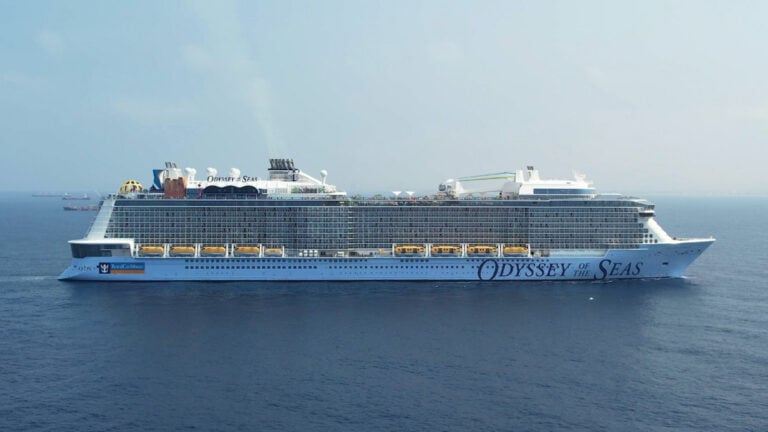
Royal Caribbean International has cancelled two ports of call in Israel for Odyssey of the Seas‘ current sailing due to the escalating geopolitical situation in the region. Two new ports of call have been substituted and the remainder of the ship’s itinerary is unaffected by the sudden change.
Odyssey of the Seas Itinerary Change
The Quantum-Ultra-classOdyssey of the Seas will not be visiting either Haifa or Ashdod in Israel as planned on the current 13-night Holy Land cruise. Guests onboard received the news and an updated itinerary in their staterooms, with suggestions for top sites at the new ports of call and what will happen to pre-booked shore tours.
“As shared by our Captain, the geopolitical situation in Israel is escalating. We take the matter very seriously and our Global Security Teams are closely monitoring developments,”the letter read.“With the safety and wellbeing of our guests and crew in mind, we’ve decided to cancel our calls to Israel.”
Instead, the ship will now visit Bodrum, Turkey and Limassol, Cyprus. Each of the port visits will be a generous 13-hour stay from 7 a.m. to 8 p.m., giving guests plenty of time to explore and enjoy these new destinations.
Photo Courtesy: Royal Caribbean
Odyssey of the Seas is halfway through the 13-night cruise, having departed from Rome, Italy on Monday, October 2, 2023. The ship has already enjoyed visits to Naples, Italy; Athens, Greece; Ephesus, Turkey; and Mykonos, Greece. The ship will next visit Santorini, Greece as originally planned on Sunday, October 8.
Several days of the sailing must be adjusted, however. Monday was to have been a day at sea en route to Haifa (Tuesday) and Ashdod (Wednesday). Instead, Odyssey of the Seas will now spend Monday in Bodrum, Turkey; Tuesday will be a day at sea; and Wednesday will be the visit to Limassol, Cyprus.
The remainder of the sailing – a day at sea, a final port of call in Crete, and another day at sea before returning to Rome on Sunday, October 15 – is unchanged.
The 167,704-gross-ton Odyssey of the Seas can welcome 4,198 guests at double occupancy, or up to 5,510 passengers when fully booked with all berths filled.
After the current sailing, the ship has one more Holy Land itinerary before a 15-night transatlantic cruise will bring her to Fort Lauderdale to offer Caribbean sailings for the winter months. In April 2024, Odyssey of the Seas will return to the Mediterranean.
Shore Tours
All pre-paid shore tours booked through Royal Caribbean International for either Haifa or Ashdod are being automatically refunded to guests’ onboard accounts, and any remaining credit at the end of the sailing will be returned to the card on file within 14 business days of debarkation.
Guests with independent tour arrangements will need to contact their individual tour operators for options. Depending on individual policies, travel insurance may also help recoup costs from private tours now that the port visits are cancelled.
Bodrum, Turkey (Photo Credit: Esin Deniz / Shutterstock)
Tour options are being made available for both Bodrum and Limassol. In both destinations, guests can visit amazing historical and cultural sites and enjoy unique experiences showcasing the unique vibrancy of each port. Touring Bodrum Castle, indulging in an authentic Turkish bath, and exploring Crusader strongholds are just a few options.
Developing Situation Likely to Impact Multiple Cruises
Odyssey of the Seas is not the only cruise to be altered en route to Israel. Celebrity Cruises’ Celebrity Apex has also cancelled port visits to Israel in the next few days, substituting ports in Cyprus and Egypt instead.
Furthermore, other cruise lines with upcoming calls in Israel – including Norwegian Cruise Line, TUI Cruises, MSC Cruises, Costa Cruises, and more – are also likely to alter itineraries due to safety concerns.
Cruise lines always keep alert to tense situations and the possibility of violent escalations in different parts of the world, and alter itineraries as necessary to better protect the safety of their guests, crew members, and ships.
Similar schedule changes happened when tensions escalated between Russia and Ukraine in February 2022 as cruise lines cancelled port visits to Odessa, St. Petersburg, and other impacted destinations and substituted ports of call further from potentially dangerous regions.
The situation will undoubtedly be disappointing to thousands of cruisers who may have booked sailings deliberately to enjoy the port visits in Israel, but safety is always the foremost concern.
Even to this day, countless people remain fascinated by the RMS Titanic. This ill-fated and iconic vessel has captured people’s imaginations worldwide for over a century. While many details from the Titanic’s tragic maiden voyage are known to the general public, many people still wonder how and why the Titanic broke in half after colliding with an iceberg.
Today, we will explain why this famous ocean liner broke in half before it sank to the bottom of the North Atlantic Ocean. Not only will we explain how the collision caused the Titanic to break in half, but we will also cover some of the lessons learned from its sinking.
So, if you are ready to uncover the truth about the Titanic’s final hours above water, it is time to get started!
On Sunday, April 14th, 1912, at approximately 11:40 p.m., four days into its maiden voyage, the Titanic struck an iceberg in the North Atlantic Ocean. Despite its tragic demise, theTitanic was painstakingly designed and built to be the most impressive and sturdy ocean liner ever made. So, why did it eventually break in half and sink?
The Added Weight of Seawater
Within minutes of the collision, the Titanic had already taken on thousands of tons of water through a significant hole in its hull. While passengers were largely unaware of what had occurred, the ship’s crew already knew there was a considerable chance that the Titanic would sink. Lifeboats were lowered less than an hour after colliding with the iceberg to allow women and children to escape the sinking.
The rapid flooding due to the breach in the Titanic’s hull ultimately caused the ship to break in half. As seawater flooded into the Titanic, it began filling various compartments throughout the ship’s lower decks.
Given that the Titanic was over 882 feet long, the imbalance caused by the immense weight of the water-filled compartments put an incredible amount of stress and pressure on the ship’s already compromised hull.
At 2:17 a.m., just over 2 hours and 40 minutes after the initial collision, the Titanic’s hull began breaking in two.
The Titanic’s Length and Structural Vulnerabilities in its Hull
While the incredible weight of the seawater that the Titanic took on due to a breach in its hull would be enough to sink most ships of its time, it would not necessarily be enough pressure to cause the ship to break in half. The break had a lot to do with the ship’s immense size and an overlooked vulnerability in its design.
Titanic at Sea (Photo Credit: meunierd)
The split in the Titanic took place between the ship’s third and fourth funnels, which were giant smokestacks that supported the immense steam engine. Unfortunately, this part of the Titanic’s hull was slightly weaker than other areas, as the design could not accommodate a much-needed expansion joint due to the weight of the funnels.
Since it was weaker than other hull parts, this part of the ship lacked the structural integrity required to support the added weight of flooded compartments. The pressure on the weakened section of the ship eventually caused it to snap in half.
The Titanic’s Hull Was Constructed of Materials that Could Have Failed
While it is often seen as one of the less important factors for splitting the Titanic, recent research claims that the ship’s steel hull and wrought iron rivets proved brittle when they faced the forces generated by impact with the iceberg.
Titanic Under Construction (Photo Credit: meunierd)
While the materials seemed durable enough to withstand an impact in ideal conditions, thewater in the North Atlantic Ocean was well below freezing. The steel the hull was constructed from contained high levels of sulfur, which meant it was weakened when chilled to low temperatures. Modern-day microstructural analysis of hull steel recovered from the wreckage site has proven that there might be some plausibility to thebrittle steel theory.
What Were the Consequences of the Titanic Breaking in Half?
If you have seen James Cameron’s film Titanic, you will have noted that the ship breaking in half was depicted as one of the most dramatic and chaotic moments of its sinking. The truth is, it is not fully known how consequential this event was.
In fact, whether or not the breakage accelerated the sinking and led to a more significant loss of life continues to be questioned by experts today.
Photo Credit: Denis—S / Shutterstock
While some experts argue that the break would have caused the ship to begin sinking faster, as it would have released trapped air within non-flooded compartments in the ship’s lower decks, others believe that the Titanic was sinking at a set speed. The breakage would have had a negligible impact.
One thing is for sure; the breaking would have been a heart-wrenching sight, especially for those witnessing from lifeboats who still had loved ones trapped within the confines of the doomed ship. This would have been more traumatic given that survivors were told for nearly70 years that they were mistaken in what they claimed to have seen.
Until the Titanic’s wreckage was explored in 1985, many experts argued that it would have been impossible for the ship to have split in half above the water.
What Lessons Have Been Learned from the Titanic Breaking in Half?
While the sinking of the Titanic is interesting in its own merit, it has had a particularly influential impact on maritime safety standards and regulations.
The cause of the Titanic’s sinking and the event’s timeline triggered the establishment of the International Convention for the Safety of Life at Sea (SOLAS) in 1914, less than two years after the ship sank. This introduced stricter safety standards for all ships, especially passenger-carrying ocean liners.
Titanic
The primary goal of SOLAS was to establish legally binding safety standards for constructing all passenger vessels. This means using higher-grade materials in construction and having all designs approved by qualified professionals. Given that the sinking of the Titanic was even more tragic and costly due to the mismanagement of safety equipment, SOLAS also aimed to standardize the presence and use of safety equipment on all passenger ships.
According to the 1914 version of SOLAS, all ships had to carry a sufficient number of lifeboats for the ship’s passengers. The standards for safety and evacuation drills were also made much stricter. It also introduced new standards for fire safety and watertight compartments.
Finally, the SOLAS agreement that emerged in the aftermath of the sinking also standardized communication and navigation equipment requirements to avoid collisions like that which claimed the Titanic.
While the SOLAS convention of 1914 introduced massive changes in standards for maritime vessels of the time, it has since undergone numerous updates and revisions. As recently as September 2021, SOLAS 2020 was released. In many ways, the sinking and breaking of the Titanic have had a lasting impact on safety standards even today.
Beyond SOLAS, the breakage of the Titanic also resulted in new standards and manufacturing processes for shipbuilders worldwide. No shipbuilder wanted to be responsible for sinking on the scale of the Titanic.
Would a Modern-Day Cruise Ship Break in Half if it Was Sinking?
If you are worried about safety standards on a modern cruise ship and whether or not one could suffer the same fate as the Titanic, you will be relieved to discover that advancements in ship design and safety standards have made them far more resilient. The truth is there is very little chance that a modern cruise ship would break in half, even in the extremely unlikely event that it was sinking.
Titanic and Modern Cruise Ship (Image Credit: Peter Hermes Furian)
Even if a modern-day cruise ship collided with an iceberg or another solid object, improvements in design, construction, and safety measures would mean that the ship would not sink, never mind actually breaking in half.
Here are some of the ways cruise ships today are not vulnerable to hull-splitting incidents that claimed the Titanic.
Improvements to Structural Integrity
Today, cruise ships are constructed with reinforced hulls free from weak points that contributed to the breaking of the Titanic. They are made from more advanced and durable materials and are now engineered to distribute pressure and external stress evenly across the ship’s hull and keel. This improves the overall strength and stability of the entire ship.
Sophisticated and Watertight Compartmentalization
While the Titanic was divided into compartments that were designed to be watertight, they could not withstand the immense pressure generated by seawater flooding into them. This allowed flooding to spread and increased the speed at which the ship’s lower decks filled with water. Eventually, this flooding caused the ship’s hull to break into two.
Modern cruise ships now use far more sophisticated compartmentalization procedures that help contain flooding to specific areas of the ship. Lower portions of the ship can be sealed off manually or through an advanced computer system that can automatically detect flooding.
Advancements in Safety Regulations and Technology
As discussed above, cruise ships now adhere to a wide range of maritime safety regulations that dictate how the vessel can be designed and must be operated at sea. This ensures that all cruise ships maintain the same high passenger and crew safety standards.
Photo Credit: Philip Schubert / Shutterstock
Advancements in technology, like computer monitoring systems that detect even the slightest issues related to structural integrity, ensure that the crew can react well before an emergency. Modern navigation equipment also helps the ship’s crew avoid collisions that resulted in the Titanic’s tragic sinking.
How long did it take for the Titanic to break in half after it collided with the iceberg?
While it is difficult to gauge the precise timeline of the breakage, most modern estimates put it at roughly 2 hours and 40 minutes after the ship’s collision with the iceberg. After the Titanic had broken in half, it is believed that it took approximately 10 minutes for the bow and stern sections to submerge fully.
Did the Titanic breaking in half impact evacuation efforts?
Yes, once the Titanic had broken in half, it became challenging for anyone to evacuate the ship. Not only did it increase the speed at which the ship sank, the splitting would have made it highly confusing and stressful for anyone unfortunate enough to be still on board the vessel.
Have any other major ships broken in half due to a collision?
There are no other records of ocean liners breaking in half due to an accidental collision with an object. With that said, during wartime, particularly the First World War, numerous merchant and navy vessels split in half due to direct hits from torpedoes and other weapons.
In peacetime, the type of catastrophic breakage that finished the Titanic off has not been seen. This is partially due to the advancements in safety standards and ship design that emerged after the Titanic’s sinking.
Final Words
While the Titanic’s tragic maiden voyage certainly stands as a stark reminder of the dangers the oceans can pose to even the most impressive man-made vessels, the ship’s sinking and breakage resulted in some of the most important safety innovations of all time.
Today, passenger vessels are made to withstand and avoid collisions that caused the Titanic to split and eventually sink. Without the sinking, it may have taken decades longer for something like the SOLAS agreement to emerge, which could have resulted in countless other incidents and lost souls at sea.
There is no denying how big of an impact the sinking of the Titanic has had on maritime safety practices and ship design or how profound the ship’s tragic end has had on popular culture.
Even though ships are now much safer, the legacy of the Titanic is a powerful reminder of the importance of respecting the world’s oceans and seas. This reminder has shaped the modern-day cruise industry, so we can all enjoy voyages in a much safer way!