Nearly thirty-six hours after colliding with Pier 27 while docking in San Francisco, the repairs to Ruby Princess are underway and the ship will depart Sunday, July 9, 2023 for a shortened sailing with just two ports of call rather than the original 10-night, 4-port itinerary.
Guests are being provided different options, from full refunds to partial refunds and future cruise credits for the dramatic changes.
Now, repairs are expected to take another 24 hours or more, and the ship’s estimated time of departure from San Francisco is set at 4 p.m. on Sunday, July 9, 72 hours after its original departure schedule.
Ruby Princess Damage (Photo Credit: Amanda del Castillo)
Guests onboard have been notified that the revised itinerary is for the ship to sail a 7-night “Pacific Northwest/Alaska” voyage with visits to Ketchikan on Wednesday, July 12 and Prince Rupert on Thursday, July 13. Ruby Princess will return to San Francisco on July 16 for debarkation as originally scheduled.
“Princess has considered all possible alternatives and has selected this itinerary to preserve as much of our guests’ precious vacation time as possible,”the statement from Princess Cruises read.“We deeply regret the disappointment the delays have caused and appreciate our guests’ understanding as we manage this unexpected situation.”
The hole in the Ruby Princess cruise ship was repaired. Does it need some painting job?! pic.twitter.com/gWecVXEfko
The ship’s original itinerary was also to have included a visits to both Sitka and Juneau as well as scenic cruising in Glacier Bay, none of which is possible now. The calls to Ketchikan and Prince Rupert were always scheduled fur July 12 and July 13, respectively.
Until the extent of the damage and the timeline for repairs was known, it was not possible to permit guests off the ship in case the vessel was to depart on short notice or if the full cruise were to have been cancelled.
Compensation Options
Guests do now have the option to cancel their cruise and will receive a 100% refund of their cruise fare, as well as full refunds of post-cruise hotel packages and transfers booked through Princess Cruises, any prepaid shore excursions for now-cancelled ports of call, and other prepaid items and taxes, fees, and port expenses.
Photo Credit: Macklin Holloway / Shutterstock
Guests who elect to cancel their cruise will also receive a 50% future cruise credit (FCC) of their fare, which can be used for any future Princess sailing booked by February 1, 2024 and sailing by February 1, 2025.
Even if cancelling, guests may remain onboard until 11 a.m. on Sunday morning, July 9, as they make alternative travel plans.
Passengers who do remain aboard for the now 7-night abbreviated sailing will receive a 75% refund of their fare as well as refunds for pre-paid shore tours for now-cancelled ports of call and the applicable taxes, fees, and port expenses.
These travelers will also receive a 75% FCC for the cruise fare to book a future Princess Cruises voyage.
Repairs Continuing
The repairs to the 113,561-gross ton Ruby Princess are already underway, and will be fully inspected before the ship sets sail on Sunday. The damage was done to the ship’s port aft corner, where significant dents and tears in the hull were seen. Additional scuff marks were also noted on the port side of the vessel.
One giant band-aid is being attached on the side of Ruby Princess cruise ship still docked in San Francisco. pic.twitter.com/dNgMW87cUW
The ship’s restaurant and hotel operations are not affected by the damage, and at no time has the safety of the guests or crew onboard been compromised. No injuries have been reported related to the incident.
The Crown-class vessel currently has 3,328 guests and 1,161 crew members onboard.
Unsure what is meant by the aft of a ship? We can help you understand this nautical terminology. Our guide covers everything you should know!
Whether you are new to cruise ship vacations and would like to know more about the layout of a ship, or you are just curious about nautical terminology, you will want to familiarize yourself with what is meant by the aft of a ship.
Fortunately, we can help you gain an in-depth understanding. We will explain what this term means and cover in detail what areas you will find in the aft of a large-scale cruise ship. From there, we will even explain some of the benefits and drawbacks of booking a room in the aft of a cruise ship.
If you ever wanted to learn the differences between the forward and the aft of a ship, you have come to the right place!
The aft of a ship is a nautical term to describe a vessel’s rear section or back end. The rear of the ship can also be called the stern, but aft is often the preferred term when discussing larger vessels like cruise ships.
Essentially, the aft of a ship is the exact opposite of the bow or forward of a ship, which is the term for the front end of a vessel. With most non-sailing ships, the underside of the aft is where you will find the propellers, engine compartments, and steering rudder.
Where Does the Term Aft Come From?
The term “aft” is a common phrase in maritime and nautical terminology that is often believed to just be the shorter version of the word afterdeck. While this explanation makes sense, it is actually somewhat misguided.
The real explanation for the use of the word aft in nautical terminology is the fact that the word is derived from an Old English word spelled “aeftan,” which roughly translates to “behind” or “in the back of.”
Two Docked Cruise Ships (Photo Credit: SeregaSibTravel / Shutterstock)
Given that it originates in such an old word, it is unsurprising that the term aft has been used in nautical terminology for hundreds of years. Various navies, particularly the United Kingdom’s Royal Navy, placed great importance on the aft portion of a naval vessel, as this is where the steering wheel and captain would be located.
Today, the term aft is used regularly, especially within the cruise ship industry, to describe the back portion of a ship. It can be used to describe where various amenities are located, as well as sections of cabins.
What Can Be Found at the Aft of a Cruise Ship?
Regarding cruise ships, the aft of the ship can be an extremely busy area where passengers can find many amenities and features.
While some of the smaller cruise ships will use the aft of the ship as a quiet area where they can position a simple observation area above crew cabins and storage areas, some of the larger cruise vessels will use this area as a high-traffic entertainment hub.
Some of the many things you could find at the aft section of a cruise ship could include:
Dining Venues and Restaurants
Given that the aft of a cruise ship can offer stunning views and a more relaxed atmosphere than the middle of the ship, it is regularly used for restaurants, cafes, and other dining establishments. It can be a great place to enjoy a delicious meal or a quiet drink while viewing the water being churned up behind the ship.
Norwegian Encore Dining Room
Many cruise ships also feature bars and lounges in the aft, allowing them to enjoy the expansive views.
Outdoor Observation Decks
It is also common to have multi-level observation decks at the aft of a cruise ship, as they provide outstanding views. Some cruise lines will even intentionally charter their trips in a way where the sun will set behind the vessel to offer passengers stunning sunset views from the aft of the ship.
View of MSc Cruise Ship (Photo Credit: ODIN Daniel / Shutterstock)
Many of these observation decks will have seating areas that consist of sun chairs, bistro tables, and comfortable loungers, so it is beneficial to stake out a spot early if you plan on taking in a sunset view!
Swimming Pools and Spas
You may also notice that some cruise ships have swimming pools, hot tubs, and spa facilities in the aft section. Again, the stunning views of the ocean that can be found at the rear of the ship make this an ideal location for lounging and relaxing.
Pool and Loungers at back of Cruise Ship (Photo Credit: Brent Wong / Shutterstock)
Cabins with Balconies
For many cruise ships, some of the largest passenger cabins can be found in the aft section. For those looking for a large and comfortable balcony, looking for a cabin towards the aft of the ship could be the right decision.
Because the aft of the ship is more shielded from the wind, the balconies tend to be much larger than those found along the port and starboard sides of the ship.
Not only are the balconies and cabins found in the aft of the ship usually larger than those found elsewhere, but they also offer uninterrupted ocean views that allow passengers to enjoy the hypnotic sight of water churning in the ship’s wake.
Some of these cabins and balconies are even located along the corners of the ship’s rear, so they can wrap around, allowing for multiple views from the same cabin!
Crew Quarters
Some cruise ships will also use the lower portions of the aft of the ship for small crew cabins and shared, dormitory-style accommodations.
These areas are reserved for staff members to sleep and recuperate during their off-duty hours. While crew quarters are found here on some ships, where crew quarters are located depends on the specific layout of each particular cruise ship.
Helicopter Landing Pad
Some ships feature a helipad towards the aft of the ship. These helipads are designed for medical emergencies that necessitate the evacuation of a passenger or crew member. The Helipads on Royal Caribbean and Celebrity cruise ships are at the front.
Typically, the helipad will also be near a medical treatment facility. Although they are interesting features of the ship, these areas are only accessible to certain crew members.
Helipad on Cruise Ship (Photo Credit: Anton Watman / Shutterstock)
It is also possible to find sports and recreation facilities, movie theaters, concert venues, and other amenities towards the aft of the ship. Basically, each cruise ship is different, but many try to take advantage of the stunning views offered by this relaxing section of the vessel.
Should You Book a Cabin in the Aft of the Cruise Ship?
Where you book a cabin on a cruise ship depends primarily upon your personal preferences and the budget you have allowed for your trip.
Stunning Views
In terms of the benefits of a cabin near the aft of the trip, many people find the view relaxing. Watching as the ship’s propulsion system churns up the water below can be mesmerizing, as can the expansive view of the sea or ocean you get behind the ship.
Cruise Ship Wake (Photo Credit: Tony Steinberg / Shutterstock)
These views can be delightful when the ship is pulling out of port, as you see the land shrink into the distance the further the ship gets away from it.
Larger Cabins and Balconies
As mentioned, another benefit of cabins located towards the ship’s rear is that some of the best private balconies can be found here. The rear-facing cabins and verandas are much larger than those on either side of the midship area. Many ships even offer wrap-around balconies with two views for those willing to spend a little more on their trip.
Proximity to Dining Areas and Amenities
We covered some of the features common towards the aft of cruise ships above. If you would like easier access to dining areas and other amenities, it might be worth looking at the ship’s layout, as many will have these features in the aft section.
Are There Downsides to Booking a Cabin in the Aft of the Ship?
Again, personal preferences play a significant role here, but booking a cabin in the aft section of a cruise ship is not for everyone. You have to remember that this is where the ship’s engine equipment and propeller system are located, so vibrations and other sounds in the engine room could impact some of the lower cabins.
After of the Cruise Ship (Photo Credit: Sean Pavone / Shutterstock)
Then, of course, there is the fact that larger aft cabins with full-sized balconies are highly sought after, which means they can be more expensive than cabins located in other parts of the ship.
Not only can this increase the price, but it can also make them more challenging to book. If booking a cabin in the aft of a cruise ship appeals to you, you should book your trip well ahead of time to ensure that you get the accommodations you desire.
Another potential drawback of a cabin near the aft of the ship is that you could be located a reasonable distance from the ship’s main elevators, which tend to be closer to the ship’s middle sections. While this is not always the case, it can be a concern for those with mobility issues.
Is the Aft of the Ship Bad for Seasickness?
It is a common misconception that the aft of the ship is the worst area to stay for those sensitive to seasickness. The truth is, the forward of the vessel is where the most movement can be felt. This is especially true for those staying on the upper decks of the ship’s front end, as the swaying motion is the most detectable in these areas.
Photo Credit: MSC Cruises
Perceivable movement is less severe at the aft of the ship than at the ship’s forward. With that said, the ship’s propulsion system can create excess noise and vibrations that can disturb some passengers.
If you have concerns about sea sickness or motion sickness, you would be better off booking a cabin as close to the ship’s center as possible. You should also prioritize a lower deck, as this will reduce the motion and swaying you can feel.
Final Words
Now that you know more about maritime terminology, you will be better prepared to navigate a trip and book a cabin for your next cruise vacation. Whether or not booking a cabin in the aft section of the ship is right for you depends on what you value in these types of trips and the budget you have set aside.
With that said, the views of the churning wake can be an incredible draw, as can the stunning views of seemingly endless water behind the ship.
Even if you book your cabin in another part of the ship, we recommend venturing out to the aft to take in the view, especially as the sun sets. Grab a meal towards the ship’s rear, or take a quiet moment for yourself; it is well worth your time!
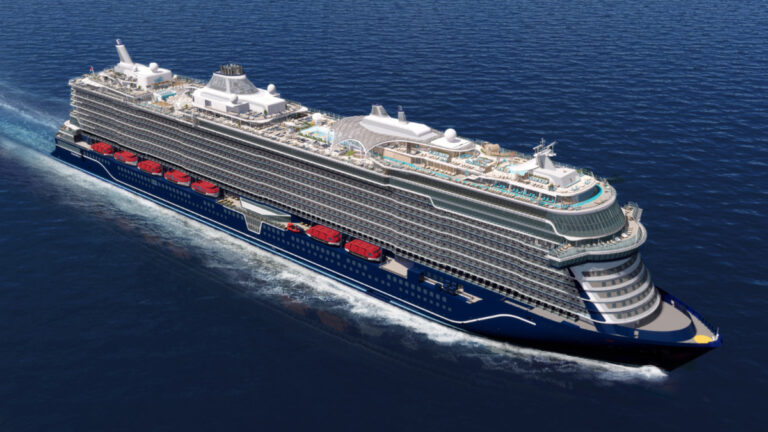
TUI Cruises has revealed outstanding new features for the upcoming Mein Schiff 8, which will be a new class of vessel for the German cruise line and the largest ever built for their fleet.
Deliberately designed for a sense of openness and well-being, the ship will offer never-before-seen spaces and plenty of options for travelers looking for a comfortable, relaxing vibe.
New Spaces for Mein Schiff 8
The upcoming Mein Schiff 8 from TUI Cruises promises that guests will experience freedom in a new way onboard, with outstanding new spaces carefully designed for well-being without a sense of crowds, despite the fact that the 161,000-gross ton ship will be the largest ever built for the cruise line.
TUI Cruises Mein Schiff 8
Extensive outside deck spaces will be interconnected for easy flow, with wide promenades and deluxe seating and lounging options in a variety of unique seating areas and cozy niches. Cushioned sunbeds, classic loungers, Adirondack chairs, and other seating styles invite guests to relax and enjoy their cruise.
TUI Cruises Mein Schiff 8
Of special note is the unique, first-of-its-kind “shadow roof” designed in an open wicker style to provide shade while still promoting air flow and dappled sunlight, similar to a natural shade canopy with flecks of light.
“The iconic roof, which seems like a light-flooded grotto, will not only be visible from afar, it also offers guests a very special retreat. A unique place that probably doesn’t exist on any other ship,”said Björn Asmussen, architect at 3Deluxe, who helped design the roof.
TUI Cruises Mein Schiff 8
The roof is supported by graceful arches that offer a soft vibe but with a height to permit ample breezes. Parts of a pool, jogging track, and plentiful seating are all under the cooling shade of the roof.
Another stunning space onboard is near the ship’s stern. A terraced “sun landscape” with ample seating and lounging spaces leads up to a luxury infinity pool overlooking the deck and offering premium views of the surrounding seascape.
TUI Cruises Mein Schiff 8
Construction Well Underway
Construction on Mein Schiff 8 began in June 2022 at the Fincantieri Monfalcone shipyard near Trieste, Italy. The vessel will be the first ship in TUI Cruises’ fleet to be powered by liquefied natural gas (LNG), and has a variety of efficiency updates over the line’s older ships.
“The investment in LNG-powered ships is an important milestone on the way to emission-free and climate-neutral cruising. LNG serves as a bridging technology here. In perspective, we will use BIO LNG, which is produced either from biogenic sources or synthetically from renewable energy,” Wybcke Meier, TUI Cruises’ CEO, said when the ship’s construction began.
TUI Cruises Mein Schiff 8
The cruise line has some of the most ambitious goals for emissions-free cruising in the industry, with the intent of sailing completely emissions-free by 2030.
While not many exact details of the ship are yet confirmed, Mein Schiff 8 will be able to welcome approximately 4,000 passengers, with roughly 1,100 crew members onboard. The ship will be a German-speaking vessel, with all onboard communication, announcements, shows, and newsletters primarily provided in auf deutsch.
Mein Schiff 8 is scheduled to debut in late 2024, having been slightly delayed from the planned mid-2024 debut due to the COVID-19 pandemic and its impact on shipyard productivity. A sister ship, Mein Schiff 9, is planned for 2026.
Stay tuned to Cruise Hive for further updates on this unique upcoming vessel as additional features, itineraries, and other information is announced.
Have you ever wondered about the techniques involved in docking a cruise ship? We will cover 6 of the most common docking techniques cruise ships use.
Docking a cruise ship is a relatively complex procedure that relies on careful planning, clear communication, and a skillful crew. While you may assume that cruise ships are always docked using the same techniques, these massive vessels can use various methods.
To help you understand how cruise ships are docked, we will cover some of the most common docking techniques. We will also explain why the different methods are employed, rather than all vessels using the same basic process.
If you are ready to learn about cruise ship docking, it’s time to get started!
How a cruise ship is docked will depend on a variety of factors. The following are just some that need to be taken into consideration by a ship’s navigational crew when deciding which docking method they will use:
Port Infrastructure and Layout
The port where the cruise ship intends to dock plays a significant role in determining which type of docking technique the vessel will need to use. Some have narrow waterways, which restrict how ships can navigate the port.
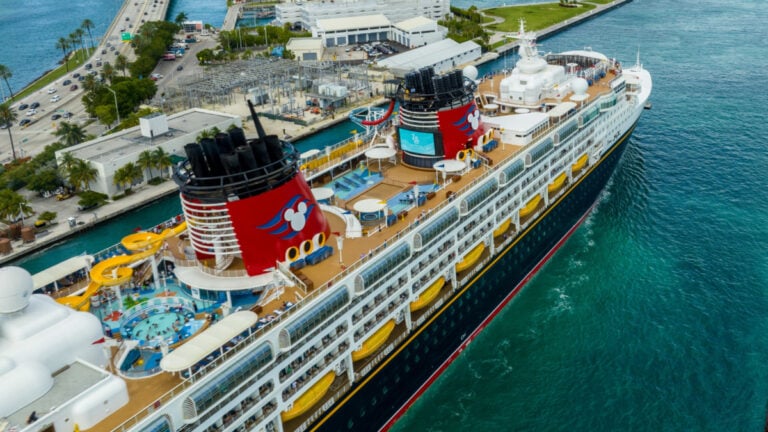
PortMiami Cruise Ships (Photo Credit: Felix Mizioznikov / Shutterstock)
Others may use fixed rather than floating docks, so tidal conditions at the time of docking can force the vessel to dock in a certain way.
Available Space Within a Port
In high-traffic ports, larger ships can be forced to dock at a specific angle, allowing the port authority to maximize their limited space. Even if a port is not particularly busy but is on the smaller side, they could request specific docking techniques to prevent larger ships from blocking in others.
The Physical Size of the Cruise Ship Itself
The length and width of a cruise ship can also play a significant role in determining which docking method is the safest and most efficient. With larger cruise ships, maneuverability can be a concern in tight spaces.
Royal Caribbean Wonder of the Seas (Photo Credit: Darryl Brooks / Shutterstock)
These larger ships may also have to dock in ports with the specialized infrastructure required to allow many passengers to disembark, like multiple berths and longer piers.
Urgency of Docking
In emergencies where a ship must be evacuated quickly, its captain and navigational officers can be forced to adopt a docking procedure they may otherwise avoid. These forced docking situations can dictate which type of technique is used, as simply waiting for a more suitable docking point to become available is not an option.
What Are the Most Common Techniques for Docking a Cruise Ship?
Now that you understand why cruise ships can use different docking techniques, it is time to take a look at some of the most common methods used for docking a cruise ship:
The Traditional Docking Method
As the name implies, traditional cruise ship docking is how most cruise ships were initially docked. It also is the most commonly used method today.
This docking technique involves aligning the ship parallel to a stationary dock. The ship’s navigational officers work with the port’s head pilot to maneuver the cruise ship alongside the dock.
Cruise Ship Officers on the Bridge (Photo Credit: Tony Skerl / Shutterstock)
While most maneuvering is carried out using the cruise ship’s primary propulsion system and secondary side thrusters, they can also request assistance from tugs operating within the port.
Once the cruise ship is in position, mooring lines are deployed and secured to hold the vessel in place. This prevents movement and allows for the secure docking required to allow guests and crew to disembark the ship.
Multiple Berth Docking
In larger ports with areas explicitly dedicated to allowing cruise ships to dock, multiple berth docking can be performed. With this technique, numerous cruise ships can dock alongside each other.
Each cruise ship can be positioned in its own berth, with mooring lines securing them. This is particularly common in popular destinations offering cruise ship passenger attractions. This technique requires careful planning, as it is vitally important that the cruise ships do not dock while another ship’s guests are disembarking or boarding.
Bow or Stern Mooring
When a port does not offer sufficient docking facilities for full-sized cruise ships, it is possible to anchor offshore, then transport cruise passengers to the shore using smaller ferries. Within the cruise ship industry, this process is called tendering.
Cruise Tender
When this unique form of docking is used, the ship’s crew positions the cruise ship so that its bow or stern faces open water. This increases stability, even when the vessel is not in port. Mooring lines can be used to secure the ship to additional anchoring points and secured buoys.
Not only is this technique common when visiting areas that are incredibly busy and need more room for a cruise ship in their port, but it can also be used for more remote areas that lack adequate docking facilities.
Mediterranean Mooring
Mediterranean Mooring, or Med Mooring for short, is a docking technique developed to overcome the logistical issues of docking in some of the Mediterranean Sea’s most popular and crowded ports.
This allows the cruise ship to take up less space in the port, so more cruise ships can fit. Once the ship is in position, mooring lines are secured to the dock to hold the ship at this angle.
Passengers can either depart at the front of the ship, which is the area closest to the dock, or lengthy platforms can be extended to the ship to allow passengers to walk across the water.
While this technique was developed to overcome the crowded ports of the Mediterranean Sea, it can be used elsewhere if required.
Perpendicular Pier Docking
In ports where cruise ships must dock perpendicular to the shoreline to maximize space, they can position their bow or stern towards the shore, then position themselves inwards.
Once this occurs and the ship is in position, mooring lines hold the vessel in place, allowing passengers and crew to disembark or board safely. This docking technique usually involves pilot and tug boats assisting the cruise ship, as the docking process must be exact.
One of the significant advantages of this type of docking is that it means docks are located on both the starboard and port sides of the ship. One side of the vessel can allow passengers to come and go from the ship, while the other can be used to restock the ship with supplies and fuel.
Floating Dock Docking
In ports that have significant tidal fluctuations, floating docks can be used. Rather than a fixed dock, the port uses docks that move in elevation with the rising and lowering of the tide. These floating docks are attached to the shore with flexible connections that can move with the tides.
The ship’s navigation team will use the ship’s propulsion system and thrusters to align the ship with the appropriate floating docks. A local pilot familiar with the port and the characteristics of the tide will assist the vessel.
Once the ship has been attached to the floating dock with mooring lines, the local pilot can authorize the cruise ship to allow passengers to disembark.
Even though the cruise ship is connected to the floating docks, it is still essential that local tide conditions are taken into account to ensure that the passengers are safe at all times. This is usually for much smaller vessels rather than large cruise ships.
How Do Cruise Ships Prepare for Docking?
Preparing a large ship to dock safely and efficiently is a complicated process. Not only does the crew have to determine the safest docking technique to use for the situation at hand, but they must also carry out the following procedures correctly:
Planning
The ship’s captain and navigation officers must work with the local pilot and port authorities to plan when the vessel should approach. They review everything from depth charts, incoming weather conditions, the physical size and draft of the ship itself, and local regulations for that specific port.
Officers on the bridge communicate their plans with the relevant personnel to ensure the docking procedure goes smoothly.
Positioning and Speed Control
Once the planning phase has been completed, it becomes time to prepare the crew for executing their docking responsibilities. Communication systems are tested, then the planned maneuvers and speeds are properly communicated with the relevant crew members.
Thrusters
Depending on the chosen docking technique, the ship’s propulsion system and thrusters work together to position the ship. Tug assistance can be requested from local tug operators and pilots.
Emergency Preparedness Procedures
Safety is always the number one priority with any complicated process like docking. The ship’s crew is readied to react to any sort of emergency that could feasibly occur during the docking procedure.
Passenger and Crew Preparations
Once everything has been planned and the crew is ready to dock the ship, announcements can inform passengers and crew members to return to designated assembly areas or their cabins, as these are the safest areas to remain during the docking procedure.
Photo Credit: Philip Schubert / Shutterstock
As mentioned, safety takes priority whenever any cruise ship is being docked. The entire procedure can be called off if docking cannot be performed safely.
The cruise ship’s crew and shore-based authorities, pilots, and other relevant personnel work together to prioritize the safety and comfort of those on board and those in other pre-docked cruise ships.
Final Words
Docking is incredibly important for cruise ships. It allows passengers and crew members to board and disembark the cruise ship safely. When this is carried out smoothly, it will enable passengers to begin and end their voyage and visit exciting shore destinations for day trips and shore excursions.
It is a critical component of the entire cruise ship experience. Beyond allowing passengers to board, docking allows cruise ships to load new supplies. In some situations, maintenance and repairs can also be carried out while the cruise ship is docked.
For longer cruise voyages, even the crew can be changed over or given some much-needed time off the ship for their own well-being. Overall, docking is one of the most vital operations a cruise ship carries out, and it is an integral part of any cruise experience!
Disney Cruise Line will be rolling out its new DisneyBand+ wearable aboard Disney Fantasy starting July 29, 2023, bringing the new wireless technology to a second ship in the fleet.
The wearable, hands-free band provides convenience and integration onboard by permitting guests to access their stateroom, make purchases, and add extra magical touches to their cruise experience.
DisneyBand+ Coming Soon to Disney Fantasy
Following the successful introduction of the DisneyBand+ to Disney Wish and the use of the wearable RFID device in Disney theme parks, DisneyBand+ will now be available aboard Disney Fantasy as early as the Saturday, July 29, 2023 sailing, a 7-night Eastern Caribbean cruise from Port Canaveral to St. Maarten, San Juan, and Castaway Cay.
The band’s availability has been reported by booked guests, but it may only be available in limited numbers and on select sailings at this time. The cruise line plans to introduce DisneyBand+ aboard the entire fleet throughout 2023, but the exact timeline for each ship to integrate the technology has not been announced.
Photo: Disney
The 129,700-gross ton Disney Fantasy is the second-newest ship in the Disney fleet, having debuted in 2012 (Disney Wish is the newest, and debuted in 2022). Because the Disney fleet is older, it will take time to ensure each vessel is properly equipped for all the features of the wireless DisneyBand+ to work properly.
Using DisneyBand+ is optional for all cruise guests, and does not replace the traditional ship “Key to the World” cards which remain necessary for debarking and embarking the ship at ports of call, as well as when leaving the ship at the end of the cruise.
Benefits of Wireless Bands
DisneyBand+ is a waterproof wristband with wireless RFID technology connected to guests’ shipboard accounts and information. Guests can use the band to make onboard purchases of food, drinks, and souvenirs, as well as access their staterooms and select lounge spaces without needing a separate card.
Because the band is on the wrist, it is much more difficult to lose than a traditional card and is more convenient to carry around throughout the cruise, especially for younger cruisers.
Photo: Disney
The band is also customizable with various colors and designs, including exclusive Disney Cruise Line nautical themes that are only available to guests setting sail with the cruise line.
If guests already have a MagicBand+ from the Disney theme parks, they can also use that band for a Disney cruise or order a new band to add to their collection. Likewise, a band used for a Disney cruise can also be used at Walt Disney World Resort or Disneyland Resort.
The band is rechargeable and comes with a charger to ensure it stays active and powered up for all onboard needs, regardless of the length of the cruise.
DisneyBand+ Costs
At this time, DisneyBand+ costs $35 per guest for a solid color, or $45 for a themed design. If purchased more than 11 days prior to sailing, the band is $10 off, but the discount offer is only available to US residents and is subject to availability.
Photo Credit: NAPA / Shutterstock
Once onboard, using the DisneyBand+ does not cost anything except for whatever is being charged to a guest’s onboard account – there is no usage fee or extra charge for the wireless, hands-free convenience.
Wireless Bands on Other Cruise Lines
Disney Cruise Line is not the first to introduce “wearables” as an alternative to traditional cruise ship cards. Princess Cruises’ OceanMedallion is one of the most successful and popular uses of the technology. MSC Cruises also has the MSC for Me that integrates a band, the cruise line’s app, and touchscreens around all the fleet’s smart ships (which is not yet every MSC ship, but is coming soon).
Aboard Royal Caribbean ships, the WOW band is available for guests to purchase on select ships, and is provided for free to guests cruising in Star Class.
Guests aboard Princess Cruises’ Ruby Princess continue to wait as the ship remains docked in San Francisco, California. The unexpected overnight stay is due to the collision with Pier 27 early on July 6, 2023.
Maintenance crews, the US Coast Guard, and other officials are working on inspections and assessments of the damage. At the same time, Princess Cruises has yet to confirm a departure for its 10-day Alaska cruise onboard the stricken vessel.
Damage Assessment and Repair Work Continues
Guests who boarded Ruby Princess on July 6 for a 10-day Alaska cruise from San Francisco were treated to an unexpected, and likely unwelcome, overnight stay in the San Francisco port.
DAMAGE AT THE DOCK: Thousands still stuck on this Ruby Princess cruise ship at Pier 27 in SF. Passengers boarded yesterday at 6am to head to Alaska.
The Coast Guard & cruise technicians are assessing damage to see if the ship will even sail. People are still on board. @KPIXtvpic.twitter.com/JclVZ3IuL2
Princess Cruises, in collaboration with the U.S. Coast Guard and its maintenance and engineering team, continues to inspect and assess the ship to determine the extent of the damage and necessary repairs. The question is whether the damage is structural or superficial.
Princess Cruises issued a statement to ABC 7 News on July 6:“Princess Cruises is in continued discussions with the U.S. Coast Guard regarding clearance for Ruby Princess to depart San Francisco, but a departure timeframe has not yet been confirmed. The safety of our guests and crew remains our top priority, and Ruby Princess will depart once the ship is deemed by U.S. Coast as fit to sail.”
Yesterday the Ruby Princess cruise ship suffered visible damage after hitting Pier 27 while docking in San Francisco. This morning crews are still trying to fix it…as a new round of passengers have been onboard since around 11AM yesterday to head to Alaska. Current pics: pic.twitter.com/B8qMafStkW
While Ruby Princess is being assessed, the ship’s departure time for the next scheduled cruise remains uncertain. In the earlier statement from Princess Cruises, the cruise line was hopeful that the vessel would be able to leave late last night, July 6.
The cruise line’s technical experts and shoreside team will remain working on this situation, and the ship will set sail from San Francisco should clearance to depart be received at any time tonight. Additional updates regarding the ship’s status and revised itinerary will be provided in the morning. Princess will also be providing a goodwill gesture of compensation once the full effect of the necessary changes is known.
At the time of the incident, the vessel had 3,328 guests and 1,159 crew members on board. New guests boarded the ship on Thursday around 11:30 AM and are now waiting to set sail on their planned 10-night Alaskan cruise. The 113,561 gross tons Ruby Princess is due to arrive in Sitka, Alaska, on July 9, a date that is becoming more and more uncertain.
Investigation into the Incident
The investigation into the collision is currently underway, with the ship’s pilot under scrutiny. Bar pilots are experienced captains who board cruise/cargo ships and tankers to guide them through the bay’s sandbars and into the port. The pilot of Ruby Princess is being drug and alcohol tested, a standard procedure in serious marine incidents.
Ruby Princess Docked in San Francisco (photo Credit: Darryl Brooks / Shutterstock)
Preliminary reports suggest that the docking was attempted at the maximum recommended current, which could have made the maneuver particularly challenging. The U.S. Coast Guard and other federal agencies are carrying out the investigation.
“The Coast Guard has sent two teams, an investigations team and an inspection port state control team to the vessel and will be conducting those inspections and investigations,”said U.S. Coast Guard Lieutenant Commander William Williams.
As the Ruby Princess awaits departure clearance, Cruise Hive will keep you informed of any updates regarding the ship’s status and revised itinerary.
MSC Cruises’ MSC Meraviglia is offering longer sailings for fall 2023 with in-depth stops at some of the most richly historic and popular Atlantic coast cities, including New York, Boston, and Halifax.
When combined with all the amazing features of the ship itself, these itineraries are not to be missed for the ultimate autumn adventure.
Longer Autumn Cruises for MSC Meraviglia
Guests looking to get away this fall can enjoy 10- and 11-night sailings aboard the 171,598-gross ton MSC Meraviglia, departing from New York City for amazing autumn itineraries.
In September and October, select Canada/New England cruises are designed to showcase the region’s spectacular fall foliage, as well as give guests the opportunity to immerse themselves in the culture and history of stunning cities.
Only three of these special itineraries are available, with departure dates of September 24, October 4, and October 15.
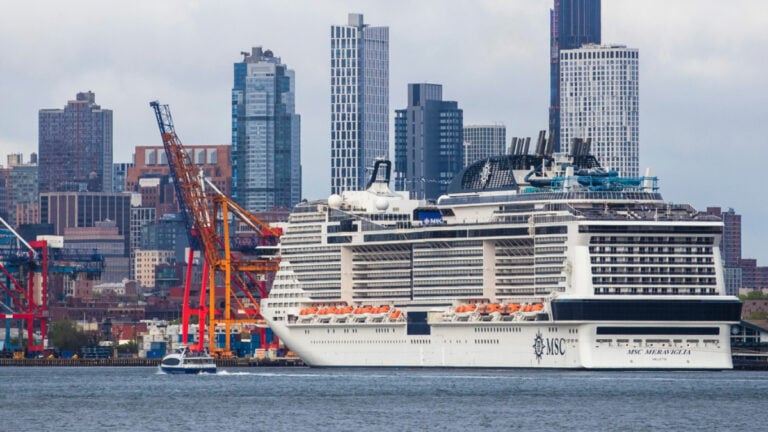
MSC Meraviglia Arrives in New York (Photo Courtesy: MSC Cruises)
Canada and New England is renowned for colorful fall foliage, and there is no better way to see it than from the deck of a cruise ship. The specific dates of these cruises optimize peak fall foliage colors, which historically run from mid-September to mid-October. Along the way, visits to top ports of call on the Atlantic coast give travelers wonderful insights to the region’s unique background.
Stunning Ports of Call
These longer MSC Meraviglia sailings offer full-day stops at a range of must-see ports, from Newport, Rhode Island to Portland, Maine, as well as top Canadian ports of call. Each destination offers something unique for guests to enjoy.
Newport on the southern coast of Rhode Island, is a charming waterfront community with outstanding architecture and iconic mansions, along with a picturesque rocky shoreline that offers gorgeous views of Narragansett Bay.
This often-overlooked port of call is a feature of MSC Meraviglia‘s autumn itineraries, with guests having a long port day to thoroughly explore and appreciate the maritime town.
History buffs – especially those interested in the American Revolution – will enjoy a full day in Boston, where they can walk along the famous Freedom Trail and visit historic sites for the Boston Massacre, Boston Tea Party, Paul Revere’s Ride, and much more. Meanwhile, sports buffs will appreciate touring Fenway Park and everyone can enjoy amazing food.
MSC Meraviglia Arrives in New York (Photo Courtesy: MSC Cruises)
In Halifax, the seaside capital of Nova Scotia, guests can stroll along one of the world’s longest continuous waterfront boardwalks and enjoy not only fantastic restaurants, but also a wide range of retail options with maritime souvenirs and other quaint options. Just outside the city, amazing natural beauty and charming fishing villages offer a unique perspective different than massive cruise ships.
Next up on MSC Meraviglia‘s special fall itineraries is Saint John, New Brunswick. Nature lovers will especially enjoy this stop with the striking coastline, lush forests, biking trails, and the amazing Bay of Fundy, home to some of the world’s highest tides. Wildlife is abundant here, and guests may get great views of seals, whales, moose, birds, and much more.
Portland, Maine, is another port of call not to be missed on any autumn adventure. Here, guests will find lighthouses, cobblestone streets, swimmingly fresh seafood, and much more, from historical architecture to the Portland Museum of Art to plenty of outdoor activities to enjoy all that nature offers at this beautiful time of year.
Sailing on MSC Meraviglia
MSC Meraviglia debuted in 2017 and offers guests a wide range of onboard activities and features, from the impressive promenade topped with and LED sky screen to more than 30 bars and restaurants, both indoor and outdoor pools, a ropes course, the extensive MSC Aurea Spa, a state-of-the-art fitness center, and the exclusive MSC Yacht Club.
The ship’s 19 decks can welcome 4,428 guests at double occupancy, and up to 5,642 passengers when fully booked with all berths filled. Onboard, a team of more than 1,500 international crew members provides exemplary service.
MSC Meraviglia is homeported from New York year-round. In addition to these special autumn sailings, the ship offers regular cruises to The Bahamas as well as Bermuda, with occasional Caribbean itineraries – providing diverse sailings and something for everyone from the Big Apple.
Ocean Cay MSC Marine Reserve, the private island of MSC Cruises, was featured on NBC’s Today Show to celebrate the initial success of its pioneering coral nursery in the Bahamas. The Super Coral Program project, which started in 2018, aims to rebuild the coral beds surrounding MSC’s private island resort.
Cruise lines typically focus on a fun-filled day with pools, slides, and beach bars at their private islands. MSC’s Ocean Cay is focused on the environment on its private island, a sand-mining area before MSC Cruises took possession and developed it into a pristine natural area.
Super Coral Program
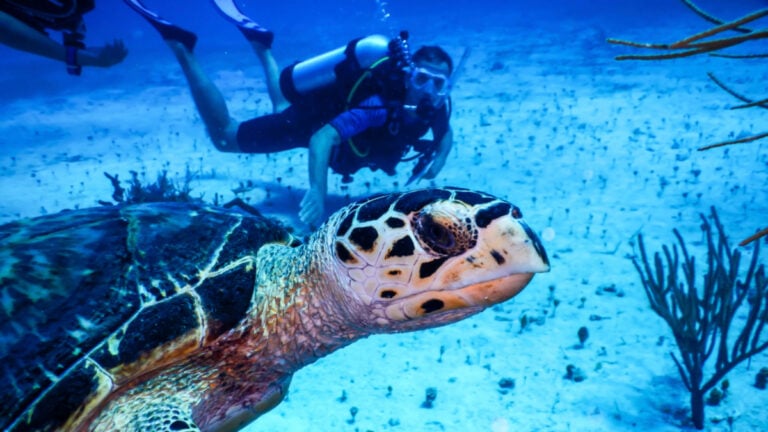
MSC Cruises and its non-profit organization, the MSC Foundation, have received widespread praise for the success of its Super Coral Program at Ocean Cay Marine Reserve. NBC’s Today Show showed a special on July 6, with researchers growing new corals that they hope will resist climate change’s effects.
The MSC Foundation established the Super Coral Program in 2018 to underline Ocean Cay’s commitment to sustainability.
The program’s goal is to halt the global decline of coral populations. It involves growing sample specimens of Super-Corals on so-called “coral trees,” situated just below the surface of the protected waters encircling the island.
These coral trees are organized into nurseries where researchers keep tabs on critically-endangered species to understand their adaptation to ocean conditions, all in a bid to conserve existing coral populations and cultivate resilient coral.
The video highlights that several trees in these coral nurseries are now full of coral and demonstrating promising results. The Ocean Cay MSC Marine Reserve and MSC Foundation have plans to scale up these coral nurseries to 13 trees in 2023, aiming to produce over 1,100 coral fragments annually.
Ecosystems Struggling to Keep Up
The Super Coral Programme, initiated by the MSC Foundation, aims to safeguard marine ecosystems and coral beds, particularly around Ocean Cay in the Bahamas. Coral reefs, some of Earth’s most biologically diverse ecosystems, support over a million marine species and provide numerous benefits, from food supply and coastal protection to tourism.
MSC’s Ocean Cay Private Island
Nevertheless, they are gravely endangered by destructive fishing practices, sedimentation, pollution, and climate change-induced bleaching events that harm and kill coral.
Dr. Owen O’Shea, the Marine Program Research Manager for Ocean Cay, has this to say on the dire situation of Corals worldwide: “The problem we see in reefs is that the corals are struggling to keep up with their adaptive evolution. Some do it very well; they are incredibly resilient, others not so much.”
MSC Ocean Cay Marine Reserve
Ocean Cay, the base for the program, is a small sand island 20 miles south of Bimini in the western Bahamas and 65 miles southeast of Miami, Florida. The island was utilized as a sand mining site for nearly six decades before being abandoned in 2015. MSC seized this opportunity to initiate this ecological restoration program.
The program offers Ocean Cay visitors the chance to learn about and experience marine conservation and restoration firsthand. Several of MSC’s cruise ships visit Ocean Cay regularly.
These include MSC Seascape sailing from Miami, Florida, MSC Seaside sailing from Port Canaveral, and MSC Meraviglia sailing from New York City.
While the focus is very much on marine preservation at Ocean Cay, cruise ship guests visiting the island can still have a great day out. The island features stunning white sand beaches, bars, restaurants, and various watersport activities such as stand-up paddleboarding, kayaking, and more.
Princess Cruises’ Ruby Princess collided with the pier in San Francisco while docking early on Thursday morning, July 6, 2023, at the end of a 10-night Alaska cruise. Damage above the ship’s waterline is currently being assessed, but no injuries have been reported from the incident.
Ruby Princess Collides With Pier
The Crown-class Ruby Princess collided with Pier 27 in San Francisco while returning from a 10-night Alaskan cruise. The incident happened in the early morning hours at approximately 6:05 a.m. local time as the ship was docking prior to debarkation, and passengers onboard felt a hard, abrupt jarring when the impact occurred.
Ruby Princess cruise ship just slammed into Pier 27 in San Francisco. Source tells me bar pilot “tried docking on a 3knot ebb current which is insane.” Bar pilots are captains who board cruise/cargo ships and tankers to guide them through the bay’s sand bars and into port. pic.twitter.com/y1nAJ31WvX
Princess Cruises has described the impact as “unexpected contact” and a full assessment is currently underway.
Visible damage above the waterline was noted on the ship, including buckled hull plates at the aft port corner as well as scuff marks on the hull.
At the time of the incident, 3,328 guests were aboard the vessel, wrapping up a 10-night Alaskan cruise that departed from San Francisco on Monday, June 26, 2023 and had visited Juneau, Skagway, Glacier Bay, Ketchikan, and Prince Rupert before returning to San Francisco this morning.
.@PrincessCruises confirms: “during arrival at the port of San Francisco at 0605 local time that Ruby Princess made unexpected contact with the dock at Pier 27 while docking.”
It is possible the next cruise, also scheduled as a 10-night Alaskan cruise but with a slightly different itinerary that includes Sitka but will not be calling on Skagway, may be delayed if extensive repairs are necessary. The ship is scheduled to leave San Francisco at 4 p.m.
The US Coast Guard and Princess Cruises maintenance and engineering team members are inspecting the vessel. They will determine the full extent of the damage as well as any critical repairs and whether or not work can safely be completed while the ship is underway.
No guests or crew members were injured in the collision, and no operational systems were damaged.
Strong Currents May Have Contributed
While a full investigation into the incident will take time, some preliminary reports indicate that the ship’s pilot may have been attempting the docking while at maximum current recommendations.
Ruby Princess Cruise Ship
This can make docking conditions extremely challenging, especially if currents shift unexpectedly or there are other factors in play, such as strong winds, poor visibility, or other difficulties.
The dock was also damaged in the impact and will require repair, the extent of which is still being determined.
Collisions Not Unheard Of
Collisions with docking piers are not common incidents, but they do happen even with experienced pilots and helmsmen aboard, either at homeports or while docking in ports of call.
In May 2022, for example, Royal Caribbean International’s Harmony of the Seas backed into a dock extension in Falmouth, Jamaica, collapsing part of the structure and denting the ship’s hull.
That incident was determined to have been caused by poor communication that resulted in pilot error. The ship was repaired within hours and able to continue sailing without significant delay.
More concerning are collisions between ships, which are much less common. In December 2019, two Carnival cruise ships collided in Cozumel, Mexico. Carnival Legend suffered minor damage in that incident, while the slightly larger Carnival Glory had much greater damage and was delayed for its next sailing.