Princess Cruises’ Ruby Princess collided with the pier in San Francisco while docking early on Thursday morning, July 6, 2023, at the end of a 10-night Alaska cruise. Damage above the ship’s waterline is currently being assessed, but no injuries have been reported from the incident.
Ruby Princess Collides With Pier
The Crown-class Ruby Princess collided with Pier 27 in San Francisco while returning from a 10-night Alaskan cruise. The incident happened in the early morning hours at approximately 6:05 a.m. local time as the ship was docking prior to debarkation, and passengers onboard felt a hard, abrupt jarring when the impact occurred.
Ruby Princess cruise ship just slammed into Pier 27 in San Francisco. Source tells me bar pilot “tried docking on a 3knot ebb current which is insane.” Bar pilots are captains who board cruise/cargo ships and tankers to guide them through the bay’s sand bars and into port. pic.twitter.com/y1nAJ31WvX
Princess Cruises has described the impact as “unexpected contact” and a full assessment is currently underway.
Visible damage above the waterline was noted on the ship, including buckled hull plates at the aft port corner as well as scuff marks on the hull.
At the time of the incident, 3,328 guests were aboard the vessel, wrapping up a 10-night Alaskan cruise that departed from San Francisco on Monday, June 26, 2023 and had visited Juneau, Skagway, Glacier Bay, Ketchikan, and Prince Rupert before returning to San Francisco this morning.
.@PrincessCruises confirms: “during arrival at the port of San Francisco at 0605 local time that Ruby Princess made unexpected contact with the dock at Pier 27 while docking.”
It is possible the next cruise, also scheduled as a 10-night Alaskan cruise but with a slightly different itinerary that includes Sitka but will not be calling on Skagway, may be delayed if extensive repairs are necessary. The ship is scheduled to leave San Francisco at 4 p.m.
The US Coast Guard and Princess Cruises maintenance and engineering team members are inspecting the vessel. They will determine the full extent of the damage as well as any critical repairs and whether or not work can safely be completed while the ship is underway.
No guests or crew members were injured in the collision, and no operational systems were damaged.
Strong Currents May Have Contributed
While a full investigation into the incident will take time, some preliminary reports indicate that the ship’s pilot may have been attempting the docking while at maximum current recommendations.
Ruby Princess Cruise Ship
This can make docking conditions extremely challenging, especially if currents shift unexpectedly or there are other factors in play, such as strong winds, poor visibility, or other difficulties.
The dock was also damaged in the impact and will require repair, the extent of which is still being determined.
Collisions Not Unheard Of
Collisions with docking piers are not common incidents, but they do happen even with experienced pilots and helmsmen aboard, either at homeports or while docking in ports of call.
In May 2022, for example, Royal Caribbean International’s Harmony of the Seas backed into a dock extension in Falmouth, Jamaica, collapsing part of the structure and denting the ship’s hull.
That incident was determined to have been caused by poor communication that resulted in pilot error. The ship was repaired within hours and able to continue sailing without significant delay.
More concerning are collisions between ships, which are much less common. In December 2019, two Carnival cruise ships collided in Cozumel, Mexico. Carnival Legend suffered minor damage in that incident, while the slightly larger Carnival Glory had much greater damage and was delayed for its next sailing.
To those that are unfamiliar, nautical terms can be confusing. For those passionate about cruise ship vacations, understanding this terminology can make the entire experience more enjoyable. We will explain in-depth what the draft of a ship or draught of a ship actually means.
Not only will we define what it means, but we will also explain why a ship’s draft is so important when it comes to navigating the shallow waters that can be found in certain ports and surrounding various high-traffic coastlines.
Before exploring the term’s relevance for cruise ships, it is essential to establish a basic definition of what it means. Essentially, the draft of a vessel is a specific measurement that defines the distance between the waterline and the lowest point of the ship’s hull.
While it is often measured in both feet and meters, the measurement has to be incredibly precise, as any degree of inaccuracy could have dire consequences for the ship and its passengers.
Why Is the Draft of a Ship Such an Important Measurement?
The main reason a ship’s draft is so important is that it significantly impacts the ship’s overall stability, maneuverability, and ability to navigate shallow waters.
The Relevance of Draft for the Stability of a Ship
In simple terms, a ship with a deep draft, meaning a significant distance between the waterline and the bottom of the hull, will have a better chance of remaining upright in challenging sea conditions. This is because a larger draft could lower the ship’s center of gravity in the water.
Photo Credit: Luca DAddezio / Shutterstock
That said, the ship’s draft is only one factor determining how stable a vessel will be at sea. Other factors can include how evenly the weight is distributed, the ship’s buoyancy rating, as well as the conditions of the water itself.
Importance of Draft for the Maneuverability of a Ship
The deeper the ship’s draft, the more difficult it is for the ship to change directions and even increase its speed. Vessels with a deeper draft have a much larger turning radius, which can restrict the ship’s ability to navigate narrow and confined waterways, such as certain ports, bays, and channels.
This is why smaller cruise ships, like those chartered for river cruises, tend to have very shallow drafts.
The Impact of Draft on the Ship’s Ability to Traverse Shallow Waters
While this might be self-explanatory, it is an essential consideration for those charter routes for cruise ships and other vessels.
Ships with deeper drafts are far more restricted when navigating shallow waters. As you would expect, they run the risk of running aground, meaning the hull could scrape the seabed or ocean floor.
Not only could this strand the ship and make it impossible to continue the voyage, but it could also cause significant damage to the hull and even the ship’s propellers.
On the other hand, ships with shallow drafts can access shallow waters. For the cruise industry, this means these lower draft ships can access shallow water ports and even navigate shallow bodies of water.
The importance of draft depth for navigation purposes explains why many shipping vessels and barges are designed with almost perfectly flat hulls.
Since these types of ships need to access ports and shipping yards, they are designed with extremely shallow drafts, but this also means they need to be very wide, which reduces their top speed and makes for a much more steady and comfortable ride.
How Deep Is the Draft of a Typical Cruise Ship?
The draft of a cruise ship will depend on the physical size of the vessel and the purpose it was designed for.
Smaller cruise ships that were designed specifically for river cruises have relatively shallow drafts, while those that are designed to traverse the rough waters of the ocean and large seas, like the Mediterranean, are required to have much deeper drafts for stability purposes.
That said, most modern-day cruise ships designed to traverse open water have a draft depth measuring between 25 to 30 feet, or roughly 8 to 9 meters.
Royal Caribbean’s Oasis of the Seas (Photo Credit: Palephotography / Shutterstock)
For perspective, some of the largest cruise ships ever made, like Royal Caribbean’s Oasis-Class cruise ships, have a draft depth of nearly 32 feet! Cruise ships with deeper drafts were typically designed this way to handle rougher seas, longer voyages, and maintain faster cruising speeds.
While each ship will have its own unique design and draft depth, a general rule for most cruise ships is that the draft represents roughly 10% of the ship’s total height. Compared to other types of ships comparable in size to cruise ships, this draft-to-height ratio is considered fairly low.
While having a deep draft is great for stability, which can make for a far more comfortable experience for passengers, it also means that they are restricted in the waters they can traverse. Shallow water coastlines and ports are simply off-limits, as the risk of getting stuck or damaging the ship’s hull is too great.
Can the Weight of a Ship Impact Its Draft?
You might be wondering if a heavier ship would have a deeper draft. As it turns out, draft depth can be impacted by the weight of the ship as well as the total weight of what it is carrying, including cargo, passengers, fuel, supplies, and in the case of cruise ships, amenities like swimming pools, restaurants, and so much more.
Simply put, as a ship takes on more weight, more of the vessel becomes submerged, which increases the draft. This is why captains and other officers must be able to accurately calculate the weight of their ship and everything that has been brought on board. This is particularly relevant if a course has been plotted that would involve navigating shallow waters or even entering a port with a relatively low depth.
So, if you have ever wondered why certain cruise lines encourage you to limit the weight of your luggage, now you have your answer. While passenger bags may not significantly impact the ship’s weight, when it comes to the safety of the crew and passengers, the ship’s total weight is monitored and calculated with precision.
What Happens if a Cruise Ship’s Draft Is Too Deep for a Port?
If a cruise ship’s draft is too deep for a particular port, there are basically two options for the captain and navigation crew. They can either move on to another port with deeper water or lie offshore and call for ferries to take passengers and crew to shore.
Cruise Ship Tendering
Typically, cruises will be chartered so that the ship only visits ports it can enter, but some cruise ships will drop the anchor offshore, then tender passengers to shore for excursions. Tendering is the term used to describe this particular activity, but it simply means to ferry passengers to shore using any form of water shuttle.
What Is Kept in the Draft Section of a Cruise Ship?
The area of a cruise ship that remains beneath the water, which you might deem the draft section, is known as the hull or simply the bottom portion of the ship. This area can be used to store vital equipment for the ship’s ability to navigate the water safely and efficiently.
The Propulsion System and Engine Room
The most essential pieces of equipment that are kept in this portion of the ship are related to its propulsion system. This includes the ship’s primary engines and propeller systems.
Photo Credit: Ihor Koptilin / Shutterstock
A cruise ship’s propulsion system and engine room are vital, as this equipment and machinery allow the cruise ship to maintain its movement, speed, and direction. We’ve got a more dedicated article on what a cruise ship engine room looks like, which you can read here.
The Ballast System
You will also find the ship’s ballast system in the section of the ship that remains below the waterline. This system is used to adjust the weight distribution of the ship, which is critical for its overall stability. The ballast system uses massive tanks filled with seawater and emptied as required to keep the ship stable.
This is particularly important if the ship encounters rough seas, as it helps limit the swaying felt in the upper decks. Ballast tanks also have an essential role in determining the depth of the ship’s draft.
When the ballast tanks are emptied, the ship’s weight decreases, reducing the depth of the ship’s draft. This can be important if the ship is forced to enter shallow waters.
Additional Equipment and Systems
Depending on the cruise ship, you can also find other mechanical systems in the ship’s hull, such as backup generators, safety pumps, and refrigeration units.
This massive area of the ship can also be used to store the ship’s fuel tanks, extra equipment, and various supplies that might be needed for a long voyage.
One of the most interesting features of a cruise ship’s hull is the fact that it will be compartmentalized for the overall safety of the vessel. If the hull is damaged and water leaks into the ship, areas can be sealed off.
This can prevent the ship from sinking, so the ship can be stabilized, and the crew and passengers can be evacuated if needed without using lifeboats.
How Is the Draft of a Ship Measured?
Although cruise ships are designed to have a specific draft, measurements can be tracked through draft markers located on the ship’s sides. These simple depth markers allow the crew and other observers to have live updates on how deep the ship’s draft is at any given moment.
The next time you board or disembark a cruise ship, look at the front of the ship. You should see a draft measure line just above the waterline. These can be found on the ship’s port and starboard sides, so it should not matter which side you are on.
Draft Line Measurement (Photo Credit: Denys Yelmanov / Shutterstock)
Modern-day cruise ships are also equipped with numerous depth sensors, which provide the ship’s navigation crew and engine room with regular updates on the ship’s draft, balance, stability, and more.
What Is the Keel of a Cruise Ship?
The keel of a ship is the central beam that runs along the very bottom of the ship. The keel runs from the bow to the stern and provides critical structural support to the entire ship.
During construction, the keel is the first part of the ship’s hull that is welded together, so it almost acts as a sort of scaffolding for the rest of the vessel. From the keel, other structural components of the ship will be attached, including the ship’s frame (ribs), and the outer plating that composes the finished ship’s outer barriers.
Photo Courtesy: Fincantieri
Since the keel runs through the deepest part of the ship, it is often seen as the reference point for measuring the draft of a ship. If the ship was to enter waters that were too shallow, it would be the keel of the ship that would most likely scrape the seafloor.
What Is Meant by the Lowest Point of a Cruise Ship?
As the name implies, the lowest point of a ship is a phrase used to describe the part of the ship that sits the deepest in the water while the ship is floating. Typically, the ship’s keel will also be its lowest point.
Knowing the lowest point of a ship’s hull and how low it actually sits is incredibly important for calculating a ship’s draft. It is also an essential piece of information for assessing how stable and maneuverable a ship will be.
Final Words
While it is often overlooked, a cruise ship’s draft (or draught of a ship) is crucial for its ability to navigate certain waters. In addition to determining where the ship can go and which ports it can visit, its draft dramatically affects its overall maneuverability and stability.
Draft also plays a role in deciding a ship’s cargo capacity, as ships with deep drafts have extra space to store equipment and supplies. Finally, a cruise ship’s draft is critical for safety. Without careful calculations to ensure that a vessel can navigate certain waters, there would be a constant risk to the safety of the crew and passengers.
Now that you know more about the draft of a ship, you can better understand why cruise ships look the way they do. Are you interested in seeing the bottom portion of a ship? Check out Cruise Ships Out of Water – How Does it Look?
In an ambitious move towards carbon-neutral cruising, French luxury cruise and expedition company Ponant has unveiled the design for a revolutionary new cruise ship. As part of their Swap2Zero project, the cruise line is set to launch a uniquely designed cruise ship that blends sustainability with ground-breaking technology.
Ponant operates worldwide with smaller cruise and expedition ships, sailing to ecologically fragile areas such as the Antarctic, the Kimberley in Australia, and as far north as the Magnetic North Pole.
Working Towards Zero Emissions
Ponant has unveiled a pioneering concept cruise ship that aims to become one of the first carbon-zero cruise ships in the world. The ship, set to sail by 2030, will have a suite of state-of-the-art technologies, which Ponant promises will redefine the future of shipbuilding and the maritime industry.
“By 2030, our future ship aims to have zero greenhouse gas emissions when sailing, maneuvering, in port, or at anchor. Her carbon footprint will be reduced throughout her life cycle. Renewable energy supplied by the wind and sun will be combined with low-carbon non-fossil energy associated with fuel cells,”said Hervé Gastinel, CEO of Ponant.
Future Ponant Sail Cruise Ship
Ponant’s future ship design incorporates a sail power system and hull that gets 50% of the propulsion energy from wind.
The vessel will also have over 1,000 square meters of solar power panels integrated into the structures and sails, low and high-temperature fuel cells, onboard carbon capture technology, and an innovative energy management system.
The proposed cruise ship will house approximately 100 guest cabins and measures an overall length of 181 meters. The naval architecture will be done by Stirling Design International, which is also responsible for the design of Ponant’s ice breaker Le Commandant Charcot. Discussions are ongoing to select the shipyard that will build the carbon-zero cruise ship.
Decarbonization of the Cruise Industry
The new vessel aims to be sustainable and to inspire industry change. In that respect, the design can be easily copied by other cruise ship operators to speed up the decarbonization of the industry.
Gastinel: “This is much more than a new ship. We want to offer a new mode of navigation and actively contribute to the decarbonization of the maritime sector. With Swap2Zero, we are building a French technological showcase to convince other stakeholders to commit to carbon-neutral navigation.”
Future Ponant Sail Cruise Ship
Simultaneously, Hurtigruten, the Norwegian expedition and cruise company, announced their own ‘Sea Zero’ project in June 2023, adding to the industry-wide push towards zero-emission vessels.
Their plans include 60-megawatt battery packs, wind technology, retractable sails with solar panels, artificial intelligence for efficient docking and undocking, and contra-rotating propellers. The Hurtigruten concept design would be a 135-meter-long cruise ship catering to 500 guests.
A Collective Move Towards Carbon Neutrality
These initiatives represent a significant step towards sustainable cruising, responding to the criticism that the cruise industry has faced over the past decades regarding its environmental impact.
From transitioning to less polluting marine fuels, utilizing shore power, and investing in modern, less pollutant cruise ships, the industry is making significant strides towards becoming carbon neutral.
However, achieving carbon neutrality still presents challenges. Critics argue that the move to Liquefied Natural Gas (LNG) may not be as beneficial due to its high methane production during production, and using shore power would only be beneficial if that power is produced without using carbon-based fuels.
The shift towards zero-emission vessels, such as Ponant’’s Swap2Zero project and Hurtigruten’s ‘Sea Zero’ project, represents a turning point in the cruise industry. Their plans offer a glimpse of the industry’s future, where carbon-neutral ships become the norm rather than the exception.
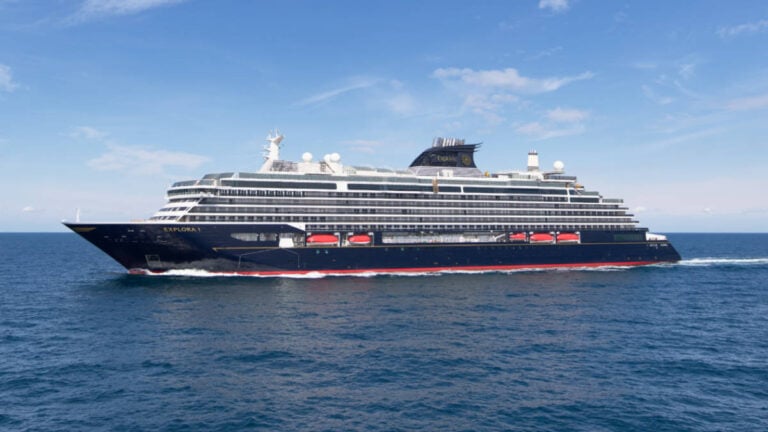
Explora Journeys, the new luxury brand of MSC Group, has delayed the launch of its first vessel, Explora I, which was scheduled to debut at her handover ceremony on July 6, 2023. The ship is under construction at the Fincantieri shipyard in Monfalcone, Italy.
Further Enhancements Needed, Line Says
Supply chain issues and the need for further enhancements to the ship resulted in a postponement of Explora I’s delivery from the shipyard to Explora Journeys, slated for July 6. The ship’s naming ceremony, set for July 8 in Rome, also is called off.
The cruise line had earlier announced that the ship’s godmother would be Dr. Sylvia Earle, the renowned American oceanographer, explorer, biologist, and conservationist.
Photo Courtesy: Explora Journeys
Explora Journeys had planned the ship’s maiden voyage for July 17, and it is unclear whether that sailing will operate. On July 5, the cruise line’s website had no voyages listed for July; the first available sailing is now shown as a 7-night cruise from Copenhagen to Reykjavik, Iceland, on August 1.
The luxury ship’s maiden cruise was to depart July 17 from Southampton, UK, on a 15-night itinerary to the Norwegian Fjords and the Arctic Circle, with disembarkation in Copenhagen.
Reports indicate that the ship’s launch will be delayed by a few weeks as enhancements are completed. It is the second time the ship’s construction schedule has been amended. Explora I was originally slated to debut in May 2023, but in the fall of 2022, the cruise line pushed back the date to July, also citing supply chain challenges.
Explora I Headed to the Caribbean This Year
A series of announcements by the cruise line in recent months offered glimpses into the services and amenities Explora I will provide.
In May 2023, it revealed the Journey Together Gathering program, a mix of activities, amenities, and special deals all designed to attract bookings from multi-generational family groups.
In a bid to distinguish itself as a provider of ultra-luxury services, Explora Journeys in June revealed a partnership with Rolex that will create the industry’s first Rolex boutique at sea. The Swiss company’s ultra-luxe timepieces will be offered for sale in a dedicated shop onboard Explora I.
Photo Courtesy: Explora Journeys
And the line had announced that, following her summer season in Northern Europe, the ship from November 2023 to March 2024 would sail a series of Caribbean cruises between Miami, San Juan, Puerto Rico, and Bridgetown, Barbados.
The ship is slated to operate 7- to 14-night cruises, with port calls varying by cruise date. All itineraries include calls at MSC Cruises’ private island, Ocean Cay MSC Marine Reserve, a 95-acre destination in the Bahamas.
MSC Cruises recently stated that the reserve will temporarily close for upgrades from April 7 through May 22, 2024. The closure is not expected to affect Explora I’s visits to the destination.
A New Fleet for MSC
Explora I is the first in a series of six luxury ships planned for Explora Journeys, a new brand within the cruise division of MSC Group, which also owns MSC Cruises. The all-balcony ship will accommodate 922 guests in 461 suites and residences, all designed with the brand’s “Home at Sea” lifestyle concept.
Photo Courtesy: Explora Journeys
The ship’s opulent Owner’s Residence features 3,000 square feet of indoor and outdoor living space. Explora I also offers 22 Ocean Residences, 67 Ocean Penthouses, and 371 Ocean Terrace and Ocean Grand Terrace Suites.
Explorer Journeys’ second ship, Explora 2, is under construction and is expected to launch in 2024. Four additional ships are slated to enter service by 2028, the company said.
All of the luxury ships will offer six restaurants, plus in-suite dining, 12 indoor and outdoor bars and lounges, four swimming pools, extensive outdoor decks with private cabanas, wellness facilities, and entertainment.
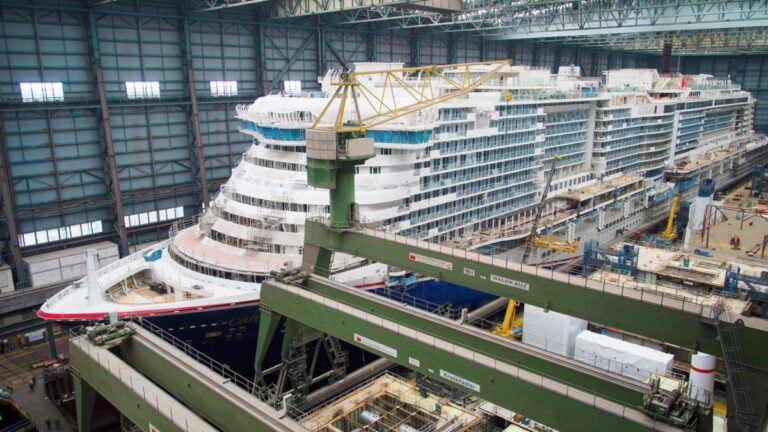
Carnival Jubilee, currently under construction at the Meyer Werft shipyard in Papenburg, Germany, is nearing another milestone. The installation of its adrenaline-inducing rollercoaster, BOLT, has now begun.
New images from the shipyard provide a sneak peek into the latest advancements, further fueling the excitement around this highly anticipated cruise ship.
The Thrill of Bolt Begins to Take Shape
BOLT: Ultimate Sea Coaster, a rollercoaster known for its heart-stopping twists and turns, is gearing up to offer guests on Carnival Jubilee nearly 800 feet of adrenaline rush.
The Meyer Werft shipyard in Papenburg, Germany, shared a new update on Carnival Jubilee’s construction, where workers have started installing the iconic rollercoaster.
Carnival Jubilee Construction at Meyer Werft
Promising speeds of up to 40 miles per hour, BOLT is already a popular feature on sister ships, Carnival Celebration and Mardi Gras.
On July 5, Meyer Werft said:“Moving across a cruise ship at 60 kilometers per hour and an acceleration of 1.2 g is another matter altogether. But that’s exactly what guests of the Carnival Jubilee can look forward to, because that’s what awaits them on a ride on the BOLT roller coaster.”
The post confirmed that the construction of the rollercoaster is proceeding well, with 220 meters of rails already installed. The images show the steel structure of the rollercoaster already installed, with construction workers now busy installing the rails.
Carnival Jubilee Construction at Meyer Werft
However, due to its considerable height, the coaster’s full completion will have to wait until the ship is floated out of the large construction hall in Papenburg, which will likely happen later in July 2023.
Next Steps in Carnival Jubilee‘s Journey
July promises to be an essential month for the new Carnival cruise ship as it gears up for its float out – an essential step in shipbuilding where the vessel is launched to float on water for the first time. Once afloat, sea trials will commence in August to assess the ship’s performance and stability.
Carnival ambassador John Heald said, “She will have a float out next week, and sea trials begin in August. She’s on schedule to bring you loads of fun.”
Photo Courtesy: Meyer Werft
For those unfamiliar with the process, sea trials are a crucial part of shipbuilding. They involve rigorous testing of the ship’s speed, maneuverability, equipment, and safety features. Only after the successful completion of these trials can the ship officially join the fleet.
An exciting aspect of the cruise ship’s journey is its Ems river transfer. This unique process will occur before the sea trials, where the ship is delicately navigated from the inland shipyard to the North Sea. This fascinating engineering feat is performed with the aid of tugboats and usually draws in thousands of spectators.
A New Chapter in Cruising Fun
Joining the fleet as the third Excel-class ship for Carnival Cruise Line, Carnival Jubilee is a 183,521 gross ton cruise ship that can accommodate 5,374 guests at double occupancy or up to 6,631 passengers at full capacity. Following a slight delay from her initial debut, the inaugural sailing is now set for December 23, 2023.
Rendering Courtesy: Carnival Cruise Line
Carnival Jubilee‘s home port will be in Galveston, Texas. The ship will operate 7-night Western Caribbean sailings visiting destinations such as Costa Maya and Cozumel in Mexico and Roatan in Honduras.
With three full days at sea, guests can thoroughly enjoy the BOLT rollercoaster and the other exciting features the ship offers.
In celebration of the cruise line’s 183rd birthday and in anticipation of the upcoming Queen Anne, Cunard Line has released intricate, vintage-style cutaway artwork to give eager cruisers a close-up view of the ship and its offerings, including popular venues and onboard activities, from the very top deck to below the waterline.
Cutaway Queen Anne Artwork
As the May 2024 debut of Queen Anne draws closer, Cunard Line is showcasing the new vessel in vintage-inspired cutaway artwork by Polish artist Dominik Bulka.
Not only does the fun and colorful image show off the spaces, venues, and activities of the new ship, but it also includes quirky references and trivia from the cruise line’s 183-year history and other ships in the Cunard fleet.
Popular and familiar spaces onboard Cunard ships are visible in the image, including the Grand Lobby and Golden Lion pub, along with the new Bright Lights Society show bar, where guests will enjoy live entertainment and exclusive performances with dramatic lighting. Shopping areas, food storage, and even crew areas can also be seen in the detailed illustration.
Savvy guests will also recognize famous features of Cunard ships, such as the red-coated bellhops that first began serving the line in 1930, and to this day offer a classic welcome to guests.
Famous faces are even integrated into the whimsical artwork, such as Elizabeth Taylor, Ed Sheeran, and Sir Winston Churchill – all of whom have sailed with Cunard over the years.
One of the most famous faces illustrated onboard is Captain Inger Klein Thorhauge, shown front and center on the ship’s bridge. The first-ever female captain for Cunard, she has served the line for more than 25 years, including as master of Queen Victoria and Queen Elizabeth, before she will take the helm of Queen Anne.
Another famous face is that of Jimmy, a hippopotamus Cunard Line transported from Naples to Chester Zoo in Cheshire, England in 1963. While the illustration shows Jimmy port side on Deck 1, the famous animal was actually transported on the open deck with an awning over his cage and given regular cool showers for comfort.
Queen Anne Cutaway
Glimpses throughout the illustration also show different activities guests will be able to enjoy onboard, such as yoga classes, poolside movies, live music, comfortable sleep, fine dining, and so much more.
Can you find the unicorn, bride, archer, tricycle, post box, three of clubs, and skydiving bellhop hidden onboard?
Sailing Queen Anne
While the 113,000-gross ton, Pinnacle-class Queen Anne won’t be QUITE as colorful as the whimsical illustration, the ship will offer guests amazing experiences with signature Cunard service.
When she debuts in May 2024, the ship will be largely homeported from Southampton, but will also offer several departures from Hamburg and Kiel in Germany, as well as Civitavecchia (Rome) in Italy.
Cunard’s Queen Anne Ship (Photo Courtesy: Cunard Line)
In January 2025, the ship will make her maiden transatlantic crossing to New York, and her grand inaugural tour will also take her to San Francisco, Sydney, Hong Kong, Singapore, and Dubai.
Onboard, guests will find impeccable venues and features, including the top-deck Mareel wellness studio with natural elements supporting inner peace and well-being. Steam rooms, a salt sauna, an ice room, thermal pool, and reflexology foot baths offer the ultimate in indulgent luxury to travelers.
For another type of indulgence, Queen Anne will offer dedicated dining rooms for each accommodation level, with options from fine dining to casual meals, decadent treats, and the line’s signature Afternoon Tea. Vegetarian and vegan options will also be featured throughout.
The ship will also feature multiple pools, the Sky Bar and Observation Deck, for impeccable views, abundant deck space, and much more.
Queen Anne can welcome as many as 3,000 passengers per sailing, and the ship is currently under construction at the Fincantieri shipyard in Marghera, Italy.
Ever wonder why are ships called she and why so many ships are given female names? We can help you understand this tradition and why it continues.
Many people automatically refer to a ship as a “she,” but relatively few understand why this common maritime practice exists or why it continues. To help you understand this common practice and why it is relevant to the cruise industry, we will cover everything you need to know.
This means reviewing the history and this custom and explaining why ships were originally given feminine pronouns. We will even cover the recent controversy surrounding what some consider a dated practice.
While it may surprise you, there are many reasons why the maritime industry has a long history of referring to ships as “she” and giving them female names. While some argue about the true origin of the practice, the following are some of the most commonly accepted explanations.
Historical Associations with Female Deities
Many ancient cultures had female deities and goddesses associated with navigating the sea. For example, the ancient Greeks believed in Aphrodite, while the Ancient Romans worshipped Venus. These goddesses were connected to traversing the water, as well as protection, love, and beauty.
Golden figurehead on Sailing Ship (Photo Credit: Maria Nelasova / Shutterstock)
Historians believe that the fact that many cultures associate the water with a female deity or goddess explains why ships have been labeled with feminine pronouns by so many cultures throughout history.
For deeply religious cultures, connecting a ship and a feminine deity was likely seen as a way to increase the likelihood of a safe voyage.
After thousands of years, the practice has become so well established that it has become a strong tradition, even if modern-day practitioners no longer do so for the original reasons.
While there is far less of a disparity today, throughout history, the maritime world has been dominated by male sailors. Shipping vessels, naval ships, and even fishing boats were primarily navigated and traveled by men.
It only makes sense that men at sea for long periods would begin associating the vessel responsible for their survival with a motherly protective role.
It is also believed that many sailors throughout history have named ships after lovers, famous women like Queen Elizabeth or Queen Mary, or even their own mothers. Naturally, this would explain why ships would be given female pronouns.
Nautical Traditions
If you have ever spent time around sailors, they can be a somewhat superstitious bunch with all of their own terms and traditions.
Using feminine pronouns for ships and giving them female names could be explained as a tradition that has no logical explanation but has never stopped.
Resilient Lady Cruise Ship
In other words, over the centuries, giving a sailing ship a female name has simply become an ingrained part of maritime culture. The custom could have been passed down for generations until it was firmly established as the standard.
Less Likely Explanations for Why Ships Are Called She
The Word Ship Has Latin Origins
The word ship takes its root from the Latin words “navis” and “naves,” which are considered feminine words. Like many of the Romance languages, like French and Portuguese, Latin genders words, including inanimate objects.
The problem with this explanation for the modern-day custom of referring to ships with feminine pronouns is that other objects considered feminine in Latin and other Romance languages, like the word “car,” are not referred to by these pronouns.
Then there is the fact that ships in modern languages with direct roots in Latin, like Spanish, often refer to ships and boats with masculine pronouns.
While the Latin origins of many nautical terms certainly impact modern-day maritime customs, the truth is it is unlikely that it is why we still refer to a ship as a “she” or a “her.”
Women Are Associated with Grace and Elegance
Many historians and maritime experts also believe that a partial explanation for why a ship is labeled with a feminine pronoun is the traditional belief that a woman is associated with elegance and grace.
Image Courtesy: Virgin Voyages
The theory is that some sailors and ship owners would believe that referring to their ship as she or giving it a female name would make it appear more beautiful and alluring to others.
While there is no way to disprove these theories, the other explanations have far more proof backing them.
Modern-Day Controversies Surrounding the Practice
In some circles, controversy surrounds the old practice of referring to all ships as “she.” The belief is that the patterns could perpetuate gender stereotypes and reinforce the misguided notions that all women have specific characteristics and personality traits.
There is also the belief that the practice could discourage women from pursuing careers within the maritime industry, as labeling the ship a “she” would make the women on board feel less valued.
Photo Credit: JHVEPhoto / Shutterstock
Simply put, evolving perspectives on gender and how gendered pronouns are applied to language realms are beginning to pressure all industries to embrace gender-neutral language and pronouns.
While there certainly is some debate about whether or not the tradition of referring to a ship as she should continue, the practice persists to this day due to tradition and maritime customs.
Whether or not we will stop seeing ships with female names in the future is difficult to predict, but there is no denying that the practice has its critics.
Are Cruise Ships Called She?
In the past, every cruise ship was called “she,” and many were given female-sounding names. Today, the linguistic tradition continues, but more full-sized cruise ships are given more abstract names.
Final Words
Whether or not you choose to practice the maritime tradition and parlance of referring to a sailing ship as a “she” is entirely up to your own preferences.
The cultural tradition still has its place in the maritime industry, including within the world of cruises. Still, if you prefer, you can always choose gender-neutral alternatives.
Norwegian Cruise Line has updated its crew member grooming policy for onboard team members and will now permit tattoos to be seen, with some exceptions for tattoo location as well as design. Other updates to the grooming guidelines have also been made, including for types of jewelry as well as facial hair.
Crew Member Grooming Guidelines Updated
In a welcome update to onboard grooming policies, Norwegian Cruise Line is easing some jewelry, facial hair, and tattoo guidelines. This will be good news for crew members, but how will guests react?
According to Crew Center, the changes to the shipboard grooming policy apply to crew members, officers, and staff in all shipboard positions, and were communicated to all employees. The new guidelines are in force from July 1, 2023.
Photo Credit: StudioPortoSabbia / Shutterstock
Facial Hair
Facial hair is one of the most noticeable guidelines, and crew members may now have a mustache, beard, goatee, or chin/lower lip “tuft” so long as it is neatly trimmed and well-maintained.
Mustaches may not be any longer than the length of the upper lip, therefore no styles such as large handlebars, the upwards-pointed Dali, Fu Manchus, or horseshoes will be permitted.
Simpler styles, such as a neatly groomed lampshade design, painter’s brush, or pencil are acceptable.
Jewelry
Jewelry guidelines have also been updated. Team members may wear a maximum of three bracelets, all of which must be in good condition. No food and beverage team members may wear bracelets or watches while preparing food and drink, however, which includes bartenders.
Similarly, a maximum of three rings may be worn, though an engagement and wedding band set counts as a single ring (even if not soldered or otherwise affixed together).
Food and beverage employees may wear one plain ring, such as a simple wedding band without elaborate ornamentation or detailing that might harbor crumbs, grease, or other debris.
Team members may wear a maximum of two small stud earrings per ear, or two hoops with a diameter no larger than a US dime.
Tattoos
Norwegian team members may now show tattoos, but only in certain ways. No tattoos on the face, head, or front of the neck (above a typical t-shirt collar) may be visible at any time.
In other locations, such as arms, legs, and hands, tattoos may not be “extremist, indecent, sexist, or racist.” This could include any tattoos determined to be affiliated with, symbolize, or otherwise depict extremist philosophies, gangs, or groups; any tattoos or markings that may showcase or advocate racial, gender, or ethic hatred or intolerance; promote or depict discrimination; or advocate violence or unlawful behavior and activities.
Photo Credit: BUI LE MANH HUNG / Shutterstock
Indecent tattoos of any type – whether imagery or words – are also not permitted to be visible at any time. Nor are sexist tattoos that degrade or demean anyone based on gender permitted, even if the actual imagery or wording may not be considered technically indecent, extremist, or vulgar.
It must be noted that the tattoos that are permitted must be in place when a crew member begins their onboard contract. No visible tattoos can be added during employment. This is likely to allow inspection and acceptance of existing tattoos to ensure they are permitted before a crew member reports to their ship.
Other Cruise Lines
All cruise lines have grooming guidelines in place for crew members, though the exact policies vary. In general, higher end, luxury lines tend to have stricter policies in accordance with the expectations of their guests and the atmosphere they hope to create onboard their vessels.
Some cruise lines that cater to young families and children may also have stricter guidelines to ensure everyone is comfortable in that atmosphere.
Guidelines may also occasionally vary for different positions on a ship, depending on whether or not crew members interact with guests in any way.
Depending on team member uniforms, covering tattoos may be as simple as wearing the coveralls, long pants, or long sleeves required for the job position, or else crew members may use makeup or bandages to conceal tattoos. Excess jewelry can be taken off while at work.
The strictness of policies and how they are applied will also vary. For some companies, grooming guidelines may be continually enforced as guests can still see crew members when off duty, such as debarking or returning to a ship during a port day. On other lines, these policies may only apply while a crew member is in uniform or actively on duty.
Grooming guidelines are not unique to cruise ships; similar policies are in place at most places of employment, particularly where customer service is at the forefront. This includes resorts, hotels, amusement parks, and similar venues.
The RMS Titanic is arguably the most famous ship ever built. For its time, it was a true engineering marvel and the ultimate symbol of luxury and class. While many people today assume that its fame is primarily due to its tragic sinking, the reality is that the previously unimaginable scale of the ship really captured the world’s attention.
Today, we will explain in great detail how long it took to build the Titanic. Not only will we provide you with a detailed breakdown of the interesting timeline of the Titanic’s construction, but we are also going to compare it to the build times of modern-day cruise ships.
Whether you have a deep interest in the history of the Titanic or you just have a general curiosity for everything related to the cruise industry, we have the answers you are looking for!
Construction of the Titanic began in 1909 in Belfast, Ireland. Irish ship-building company Harland & Wolff constructed the ship. The Harland and Wolff shipyard worked alongside the shipping company White Star Line, a British company that acted as a subsidiary of an American company called International Mercantile Marine Co.
Who Ordered the Construction of the Titanic?
The Titanic was ordered and owned by White Star Line, founded in 1869. By the time construction began on the Titanic, White Star Line had been building and operating luxurious ocean liners for nearly 40 years.
White Star Line Ad (Photo Credit: chrisdorney / Shutterstock)
Naturally, the Titanic and the sister ship Olympic were meant to be the crown jewels in White Star Line’s fleet. When laying out designs and intentions for the Titanic, it was envisioned as the world’s most luxurious and expensive transatlantic passenger ship.
How Long Did It Take to Build the Titanic?
As mentioned, construction on the Titanic began in 1909. The Titanic’s enormous keel was laid down on March 31st, 1909, often taken as the official first day of construction.
While there is some debate about the official date of completion, as some take the date to be the day construction ended, while others say it was not complete until its first sea trial, the commonly accepted completion date is April 2nd, 1912.
Photo Credit: Anton_Ivanov / Shutterstock
This means there were exactly 1,098 days between the start of construction and the generally accepted final day of construction. Simply put, it took three years and two days for the Titanic to be built.
Construction workers toiled night and day to complete the ship quickly. The enormous project ended up claiming the lives of eight workers.
What Steps Were Involved in Building the Titanic?
Like any ship, the Titanic was built in phases. Given the Titanic’s unprecedented scale at the time of its construction, each phase required significant effort and manpower. To help you understand how the Titanic was built, here is a simple breakdown of the main phases of its construction.
Before construction, White Star Line assembled some of the most well-respected naval engineers to create plans for the Titanic. Given the immense scale of the Titanic, planning took much longer than a typical passenger liner would.
Titanic Design Blueprints (Image Credit: Elena Kozak / Shutterstock)
Start of Construction and Framing
After the designs were finalized, construction began on March 31st, 1909. At the peak of construction, the shipyard employed over 14,000 men, giving you an idea of the project’s immense scale.
After roughly one year of construction, the Titanic’s massive steel frame was complete, which was the most time-consuming aspect of the construction.
Titanic Construction
It took almost 3.5 million rivets to hold the steel plates that formed the Titanic’s hull in place to give you an idea of how much labor was involved in this phase.
Assembly of the Interior of the Ship
Once the frame and side plating of the ship were held together, work could begin on the interior of the Titanic. This phase took thousands of workers, all completing various jobs. The entire project took nearly a year to complete, from installing the ship’s enormous engine and propellers to building various decks and rooms.
Outfitting the Ship
The outfitting phase could begin once the ship’s interior and exterior were complete. During this lengthy phase, the ship’s interior could be outfitted with luxurious amenities. Everything from grand staircases and opulent dining areas was installed, which took months to complete.
Photo Credit: Everett Collection / Shutterstock
It is important to note that the Titanic was meant not just to be one of the largest passenger vessels ever made, it was designed to be the peak of luxury travel, so the outfitting stage was incredibly time-consuming. Every detail was completed with meticulous attention to detail.
Launching of the Titanic and Tests of Sea-Worthiness
An enormous crowd gathered to see the Titanic first enter the water towards the end of 1911. While this was an important event, as it proved the massive ship could float, it was far from the date of the ship’s completion.
After it first entered the water, nearly an entire year worth of tests and finishing touches to the interior were required. These finishing touches delayed the estimated completion date by several months.
When Did the Titanic Set Out on Its Maiden Voyage?
There was a short time between the Titanic being completed in Belfast, Ireland, to setting sail on its first passenger voyage from Southampton, England.
In fact, you can measure the length of time in days! With many believing that the official completion date for the Titanic was April 2nd, 1912, as this was the date of its final sea-worthiness test, it set off with passengers just eight days later on April 10th, 1912.
The Titanic was a genuinely enormous ship for its time. Its length is still comparable to the largest cruise ships of today. To give you a better appreciation for its impressive size, here are the Titanic’s official dimensions and statistics:
Length of Keel – 852.5 feet
Overall Length with Propellers – 882.7 feet
Breadth – 92.5 feet
Depth – 59.6 feet
Total Weight in Tonnage – Gross 46,329
Number of Decks – 7
Total Passenger and Crew Capacity – 3,320 (2,435 passengers and 885 crew)
How Does the Titanic Compare in Size to Modern-Day Cruise Ships?
While a direct size comparison is difficult, as the Titanic’s design differs greatly from that of a modern-day cruise ship, it is still worth comparing a few statistics.
Where the Titanic was just over 100 feet tall, most modern-day, largescale cruise ships are about 200 feet tall. Another way to measure the difference in size between the two is that the Titanic had nine passenger decks, whereas the average ocean-worthy cruise ship today tends to have about 12 to 14 passenger decks, plus additional decks for various types of amenities.
RMS Titanic (Photo Credit: D. Ribeiro / Shutterstock)
In terms of weight, the Titanic had a gross tonnage of 46,328, which set a record for the time. By comparison, a modern cruise ship weighs more than double, with the average gross tonnage sitting around 120,000.
Today, some of the largest cruise ships in the world, like the Royal Caribbean’s Oasis Class ships, have an incredible gross tonnage of 230,000!
This is not to diminish the immense size of the Titanic, which was groundbreaking for the time and a truly historic achievement in shipbuilding; it goes to show how far cruise ships have come since the early 20th century.
How Does the Titanic’s Construction Time Compare to the Build Time for Modern-Day Cruise Ships?
While a build time of just over three years may sound short when you consider it was one of the most ambitious construction projects of the time, the construction of the Titanic took a lot longer than it takes to build a modern-day cruise ship.
In contrast to the Titanic’s three-year build time, a large-scale modern-day cruise ship takes about two years to build from start to finish, thanks to computer-aided design programs, prefabricated parts, and modern-day tools, materials, and hydraulic construction equipment.
Titanic Dry Dock (Photo Credit: navorolphotography / Shutterstock)
The comparatively accelerated building timeline of a modern-day cruise ship also owes much to the incredible popularity of the cruise line industry. With the demand for large-scale vessels higher than ever, shipbuilders have more resources to adopt the latest technologies in their shipbuilding yards.
Is the Titanic Being Rebuilt?
There have been ongoing plans to recreate the Titanic as part of a project called Titanic II. This replica ship will act as a fully functional modern-day replica of the original Titanic.
It is being built by Blue Star Line Pty. Ltd., based in Brisbane, Australia. Although it was initially meant to be completed by 2016, various delays have forced the $500 million project to push back its completion date.
Titanic Replica
As of now, there is no set completion date. Ironically, even with modern-day technology, the replica Titanic II will take significantly longer to build than the original Titanic, if it is ever completed.
Frequently Asked Questions (FAQs)
How Fast Could the Titanic Travel?
The Titanic’s massive, steam-powered triple-screw propulsion system allowed it to travel at 22 knots.
While it could have been designed to go faster, higher speeds could have caused passengers to feel vibrations and hear loud noises. Since it was intended primarily for luxury and extravagance, slower and more comfortable speeds were believed to be preferable to a faster journey.
Where is the Titanic’s Wreckage Located?
The sunken wreckage of the Titanic was located in 1985. It sits at a depth of 12,500 feet in the North Atlantic Ocean. Its final resting place is roughly 370 miles from Newfoundland, Canada.
How Many People Survived When the Titanic Sank?
While the ship could technically carry more passengers, it left Southampton, England, with 2,224 passengers and crew members on board. Out of all those on board, only 710 people survived long enough to be rescued.
How Much Did It Cost to Build the Titanic?
Given how ambitious the construction of the Titanic was, it is no surprise that it was a costly project. The final cost for the ship’s structure is estimated to be around $7.5 million.
While this figure may seem somewhat low, it is important to consider inflation. When you factor in inflation, a more reasonable estimate for the final cost of the Titanic is about $200 million.
What Was the Titanic Made From?
While the interior of the Titanic featured a wide range of materials, including expensive wood paneling and decorations, most of the ship was constructed using high-grade steel.
Do Icebergs Pose a Risk to Modern-Day Cruise Ships?
After learning more about the tragic sinking of the Titanic, you may wonder if a modern-day cruise ship could suffer the same fate. Fortunately, modern-day cruise ships have plenty of measures to reduce the likelihood of a collision with an iceberg or any other object that could pose a risk to the vessel, its passengers, and crew.
Photo Credit: SebZet / Shutterstock
In fact, modern-day cruise ships are equipped with radar and sonar systems that can detect icebergs above and below the waterline. Modern ships, including cruise ships, follow carefully planned routes designed to avoid icebergs and other obstacles.
These routes are routinely patrolled and monitored using satellites to ensure safety. High-traffic regions, like the North Atlantic Ocean, have dedicated ice patrols that relay up-to-date updates on iceberg movements, which all cruise ship captains can access.
However, in June 2022, the Norwegian Suncruise ship actually hit an iceberg, which was a growler, while sailing in Alaska. Thankfully the ship remained seaworthy.
Final Words
Although the Titanic took years to build, it was an incredible achievement in human engineering. Despite its tragic end, it was still a marvel of shipbuilding and a testament to what the shipbuilders and designers of the day could accomplish.
Its sinking should not negate the incredible hard work and craftsmanship it took to bring the dream of the Titanic to life.