Safety is important on every cruise ship and savvy travelers know to be careful at all times, such as using hand railings on stairs and being aware of slippery decks.
Carnival Cruise Line, however, will not permit passengers to use one common, easy item that could help prevent slipping and falling, particularly in and around pools and hot tubs that are always busy spaces onboard.
A concerned guest reached out to John Heald, the cruise line’s Brand Ambassador, bringing the situation to his attention.
“My elderly husband now wears water sandals on the pool deck and in the water for safety (after slipping getting out of the pool, requiring five stitches),”the guest explained.
“Today a lifeguard informed him he could not wear water shoes in the pool. Nowhere in the Carnival pool and safety information does it state water shoes are not allowed. We’re disappointed and concerned about safety and further injuries.”
While the guest does not clarify which Carnival cruise ship they were sailing on, the cruise line’s pool safety policies are the same fleetwide. Heald responded and explained the reasoning for not permitting water shoes.
“We don’t allow water shoes in the pool. The reason is because they may have picked up some kind of germ or even a piece of glass or dirt that may go into the swimming pool,”Heald said.“That’s why we don’t allow them.”
The cruise line’s reasoning is sound, because a guest might wear water shoes all over the ship – possibly stepping on spilled food in the Lido buffet or walking on public bathroom floors, for example. Similarly, the same guest may wear those shoes off the ship in port, which could mean walking on all types of dirt, sand, or rocks.
If that material gets into the ship’s pool, it can contaminate the water and may clog or damage filters. This would mean the pool needs to be closed and would be unavailable to any guests.
It should be noted, however, that what the original commenter said – “Nowhere in the Carnival pool and safety information does it state water shoes are not allowed,” – is true.
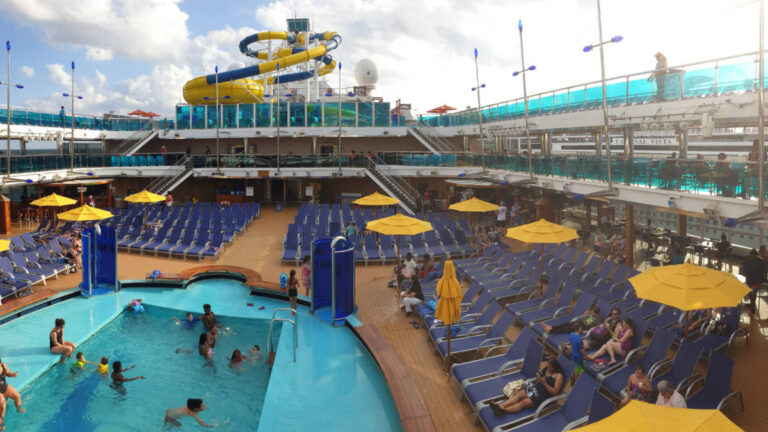
Main Pool on Carnival Cruise Line (Photo Copyright: Cruise Hive)
Carnival Cruise Line’s Pool Safety does note that no diapers are permitted in the pool, but there is no specific restriction stated about pool shoes, or even regular shoes for that matter.
The majority of the Pool Safety discussion covers swim life vests, crew water safety training, and some other basic guidelines, such as “use pool at your own risk” “showers are required prior to use” and “use ladder and handrails to enter and exit the pool.”
Other commenters have noted that the unwritten policy of no swimming shoes isn’t always fully enforced.
“That’s odd since I regularly wear water shoes in the pools,”another guest confirmed.
Aren’t Bare Feet Dirty?
The restriction against pool shoes may seem odd when bare feet can also be dirty. The difference, however, is that the decks of a cruise ship can get very hot, and most people do not go barefoot all over the ship.
This means travelers are more likely to be wearing flip-flops, sandals, or shoes around the ship as they head for the pool. Once they get a lounge chair (without saving the chairs for too long!), they would then remove their footwear just before entering the pool or hot tub.
Furthermore, since guests are required to rinse off in the nearby showers before getting in the pool, that would help rinse off any dirt or debris – this would rinse off easier from bare feet than from shoes with firmer soles.
Unfortunately, just as with the policy about water shoes, pre-pool showers are not always fully enforced and not all travelers rinse off before entering a pool or hot tub.
Not one, not two, but four cruises onboard Valiant Lady have been cancelled in favor of private charters that have booked out the entire cruise ship.
Impacted passengers, which were scheduled for May and October of 2025, were contacted by the adults-only cruise line to notify them of the cancellations and their options – and many weren’t happy about it.
The first impacted cruise would have embarked on March 23, 2025, from Miami, Florida, and called for stops at Cozumel, Mexico, and Bimini Islands, Bahamas, over the course of five fun-filled days.
“Unfortunately, Valiant Lady’s sailing scheduled for May 23, 2025 has been cancelled due to a private charter. We sincerely apologize for this disruption to your plans,” Virgin Voyages emailed impacted guests.
But what’s even more unusual is that the 2,770-passenger vessel’s following sailing also seems to have been cancelled due to another private charter.
“Got [an] email today cancelling our May 28th VL cruise due to the cruise getting privately chartered,” an impacted guest shared online, although the cruise line has not directly confirmed this information just yet.
Naturally, many passengers who had been looking forward to their upcoming vacations were disappointed by the news.
“Cancelling due to weather or ship maintenance is one thing, but cancelling due to a private charter? Not going to lie, this is pretty infuriating,”one cruiser shared on Reddit.
However, impacted guests were given multiple options to choose from to make things right, including a full refund, a future cruise credit, or to rebook a similar cruise at no extra cost with a $100 onboard credit thrown in for the inconvenience.
Why Do Cruise Lines Prioritize Charter Cruises?
In many circumstances, charter cruises – and especially full-ship charter cruises – are a good deal for the cruise lines that make it worth choosing these private groups or companies over already-booked passengers.
In a full-ship charter, an organization rents out the entire ship to celebrate a theme, cause, or activity. Some examples of recent chartered sailings to make headlines are themed around Star Trek, Taylor Swift, and Comic-Con – which is a first-of-its-kind celebration at sea taking place in 2025.
But in order to host these sailings, the organizers typically pay as if the ship was at maximum capacity with double occupancy in each stateroom.
Virgin Voyages’ Valiant Lady Cruise Ship (Photo Credit: Felix Mizioznikov)
They may also be paying the cruise lines extra fees for things like facilitating special events onboard and administration fees for organizing the private sailing.
Considering most cruises aren’t at maximum capacity and at least a few cabins remain unsold, the cruise lines ultimately profit more when they accept the charter – even after refunding already booked guests.
Other mainstream cruise lines have also cancelled upcoming sailings in order to prioritize private charters – including an October 2025 voyage onboard Carnival Libertyandtwo Bahamas sailings onboard Norwegian Getaway in August of 2026.
This is also not the first time that Virgin Voyages has upset its guests with cancellations.
Earlier this year, there was an uproar online after the cruise line removed the ports of Toulon, France, and Marseille, France, from Scarlet Lady’s European “Irresistible Med” and “French Daze & Ibiza Cruises.”
There are a lot of nautical terms that you may hear for the first time when you take your first cruise. Among them, and two terms that you definitely need to understand, are port and starboard.
You probably know that one means “left” and one means “right,” but which is which and why do cruise ships use port and starboard instead of left and right anyway? Here’s everything you need to know.
Why Do Cruise Ships Use Port and Starboard Instead of Left and Right?
Cruise ships use port and starboard instead of left and right because “left” and “right” are determined by the individual and how they’re standing. The port and starboard sides of the ship, in contrast, always stay the same.
This is vital because, when you’re operating a ship, you need to be able to communicate to the crew around you and tell them about certain sides of the ship, without any ambiguity. This port and starboard system helps avoid confusion.
Think about it. If you were sailing on a ship and an emergency occurred, you wouldn’t want to say “Crew, the ship’s left side is on fire!” Depending on where your fellow crew members are standing and the direction they’re facing, they could head to either side of the ship. However, if you say, “Crew, the ship’s starboard side is on fire!” they’ll know exactly what you mean and where to go.
Beyond emergencies, from on-board emergencies to potential collisions, port and starboard are also important terms for general navigation, as well as for identifying other ships in the water via their red and green navigation lights, and determining whether they’re sailing toward or away from you (particularly if the weather is bad or at night).
They also come in handy when docking or otherwise maneuvering the vessell into a certain position. For example, when sailing near buoys, a ship’s captain can look at the buoy’s paint or light for key directional information.
Red usually means “port” or “left” and green usually means “starboard” or “right.” If the captain sees a green buoy, it means that the ship should stay to the right of the buoy. If the captain sees a red buoy, it means the ship should stay to the left of the buoy.
Where Did the Terms Port and Starboard Come From?
Port Side Red Light
The terms port and starboard have been in use for centuries, since the early days of boating, and the linguistic history behind the two terms is quite interesting.
Before ships were powered by rudders, people would steer ships with a steering oar. Because many people are right-handed instead of left-handed, the people steering with these oars would sit on the right side of a boat.
The term “starboard” comes from two old English words: “stéor,” which means “steer,” and “bord,” which means a boat’s side. So, “steorbord” became “starboard,” meaning, “the steering side of the boat.”
The steering oar belonged on the right, steering side of the boat, which we now call “starboard.” Because of this, when ships were docked and moored, this would be done on the other or left, side. This other side was called, “larboard,” because it was the side on which the ship would be loaded.
However, over time, this term became confusing because it sounded too much like “starboard.”
So, this term was changed to “port” because it was the side of the boat that would be used when the ship was coming into port. This other side of the boat was the right side.
During the sixteenth and seventeenth centuries, as the English began to sail their trading ships more often, these terms started to become popular. It was a way for navigators to give each other instructions while sailing the great seas.
As England colonized countries such as the current United States and India, sailors in the countries all over the globe that the English colonized began to use these terms, too. As a result, it became a global way of referring to the sides of the ship.
Since this time, maritime terms have become regularized and made uniform by international bodies. Because port and starboard were already being used by so many, they became the official terms used worldwide.
Even the colors used to indicate port and starboard have historical origins! The red for port and green for starboard weren’t just picked at random.
Historically, red lanterns were easier to come by than green lights (due to the limited availability of green glass, and the relative common use of red glass). As such, red lights were often used to illuminate ports and harbors. Thus, over time, red began to be used to indicate “port.”
How Do You Know Which Side of the Ship is Starboard and Which Side is Port?
So when you embark on your cruise, how do you know which side of the ship is starboard and which side is port? All you have to do is look toward the front of the ship (which is called the bow).
When you’re facing the bow, starboard is on the right and port is on the left.
Not sure you’ll be able to remember this? Try using a little memory trick or some mnemonic devices.
The words “left” and “port” both have four letters in them, and both are one syllable. This can help you remember that left equals port — so if you’re facing the bow, the port side of the ship is on your left side.
Other letter-related tricks for remembering the port and starboard sides of the ship include counting the number of “r”s in both words. Port as one “r” and starboard has two — thus, starboard equals “right,” as it also begins with the letter “r.”
You can also simply think about the terms alphabetically. Left comes before right, alphabetically, and so does port come before starboard alphabetically. As such, left equals port and right equals starboard.
You can also look for the ship’s lights and signage. As mentioned, often, red navigation lights and signage are used to indicate the port side of the ship, while green lights and signage are used to indicate the starboard sides of the ship. You can use another little memory trick to remember this as well. Just remember that port wine is red, and red indicates the port side of the ship.
And, if all else fails, you can simply buy some novelty items to help you remember which side is which — like socks! Just be sure to put them on the right feet, and be sure to be facing the ship’s bow before referencing them.
Does it Matter if Your Cabin is on the Port or Starboard Side of the Ship?
Carnival Cruise Line Balconies (Photo Copyright: Cruise Hive)
Beyond just averting potential accidents and preventing collisions, knowing the port and starboard sides of a cruise ship can also clue you in to where exactly your cruise ship cabin will be — and while this doesn’t always matter for every cruise, it definitely does for one-way cruises.
While cabins and suites are generally the same regardless of the side of the ship they’re on, in terms of layout and size, where they can differ is the views.
On round-trip sailings, both sides of the ships will typically get good views at different times of the cruise. However, if you’re on a one-way cruise, you may find that one side of the ship gets all the views while the other gets none.
For example, if you’re sailing up the Alaskan coastline, northbound, and it’s a one-way cruise, you’ll want a stateroom on the right (starboard) side of the ship, facing the shoreline. If you’re sailing southbound, the opposite would be the case. You’d want a stateroom on the left (port) side of the ship.
Do note that, on cruises such as these, getting a cabin on a certain side of the ship, where the views are best, will often cost more.
Beyond just soaking in the views of the shoreline, you may also want to pick a cabin on a side of the ship that will offer more sunrise or sunset views. The sun always rises in the east and sets in the west.
So, if your ship is traveling north, and you want to get some great sunrise views, you’ll want a cabin on the right side of the ship, or the starboard side. If you want sunset views, you’d choose a port side cabin.
How Do You Know Which Side of the Ship a Cabin is On?
But how do you actually find out which side of the ship a potential cabin you’re thinking of booking is on?
Some ships use odd and even numbers to indicate what side of the ship a cabin is on. If it does, the even numbered cabins are on the starboard side of the ship, while the odd numbered cabins are on the port side of the ship.
You can also simply look at your cruise ship’s deck plan and think about the front and back of the ship, and which rooms are on the port and starboard sides of the ship accordingly.
Other Important Nautical Terms to Know Before Your Cruise
Photo Credit: Michaela De Freitas / Shutterstock
Beyond port and starboard, there are some other nautical terms that it can be helpful to know before your cruise.
For example, both “fore” and “bow” refer to the ship’s front, as does the “prow.” “Stern” and “aft” refer to the ship’s back.
The ship’s “bridge” is where all the navigation happens, and where the captain works (you can sometimes get a behind-the-scenes tour that takes you to the bridge, depending on your cruise line!).
While not as important to know, if you hear someone refer to the beam, that’s the width of the ship at its widest point, in the middle. Likewise, the draft is the depth of the ship’s keel below the water. On that note, the keel is the bottom center of the boat (think of it a little like a spine).
The lee side of a ship is, unlike port side and starboard side, something that can change. The lee side is the ship’s side that’s not facing the wind at any given moment.
The wait is almost over! Disney Cruise Line has just received its newest ship, Disney Treasure – ahead of schedule – and soon will be setting off on her maiden voyage.
Meyer Werft shipyard in Papenburg, Germany, delivered the new 144,000-gross-ton Disney Treasure to the cruise line on October 24, 2024, six days earlier than planned! It’s less than two years since its steel was first cut in January 2023 and less than a month after the vessel successfully completed its sea trials in the North Sea.
Ahead of the sea trials, Disney Treasurenavigated the narrow and winding Ems River from the shipyard in Papenburg to the North Sea, managing the tight conditions and maneuvering without issue and marking another key milestone before delivery.
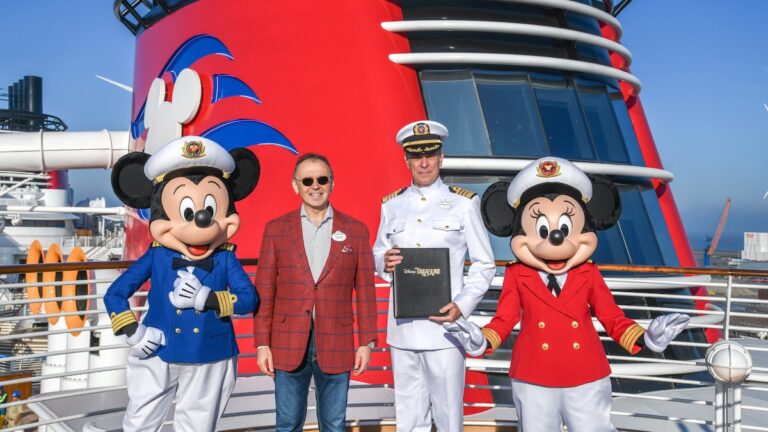
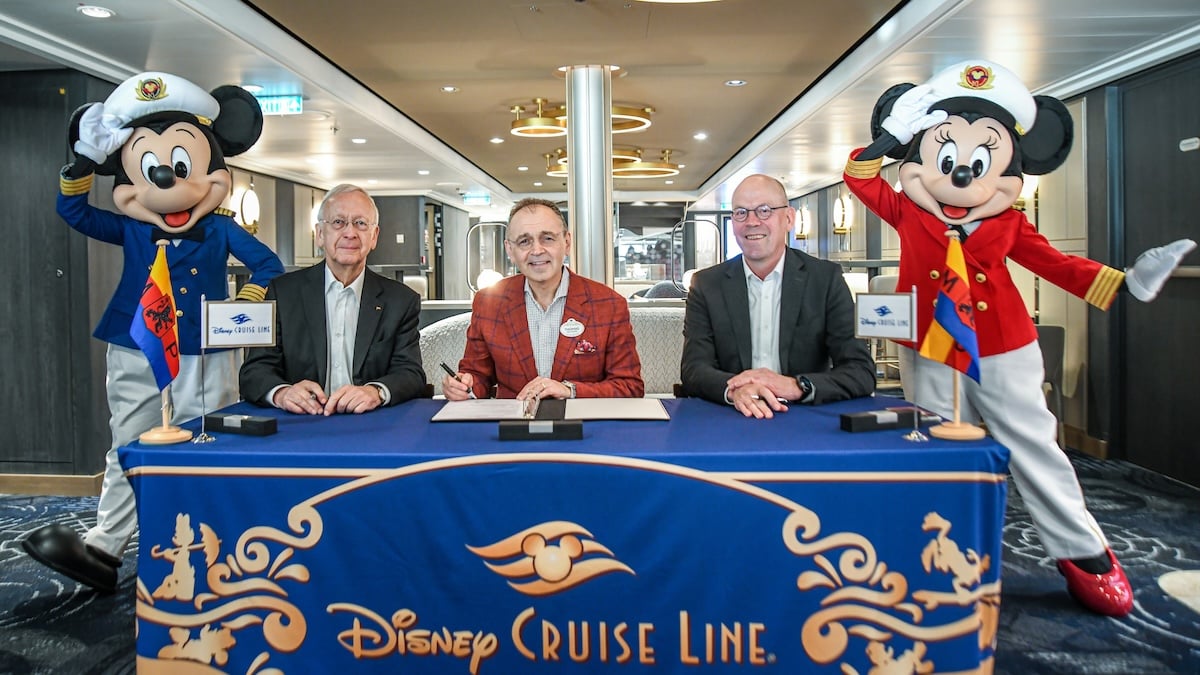
Disney Signature Experiences President Thomas Mazloum and Captain Marco Nogara received the ship during the handover ceremony from Meyer Werft CEO Bernd Eikens and Managing Director Bernard Meyer.
“We are very happy to hand over the Disney Treasure to Disney Cruise Line today,”said Eikens. “She is the newest milestone in our longstanding partnership and everyone at Meyer Werft has put a lot of effort and passion into Disney Treasure.”
Malzoum echoed the statement, saying,“We’re incredibly thankful for our work with Meyer Werft and look forward to our bright future together as we continue to expand the Disney Cruise Line fleet.”
Bringing New Themed Experiences and Magic to the High Seas
Disney Treasure, which will be homeported in Port Canaveral, Florida, near Disney World Resort in Orlando, is slated to begin her maiden voyage on December 21, 2024, to the Eastern Caribbean, spending her first holiday enjoying calls in the British and US Virgin Islands and Disney Cruise Line’s private destination, Castaway Cay.
Disney Treasure handed over to Disney Cruise Line (Photo Credit: Meyer Werft)
As the second ship in the Triton Class, the 4,000-passenger ship, like each ship in the fleet, is designed to immerse guests in Disney’s stories and characters, with a new theatrical dining experience providing themed meals with performances that bring the Pixar film “Coco” to life, and a brand-new Broadway-style adaptation of “Moana.”
In addition to its themed entertainment, the ship is introducing a signature song as part of its debut and features an “Aladdin”-themed bow design along with a Grand Hall atrium that resembles the film’s palatial city of Agrabah.
Guests will get a sneak peek at the entertainment during the Macy’s Thanksgiving Day Parade, where Disney Cruise Line’s float will spotlight its newest vessel ahead of her official debut.
Additionally, the ship will offer kids and adults plenty of adventures with a reimagined AquaMouse waterslide/rollercoaster, a “Toy Story”-inspired splash zone, and multiple swimming pools.
Disney Treasure River Ems Conveyance
The vessel will also offer more than 1,200 staterooms with designs centered around the animated films “Aladdin,” “Up,” “Encanto,” and “Pocahontas,” as well as royal suites with features showcasing “The Lion King,” “The Jungle Book,” and “Aladdin.”
Of course, Disney Treasure’s dining, lounges, and bars will also feature a number of familiar characters and themes Imagineers are renowned for creating.
“The Disney Treasure is yet another example of how we’re bringing the magic of Disney to more fans than ever before – and today, we are one step closer to debuting this spectacular ship to the world,” Mazloum said.
As the latest addition to the cruise line’s fleet – and the fifth Disney ship built by Meyer Werft – Disney Treasure will soon be joined by a third Triton-class vessel, Disney Destiny, which is currently under construction in Papenburg and set for delivery in 2025.
Four more Disney ships are scheduled to be constructed at Meyer Werft between 2027 and 2031.
With another successful Alaska cruise season now in the rearview window, the Port of Seattle, a major embarkation port for voyages to the Great Land, is tallying up the 2024 cruise arrivals data.
During the May-to-October season, the port hosted 275 sailings and 800,000-plus cruise passengers. While the statistics are good, they fall a bit short compared to the 2023 season, when 291 sailings delivered about 907,000 passengers.
However, both 2023 and 2024 show vast improvements versus pre-pandemic 2019, when the port welcomed just 213 sailings.
The new data, released on October 24, 2024, shows the port has fully rebounded and has become a more popular departure choice for Alaska sailings. Port officials, who are predicting that the 2025 summer season will bring even more success, point to high-profile ships that will homeport in Seattle.
Among them is Cunard’s Queen Elizabeth, a 2,100-guest luxury ship that will operate 11 Alaska cruises from the port, starting on June 12, 2025 and continuing to late September 2025.
A range of 7- to 11-day voyages is offered. Seven-day cruises will call at Juneau and Skagway, Alaska; and Victoria, British Columbia; and feature scenic cruising in Glacier Bay. For guests with a little more time, 11-day itineraries visit those destinations and add Ketchikan and Sitka, Alaska; and include scenic cruising at Hubbard Glacier.
Each voyage will feature an Alaskan Cultural Heritage Guide and a naturalist onboard, and offer excursions that vary from whale-watching and land tours to gold panning, visits to wildlife preserves, and more.
Virtually every major cruise line is well represented with Alaska cruises from Seattle in 2025, including Norwegian Cruise Line, Royal Caribbean, Holland America Line, Princess Cruises, and Carnival Cruise Line.
Among the biggest ships slated to sail from Seattle are Royal Caribbean’s 4,900-guest Anthem of the Seas, Norwegian Cruise Line’s 4,000-guest Norwegian Bliss, and Princess Cruises’ 3,600-guest Royal Princess.
All of the Carnival Corporation brands, including Cunard, have preferential berthing privileges at the Port of Seattle, thanks to a 10-year agreement the conglomerate announced in June 2024.
Port Leads Industry in Environmental Policy
The Port of Seattle positioned itself as a leader in environmental sustainability efforts in June, when it announced that all cruise ships visiting the facility starting in 2027 must be able to connect to shore power.
Hooking into shore power infrastructure cuts cruise ship emissions by up to 99%, and greenhouse gases by more than 20%. The onshore power source enables ships to turn off their engines while in port and keep hotel systems running.
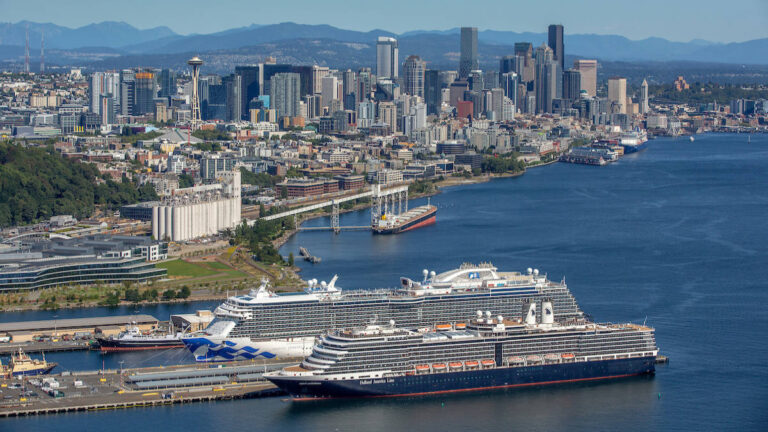
Carnival Cruise Ship in Seattle (Photo Credit: Port of Seattle)
At the Port of Seattle, two shore power connections are available at the Smith Cove Cruise Terminal at Pier 91. Shore power hook-ups are being installed at the port’s Pier 66 cruise berth, and when that project is complete, all cruise berths at the port will have the needed infrastructure.
The Seattle port is the first in the US to mandate the shore power regulation. The initiative is part of a Green Corridor plan introduced in 2022 that aims to safeguard the coastal cruising grounds between Washington State, British Columbia, and Alaska.
The long-term effort calls for zero greenhouse gas emission ships to sail the route, and for ports to support the ships with appropriate docking facilities.
According to the Cruise Lines International Association (CLIA), just 30% of cruise ships currently operating have shoreside power capabilities, but many vessels are being equipped with the technology.
Cruise travelers often bring home souvenirs for friends, neighbors, and family members who weren’t lucky enough to join them on the voyage. Some family members that often get great attention after a cruise are pets – but it can be surprisingly hard to find pet-friendly souvenirs while sailing.
One frequent cruiser has reached out to John Heald, Carnival Cruise Line’s Brand Ambassador, with a request for Carnival-themed toys to be sold onboard.
The guest explains that they would normally buy souvenirs for their grandchildren, but as the youngsters have grown up, they don’t buy so many. Now, their attention is on a new family member.
“I now have a puppy for the first time in 15 years and he’s my baby! Wanted to get him something in the shops but nothing was dog-friendly,”the guest explained.“I think if Carnival added a few ‘Carnival dog toys’ they would be surprised how well they would sell! Just a suggestion.”
Heald’s assistant, Jacinta, responded to the guest’s suggestion with great enthusiasm.
“Thanks so much for the great suggestion and we will share this with our colleagues from the shops,”she said.
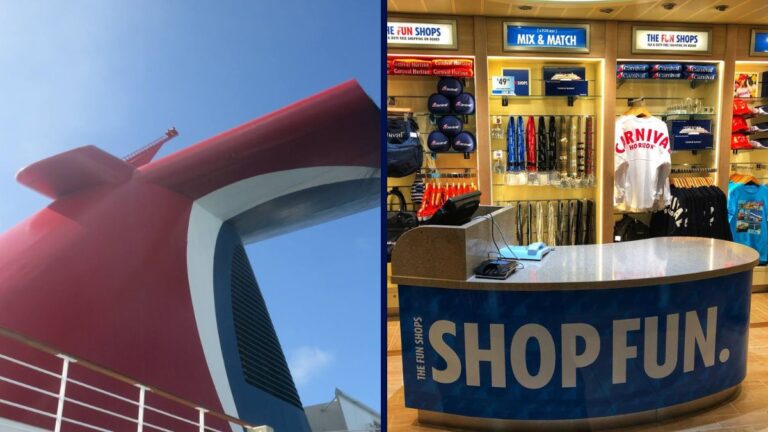
Cruise lines change the logo-branded merchandise they offer regularly, based on sales, guest feedback, and product availability. Carnival Cruise Line offers a wide selection of apparel, mugs, model ships, photo frames, keychains, and more.
The cruise line also often features special, limited-edition merchandise such as for a new ship’s inaugural season or holiday items that may only be sold onboard during that special season rather than year-round.
It should be noted that even if Carnival Cruise Line were to being offering pet-friendly merchandise, pets will not be permitted onboard. Only trained service dogs are allowed to set sail, in accordance with the cruise line’s service dog policy.
“Carnival only permits service dogs on board. A service dog is legally defined and individually trained to meet the specific needs of a person with a disability,”the policy reads.“Pets, or service dogs in training, are not allowed aboard. Emotional support dogs, which are not recognized by the US Department of Justice, are also not permitted on Carnival ships.”
What Pet Toys Could Carnival Offer?
Heald himself owns a young German shepherd named Quantum and is sure to be intrigued by the idea of dog toys onboard – especially since young dogs and puppies can often destroy toys easily.
While the onboard gift shops do offer toys – plush Freddy the Funnel or Carnival cruise ship toys, for example – these items are not suitable for pets.
Pet-friendly items should be free of small parts that could be swallowed, are typically more durable, and should be made with non-toxic materials.
Royal Caribbean Souvenir (Photo Credit: Melissa Mayntz)
Of course, all new products go through rigorous testing and marketing approval before being offered onboard ships. Pricing options, potential interest, supply availability, and onboard space should all be considered before offering pet toys.
Possible options for Carnival-branded pet toys could include tugs, durable rubber chew toys, plushies, or treat-dispensing toys (just take my money if they make a Carnival funnel rubber treat dispenser!).
Other pet-themed items could also be offered in the gift shops, such as collars, leashes, bandanas, bowls, or even pet-sized shirts.
While Carnival-themed items would likely be the hottest pet items for frequent cruisers, more general nautically-themed pet merchandise could also be great additions to the onboard shops.
Limited selections of pet toys and other pet items have been spotted on other cruise lines, whether or not Carnival Cruise Line will begin offering pet merchandise is not yet confirmed.
Would you buy pet items onboard a Carnival ship? Share what you’d buy for your furry family members on the Cruise Hive boards!
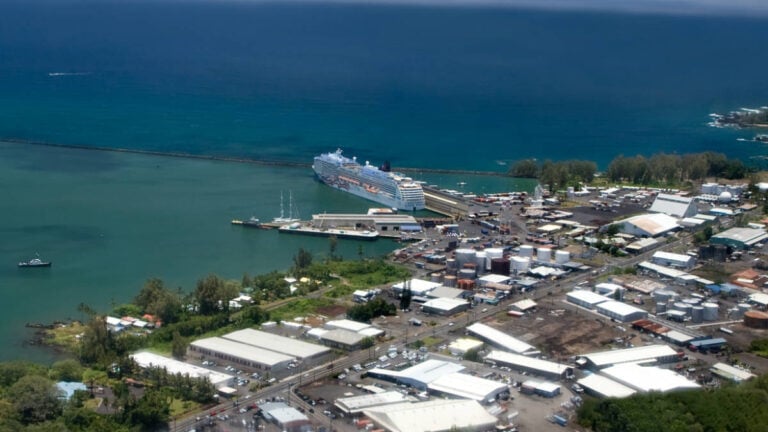
Hilo Cruise Port is located on Hawaii’s Big Island. Welcoming over 200,000 cruise passengers yearly, it is one of several gateways to the island’s lush greenery, stunning waterfalls, volcanic beaches, and tropical landscapes.
Built in the 1930s, this port has grown from a shipping facility to a modern cruise ship port that plays a vital role in helping the state’s thriving tourism industry flourish. Today, we’ll cover everything you need to know about the Hilo cruise port.
As the name suggests, Hilo Cruise Port sits just outside the city of Hilo, which is one of the oldest and largest settlements on Hawaii’s Big Island. Like Hilo itself, Hilo Cruise Port is located on the Big Island’s northeastern coast, making it easy for visiting cruise ships to reach.
When they are docked in Hilo Bay, visiting cruise ships also enjoy natural protection from rough ocean waters by the shape of the bay and the man-made, 10,080-foot-long Hilo Breakwater Barrier.
Not only is the location ideal for cruise ships voyaging from the mainland of the United States, but the fact it is only 2.5 miles away from downtown Hilo means it is perfect for visiting cruise ship passengers hoping to take in some of Hawaii’s famed Aloha culture.
Plus, Hilo is just a short distance from some truly stunning natural attractions, including the Big Island’s breathtaking Hawaii Volcanoes National Park and Akaka Falls State Park, which makes it the perfect excursion destination.
Although it is not as big or busy as Honolulu Cruise Port, Hilo Cruise Port is still a popular docking point for Hawaiian cruises.
Hilo Cruise Port Address:
Hilo Cruise Port 80 Kuhio Street Hilo, HI 96720
Hilo Cruise Port Piers and Terminal
Cruise Ship Docked in Hilo (Photo Credit: Elmar Langle)
Hilo Cruise Port features multiple piers, but only Pier 1 serves large cruise ships. The second pier, Pier 2, is used to dock smaller cruise ships and other small to medium-sized inter-island passenger vessels, and Pier 3 is for smaller inter-island cargo ships.
The port features a relatively small terminal building that is not connected directly to the cruise ship berth with bridges, as is sometimes the case with larger facilities.
Instead, visiting passengers disembark directly onto either pier, where they are greeted with a few open-air kiosks. If they walk to the base of Pier 1, they will find the small terminal building.
Despite its size, the terminal building features the basic amenities you would expect from a cruise ship terminal, including restrooms, waiting areas, passenger information desks, tourism kiosks, and more.
Terminal Facilities
As previously mentioned, the small cruise terminal building may be somewhat limited in terms of amenities, but it still offers all of the essential services you would expect.
Restrooms
Clean and wheelchair-friendly restrooms are available in the terminal building.
Wi-Fi
Unfortunately, complimentary Wi-Fi is not available at Hilo Cruise Port. While there are no options available in the port itself, Hilo Bay Café is just 1.5 miles away, so passengers needing internet access can walk roughly 30 minutes to connect to free Wi-Fi.
Accessibility
Both piers and the small terminal building are fully accessible, with ramps and ADA-compliant restroom facilities ensuring that all visiting passengers feel welcome.
Cruise Lines that Visit Hilo Cruise Port
Cruise Ship Just off Hilo (Photo Credit: okimo)
Given that Hawaii’s Big Island is one of the busiest tourist destinations in the United States, it is no surprise that a number of major cruise lines make regular stops at the Port of Hilo Cruise Terminal. The following are just a few of the many cruise lines that visit Hilo:
Norwegian Cruise Line
Princess Cruises
Carnival Cruise Line
Viking Ocean Cruises
Holland America Line
Celebrity Cruises
Royal Caribbean International
Where Do Cruise Ships Dock?
Almost all cruise lines dock at the larger, east-facing berth on Pier 1. This is not only because the 1,265-foot-long berth can accommodate larger ships, but it is also closer to the terminal building.
During the busy season, some cruise ships will dock at Pier 2, but it can only accommodate small to medium-sized cruise ships, as it has a berthing space of 703 feet.
Parking at Hilo Cruise Port
View of Hilo, Hawaii (Photo Credit: Danita Delimont)
While Hilo Cruise Port does not offer a dedicated long-term parking lot for cruise passengers, it is possible to park in the area.
Official Hilo Cruise Port Parking
A short-term parking lot is available on-site but primarily used for pickup and drop-off purposes. It sits at the point where the two piers converge.
Although free parking is available for up to two hours at the lot, it is primarily used for port staff, so you will be told to leave if you stay beyond the two-hour pickup window.
Mokaoku Municipal Parking Lot
If you need long-term or overnight parking, you will need to use one of the nearby unofficial lots. Unfortunately, Hilo Cruise Port is located in an industrial area that primarily services the shipping port, so there are no commercial parking lots within the immediate vicinity of the port.
Located about 1.5 miles away near Coconut Island, this public parking lot offers free daytime parking. Overnight parking is $10 per day. It is a pay-and-display lot, so you must pay ahead of time and clearly display your ticket in your window. Note that this lot is fairly small, and parking is limited.
Kamehameha Ave Parking Lot
Located 2.5 miles from the port at the bus terminal at 329 Kamehameha Avenue, you can find another free parking lot. This one is much larger and offers complimentary overnight parking. Hawaii’s Transit Agency operates it, so it is completely free to use, but keep in mind that it is not a secure lot, so parking is at your own risk.
Traveling to Hilo Cruise Port from Nearby Airports
Another major reason for Hilo Cruise Port’s popularity is its proximity to Hilo International Airport (ITO). Here’s a quick breakdown of how to get to and from the two closest airports:
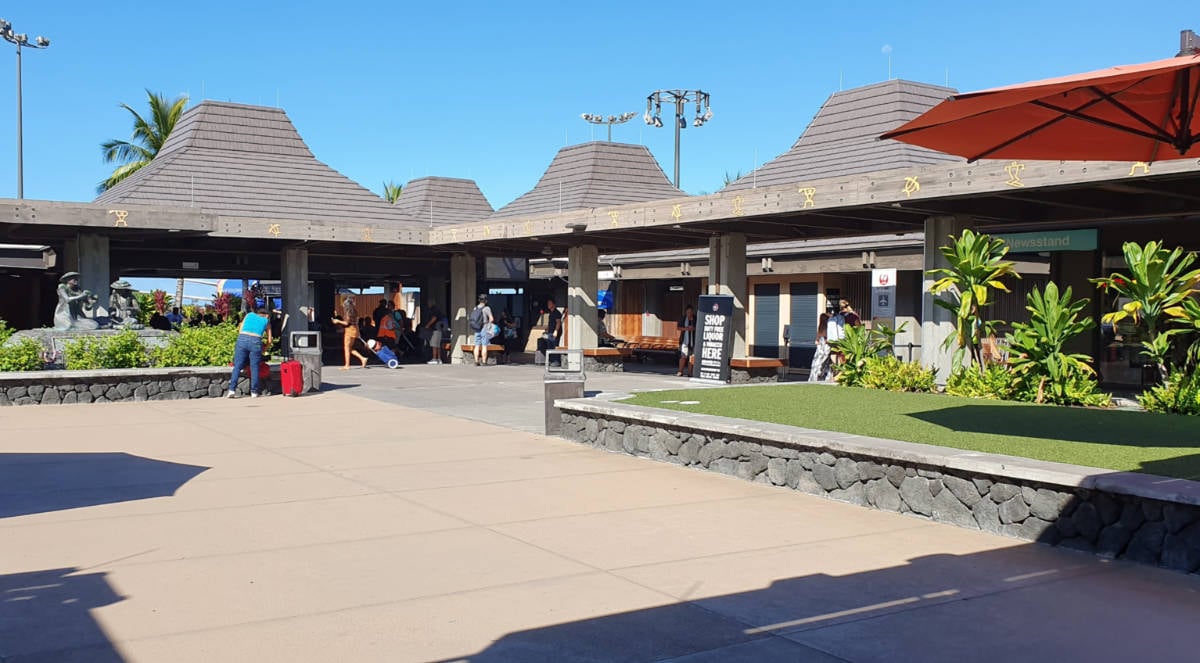
Hilo International Airport (ITO)
Hilo International Airport (Photo Credit: VisualMediaHub)
Just 3.1 miles from the cruise port, Hilo International Airport is the main airport serving the Hilo area. Some cruise lines, including Norwegian Cruise Line and Celebrity Cruises, offer free shuttle services from the airport for cruises that list the Port of Hilo as their initial embarkation point.
Several car rental providers are at the airport, so some passengers will rent a vehicle and drive themselves. If you plan on doing so, you can take the following directions:
Take Kekuanaoa Street, then turn right onto Kanoelehua Ave for 0.7 mi. Turn right onto Kamehameha Ave, make a slight left onto Kalanianaole St, and watch for signs for Hilo Cruise Port.
If you are flying into Hilo International and need to get to the port, you have the following options available to you:
Taxis are the most popular mode of transportation from the airport. While the city does not enforce a flat rate for transportation to the port, fares for this 10-minute drive tend to be around $15 to $20.
Both Uber and Lyft are available on the Big Island, and many drivers are willing to pick up passengers at the airport.
As mentioned, there are several rental agencies directly at the airport, including Hertz and Enterprise. Daily rates for a compact car are usually pretty reasonable, so it can be a somewhat affordable way to explore Hilo and the surrounding area.
Kona International Airport (KOA)
Kona International Airport (Photo Credit: Danne_l)
The airport is the second that serves the Big Island. Located on the island’s western side, it is 78 miles away from the port. Although this may not seem practical, some cruise passengers will fly into Kona International Airport to explore more of the island before they board their cruise ship.
Plus, the drive is incredibly scenic, offering tourists an opportunity to view some of the island’s volcanic landscape and coastline from the comfort of their vehicle.
If you choose to do so, you should anticipate the drive to take between 1.5 and 2 hours.
Head west on Keahole Airport Rd and turn left on Kupipi St to Keahole Airport Rd and right only HI-19. Then, follow the signs to HI-190. After about 70 miles, take a left onto W Puainako St for 0.6 mi, then turn left onto W Kawili St for 1.2 mi.
Turn right onto E Kawili St then left onto Kanoelehua Ave. After 1.2 mi, take a slight left onto Kalanianaole St and watch for signs for Hilo Cruise Port.
Unfortunately, getting between Kona Airport and the cruise port can be somewhat tricky given the 78-mile distance separating them, but you still have these options available to you:
Because there are no direct shuttle buses from Kona Airport to the cruise port, most people will opt for a cab. Keep in mind that taxi fares can cost upwards of $250, as most drivers will be hesitant to drive across the entire island.
As mentioned, renting a car and taking a scenic drive is another popular option. With drop-off locations just outside of nearby Hilo Airport, it can be a way to see more of the island before your cruise.
How to Get to Hilo Cruise Port
The Hilo Airport and Cruise Port (Photo Credit: Shawn Zhang)
Other ways to get around Hilo and make it to Hilo Cruise Port include the following:
Taxis and Ride-Sharing Services
Given that the Big Island of Hawaii is a major tourist destination, there are plenty of taxis and rideshare drivers looking to capitalize. Depending on where you are coming from, fares can range from $15 to $35. While you can flag down a taxi, some people prefer an app-based rideshare service for their transparent pricing and the fact that you can easily choose where you will be picked up.
Car Rentals
As mentioned, rental cars are another hugely popular way to get around the island. Daily rates vary but can be pretty affordable if you are visiting during the off-season. Larger 4×4 SUVs tend to be more expensive but can be worthwhile if you have lots of luggage or want to explore some of the island’s more rugged and remote areas.
Public Transportation
The Hele-On Bus Service is the main form of public transportation in Hilo. This public bus service offers routes throughout Hilo and the surrounding area, but they do not have a drop-off point directly at the port. The closest bus stop is about a 13-minute walk away.
That said, it is by far the most affordable form of transportation, with one-way fares costing only $2.20 for 0.1 to 4 miles and $3.50 for anything over 4 miles. The bus service also provides routes to some of the most popular tourist attractions surrounding Hilo.
Beaches Near Hilo Cruise Port
Coconut Island Beach, Hilo (Photo Credit: Joe Belanger)
While the area surrounding Hilo is better known for its rugged volcanic coastline than the sandy beaches you get in the Caribbean, a few of Hawaii’s famous black-sand beaches are relatively close to the port. If you want to enjoy some relaxing downtime while you visit Hawaii, you can go to the following public beaches:
Coconut Island Beach
Also known as Moku Ola, the beach adjacent to Coconut Island is just 1.5 miles from the cruise port. There is a small beach and park on the main island, and you can cross a small bridge over to Coconut Island, where you will find two sandy beaches. You can also explore tide pools, and the clear waters are a popular spot for snorkeling.
Richardson Ocean Park Beach
Although 2.9 miles east of the cruise port, Richardson Ocean Park is another great location for a beach day. The volcanic black sand contrasts with the blue water and lush green palm trees, giving this park and its beach a unique appearance.
The waters along the park’s beach are also home to a thriving reef system, where you can sometimes view monk seals and Hawaiian green sea turtles. Whether you want to relax and listen to the waves under a palm tree or you want to take a swim, it’s well worth visiting this island paradise.
Keaukaha Beach Park
Although not your typical sandy beach, this scenic oceanfront park is the closest beach to the cruise port. Just over half a mile from the port, it’s possible to walk to the park and enjoy its beach. The beach is less than a mile long, but there is a clear gap in the rocky shoreline where locals and tourists enjoy swimming.
If you do make it out to the park, you will be able to watch cruise ships coming and going from the port and surfers trying to catch a wave. It’s a fun place to spend an afternoon, even if it doesn’t have the type of sandy beachfront that you might be more used to.
Dining Near Hilo Cruise Port
Ken’s House of Pancakes (Photo Credit: Chris Allan)
While you will only find vending machines at the cruise port, you don’t have to travel too far to find diners, restaurants, and cafés. Whether you want to try some of the local cuisine or you want some more familiar comfort food, the following options are all fairly easy to get to from the port:
Hilo Burger Joint
Hilo Burger Joint is a no-fuss, family-owned restaurant and bar that serves up incredible burgers. Everything on their menu is locally grown on the Big Island, and all their burger patties are made with grass-fed, hormone-free beef.
It’s 3 miles away, but with 21 different burgers, including plenty with signature Hawaiian ingredients and flavors, it is an excellent stop for casual eats and well worth visiting. Plus, if you want to cool off, they also have 21 beers on tap, including some local brews.
The Hawaiian Style Café
Located 2 miles from the port, The Hawaiian Style Café is another family-owned restaurant that is a popular option for tourists and locals alike. Although it opened in 1978 under a different name, it has continued to offer the same huge portions and delicious comfort food that keep people coming back for more.
With plenty of popular Hawaiian dishes on offer, including poke bowls, grilled fish, and Hawaiian-style pork sausages, it is a great place to try some authentic Hawaiian dishes. They also offer plenty of homemade pasta dishes, so if local flavors aren’t your thing, you can try something you’re a bit more used to.
WSW (Whiskey Steak Wine) Steakhouse
If you are looking for something a little bit more upscale, WSW Steakhouse offers a diverse menu of steaks, seafood dishes, and a full brunch menu.
As you can probably guess from the name, they also have an incredible wine and whiskey menu. The restaurant also offers stunning ocean views, so it is worth the 1.4-mile journey from the cruise port.
Miyo’s Japanese Restaurant & Izakaya Bar
Hawaii has an enormous Japanese-American population, which explains why so many Japanese dishes are adored by the locals. Established in 1987, Miyo’s Japanese Restaurant has been one of Hilo’s most successful. This cozy restaurant uses local ingredients and seafood to prepare delicious Japanese dishes.
They also have a wide range of small appetizer dishes, imported sakes, and Japanese beers. If you want to eat like a local, consider making the 2-mile journey from the cruise port.
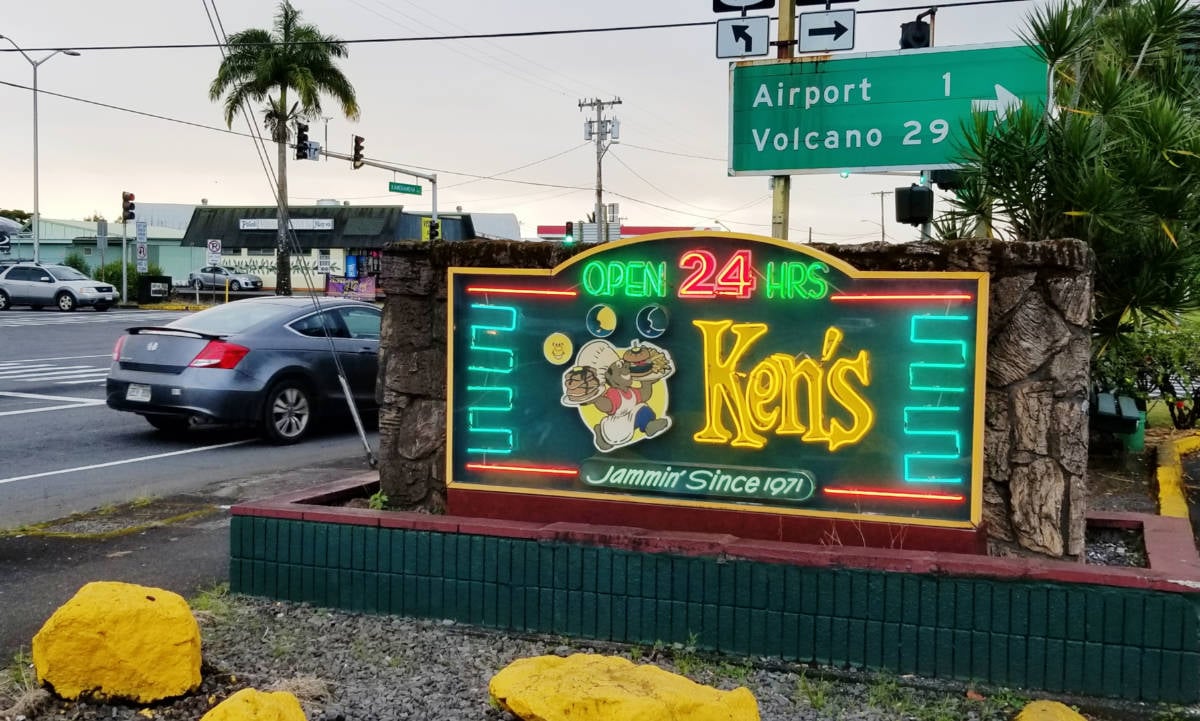
Ken’s House of Pancakes
Just one mile away from the cruise port, Ken’s House of Pancakes is one of the closest options. While it may seem like an unassuming diner, this famous pancake house has been around since 1971 and is one of the most popular spots in Hilo.
This award-winning local favorite has also been visited by countless Hollywood stars, musicians, and professional athletes, as evidenced by the signed photographs that cover the dining room walls. If you have a big appetite, Sumo Size your dish!
Shopping Near Hilo Cruise Port
Farmers Market in Hilo (Photo Credit: Tada Images)
Unlike some of the bigger cruise ports you will find in the Caribbean, Hilo Cruise Port has no on-site duty-free shopping or designer stores, but that doesn’t mean you have to leave Hilo empty-handed. There are plenty of options for shopping enthusiasts if you travel to Hilo’s downtown, including the following:
Hilo Farmers Market
This historic market is incredibly popular amongst locals for its fresh market items. With over 150 vendors setting up every Wednesday and Saturday (and regular market offerings every other day from 7 am to 3 pm), it is a great location to purchase handmade craft items and souvenirs.
Plus, there are plenty of food vendors selling everything from sliced tropical fruit to fresh-made poke bowls. It is one of the biggest markets in the State of Hawaii and something every visiting tourist should experience if they can.
Waiakea Kai Shopping Plaza
If you just need to pick up a few essentials for your cruise, this shopping plaza is only 1.1 miles from the cruise port. Not only is it home to a grocery store, pharmacy, Walmart, and other stores that are perfect for buying cruise supplies, but it also houses several restaurants and cafés, so it’s an easy place to grab a quick bite and a coffee.
Shopping Along Kamehameha Avenue
If you are willing to hop in a cab, there are plenty of stores, shops, and boutiques along Kamehameha Avenue. Located about 2.5 miles from the port, this popular shopping district is home to plenty of clothing stores where you can purchase swimwear and iconic Hawaiian items, like the classic button-up Hawaiian shirt.
Like the rest of Hawaii, Hilo enjoys pleasant weather year-round, with average temperatures rarely straying from the low 70° to high 80° F range.
With that said, the stretch between November and March can be very wet. In fact, the rainfall is so regular during these months that Hilo is one of the rainiest cities in the entire country.
Since most visitors try to avoid these rainy months, the dry season, which runs from April to October, tends to be the busiest. These months are also considered the best time to explore the area, so you will discover that plenty of excursions and sightseeing tours are available during these months.
If you decide to visit outside of the busy season, you can make time to take in the Waimea Cherry Blossom Heritage Festival in February. The world-famous Merrie Monarch Festival also occurs in early April, and this week-long celebration of Hawaiian island culture is definitely worth going out of your way to experience.
Packing up at the end of a cruise vacation can be hectic, especially as passengers may rush to get their bags out for security collection on the last night of the cruise.
Or you may be like me, carrying your own bags off the ship but not packing until the early hours of debarkation morning when you’re barely awake.
Either way, it’s easy to accidentally leave something onboard tucked in the back of the stateroom safe, in a nightstand drawer, or forgotten in the closet. But what happens to those items?
Carnival Cruise Line’s Brand Ambassador, John Heald, has offered a rare look behind-the-scenes at the “Mother Ship” – the cruise line’s Miami headquarters where lost items are gathered as shoreside staff works to return them to their rightful owners.
“I’m in a very special place and I want to say a massive thank you,”Heald said, referring to the lost-and-found-team.“They are all very, very, very, very hard-working people.”
“These are people never in the spotlight and that’s not right, so I wanted to put them in the spotlight now and say thank you.”
The 4-minute video Heald shared on his Facebook page not only recognized the shoreside crew members responsible for sorting, cataloging, and working to get items back to travelers, but also showed deeper insights into the entire process.
“Every single week, people leave things onboard. It’s found, or recovered, and sent back to the Guest Services desk,”Heald explained.“A week later, or the end of the next cruise – not straightaway on the same day that it’s lost – it’s sent back to Miami. It has to clear through customs and all the other things.”
You can watch the full video below:
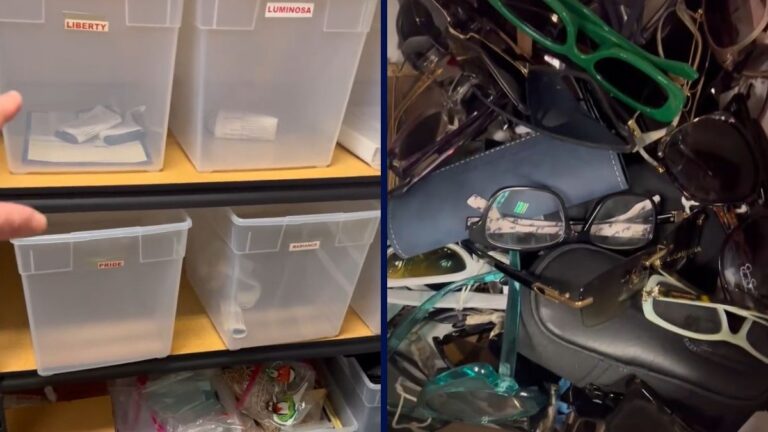
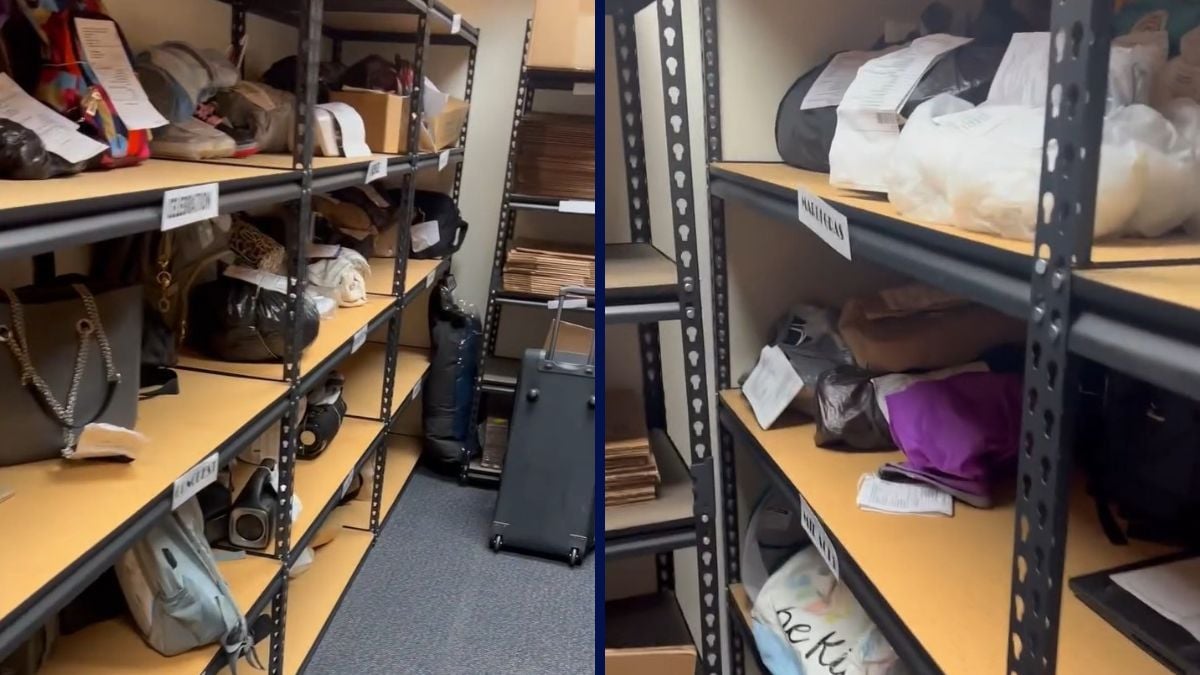
Lost items are delivered to Carnival Cruise Line headquarters in green bags marked with the ship name and sailing date so they can be processed to be returned to their owners.
A surprising variety of items are left onboard Carnival ships, including purses, shoes, cell phones, tablets, charging cables, eyeglasses, jewelry, clothing, cpap machines, hats, books, and much more.
“All this is gathered up,”Heald explained, showing plastic bins with ship names where items are collected.“Then it’s sorted.”
The next step in the process is that all items are examined and attempted to be matched with lost item reports from individual ships. These are forms that travelers fill out to alert crew members that they have left an item behind.
If the item is located, it will then be returned to the guest. Travelers should be aware, however, that the process can take time – even up to two weeks or longer after a sailing has ended.
Why Does It Take So Long to Return Items?
It can be frustrating for travelers to wait so long to recover items they may have accidentally left behind on their cruise. The return process, however, can vary greatly depending on each ship’s individual schedules.
If the ship is sailing longer itineraries, it may be quite some time before lost items can be located as they are not taken to headquarters until after the end of the next sailing.
For example, let’s say a guest enjoys the 4-night, November 28, 2024 departure of Carnival Sunshine from Charleston, South Carolina, but accidentally leaves their cell phone onboard in their stateroom safe. They only realize this after debarking the ship, but do fill out the online form to recover their phone.
Carnival’s Lost-and-Found Department
The ship, however, has already departed on its next cruise – a 10-night Eastern Caribbean sailing that left just hours later. Even if the phone is found by the cabin attendant, it will be 10 days before the ship returns to the US.
Then, the phone (along with any other items found onboard after that 4-night cruise) must be shipped to Carnival Cruise Line’s headquarters in Miami, which could take another 3-4 days.
Once arriving in Miami, the items must then go through the sorting process, be carefully identified, and connected to their respective owners. Only at that time would the lost phone be able to be sent back to its owner.
Throughout the process, Carnival Cruise Line does attempt to email travelers about the status of their item, including whether it was located or not and what the next steps may be.
Have you ever lost an item on a Carnival cruise? Did you get it back, and if so, how long did the process take? Share your experiences on the Cruise Hive boards!
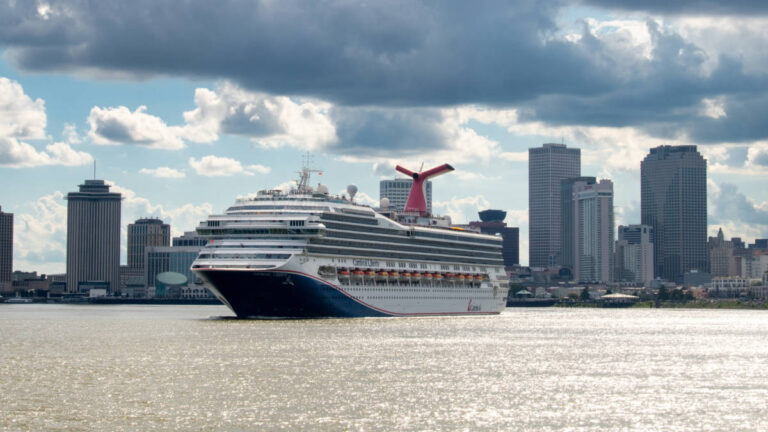
For the first time since the end of the pandemic-era, the Port of New Orleans will set a new record number of annual cruise passengers. By the close of 2024, the port will have seen 1.3 million cruise passenger movements through the facility, including guests on ocean-going and river ships.
The passenger total will easily exceed 2023’s 1.2 million transits, which signaled the port’s return to the 2019 level. That year was a record-breaker, surpassing the 1.1 million recorded in 2018.
With the increase to 1.3 million in 2024, the cruise sector accounts for more than 15% of the port’s annual revenue.
The increase in cruise tourism helps not only the port but also the city of New Orleans. With about 90% of cruise arrivals traveling to the port from other states, roughly 70% of them will book pre- or post-cruise stays in the Big Easy.
That translates into some 300,000 hotel room night bookings and about $125 million in revenue for local businesses.
Cruise lines embrace New Orleans as a convenient departure port for Western Caribbean cruises and, to a lesser degree, Eastern Caribbean sailings. All three major lines, Carnival Cruise Line, Royal Caribbean, and Norwegian Cruise Line, have ships operating from the port.
Carnival Cruise Line’s Carnival Liberty and Carnival Valor, both Conquest-class ships that entered service in 2004, are based at the port year-round.
The 2,980-guest Carnival Valor operates 3- and 4-night Western Caribbean cruises. The shorter option calls at Cozumel, Mexico, while the longer itinerary visits Cozumel and Costa Maya.
Carnival Liberty, accommodating 2,974 guests, offers 6-night Eastern and Western Caribbean cruises. Western Caribbean sailings visit destinations such as Roatan, Honduras; Belize; Cozumel; and Jamaica, depending on departure date, while Eastern Caribbean itineraries call at Key West, and Freeport and Nassau, Bahamas.
Norwegian Cruise Line homeports the mega-ship Norwegian Getaway at New Orleans. The 4,000-guest Breakaway-class ship that debuted in 2014 introduced her seasonal Western Caribbean cruise series in October 2024.
Port calls feature Harvest Caye, a private destination in Belize; Roatan, Honduras; and Costa Maya and Cozumel. The ship will remain in New Orleans through April 2025 before deploying to New York for a Bermuda cruise series.
Royal Caribbean’s Brilliance of the Seas, a Radiance-class ship that launched in 2001, began her seasonal New Orleans deployment in October 2024, sailing 6-night cruises.
Cruise Ships Docked in New Orleans (Photo Credit: Aleksandr Dyskin)
The 2,140-guest ship offers itineraries calling at Cozumel and Costa Maya, Mexico; Perfect Day at Coco Cay, the line’s private island; Grand Cayman; Progresso; and Jamaica.
Brilliance of the Seas will homeport at New Orleans until early April. The ship will then reposition to Athens for her summer series of 6-night Eastern Mediterranean voyages.
Port Official Predicts Another Cruise Record in 2025
Taken together, the cruise ship schedules in 2025 indicate that the Port of New Orleans could continue its record-breaking streak.
“With a record number of cruise passengers anticipated across the industry in 2025, New Orleans remains a leading destination for two vacations in one as cruise passengers typically stay to experience our city before or after their voyage,” said Ronald Wendel, Jr., acting president and CEO of the Port of New Orleans.
”Our long-standing partnerships have been key to this success, and we’re grateful to our cruise line and hospitality partners for their continued support,” added Wendel.
The port accommodates cruise ships at two terminals. Carnival Cruise Line ships use the port’s Erato Street Cruise Terminal while Royal Caribbean and Norwegian Cruise Line use the Julia Street Cruise Terminal.
New Orleans also welcomes river cruises that ply the Mississippi River, including Viking and American Cruise Lines. The vessels carry from 150 to nearly 400 guests each, and operate roundtrip from the Big Easy to historic destinations such as Vicksburg, Mississippi, and Memphis, Tennessee, and places farther north, including destinations in Missouri and Minnesota, among others.