In celebration of the cruise line’s 183rd birthday and in anticipation of the upcoming Queen Anne, Cunard Line has released intricate, vintage-style cutaway artwork to give eager cruisers a close-up view of the ship and its offerings, including popular venues and onboard activities, from the very top deck to below the waterline.
Cutaway Queen Anne Artwork
As the May 2024 debut of Queen Anne draws closer, Cunard Line is showcasing the new vessel in vintage-inspired cutaway artwork by Polish artist Dominik Bulka.
Not only does the fun and colorful image show off the spaces, venues, and activities of the new ship, but it also includes quirky references and trivia from the cruise line’s 183-year history and other ships in the Cunard fleet.
Popular and familiar spaces onboard Cunard ships are visible in the image, including the Grand Lobby and Golden Lion pub, along with the new Bright Lights Society show bar, where guests will enjoy live entertainment and exclusive performances with dramatic lighting. Shopping areas, food storage, and even crew areas can also be seen in the detailed illustration.
Savvy guests will also recognize famous features of Cunard ships, such as the red-coated bellhops that first began serving the line in 1930, and to this day offer a classic welcome to guests.
Famous faces are even integrated into the whimsical artwork, such as Elizabeth Taylor, Ed Sheeran, and Sir Winston Churchill – all of whom have sailed with Cunard over the years.
One of the most famous faces illustrated onboard is Captain Inger Klein Thorhauge, shown front and center on the ship’s bridge. The first-ever female captain for Cunard, she has served the line for more than 25 years, including as master of Queen Victoria and Queen Elizabeth, before she will take the helm of Queen Anne.
Another famous face is that of Jimmy, a hippopotamus Cunard Line transported from Naples to Chester Zoo in Cheshire, England in 1963. While the illustration shows Jimmy port side on Deck 1, the famous animal was actually transported on the open deck with an awning over his cage and given regular cool showers for comfort.
Queen Anne Cutaway
Glimpses throughout the illustration also show different activities guests will be able to enjoy onboard, such as yoga classes, poolside movies, live music, comfortable sleep, fine dining, and so much more.
Can you find the unicorn, bride, archer, tricycle, post box, three of clubs, and skydiving bellhop hidden onboard?
Sailing Queen Anne
While the 113,000-gross ton, Pinnacle-class Queen Anne won’t be QUITE as colorful as the whimsical illustration, the ship will offer guests amazing experiences with signature Cunard service.
When she debuts in May 2024, the ship will be largely homeported from Southampton, but will also offer several departures from Hamburg and Kiel in Germany, as well as Civitavecchia (Rome) in Italy.
Cunard’s Queen Anne Ship (Photo Courtesy: Cunard Line)
In January 2025, the ship will make her maiden transatlantic crossing to New York, and her grand inaugural tour will also take her to San Francisco, Sydney, Hong Kong, Singapore, and Dubai.
Onboard, guests will find impeccable venues and features, including the top-deck Mareel wellness studio with natural elements supporting inner peace and well-being. Steam rooms, a salt sauna, an ice room, thermal pool, and reflexology foot baths offer the ultimate in indulgent luxury to travelers.
For another type of indulgence, Queen Anne will offer dedicated dining rooms for each accommodation level, with options from fine dining to casual meals, decadent treats, and the line’s signature Afternoon Tea. Vegetarian and vegan options will also be featured throughout.
The ship will also feature multiple pools, the Sky Bar and Observation Deck, for impeccable views, abundant deck space, and much more.
Queen Anne can welcome as many as 3,000 passengers per sailing, and the ship is currently under construction at the Fincantieri shipyard in Marghera, Italy.
Ever wonder why are ships called she and why so many ships are given female names? We can help you understand this tradition and why it continues.
Many people automatically refer to a ship as a “she,” but relatively few understand why this common maritime practice exists or why it continues. To help you understand this common practice and why it is relevant to the cruise industry, we will cover everything you need to know.
This means reviewing the history and this custom and explaining why ships were originally given feminine pronouns. We will even cover the recent controversy surrounding what some consider a dated practice.
While it may surprise you, there are many reasons why the maritime industry has a long history of referring to ships as “she” and giving them female names. While some argue about the true origin of the practice, the following are some of the most commonly accepted explanations.
Historical Associations with Female Deities
Many ancient cultures had female deities and goddesses associated with navigating the sea. For example, the ancient Greeks believed in Aphrodite, while the Ancient Romans worshipped Venus. These goddesses were connected to traversing the water, as well as protection, love, and beauty.
Golden figurehead on Sailing Ship (Photo Credit: Maria Nelasova / Shutterstock)
Historians believe that the fact that many cultures associate the water with a female deity or goddess explains why ships have been labeled with feminine pronouns by so many cultures throughout history.
For deeply religious cultures, connecting a ship and a feminine deity was likely seen as a way to increase the likelihood of a safe voyage.
After thousands of years, the practice has become so well established that it has become a strong tradition, even if modern-day practitioners no longer do so for the original reasons.
While there is far less of a disparity today, throughout history, the maritime world has been dominated by male sailors. Shipping vessels, naval ships, and even fishing boats were primarily navigated and traveled by men.
It only makes sense that men at sea for long periods would begin associating the vessel responsible for their survival with a motherly protective role.
It is also believed that many sailors throughout history have named ships after lovers, famous women like Queen Elizabeth or Queen Mary, or even their own mothers. Naturally, this would explain why ships would be given female pronouns.
Nautical Traditions
If you have ever spent time around sailors, they can be a somewhat superstitious bunch with all of their own terms and traditions.
Using feminine pronouns for ships and giving them female names could be explained as a tradition that has no logical explanation but has never stopped.
Resilient Lady Cruise Ship
In other words, over the centuries, giving a sailing ship a female name has simply become an ingrained part of maritime culture. The custom could have been passed down for generations until it was firmly established as the standard.
Less Likely Explanations for Why Ships Are Called She
The Word Ship Has Latin Origins
The word ship takes its root from the Latin words “navis” and “naves,” which are considered feminine words. Like many of the Romance languages, like French and Portuguese, Latin genders words, including inanimate objects.
The problem with this explanation for the modern-day custom of referring to ships with feminine pronouns is that other objects considered feminine in Latin and other Romance languages, like the word “car,” are not referred to by these pronouns.
Then there is the fact that ships in modern languages with direct roots in Latin, like Spanish, often refer to ships and boats with masculine pronouns.
While the Latin origins of many nautical terms certainly impact modern-day maritime customs, the truth is it is unlikely that it is why we still refer to a ship as a “she” or a “her.”
Women Are Associated with Grace and Elegance
Many historians and maritime experts also believe that a partial explanation for why a ship is labeled with a feminine pronoun is the traditional belief that a woman is associated with elegance and grace.
Image Courtesy: Virgin Voyages
The theory is that some sailors and ship owners would believe that referring to their ship as she or giving it a female name would make it appear more beautiful and alluring to others.
While there is no way to disprove these theories, the other explanations have far more proof backing them.
Modern-Day Controversies Surrounding the Practice
In some circles, controversy surrounds the old practice of referring to all ships as “she.” The belief is that the patterns could perpetuate gender stereotypes and reinforce the misguided notions that all women have specific characteristics and personality traits.
There is also the belief that the practice could discourage women from pursuing careers within the maritime industry, as labeling the ship a “she” would make the women on board feel less valued.
Photo Credit: JHVEPhoto / Shutterstock
Simply put, evolving perspectives on gender and how gendered pronouns are applied to language realms are beginning to pressure all industries to embrace gender-neutral language and pronouns.
While there certainly is some debate about whether or not the tradition of referring to a ship as she should continue, the practice persists to this day due to tradition and maritime customs.
Whether or not we will stop seeing ships with female names in the future is difficult to predict, but there is no denying that the practice has its critics.
Are Cruise Ships Called She?
In the past, every cruise ship was called “she,” and many were given female-sounding names. Today, the linguistic tradition continues, but more full-sized cruise ships are given more abstract names.
Final Words
Whether or not you choose to practice the maritime tradition and parlance of referring to a sailing ship as a “she” is entirely up to your own preferences.
The cultural tradition still has its place in the maritime industry, including within the world of cruises. Still, if you prefer, you can always choose gender-neutral alternatives.
Norwegian Cruise Line has updated its crew member grooming policy for onboard team members and will now permit tattoos to be seen, with some exceptions for tattoo location as well as design. Other updates to the grooming guidelines have also been made, including for types of jewelry as well as facial hair.
Crew Member Grooming Guidelines Updated
In a welcome update to onboard grooming policies, Norwegian Cruise Line is easing some jewelry, facial hair, and tattoo guidelines. This will be good news for crew members, but how will guests react?
According to Crew Center, the changes to the shipboard grooming policy apply to crew members, officers, and staff in all shipboard positions, and were communicated to all employees. The new guidelines are in force from July 1, 2023.
Photo Credit: StudioPortoSabbia / Shutterstock
Facial Hair
Facial hair is one of the most noticeable guidelines, and crew members may now have a mustache, beard, goatee, or chin/lower lip “tuft” so long as it is neatly trimmed and well-maintained.
Mustaches may not be any longer than the length of the upper lip, therefore no styles such as large handlebars, the upwards-pointed Dali, Fu Manchus, or horseshoes will be permitted.
Simpler styles, such as a neatly groomed lampshade design, painter’s brush, or pencil are acceptable.
Jewelry
Jewelry guidelines have also been updated. Team members may wear a maximum of three bracelets, all of which must be in good condition. No food and beverage team members may wear bracelets or watches while preparing food and drink, however, which includes bartenders.
Similarly, a maximum of three rings may be worn, though an engagement and wedding band set counts as a single ring (even if not soldered or otherwise affixed together).
Food and beverage employees may wear one plain ring, such as a simple wedding band without elaborate ornamentation or detailing that might harbor crumbs, grease, or other debris.
Team members may wear a maximum of two small stud earrings per ear, or two hoops with a diameter no larger than a US dime.
Tattoos
Norwegian team members may now show tattoos, but only in certain ways. No tattoos on the face, head, or front of the neck (above a typical t-shirt collar) may be visible at any time.
In other locations, such as arms, legs, and hands, tattoos may not be “extremist, indecent, sexist, or racist.” This could include any tattoos determined to be affiliated with, symbolize, or otherwise depict extremist philosophies, gangs, or groups; any tattoos or markings that may showcase or advocate racial, gender, or ethic hatred or intolerance; promote or depict discrimination; or advocate violence or unlawful behavior and activities.
Photo Credit: BUI LE MANH HUNG / Shutterstock
Indecent tattoos of any type – whether imagery or words – are also not permitted to be visible at any time. Nor are sexist tattoos that degrade or demean anyone based on gender permitted, even if the actual imagery or wording may not be considered technically indecent, extremist, or vulgar.
It must be noted that the tattoos that are permitted must be in place when a crew member begins their onboard contract. No visible tattoos can be added during employment. This is likely to allow inspection and acceptance of existing tattoos to ensure they are permitted before a crew member reports to their ship.
Other Cruise Lines
All cruise lines have grooming guidelines in place for crew members, though the exact policies vary. In general, higher end, luxury lines tend to have stricter policies in accordance with the expectations of their guests and the atmosphere they hope to create onboard their vessels.
Some cruise lines that cater to young families and children may also have stricter guidelines to ensure everyone is comfortable in that atmosphere.
Guidelines may also occasionally vary for different positions on a ship, depending on whether or not crew members interact with guests in any way.
Depending on team member uniforms, covering tattoos may be as simple as wearing the coveralls, long pants, or long sleeves required for the job position, or else crew members may use makeup or bandages to conceal tattoos. Excess jewelry can be taken off while at work.
The strictness of policies and how they are applied will also vary. For some companies, grooming guidelines may be continually enforced as guests can still see crew members when off duty, such as debarking or returning to a ship during a port day. On other lines, these policies may only apply while a crew member is in uniform or actively on duty.
Grooming guidelines are not unique to cruise ships; similar policies are in place at most places of employment, particularly where customer service is at the forefront. This includes resorts, hotels, amusement parks, and similar venues.
The RMS Titanic is arguably the most famous ship ever built. For its time, it was a true engineering marvel and the ultimate symbol of luxury and class. While many people today assume that its fame is primarily due to its tragic sinking, the reality is that the previously unimaginable scale of the ship really captured the world’s attention.
Today, we will explain in great detail how long it took to build the Titanic. Not only will we provide you with a detailed breakdown of the interesting timeline of the Titanic’s construction, but we are also going to compare it to the build times of modern-day cruise ships.
Whether you have a deep interest in the history of the Titanic or you just have a general curiosity for everything related to the cruise industry, we have the answers you are looking for!
Construction of the Titanic began in 1909 in Belfast, Ireland. Irish ship-building company Harland & Wolff constructed the ship. The Harland and Wolff shipyard worked alongside the shipping company White Star Line, a British company that acted as a subsidiary of an American company called International Mercantile Marine Co.
Who Ordered the Construction of the Titanic?
The Titanic was ordered and owned by White Star Line, founded in 1869. By the time construction began on the Titanic, White Star Line had been building and operating luxurious ocean liners for nearly 40 years.
White Star Line Ad (Photo Credit: chrisdorney / Shutterstock)
Naturally, the Titanic and the sister ship Olympic were meant to be the crown jewels in White Star Line’s fleet. When laying out designs and intentions for the Titanic, it was envisioned as the world’s most luxurious and expensive transatlantic passenger ship.
How Long Did It Take to Build the Titanic?
As mentioned, construction on the Titanic began in 1909. The Titanic’s enormous keel was laid down on March 31st, 1909, often taken as the official first day of construction.
While there is some debate about the official date of completion, as some take the date to be the day construction ended, while others say it was not complete until its first sea trial, the commonly accepted completion date is April 2nd, 1912.
Photo Credit: Anton_Ivanov / Shutterstock
This means there were exactly 1,098 days between the start of construction and the generally accepted final day of construction. Simply put, it took three years and two days for the Titanic to be built.
Construction workers toiled night and day to complete the ship quickly. The enormous project ended up claiming the lives of eight workers.
What Steps Were Involved in Building the Titanic?
Like any ship, the Titanic was built in phases. Given the Titanic’s unprecedented scale at the time of its construction, each phase required significant effort and manpower. To help you understand how the Titanic was built, here is a simple breakdown of the main phases of its construction.
Before construction, White Star Line assembled some of the most well-respected naval engineers to create plans for the Titanic. Given the immense scale of the Titanic, planning took much longer than a typical passenger liner would.
Titanic Design Blueprints (Image Credit: Elena Kozak / Shutterstock)
Start of Construction and Framing
After the designs were finalized, construction began on March 31st, 1909. At the peak of construction, the shipyard employed over 14,000 men, giving you an idea of the project’s immense scale.
After roughly one year of construction, the Titanic’s massive steel frame was complete, which was the most time-consuming aspect of the construction.
Titanic Construction
It took almost 3.5 million rivets to hold the steel plates that formed the Titanic’s hull in place to give you an idea of how much labor was involved in this phase.
Assembly of the Interior of the Ship
Once the frame and side plating of the ship were held together, work could begin on the interior of the Titanic. This phase took thousands of workers, all completing various jobs. The entire project took nearly a year to complete, from installing the ship’s enormous engine and propellers to building various decks and rooms.
Outfitting the Ship
The outfitting phase could begin once the ship’s interior and exterior were complete. During this lengthy phase, the ship’s interior could be outfitted with luxurious amenities. Everything from grand staircases and opulent dining areas was installed, which took months to complete.
Photo Credit: Everett Collection / Shutterstock
It is important to note that the Titanic was meant not just to be one of the largest passenger vessels ever made, it was designed to be the peak of luxury travel, so the outfitting stage was incredibly time-consuming. Every detail was completed with meticulous attention to detail.
Launching of the Titanic and Tests of Sea-Worthiness
An enormous crowd gathered to see the Titanic first enter the water towards the end of 1911. While this was an important event, as it proved the massive ship could float, it was far from the date of the ship’s completion.
After it first entered the water, nearly an entire year worth of tests and finishing touches to the interior were required. These finishing touches delayed the estimated completion date by several months.
When Did the Titanic Set Out on Its Maiden Voyage?
There was a short time between the Titanic being completed in Belfast, Ireland, to setting sail on its first passenger voyage from Southampton, England.
In fact, you can measure the length of time in days! With many believing that the official completion date for the Titanic was April 2nd, 1912, as this was the date of its final sea-worthiness test, it set off with passengers just eight days later on April 10th, 1912.
The Titanic was a genuinely enormous ship for its time. Its length is still comparable to the largest cruise ships of today. To give you a better appreciation for its impressive size, here are the Titanic’s official dimensions and statistics:
Length of Keel – 852.5 feet
Overall Length with Propellers – 882.7 feet
Breadth – 92.5 feet
Depth – 59.6 feet
Total Weight in Tonnage – Gross 46,329
Number of Decks – 7
Total Passenger and Crew Capacity – 3,320 (2,435 passengers and 885 crew)
How Does the Titanic Compare in Size to Modern-Day Cruise Ships?
While a direct size comparison is difficult, as the Titanic’s design differs greatly from that of a modern-day cruise ship, it is still worth comparing a few statistics.
Where the Titanic was just over 100 feet tall, most modern-day, largescale cruise ships are about 200 feet tall. Another way to measure the difference in size between the two is that the Titanic had nine passenger decks, whereas the average ocean-worthy cruise ship today tends to have about 12 to 14 passenger decks, plus additional decks for various types of amenities.
RMS Titanic (Photo Credit: D. Ribeiro / Shutterstock)
In terms of weight, the Titanic had a gross tonnage of 46,328, which set a record for the time. By comparison, a modern cruise ship weighs more than double, with the average gross tonnage sitting around 120,000.
Today, some of the largest cruise ships in the world, like the Royal Caribbean’s Oasis Class ships, have an incredible gross tonnage of 230,000!
This is not to diminish the immense size of the Titanic, which was groundbreaking for the time and a truly historic achievement in shipbuilding; it goes to show how far cruise ships have come since the early 20th century.
How Does the Titanic’s Construction Time Compare to the Build Time for Modern-Day Cruise Ships?
While a build time of just over three years may sound short when you consider it was one of the most ambitious construction projects of the time, the construction of the Titanic took a lot longer than it takes to build a modern-day cruise ship.
In contrast to the Titanic’s three-year build time, a large-scale modern-day cruise ship takes about two years to build from start to finish, thanks to computer-aided design programs, prefabricated parts, and modern-day tools, materials, and hydraulic construction equipment.
Titanic Dry Dock (Photo Credit: navorolphotography / Shutterstock)
The comparatively accelerated building timeline of a modern-day cruise ship also owes much to the incredible popularity of the cruise line industry. With the demand for large-scale vessels higher than ever, shipbuilders have more resources to adopt the latest technologies in their shipbuilding yards.
Is the Titanic Being Rebuilt?
There have been ongoing plans to recreate the Titanic as part of a project called Titanic II. This replica ship will act as a fully functional modern-day replica of the original Titanic.
It is being built by Blue Star Line Pty. Ltd., based in Brisbane, Australia. Although it was initially meant to be completed by 2016, various delays have forced the $500 million project to push back its completion date.
Titanic Replica
As of now, there is no set completion date. Ironically, even with modern-day technology, the replica Titanic II will take significantly longer to build than the original Titanic, if it is ever completed.
Frequently Asked Questions (FAQs)
How Fast Could the Titanic Travel?
The Titanic’s massive, steam-powered triple-screw propulsion system allowed it to travel at 22 knots.
While it could have been designed to go faster, higher speeds could have caused passengers to feel vibrations and hear loud noises. Since it was intended primarily for luxury and extravagance, slower and more comfortable speeds were believed to be preferable to a faster journey.
Where is the Titanic’s Wreckage Located?
The sunken wreckage of the Titanic was located in 1985. It sits at a depth of 12,500 feet in the North Atlantic Ocean. Its final resting place is roughly 370 miles from Newfoundland, Canada.
How Many People Survived When the Titanic Sank?
While the ship could technically carry more passengers, it left Southampton, England, with 2,224 passengers and crew members on board. Out of all those on board, only 710 people survived long enough to be rescued.
How Much Did It Cost to Build the Titanic?
Given how ambitious the construction of the Titanic was, it is no surprise that it was a costly project. The final cost for the ship’s structure is estimated to be around $7.5 million.
While this figure may seem somewhat low, it is important to consider inflation. When you factor in inflation, a more reasonable estimate for the final cost of the Titanic is about $200 million.
What Was the Titanic Made From?
While the interior of the Titanic featured a wide range of materials, including expensive wood paneling and decorations, most of the ship was constructed using high-grade steel.
Do Icebergs Pose a Risk to Modern-Day Cruise Ships?
After learning more about the tragic sinking of the Titanic, you may wonder if a modern-day cruise ship could suffer the same fate. Fortunately, modern-day cruise ships have plenty of measures to reduce the likelihood of a collision with an iceberg or any other object that could pose a risk to the vessel, its passengers, and crew.
Photo Credit: SebZet / Shutterstock
In fact, modern-day cruise ships are equipped with radar and sonar systems that can detect icebergs above and below the waterline. Modern ships, including cruise ships, follow carefully planned routes designed to avoid icebergs and other obstacles.
These routes are routinely patrolled and monitored using satellites to ensure safety. High-traffic regions, like the North Atlantic Ocean, have dedicated ice patrols that relay up-to-date updates on iceberg movements, which all cruise ship captains can access.
However, in June 2022, the Norwegian Suncruise ship actually hit an iceberg, which was a growler, while sailing in Alaska. Thankfully the ship remained seaworthy.
Final Words
Although the Titanic took years to build, it was an incredible achievement in human engineering. Despite its tragic end, it was still a marvel of shipbuilding and a testament to what the shipbuilders and designers of the day could accomplish.
Its sinking should not negate the incredible hard work and craftsmanship it took to bring the dream of the Titanic to life.
Norwegian Cruise Line has informed guests embarking Norwegian Dawn on Sunday, July 2, 2023 that port information has been miscommunicated, with far more tender ports on the itinerary than noted in the online reservation system. While one of the cruise’s eight planned ports of call was shown as a tender port, in reality, there are five tender ports for the sailing.
While no itinerary changes are being made, the number of tender ports could cause complications for guests with limited mobility or other challenges that make tendering more difficult.
Tender Ports Clarified
Norwegian Dawn set sail on July 2 on a 10-night “British Isles: England & Ireland” sailing from Copenhagen, Denmark. Eight ports of call are part of the itinerary – Edinburgh, Invergordon, and Kirkwall in Scotland; Stornoway on the Isle of Lewis; Dublin, Ireland; Belfast, Northern Ireland; and Falmouth and Portland in England before the ship arrives in Southampton for debarkation on Wednesday, July 12.
On the reservation system for this sailing, only Edinburgh was noted as a tender port, but guests were informed at embarkation that there will actually be five tender ports during the sailing.
“It has come to our attention, that the reservation system did not accurately portray a number of ports on this itinerary are tender ports,”the letter read.“As such, please note that we will be visiting a total of five tender ports during the voyage.” The tender ports are Edinburgh, Kirkwall, Stornoway, Dublin, and Falmouth.
“Rest assured our dedicated onboard team will be readily available to assist you with the tendering process,”the letter continued.“We apologize for any inconvenience this may cause.”
It must be noted that the ports indicated were always planned to be tender ports, but it was an error in the reservation system that failed to list them accurately. There are no port of call changes, time alterations, or other adjustments made for this cruise.
Nevertheless, this can be a shock to guests who may have booked the itinerary specifically because so few ports seemed to be using tenders, which can be more challenging for travelers with mobility challenges or those who may be susceptible to motion sickness in small boats.
Norwegian Cruise Line’s Tender Ports list does include Edinburgh (Newhaven); Kirkwall, Stornoway, and Dun Laoghaire (Dublin) as tender ports, though Kirkwall is listed as either docking or tendering depending on the call, and Falmouth is not noted as a tender port.
Why Is Tendering a Big Deal?
Tendering – using small boats to move from an anchored cruise ship to the dock rather than just walking off the ship – can be challenging for guests with mobility issues, particularly since the small, narrow gangways used for tendering are often moving and may involve steep ramps or steps.
Guests who use scooters or wheelchairs may have difficulty tendering, as well as guests with small children who require strollers. Similarly, guests with crutches or canes can find boarding tender boats more difficult.
Photo Credit: Vytautas Kielaitis / Shutterstock
Even some travelers who greatly enjoy large cruise ships but have seasickness on small boats may have difficulty with tender boats.
Furthermore, tendering can be a lengthy process, and while Norwegian Dawn is one of the smaller vessels in Norwegian Cruise Line’s fleet, the 92,250-gross-ton cruise ship can welcome more than 2,300 guests.
When every guest needs to board a small boat to move to and from the dock, it can be a much longer process than just walking off the ship via a larger gangway and pier. Norwegian Cruise Line’s “Accessibility Assistance” information includes the following details on tendering:
“Certain vessel transfers, such as tendering and gangways, may not be fully accessible to wheelchairs or scooters at the time that they desire or that they cannot go ashore at all. When a ship is unable to dock, guests are taken ashore on smaller boats called tenders. Guests may need to utilize steps or a stair case to access the tender and to re-board the ship. Some guests with limited mobility may find it difficult to embark or disembark the ship at certain times while at dock or while tendering.”
Because of the possible lack of accessibility and the potential for delays in debarking the ship during the tendering process, guests may not have as much time as anticipated to enjoy each port of call.
Guests booked on any cruise should always investigate whether or not ports of call are tender ports if they have any concerns about accessibility or are planning independent shore excursions, just to be sure they can plan their day ashore accordingly.
Celebrity Cruises has quietly updated the Gratuity Program page of its Frequently Asked Questions with increased rates to begin as of Tuesday, July 11, 2023.
The automatic gratuities for all staterooms will be increased, which marks the second increase in less than a year. Prior to these recent increases, gratuities aboard Celebrity Cruises had remained constant since November 2020.
Gratuity Rates Going Up
Celebrity Cruises will be raising automatic gratuity rates for all staterooms for every sailing that departs on or after July 11, 2023. All rates are per person, per day, vary depending on the type of stateroom, and are listed in US dollars (USD).
The increased rates will be $18 for inside, ocean view, and veranda staterooms; $18.50 for Concierge Class and AquaClass staterooms; and $23 for guests in The Retreat.
Photo Credit: Steve Heap / Shutterstock
Confirmed bookings at the cruise line’s “All Included” or “Always Included” rates that already have paid for gratuities in those packages will not have any increase, regardless of sailing date, but the new gratuity rates will apply for all new bookings.
Previous rates were $17.50, $18, and $21 for the respective stateroom categories. This new increase represents a change of just roughly 3% for inside, ocean view, veranda, Concierge, and AquaClass staterooms, but is a more significant 9.5% increase for staterooms in The Retreat.
Gratuities are automatically added to guests’ SeaPass accounts during the cruise. Should travelers encounter a problem or prefer to pay in cash and wish to adjust their gratuities, they can do so onboard at the Guest Relations desk.
Second Increase in Less Than a Year
These new increases are the second time Celebrity Cruises has raised gratuity rates in just nine months. The rates were increased in mid-October 2022, at that time raising up from $15.50 for standard staterooms, $16 for Concierge Class and AquaClass, and $19 for The Retreat.
This means that in less than a year, gratuities have risen more than 16% for standard rooms, 15% for Concierge and AquaClass, and 21% for The Retreat.
Photo Credit: Melissa Mayntz
All cruise lines have been raising gratuity rates in the past year, but the greater frequency of increases is concerning and puts an added financial burden on travelers who have budgeted carefully for a vacation only to find higher than expected onboard expenses, including gratuities.
The increase may not be much, but when added to other increases associated with a cruise vacation – airfare, port parking fees, shore tours, port taxes, etc. – it can be significant.
Of course, if guests pre-pay their gratuities, they are not usually subjected to the higher rates, regardless of when those rates are increased compared to the sailing date of the cruise.
Celebrity Cruises does have a note on the bottom of their Gratuity Program FAQ that states, “Gratuity amounts are subject to change” – a note that first appeared only after the October 2022 increase.
Related Cruise Lines – Are Increases to Come?
Celebrity Cruises is part of the Royal Caribbean Group, which also includes Royal Caribbean International and Silversea Cruises. At this time, neither of those related cruise lines have indicated any gratuity increase, but such changes may be coming.
Photo Credit: Darryl Brooks / Shutterstock
Royal Caribbean International last increased gratuity rates in September 2022, while Silversea Cruises already includes gratuity rates in the base fare and no additional charges are added to guests’ accounts during sailing.
Furthermore, once one cruise line raises gratuities, other lines generally follow suit within the next few months, even from different corporations.
It is likely that travelers may see gratuity rate increases from Carnival Cruise Line, Norwegian Cruise Line, Disney Cruise Line, and others later this year.
Any large ship, like a cargo ship or container ship, will consume a significant amount of fuel, and cruise ships are no exception. But how much fuel do cruise ships use? Why do cruise ships need to use so much fuel? If these are questions you commonly have onboard your cruise, you’ve come to the right place to find answers.
Keep reading to learn everything about cruise ship fuel consumption and more.
Cruise Ship Fuel Consumption: How Much Fuel Does a Cruise Ship Use?
Cruise ships consume a large quantity of fuel, but the exact amount depends on several factors. A large cruise ship, on average, uses as much as 250 tons every day, which is more than 80,000 gallons, much more than most people will use in their lifetime.
Smaller cruise ships may have a little less fuel usage, at around 150 tons per day, which is still a significant amount. This leads to the question: if cruise ship fuel consumption is so high, how much fuel can cruise ships hold?
How Much Fuel Do Cruise Ships Hold?
To consume the large amounts of fuel that they do, cruise ships need to be able to hold a lot of fuel – a very large amount.
Cruise ships hold various amounts of fuel, depending on their size. A large cruise ship can be up to 1,100 feet long and carry as much as two million gallons of fuel, while a smaller cruise ship can typically hold around 130,000 gallons.
Now that you know about cruise ship fuel consumption and how much fuel cruise ships hold, let’s talk about the reason for cruise ship fuel consumption to be so high.
Why Do Cruise Ships Consume So Much Fuel?
Several factors affect cruise ship fuel consumption. Let’s take a look at some of the most significant ones.
Speed
Speed is one of the top factors in cruise ship fuel consumption. Similarly to how your car consumes more fuel the faster it goes, cruise ships burn more fuel when they go fast. This is due to the power needed to drive the ship forward.
Cruise Ship Wake (Photo Credit: Tony Steinberg / Shutterstock)
To try to mitigate this, cruise ships often travel at a leisurely pace well below their maximum capability. The faster the cruise liner goes, the more power is needed to drive it forward. So when the ship stays at a leisurely pace, less power is needed to maintain that pace.
Distance
It goes without saying that the farther a vessel travels, the higher its fuel consumption. In fact, a ship may burn an entire gallon of fuel for every 30 to 60 feet it travels!
Ship’s Engine and Design
A cruise ship’s engine and design contribute to its fuel consumption. Cruise ships use either diesel engines, gas turbines, and diesel-electric.
Diesel engines are the traditional type of engines used, but a diesel engine typically consumes a lot of fuel. Moreover, a larger vessel needs larger engines, which will consume more fuel.
Photo Credit: Ihor Koptilin / Shutterstock
Beyond that, much like cars, the design of the cruise liner also dictates how much fuel will be consumed. When a cruise ship is being designed, they consider how the water will affect the ship and consequently affect fuel consumption.
Size
Finally, the size of the ship plays a huge role in fuel consumption. The bigger the ship, the more fuel it needs to run. This is mainly due to the amount of fuel a large ship needs to stay afloat compared to a smaller ship.
Cruise Ship Fuel Consumption FAQ
How long does it take to refuel a cruise ship?
The length of time it takes to refuel a cruise ship depends mainly on the size of the ship and its fuel tank. Other factors that play a role include the capacity and capability of the refueling barge. That said, on average, refueling a cruise can be done at about 110 tons of fuel per hour.
Does weather impact fuel consumption?
The weather can have an impact on fuel consumption in several ways. For example, if a ship needs to speed up to avoid a storm, it will consume more fuel. Don’t worry; the cruise line considers this possibility!
Summary: Cruise Ship Fuel Consumption
Cruise ships consume a lot of fuel, and it makes sense why. Any ship transporting thousands of people and operating as a mini city requires significant power. That said, cruise lines are always aware of their ships’ fuel usage and fuel efficiency and finding ways to improve them, such as using LNG to power cruise ships.
When you think of a cruise, you probably think of all of the activities you’ll do onboard the ship, as well as activities you’ll do at all the ports. With this line of thinking, your stateroom might be secondary. After all, you might only be spending time there sleeping, right?
On the contrary, your cruise ship cabin can greatly affect your onboard experience, even if you don’t anticipate spending a lot of time in your room. That’s why you must pick the best cruise ship cabin to ensure that your trip goes well.
What are the best rooms on a cruise ship? We’re here to help. Keep reading to discover the best rooms on a cruise ship to help you find the room that will make your cruise an enjoyable experience all around.
When some people think of the best room on a cruise ship, they may automatically think of a room with an ocean view at the top of the ship. However, this isn’t the case for everyone, and you should consider the total features of the room before choosing.
When choosing the best room for a cruise ship, there are several factors that you should consider, such as the noise, seasickness, how many people are cruising with you, your budget, and even what type of view you want.
With all of these factors in mind, you can better evaluate your options for cruise cabins to find the best one for your needs. Let’s take a look at the best rooms on a cruise ship.
Best Rooms on a Cruise Ship
Different staterooms on a cruise ship have different features, and it’s important that you consider each one to find a room that best aligns with the goals of your trip and your needs. Without further ado, here are the best rooms on a cruise ship based on different needs.
If You Want an Ocean View
An ocean view room is one of the best rooms on a cruise ship, no matter where on the ship it is located.
If you want some sunlight as well as a glimpse of the ocean, this is a great option that costs less than rooms with a balcony but still provides you with a wonderful cruising experience.
Ocean View Cabin (Photo Credit: A. Kiro / Shutterstock)
Better yet, you can get both an ocean view and a large deck to enjoy it from in the cabin at the back of the ship, called the aft.
The aft of the ship provides some of the best-uninterrupted ocean views a cruise ship has to offer, as well as a quieter place to enjoy these views from a large deck.
If You Want to Be Near All of the Action
As mentioned, many people embark on a cruise less to spend time relaxing in their rooms and more to take advantage of the amenities on the cruise ship. If this is your goal, one main factor that you’ll want to consider is how close your room is to the amenities on the ship.
Check out your chosen ship’s map before choosing your cruise cabin. It’s a good idea to know where the attractions are – such as the specialty restaurants, pool, and spa – and how close your room may be to them.
Cruise Ship Stateroom (Photo Credit: ODIN Daniel / Shutterstock)
In general, if you plan on spending a lot of time at these attractions, it’s best to book a room near them – whether that be on the same floor or just the same side of the ship.
However, booking on the same side of the ship may be easier to move around and take less time to get to rather than having to walk 15 minutes across the ship.
However, be aware that you should avoid cabins directly above or below noisy areas, especially if you want a good night’s rest!
If You Want a Quieter Space
If you plan on your cruise being a peaceful experience, you’ll want to seek a cabin on the quietest side of the ship. This tends to be the aft or the rear of the ship.
Cruise Ship Balcony View (Photo Credit: ODIN Daniel / Shutterstock)
The aft is away from the hustle and bustle of midship, where all the action tends to happen. You’ll also get a beautiful ocean view and often more space than in other ship cabins.
If You Get Seasick
Seasickness is one reason why, even if you only plan on being in your cabin to sleep, you should prioritize choosing a cabin that’s most comfortable for your needs.
If you’re prone to seasickness, you may want to stay away from the cabins on the top deck, as attractive as they might seem. The best cruise cabin to book would be near ocean level at the ship’s center, known as mid-ship.
While ocean-level rooms aren’t considered the most luxurious options, the closer you get to water-level, the less rocking you’ll feel on the ship. Plus, these rooms are your best chance at seeing wildlife out on the ocean!
If You Want Room for Your Family
Connecting cabins are a great option if you’re traveling with a group and want to stay close, but all want your own space.
Photo Copyright: Emrys Thakkar
Connecting cabins are a great option for families, especially ones with older children. They’re also great if you’re traveling with a group of friends.
These types of cabins are available on most cruise lines these days, so you shouldn’t have too much trouble finding this option.
If You Want Access to Fresh Air
Objectively, balcony suites are often thought of as being the best rooms on a cruise ship. There’s nothing better than being able to breathe in that fresh sea air.
When choosing a veranda stateroom, you should consider the following factors, the direction the ship is facing, the deck level the cabin is on, and potentially obstructed views. You’ll also want to consider the size of the balcony, and whether it could fit everyone in your party.
If You Want a Lot of Space
The one thing about cabins on cruise ships is that they’re all quite small. There are definitely circumstances where you would want a larger cabin, such as if you do want to spend a lot of time in your room, or if you’re cruising with kids.
If this is the case, opting for the largest suites on cruise ships is the best room choice. These suites will provide ample space for your stay and ensure that you don’t feel cooped up in your cabin.
Photo: Royal Caribbean
Here are some notable large suites on major cruise lines, some of them being considered the best suites on the cruise ship:
The Ultimate Family Suite on Royal Caribbean ships: A two-story suite with all of the games your kids could dream of, from an air hockey table to a tennis table.
Specialty cabins on Carnival Cruise Line: Carnival has several specialty cabins with more space than their other cabins, including the Havana suites with additional outdoor space and the Family Harbor suites with separate space for kids.
3-bedroom Garden Villa on Norwegian Cruise Line: This suite is one of the most luxurious suites you’ll find on any cruise ship. It includes space for up to 8 guests and a private terrace.
If you want to spend your budget on activities
Bigger staterooms mean more money spent on the room and potentially less spent on activities, especially if you’re cruising on a budget.
If you’d rather save money for all the fun activities you’ll be doing, the best room on a cruise ship for you may be the most affordable one.
Carnival Cruise Line Inside Stateroom
These are usually inside cabins, which are also a good choice for single cruisers, and those who will spend most of their time around the vessel.
Best Rooms on a Cruise Ship FAQ
What is the best room position on a cruise ship?
The best room position on a cruise ship depends on several factors. For example, if you get seasick, you want to be as close to the pivot point as possible to feel the least amount of movement. However, choose a room on the aft if you want the most space and the best view.
What is the best deck to choose on a cruise ship?
The best deck on a cruise ship largely depends on your preferences. However, as a general rule of thumb, the higher the deck, the better the view. You’ll also get the most panoramic view at the top of the ship.
Is it worth getting a room with a balcony?
Although rooms with balconies are more expensive, they are definitely worth it if you’re looking for more space and fresh air in your cabin with a seating area.
The Verdict: The Best Room on a Cruise Ship
There are several contenders for the best room on a cruise ship – it all depends on what you’re looking for in a cabin and for your overall vacation.
When choosing your cabin, it’s important to consider how much time you’ll spend in your cabin, what activities you’ll be doing throughout your cruise, and how important it is to have an ocean view. This will help you decide on the best room for you to get maximum enjoyment from your cruise!
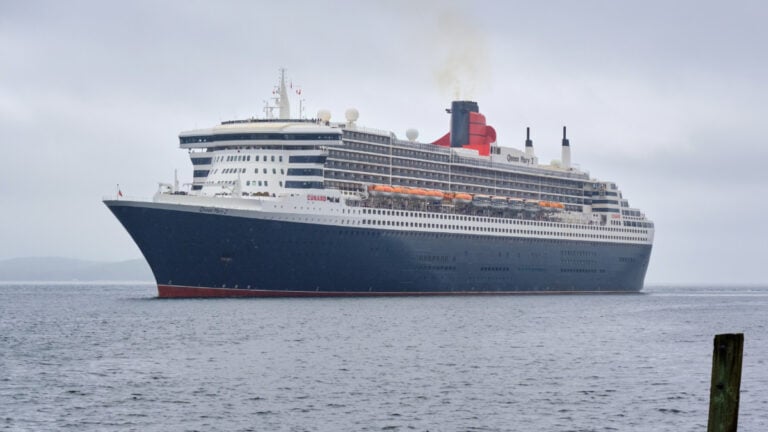
The Queen Mary 2, currently on a seven-night westbound transatlantic crossing, has experienced an unexpected delay in its arrival to New York City due to a medical emergency onboard. The ocean-liner diverted its course to Halifax, Nova Scotia, where it arrived on June 30.
The vessel is arriving in New York City with a six-hour delay. Cunard has informed guests due to embark on the ship for the upcoming voyage that efforts have been made to ensure they are comfortable while waiting to check in.
Unfortunate Medical Emergency Causes Delay
The Queen Mary 2 was initially scheduled to arrive at the New York City pilot station on the morning of June 30. However, a medical emergency involving a crew member necessitated a diversion to Halifax, Canada.
The medical evacuation could not be performed by helicopter due to heavy fog, leading to the change in course. As a result, the ship is expected to arrive at the Brooklyn Cruise Terminal around 3 PM.
Queen Mary 2 in New York (Photo Credit: ATGImages / Shutterstock)
In response to this unforeseen situation, Cunard, the cruise line operating the Queen Mary 2, promptly communicated with guests due to board the ship for the upcoming cruise.
An email detailing the situation and the measures taken to ensure their comfort during the delay was sent out. The email read:“Following a medical emergency which required a diversion to Halifax, Queen Mary 2’s arrival into New York has been delayed by approximately 6 hours.”
“As you will not be able to embark at the original time, the pre-arranged transfer will be taking you to a conference facility at the New York Hilton Midtown, where there will be comfortable seating, light bites, refreshments, and a representative on hand to answer any queries that you might have.”
In the event of a medical emergency, cruise ships like the Queen Mary 2 have standard procedures in place to ensure the safety and well-being of all onboard.
Queen Mary 2 (Photo Credit: Andy Glenn / Shutterstock)
This includes diverting the ship’s course if necessary to access medical facilities, as in this instance. While the delay will inconvenience some guests and cause them to rebook flights and other travel arrangements, Cunard has done everything possible to ensure the patient’s well-being.
Following Cruise Departure
The Queen Mary 2 is currently the only ocean liner in the world; at 149,215 gross tons, she can accommodate 2,695 guests. The ship had just completed a seven-night transatlantic crossing, which began on June 23 in Southampton, England, and concludes in New York City on June 30.
The upcoming cruise, a seven-night Independence Day Celebration, will sail today, June 30, although departure may be slightly delayed due to the medical emergency.
The itinerary includes stops in Halifax, Nova Scotia, on July 2; Boston, Massachusetts, on July 4; Newport, Rhode Island, on July 6; and concludes in New York City on July 7.
In light of the delay, Cunard has taken several steps to ensure the comfort and convenience of guests waiting to embark on Queen Mary 2.
The cruise line has arranged for a transfer from the New York Hilton Midtown to the ship at the revised embarkation time, which is anticipated to be approximately 6 hours later than the original time.
Guests can either stay at the hotel or explore the city and return ahead of the new embarkation time. Cunard has assured that all luggage will be stored safely and loaded onto the ship.
In addition, as a gesture of goodwill due to the delayed embarkation, Cunard has placed a credit of $25 per guest in their onboard accounts for them to spend during the cruise.