Holland America Line has released details about its upcoming holiday season sailings, covering Thanksgiving, Hanukkah, Christmas, and New Year’s. Special events, destinations, and activities will make these seasonal cruises a wonderful and memorable experience for guests, no matter what traditions they celebrate.
Celebrate the Holidays With Holland America Line
The holiday season is undeniably stressful, but Holland America Line is seeking to give travelers stress-free options that still preserve treasured traditions even while enjoying new memorable moments. Special seasonal activities, unique destinations, and more will make each of these holiday sailings an amazing way for guests to celebrate the season.
“Travelers are looking for ways to destress around the holidays while also maintaining a sense of tradition, and by cruising with us they’re able to do both,”said Beth Bodensteiner, Holland America Line’s chief commercial officer.
Holland America Line is offering holiday-themed sailings to a wide range of destinations, giving guests plenty of options to meet both their travel preferences as well as their holiday expectations.
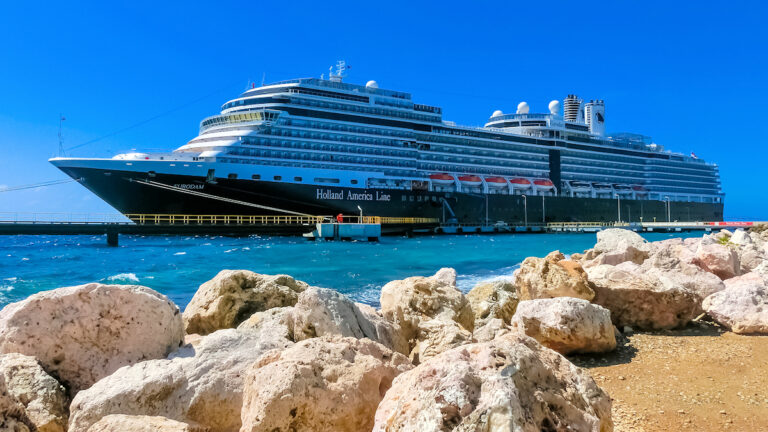
Oosterdam in Mexico (Photo Credit: SebZet / Shutterstock)
Global Itineraries
For many people, “holidays” mean “home” rather than travel. Holland America Line is inviting cruisers to enjoy their “home away from home” atmosphere for worry-free celebrations all around the world.
Special holiday-themed sailings are available from US homeports such as Fort Lauderdale and San Diego, as well as in more far-flung destinations for truly unique holidays.
For example, guests could enjoy balmy Caribbean weather rather than icy snow and cold, with sailings aboard Eurodam, Rotterdam, Nieuw Amsterdam, Zuiderdam, Zaandam, and Nieuw Statendam. Yet onboard each ship, traditional holiday festivities bring seasonal spirit to life regardless of the temperatures.
Of special note is Rotterdam‘s 19-night “Panama Canal Sunfarer/Eastern Caribbean” sailing departing Fort Lauderdale on December 3. In addition to transiting the canal, the ship will visit Colombia, Costa Rica, and more. Especially notable is the opportunity for guests to visit the oldest continually operating synagogue in the Americas, the Mikve Israel-Emmanuel Synagogue in Curacao, on the first day of Hanukkah.
Mikve Israel-Emmanuel Synagogue (Photo Credit: Carlos Yudica / Shutterstock)
For more far-flung options, Koningsdam and Volendam are offering Hawaii and Mexico cruises through the holiday season, with both ships homeported from San Diego. Koningsdam will be offering Mexican Riviera and “Circle Hawaii” itineraries, while Volendam is sailing “Historical Baja” and “Sea of Cortez” options during the holiday season.
Oosterdam and Noordam will be offering even more unique holiday sailings for truly once-in-a-lifetime celebrations. Oosterdam is sailing a once-in-a-lifetime 22-day “South America and Antarctica Holiday” departing December 16, 2023 from Buenos Aires, with Christmas Eve and Christmas Day cruising in Antarctica (ice, weather, and permissions permitting).
Meanwhile, Noordam will be offering Far East exoticness with a 14-day sailing from Singapore to Hong Kong departing December 23, 2023 with ports of call in Thailand, Cambodia, and Vietnam. A special onboard celebration will ring in the new year with dramatic style.
Holiday Events Onboard
While Holland America Line’s different holiday sailings will be visiting unique destinations with memorable ways to celebrate the holidays, the festivities also continue onboard with traditional celebratory elements.
“On a Holland America Line holiday sailing, guests can spend their days exploring exciting destinations, and at night they’ll enjoy traditional meals and other celebrations while surrounded by beautiful holiday décor,”said Bodensteiner.
Holland America Line Christmas Decorations (Photo Credit: Solarisys / Shutterstock)
Each ship in the Holland America Line fleet will be festively outfitted with classic decorations and holiday lighting and such unique and charming themed displays such as gingerbread villages and more.
Curated holiday menus will be presented on each sailing, from turkey and dressing on Thanksgiving to latkes and Sufganiyot (traditional doughnuts) for Hanukkah. For Christmas meals, festive dishes from around the world will highlight global tastes of the season.
Onboard activities will include tree-lighting ceremonies, dreidel games, holiday movies, caroling parties, and much more, including special activities for younger cruisers with visits from Santa. On New Year’s sailings, a lively ball and midnight countdown will ring in 2024 with outstanding style.
No matter how cruisers choose to celebrate, Holland America Line can help them make amazing, stress-free holiday memories.
Global Ports Holding is expanding its reach in the Caribbean with a new agreement to manage cruise port operations in Saint Lucia. The fast-growing, UK-based company already oversees three busy cruise ports in the region.
UK Firm to Manage Pointe Seraphine Cruise Port
Add Saint Lucia to the growing list of cruise ports operated by Global Ports Holding (GPH), the London-based firm that manages port operations in more than two dozen destinations worldwide and typically invests in its ports with expansions and upgrades to cruise facilities.
On August 9, 2023, the port operator announced it had signed a 30-year concession agreement with the government of Saint Lucia to operate the Pointe Seraphine Cruise Port in Castries, Saint Lucia. The pact carries a 10-year extension option.
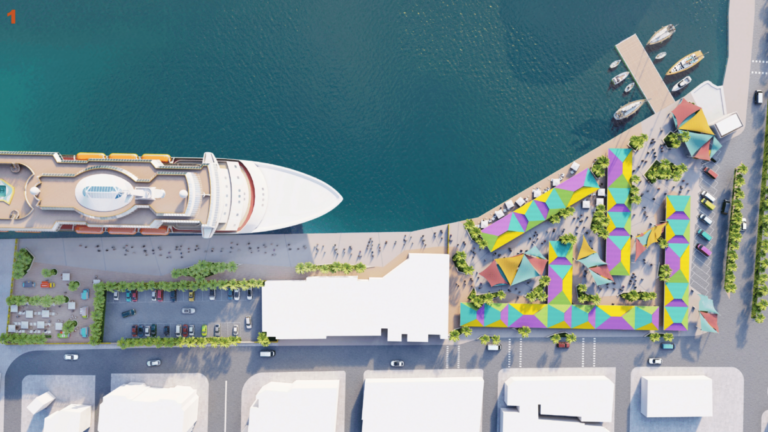
Saint Lucia Cruise Port Upgrade Render (Courtesy: Global Ports Holding)
In the Caribbean, the company also operates the ports in San Juan, Puerto Rico; Antigua; and Nassau, the Bahamas.
A frequent port call on Eastern Caribbean cruises, Saint Lucia is in the West Indies, just south of Martinique. The island welcomed 590,000 cruise guests from March 2022 to March 2023; the number is down from about 700,000 pre-pandemic.
Saint Lucia Cruise Port Upgrade Render (Courtesy: Global Ports Holding)
The agreement with Saint Lucia widens GPH’s footprint in the region, where its largest operation is in Nassau, which welcomed more than 2.2 million cruise guests in just the first six months of 2023.
A $300 million investment in Nassau’s berth facilities and cruise guest services was unveiled in May 2023. With the upgrades, the port can accommodate three Oasis-class ships at the same time and a total of six ships docking on the same day.
Pier Expansion, Retail Upgrades Planned
Although Saint Lucia’s port is much smaller than Nassau and the other ports GPH manages in the Caribbean, the company has big plans for the island destination.
While not attaching an investment amount to its announcement, GPH pledged to expand the existing cruise pier at Pointe Seraphine, enabling the largest cruise ships to dock and increasing the port’s capacity.
GPH also plans to invest in upgrading the retail experience at the cruise port, including the redevelopment of the Vendor’s Arcade and the design and development of a new Fishermen’s Village at Bananes Bay, with the goal of providing a new space for local vendors.
Saint Lucia Cruise Port Upgrade Render (Courtesy: Global Ports Holding)
Additionally, the company will invest in upland development at Soufriere Bay, including creating a new amphitheatre and food and beverage area.
“I am delighted that the Government of Saint Lucia has awarded GPH the cruise port concession for Saint Lucia. This concession represents another significant milestone for GPH as we continue successfully growing our global cruise port network,” said Mehmet Kutman, chairman and CEO of GPH.
“The GPH team very much look forward to working with all stakeholders to build further on the success of this wonderful destination,” he added.
Global Ports Holding did not reveal a timetable for the planned improvements, but the completion of the extended pier and other infrastructure projects are expected to eventually increase cruise guest arrivals at the Saint Lucia port to more than 1 million.
GPH Expands Caribbean Port Operations
GPH, already the world’s largest cruise port operator, has expanded its presence globally in the post-pandemic cruise landscape. With most of its operations in Europe, including at the major cruise ports of Barcelona, Venice, and Lisbon, the company appears to have its sights set on further growth in the Americas.
GPH signed its agreement with Antigua in 2019, and in 2021 opened a new, $30 million cruise pier at the island’s St. John’s Port. At the San Juan Cruise Port, a 2022 agreement between Puerto Rico Ports Authority and GPH provides an investment of $100 million towards critical infrastructure projects..
In addition to its Caribbean contracts, GPH operates one other port in the Americas, Prince Rupert Cruise Port, in British Columbia, a growing port of call on Alaska itineraries.
Royal Caribbean International has begun reaching out to guests booked on Panama Canal cruises aboard Rhapsody of the Seas to inform them that the sailings have been adjusted to an alternate itinerary.
While the ship will still begin from Colon, Panama, no canal transit is part of what are now Southern Caribbean cruises.
Panama Canal Transits Cancelled
Rhapsody of the Seas will no longer be making a series of shorter Panama Canal sailings during the winter 2023-2024 season, unique itineraries that attracted many guests to this bucket-list experience of transiting one of the world’s greatest engineering wonders.
Instead, Royal Caribbean has been notifying guests that the sailings have been “adjusted” to a new itinerary, with no Panama Canal transit at all.
Photo Credit: TAH Media / Shutterstock
The original 7-night itineraries were to have begun by setting sail from Colon, Panama and visiting Cartagena, Colombia before cruising the complete transit of the Panama Canal. Two ports in Costa Rica followed – Puntarenas and Quepos – before the ship reached Panama City, Panama, for debarkation. Reverse itineraries are also impacted by this change.
Now, the sailings will be roundtrip from Colon, Panama and offered as Southern Caribbean cruises instead. Depending on the sailing date, Rhapsody of the Seas may still visit Cartagena, and visits such as Curacao, Aruba, and Bonaire are part of different itineraries. Exact details vary depending on departure date.
Options to Choose From
Guests on the impacted cruises have three options to choose from for their travel plans. They can opt to stay aboard the adjusted and now Southern Caribbean sailing, which will include price protection with a refund to the new price if the adjusted price is lower than the original fare.
Second, guests may rebook on any other Royal Caribbean sailing, on any ship, and at any date, and the non-refundable deposit change fees will be waived. Travelers will be responsible for any increase in price as well as taxes, fees, and other expenses.
For both options, Royal Caribbean will also reimburse up to $200 USD per passenger ($400 for international guests) for non-refundable travel expenses or change fees, such flights, trains, rental cars, or hotels. Additional travel expenses will be considered for reimbursement with appropriate receipts and explanations, but are not guaranteed.
Rhapsody of the Seas Cruise Ship (Photo Credit: Aerial-motion / Shutterstock)
The third option is an outright cancellation, and guests will receive a full refund of the cruise fare, deposits, and any pre-paid purchases. The refund will be processed back to the original form of payment. If a future cruise credit was used, it will be reinstated at the original terms.
No further compensation is available to guests who choose complete cancellation. The cruise line does ask for patience as rebookings are managed, and notes that it may be necessary to temporarily place guests into “Guarantee” stateroom status (GTY) while details are finalized.
Guests are asked to notify the cruise line or their travel agent no later than August 29, 2023 about their decision, or they will be kept in a like-for-like stateroom on the new adjusted itinerary.
Why Cancel the Canal?
No explanation has been given for why Rhapsody of the Seas will no longer be offering any Panama Canal transits as planned. The email sent to booked guests does note that the change is “to enhance your experience,” but many guests are questioning the enhancement.
Transiting the Panama Canal is a once-in-a-lifetime cruise experience for many travelers, and these shorter cruises offering a full transit rather than a partial one were very popular and unique.
Speculation is that the costs and fees associated with transiting the canal have risen sharply, making the shorter voyages less financially viable for the cruise line.
Photo Credit: LukeandKarla.Travel / Shutterstock
It is also possible that conditions in the canal, including water levels due to ongoing drought conditions, are limiting some transit traffic, and cruise ships would not likely have priority over cargo vessels.
Lower water levels may also be limiting what times ship traffic can move through the canal, which may not align with the cruise line’s schedule.
Authorities have already restricted canal access to ships with a draft of 43 feet or less because of low water levels. The Vision-class Rhapsody of the Seas has a draft of just 25 feet, and therefore is not yet directly impacted by this restriction.
Fewer ships are being permitted through the canal daily, however, and it is possible that the cruise ship has been cut from the transit list by canal administrators.
Several longer, one-way Panama Canal cruises are still available for booking at this time. Radiance of the Seas has three transits planned, starting with a 16-night eastbound transit from San Diego to Tampa, departing on October 7, 2023.
In 2024, the ship is offering a 14-night westbound sailing from Tampa to Los Angeles on April 8, 2024, as well as a 16-night return eastbound voyage on October 5, 2024.
Brilliance of the Seas will also be making one eastward Panama Canal transit via a 14-night sailing from Los Angeles to New Orleans, departing September 28, 2024.
Cunard has revealed a new collaboration with the two-Michelin-starred chef Michel Roux. In a bid to elevate the dining experience on their upcoming ship, Queen Anne, they’ve turned to the expertise of Roux to reenvision and enhance the culinary offerings.
Besides revamping the iconic Golden Lion’s pub menu with Michel Roux, Cunard is hard at work creating a new dining experience onboard its newest ship. This includes four new dining establishments that will be featured onboard Queen Anne.
Michel Roux Teams Up with Cunard
Two Michelin star chef Michel Roux has teamed up with Cunard, the cruise line announced today, August 8. Roux is well known for his restaurant Le Gavroche and has worked with several highly acclaimed chefs before becoming a Michelin-starred chef.
The distinguished chef will work closely with Cunard’s culinary development team to devise a unique gala menu exclusively for the Queen Anne‘s Queens Grill restaurant.
Further, Roux is set to revamp the Golden Lion pub’s menu, promising a gastronomic journey that retains the comfort and familiarity of a pub meal but with a refined twist. The Golden Lion is a staple aboard every Cunard ship. Known for its authentic British pub ambiance and specially brewed beers, it offers guests a slice of familiarity.
Chef Michel Roux
These culinary highlights will launch as Queen Anne sets sail in May 2024 and will be rolled out across the fleet following the maiden voyage of Cunard’s newest ship.
Michel Roux said: “It is an absolute privilege to be working with Cunard’s hugely talented and passionate culinary development chefs as we countdown to the launch of their newest ship Queen Anne.
“For me, there is no better recipe than blending high-quality ingredients with elegant execution to create unforgettable experiences for diners, and I am incredibly excited to showcase our elevated, reimagined pub classics to Cunard guests very soon.”
Dining Onboard Cunard’s Newest Ship, Queen Anne
Beyond collaborating with Chef Roux, Cunard has expanded Queen Anne‘s dining repertoire. Four new restaurants will grace the ship: Aji Wa, Aranya, Sir Samuels, and Tramonto. Each venue presents a distinctive ambiance and menu, ranging from the seasonal flavors of Japan in Aji Wa to lavish steak and seafood offerings in Sir Samuels.
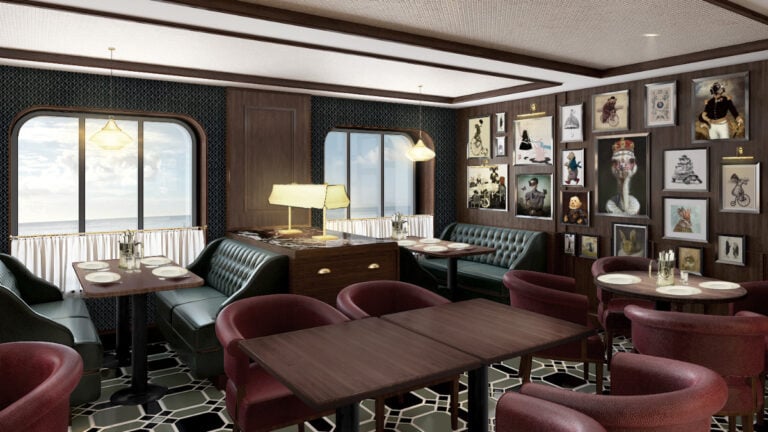
Queen Anne Golden Lion Pub
Aranya promises a multi-sensory exploration through India’s rich spice tapestry. Not to be outdone, Tramonto offers a Mediterranean-inspired menu, where guests can dine al-fresco.
Angus Struthers, Acting Senior Vice President of Cunard:“We’re excited to share a flavor of what will be served on board Queen Anne in 2024. Cunard is renowned for high-quality dining options, and we’re delighted to be working with the very best chefs at the top of their different culinary fields to offer such a wide range of dining options to our guests.”
Queen Anne Sailing 2024
Queen Anne, at 113,000 gross tons, is a Pinnacle-class cruise ship capable of carrying up to 3,000 guests. Scheduled to be primarily homeported from Southampton starting May 2024, Queen Anne will also sail from Hamburg, Kiel, and Civitavecchia next year.
From January 2025 the ship will cruise from Southampton to cities such as New York, San Francisco, Sydney, Hong Kong, Singapore, and Dubai.
Princess Cruises announced it will deploy two ships to sail Antarctica and South America itineraries in 2024 and 2025. The voyages vary in length from 14 to 51 days, visiting some of the world’s most remote destinations.
Two Ships Will Operate 11 Different Itineraries
Adventurous cruisers who dream of visiting the White Continent can choose from four departures of Princess Cruises’ Sapphire Princess in late 2024 and early 2025. The Gem-class ship also will operate several South American sailings, as will the line’s Royal-class Majestic Princess.
Between the two ships, the line will offer port calls or scenic cruising at 26 destinations in 14 countries. Princess Cruises will feature 11 unique itineraries and 15 total Antarctica and South America departures.
“No other large ship cruise line sails Antarctica like Princess. Our master navigators, unique local relationships and outstanding amenities make accessing these exotic destinations not only immersive but amazingly comfortable,” said John Padgett, president of Princess Cruises.
Sapphire Princess to Sail 4 Antarctica Cruises
The 2,670-guest Sapphire Princess, which entered service in 2004, will operate four cruises to the southernmost continent roundtrip from Buenos Aires on December 1 and 18, 2024, and on January 4 and 20, 2025.
Guests will cruise the Antarctica region, sailing around Elephant Island, and through Antarctic Sound and the Gerlache Strait. The 17-day voyages will call at Punta Arenas, Ushuaia (Tierra del Fuego), the Falkland Islands (Stanley), and Montevideo, Uruguay.
Princess Cruises Antarctica
Additional scenic cruising will feature Deception Island, the Neumayer Channel, South Shetland Islands, and Admiralty Bay.
Both cruise ships will sail 14- or 15-day Cape Horn & Strait of Magellan cruises; 18-day Andes & South America cruises; 18-day Brazilian Adventure itineraries; and 32- to 33-day Andes & Cape Horn Grand Adventure and Brazilian and Cape Horn Grand Adventure voyages.
Majestic Princess to Feature Longest Itinerary
Majestic Princess, with capacity for 3,560 guests, will operate the longest itinerary in the line’s South America cruise roster, with the 51-day South America Grand Adventure.
Departing Los Angeles on December 1, 2024, the Royal-class ship will call at Puerto Vallarta, Fuerte Amador, located at the Pacific entrance of the Panama Canal; Lima and Pisco, Peru; La Serena, Santiago, and Puerto Montt, Chile; Ushuaia, Argentina; Rio de Janeiro, Brazil; and other South American destinations. Scenic cruising will feature Cape Horn and the Falkland Islands.
Photo Courtesy: Princess Cruises
The ship, which launched in 2017, also visits two Caribbean destinations, Dominica and St. Kitts, before concluding the cruise in Fort Lauderdale.
Princess Cruises is also offering two cruise tours on its South America itineraries. The Iguazú Falls Adventure will bring guests to the world’s largest waterfall system and includes a visit to Rio de Janeiro. The Machu Picchu Explorer cruise tour features rail travel to the ancient Inca compound, Machu Picchu, and a tour of the historic city of Cusco.
The Antarctica and South America cruises and cruise tours are open for booking, and guests who book before August 25, 2023 will receive up to $2,300 in onboard spending and shore excursion credits.
Line Is Poised to Launch 16th Vessel
Princess Cruises, one of Carnival Corporation’s nine cruise brands, currently operates 15 ships, and will soon debut its 16th when the 4,300-guest Sun Princess enters service in early 2024.
Under construction at the Fincantieri shipyard in Monfalcone, Italy, the ship is scheduled to sail her 10-day Inaugural Grand Mediterranean cruise on February 8, 2024, from Barcelona to Rome.
The ship, which will feature a series of new onboard spaces and the fleet’s largest casino, will operate a full season in the Mediterranean from multiple departure ports, including Barcelona, Rome, Athens, and Southampton. The ship is slated to reposition to Fort Lauderdale in November 2024.
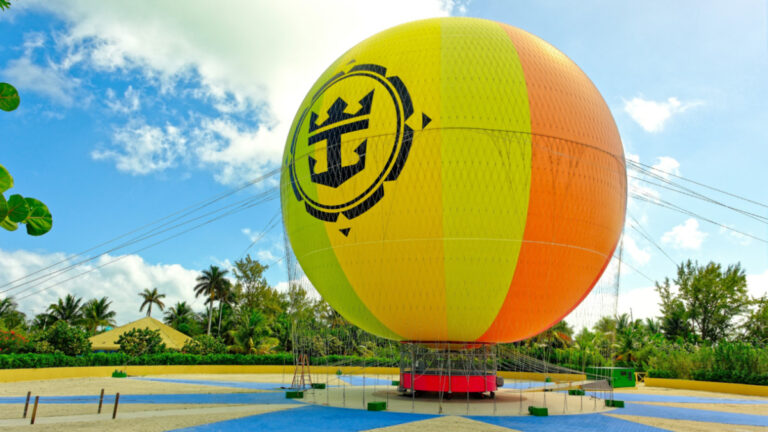
Royal Caribbean International has begun reaching out to guests who have booked a hot air balloon ride as part of their visit to Perfect Day at CocoCay to let them know that the attraction will be closed for maintenance.
Refunds for pre-booked rides are being processed, but it appears the colorful ride may be closed for several months.
Balloon Ride Now Closed on CocoCay
Guests booked on upcoming cruises that include visits to Royal Caribbean’s private island destination in the Bahamas, Perfect Day at CocoCay, are being notified that the “Up, Up, & Away” balloon ride attraction will be closed during their visit.
“Just like in your home, our attractions need some TLC, too!”the notification email reads.“Up, Up, & Away at Perfect Day at CocoCay will be temporarily closed for some routine maintenance.”
Up, Up, and Away at Perfect Day at CocoCay (Photo: Royal Caribbean)
The closure notification is only being sent to guests who have pre-booked the balloon experience. Refunds are being automatically processed back to the form of payment on file, and if the experience was booked with an onboard credit, that credit is being reinstated to the guest’s account.
Details about the nature of the “routine maintenance” have not been announced. It is possible the balloon may be upgraded with new operating controls, different materials, or other enhancements to make it a more unique experience for returning guests, or to improve its operating performance.
How Long Is the Closure?
No exact dates for the closure of Up, Up, & Away have been released, but guests who have pre-booked the experience and have received the closure notice have reported a window of at least several months.
As of this writing, guests booked for the hot air balloon ride have reported cancellations of their booking from mid-August through at least late October.
Royal Caribbean’s Perfect Day at CocoCay (Photo Credit: Hendrickson Photography)
It is possible that the closure only impacts select sailings that intersect with a planned work schedule, or the attraction may be closed completely during the next few months as the maintenance and possible upgrades are performed.
In the coming weeks, many ships in Royal Caribbean’s fleet are scheduled for visits to CocoCay, including Mariner of the Seas, Adventure of the Seas, Independence of the Seas, Freedom of the Seas, Harmony of the Seas, Wonder of the Seas, and more.
About Up, Up, & Away
Up, Up, & Away is a helium balloon experience at Perfect Day at CocoCay. While not strictly a “hot air” balloon, the 10-minute experience is very similar as guests rise up to 450 feet above the island for the most amazing 360-degree views in the Bahamas.
The balloon is tethered for optimal control and to regulate its motion and distance and the balloon’s basket is wheelchair accessible.
The ride is a gentle one, and cruise travelers of all ages can enjoy the experience. Pricing varies based on guest age, cruise ship capacity, visit date, and other factors.
Up, Up, and Away at Perfect Day at CocoCay (Photo: Royal Caribbean)
Full adult prices apply for adventurers ages 13 and older, discounts for younger guests from ages 4-12, and cruisers age 3 or younger can ride for free with a paid adult. There are no height or weight restrictions for Up, Up, & Away.
Operated by professional balloon pilots who undergo rigorous training, the adventure does depend on weather conditions, local winds, and other atmospheric and meteorological factors to safely and efficiently operate.
Visitors to CocoCay often report that the balloon is not able to operate, as upper level winds can dramatically impact the balloon even on what seems to be a perfect weather day on the island.
The balloon can accommodate roughly 30 guests per ride, and often sells out quickly. To save a spot, guests booked on a cruise visiting CocoCay are urged to made advance reservations online or through the cruise line’s app as soon as possible. If space is available, guests can book their ride while on the island.
Guests aboard MSC Cruises’ MSC Seaside have noticed a new addition to the main dining room menu – a surcharge for additional entrees.
This follows similar policies implemented onboard both Carnival Cruise Line and Royal Caribbean International ships in the past year, and is part of a growing trend on cruise ships.
New Dining Charge Spotted on MSC Cruises
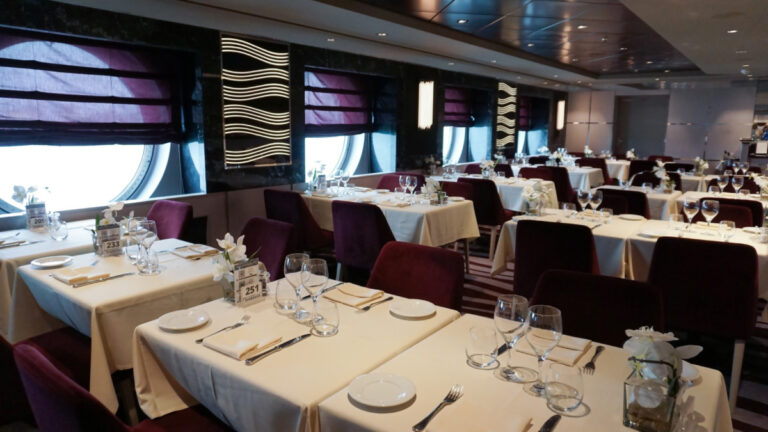
Guests currently sailing on MSC Seaside have reported a new charge in the ship’s two main dining rooms – a $5 (USD) surcharge. The notation is listed on the menu and is only listed for entrees: “a surcharge of $5 for second entree or more applies.”
This new charge is an unwelcome surprise to many cruise travelers who are becoming increasingly dissatisfied with the perceived “nickel and diming” on cruises, when a seemingly inexpensive base fare is augmented by multiple extra fees.
Carnival Cruise Line was the first major cruise line to implement such charges in the main dining room in early November 2022, but that cruise line’s $5 surcharge only applies to third, fourth, and more entrees – the first two remain complimentary. MSC Cruises, however, appears to be charging the fee for the second entrée as well.
Royal Caribbean International quickly followed suit with an extra charge in late November 2022, but only applied the fee to broiled lobster tails. The fee is substantially higher, however, at $16.99 per extra tail, plus an 18% gratuity.
MSC Cruises’ extra fee applies to all types of entrees. While guests onboard MSC Seaside have confirmed the charge, it is not yet known whether the charge is being implemented fleetwide or if it may be in a test phase aboard limited ships or select sailings.
Photo Courtesy: MSC Cruises
MSC Seaside is currently homeported from Port Canaveral, offering various itineraries to the Bahamas and Western Caribbean ports of call, including Costa Maya and Cozumel in Mexico, Nassau, and the cruise line’s private island, Ocean Cay MSC Marine Reserve.
In late November, the ship will reposition to homeport from Martinique to offer southern Caribbean sailings through the winter months.
The 150,000-gross ton vessel features 15 passenger decks and can welcome 4,132 guests at double occupancy. In addition to the two main dining rooms onboard, MSC Seaside also offers a variety of other dining venues, including a pizzeria, steakhouse, seafood specialty restaurant, casual buffet, and more.
Why Charge for Extra Entrees?
There has been much speculation about why cruise lines have begun charging extra fees for multiple main dining room entrees, and three main theories have emerged.
Cruise lines have touted the practice as an attempt to help curb food waste, which has significant costs and requires extensive cleanup and disposal. By charging extra fees, cruise lines hope to discourage travelers from choosing multiple entrees “just because” that they may not care to finish. Cruise lines have also noted that higher food prices have led to the need for some extra fees to offset increased costs.
With many cruise passengers enjoying extra entrees of elegant dishes, a nominal fee can also be a very easy revenue stream for cruise lines as they continue to struggle with debt from the 15-month industry-wide pandemic shutdown.
A third explanation for extra entrée charges is that reducing multiple orders can help speed up dining service, particularly for early seatings when dining rooms must be turned over in time for late seatings to begin. Extra orders during late dining times can also slow when the dining room shuts down, creating difficulties with crew scheduling.
It must be noted that the extra charge on all lines – MSC Cruises, Carnival Cruise Line, and Royal Caribbean – only applies to main courses. All guests can still order multiple appetizers and desserts without any extra fees, no matter how many they select.
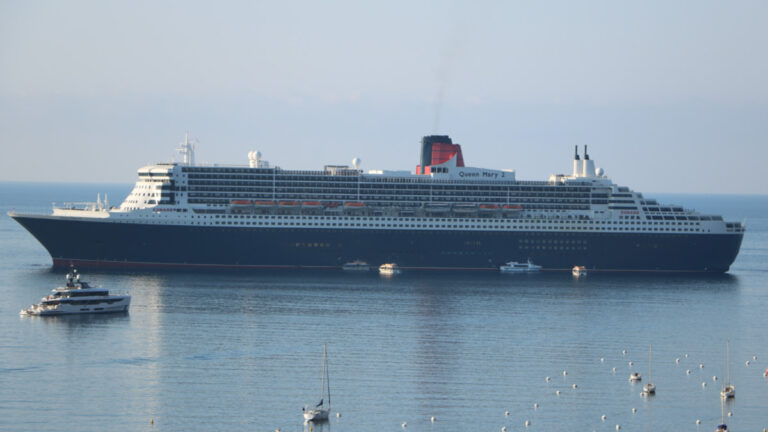
The Queen Mary 2 broke free of her moorings while docked in Civitavecchia, Italy on Friday, August 4, 2023. Both forward and aft gangways collapsed during the incident, but the ship was quickly secured with the assistance of tugboats and no injuries were reported. The ship was able to continue sailing as planned, with no significant damage.
High Winds Cause Lines to Break
High winds at the port of Civitavecchia on Friday, August 4, 2023 pushed the Cunard cruise ship Queen Mary 2 away from the pier, snapping her bow line and causing the vessel to drift briefly. As the ship moved away from the pier, both her fore and aft gangways dropped into the water.
At the time of the incident, approximately 6 p.m. locally, sustained winds were recorded at 24 miles per hour (39 kilometers per hour), with gusts as high as 36 mph (58 kph).
First day of our cruise from Civitavecchia. Drama as the #QueenMary2 broke away from its moorings and almost ran into our ship, the Norwegian Breakaway. 3 tugboats came to the rescue. #Romepic.twitter.com/tu39e9hPKJ
Several tugboats quickly reacted to the ship’s broken lines, holding Queen Mary 2 steadily in place until new lines could be properly secured. No other cruise ships or local vessels were involved in the incident.
After the ship was secure, one gangway was able to be retrieved, and the ship was carefully inspected before departing for her next port of call, Valencia, Spain. While in Valencia on Sunday, August 6, guests onboard reported that additional inspections were made to further ensure the ship’s integrity.
Queen Mary 2 is currently sailing a “Mediterranean Highlights” itinerary with ports of call in Spain, France, Italy, Portugal, and England. Her next cruise is a transatlantic sailing that will leave Southampton on Friday, August 11, 2023.
How Do Ships Break Loose?
The 150,000-gross ton Queen Mary 2 features 18 total decks, with a height of 236 feet (72 meters) from the keel to the top of the funnel – presenting a tremendous broadside surface area for winds to create strong forces that can push the vessel. This creates excessive tension on securing lines, which can lead to ropes breaking.
While such incidents are rare, they do happen occasionally. On July 15, Norwegian Cruise Line’s Norwegian Prima broke free of her moorings while docked in Zeebrugge, Belgium, under similar windy circumstances. Norwegian Prima also lost her gangways in that incident, but as with Queen Mary 2, there were no injuries.
Norwegian Prima in Iceland (Photo Credit: S. Birkelbach / Shutterstock)
Even while a cruise ship is docked, the vessel’s officers remain alert to potential risks and are able to react immediately to any unexpected incidents.
At the time of Queen Mary 2‘s sudden drifting, three other cruise ships were in port in Civitavecchia: Norwegian Cruise Line’s Norwegian Breakaway, Costa Cruises’ Costa Smeralda, and MSC Cruises’ MSC Divina.
No other ships reported mooring line stress or drifting, but the exact angle of the winds, profile of the individual ship, duration of the winds, and condition of the lines all factor in to whether or not a ship might be at risk of breaking loose.
Queen Mary 2 is the oldest of Cunard Line‘s current fleet, having entered service in 2004. She is also the largest vessel in the fleet by a wide margin, dwarfing both her fleet mates Queen Victoria and Queen Elizabeth. This can make her more susceptible to strong winds, but her expertly trained crew is well capable of handling any untoward incidents safely and efficiently.
A cruise vacation can be one of the most relaxing and exciting experiences you have ever had, but you would not be able to enjoy yourself if you constantly worry that the ship might tip over and sink. If you have concerns about the safety and stability of cruise ships, you have come to the right place.
Not only will this guide explain whether or not a cruise ship can tip over, but we will also explore the various safety mechanisms and design features modern cruise ships rely on to keep their passengers safe.
We will also examine tipping incidents of the past, as well as the safety protocols cruise ships have adopted to maintain stability while they are on the water. Can a cruise ship tip over? It’s time to get to the bottom of this issue!
While it is technically possible that a cruise ship could tip over, it would be extremely unlikely in the modern era. Even during the most severe storms, a modern cruise ship is far more stable than you might assume.
Modern cruise ships rely on advanced and sophisticated safety mechanisms, including stability control systems. They are also designed to have extremely low centers of gravity, which may seem surprising given the enormous scale of today’s cruise ships.
Cruise Ship Tipped Over (Photo Credit: MZeta / Shutterstock)
Not only are the vessels intended to be extremely stable in all weather and water conditions, but they also use watertight compartments and extremely durable hulls to ensure that they do not take on water, which would otherwise imbalance a ship and contribute to instability.
Are There Regulations and Safety Standards for Cruise Ship Stability?
Yes, the cruise line industry is strictly regulated. All ships must meet standards for safety and stability. These standards were established by the International Maritime Organization (IMO).
Depending on which country a cruise ship is based in or where its chartered route takes it, the cruise line may also have to adhere to certain local regulations regarding safety and stability at sea and in port.
Fantasy Class Cruise Ship (Photo Credit: tose / Shutterstock)
They also must undergo rigorous testing to ensure that the cruise ship is stable enough that it would not tip over in rough seas. These standards and regulations must be met before a cruise ship can ever take on passengers.
Thanks to these efforts and the cruise line industry’s willingness to adhere to the regulations that govern it, it is extremely unlikely that a well-maintained cruise ship would ever tip over. Unfortunately, cruise ship stability was not nearly as consistent in the past.
How Much Could a Cruise Ship Lean Before Tipping Over Completely?
Thanks to their balanced design, built-in stabilization systems, and extremely low center of gravity, modern cruise ships are capable of tipping at an angle of at least 60 degrees before they are at risk of fully capsizing. Considering how big a lean 60 degrees would be, it shows how capable a cruise ship is of withstanding rough seas.
Photo By: @RMT_Scotland / @1PMcCurdy (Twitter)
Not only can a modern cruise ship roll to 60 degrees before it fully tips over, but it can also withstand waves that measure up to 50 feet in height! This is because cruise ships are designed to withstand the most extreme weather conditions imaginable.
While highly advanced weather and storm detection systems mean that cruise ships can easily avoid these situations, the fact they can withstand them means the chances of tipping over are very slim.
How Do Cruise Ships Ensure Stability and Avoid Tipping Over?
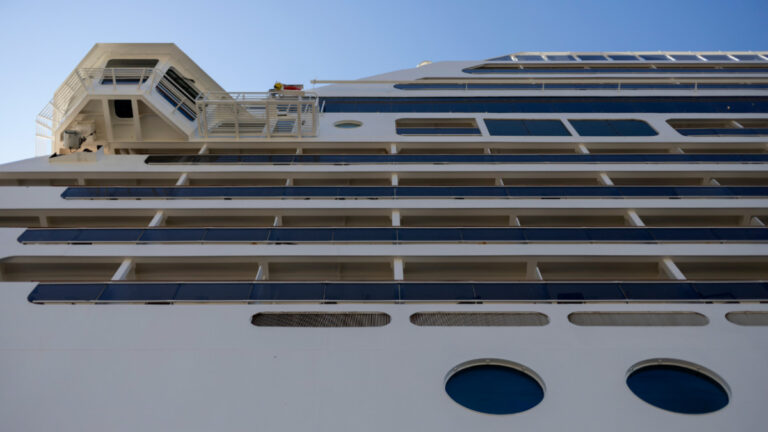
Balancing and maintaining a low center of gravity are key to cruise ship stability. Despite their massive size and weight, cruise ships are perfectly balanced, meaning weight is evenly distributed throughout the ship. While a cruise ship may look incredibly top-heavy, most of the weight is concentrated in the lower sections of the ship.
The hull is made from heavy steel and contains incredibly dense machinery and fuel tanks. On the other hand, the top section of the ship is far less dense and tends to be made from lightweight and durable materials, like aluminum.
Photo Credit: ollirg / Shutterstock
Safe weight distribution is also ensured using sophisticated ballast systems that can take on seawater in various areas of the ship’s hull to immediately even out any imbalance.
Cruise ships also use a deep draft to balance out the height and weight of their upper decks. This concept is known as metacentric height, which involves measuring the stability of a ship by calculating the distance between its true center of gravity and its metacenter.
Modern Stabilization Systems
Thanks to sophisticated stabilization systems, modern cruise ships can ensure stability and avoid tipping over. Some of these systems, known as active stabilization systems, adapt to water and weather conditions. Gyroscopes, thrusters, and counterweights prevent the ship from swaying in the water.
By reducing rolling and pitching, they maintain a stable experience for all passengers and crew on board the vessel, but, more importantly, they prevent the ship from tipping over, even in the roughest waters.
Cruise Ship Stabilizer
Other, less reactive systems also help ensure stability. These systems are passive stabilization systems and can include anti-roll ballast tanks. These systems are placed throughout the ship’s hull, and they help reduce unwanted movement so that the ship can enjoy a stable and smooth voyage.
Sensitive, Instantaneous, and Precise Navigation Systems and Weather Monitoring Systems
Another way modern cruise ships ensure stability and avoid the tipping issues plaguing the less sophisticated ships of the past is by using highly sophisticated navigation and weather monitoring equipment.
By accurately measuring weather and water conditions, cruise ships can avoid dangerous waters that could risk the ship’s safety. Advanced navigation systems also ensure that the ship avoids known hazards and emerging obstacles, like dangerous weather patterns, other ships, and even moving temporary objects, like icebergs.
Cruise ships are incredibly stable on the water and can now accurately avoid the hazards and rough weather conditions that might force the ship to rely on its stabilization systems.
Can Passengers Cause a Cruise Ship to Tip?
Given that cruise ships can carry thousands of passengers during a voyage, you might wonder what would happen if all the passengers moved to one side of the ship at the same time.
Naturally, this would cause a weight imbalance, so the ship could begin to have a slight lean towards the side the passengers moved to, but the extent of that lean would not be as significant as you might imagine.
Modern cruise ships are designed to maximize stability in all scenarios. This prevents the level of leaning that could cause the ship to tip over. As mentioned, the ship’s built-in safety measures prevent this.
Carnival Cruise Line Deck Party
For starters, the ballast system would quickly fill with water on the opposite side of the ship to the passengers, as this would help even out the weight distribution. The ship’s advanced monitoring systems would initiate the filling of the ballast system almost immediately.
Even without the ballast system working to counteract the imbalance in weight, the ship’s stabilizer fins would prevent it from tipping over. Put simply, you would need significantly more weight than the combined weight of all passengers on board the ship to cause it to tip over!
Have Cruise Ships Ever Tipped Over in the Past?
Sadly, there have been incidents in the past where a cruise ship tipped over. Most people are familiar with the incident in January 2012 just off the coast of Italy. This unfortunate incident involved an Italian cruise ship called the Costa Concordia.
The ship’s hull struck an underwater reef, which caused the ship to tip over and eventually capsize. Tragically, this tipping incident resulted in 32 deaths and a distressing ship evacuation.
While this incident and the resulting loss of life were horrific, it was determined that the ship’s captain was responsible. He had navigated the ship into waters it was never supposed to enter. The entire industry has since used it as a serious wakeup call, and regulations regarding cruise ship stability standards have been made far stricter since.
More recently, Royal Caribbean’s Explorer of the Seas was hit by a sudden wave on November 7, 2024, off the coast of Spain. The Voyager class vessel, which is 137,308 gross tons, is listed heavily on one side and caused some injuries. The sudden tilt only lasted a few moments, and despite some minor damage from falling items, Explorer of the Seas continued sailing.
What Was the Result of This Incident?
Today, cruise ship crews have far better training, emergency response protocols have been made more effective, and serious improvements have been made in cruise ship design and navigation system precision.
Not only has the stability of ships been improved alongside enhanced safety measures for all those on board, but structural modifications have also been made to enhance the strength of their hulls.
Costa Concordia (Photo Credit: Niccolo’ Simoncini / Shutterstock)
This prevents ships from taking on enough water to tip in the unlikely event that they do hit a solid object, like the reef that triggered the Costa Concordia incident.
The industry has also improved communications and monitoring systems to ensure cruise ships can detect hazards that would otherwise result in serious safety issues.
Is it Uncomfortable to Travel on a Cruise Ship?
Many first-time cruise ship passengers worry that the ship could have a constant, side-to-side motion that would trigger sea sickness and discomfort.
While it is true that you may be able to detect some motion while you are on board a cruise ship, especially if you are traversing a larger body of water, like an ocean, the same stabilization measures that prevent cruise ships from tipping over actually help to minimize discomfort and sea sickness. Ensuring that the ship is always stable, the motion that triggers sea sickness is kept to a minimum.
That said, some cruise ship travelers particularly sensitive to motion sickness can choose to stay in a cabin in the middle of the ship.
Since the middle section of the ship is the ship’s center of gravity, it is where the least amount of motion can be detected. There are also basic motion sickness pills you can pick up at just about any pharmacy to help those particularly sensitive.
Frequently Asked Questions
Could an iceberg sink a modern cruise ship?
While it is not impossible, there is a very low probability that an iceberg could cause the sinking of a modern cruise ship. Since the days of the RMS Titanic, cruise ships have been designed with reinforced hulls that can withstand high-speed impacts with solid objects.
Modern cruise ships also have sophisticated navigational systems that ensure a ship’s bridge can detect and easily avoid hazards. Even in the extremely unlikely scenario that a cruise ship did collide with an iceberg, they are now designed in a far more compartmentalized way, so a leak would not allow seawater to flood the entire lower portion of the ship.
Will a cruise ship tip over in a storm?
No, it is extremely unlikely that a cruise ship would tip over in a storm. The industry uses rigorous safety standards to ensure that ships are balanced to stay upright in even the roughest waters.
What is a ballast tank?
Ballast tanks are enormous water tanks held in the hull of a cruise ship. These huge tanks are filled with water to increase the weight of the lower section of the vessel, ensuring a low center of gravity so that the tank will be more stable in the water. If the ship carries significant weight due to cargo or passengers, the amount of water the ballast tank carries can be reduced quickly.
Final Words
While ships of the past were always at risk of tipping over, modern cruise ships are designed to prevent them from tipping over. The cruise line industry’s number one priority is always the safety of the passengers on board and the integrity of the cruise ships they operate.
By adhering to safety standards and regulations, the cruise line industry has adopted design features and safety mechanisms that prevent their ships from capsizing.
Stabilization systems, weather and hazard detection systems, ballast tanks, and maintaining a balanced, low center of gravity all help to keep cruise ships upright. These efforts also help keep cruise ships stable so passengers and crew members enjoy a far more comfortable onboard experience.