Carnival Cruise Line has responded to guest concerns about the need to hand in passports for select sailings with reassurances that this is indeed normal procedure.
While it may be new to some guests who may be sailing these types of itineraries for the first time, passports are always safely stored onboard.
Cruise Travelers Must Hand Over Passports
Guests aboard Carnival Freedom as the ship returns from dry dock in Spain have been startled to learn that they must surrender their passports for immigration processing in Spain. This can be disconcerting for travelers who have been warned of passport theft and scams, but Carnival Cruise Line is seeking to reassure guests about the requirement.
Carnival Cruise Line brand ambassador John Heald has been inundated with questions and concerns about this issue – some not so polite – and has explained the process.
“So [passports] will be collected today, embarkation day and stored in a safe on board. The immigration officials will come on the ship in Valencia or Malaga or both and check passports,”Heald said.“The good news is that the immigration authorities will not need to see the guests themselves otherwise there would be a huge line for that as you can imagine.”
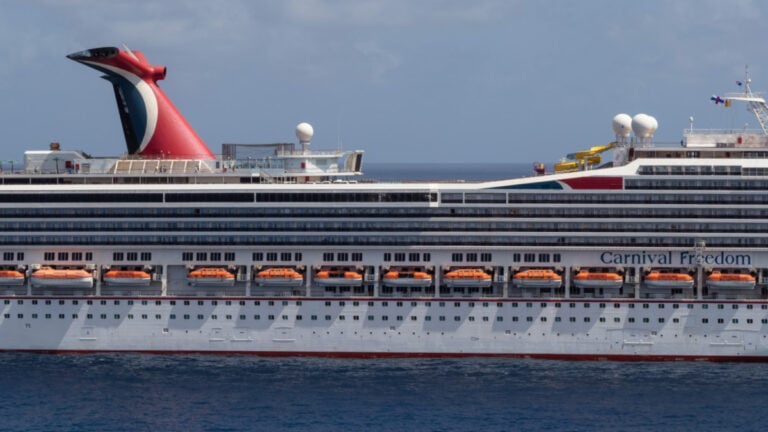
Carnival Freedom at Port Canaveral (Photo Credit: Peter Titmuss / Shutterstock)
Carnival Freedom departed Barcelona, Spain on Monday, October 23, 2023, after finishing her dry dock upgrades in Cadiz, which included getting a new whale tail funnel. The ship is scheduled to call on Valencia, Malaga, and Las Palmas in the Canary Islands before heading out to the open ocean on her way to Bermuda and then Port Canaveral.
The cruise line will not hold on to passports any longer than necessary to comply with immigration requirements.
“All the passports will be returned after the last Spanish port which is Las Palmas,”Heald clarified.“You will all receive a letter on board on how this will be done.”
Heald said that the cruise line was only informed of the requirement for Carnival Freedom‘s transatlantic crossing in the last few days, which explains why guests were not alerted to this requirement long before embarkation.
Not a New Procedure
It must be noted that this is not an unusual procedure and is quite common on both Asian and European cruises as part of immigration processing and clearances.
Collecting passports is not the cruise line’s decision, but is dictated by the regulations of the country the ship is visiting, with different countries having different regulations. Carnival Cruise Line has no recourse nor input that will affect the requirement, and if it is not done, Carnival Freedom would not be permitted to visit the planned Spanish ports of call.
US Passports (Photo Credit: Chiara Sakuwa / Shutterstock)
Carnival Cruise Line’s travel documentation webpage only states that “US citizens are required to carry a passport, valid for six months beyond the return date of their voyage” for Europe and transatlantic cruises. No specific details about surrendering passports are mentioned.
Different factors may influence whether each country’s immigration officials may require passports to be surrendered. The number of ports a ship will visit, the total number of hours in ports of call, previous destinations the ship will have visited, or the overall capacity of the ship could all be factors in whether or not passports must be turned in.
Guests are always advised to travel with a valid passport, even if not explicitly required, such as for closed-loop cruises from US homeports.
Without a passport, guests could find themselves having much greater challenges if they must remain in a port of call due to an injury or other circumstances, must leave the cruise early for an emergency back home, or if something drastic happens and the entire cruise is cancelled and guests must be returned home from a foreign port, such as due to ship damage.
From the ocean itself to pools, hot tubs, waterslides, splash pads, and more, cruise ships are known for water. What is more unusual, however, is guests waking up in the middle of the night to water flooding their stateroom and pooling in the hallway outside as it rains down from the ceiling, but that is just what happened to guests aboard Carnival Radiance recently.
Videos Show Flooding on Carnival Radiance
Two new videos have been flooding – pun intended – social media showing soaked floors and the raining ceiling aboard what is reported to be Carnival Radiance.
Uploaded on TikTok by a woman named Amber, hashtags #carnivalcruise and #flooding help describe the videos, while the posted description indicates the incident occurred aboard Carnival Radiance. The hallway décor and brief glimpses of crew identification badges and nametags do indeed confirm that this was on a Carnival cruise ship.
The first video is just six seconds long and was posted in mid-October, showing the massive water accumulation in the hallway. That brief video already has more than 107,000 likes and more than 7,300 comments – many of which are making joking Titanic references.
The incident apparently happened in the early hours of October 17, 2023, the first night of a 4-night cruise out of Long Beach, California. The ship had departed Long Beach the evening before and would visit Catalina Island on October 17, followed by Ensenada, Mexico on October 18. After a day at sea, Carnival Radiance returned to Long Beach on Friday, October 20.
You can watch the footage of the flooding below:
The poster claims to have been woken up at 2 a.m. with water gushing into their stateroom, while the video clearly shows hallways and floors so soaked that the water is pooling on top of the carpet. The poster also indicates that they lost power at one point in the midst of the flooding, though the hallway clearly has power.
Both videos also clearly show water pouring from the ceiling in one section of the hallway, as if it were raining indoors on the ship.
Nearly a dozen crew members are busy in the hallway with cleanup efforts in the longer video, using specialized vacuums and squeegees to contain the deluge. A makeshift plastic curtain has also put in place to help block the area from additional water spray.
Guests on the sailing have indicated that the incident happened on Deck 7 (Empress Deck) of the ship, but praised crew members for very quickly cleaning up the area, even in the middle of the night.
Some comments state that passengers in the affected area were moved to different staterooms, the deck smelled like sewage, and that clothes were sent to the laundry, but these reports are not confirmed.
Where Did the Water Come From?
At this time, there is no indication of what happened to create the internal flooding. As Deck 8 is also a staterooms-only deck and the incident appears confined to Deck 7, it is possible a water pipe burst, causing the immediate flooding.
It should be noted that Deck 7 is well above the waterline and there is no indication at all that there was any structural breach on the ship at any time. This appears to have been an internal issue only and has already been resolved.
Carnival Cruise Ship Flood (Credit: @dawn7877)
No information is available about whether or not impacted guests are being compensated for any damage to their possessions or if any other compensation for the unusual circumstances has been offered.
The Sunshine-class Carnival Radiance was formerly Carnival Victory before a tremendous $200 million (USD) transformation in 2021. The 101,509-gross-ton ship can welcome 2,984 guests at double occupancy, or up to 3,873 guests when fully booked when all berths filled (not flooded).
Floods on Cruise Ships
This is not the first time a cruise ship has been inundated with unexpected water. On the maiden voyage of the world’s largest cruise ship, Royal Caribbean International’s Wonder of the Seas in March 2022, a sprinkler malfunction caused swift flooding on the Royal Promenade.
Video Footage: @eloy4k
In another bizarre incident, a sudden turn caused a pool to overflow on Harmony of the Seas in January 2023, creating a six-deck waterfall in the ship’s center space.
Cruise ships occasionally have open spaces flood from less severe pool overflows, or when a vessel may be caught in a sudden, intense squall, such as happened aboard Carnival Sunshine in May 2023, which caused significant flooding, particularly in crew areas.
Water pipes can burst, drains clog, sprinklers malfunction, and other incidents happen that cause such unexpected waterlogging.
Fortunately, crews are well-trained to mitigate such incidents and quickly repair and clean up areas to restore them to dryness with a minimum of disruption. Carpeting can be swiftly replaced, huge fans are used to circulate air and speed drying, and other restoration methods are used to quickly dry ships out and ensure a fantastic, non-flooded time for guests.
Carnival Freedom has officially set sail again sporting her brand new, iconic “whale tail” winged funnel following more than two weeks in dry dock in Cadiz, Spain. The ship’s return to service is also with additional renovations and refreshment, including adding a popular new venue onboard.
Carnival Freedom Finishes Dry Dock
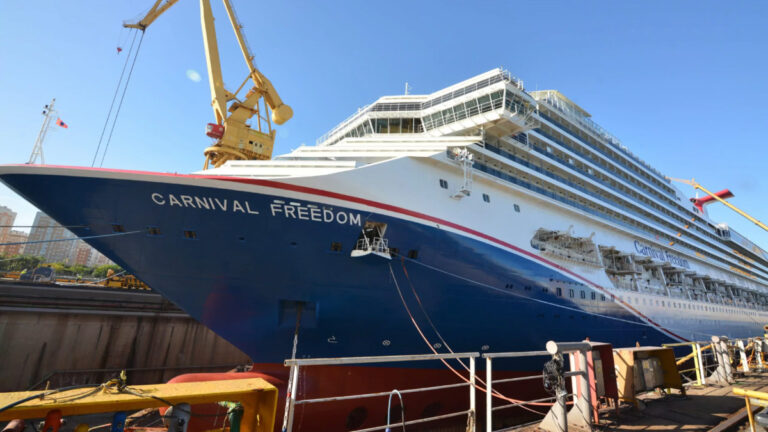
The 110,000-gross-ton, Conquest-class Carnival Freedom has successfully completed her dry dock in Cadiz, Spain, and has welcomed guests back aboard for a transatlantic cruise to return to her homeport of Port Canaveral, Florida.
The ship spent a total of 16 days in dry dock undergoing intensive refurbishment, which has included refreshing public areas as well as guest staterooms, expanding the onboard casino, and general maintenance work.
Of special interest are the aesthetic upgrades to the ship’s appearance, most notably the replacement of the ship’s winged funnel, which was damaged by a fire in May 2022 while docked in Grand Turk. There were no injuries during the fire, but the starboard wing of the funnel structure was severely damaged, resulting in both wings being removed for more than a year until this dry dock.
Carnival Freedom Completes Dry Dock
This marks the first time that the team members at the Cadiz shipyard have designed and manufactured a Carnival funnel, bringing the ship back to her characteristic appearance that is so instantly recognizable to cruise lovers around the globe.
Another update to Carnival Freedom‘s appearance is that her hull has now been repainted in the new red, white, and blue livery that first debuted with Mardi Gras in 2021 and has been rolling out across the fleet as each ship enters dry dock.
This overall refreshment inside and out gives Carnival Freedom, which first set sail in 2007, a brand new look for guests to enjoy.
New Venues Onboard
It isn’t just the overall look of Carnival Freedom that has been updated. The ship has also had the popular Heroes Tribute Bar added with fitting military décor, a “Welcome Home” tribute and memorabilia wall, and a patriotic scheme to honor veterans and active-duty service members.
Carnival Cruise Line is gradually adding the Heroes Tribute Bar to all ships in the fleet. The venue first debuted with Carnival Panorama in 2019, and has been a hit for veterans, active service members, and their families to share the camaraderie of their service and experiences.
Carnival Freedom Tribute Bar
“The Heroes Tribute Bar is a project that is very near and dear to my heart and one that everyone at Carnival is extremely proud of,” said Christine Duffy, Carnival Cruise Line president, when the venue opened aboard Carnival Panorama.
“We’re always looking for new ways to honor our military heroes and this new outlet is a wonderful tribute to the sacrifices of our Armed Services personnel and their families, and is a wonderful complement to our extremely popular military tributes which are held on each and every Carnival cruise.”
Another new venue, the Dreams Studio, has also been added aboard Carnival Freedom. The studio offers private photography sessions for guests to capture the very best of their vacation memories with Carnival’s expert photography staff.
Carnival Freedom Sailing Again
To return to Florida, Carnival Freedom is now sailing a 14-night transatlantic cruise from Barcelona, visiting Valencia and Malaga in Spain, the Canary Islands, and Bermuda before she will arrive in Port Canaveral on Monday, November 6, 2023.
Once back in her year-round homeport, the ship will offer 4- and 5-night Bahamas and Eastern Caribbean sailings, visiting popular destinations like Nassau, Grand Turk, Amber Cove, Bimini, Half Moon Cay, and Princess Cays, depending on the cruise length and departure date. The ship is scheduled to remain sailing from Port Canaveral at least until early April 2026.
Carnival Freedom can welcome 2,980 guests aboard at double occupancy, or as many as 3,754 guests when fully booked with all berths filled. The ship is also home to approximately 1,150 international crew members who are ready to once again welcome guests to phenomenal vacations on the revitalized ship.
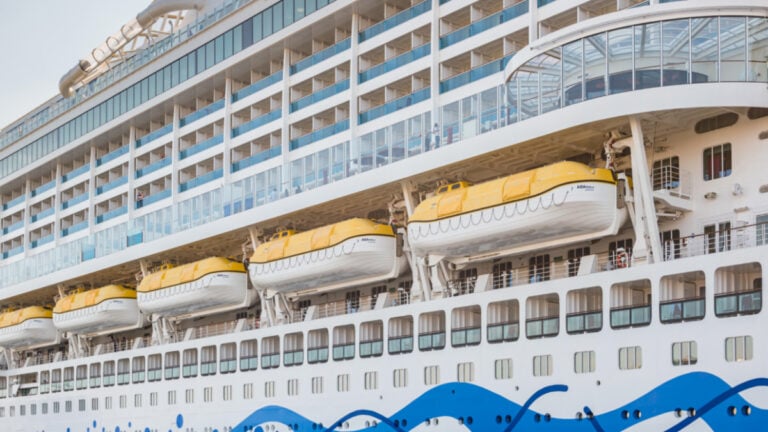
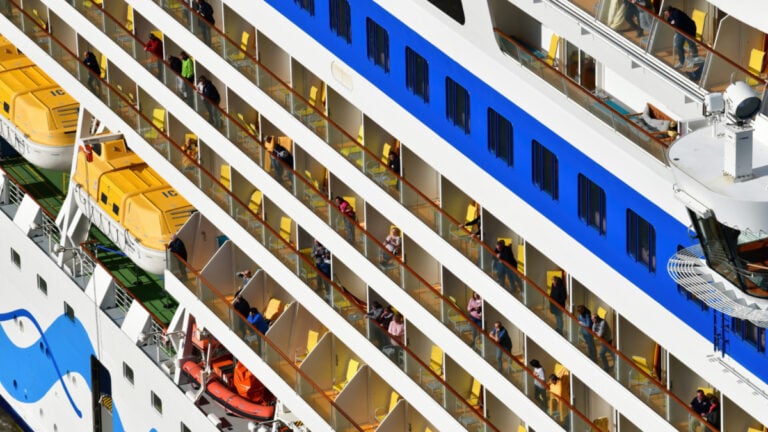
Her Majesty’s Coast Guard in the United Kingdom has called off the search for a crew member who went overboard from the German-operated cruise ship, AIDAperla.
The incident that transpired on the morning of October 22, 2023, brought together a host of search and rescue teams searching for any signs of the missing crew member.
The ADIA cruise ship was en route from Hamburg to Spain, making its way towards La Coruña, with the incident occurring near Ramsgate in the United Kingdom. AIDAperla has resumed her course toward Spain, and HM Coast Guard vessels have returned to their base.
Search Called Off For AIDAperla Crew Member
The search for a missing crew member who went overboard from the cruise ship AIDAperla on October 22 has been unsuccessful. After a search that took nearly all of Sunday, the conclusion was that the crew member stood little chance of surviving, considering that the English Channel has a water temperature of around 14 degrees Celsius, or 57 degrees Fahrenheit.
The incident occurred around 08:00 AM on Sunday while AIDAperla was navigating the English Channel near Ramsgate, roughly 20 miles north of the southeast coast of England, en route from Hamburg to Spain.
The Royal National Lifeboat Institution (RNLI) was among the first to respond, with its crew out of Ramsgate being alerted at 8:20 AM, followed swiftly by a Dover team 15 minutes later.
Photo Credit: JHVEPhoto / Shutterstock
HM Coastguard deployed a search and rescue helicopter, a Coastguard fixed-wing aircraft, and coordinated the RNLI’s all-weather lifeboats from Ramsgate and Dover. The Captain of AIDAperla commenced search patterns around the area of the incident.
Despite all parties’ efforts, the nine-hour search did not yield the outcome everyone hoped for. The Maritime and Coastguard Agency confirmed the end of the search around 6 PM local time on Sunday. “At about 6 PM on October 22, the search was ended for a man reported overboard from a passenger ship off Ramsgate.”
The Telegraph reports that the Captain confirmed the end of the search attempts in an announcement: “The Coastguard has cancelled the search as twilight set in, and the crew member who fell overboard is unfortunately left with very little chance.”
In a statement, AIDA Cruises extended its thoughts to the missing person’s family and colleagues, maintaining close contact with them and the AIDAperla crew.
The 124,100 gross-ton vessel, which has space for 3,400 guests and a crew of 900, has continued on its voyage and is scheduled to arrive in La Coruna, Spain, on October 23. The cruise will continue to the Canary Islands; Philipsburg, St. Maarten; Basseterre, St. Kitts; and conclude in La Romana, Dominican Republic, on November 9.
Safety Onboard Cruise Ships
The unfortunate incident sheds light on the inherent risks associated with cruise vacations and working onboard cruise ships despite stringent safety measures.
Among those measures are man overboard systems, a blend of video surveillance and motion sensors designed to detect and alert the crew when someone goes overboard.
Cruise ships also operate with several emergency response procedures, which include coordinated ship-wide drills such as Code Oscar training for search and rescue operations, and are equipped with specialized rescue boats ready for rapid deployment, further improving the chances of a successful rescue.
Additional preventive measures include higher railings, offset decks, CCTV, and increased security to stop individuals from venturing into unsafe areas. Despite these measures, the tragic event onboard AIDAperla underscores the fact that safety measures mitigate but cannot avoid accidents.
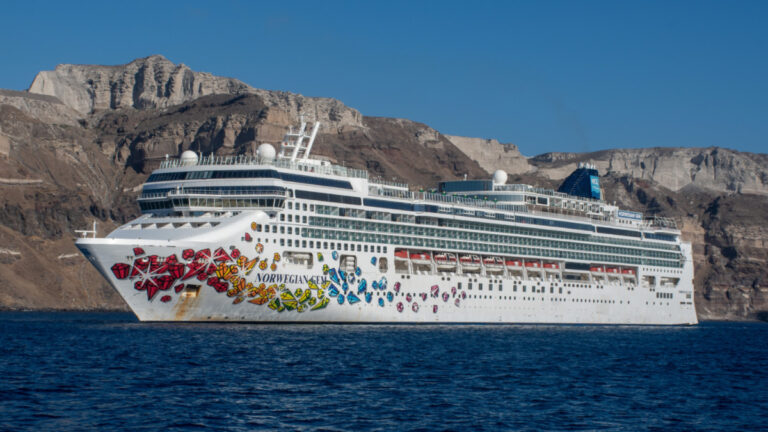
The November 1 sailing of Norwegian Gem was to have been an 11-night Mediterranean sailing with highlights in Greece, Turkey, and Egypt as well as calls in both Haifa and Ashdod, Israel.
Due to the regional violence and the possibility of the escalating conflict spilling over neighboring borders, as well as stronger travel restrictions throughout the region, it is no longer possible for Norwegian Gem to sail the original itinerary.
Three of the original ports of call have now been cancelled and the ship will no longer be visiting Port Said, Egypt or either Haifa or Ashdod. The stay in Alexandria has been extended to a much longer overnight visit, and two additional ports of call in Greece – Heraklion and Mykonos – have been added.
Photo Credit: Darryl Brooks / Shutterstock
Furthermore, other originally scheduled ports have been shifted in the itinerary to accommodate the new destinations and travel route.
“We understand that itinerary changes can be frustrating. We share your disappointment and regret that this situation has prevented us from delivering the vacation that both we and our guests imagined,”the notification to booked guests read.
Norwegian Gem will depart Istanbul, Turkey on Wednesday, November 1, as originally scheduled, and the first two days – Kusadasi, Turkey from 1:30-7:30 p.m. on Thursday and a day at sea on Friday – remain unchanged.
The ship will reach Alexandria as planned at 6 a.m. on Saturday, but will now remain in that vibrant and colorful port overnight until 6 p.m. on Sunday evening. The call to Limassol, Cyprus will be next on Monday, followed by Alanya, Turkey on Tuesday. The ship will then move on to Heraklion, Rhodes, and Mykonos on Wednesday, Thursday, and Friday respectively.
The arrival in Piraeus (Athens) on Saturday, November 11, 2023 is still planned for 6 a.m. as originally scheduled for an on-time debarkation.
Compensation Offered
Guests booked aboard this sailing are being offered a $200 onboard credit per stateroom, distributed as $100 for both the first and second guests in the cabin. This credit is non-refundable, however, and any unused monies will not be refunded at the end of the cruise.
All shore tours booked through Norwegian Cruise Line for the now-cancelled visits to Port Said, Ashdod (Jerusalem), and Haifa (Tel-Aviv) are being automatically cancelled and fully refunded back to guests’ onboard accounts. Similarly, tours booked for Limassol, Alanya, and Rhodes are being rescheduled as necessary for the changes in visits to those ports.
Guests will be able to book tours for Alexandria, Heraklion, and Mykonos soon, as arrangements are still being confirmed with tour operators.
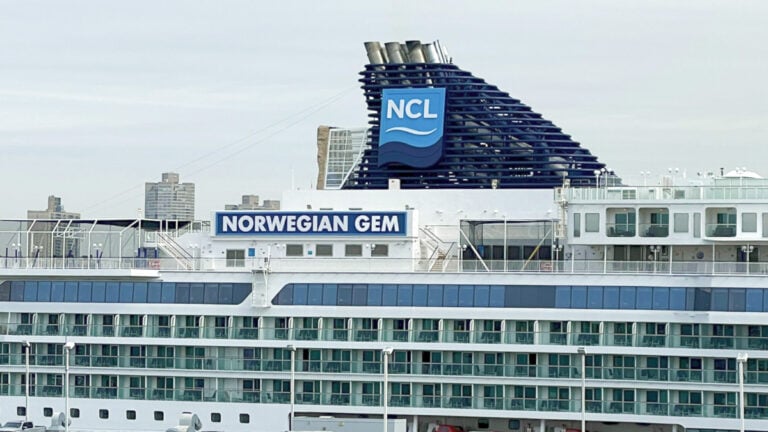
Norwegian Gem Cruise Ship (Photo Credit: Paul Wishart)
Any travelers who have made independent tour arrangements will need to reach out to their tour operators as soon as possible for refunds, rescheduling, or other arrangements as available.
Specifically, section 7(a) states that the cruise line“has the sole discretion and liberty to direct the movements of the vessel, including the rights to … deviate from the purchased voyage or the normal course for any purpose, including, without limitation, the health and safety in the interest of Guests or of the vessel.”
This includes the ability to “cancel any scheduled call at any port for any reason and at any time before, during or after sailing of the vessel.”
It is not unusual for cruise lines to adjust itineraries based on political or social upheavals such as protests, acts of terrorism, surges in violence, or other activities that could compromise travelers’ safety. These disruptions might be for just a sailing or two, or could be much longer term adjustments depending on the scope of the individual situation.
Guests booked on any sailing in or near Israel in the coming months will want to stay in close contact with their cruise line or travel agent for updates and potential changes.
A major search operation has been launched by HM Coastguard in the UK in the English Channel for a crew member who is overboard from a Carnival-owned cruise ship named AIDAperla, operated by German-based AIDA Cruises.
Crew Member Overboard AIDAperla
Search operations are underway in the English Channel for an overboard crew member from the AIDAperla cruise ship. The incident occurred on Sunday morning, October 22, 2023. At the time, the large cruise ship was off Ramsgate, located approximately 20 miles north of the southeast coast.
The RNLI said to ITV News that the call was received at 8:20 AM by the Ramsgate crew, and a crew out of Dover was launched just 15 minutes later. The HM Coastguard is coordinating efforts since it was alerted of the overboard at approximately 8:55 AM. The search is being conducted approximately 25 miles off Ramsgate.
In a statement, HM Coastguard said: “The HM Coastguard search and rescue helicopter has been sent from Lydd alongside a Coastguard fixed-wing aircraft and the RNLI’s all-weather lifeboats from Ramsgate and Dover.“
According to the Cruise Ship Tracker, AIDAperla is currently sailing a search pattern, and data shows the vessel circling in the English Channel. The cruise ship is scheduled to arrive in La Coruna, Spain, on October 23. No details are yet known if that arrival will be delayed.
AIDA Cruises said to Cruise Hive: “AIDA Cruises confirms that there is reason to believe that a crew member of AIDAperla went overboard in the English channel in the early morning of October 22. The captain and crew of AIDAperla immediately initiated all necessary rescue measures in close coordination with the local authorities.
“The search on board confirmed that a male crew member is missing. The ship was immediately stopped and returned to the spot where the incident was believed to have happened and has taken part in the search since.“
The AIDA Cruises ship departed Hamburg, Germany, on October 20 on a three-segment sailing, which is part of a much longer 27-day transatlantic voyage, with multiple embarkation and debarkation ports, such as in the Canary Islands, Dominicana, and Barbados.
AIDAperla is among one of the larger vessels in the fleet, which is part of nine brands owned by the Carnival Corporation. The cruise ship is 124,100 gross tons and was constructed in Nagasaki, Japan. AIDAperla has a passenger capacity of up to 3,400 and a crew capacity of 900.
When booking a cruise vacation, you are probably far more concerned with the onboard amenities, dining options, cabin accommodations, and what shore excursion you want to do than you are with the actual structure of the ship.
Even though it may seem less glamorous than other aspects of your vacation, it is worth considering the ship itself. A greater understanding of the ship and how it works will help you appreciate how incredible a modern cruise ship is.
Today, we will take an in-depth look at what lies beneath the surface of a cruise ship by exploring the hull. Not only will we explain what is down there, but we will also explain the critical function the hull serves. We will even address some common questions cruise ship passengers have about the hull.
If you want to expand your understanding of cruise ships and their operation, you have come to the right place!
The hull of a cruise ship can be seen as the base and outer shell of the entire vessel. Essentially, it is the portion of the ship most submerged in the water. For this reason, the hull plays a critical role in keeping any cruise ship afloat.
The hull sits below the waterline, covering a cruise ship’s entire underbody. This means it extends from the bow of the ship right to the stern. In terms of its height, it also runs from the waterline down to the ship’s keep, which is the lowest point of any ship.
Since the hull must withstand harsh conditions, like crashing waves, significant water pressure, saltwater, and even impacts, it needs to be incredibly strong. Just how big a ship’s hull is and how much of it remains underwater depends on the specific size and type of cruise ship you are discussing; however, it tends to be a significant portion of the ship’s entire structure and mass.
What Are the Basic Functions of a Cruise Ship Hull?
The hull of a cruise ship is incredibly important. It provides a physical structure for the ship to be built upon and the buoyancy required to keep the cruise ship and everything it is carrying afloat. The hull also helps reduce water resistance, which helps with everything from improving fuel efficiency to allowing the ship to travel through the water smoother and faster.
Bulbous bow, hull and waterline (Photo Credit: canduca)
In this sense, the hull provides the stability required to allow such a massive vessel to float on the water. The hull also needs to safeguard the ship and prevent it from sinking. As we will discuss in greater detail, within the hull itself, you will also find various compartments that can contain essential equipment needed to keep the ship functioning efficiently and safely.
Even though you may not see much of the hull as a passenger, it plays a massive role in allowing you to enjoy any cruise vacation.
What Are the Different Areas of a Cruise Ship Hull?
Like just about any type of large vessel, a cruise ship hull will feature numerous different compartments and spaces. As you will learn, each plays an essential role in allowing the ship to function safely.
The Engine Room
As the name implies, the engine room contains the ship’s engines and propulsion system. It can be seen as the ship’s heartbeat, so it serves an important role. Since the ship’s propulsion system needs to sit below the waterline, it is only natural that the engine room sits within the ship’s hull.
Photo Credit: Turn_Mug / Shutterstock
A significant amount of the ship’s fuel will also be stored in the hull. Typically, the fuel is stored near the propulsion system, but it can be located in other segments of the ship to help maintain its overall balance and stability.
Ballast Tanks
A cruise ship hull will also contain ballast tanks, which help control the stability of the entire vessel. These massive tanks can be filled or emptied with seawater, which makes it possible to modify the ship’s center of gravity. Ballast tank adjustments are necessary to keep a cruise ship afloat and stable, so they are essential.
Wastewater Tanks and Waste Treatment Facilities
Modern cruise ships also feature enormous tanks that help store and treat waste and wastewater. While ships in the past may have dumped much of this waste overboard, modern standards help eliminate the environmental impact cruise ships have on the waters they travel through.
Garbage Disposal Area on Cruise Ship (Photo Credit: Mohd Syis Zulkipli / Shutterstock)
While these tanks and treatment systems are incredibly sophisticated and far more sanitary than you may assume, they still sit out of view of passengers. This explains why they are almost always located in the ship’s hull.
Storage Compartments
Since there is so much space available in the hull of a cruise ship, it is a good location for various storage compartments and refrigeration rooms. Depending on the ship’s needs, these storage areas can be used to store everything from food and beverages to medical supplies and bedding.
Crew Accommodations and Facilities
While each cruise ship varies, some cruise ships will feature crew quarters in the upper portion of the hull. Crew members can enjoy breaks and catch up on sleep in these areas. Some ships will also feature separate mess and canteens for crew members in the lower regions of the ship. There are also venues such as a crew bar, gym, and barber.
Photo Copyright: Cruise Hive
Can Passengers Explore the Hull?
While the hull is undoubtedly an interesting and important section of the ship, most cruise ships ensure that this area is entirely off-limits to passengers and other unauthorized personnel.
This is because the hull can be hazardous for those needing the proper training and expertise. For starters, various pieces of equipment and machinery could pose a severe safety risk. Not only is it essential to restrict access to the hull for the safety of the passengers themselves, but it is also essential to keep this area reserved for authorized personnel for the overall safety of the ship.
If, for example, passengers wandered into the engine room unsupervised, the results could be catastrophic. Numerous machines and pieces of equipment are essential to the entire ship’s safe operation down in the hull, so it needs to be protected.
The Structure of a Cruise Ship Hull
Now that you have an understanding of the inner makeup of the hull, we can take a look at the exterior layers and structure. While it may look seamless from the outside of the ship, the hull of a cruise ship is made up of several segments that all serve a unique function.
The hull’s outer plating composes the most visible layer of the hull. This plating can be seen as the outer skin of the hull. It protects the lower portions of the ship and provides the primary defense against external elements, like water pressure and floating objects. In most cases, this plating is made from hardened steel and coated with specialized paint that can withstand the corrosive effects of ongoing saltwater exposure.
Hull of a Cruise Ship (Photo Credit: Per-Boge)
Beneath the hull’s outer plating, you will find steel framing and bulkheads. This is what gives the hull its shape and strength. You can think of the framing as the skeleton of the hull. While the plating needs to be incredibly durable, this inner framing gives the entire ship its strength and rigidity.
From there, you will find the hull’s inner plating, which, alongside the outer plating, sandwiches the frames and bulkheads. It provides an additional layer of protection and helps enhance the hull’s structural integrity. Given that the entire ship could sink if the hull was not strong, this inner layer serves a vital purpose in maintaining the ship’s safety and stability.
FAQs
Why doesn’t the hull of a cruise ship rust?
Given that the hull’s outer surface is metal and has to withstand long-term exposure to saltwater, you might wonder why it does not rust. The ship’s outer surface is protected with corrosion-resistant coatings and paints. This acts as a water-tight barrier between the hull’s metal surface and the surrounding water.
This protective coating must be inspected and maintained at regular intervals to keep the ship safe from corrosion. Scheduled dry docks are used for hull cleaning.
Do cruise ships offer hull tours?
For the most part, cruise ships will not offer tours of the hull. The access to this segment of the ship needs to be carefully regulated to maintain the safety of the individual passengers and the entire ship. In simple terms, allowing passengers to explore the ship’s hull would be too dangerous, even if they were supervised by authorized crew members.
What is a cruise ship hull made from?
Most modern-day cruise ships feature high-strength steel hulls. This durable material is required to withstand the immense pressure and stress of traveling through oceans and large seas.
Final Words
If you are a true cruise enthusiast, it pays to have a working understanding of the ship from top to bottom, even if you cannot explore every region.
Even though the hull of a cruise ship is mainly hidden from view, it serves several essential purposes. If you would like to learn more about the design of a modern cruise ship hull, we encourage you to watch Royal Caribbean’s video guide to the Oasis of the Seas Hull Design.
More importantly, make sure you enjoy yourself on your next cruise vacation, whether you’re heading to New Zealand, New York, or New Orleans, and remember that the ship and the professional cruise line crew work incredibly hard to ensure you are safe and comfortable!
While many cruise ships have been forced to alter itineraries due to the tense situation in Israel, Norwegian Gem is having more significant changes than most vessels for her November 11 and November 22 sailings, the final two sailings before the ship heads back to North America.
Not only are port visits in Israel cancelled, but other ports have also been rearranged to accommodate the changes. This can cause difficulties for travelers who may have made various independent tour arrangements.
Norwegian Gem Itinerary Changes
Due to the heightened tensions in Israel, many cruise lines have opted to cancel port visits in the region. This includes Norwegian Cruise Line, which has cancelled all remaining calls to Israel for 2023.
This has led to some dramatic itinerary changes for the 93,530-gross-ton, Jewel-class Norwegian Gem, which is offering longer eastern Mediterranean sailings that were to have included two port visits in the country. The ship’s last two cruises of the season are both impacted, though the next voyage – the 15-night transatlantic between Rome and New York – does not have any changes.
November 11 Itinerary Change
The Saturday, November 11 sailing of Norwegian Gem is an 11-night voyage from Athens to Istanbul, with a total of 9 planned port visits. Now, three ports have been completely cancelled and the ship will no longer call on either Ashdod or Haifa in Israel or Port Said in Egypt.
Instead, Norwegian Gem will overnight in Alexandria, giving guests more time to enjoy that culturally and historically rich destination.
The planned visit to Larnaca, Cyprus has been moved up in the itinerary to replace Ashdod, and Limassol, Cyprus has been added to the itinerary to replace Haifa.
The visit to Alanya, Turkey, has also been moved a day earlier, and Heraklion, Greece has been added. Finally, the visit to Rhodes – still planned for Sunday, November 19 – will be one hour shorter, now departing at 5 p.m. rather than 6 p.m. as originally scheduled.
In total, 7 days of the 11-night sailing have been altered. Only the very first day – a day at sea – and the final call to Kusadasi, Turkey on Monday, November 20, are unaffected. The ship will arrive in Istanbul on Tuesday, November 21 for an overnight before debarkation the next morning.
While the cruise line will adjust pre-paid Norwegian Cruise Line shore excursions for changed port days and refunds will be given for tours in now-cancelled ports, guests with independent arrangements will need to contact their tour operators for refunds or other options.
November 22 Itinerary Change
The Wednesday, November 22, 2023 departure of Norwegian Gem – a 12-night Mediterranean sailing from Istanbul to Rome ahead of the ship’s transatlantic repositioning cruise – has likewise had 4 of 9 ports of call adjusted.
The sailing will leave Istanbul as planned on Wednesday, November 22, and the first two ports of call – Kusadasi, Turkey and Piraeus (Athens), Greece – are unchanged.
The next four days are all adjusted, however. The calls to Ashdod and Haifa are cancelled, a call to Heraklion, Greece has been added, and both the visits to Rhodes, Greece and Alanya, Turkey, have been bumped a day later than originally scheduled. Finally, Limassol, Cyprus has been added to the itinerary.
The remaining days – an overnight visit to Alexandria, Egypt; a day at sea; and visits to Siracusa and Naples in Italy – are not changed. The cruise will end on schedule in Civitavecchia (Rome) on Monday, December 4, 2023.
As with the previous sailing, pre-paid tours booked through the cruise line will be refunded if they cannot be rescheduled, but any independent arrangements must be settled through the tour operators guests have hired.
Challenges of Longer Itinerary Changes
It can be challenging for cruise lines to need so many itinerary changes, especially when the regional situation dictates that multiple cruise ships must be accommodated.
Alternative ports can only welcome so many ships, and vessels already booked into those ports have priority for available berths.
On longer, port-intensive cruises, it can be difficult to find replacement ports in the region if a ship already plans to visit the most popular destinations. In some cases, as with these two sailings of Norwegian Gem, shuffling the order of visits can help make it easier to add new destinations.
Another alternative can be to extend existing ports of call to give guests more time for immersive exploration, though this isn’t always feasible depending on a ship’s schedule and the distance to the next destination, as well as what timing a port can accommodate.
Guests booked on any eastern Mediterranean sailing in the coming months should stay updated about potential itinerary changes and what that may mean for their cruise vacation plans.
With just over six months before Cunard’s newest ship, Queen Anne, makes her debut, the luxury cruise line took the wraps off some of the artwork that will be showcased onboard the vessel.
A celebratory event was held on October 18, 2023, for cruise line and industry VIPs in New York, featuring a lively cabaret performance.
Celebratory Event Held as Ship Readies for Debut
Cunard’s Queen Anne cruise ship is still under construction at the Fincantieri shipyard in Marghera, Italy, but the countdown to her launch is already underway. The cruise line hosted an event at New York’s swanky Cipriani 25 Broadway to introduce some of the artwork the new 3,000-guest ship will feature.
The ship, the first new-build for Cunard in 13 years, also will sport a new entertainment venue when she launches in May 2024. Queen Anne will join three ships in the Cunard fleet: Queen Mary 2, Queen Elizabeth, and Queen Victoria.
Artists whose works will be displayed on the new Cunard ship include photographer Michael James O’Brien; Eric Louie, a Canadian artist; Shradha Kochhar, a Brooklyn textile artist; and London-based artist Tommy Camerno.
Along with a reception to showcase the various artworks, guests were treated to a cabaret-style performance by the renowned stage and screen actor Alan Cumming. The event was meant to evoke the atmosphere that guests aboard Queen Anne will find in the ship’s new entertainment venue, Bright Lights Society, a performance lounge featuring bold light installations.
Cunard Event for Queen Anne
“This evening is a full circle moment for the company as we come together at this historic, magnificent building, which bridges Cunard’s 183-year historic legacy with the modern era of ocean travel,” said Katie McAlister, President of Cunard.
“Our new ship, Queen Anne, will pay homage to her royal namesake, renowned for her dedication to the arts and innovative spirit; as such, the ship will usher in a new era for Cunard as we introduce new experiences for our guests, complementing our signature, timeless style,” added McAlister.
Details regarding Queen Anne’s design have been released by Cunard as the ship’s launch approaches. The line revealed in 2022 that a team of designers is creating a modern approach to her venues while incorporating elements of Cunard’s rich history.
Designers David Collins Studio, Richmond International, and Sybille de Margerie, are working with Adam D. Tihany, creative director for Cunard, to set the elegant tone of the ship, guided by five principles — heritage, craftsmanship, storytelling, style, and innovation.
The design teams reviewed the Cunard Archives, including historical poster advertisements, brochure covers, and photography, before deciding on materials, fabrics, patterns, and other elements.
New Suites, Dining Enhancements Planned
Among the new features onboard the 113,000-gross ton ship will be Cunard Queens Grill Grand Suites, offering guests exclusive, private residences on board. Some of the amenities include a dining room and adjacent butler’s pantry, walk-in wardrobes, marble-finished bathrooms with sea views, and spacious balconies.
Queen Anne Open Deck
The 14-deck Queen Anne will feature 15 dining venues, and while all of them are sure to provide excellent cuisine, guests dining in the ship’s Queens Grill restaurant will experience a unique menu created by two Michelin star chef Michel Roux, who partnered with Cunard in August 2023.
Queen Anne’s maiden voyage is scheduled to sail roundtrip from Southampton, UK, on May 3, 2024. The 7-night cruise will call at La Coruna, Spain, and Lisbon, Portugal. The ship will home port in Southampton, sailing to destinations such as the Canary Islands, British Isles, Norwegian Fjords, Scandinavia, and the Western Mediterranean, with some departures offered in Hamburg and Kiel, Germany, and Rome.