The local economy of Portland, England, a frequent port call for ships sailing around the British Isles, received a welcome influx of unexpected cruisers when a Norwegian Cruise Line vessel made a surprise visit.
Portland, roughly 60 miles southwest of Southampton, is located along England’s famed Jurassic Coast, a World Heritage site in the county of Devon.
Norwegian Dawn Arrives a Day Early at Portland
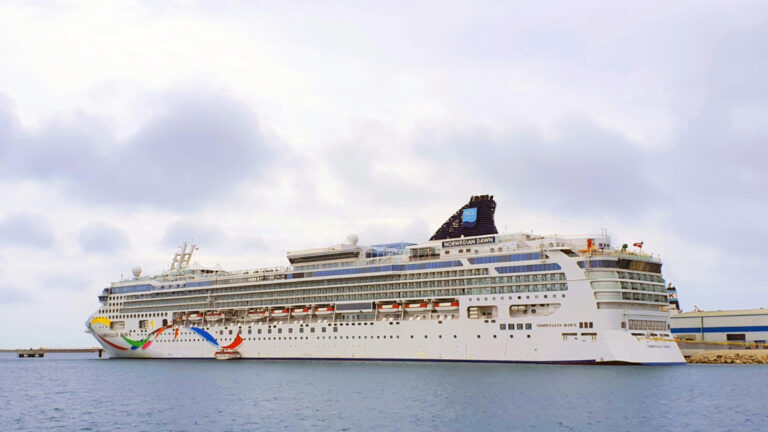
Norwegian Cruise Line’s 2,340-guest Norwegian Dawn arrived in Portland, England, on July 10, the evening before her scheduled port call, bringing more business to shops, restaurants, and pubs. Poor weather conditions elsewhere prompted the early visit.
The Dawn-class ship that entered service in 2002 regularly calls at Portland on summer season itineraries that explore the British Isles and Ireland, plus France and Belgium. Norwegian Dawn is among many ships that call at Portland.
In fact, the port in 2023, expects a total of 130,000 cruise guests to visit, reflecting a 23% increase in cruise arrivals versus 2022. For 2023, cruise-related revenues are expected to bring about $13 million to the local economy.
Norwegian Dawn
One of the largest ships to call this season was MSC Cruises’ MSC Virtuosa, which carries up to 5,000 cruise guests. Cruisers who call at Portland typically visit the nearby town of Weymouth, and that is what the Norwegian Dawn’s guests did this week.
“One of the secrets of success in the growth of our cruise business is to be as accommodating and flexible as we can be for our customers. Praise must go to our staff and suppliers for their quick response to make arrangement for the Norwegian Dawn’s arrival and shuttle bus transport for its passengers,” said Bill Reeves, Chief Executive of Portland Port.
“On the evening of arrival about half of the ship’s passengers headed off to Weymouth to enjoy the pubs and restaurants or sample the local fish and chips, and their arrival would have provided an unexpected economic boost for many catering, hospitality and related businesses in the area,” Reeves added.
Photo Credit: Maciej Olszewski / Shutterstock
The ship was sailing a 10-day itinerary from Copenhagen to Southampton, departing the Danish port on July 2. Besides Portland, other port calls included Edinburgh and Stornoway, Scotland; Dublin, Ireland, and Belfast, Northern Ireland, among other destinations.
Norwegian Dawn is currently sailing a 14-night itinerary roundtrip from Southampton that departed on July 12, with calls planned to Le Havre, France; Bruges, Belgium; Invergordon, Edinburgh, Glasgow, and Kirkwall, Scotland; Belfast, Northern Ireland, and Cork and Dublin, Ireland, among other destinations.
Port Call is Part of England’s Famed Jurassic Coast
Portland Port records show that roughly half of visiting cruise guests book excursions in the region, while the remaining guests use the port’s free shuttle buses to Weymouth, a quaint seaside town known for its colorful beach huts and Georgian architecture.
Some excursions explore the Jurassic Coast, one of Great Britain’s most popular destinations and the only place on Earth where rocks from the Triassic, Jurassic, and Cretaceous periods can be seen in one location.
Photo Credit: Vytautas Kielaitis / Shutterstock
Onboard Norwegian Dawn, guests will find a wide range of stateroom categories, including the ship’s garden villas, which are among the largest suites at sea. Some of the villas have multiple bedrooms and comprise up to 7,000 square feet.
Specialty dining venues on the ship include La Cucina, for Italian cuisine; the French-inspired Le Bistro; Tappanyaki, for Japanese specialties; Sushi; Los Lobos, featuring Mexican dishes; Cagney’s Steakhouse; and Modern Churrascaria, a Brazilian steakhouse.
Norwegian Dawn will continue to sail British Isles and Ireland cruises from Copenhagen and Southampton, plus Germany and Poland sailings between Stockholm, Sweden, and Copenhagen, and France, Spain, Portugal and Belgium voyages between Southampton and Lisbon through October.
In November, the ship will deploy farther south, offering a variety of Mediterranean and Greek Islands cruises.
The Meyer Werft shipyard in Papenburg, Germany has announced that Saturday, July 22, 2023 is the day for Carnival Jubilee, when the newest ship in the Carnival Cruise Line fleet will be floated out of the construction dock, touching water for the first time and bringing her one step closer to her December debut.
Carnival Jubilee to Be Floated Out This Weekend
Meyer Werft has announced that Carnival Jubilee will be officially floated out on Saturday morning, July 22, 2023. This is a major construction milestone for any new vessel, and marks a significant shift in the ship’s progress as final outfitting is begun in a nearby wet dock.
“Saturday, it’s the day!”Meyer Werft announced on social media.“The Carnival Jubilee will leave our covered building dock at about 9 am and will be fixed at the equipment pier around 12 pm, according to the current schedule.”
The shipbuilder does note that the schedule may change due to weather conditions. The Saturday forecast in Papenburg calls for a 60% chance of rain and a high temperature of 69 degrees Fahrenheit (21 Celsius), which is quite typical for July in northwestern Germany.
Carnival Jubilee Cruise Ship
The float out of a cruise ship is a significant construction milestone and marks the completion of the vessel’s outer hull. While interior work is far from complete, this does showcase the progress of the ship and is the first step toward her long service life on the water.
A variety of shipyard employees will attend the float out ceremony and there may be cruise line officials present as well, though this is not a handoff ceremony or official naming. Those steps will come later, as the ship is fully completed and ready to welcome guests.
Photo Credit: Meyer Werft
This float out is particularly significant as Carnival Jubilee was never originally intended as a Carnival Cruise Line ship, and instead the vessel had been ordered for AIDA Cruises.
The incredible success of Mardi Gras, however, prompted Carnival Corporation to switch the new ship to its namesake line, making Carnival Jubilee the first vessel Meyer Werft has ever built for Carnival Cruise Line.
Next Steps
The first steel was cut for Carnival Jubilee on March 18, 2022, beginning the ship’s physical construction. Over the past 16 months, the hull has taken shape, blocks have been assembled, and even the Bolt roller coaster has been installed onboard.
Carnival Jubilee is not yet be quite ready to be handed over to the cruise line, however, as much interior work remains to be finished. After the float out, the ship will be tied up at a nearby wet dock, where interior work – furnishing the ship, interior design, etc. – will commence. This will take several weeks, as final details are put into place.
Carnival Jubilee Construction at Meyer Werft
Next up will be the ship’s sea trials, which will take place sometime in August 2023. These are the technical tests of the ship’s critical systems, including navigation, propulsion, and safety operation. Those tests can take from just a few days to two weeks, depending on the vessel’s performance and any adjustments that may need to be made.
After the sea trials, the ship will be handed over and officially become property of Carnival Cruise Line, rather than of Meyer Werft. At that time, final details of the interior spaces will be completed, and the ship will begin receiving supplies and equipment so she is ready to sail.
Upper Deck of the Carnival Jubilee Currents Zone
Crew members (as many as 1,735) will begin arriving to the ship in the following weeks to familiarize themselves with its facilities and unique quirks, and in December 2023, Carnival Jubilee will welcome guests for the first time.
When finished, the 183,521-gross ton Carnival Jubilee will measure 1,130 feet in length, with 15 passenger decks for as many as 6,631 guests to explore (5,374 guests when booked at double occupancy only).
First Sailings
The third Excel-class ship, sister to Mardi Gras and Carnival Celebration, is scheduled to debut on December 23, 2023 with a 7-night sailing roundtrip from Galveston, Texas.
Rendering Courtesy: Carnival Cruise Line
The Western Caribbean cruise will call on Roatan, Honduras and Costa Maya and Cozumel in Mexico before returning to her Lone Star State homeport.
Details have not yet been announced about the ship’s official christening, including who will be named the ceremonial godmother.
Carnival Jubilee is scheduled to remain homeported from Galveston at least through April 2025, sailing alongside the Dream-class Carnival Breeze and Carnival Dream and the Spirit-class Carnival Miracle.
Have you ever wondered what do cruise ships do with sewage? If you have ever wanted to know, we have all of the answers. Read on for the truth!
When most people think of a cruise vacation, they immediately picture beautiful views of open water, relaxation, luxury, and exciting amenities. What is often ignored is how these massive vessels deal with the immense amount of sewage and waste produced during their lengthy voyages.
If you have ever wondered what cruise ships do with sewage, we have all of the answers. We will explain how modern-day cruise ships handle human waste and other forms of sewage while they are at sea and how these enormous ships deal with garbage and recycling. While it may not be the most glamorous topic, having a clean, odor-free experience is essential for cruise passengers and crew members alike.
If you are ready to learn, here is how cruise ships ensure that they handle sewage safely and responsibly!
What Types of Sewage Do Cruise Ships Deal With & What Do They Do With It All?
Before we dive into the ways that cruise ships handle and dispose of sewage, it is helpful to quickly explain the different types of waste generated during a voyage.
Non-Human Solid Waste
While flushing toilets, running taps, and shower drains all result in significant amounts of human waste and wastewater, they are not the only forms of sewage that can build up while a cruise ship is on the water.
Kitchen waste, specifically food scraps and unfinished beverages, can quickly become an issue on a lengthy cruise with a high number of passengers and crew members. If not stored and dealt with properly, this type of waste can begin to biodegrade, resulting in unpleasant odors and even a buildup of flammable gases.
Even non-odorous solid waste, like scrap paper and plastic, must be dealt with appropriately, or else the ship would quickly become overwhelmed with unsightly messes.
What Do Cruise Ships Do With This Type of Waste?
To overcome this issue, waste is segregated and dehydrated. Any form of waste that can be recycled, such as reusable plastics, glass containers, and metal cans, are all cleaned and stored, so they can be recycled and repurposed when the ship reaches land and the appropriate recycling facilities.
Non-recyclable, organic waste is dehydrated, and then it is incinerated. This is the most environmentally-friendly way to deal with this waste while the ship is at sea. If the ship is in port, the waste can be collected by local waste management services.
Wastewater not linked to human waste is often called grey water within the cruise industry. This water can come from washing dishes in the ship’s kitchens, the ship’s laundry facilities, and water used by the cleaning staff to mop floors, sinks, and clean other surfaces. Since this water can contain non-biodegradable debris, chemical cleaning agents, and detergents, it cannot simply be released overboard.
What Is Done With This Type of Wastewater?
This type of wastewater is usually filtered and treated onboard the ship because modern cruise ships have sophisticated water treatment facilities. Settlement tanks, a range of filters, chemical treatments, and various water quality tests are performed on the so-called grey water, as this ensures that the water is free from all harmful contaminants.
Garbage Disposal Area on Cruise Ship (Photo Credit: Mohd Syis Zulkipli / Shutterstock)
Once fully treated, this type of non-sewage wastewater can be discharged into some regions of the ocean. While this may sound like it would be harmful towards the environment, the water must meet stringent regulatory standards before dumping can begin. Essentially, the water must be completely clean and pose no serious risk to the health of local marine life and ecosystems.
Human Waste and Sewage
Given how many passengers and crew members travel on a large-scale cruise ship, it is incredibly important that they handle human waste correctly. Human waste can refer to water that results from flushing toilets and water collected by cabin showers and other bathing facilities on the ship.
Cabin Toilet on a Cruise (Photo Credit: Solarisys / Shutterstock)
This particular type of waste is also known as black water. Due to the health risks associated with it and the unpleasant odors that go with human waste, this form of sewage must be dealt with properly.
What Is Done With This Type of Wastewater and Sewage?
All forms of human waste have to undergo an extremely rigorous treatment process within areas of the ship that are off-limits to all passengers. In addition to heavy filtration, these modern sewage treatment facilities use chemical treatments and biological composting procedures.
Throughout the process, the treated and untreated sewage is stored in airtight holding tanks, which helps with odor control. These holding tanks are also incredibly durable, and they are regularly checked for leaks and weak spots, as maintaining their structural integrity is essential for the health and safety of all onboard the ship.
Once the sewage has been treated and is no longer a biological concern, clean and tested water can be released from the ship into designated bodies of water. Dehydrated solid waste is kept until the ship can dispose of it correctly on land.
Some of the larger cruise ships also have incineration facilities that can deal with treated solid waste at high temperatures, reducing its volume and completely sterilizing it.
If the ship is in port when the treated sewage is ready for discharge, it is passed off to the local water treatment facilities to be processed even further.
What Types of Regulations Govern How Cruise Ships Dispose of Sewage?
To ensure that all cruise ships adhere to proper sewage treatment and disposal procedures, it is essential that the industry is regulated.
To protect marine life and the environment, the entire cruise ship industry has to follow the rules regarding sewage disposal. The International Maritime Organization (IMO) is one of the most stringent regarding regulations regarding how cruise ships hold and release sewage and other forms of waste.
When cruise ships are within waters belonging to a particular nation, they must also adhere to that country’s specific rules and regulations regarding waste and sewage treatment. For example, if a cruise ship travels through American waters, the cruise ship must adhere to rules set out by the United States Environmental Protection Agency (EPA).
While these national agencies can set different standards and rules, most are fairly clear on how sewage must be treated and how it must be disposed of and discharged.
In addition to strict treatment standards, these powerful organizations also dictate where waste can be released, even after it has been treated.
Most do not allow cruise ships to discharge waste anywhere near the nation’s shores, so all waste must be treated, then delivered to local waste treatment systems. Naturally, this also comes with a significant fee, which can be rolled into fees paid to dock a cruise ship in a local port.
Does the Cruise Industry Have its Own Rules?
Believe it or not, many cruise lines add their own environmental standards for sewage disposal that go beyond what they are legally required to do.
Icon of the Seas Sea Trials (Photo Courtesy: Royal Caribbean)
Not only is this good for the cruise line’s public image, but coming up with more effective and energy-efficient treatment systems cuts down on waste and makes the entire ship more practical and sustainable.
Frequently Asked Questions (FAQs)
What is black water on a cruise ship?
Black water is a term used to describe sewage. Typically, the term is explicitly used when describing human waste or water that has been in contact with some form of human waste.
Are cruise ships allowed to release sewage anywhere?
No, there are set regulations that specify where a cruise ship is allowed to discharge sewage. Typically, sewage cannot be released within miles of a shoreline or at shallow water depths, as it can pose a greater risk to the marine ecosystem in the area. The sewage must also be treated before it is released into the water.
What is grey water?
Grey water is a term cruise ships use to describe wastewater that has not come in contact with human waste or any other form of biologically hazardous material. This can include water that has passed through a sink, laundry machine, or non-toilet drain.
Is the treated sewage water safe to drink?
While this water is close to drinkable, it is unsafe to do so, as drinking water needs to be vigorously tested through a certified water treatment facility.
Have cruise ships always treated sewage water?
Sadly, cruise lines of the past did not treat water before releasing it into the sea or ocean. Fortunately, changing attitudes and strict regulations have improved how cruise ships deal with wastewater and sewage.
Final Words
How cruise ships treat and dispose of sewage has come a long way. Cruise ships now use a complex sewage treatment process that helps limit the environmental impact of carrying so much waste at sea.
Thanks to advanced technologies, high standards, and government regulations, cruise ships deal with sewage sustainably and professionally, protecting passengers, crew members, and the waters that cruise ships travel through.
The Virgin Voyages cruise ship Scarlet Lady came into unfortunate contact with a mooring dolphin at PortMiami over the weekend. This mishap resulted in a dent and hull perforation on the starboard aft side of the ship just above the waterline.
Luckily for guests, Virgin Voyages could immediately initiate repairs, ensuring guests experienced a minor delay in the vessel’s departure.
Scarlet Lady Collision in Miami
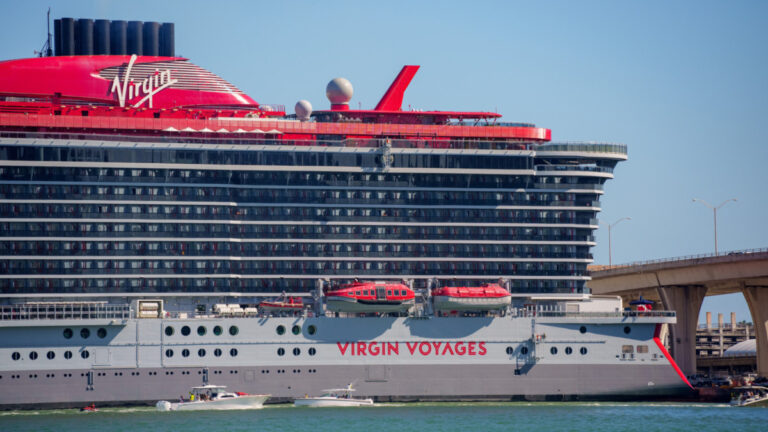
Scarlet Lady was involved in a one-sided collision on Sunday, July 16, at PortMiami. The cruise ship made contact with a mooring dolphin during arrival.
Eyewitnesses and online video footage reveal that the incident occurred as the ship attempted to align its starboard side with the dock at the Virgin Voyages cruise terminal. You can watch the arrival of the vessel below, including the impact:
Unfortunately, the vessel miscalculated the distance to the dolphin, a freestanding extension of the dock used for mooring ships. The mishap led to the ship’s collision with the dolphin during its turn. This event, however, did not stop the Scarlet Lady for long. Repairs were promptly initiated and continued throughout the day.
Despite this hiccup, the US Coast Guard cleared the ship, which pulled out at approximately 12:30 AM, albeit with a delay of around six and a half hours from the scheduled departure time.
The Scarlet Lady, at 110,000 gross tons and with a capacity for over 2,770 guests, had just returned from a 4-night cruise to Key West and Bimini in the Bahamas before the mishap.
Following the incident and subsequent repairs, the ship set off from PortMiami for a 5-night cruise, with stops in Cozumel, Mexico, and Bimini Island, Bahamas, before returning to Miami.
The Scarlet Lady is scheduled to operate year-round from Miami through April 2024, when she will be repositioning to Europe for a season in the Mediterranean, sailing from Barcelona. From Miami, the ship sails four- and five-night cruises to Key West and the Bahamas.
Minor Impact on Guest Experience
Guests who boarded the Scarlet Lady for the cruise departing July 16 can consider themselves fortunate. The damage was effectively repaired thanks to the quick and efficient work of the ship’s crew and contractors. It also means that the impact of the collision will not negatively affect guests onboard.
Images of the vessel after the repairs were completed show minimal damage, with the ship’s crew even managing to put a fresh coat of paint on the damaged area.
At this time, Virgin Voyages has not made any statements on the cause and possible further effects of the collision; neither is it clear who, the harbor pilot or the Captain, was in charge of navigation during the incident.
Photo Credit: EQRoy / Shutterstock
The vessel seems unlikely to need more significant repair work, as the United States Coast Guard has already cleared her to sail.
This incident contrasts with a similar situation on July 6, 2023, involving the Crown-class Ruby Princess cruise ship. This cruise ship collided with Pier 27 in San Francisco, causing damage to the ship’s hull similar to that on the Scarlet Lady. After extensive repairs and obtaining the necessary certification from the US Coast Guard, the ship resumed operations.
Nevertheless, the incident reduced the originally planned 10-night Alaska sailing to a 7-day cruise. Ruby Princess also sailed with fewer passengers onboard because some opted out of the shortened itinerary.
Carnival Cruise Line has announced several ships that will be starting the new main dining room menus following the introduction of the revamped menus aboard Carnival Dream in the past few weeks.
The new menus, which include special select dishes from the cruise line’s Chief Culinary Officer Emeril Lagasse, will be introduced fleet-wide in a phased approach through early 2024.
First to receive the new menus will be Carnival Conquest on her July 17, 2023 departure, a 4-night Western Caribbean cruise visiting Key West and Cozumel.
Carnival’s Emeril Lagasse and Chefs
Next up to receive the enhanced menu – which includes a rotation of more than 60 new dishes – will be Carnival Horizon later this month. In August, four additional ships will feature the new menus: Carnival Sunrise, Carnival Vista, Carnival Radiance, and Mardi Gras.
“Working with our skilled team of Carnival chefs, we recently tested and selected more than 60 new dishes to mix into the dining room rotation. I’m pleased that these dishes were very well received by our guests on Carnival Dream, so we are very excited to roll them out to the Carnival fleet,” said Emeril Lagasse, Carnival’s “Chief Culinary Officer.”
Carnival Cruise Line Menu Change
Throughout the rest of 2023 and into early 2024, Carnival Cruise Line will bring the new menus to several US-homeported vessels each month.
The cruise line’s Australia-based ships – Carnival Luminosa and Carnival Splendor – will implement the new menus later in 2024, but exact dates have not been announced.
Beyond Carnival Conquest, Carnival Horizon, and the ships confirmed to receive the new menus in August, the exact order of ships to introduce the new menus has not been announced.
From Hawaiian shrimp poke and roasted duck rolls to grilled swordfish and Cornish game hen, delicious options span all flavor profiles and offer a wide range of unique options.
“Food is an ever-evolving art, so our approach to the dining room offerings is to infuse a selection of new dishes, feature more international flavors and complement the Carnival classics our guests love,”Lagasse said.
Of particular interest are the new salad entrees, larger salads featuring key proteins for a filling and delicious meal on the lighter side. The “Ultimate Cobb Salad” “Beefsteak Salad” and “Asian Chopped Salad with Chicken” are just a few of these new mainstays.
Some of the most popular of the new dishes are the “Emeril Selects” options, personally curated by Lagasse and offered as highlighted options on each menu. “Beef Carpaccio” “Coffee Glazed Roast Duck” and “BBQ Salmon” are just some of these special highlights.
Of course, no menu is complete without decadent desserts. New options include the “Dutch Double Chocolate Pave” cake and a luscious “Banana Cream Pie” guests are sure to love.
Classics Remain Popular
Loyal Carnival guests don’t need to despair about the fate of their favorite classic dishes, as the cruise line is keeping many well-loved options available on the menu. “Escargot Bourguignonne” is still a top-tier appetizer, “Classic Beef Wellington” remains a delicious entrée, and of course, the classic “Chocolate Melting Cake” is one of the cruise line’s most popular desserts of all time.
Other popular favorites, including the chilled strawberry bisque soup and the savory cheese plate for dessert, also remain on the menu with only slight alterations.
Guest feedback to the test period aboard Carnival Dream has also led to the development of more vegan dishes to be added to the menu, along with vegetarian options already available.
The bridge is the most important area of any ship, including all cruise ships. If you think of a cruise ship as a large, complex organism, the ship’s bridge would be the vessel’s brain.
Not only is it where the captain and the other high-ranking officers navigate and control the ship’s most important operations, but it is also where communications with other ships and authorities on shore are conducted.
To help you learn more about this incredibly important and highly advanced control center, we will offer a detailed guide to the main components of a cruise ship bridge. We will also answer some common questions cruise ship passengers have about ship bridges, so you can better understand how cruise ships are operated.
Essentially, a cruise ship bridge is a dedicated control room near the front of the ship. Ship bridges are located towards the front of a cruise ship in an elevated position, allowing the captain and other crew within the bridge to have an unobstructed view of what is ahead of the vessel.
In most cases, the ship bridge will have windows facing most directions so that the crew can see ahead and down the sides of the ship. In fact, most ship bridges will have a 255° view of the path forward, allowing for more visibility on both the port and starboard sides of the vessel.
As mentioned, the cruise ship bridge is where all major navigational decisions are made and executed. Basically, it is the command center where all of the cruise ship’s operations are carried out. The ship bridge is also where decisions are made regarding the ship’s speed.
In addition to navigation, decisions made within the bridge are important for the safety of the ship’s passengers and crew. Not only does this mean those stationed within the bridge are responsible for avoiding obstacles, challenging weather conditions, and other potential hazards, it is where communication with ships, rescue personnel, and authorities located on land is carried out.
Why Is This Area Called the Ship Bridge?
The term “ship bridge” was used well before modern-day cruise ships were established. Originally, the term referred to a raised platform built at the top of a ship’s deck to give the ship’s captain a better view of the path ahead.
Photo Credit: waupee08 / Shutterstock
Since then, the term ship bridge has become a blanket term for the command area of just about any type of ship, including cruise ships. Since the bridge is where a ship’s captain and other officers control its navigation, it serves a similar purpose to the original raised platforms used on traditional sailing ships.
What Are the Main Areas of a Cruise Ship Bridge?
To give you a better understanding of the interior of a cruise ship’s command center, here are the main areas of a cruise ship bridge and the purposes they serve.
The Navigation Area
The bridge will feature a primary and secondary navigation area. Naturally, this is where the ship’s navigational equipment is located, including radar systems, GPS tracking equipment, and various chart plotting systems. You can also find backup navigation charts in these areas, which are used as a fail-safe if the ship’s navigational equipment fails.
Navigation Systems (Photo Credit: Alexey Seafarer / Shutterstock)
To ensure an unobstructed view, the two navigation areas are almost always located at the front of the bridge or on an elevated platform.
The Control Area
The ship’s speed and steering systems are located in the control area. Here you will find the primary engine control system, computer systems, steering mechanisms, and throttle controls.
Experienced officers are typically found here, as some of the ship’s most important functions are controlled in this area. In most cases, this area will be located to the side of the navigation area, as the two are closely related.
The Communication Area
The communication area of the bridge is where the cruise ship’s primary communications systems are located. This includes everything from satellite communication systems to sophisticated radios and telephones wired directly to the engine room.
This area is vital, as it allows the crew to communicate with other ships, shore-based authorities, and crew members in other areas of the ship. This area can be located in various parts of the bridge, but it is often located very close to the captain’s command center.
The Command Center
As the name implies, the captain and other high-ranking crew oversee all of the cruise ship’s essential operations. It is also where you will find the captain’s elevated chair.
Photo Credit: Philip Schubert / Shutterstock
Here you will find various display screens that give the captain instantaneous feedback about the cruise ship’s course, speed, and overall status.
Typically, it is located towards the back of the bridge but retains a clear view of the path ahead. This allows the captain’s voice to project forward so that all crew members can hear their commands clearly.
Main Observation and Lookout Deck
Towards the front of the bridge, you will often find a lowered observation and lookout deck. This area allows the captain and crew to get a clear view of the path ahead without blocking the view of crew members still at their stations.
For most cruise ships, this area is where you will find the best view of the entire ship.
The Bridge Wings
The bridge wings are extended platforms that protrude from either side of the bridge. These enclosed platforms exist to provide the navigational crew with better visibility, especially during docking procedures, and when the ship is navigating narrow waterways.
Since the bridge wings extend beyond the cruise ship’s hull, officers and other bridge crew members are able to have a much clearer view of either side of the ship.
Cruise Ship Officers on the Bridge (Photo Credit: Tony Skerl / Shutterstock)
This improved visibility allows the crew to more accurately gauge the distance to a docking platform, as well as any potential hazards to either side of the ship.
Direct contact is maintained between the bridge and those crew members that are stationed within the bridge wings during docking. In doing so, those on the bridge wings can provide guidance, and relay critical, up-to-date information as the thrusters are used to control the ship’s movement.
By working together, the crew members are able to ensure safe and precise maneuvering while docking and avoiding obstacles.
Crew Accommodations and Break Room
With some of the larger cruise ships, where a large crew is required to be on the bridge at all times, there may also be small living quarters towards the back of the bridge.
This allows the captain, as well as other members of the bridge crew, to rest and recuperate without needing to travel far. In an emergency scenario, the captain and their crew must be able to return to the bridge in as little time as possible.
Photo Credit: Philip Schubert / Shutterstock
Most vessels will have at least a bathroom in this area, but others can feature the captain’s quarters, beds, tables, and a small kitchenette, so crew members can take small breaks and rest during longer journeys.
Type of Personnel That Can Be Found on a Cruise Ship’s Bridge
Although the exact number of people found working on the ship’s bridge will depend on the size of the cruise ship, as well as the duration of the voyage, you will typically find the following types of personnel there:
The Ship’s Captain
The captain fulfills the most crucial role of a crew member on a cruise ship. This is reflected by the fact that they are considered the highest-ranking officer on the ship.
The captain will spend most of their time on the bridge in the command center. From here, they will oversee all operations within the bridge, including everything from navigation decisions to safety drills.
To learn what is required of a cruise ship captain and the skills needed to become one yourself, we recommend reading about how to become a cruise ship captain.
The Staff Captain
For most cruise ships, the staff captain acts as the captain’s second-in-command. All crew members will report to the staff captain when the captain is away. Basically, their role is to assist the captain and ensure that all operations are carried out safely and according to protocol.
Helmsmen
The helmsmen or helmsman steers the ship according to the captain’s directions. They also maintain regular contact with navigation officers, ensuring the cruise ship stays on course.
Typically, they will spend almost all of their time in the control area, which is located in the middle of the bridge on most ships.
Navigation Officers
As the name implies, navigation officers operate the cruise ship’s navigational equipment. They are also expected to have a professional understanding of navigational and depth charts, so they can continue to plot the ship’s course in the event of an equipment failure. They spend their time in the navigation area of the bridge, and they typically work in teams.
Photo Credit: Michele Rinaldi / Shutterstock
Communications Officers
Communications officers operate all of the communications equipment within the bridge. This means they must have an expert understanding of maritime radio procedures.
They also operate satellite communications systems and make in-calls to various other ship sections when commanded by the captain or staff captain.
Engine Officer
The engine officer is the direct link between the engine room and the ship’s bridge. They ensure the large vessel maintains its speed, direction, and course.
They also understand the ship’s limitations, as well as its current status and performance. The captain often speaks directly with the engine officer, especially during emergencies.
Lookouts and Junior Officers
Lookouts and junior officers perform general duties on the bridge for larger cruise ships. They should have a basic understanding of most roles on the bridge, so they can step in when required.
Photo Courtesy: Carnival Cruise Line
While traversing narrow or high-traffic waterways, they are also expected to keep a close eye on the ship’s surroundings to prevent collisions and other dangerous situations.
Is it Possible for Cruise Ship Passengers to Visit the Bridge?
Given the bridge’s significance and the fact that it is where the captain performs most of their duties, many cruise ship passengers hope to visit it while on board a cruise ship. This is particularly true for those with small children.
Whether or not this is possible for passengers to visit the bridge depends on the exact policies of the cruise line you are vacationing with. It is also up to the discretion of the captain and other bridge personnel.
Behind the Scenes Tour (Photo Credit: Philip Schubert / Shutterstock)
While some will allow a small number of passengers to have a limited tour of the bridge, mainly while the ship is in port, the area is almost always only accessible to authorized personnel.
This is due to safety and security concerns. The last thing a captain would want is for their bridge crew to become distracted from their duties due to the presence of passengers and others.
If you are interested in visiting the bridge of a ship you are traveling with, look into the exact policies and offerings of that cruise line company.
Some will allow passengers to meet the captain and other high-ranking officers during a guided tour. During some of these tours, it is possible to get a limited look at the bridge and explain how the equipment on the bridge actually works.
Bridge of a Vessel (Photo Credit: Trygve Finkelsen / Shutterstock)
While there are no guarantees that you will be able to do so, these tours are often something you will need to register for ahead of time and pay a fee to participate in.
Again, if you are lucky enough to participate in a bridge tour, it will take place while the ship is in the harbor. You may also be required to stick to strict behavioral guidelines and even follow a specific dress code.
Are Bridge Tours Worth the Price?
While costs will vary depending on the cruise line, most of these tours cost about $100 and must be booked ahead of time.
These behind-the-scenes tours can certainly be interesting, but it is essential to understand that there are limitations. For starters, you likely won’t see too much action, as they are rarely scheduled while the ship is at sea.
Photo Credit: Philip Schubert / Shutterstock
With that said, for naval enthusiasts who want to understand the actual workings and operations of the ship they have boarded, it can be a very worthwhile experience.
It comes down to your preferences. If you are interested in participating in one, you should look into onboard activities well ahead of time, as the available spots on these tours can sell out very quickly.
If you want to see a quick example of a cruise ship bridge tour, you can find a video demonstration of a Princess Cruises bridge tour here.
Final Words
Given that the bridge is one of the most crucial components of any cruise ship, it is helpful to familiarize yourself with the various areas found in this area of the ship. It’s worth a tour of the essential location to discover what goes on behind the scenes.
Norwegian Cruise Line’s newest vessel, the first-in-class Norwegian Prima, broke free of her moorings on the afternoon of July 15, 2023, while docked in Zeebrugge, Belgium.
The ship’s gangways were dragged and fell into the water, but no guests or crew were injured in the incident, which is attributed to windy conditions that pushed the ship away from the dock.
Norwegian Prima Breaks Free
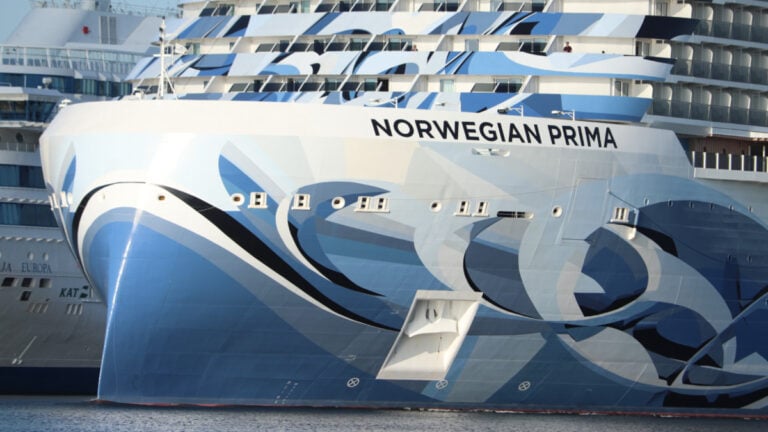
During exceptionally windy weather while docked in Zeebrugge, Belgium on Saturday, July 15, 2023, Norwegian Prima broke free of several mooring ropes and began drifting away from the pier. The ship moved enough so that both gangways, first forward and then aft, were dragged and fell into the water.
No guests or crew members were on the gangways at the time, and there were no injuries related to the incident. This occurred at approximately 2:45 p.m.
Three tugboats assisted with bringing the 143,535-gross ton cruise ship back to the dock, where she was again tied up to berth securely. High winds attributed to the incident, pushing against the 20-deck ship and putting additional stress on the mooring ropes.
Norwegian Prima was docked in Zeebrugge from 7 a.m. to 5 p.m. local time, during which steady windspeeds ranged from 6-18 knots (7-21 miles per hour / 11-34 kilometers per hour). Gusts reached as high as 43 knots (50 mph / 80 kph), and it was during one of those gusts that the mooring lines broke.
@BBCBreaking – As were about to reboard the ship (Norwegian Prima) after Belgium, the gangways started slowly rolling towards the edge of the water, which we then noticed was because the boat began drifting away. They immediately started screaming and halting everyone from board pic.twitter.com/9aIiwPBalr
At the time, most cruise passengers were ashore enjoying the last port of call of the 10-night “Northern Europe: Island & Norway to London” sailing. Norwegian Prima had departed Reykjavik, Iceland on July 6, and already enjoyed ports of call in Iceland, Norway, and Holland before the call in Zeebrugge.
Guests on the pier at the time the lines broke were held ashore until Norwegian Prima was safely secured again and new gangways were in place. The sunken gangways will be retrieved later, and the entire incident is being investigated by the port.
Norwegian Prima Cruise Ship (Photo Credit: Studio Porto Sabbia)
The ship left the village on Belgium’s northern coast Saturday evening, and arrived on time in Southampton for debarkation on Sunday morning. The next sailing, an 11-night “Northern Europe: Iceland, Norway, & Belgium” itinerary returning to Reykjavik, is not impacted.
Norwegian Prima will remain in Europe offering Northern European sailings through September, when the ship will offer a few Mediterranean sailings before repositioning to Galveston for the winter months. From there, she will offer 7-night Caribbean itineraries visiting popular ports of call in Mexico, as well as Roatan in Honduras and Harvest Caye, Norwegian Cruise Line’s private island destination in Belize.
Ships Breaking Loose
Norwegian Prima is not the first cruise ship to break loose from a dock due to high winds. In February 2023, MSC Cruises’ MSC Musica briefly broke free from being docked in Rio de Janeiro, Brazil, when wind gusts were reaching nearly 25 miles per hour (40 kilometers per hour / 22 knots).
Cruise lines often cancel ports of call when high winds are predicted. This may happen during hurricanes or tropical storms, or just when local weather conditions may be too dangerous for secure docking. The location of the dock, sheltered harbor options, wind directions, and other factors are all taken into account when judging the safety and suitability of docking conditions.
Ships at tender ports also frequently cancel port visits when windy conditions make it unsafe to operate the smaller boats.
A ship’s size is also an important factor in judging whether wind conditions are safe for docking or not. Larger ships with more decks above the waterline are more likely to be impacted by strong winds that can push a vessel away from the dock, or even push it into the dock in a way that may damage the ship or the pier.
Norwegian Prima is not the largest ship in Norwegian Cruise Line’s fleet, but the ship’s tall profile can challenging to maneuver in windy conditions. The ship can welcome as many as 3,099 guests at double occupancy, and the ship’s captain will always keep passenger safety at the forefront when considering docking conditions.
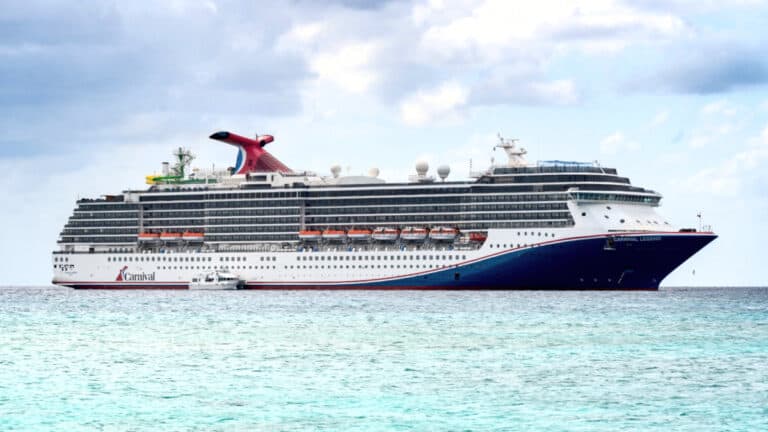
Carnival Cruise Line has reached out to guests booked on select sailings of Carnival Legend that the ship will be returning to Baltimore, Maryland earlier than the original itinerary planned.
This may impact guests’ post-cruise travel plans, but it does not impact ports of call during the two affected cruises.
Carnival Legend Returning Early on Two Cruises
Two upcoming fall cruises of Carnival Legend – the August 13 and September 2 departures – will be returning earlier to their homeport than initially planned. Carnival Cruise Line has reached out to booked guests to advise them of the change.
“We have made a slight adjustment to the itinerary for your cruise – our return to Baltimore will be earlier than previously scheduled. Carnival Legend will now be docking at 8:00 AM instead of 10:00 AM,”the email explained.
The two hour difference is only noted for two upcoming cruises: August 13, 2023 and September 2, 2024. Both sailings are 14-night itineraries to Greenland and Canada, with ports of call in Nanortalik and Qaqortoq, Greenland, as well as St. Anthony and Corner Brook in Newfoundland and Sydney in Nova Scotia.
No other ports of call are being adjusted at this time, and the two previous days of each sailing – before arriving in Baltimore on August 27 and September 16, respectively – are days at sea.
Carnival Legend is a Spirit-class vessel, weighing in at 88,500 gross tons. The ship can welcome 2,124 guests at double occupancy, or as many as 2,610 passengers when fully booked.
The ship is currently homeported from Baltimore and is offering Bahamas and Eastern Caribbean sailings through the summer months.
In late August, Bermuda cruises are added to the schedule, as well as Canada and New England sailings in the autumn to take advantage of the region’s spectacular fall foliage.
Why the Change?
No explanation has been given about why the ship will now be returning to Baltimore two hours earlier than originally scheduled on these particular sailings, though it must be noted that these are the only two cruises the ship has planned to Greenland and Canada.
Photo Credit: Tony Davis
It is likely that the ship’s overall route returning from Canada has been slightly modified, resulting in a faster travel time. There is no indication that this change has anything to do with the ship’s operation, engine efficiency, or maximum cruising speed capability.
Adjustments to popular shipping lanes, predicted seasonal weather patterns, or tidal schedules could all have this type of minimal impact on a cruise ship’s schedule.
Impact on Passengers
This two-hour docking change is unlikely to have a dramatic impact on most travelers’ post-cruise arrangements, especially since Carnival Legend will be arriving earlier than planned rather than later.
Guests who have booked flights to return home earlier in the day now have slightly more breathing room in their schedules, perhaps even time to enjoy breakfast on board before departing the ship. Guests with later flights will wait slightly longer than expected for their follow-on travel, but there is no need to rush.
There has been no notification sent to guests embarking Carnival Legend for the next cruises on those days – both of which are 6-night Bermuda sailings – indicating any earlier departure time from Baltimore, so it is unlikely that their travel plans will need adjusting. Nor has there been any communication about changes arrival time appointments or other schedule adjustments.
It is always a good idea for travelers to stay in close contact with their cruise line prior to embarkation, as last-minute changes and schedule adjustments can occur.
Norwegian Cruise Line has reached out to guests embarking on Norwegian Breakaway on July 15, 2023 that a scheduled labor strike may impact flights into Rome, Italy, and any delays or disruptions could potentially affect passengers arriving for their cruise.
Guests who booked air travel through the cruise line will be contacted with further instructions if necessary, while guests with independent flight arrangements should stay in close communication with their airline for updates and schedule changes.
Air Traffic Controller Strike May Impact Cruise Travelers
A scheduled labor strike by the Italian Air Navigation Service (ENAV) on Saturday, July 15, 2023 may create significant flight delays that could cause cruise travelers to miss embarkation aboard Norwegian Breakaway. To alert guests, Norwegian Cruise Line reached out to booked guests and travel partners this week with a notification.
ENAV is the company that provides all navigation services within Italian airspace, including air traffic control, flight information, airport weather forecasts, and other information necessary for safe and efficient air travel. With workers striking as part of a labor dispute, extensive flight delays and cancellations are expected.
Photo Credit: Cineberg / Shutterstock
Norwegian Cruise Line reached out to travelers booked on Norwegian Breakaway this week to alert them to the possibility of significant delays.
“We have been informed that flight cancelations and delays are to be expected in Italy. As this may impact your travel arrangements, we want to make sure you are aware of this situation and how it may impact your travels,”the email read.
The notification goes on to note that flights landing in Rome between 10 a.m. and 6 p.m. are expected to be most affected.
Guests with air travel booked through the NCL Air Program will be contacted directly if their flights are affected, with further instructions about how to adjust their plans to reach Norwegian Breakaway. Guests should check their trash, spam, and junk email folders to be sure not to miss any announcements or updates.
If guests purchased flights on their own, they are advised to stay alert to communications from their airline about changes and adjustments.
Norwegian Breakaway departed Civitavecchia at 5 p.m. local time. The cruise port is located approximately 70 kilometers (44 miles) northwest of Rome.
The ship is sailing a 10-night Greek Isles & Italy itinerary, with ports of call scheduled for Santorini, Athens, and Olympia in Greece; La Valletta, Malta; Messina, Sicily; Naples and Pisa (Livorno), Italy; and Cannes, France.
Photo Credit: Ritu Manoj Jethani / Shutterstock
The 145,655-gross ton ship can welcome 3,963 guests per sailing, with 1,600 international crew members onboard to provide memorable service.
What If Guests Miss the Ship?
If travelers have missed arriving to Norwegian Breakaway for departure, the next stop is Santorini, Greece on Monday, July 17. Travelers could arrange additional air travel or other means to reach Santorini and board the ship.
Santorini is approximately a two-hour flight from Rome, but guests would also need to arrange for hotel stays until Norwegian Breakaway arrives at 1 p.m. on Monday afternoon, July 17.
Norwegian Cruise Line has not provided details about possible arrangements, as every traveler may have different schedules and needs to reach the cruise ship. It is possible that cancelling the cruise may also be an option if guests cannot easily meet the ship, but this would likely incur steep penalties or a complete forfeiture of the cruise fare, depending on how air travel was booked.
Other Cruise Lines Impacted
Norwegian Breakaway is not the only ship potentially impacted by air travel difficulties in Italy this weekend. Norwegian Epic is also departing from Civitavecchia on July 15, as is Princess Cruises’ Enchanted Princess.
Photo Credit: ODIN Daniel / Shutterstock
On Sunday, July 16, Royal Caribbean International’s Odyssey of the Seas is scheduled in Civitavecchia, while MSC Cruises’ MSC Seashore is also homeporting from the city that day.
Celebrity Cruises, Costa Cruises, Marella Cruises, and AIDA Cruises also have visits or departures scheduled from Civitavecchia in the next few days.
Other Italian ports are also likely to be impacted by travel delays in the coming days, including Ravenna and Trieste.
Guests booked on any cruise line departing from Italian ports in the next few days should be aware of potential travel delays. While the strike may be scheduled for only one day, rescheduling delayed travelers may have impacts on travel arrangements for the next several days.