It’s never been the most popular dining choice onboard the Norwegian Cruise Line ships and has often been empty. So, the choice to make the American Diner a complimentary offering instead of a for-fee dining experience is one that only makes sense.
This transition, which began in early January, is expected to be completed by mid-February across six NCL vessels. The new menu removes some of the more upscale options, such as Lobster Sliders, and aligns the available options with other complimentary dining options across the fleet.
Transition to A Complimentary Dining Experience
Starting January 2, 2024, Norwegian Cruise Line has started with the transition to complimentary lunch and dinner at the American Diner.
The transition will be taking place across the six Breakaway and Breakaway-Plus cruise ships that currently have the specialty dining option available, Norwegian Getaway was the first ship to be included in the transition for the January 2 cruise. Norwegian Escape will be next for its January 6 cruise from Port Canaveral, Florida.
Norwegian Encore, Norwegian Breakaway, and Norwegian Bliss will transition on January 7, and the final ship to transition will be Norwegian Joy on February 13, 2024, as confirmed on the NCL website.
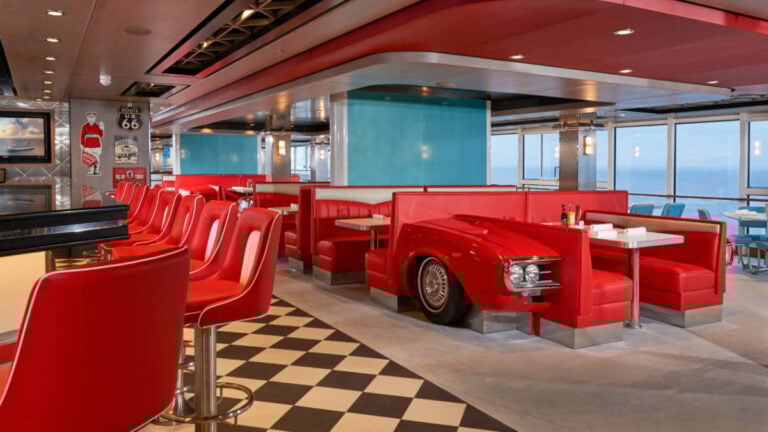
The American Diner, known for its classic Americana atmosphere reminiscent of a classic diner, has never really been the most popular option onboard the Norwegian Cruise Line ships. Menu options have been available in one variation or another across other dining options that are complimentary such as The Local and O’Sheehan’s.
Then again, the changes that NCL will be incorporating in the new menu for the American Diner are largely similar to the menu options at O’Sheehan’s and the Local. Spaghetti and meatballs at the American Diner, or Fettucine Carbonara at O’Sheehan’s. The Wrangler Burger, another staple at O’Sheehan’s will also be featured at the NCL dining venue.
Norwegian Cruise Line American Diner
The new menu does remove the popular lobster sliders. New starter options include a smoked fish dip, white bean chicken chili, cheese nachos, Caesar Salad and Grecian Salad,
Sandwich options will include a battered fish sandwich, pulled pork sliders, and a chicken salad sandwich. Comfort foods like chicken pot-pie casserole, Lechon Asado, and homemade meatloaf are also on offer.
For dessert, guests have the choice of bread pudding, carrot and walnut cake, and chocolate mousse. Not everything will be complimentary as milkshakes will have a $7 surcharge.
Positive Effect On Dining Traffic
The choice of Norwegian Cruise Line to make the American Diner complimentary will have a positive effect on the other complimentary dining options across the vessels, such as the Garden Cafe, the Main Dining Rooms, and O’Sheehans and Shanghai’s Noodle Bar.
The welcoming atmosphere at the American Diner, with its checkered floors and classic booths, will certainly draw in more guests as a complimentary dining option than it ever did as a paid option.
Norwegian Joy Cruise Ship (Photo Credit: Felix Mizioznikov / Shutterstock)
At a minimum, it will help relieve some of the pressure on those venues, with the Garden Cafe in particular known to be excessively busy during peak hours for lunch and dinner.
The question remains whether the American Diner will be opening up for complimentary breakfast as well, or even as a 24-hour dining option, although O’Sheehans has that covered already.
The American Diner is only available on the Breakaway and Breakaway-Plus class cruise ships, not on the new Prima-class cruise ships Norwegian Prima and Norwegian Viva, Norwegian Epic, or any other cruise ships in the fleet.
Norwegian Cruise Line has notified guests booked on the February 4, 2024 departure of Norwegian Star of a shortened port visit during the coveted sailing that includes scenic cruising in Antarctica.
While the change is relatively minor, it could be a disappointment to guests who are eager for what is often a once-in-a-lifetime opportunity to visit this remote region.
Norwegian Star Itinerary Change
Guests setting sail next month on Norwegian Star for a 14-night South America: Argentina & Chile cruise have been alerted that one of their port calls is being slightly shortened. Norwegian Cruise Line emailed guests of the change so they can plan accordingly.
“We are committed to providing the best vacations at sea and have been working tirelessly to continue to elevate the quality of our offerings and overall guest experience while driving a positive impact on society and the environment,”the email explained.“As we optimize itineraries for fuel efficiencies, we have modified Norwegian Star’s itinerary.”
The impacted sailing departs on Sunday, February 4, 2024, and two small changes have been made to the previously planned schedule. On Friday, February 9, the ship is calling in Punta Arenas, Chile from 8 a.m. to 4 p.m. That time remains unchanged from the original itinerary, but now “Cruising Chilean Fjords, Chile” is also listed for that date.
Because there is no time change for the visit to Punta Arenas, the addition to the date is simply clarifying that there will, in fact, be scenic cruising that evening. On February 9, the will set at approximately 9:25 p.m. local time in Punta Arenas, so even though the fjord cruising is later in the day, the views should be spectacular.
The second itinerary adjustment is to the last port of call on the itinerary, Port Stanley in the Falkland Islands on Thursday, February 15. Originally, the ship was scheduled to be in port from 6 a.m. to 4 p.m., but now the visit has been trimmed by one hour and Norwegian Star will depart at 3 p.m.
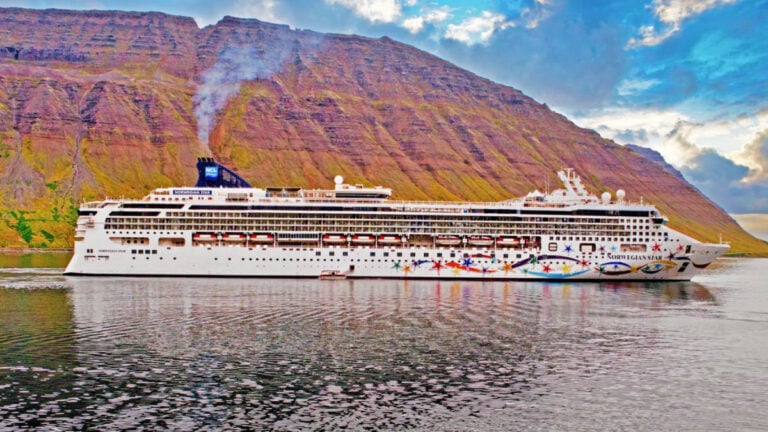
Norwegian Star Cruise Ship (Photo Credit: Lukassek / Shutterstock)
This small change may affect some shore excursions later in the day, but should not have a major impact on options offered in the destination. Passengers who may have arranged their own private tours, however, will want to be sure their tour operator can accommodate an earlier time back to the ship.
No other itinerary changes are indicated at this time, and Norwegian Star will be returning to Buenos Aires, Argentina as originally scheduled on Sunday, February 18.
The 91,740-gross-ton ship is homeported from Buenos Aires offering similar outstanding itineraries through the end of March. Guests booked on similar sailings will want to stay in contact with Norwegian Cruise Line in case their cruises also have slight itinerary modifications.
Norwegian Star can welcome 2,348 guests onboard, and is also home to just over 1,000 international crew members. After her season in South America, she will reposition to Europe to offer a variety of sailings to the British Isles, Scandinavia, Iceland, Greenland, and northern Europe before returning to South America in December 2024.
Will These Itinerary Changes Help?
Such a small in-port time change may not seem significant, but it can be helpful as the cruise line has stated, for “fuel efficiencies” and having a positive impact on the environment. Norwegian Cruise Line has made similar itinerary modifications to various ships and sailings in the Caribbean as well.
By leaving earlier, the ship can cruise at a slightly slower, more efficient speed, lowering overall emissions and minimizing marine noise that can disturb delicate habitats and disrupt wildlife.
In a remote destination like the Falkland Islands, where nature viewing and photography is a main tourist draw, protecting the environment and safeguarding wildlife is critical. By taking simple steps now, Norwegian Cruise Line and other cruise lines are working to ensure that future cruises can also enjoy the region with the same pristine quality and phenomenal viewing opportunities.
Princess Cruises in 2024 will celebrate two major milestones tied to the Last Frontier State, as it honors the 65th anniversary of Alaska’s statehood and marks the 55th year it has been sailing to the pristine and sought-after destination. Not surprisingly, the cruise line will have a big presence in Alaska during the upcoming summer season.
Princess Cruises to Deploy 7 Ships to Alaska in 2024
Alaska became the 49th state on January 3, 1959, nearly 100 years after the US bought the land from Russia, and back then, few could have guessed that the Great Land would become one of the world’s premier cruise destinations.
Princess Cruises began offering Alaska sailings in 1969, and has since provided unforgettable cruise experiences to millions of guests who longed to see the state’s rugged coastlines, massive glaciers, and abundance of wildlife.
In summer 2024, the cruise line will deploy seven ships to the destination, offering 158 departures of 14 itineraries. Voyages of varying lengths will visit 17 Alaskan locations, and offer 91 scenic cruising opportunities in Glacier Bay National Park alone.
“Alaska’s statehood marked a historic moment in American history, opening doors to a world of opportunities and possibilities, and we salute this very important anniversary,” said Terry Thornton, chief commercial officer for Princess Cruises.
“Princess Cruises has been a proud partner in Alaska’s growth and prosperity, providing unforgettable experiences, contributing to its economy and fostering a deep appreciation for its unique heritage,” Thornton added.
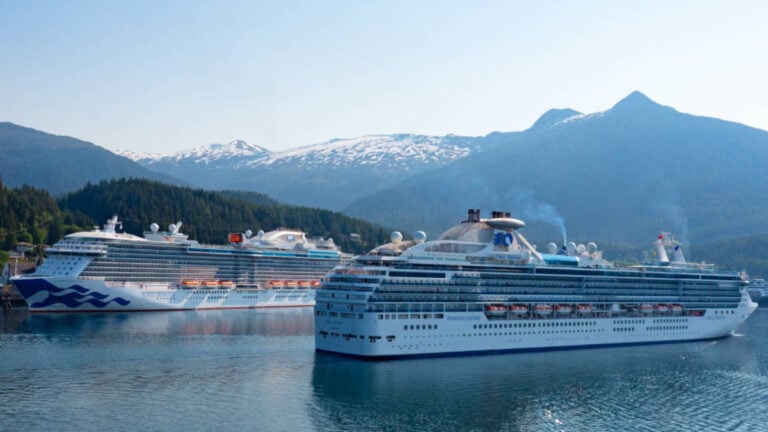
Princess Cruises in Alaska (Photo Credit: dvlcom)
Three ships will operate 7-day Voyage of the Glaciers cruises, including the 142,229 gross ton, 3,560-guest Royal Princess; the 115,875 gross ton, 2,670-guest Sapphire Princess, and the 107,517 gross ton, 2,600-guest Grand Princess.
Seven-day Inside Passage voyages will operate roundtrip from Seattle aboard the line’s 145,000 gross ton, 3,660-guest Discovery Princess, and the 143,700 gross ton, 3,560-guest Majestic Princess.
From San Francisco, Princess will offer 11-day Inside Passage cruises aboard the 113,561 gross ton, 3,080-guest Crown Princess, while the 113,561 gross ton, 3,080-guest Ruby Princess operates 7-day Inside Passage voyages from Vancouver.
Princess Cruises to Unveil New Cruisetours in 2024
Princess Cruises in 2024 will offer a series of cruisetours that combine sea voyages with land stays at wilderness lodges and visits to iconic national parks and other popular destinations. In all, 20-plus cruisetours are featured in 2024, taking guests to Denali National Park, Kenai Peninsula, Copper River, Fairbanks, and Anchorage.
The upcoming season will debut two new cruisetours. One is a 15-night National Parks Tour that takes guests to five parks — Glacier Bay, Denali, Wrangell-St. Elias, Kenai Fjords National Parks, and Klondike Gold Rush National Historical Park. The itinerary combines a 7-day cruise with eight nights on land, and accommodations at Princess Cruises’ lodges.
Princess Cruise Ship in Alaska (Photo Courtesy: Princess Cruises)
The second new cruisetour is the 9-day Katmai National Park Tour, offered pre- or post-cruise. The itinerary includes a 7-night sailing and two nights in Anchorage, providing opportunities for guests to see brown bears at Brooks Falls in the national park. Flights between Anchorage and the park are included in the cruisetour fare.
All Princess Cruises’ voyages to Alaska feature the line’s North to Alaska cultural immersion programs, which include guest interaction with local people, educational activities about the state’s history and traditions, and the availability of Alaskan seafood for onboard dining.
For youngsters, the Alaska Explorer’s Youth Program offers a Junior Ranger experience, in partnership with the Glacier Bay National Park Rangers.
Looking ahead, Princess Cruises has rolled out its plans for its 2025 season as well, offering 150-plus departures on seven ships sailing from five homeports. Also in 2025, the line will feature some 25 cruisetours.
Royal Caribbean Group is hiring a new position, described as a Manager of Marine Meteorology, to support the company’s Chief Meteorologist and provide further weather forecasting expertise to ensure each fleet has the safest, most comfortable routes for all guests to enjoy.
The new position could be a very interesting opportunity for an interested meteorologist, and will be a welcome part of the overall operation to provide the best possible cruise experiences for guests on each cruise line in the Royal Caribbean Group.
Royal Caribbean Group Hiring Marine Meteorologist
Royal Caribbean Group has posted a job opening for a “Manager, Marine Meteorology” to join the company and report to the Royal Caribbean Group Chief Meteorologist, Craig Setzer, who announced the new job opening on his X account.
“I’m happy to announce my job as the only in-house cruise industry meteorologist is bearing fruit & my department is expanding,”Setzer explained.
Setzer himself, while an experienced meteorologist with impressive credentials, is relatively new to cruise line weather forecasting. He joined Royal Caribbean International as the single line’s Chief Meteorologist in July 2023, several months after the departure of Chief Meteorologist James Van Fleet in May. Setzer was then promoted to the Chief Meteorologist for Royal Caribbean Group in November 2023.
Hi everyone, I'm happy to announce my job as the only in-house cruise industry meteorologist is bearing fruit & my department is expanding. I'm hiring a meteorologist & if you know anyone who might be interested, please have them click the link. Thanks!https://t.co/xhkBUV1jVi
The new job description notes that the Marine Meteorology position “will primarily focus on critical weather vessel routing for the RCG global fleet for ocean voyages and port call visits to destinations around the globe. The role supports the safety and comfort of guests and crew through active weather forecast support and operational recommendations.”
Further duties are described as coordination across the various fleets in the Royal Caribbean Group, including ships’ captains, as well as analyzing local weather conditions around the globe to determine how ship routes and itineraries will be affected.
Training shipboard teams and offering suggestions for weather-related fuel efficiency opportunities are also part of the listed duties, as well as additional duties as required by supervisors or managers.
Interested applicants should have a bachelor’s degree or above in Meteorology or Atmospheric Sciences, as well as several years’ experience with both maritime meteorology forecasting and open ocean vessel weather routing.
Royal Caribbean Weather
The ability to work across time zones and comfort with a non-standard weekly schedule is essential, as are various technical skills to utilize the most up-to-date technology, including AI and database analysis, for forecasting.
The pay rate for the new position has not been posted. This is standard practice for many corporate positions, and a final salary is likely to depend on an individual applicant’s level of experience, qualified expertise, and other included compensation benefits as part of a full pay package.
While at this time only one Marine Meteorologist is being hired, the fact that the position is listed as a “Manager” does indicate there may be multiple positions hired in the near future, greatly expanding the weather team for the entire Royal Caribbean Group.
What Will This Mean for Cruise Guests?
Cruise travelers may not pay very close attention to the weather forecast for their oceangoing vacation, other than to know that they will be able to enjoy sunny, clear skies and balmy temperatures – or whatever weather may be appropriate for their destination.
This new position, however, will more closely manage weather-related itinerary changes. This could include sailing routes for vessels that may encounter storms, port of call timing adjustments to avoid foul weather, and even port changes or cancellations under extreme weather circumstances.
Severe Weather Impacting Cruise Ships
While cruise lines work diligently to preserve their originally scheduled itineraries, the safety of guests, crew members, cruise ships, and port communities is always the top priority. While it can be disappointing to miss a port or have an itinerary change due to weather, this is always done to keep all travelers safe and comfortable.
Timely weather-related updates can help cruise guests adjust their travel plans before or after a cruise if necessary to accommodate itinerary changes or delays, and good communication keeps guests informed and confident in the cruise line’s ability to manage unexpected situations.
Because the new position is being hired for the Royal Caribbean Group, not just Royal Caribbean International, the job will likely cover all cruise lines owned by the Group, including Royal Caribbean, Celebrity Cruises, and Silversea Cruises. The parent company also owns 50% of TUI Cruises and Hapag-Lloyd Cruises.
Between the five cruise lines, a total of 65 cruise and expedition ships are currently part of the combined fleets of the Royal Caribbean Group, with sailings and destinations all over the world. A widely experienced weather team will certainly be an asset to managing such a diverse fleet!
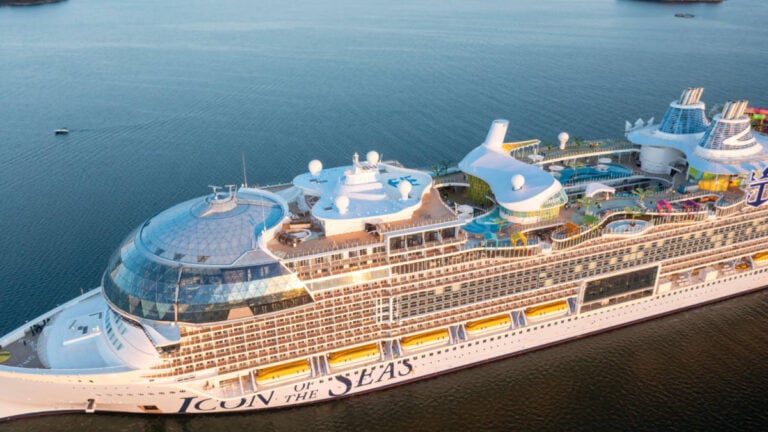
The people of Ponce, Puerto Rico, are the first to see Icon of the Seas in all her glory, as the world’s largest cruise ship arrives in the Caribbean following her transatlantic crossing from Spain. The Meyer Turku shipyard handed over Icon of the Seas on November 27, 2023, as she is being prepared for her arrival in PortMiami on January 9.
Icon of the Seas Docks at First Caribbean Port
Although she is still without guests onboard, Icon of the Seas has arrived at her first Caribbean port on January 2. The biggest cruise ship ever constructed arrived at Ponce, Puerto Rico, on the southern coast of the island early in the morning.
The cruise ship left the Spanish port of Algeciras on December 23, where she took on thousands of plants and 2,500 cubic meters of LNG. Since then, she spent the past nine days crossing the Atlantic Ocean.
During the call to Ponce, Icon of the Seas will welcome onboard new crew members and shipyard workers will be disembarking and returning home after putting the finishing touches to the vessel. What remains are inspections from the US Coast Guard, and other regulatory bodies.
Michael Bayley, the CEO and President of Royal Caribbean International, had the following to say during the arrival to the first-ever Caribbean port of call:“Oh look who just arrived early this morning into the port in Ponce, Puerto Rico! ICON!”
“Next few days lots of regulatory inspections, loading and offloading equipment, yard workers going home, more crew arriving along with a very special crew member. Preparations going well for the arrival into Miami Jan 9th where we will host the ICON arrival party.”
The identity of the special crew member remains a mystery. Speculation suggests it might be football legend Lionel Messi, the ship’s icon, who is scheduled to preside over the naming ceremony on January 23.
Sailing the Eastern and Western Caribbean Starting January 27
Although Icon of the Seas will arrive in PortMiami on January 9, the first guests will need to wait a couple of weeks before they are allowed onboard. The first official cruise will set sail on January 27. Before that date, Icon of the Seas will sail on a series of shakedown cruises, voyages designed to test all guest features with media and travel agents onboard.
The first 5,610 guests, or possibly even more as the giant Royal Caribbean ship has a maximum capacity of 7,600 passengers, will visit St. Kitts, St. Thomas, and Perfect Day at CocoCay during a 7-day Eastern Caribbean cruise.
Following that voyage, Icon of the Seas will alternate between the eastern and western Caribbean, also visiting Costa Maya and Cozumel, Mexico, and St. Maarten.
Anticipation Builds For Arrival to PortMiami
One of the most eagerly anticipated cruise ships ever constructed, Icon of the Seas is already a game changer. Not only did it take over seven years for Royal Caribbean International to design and develop the 250,800 gross tons cruise ship, but the actual construction of the behemoth took an additional 900 days since the ship’s first steel was cut in June 2021.
“Seven years ago, we had an ambitious idea to create the first vacation truly made for every type of family and adventurer; now, it’s in our hands, and in this final stretch, we’ll bring it all to life for the biggest debut in our history in January 2024,” Bayley said.
Royal Caribbean’s Icon of the Seas (Photo Copyright: Jarp2)
Onboard, guests can enjoy a variety of innovative amenities on Icon of the Seas. The ship boasts the AquaDome, the largest glass and steel structure on a cruise ship, which houses spectacular aqua shows and the highest waterfall at sea.
Seven pools, of which one is the largest at sea and six unique waterslides on Thrill Island and Splashaway Bay, offer aquatic fun for every preference. The ship also boasts an incredible 20 different restaurants, from a high-end steakhouse to comforting bar food.
Icon of the Seas is scheduled to make its much-anticipated arrival in Miami on January 9 at approximately 7 AM. Royal Caribbean International is set to unveil further details about the exciting events and activities planned for the ship’s welcome celebration in the upcoming days.
Just because you’re on a cruise vacation doesn’t mean perpetrators take a break from looking for opportunities to strike. Even though modern cruise ships are statistically one of the safest forms of travel, it’s still important to remain aware of one’s surroundings in case potential threats are lurking nearby. One TikToker has gone viral for her cruise safety tips for women sailing solo.
Viral Cruise Safety Tips On TikTok
There is some truth to the saying “there’s safety in numbers.” Single travelers, and especially females traveling solo, tend to be more vulnerable targets. Luckily, Victoria from @victorias.way on TikTok has dedicated her channel to sharing travel safety tips, especially for women traveling by themselves.
While onboard a newer MSC Cruises ship, Victoria filmed a video detailing her process to ensure no unwelcome passengers or crew can enter her stateroom. She posted the video on December 9, 2023, and it has since gone viral. She did not specify which ship she was on.
After turning on the lights and locking her cabin door, Victoria ensures her cabin is extra secure with a portable door lock. She then closes the peephole and turns on the “do not disturb” button.
You can watch the video below:
For added security, the TikToker then installs a doorstop alarm at the base of her door, before using a closet hanger to connect the deadbolt to her bathroom door handle for added security, sort of like a makeshift security chain. She then rolls up a towel to stick in the door handle to block anyone from turning it.
Finally, Victoria places a heavy piece of furniture against the door and installs a small, wireless security camera, before moving on to check out the balcony. After a brief survey of her surroundings, Victoria locks the balcony door and closes the curtain for privacy.
At the time of this writing, Victoria’s video has 18.7 million views and 17,657 comments. While most TikTokers agreed with bringing the portable lock and doorstop, some felt the safety routine was a bit overkill, took too much time, or made it too hard to access emergency exits.
“After the doorstop alarm, you’re doing entirely too much for a cruise,” wrote one TikTok user named MaKayla Turner.
“Well, you spend the first 6 days of your 7 day cruise barricading your day,” commented a user posting as David Reynolds2489.
“You forgot the guard dogs and the sniper tower w/spotlight,” joked a user going by the handle messerschmidt86.
Ultimately, it’s up to the individual cruiser to decide what steps make them feel the most safe. Note that modern cruise ships typically have security onboard and CCTV in many public areas.
One day later on December 10, 2023, Victoria also posted a second video about coping with motion sickness during a stormy night at sea. So far, this TikTok has earned 833.2K views and garnered over 9,000 comments.
In the 1-minute clip, Victoria shows how she uses seasickness patches, Dramamine tablets, and fresh air to find relief from motion sickness, before starting a dialogue in the comments by asking for more seasickness tips.
Victoria’s Travel Safety Channel
The @victorias.way TikTok channel is full of videos with travel safety tips for vacations on land and at sea. As of January 1, 2024, the channel has 68.9K followers and 7.8 million video likes.
In addition to mini cruise vlogs and cruise safety tips, Victoria, the face of the channel, also posts hotel safety tips, which contain useful information for those who arrive for their cruise early or remain in the port a few extra days.
Victoria’s page has a “Hotel Safety Tips” playlist with 22 videos, which address how to prevent intruders from entering, checking for bed bugs, and answering questions from the comments.
Additionally, Victoria has shared a playlist of six videos with home security tips, focusing on staying safe when home alone, preventing break-ins, and tips for keeping your home secure prior to leaving on vacation.
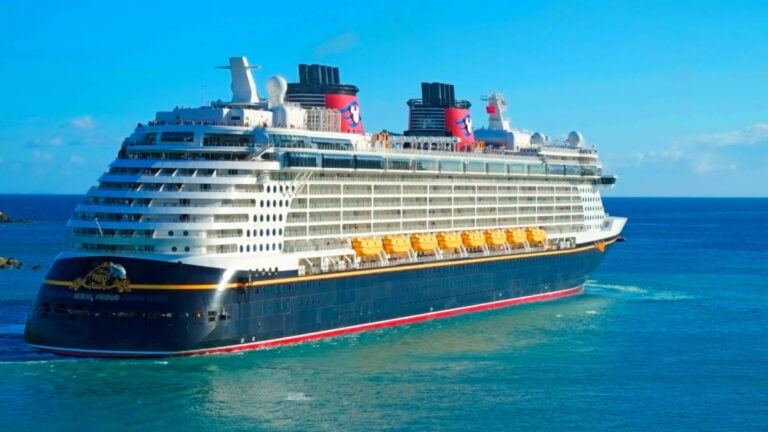
Disney Cruise Line’s Disney Fantasy rescued four refugees just north of Havana, Cuba on December 31, 2023. The cruise ship was enjoying a day at sea on its current sailing, when the small craft was spotted and Disney Fantasy rendered assistance.
Disney Fantasy Rescues Refugees on New Year’s Eve
As Disney Fantasy was sailing just north of Cuba on Sunday, December 31, 2023, a small, unpowered craft was spotted with four individuals crowded aboard. The cruise ship immediately stopped to assist, sending out its own pilot craft and rescue personnel to bring the refugees aboard.
All four individuals were successfully rescued, and would have been given any immediate medial care necessary aboard Disney Fantasy, as well as food and water. The cruise ship diverted course slightly to rendezvous with Cuban Coast Guard authorities in order to transfer the refugees to the proper authorities.
Repatriating refugees back to their country of origin is standard practice with these types of rescues. When refugees are brought aboard a cruise ship, they may be taken to the next port of call in order to reach the authorities, depending on where they are found and how convenient a rendezvous may be.
Disney Fantasy Cruise line picks up Cuban migrants at sea 12/31/23 just North of Havana, Cuba pic.twitter.com/aoK2QYNtpH
The incident happened approximately 10 miles (16 kilometers) off Cuba’s northern coast, northwest of Havana. Since Disney Fantasy was very close to Havana at the time, it was easy for the ship to divert without a significant impact on her itinerary.
Disney Fantasy is currently sailing a 7-night Western Caribbean sailing for the New Year, having departed Port Canaveral on Saturday, December 30. The day of the rescue was a day at sea, making it easy for the ship to adjust speed and sailing route to preserve the overall schedule while still rendering aid to those in need.
They have been delivered back to the Cuban Coast Guard. Surreal with this happening right Havana in the background. pic.twitter.com/benVGlfD2l
The 129,690-gross-ton Disney Fantasy will visit Cozumel, Mexico; George Town, Grand Cayman; Falmouth, Jamaica; and Castaway Cay, Bahamas during the week-long cruise ringing in the new year, before returning to Port Canaveral on Saturday, January 6. The ship can welcome 2,500 guests aboard at double occupancy, or as many as 4,000 passengers when fully booked with all berths filled.
Refugee Rescues in 2023
This region of the Straits of Florida is particularly common for refugee rescues, often individuals attempting to leave Cuba in the hopes of a better life in the United States or other nations.
Key West, Florida is just 105 miles (169 km) north-northeast of Havana. While this can be a perilous trip in a small, makeshift craft, the rewards of a new life often seem worthwhile to individuals who may be facing dire situations in their home country.
January is a popular month for such rescues, as the weather patterns in the region make it easier for rafts, lifeboats, rowboats, and other less-than-seaworthy craft to attempt the journey.
Celebrity Beyond Rescue (Footage Credit: Captain Kate McCue)
In 2023, for example, Celebrity Cruises’ Celebrity Beyond made two rescues in the region in just five days – assisting two different groups of individuals on January 2 and on January 7. Virgin Voyages’ Valiant Lady also encountered refugees in the region on January 5, while MSC Cruises’ MSC Meraviglia encountered a dramatically overcrowded refugee boat on January 14.
Other ships from different cruise lines performed similar rescues throughout the year in different areas of the Caribbean, and several ships made intense rescues in the Mediterranean as well.
Rescue operations can always be tense situations, as crew members take every step necessary to safeguard those in peril. Whether it is a refugee craft, disabled fishing vessel, cargo ship, ferry, or other type of vessel, assistance will always be offered in accordance with international maritime law.
It should be noted, however, that refugees can refuse assistance and cannot be compelled aboard another vessel so long as their craft is still functional and has adequate supplies. The small lifeboat Disney Fantasy encountered, however, had no motor and would likely not have been successful at crossing the Straits of Florida.
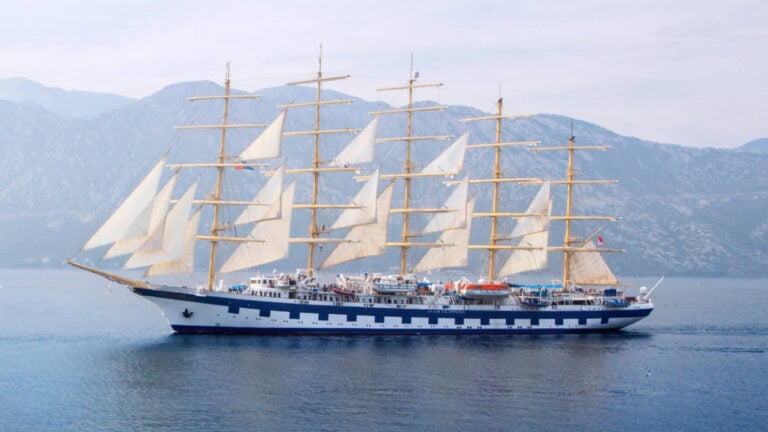
Five masts, 56,000 square feet of sails, a stiff breeze, and a rolling sea. This was the recipe for an exciting, Southern Caribbean cruise aboard Royal Clipper, the flagship of the three-vessel Star Clippers line.
What is It Like on the Royal Clipper Sailing Ship?
Commissioned in 2000, the 4,500-gross ton ship is a traditional clipper — a name given to high-performing, square-rigged sailing vessels in the mid-19th century due to their speed. They could travel the major trade routes faster than most merchant ships, typically reaching 18 mph and successfully “clipping” the length of a voyage, saving ship owners and customers time and money.
Royal Clipper is a replica of Preussen, a steel-hulled ship built in Germany that entered service in 1902 and sailed for eight years before a collision sank her in the waters off Dover, England.
The tall ship cruise experience one finds today aboard Royal Clipper is a world apart from the contemporary ships operated by popular brands like Carnival Cruise Line, Norwegian Cruise Line, and Royal Caribbean, and even other small ship lines such as Windstar Cruises.
The four-deck Royal Clipper, with a capacity for just 227 guests, has one dining room, one indoor lounge, two outdoor bars, and a small library. Without an elevator, the ship is a challenge for anyone with mobility issues, since the only way to navigate the vessel’s interior is by climbing up and down narrow and steep stairways.
Royal Clipper Sailing Ship (Photo Credit: SOLOTU)
Ideal for sailing enthusiasts and those looking for a different kind of cruise adventure, Royal Clipper delivers a unique twist on modern cruising. With the romantic atmosphere of a bygone era, the simplicity of her design allows guests to experience the true nature of a sailing ship.
Royal Clipper is 480 feet long, roughly double the wingspan of a 747 aircraft, and sports a narrow beam of just 54 feet. I embarked the ship in Bridgetown, Barbados, and from the cruise terminal I could see her rocking from side to side at the pier as a steady wind blew.
At the next berth, P&O Cruises’ 185,000-gross ton Arvia dwarfed Royal Clipper, and I began to wonder whether my sea legs would carry me through the 7-night sailing that was about to begin.
How Much Wind Is Too Much?
Our cruise in mid-December 2023 called at Antigua, Dominica, St. Lucia, St. Kitts, Iles des Saintes, and Martinique. December falls smack in the middle of the Southern Caribbean’s wet season, and the weather was true to its reputation.
We had rain showers on and off throughout our weeklong sailing, but plenty of sunshine, too. What caught most guests off-guard, however, was the presence of a phenomenon called the Christmas Wind.
These east to west trade winds were exceptionally strong and steady, and caused large swells that made the ship rock virtually nonstop. On some of the most windy nights, Royal Clipper was up against 40 knot gusts, which kept many guests awake and reaching for their motion sickness meds.
Star Clipper on Deck (Photo Credit: Donna Tunney)
Aside from the uncomfortable overnights, the high winds kept guests off the Sun Deck, where the ship’s three small pools were closed during the roughest days.
Cruisers looking for a smooth sailing aboard Royal Clipper in winter probably should book from mid-January through March, after the winds have settled and the wet season has ended, some of the crew advised.
On the up-side, the windy weather enabled the captain to sail the ship by wind power alone for about 65% of our cruise route, an extraordinary record and one that will appeal to environment-conscience cruisers. Generators remained on for hotel operations when the ship was under full sail power.
Most of the 150 guests on our cruise took the wind in stride, and appeared to become accustomed to the ship’s rocking. Holding onto handrails and bannisters became second nature, but unfortunately, the strong force of the winds put the kibosh on special events, like a barbecue lunch beachside and the use of the ship’s fold-down water sports platform at the ship’s stern.
A Preponderance of Brits
The demographics of our cruise were interesting and, we were told, typical. The lion’s share of guests were British, followed by Americans, Germans, French, and Canadians. Guests were mostly middle-aged and older, with a few in their 80s and even 90s. Unfortunately, those older folks appeared unable to safely navigate most of the ship.
Royal Clipper Vessel (Photo Credit: Pen_85)
Our sailing had a few younger couples and some singles, who had paid hefty single supplement fees to join the voyage. The ship is not conducive to children, as it offers no programming or facilities. On our cruise, there was one young couple with a baby who appeared to be under 1 year old.
Guests doted on the adorable tyke, who was just attempting her first steps. On one of those windy nights, her father quipped, “I hope she doesn’t learn to walk on this ship, she’ll turn out looking like a drunken sailor.”
High Marks for Royal Clipper’s Chef
The one thing that Royal Clipper has in common with the contemporary mega-shipsis the constant availability of food.
Continental breakfast is offered in the Piano Lounge starting at 6 a.m., followed by a full breakfast buffet in the dining room from 8 to 10 a.m.
Buffet lunch is served in the dining room from noon to 2 p.m., and a substantial array of afternoon snacks is set up in the Main Deck Tropical Bar at 5 p.m. Then it’s a multi-course dinner in the dining room from 7:30 to 9:30 p.m., and the evening closes with a midnight snack, again at the Tropical Bar.
Breakfast buffets are typical, with a good choice of hot and cold items, but there were a few oddities, such as no fresh-brewed decaf coffee — only instant was available.
Lounge on Royal Clipper
Lunches were themed, Caribbean specialties one day, Mediterranean the next, then seafood, etc. Dinners were excellent, and the chef outdid himself every night. Multi-course menus with salads, soups, appetizers, sorbets, main entrees, cheese plates, a selection of pastry desserts — all were superb.
Dinner entrees featured sea bass, duck breast, roast beef, and coq au vin, plus vegetarian offerings such as mushroom quiche, vegetable stews, and spinach cannelloni. Overall, I’d give the food high marks.
Wine was available by the glass and the bottle. We found the prices to be fair, and as with other cruise lines, unfinished bottles are stored for the following night’s meal. In the dining room and the lounge, bartenders provided a generous pour, and cocktails cost about 8 euros.
The line does not offer beverage packages for individual guests, although one can be obtained for groups.
Brother, Can You Spare a Drawer?
Royal Clipper has 114 staterooms, and most of them are quite tight. There are two owner’s suites, 14 deluxe outside balcony staterooms, two deck cabins, 90 outside doubles and six inside cabins.
Outside doubles have portholes and range from 118 to 145 square feet. Inside cabins reach just 108 square feet, and the deck cabins are 156 square feet. For two average-size adults, these are all challenging spaces.
Balcony staterooms are somewhat better, offering 280 square feet, and the owner’s suites measure 430 square feet.
I was booked into an outside double. Bathrooms, which are included in the square footage, were hardly large enough to turn around in. Shelving under the sink works well for storing items, but the sink top is miniscule. Showers are separated from the bathroom area by a low lip on the floor, which does little to prevent water from spilling into the main area.
Star Clipper Ship Cabin
Accumulating water is a problem, and in my cabin appeared to be the cause of rust stains along the lower levels of the bathroom walls. The bathrooms are in need of upgrades, no question, but the water in the shower is consistently hot, and one does get used to the cramped space.
One closet, with a safe, along with a small dresser and two additional drawers rounded out the storage space. Suitcases were hidden under the double bed, and a small chair at the foot of the bed came in handy.
A few of the guests I talked with were disappointed with the size of their accommodations, but most others took a positive view, saying that the unique aspects of the ship made up for the staterooms’ shortfalls.
A Good Variety of Shore Excursions
Many guests had looked forward to the water sports platform at the stern of the ship, hoping to swim, kayak, and perhaps paddle board off the platform in some of the quiet harbors on Royal Clipper’s itinerary.
Little of that happened due to the strong winds, which kept the platform closed during most of our sailing. However, most shore excursions went forward as planned, and a wide variety of tours were offered.
Island tours by mini-bus (from about 45 euros), hikes through the islands’ national parks, snorkeling trips, speed boat rides, kayaking on rivers and in harbors (about 85 euros), and some cultural activities, such as rum-making (72 euros), were offered.
A Fellow Gust Climbing the Mast (Photo Credit: Donna Tunney)
There is no advance-booking option for excursions aboard Royal Clipper. Guests simply add their name and cabin number to sign-up sheets located at the cruise director’s desk, and tickets are delivered to their cabins.
Onboard our Royal Clipper cruise, one of the most challenging daily tasks was navigating the gangway and climbing on and off the tenders, since the unrelenting wind caused huge, dangerous gaps between the ship and the tender craft. There was no avoiding it, since tenders were used at every port call.
The ability of the crew assisting guests on and off the tenders was excellent, but I know I was not the only one worrying about whether I’d be able to safely take the big step to board or exit the tender. Each time I made the leap felt like a major accomplishment.
In fact, just sailing on this ship felt like an accomplishment. Royal Clipper was definitely not the easiest vacation at sea, but it was easily the most memorable.
The ship is sailing four itineraries through winter 2024, all roundtrip from Barbados, and will depart the Caribbean on March 30, heading to the Mediterranean for the summer 2024 season.
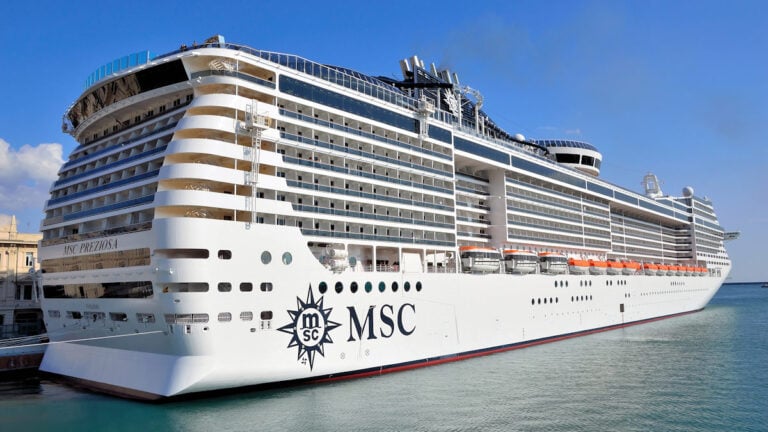
A concert aboard MSC Cruises’ MSC Preziosa was abruptly canceled when, just 30 minutes before showtime, a male guest was reported overboard. While the overboard was not connected to the concert, the cancelation was done out of respect to the victim and the rescue personnel hard at work in search efforts.
Guest Overboard From MSC Preziosa
A passenger went overboard from MSC Preziosa in the early morning hours of Saturday, December 30, 2023. The alert was sounded at approximately 12:30 a.m., and emergency procedures were initiated immediately to attempt to locate the guest onboard, as is standard procedure for an overboard alert.
At the time, MSC Preziosa was sailing toward Angra dos Reis, in Rio de Janeiro, for New Year’s Eve events. The special sailing includes a variety of music performances and celebratory activities to ring in the new year.
New Year’s Eve in Rio de Janeiro (Photo Credit: A.PAES / Shutterstock)
Local authorities were notified and search efforts began in the water as well. Once the local Coast Guard had their search underway, the cruise ship was released to continue on its itinerary. This is also standard procedure for overboard incidents.
MSC Cruises has confirmed that the guest intentionally jumped overboard. While the details of the incident have not been released, this was likely determined through onboard security camera footage, which is always reviewed as part of emergency operations when an overboard is suspected and the guest cannot be located.
“Our thoughts are with the guest’s family at this difficult time,”a statement from MSC Cruises read.
In order to preserve the privacy of the guest, their traveling companions, and family and friends, the identity of the guest has not been released. Search efforts are currently ongoing and will continue according to local authorities’ discretion.
The 139,400-gross-ton MSC Preziosa is a modified Fantasia-class vessel that joined MSC Cruises in 2013. The ship can welcome 3,959 guests onboard at double occupancy or as many as 4,345 passengers when fully booked with all berths filled. The special nature of this cruise, including it being a holiday sailing, would ensure the vessel is closer to fully booked.
Because of the emergency and the unfortunate nature of the situation, singer Alexandre Pires – who was scheduled to perform at 1 a.m. onboard – canceled his concert just minutes before going on stage, according to iG Gente.
“Out of respect for the victim and the rescue work, we spoke with the organization and reached a consensus not to hold the show, which was scheduled to start at 1am. We had not yet gone on stage when this tragic event happened,”said Pires.
“Our mission is to bring joy and promote culture through music, which would not have been possible due to what happened. I apologize to the fans for the cancellation and everyone’s understanding of the decision we made.”
There is no word on whether or not the show will be rescheduled to a different time. As the cruise is filled with a variety of performances by multiple artists, it may not be possible to accommodate a schedule change.
Photo Courtesy: MSC Cruises
Pires is an award-winning Brazilian singer-songwriter with a variety of hits in both Portuguese and Spanish. He won the Latin Billboard Music Awards for Artist of the Year in 2003 and for Best Samba/Pagode Album in 2013, with nominations in other categories in several years.
Wesley Safadão, Ana Castela, Gustavo Mioto, Leo Santana, Xande de Pilares, Durval Lellys and other artists are also scheduled to perform during the cruise. There is no word on whether or not any other performances will be impacted by this tragic development.
Other Recent Overboards
Unfortunately, the holiday season can be an especially difficult time for anyone suffering from depression or other issues that may lead them to feelings of hopelessness and futility. Overboard situations at this time of year are especially tragic.
In mid-November, a guest was reported missing and confirmed overboard from Carnival Glory. Again, the search was ended unsuccessfully despite exhaustive search efforts over a very broad area.
Norwegian Pearl Cruise Ship in Miami (Photo Credit: EQRoy)
Earlier in November, another music cruise also had an overboard situation. The incident happened from Norwegian Pearl and after nine hours, the search had to be ended, once again without success.
No matter what time of year, such incidents are difficult to deal with. Cruise Hive’s thoughts are with the family and friends of the guest, as well as the crew members of MSC Preziosa and the rescue teams that respond to such tragic circumstances.