Cruises can allow you to see so much more of the world in a large, interesting vessel. Have you ever thought about the parts of a cruise ship you don’t get to see?
One of those parts is the crew quarters. If you’re curious to learn the ins and outs of a cruise ship, you might be wondering what the crew area looks like. Well, you’ve come to the right place to find out. Keep reading to find out what it’s really like to live on a cruise ship.
You need to know a few things about crew quarters on a cruise ship to get the whole picture. Here are some of the key points.
Size
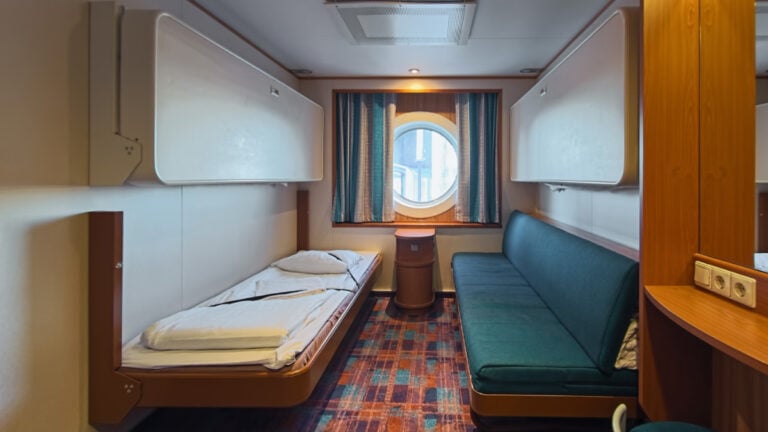
The first thing you need to know about crew quarters on a cruise ship is that, for the most part, they are quite small. In fact, some of them can be described as tiny.
While the size of cabins varies based on the ship, cruise line, and even the type of crew cabin, the size of a crew’s quarters is around 120 square feet. In comparison, the average hotel room is about 300 square feet.
Photo Copyright Cruise Hive
What’s more, at least two crew members typically share one cabin. However, in bigger rooms, more than two crew members may be bunking together.
Finally, some crew are given more cabin space, or even their own cabins, depending on what their job is. They may even be given their own stewardess. Crew members who get this privilege include those in:
Entertainment
Shops
Spas
Casinos
Of course, crew members that are very high up, such as department heads, typically get their own cabins.
What’s Included
With two people in a 120-square-foot space, most cabins are usually furnished with a bunk bed to make use of the small space. Some crew members get curtains for additional privacy in their bunk bed quarters.
Photo Copyright: Cruise Hive
Here’s what you can expect to find a crew’s cabin:
Mini fridge
Shelving and storage space
A television
A closet
In addition, there is also a private bathroom. Other items you might find in a crew’s cabin include a desk and a side table.
The Bathroom
Every cabin has its own bathroom. That said, the bathroom is utilitarian as it is smaller than the small cabin. The bathroom typically only has space for a sink, toilet, and shower, and they’re usually pretty cramped together, making the space feel very tight.
As mentioned, most cabins are shared by at least two cruise ship employees. But there are a few other moving parts regarding how crew quarters on a cruise ship work.
Crews Have More Than Their Own Cabins
A crew’s quarters include more than just their cabin. As crew members are on cruise ships for sometimes months at a time, they need the usual facilities that anyone else would need to live. Some facilities are similar to those guests have access to, but crews usually must do much of the work themselves.
Photo Copyright: Cruise Hive
This includes a laundry room resembling a laundromat for the crew to wash and dry their clothes, the need to sort and throw out their trash in their own trash facilities, and shared rooms for the crew to hang out. They may also have hair salons and other grooming facilities.
Some cruise ships also include crew gym facilities to work out and stay healthy, although they aren’t as extensive as the guest gyms on board. You can almost think of it as a college dorm situation!
Their Own Cafeteria
Crew quarters on a cruise ship also have a separate cafeteria, mess hall, or buffet for the crew to eat at. The buffet times are set, and the food may vary. Typically, the crew mess buffet’s food differs from the guest buffet.
Crew Mess (Photo Copyright: Cruise Hive)
In addition to a central mess hall, there may also be a crew cafe where they can order refreshments such as coffee and juice throughout the day.
Routine Inspections
Every crew member is expected to keep their cabin in good shape. To ensure that this is the case, crew members can expect routine inspections of their cabins.
These inspections typically happen before the beginning of every cruise, depending on the cruise line. The department head, the head of housekeeping, and a senior officer will often do these inspections. They will ensure there are no confiscated items and that the cabin is clean. Ensuring the cabin’s safety aspects are working and hygiene aspects are also looked at.
Form a Bond
Being at sea for months and having to share small spaces causes you to get close to your coworkers. Crew quarters on a cruise ship are designed to have crew members spend a lot of time together and create a bond while not working.
Photo Copyright: Cruise Hive
Crew cabins are often split up into several different floors, and those on the same floor sometimes form their own little community.
During their free time, the cruise ship crew members socialize and hang out on their floors in the crew bar. They even have after-hour parties and partake in different games. They may also have their own private front and back crew deck; in some cases, there may even be a crew pool.
Conclusion
A cruise ship can have hundreds, if not thousands, of crew members on board, which makes the crew quarters on a cruise ship quite an essential part of the ship.
Crew members need to live on the ship for months at a time, which means they need to be able to eat, stay fit, and have time for leisure. That’s why you’ll find a variety of crew facilities below deck to help them enjoy their life onboard as cruise staff.
To a certain extent, crew quarters on cruise ships have many of the same features that cruise ship guests can access.
Cruise ships have all types of interesting terms and unique features. A word you may commonly hear on a cruise ship is “Pullman bed.” But what is a Pullman bed on a cruise ship, and how do they work?
In this article, you’ll learn what a Pullman bed is, why you might consider a cabin with one, and everything else you need to know about this type of bed.
A Pullman bed is a bed that either pulls down from the ceiling or comes out from the wall of a cruise ship cabin.
A Pullman bed’s purpose isn’t to serve as a main bed in a cabin. Ideally, it’s meant to create extra space in a cruise ship cabin in the living area while allowing additional people to sleep in the room. When not in use, the Pullman bed swiftly folds back to where it came from – whether that be the wall or the ceiling – making your cabin feel bigger.
Pullman Bed on a Cruise (Photo Credit: M-Production / Shutterstock)
Choosing a cabin with a Pullman bed instead of an additional bed is generally a cheaper option, especially if you have young children or teenagers who would be sleeping on the Pullman bed.
Now that you know what a Pullman bed on a cruise ship is, are you wondering how the Pullman bed came to be? Let’s walk through a brief history lesson.
Pullman Bed History
The Pullman bed was invented by inventor George Pullman in the 19th century. Pullman beds were initially designed to solve the problem of cramped, uncomfortable sleeping quarters in the railway systems at the time.
As a result, Pullman unveiled the Pullman sleeper – a “luxurious” alternative to cramped sleeping quarters on transportation. This invention became a huge success and continues to be used today in cruise ships.
How Do You Set up a Pullman Bed?
Pullman beds are generally not very easy to set up yourself, especially if they drop from the ceiling, as there’s often a ladder involved.
You’ll need the help of a cabin steward to lift it in and out. A cabin steward usually takes over this role entirely, lowering it in the evening and raising it for you in the morning every day. They know how to ensure that the Pullman bed is secure and that the proper railings are in place to ensure the safety of the person sleeping on it.
Who Can Sleep on a Pullman Bed?
Today, Pullman beds are often meant for families with children. However, it’s possible for adults to also sleep on a Pullman bed. They’re usually the length of a regular bed. A stateroom with a Pullman bed is an excellent alternative for a group of friends with a tight budget.
Sleeping on a Pullman Bed
That said, they are often recommended for children because they have a weight limit. The weight limits vary based on cruise lines but are usually around 200 pounds.
Generally, heavy people should refrain from sleeping on Pullman beds for safety reasons, and it’s essential to remember this when booking your cruise cabins.
Pullman Bed Safety Concerns for Children
Although many families choose to let their children sleep on Pullman beds during their cruise, there are a few safety concerns that you must still look out for.
The main concern is guard rails, especially if you have young children. The guard rails on Pullman beds differ significantly, from high rails to ones that barely appear above the mattress.
If your young child is prone to rolling and there’s a risk that they might fall off the bed, it’s a good idea to let someone else sleep on the Pullman bed. You can also ask for extra pillows or an extra guard rail, although not many ships may offer this option.
How Comfortable Are Pullman Beds?
For the most part, Pullman beds are just as comfortable as the other beds in your cruise cabin. They’re usually more comfortable than a sofa bed because they use actual mattresses.
Pullman Beds (Photo Credit: ER_09 / Shutterstock)
That said, it’s important to remember that Pullman beds are single beds, so you won’t have much space while you sleep.
What’s more, Pullman beds that come out of the ceiling are generally pretty high and require a ladder to get on and off the bed. This makes these beds unsuitable for those with mobility issues.
If you get up multiple times a night, the bed could also cause problems for others trying to sleep in your cruise cabin, as the noise from the ladder may wake them.
Wrap-Up: Using a Pullman Bed on a Cruise Ship
To recap, Pullman beds pull out of the ceiling or wall of a stateroom on a cruise ship. Children and adults alike can comfortably sleep on these beds, and they allow you to fit your entire family or party in one room.
Pullman beds are a great way to use space on cruise ships. Cabins with Pullman beds are generally a more affordable option, and the cabin steward raises and lowers the bed so that all you have to worry about is a good night’s rest.
Hopefully, this article has answered more than “what is a Pullman bed on a cruise ship” and that you’ve discovered a new option for your next cruise!
Royal Caribbean International has been reaching out to guests booked on the March 12, 2023 sailing of Wonder of the Seas with news of overbooking. The cruise line is offering a variety of rebooking options if guests’ travel plans are flexible, with generous compensation for the error.
Guests Offered Rebooking Options
In an email sent to booked guests, Royal Caribbean International has acknowledged an inventory error that has oversold Wonder of the Seas. “We’re sorry to inform you that due to an unexpected inventory error, your scheduled Wonder of the Seas March 12th, 2023 sailing is currently oversold,”the email reads.
This is not the first time Wonder of the Seas has been inadvertently oversold. A similar situation occurred for the December 11, 2022 sailing. Three different options are being offered in an attempt to correct this latest overbooking, but guests may not be pleased with the proposed options.
Sail on a Different Ship
The first option is to transfer the Wonder of the Seas booking to Explorer of the Seas instead, sailing from PortMiami on March 12 for a 6-night cruise rather than a 7-night cruise. This option will also include a 100% refund of the Wonder of the Seas fare, as well as a $300 onboard credit to enjoy Explorer of the Seas.
If the Explorer of the Seas fare is lower than the fare paid for Wonder of the Seas, guests will also receive a refund for the price difference, returned to their original form of payment. Guests must still pay taxes, port fees, and gratuities for the new cruise.
Photo Credit: Merrillie Redden / Shutterstock
Explorer of the Seas will be sailing a Western Caribbean itinerary for the March 12 cruise, visiting Jamaica, Grand Cayman, and CocoCay.
While the proposed option can be of great value for guests, the differences in cruise itineraries, departure ports, and the ships themselves may make this option less appealing.
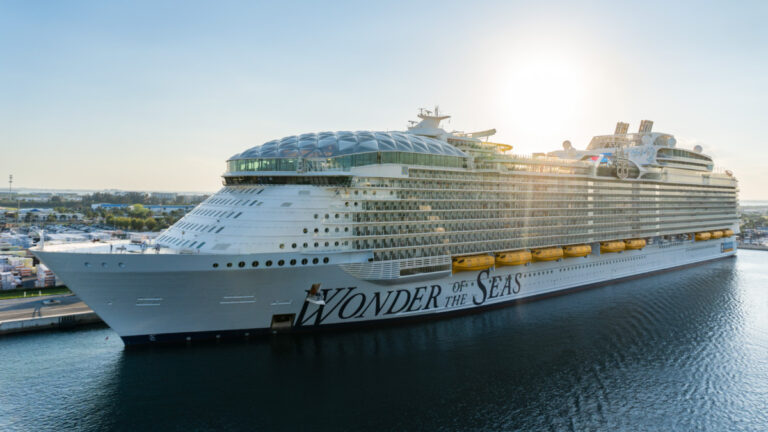
Wonder of the Seas is currently the newest and largest ship in the Royal Caribbean fleet, having just debuted in 2022 and weighing in at 236,857 gross tons.
The Voyager-class Explorer of the Seas is significantly smaller and older, having debuted in 2000. At just 138,194 gross tons, Explorer of the Seas does not have the same features and amenities as the larger, more advanced Wonder of the Seas.
Sail on a Different Date
The second option offered to guests on the oversold sailing is to transfer their Wonder of the Seas booking to a different sailing date. Only two select dates are available for this offer – the July 30 and August 13 sailings this summer.
Both alternative sailing dates are 7-night Eastern Caribbean cruises, visiting St. Thomas, St. Maarten, and CocoCay. While this is not quite the same itinerary as the original March 12 departure date, it is a close comparison.
The dates themselves may be problematic for many travelers, however. The week of March 12 is the local Spring Break week, and it is likely that many families have been looking forward to their oceangoing getaway during that school vacation.
Wonder of the Seas (Photo Credit: EWY Media / Shutterstock)
While the alternative July 30 sailing date is before local schools begin the 2023-2024 school year, the first day of school is August 10, meaning the second alternative sailing date – August 13 – is not as attractive, because it would mean students miss critical first days of school.
Full Cancellation and Refund
The third option offered to guests is to completely cancel their sailing. Not only will guests receive a full, 100% refund of their cruise fare, but they will also receive a 100% cruise fare future cruise credit (FCC), which can be used for any Royal Caribbean sailing departing through March 15, 2024.
This would refund the first cruise, and give guests a good credit to use on any future cruise for the next year. This is a great option for guests who do not have immediately flexible travel plans, but who are willing to rebook for a future date on the sailing of their choice.
More Compensation Offered
Regardless of which option guests choose, Royal Caribbean will also fully refund or reimburse any pre-purchased, non-refundable travel expenses, such as airfare and hotel rooms. Guests are also not obligated to accept any of the options, and can instead remain on the original sailing.
“This special offer is time-limited and subject to availability,”the email explains.“If you’re happy to be excluded from the special offer, please disregard this email – no further action is required.”
It is possible, however, that if not enough guests accept one of the options, oversold bookings may be cancelled and refunded, but without the special offers.
Guests who are interested in taking advantage of the offer need to contact the cruise line to make suitable arrangements and select their option. It is likely that the offer is only being made to those guests in oversold stateroom categories, and may not be available to all passengers booked during the Spring Break cruise.
If you’re cruising out of Boston, chances are you’ll be arriving by car and need to find the best and cheapest Boston cruise port parking for the duration of your cruise.
Our ultimate guide to Boston cruise port parking has all the options covered, including prices, distance to the port, shuttle service, oversize vehicles, drop-off points and information. It’s all you need to help you find a great deal in cruise port parking in Boston.
We also compare the official port cruise parking with public long-term parking lots and list the best hotels for Stay, Park and Cruise deals. It’s all here!
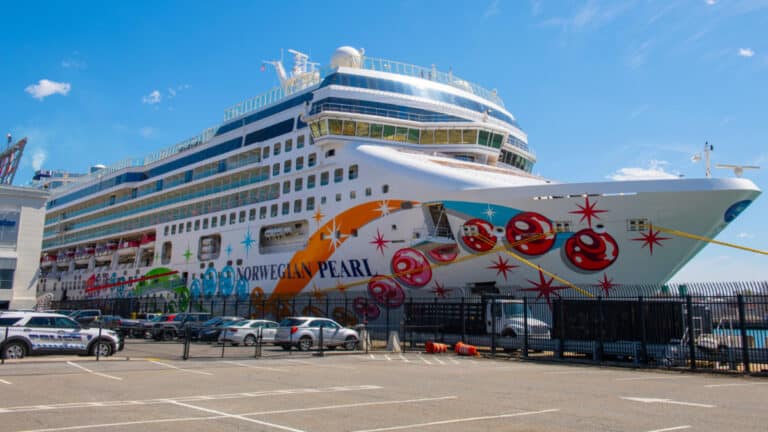
Boston cruise port is within Boston Harbor, just two miles from Faneuil Hall and Downtown Boston sights. Also known as Boston Flynn Cruiseport, it operates from April to November.
In 2022, the location of the official Boston cruise port parking moved from the South Boston Waterfront Transportation Center to Summer Street (Lot D3). This new cruise port parking lot must be pre-booked and includes a free shuttle to and from Flynn cruiseport terminal.
There are plenty of alternative public parking lots offering long-term cruise port parking. They are generally cheaper than the official site, but you may need to add the cost of a taxi or Uber, increasing the overall price of cruise parking.
Boston Cruise Terminal (Photo Credit: Ramunas Bruzas / Shutterstock)
If you plan to arrive in Boston a day or two before your cruise, you may prefer to book a hotel that offers a Stay, Park and Cruise package. These deals include transport to the cruise terminal and parking for the duration of your cruise for little more than the cost of a night’s stay.
So now you know what’s on offer, let’s get down to the details…
When to Arrive for Parking
It is recommended that you arrive at your chosen cruise port parking lot at least two hours before your cruise sets sail. You need time to check in with the parking attendant, hand over your car keys, board a shuttle bus (or taxi) to the cruise terminal and then go through security and boarding.
Passenger Drop-off Point
You can drop off passengers and/or heavy luggage before heading to your chosen Boston Cruise Port Parking lot. You need to allow time to park your vehicle and then ride the shuttle bus back to the cruise terminal for check-in.
To reach the drop-off point at Boston Cruise Port, follow signs to Drydock Ave, turn right onto Black Falcon Ave and officers will direct you to the drop-off area,
Official Parking at Boston Cruise Port
Massport Lot D3
Massport Lot D3 on Summer Street is now the official Flynn Boston cruise port parking lot. The South Boston Waterfront Transportation Center is currently used for event parking and no longer accepts extended parking for cruisers.
Parking at Massport Lot D3 is operated by SP+ and it must be booked online ahead of time through Parking.com. Select your cruise ship and the duration of the cruise to reserve your space.
Cruise Port Sign (Photo Credit: 2p2play / Shutterstock)
The price of cruise parking includes a free courtesy shuttle to and from Flynn cruiseport terminal. Getting into Massport Lot D3 is on the northeast side of Summer Street, between D Street and Pumphouse Road.
On arrival at Lot D3, staff will scan the barcode on your booking (printed out or on your phone) and you can then park in any available space. Wait at the bus shelter with your luggage for the next available shuttle bus to take you directly to the cruise port terminal.
Location: 492 Summer Street, Boston
Hours: Open 24/7
Cost: $189 per week (ticketed cruise passengers only). Oversize vehicles will be charged at a higher rate when booking.
Distance from port: 0.6 mile
Shuttle: Yes – Free
Best off-Site Cruise Parking
There are other non-official Boston cruise car parks where you can park your car for the duration of your cruise. These are public car parks (not dedicated cruise parking lots). They are open 24/7 with no gated security and no shuttle service to the cruise terminal.
Boston Cruise Terminal (Photo Credit: Darryl Brooks / Shutterstock)
You will need to drop-off luggage and passengers first, as detailed above. The driver can walk or catch a taxi or Uber to Flynn cruise terminal. Parking is by availability but you can purchase a parking pass ahead of time online.
C1 Parking Lot
Operated by ABM Parking Services, the C1 Parking Lot is the closest to the cruise terminal. It is an open-air car park and is right next to the terminal, making it easy to walk to check-in with your luggage. It is also 5-10 minutes walk from other sights such as the World Trade Center, Lawn D, shops and restaurants if you arrive ahead of time.
You need to reserve cruise port parking at the C1 parking lot ahead of time by booking online or using the app. Parking rates start at $25 per day. 7-day cruise parking is $175 and 14-day cruise parking is $200.
Location: 1 Black Falcon Ave, Boston
Hours: Open daily 24/7
Cost: From $25 per day
Distance from port: 0.2 mile
Shuttle: No
Marine Park Garage
Also operated by ABM Parking Services, Marine Park Garage is very convenient for Boston cruise port parking. It is located in the historic Seaport District of the city, also known as South Boston Waterfront. Parking is in a covered multi-storey building and daily rates are calculated from 5 am each day.
The rate per day Mon-Fri is $30 and Sat/Sunday is $20. Oversized vehicles cannot use this facility as there is a height restriction of 6’10”. You can reserve a parking spot ahead of time by booking online or using the app.
Access to the car park is easy from I-90 or D-Street. Turn onto Haul Rd, then right onto Pumphouse Road. Make a left onto Summer Street and then left again onto Drydock Ave. The entrance to the car park is on the corner of 6th Street. The cruise terminal is within easy 3-minute walking distance of this cruise port parking lot.
Location: 12 Drydock Ave, Boston
Hours: Open daily 24/7
Cost: From $20 per day
Distance from port: 0.1 mile
Shuttle: No
Sargent’s Wharf Parking
Sargent’s Wharf parking lot is a long-term car park a little further from the cruise terminal but it’s well located if you want to do some sightseeing before boarding the ship. It is just a short 4-minute walk into the center of Boston to see Paul Revere House, Quincy Market and the New England Aquarium. You will need to use a taxi or Uber to reach the cruise terminal.
This open-air public car park is open 24/7 with no gated security. The daily rate is $30 Mon-Friday and $24 on weekends. You can reserve a parking spot ahead of time by booking online or using the app.
From I-93 South, keep right and take exit 17A/B towards Government Center. Turn left into John F. Fitzgerald Surface Rd, left again onto Mercantile St and continue onto Atlantic Ave/ Commercial Street. ABM Sargent’s Wharf parking lot is on the right.
Location: 269 Commercial Street
Hours: Open daily 24/7
Cost: From $24 per day
Distance from port: 2.0 miles
Shuttle: No
V1 Parking Lot
Conveniently located for cruise parking and exploring waterfront pubs and restaurants, the Boston V1 parking lot is operated by ABM Parking Services. It is in the Seaport District opposite Rockland Trust Pavilion. You can reserve a parking spot ahead of time by booking online or using the app. This self-park facility offers a daily rate which is calculated from 5 am each day.
This Boston cruise port parking lot is easy to reach from D Street. Head northwest on Cypher Street then turn right onto S. Boston Bypass. Keep right at form (signposted I-90 W. Haul Rd) and continue onto Haul Road. At the roundabout/traffic circle take the second exit and VV1 parking in on the right.
Location: 302 Northern Ave, Boston
Hours: Open daily 24/7
Cost: From $40 per day
Distance from port: 0.7 miles
Shuttle: No
The Alyx at Echelon Seaport
Another convenient ABM Boston cruise port parking lot is The Alyx at Echelon Seaport. It is well located for the port and sightseeing, if you have time before checking in for your cruise.
The multi-storey car park has electric vehicle charging points and is fully automated for self-parking with a pre-purchased pass. The daily rate is $38 Mon-Friday and $18 on Sat and Sunday. It is calculated from 5 am each day. You can reserve a parking spot ahead of time by booking online or using the app.
It is located just off Congress Street, across the street from the Masspike exit. The entrance is on Pier Four Blvd. You will need to book a taxi or Uber to take you to the cruise terminal.
Location: 60A Pier 4, Boston
Hours: Open daily 24/7
Cost: From $18-38 per day
Distance from port: 1.0 miles
Shuttle: No
Westin Seaport District Garage
This covered parking garage has a height restriction of 6’8” and is unsuitable for SUVs and oversize vehicles. Operated by Pilgrim Parking, the garage is underneath the Westin Seaport Hotel next to the Boston Convention Center.
For cruise parking, make an online reservation with Spothero. Access is from Summer Street. From the circle in front of the hotel, follow signs to the garage ramp.
On arrival, pull a ticket and park in any space that is not “Reserved.” When you return from your cruise, show the attendant in the hotel lobby your reservation and entrance ticket. They will validate your ticket, which you can insert at the exit gate when your drive out.
Location: 425 Summer Street, Boston
Hours: Open daily from 7 am to 11 pm
Cost: $362 for 8 days
Distance from port: 0.7 miles
Shuttle: No
Best Boston Hotels with Cruise Parking Packages
As an alternative to Boston cruise port parking, why not book an all-inclusive Stay, Park and Cruise package with one of these hotels and extend your cruise with time to explore the sights of Boston?
Boston Skyline (Photo Credit: AlainP / Shutterstock)
Rodeway Inn – Boston Logan Airport
The Rodeway Inn is well located near the airport and a short taxi ride from Boston Flynn cruiseport. The hotel offers one room for up to four guests plus up to 8 days of parking while you’re away. Rooms are comfortably furnished with one king or two queen beds and they include free coffee and Wi-Fi. This deal is available when you book online through ParkSleepFly.
Location: 309 American Legion Hwy, Revere
Cost of package: $207
Distance from port: 8 miles
Shuttle: No
Comfort Inn Boston
This mid-range Comfort Inn offers a great deal when you stay, Park and Cruise. In addition to a well-appointed room, the package includes a continental breakfast, up to 7 days of parking, and a free shuttle to and from Boston cruise port. This package represents great value for money and is available to book online through ParkSleepFly. The hotel also has three on-site restaurants and a candy shop too!
Location: 900 Morrissey Blvd, Boston
Cost of package: $299
Distance from port: 5.5 miles
Shuttle: Yes – Free
Cruise Parking for Disabled Passengers
There is no designated parking for Disabled passengers at Flynn Cruiseport Boston. However, you can use the drop-off point to transport cruisers with disabilities to the ship. Alternatively, use the official D3 cruise parking lot and the free shuttle provided.
Cruise Parking for RVs and Oversize Vehicles
If you need cruise parking for an SUV or larger vehicle, you should use Massport Lot D3 on Summer Street. Oversize vehicles are over 181 inches in length or more than 70 inches (5’10”) in height. Pick-ups, minivans, trucks, crossovers and SUVs generally fall into this category.
Cruise parking for oversize vehicles must be booked online ahead of time through Parking.com. Click the option to “Select Vehicle size” then select your cruise ship and duration of the cruise to reserve your space. The price will automatically be calculated.
The price of Boston cruise port parking at this location includes a free courtesy shuttle to and from Flynn cruiseport terminal.
FAQs
How much is parking at the Boston cruise terminal?
Cruise parking at Massport Lot D3 on Summer street costs $189 per week for a standard-size vehicle.
Where to park for a cruise out of Boston?
The best place to park when cruising out of Boston is at the official cruise port parking lot D3 at 492 Summer Street, about 0.6 miles from Flynn cruiseport terminal.
Cruise ships have various rules to follow during your stay. One rule you might be wondering about before your big cruise is: can you smoke on a cruise ship?
Whether you’re a smoker or non-smoker, understanding the smoking rules for your upcoming cruise can help you prepare. Keep reading to learn whether or not you can smoke on a cruise ship and other potential smoking rules you must follow.
Let’s jump right into the question: can you smoke on a cruise ship?
The simple answer to this question is yes, you can. All cruise ships allow smoking onboard to some capacity, although this capacity is in designated areas. It’s important to note that various cruise lines have different smoking policies.
Photo Credit: vvoe / Shutterstock
Here’s how the rules go for most cruise lines in the US:
For the most part, indoor smoking in public spaces is off-limits. However, some cruise lines make exceptions for casinos.
You must be at least 18 years old to smoke from any departing destination, except the U.S., where you must be 21.
European cruise lines tend to have more relaxed smoking rules and offer more designated smoking areas than cruise lines leaving from other destinations.
No cruise lines allow you to smoke in your room, as this is considered a fire hazard for the entire vessel. Some do let you smoke on stateroom balconies, but this is becoming less and less common.
Most cruise lines treat electronic cigarettes the same as cigarettes and cigars.
If you violate a ship’s non-smoking policy, you will likely be subject to a fine, depending on the cruise line. Let’s look at the smoking policy of some of the most popular cruise lines.
Royal Caribbean’s Smoking Policy
Royal Caribbean’s ships are technically designated as non-smoking. You cannot smoke on the pool deck, outside decks, pool bar, cabin balconies, or any public area.
However, to accommodate the guests who smoke, they have designated outdoor areas indicated with signage that even comes with ashtrays for proper disposal. This rule applies to electronic cigarettes as well.
Photo Copyright: Solarisys / Shutterstock
The exception to the smoking rule is in Casino Royale, where smoking is allowed, and there are designated non-smoking areas instead. This casino exception applies for all routes except for trips from Australia and the United Kingdom.
Carnival Cruise Line Smoking Policy
The majority of Carnival Cruise Line ships have designated smoking areas both indoors and outdoors, with the indoor areas always being in the onboard casino, but only while seated and playing.
The exceptions to this general rule are Carnival Luminosa and Carnival Splendor, where smoking is not permitted indoors at all, including the casinos.
Photo Credit: SeregaSibTravel / Shutterstock
It’s important to note that on embarkation and debarkation day, smoking is not allowed outdoors on any of Carnival’s cruise ships due to refueling. To find the smoking policy of a specific Carnival cruise, check out their website.
Princess Cruises Smoking Policy
On Princess Cruises ships, smoking is only permitted in designated smoking areas. You’ll find these smoking areas on deck and in bars. You’re also not allowed to smoke in your cabin or on the balcony of your cabin. If you try to circumvent these rules, you may be subject to a fine.
Photo Credit: Darryl Brooks / Shutterstock
Cunard Smoking Policy
Cunard’s smoking policy is identical to that of other popular cruise lines. Each ship has designated smoking areas on open decks. The only exception to this is the Churchill’s Cigar Lounge on the Queen Mary 2, where guests may partake in cigar and pipe smoking only.
Costa Cruises
Costa Cruises has one of the most relaxed smoking policies, as they allow guests to smoke in their cabin balconies. They even supply wind-proof ashtrays.
Other than that, however, smoking is not permitted in any other indoor area, aside from designated cigar lounges. There are clearly indicated external smoking areas throughout their ships.
Can You Smoke on a Cruise Ship – Marijuana
When figuring out whether you can smoke on a cruise ship, there are different rules for marijuana use.
While in some states, marijuana use is legal in some form, it is still federally banned in the US and many other areas of the world. Therefore, cruise lines err on the safe side and prohibit the use of marijuana on board entirely.
Photo Credit: Tverdokhlib / Shutterstock
Even if it’s legal in your departing destination, cruise ships make stops in many other destinations along the way and must follow the laws of each. This would make regulating marijuana use on the cruise challenging to regulate and coordinate.
What’s more, cruise lines do not make exceptions for medical use. This also means that you cannot bring marijuana onboard the ship or use it in any way. This rule applies to marijuana in all forms, including edibles.
The punishment for bringing and consuming marijuana on a cruise ship can be harsher than the punishment for smoking in non-smoking areas. In the best-case scenario, you’d be subject to a high fine. Worst case, you may be asked to disembark or even be subject to arrest, depending on the destination.
Where to Find Smoking Information
You can usually find smoking information on your cruise line’s website. Checking the FAQ section is a great place to start. If you’ve already booked your cruise, check out the guidelines provided to you with your confirmation. Once you’re on your cruise, ask guest services for a map of the designated smoking areas on your ship.
No Smoking Sign on Cruise Ship (Photo Credit: Pixel62 / Shutterstock)
The Verdict: Can You Smoke on a Cruise Ship?
To recap, you can smoke on a cruise ship, but only in designated smoking areas. Mostly, these smoking areas are only outdoors, although some cruise ships allow cigarette smoking in their casinos.
Cruise ships treat cigarettes, cigars, and e-cigarettes the same, so don’t try to bypass the rules with your electronic cigarette, or you may be subject to a fine.
Finally, marijuana use in any way, shape, or form is prohibited on all cruise ships. The punishment for marijuana use on a cruise ship can be severe, so it’s best not to test your luck and abstain from it entirely during your cruise.
These rules are for the safety and comfort of all passengers onboard, so to ensure that your cruise goes as planned, make sure to know your cruise line’s smoking policy well before departure.
What about other cruise ship rules? Check out this article to learn whether you can bring food onto your cruise ship.
Miray Cruises has announced it will open for bookings for a three-year world cruise on March 1, 2023. The cruise will sail onboard the 1992-built MV Gemini and visit 135 countries on seven continents from November 2023 through the end of 2026.
The fantastic part of the three-year cruise is that the cost for guests can be as little as $2,500 per stateroom per month. This provides an excellent opportunity for those looking to travel while working while having all their daily needs taken care of.
Three Years At Sea
It won’t be something everyone will enjoy, but many will still see the benefits of embarking on a three-year journey that will span 130,000 miles, visit 375 ports of call in 135 different countries, and sail to all seven continents.
Miray Cruises announced it would be opening up bookings for the first-ever three-year world cruise. In essence, the cruise is a variation of the ever-more popular concept of living onboard a ship.
Image Credit: Miray Cruises
Several companies announced new residency ships in the last year, where guests live onboard instead of ashore. The cruise will sail on November 1, 2023, and return in 2026.
MV Gemini‘s journey around the world will begin in November of this year. Most ports of call on the trip will include several days in port, giving guests a chance to fully explore each destination, which includes 13 of the modern and ancient Wonders of the World
The cruise ship will have been fully modernized by the time she sets sail. Currently, she is in use to housing earthquake victims in Turkey and Syria. The cruise line is aimed towards working professionals that want to spend time at sea while being able to carry out their work remotely.
Aiming for Remote Workers
For just $85 per day for a stateroom onboard the MV Gemini, guests will be able to enjoy world-class dining, onboard entertainment, and recreational activities with modern workspace facilities such as a first-of-its-kind business center with meeting rooms, 14 offices, a relaxing lounge, and business library.
“Professionals need connectivity, the right amenities, and the functionality to perform their jobs. There is no other cruise product that offers this sort of flexibility to their customers,”says Mikael Petterson, Managing Director of Life at Sea Cruises.
Image Credit: Miray Cruises
The ship will also include a 24-hour on-call hospital with free medical visits, learning and enrichment classes, and the opportunity to make a positive impact through volunteer and philanthropic initiatives.
“Life at Sea Cruises offers the ultimate bucket list cruise without having to sacrifice the comforts of home,” says Irina Strembitsky, Director of Sales & Marketing of Life at Sea Cruises.“It’s your home at sea with the world as your backyard.”
Prices for the cruise start at $29,999 per year, and the entire voyage is all-inclusive. Cabins range from 130 sq ft for Virtual Inside and Oceanview staterooms to 260 sq ft Balcony Suites.
MV Gemini first sets sail in 1992 as the Crown Jewel for Crown Cruise Line. Since then, the cruise ship has sailed for a long list of owners,including Cunard, Star Cruises, and Celestyal Cruises.
Miray Cruises, a Turkish cruise operator and hotel services provider for the cruise industry, acquired the vessel in 2019. The ship is just 19,093 gross tons and has space for 1,074 guests.
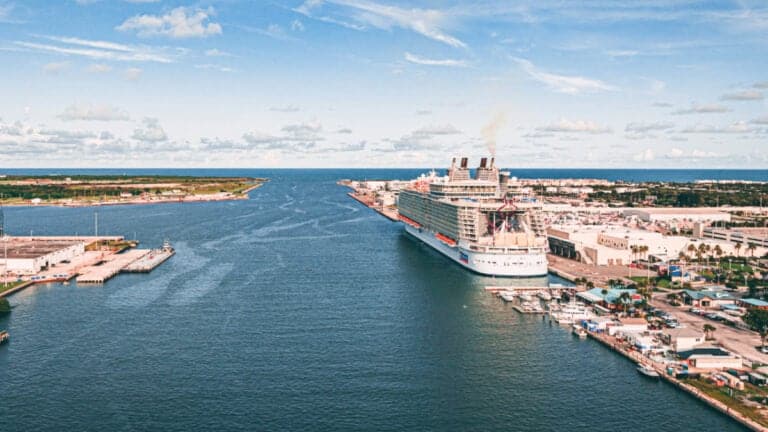
The record has been passed and Port Canaveral has taken over from PortMiami as the world’s busiest passenger cruise port.
The news comes as the 2022 passenger totals have been released from the Florida Ports Council, and Port Canaveral tops out at over 4 million passengers, a slim margin over PortMiami’s impressive numbers.
Busy Year for Port Canaveral
While the year began slowly with cruise lines continuing to limit guest capacity for health and safety restrictions, 2022 quickly gained momentum as cruise travel dramatically rebounded.
Thanks in part to Port Canaveral’s proximity to Orlando and the faster easing of local community restrictions in that part of Florida, compared to more stringent health and safety measures in the more populous communities of South Florida, the cruise port gained a slim lead over PortMiami to become the world’s busiest passenger cruise port.
Photo Credit: JHVEPhoto / Shutterstock
In total, 4,072,396 multi-day cruise guests moved through Port Canaveral, edging out PortMiami’s updated 4,022,544 multi-day guests, an updated number directly from the port rather than 3,988,094 from Florida Ports Council.
“We’ve always aimed to be the best cruise port in the world, but what an achievement to now be known as the busiest,”said Captain John Murray, Port Canaveral CEO.“This historic milestone is testament to the efforts of our team and cruise partners to provide a best in class experience for all cruise guests sailing from Port Canaveral.”
Multi-day cruise guests are those passengers on a voyage lasting more than one day. Single day guests, on the other hand, are sailing on vessels such as casino boats or similar entertainment sailings but do not have overnight stays. Multi-day guests can include both homeport sailings as well as day port visits.
Other Florida Cruise Ports
Florida is home to four additional cruise ship homeports: Port Everglades in Fort Lauderdale just 21 miles (34 kilometers) from Port Miami; Jaxport in Jacksonville in the state’s northeastern corner; Port Tampa Bay on the west coast; and Port of Palm Beach still further north from Miami and Fort Lauderdale.
None of the other homeports comes close to the passenger traffic of either Port Canaveral or PortMiami, though they all serve different cruise lines and offer great vacation options for guests.
Photo Credit: Ruth Peterkin / Shutterstock
Port Everglades saw 1.6 million passengers in 2022, while Jaxport, Port Tampa Bay, and Port of Palm Beach totaled 90,241, 418,200, and 188,235 guests, respectively.
Port of Key West is another popular cruise port in the Sunshine State and saw 198,411 guests, though the port is not used as a homeport, only as a port of call visit.
Totals to Rise Dramatically in Years to Come
It should be noted that all Florida’s multi-day cruise port passengers combined totaled 10.5 million guests. While this is an impressive total for a year when all cruise ships were not sailing the full year and restrictions still limited passengers, it is far below the 2019 total of 17.8 million, before the pandemic shutdown halted the cruise industry.
Florida Ports Council projects that the cruise industry in Florida ports should be close to 2019 levels in 2023, with even higher totals in years to come.
Forecasts for 2027 bring Port Canaveral to 6.4 million passengers that year, with PortMiami projected to host 8.4 million. Of course, port improvements at all Florida homeports will continue in the next few years to accommodate growth, welcome more advanced ships, and provide adequate security and safety for all vessels, crew, and guests who move through the ports.
Which Florida homeports have you sailed from? Do you have a favorite? Share your thoughts cruising from the Sunshine State in the Cruise Hive Boards!
Cruise ship horns have a particularly distinct sound that is very, very loud. However, you shouldn’t mistake a cruise ship’s horn for the same purpose as your car’s horn, for example.
They are an essential part of water navigation and are crucial for the safety of the ship and other ships at sea. They have a unique significance, and different blasts mean different things.
Keep reading to learn the history and significance of a cruise ship horn, and discover the meaning of the different blasts you may hear throughout your cruise.
Standardized international regulations were established to codify important vessel operation procedures. Part of this standardization includes having adequate horns on large vessels, and cruise ships are no exception.
Photo Credit: Darryl Brooks / Shutterstock
These regulations are essential to ensure good communication between all vessels for the safety of all those onboard. The main point of a cruise ship horn is to avoid a collision at all costs.
Cruise Ship Horn – Why Do They Blast Their Horns?
There are various reasons why cruise ships blast their horns, ranging from a simple salutation to other passing ships to a warning of potential danger or an emergency.
For the most part, however, most horn blasts are to communicate with other passing ships what direction the ship plans on going. This is done using various horn signals that all vessels understand.
Why Are Ship Horns So Loud?
You’re on your cruise deck relaxing and trying to get a tan when suddenly you hear the loud blaring of the horn. While this may startle you and even be annoying, there’s an important reason that cruise ship horns are so loud.
Cruise ship horns are so loud because of how big the open sea is. They act as a warning to other boats and vessels at sea. They need to be heard in cases of low visibility and in cases of emergency.
Photo Credit: Halit Sadik / Shutterstock
In general, you can hear cruise ship horns from up to two miles away. Cruise ships are pretty slow to stop and turn due to their enormous size, so this much space is needed as a warning to get out of another ship’s way.
Ship Horn Blasts – What Do They Mean
You may have noticed that cruise ships have several different blasts. But what do they mean? Here’s a quick look into what the horn blasts mean.
One short horn blast: This communicates to another ship that you intend to pass it on your port side.
Two short horn blasts: This communicates to another ship that you intend to pass on your starboard side.
Three short horn blasts: This means that you are operating in reverse, such as backing away from the dock.
One prolonged horn blast: This is the first blast you’ll often hear onboard your cruise, as the blast signals that a vessel is leaving the dock.
Five short horn blasts: This typically signals danger and is the type of blast you are least likely to hear on your ship
Aside from these reasons, your ship might also sound its horn in times of low visibility just to make its presence known.
Wrap-Up
Although cruise ship horns tend to startle and scare people onboard the ship, there’s rarely anything to worry about. In general, the ship’s captain blasts the horn signal only to communicate.
You’re more likely to hear your captain blast the ship’s horn signal for fun than you are to be in an emergency. Either way, you now know what different blasts mean so that you can be prepared for your next cruise.
Mexico has always been a top destination for cruise ships and their guests, and this trend continued throughout 2022. According to Mexico’s Secretary of Tourism, Miguel Torruco, 7.7 million cruise ship passengers arrived at different Mexican ports last year, representing a substantial increase from the previous year.
Cozumel has the busiest cruise port in the world, which proved true again in 2022, with almost 3 million passengers visiting the popular island. However, places such as Costa Maya, Cabo San Lucas, and Ensenada have done equally well in recovering from the hardships experienced in 2020 and 2021.
Busiest Ports in Mexico for Cruise Arrivals in 2022
Cozumel and Costa Maya in Quintana Roo, Ensenada in Baja California, Cabo San Lucas in Baja California Sur, Puerto Vallarta in Jalisco, and Mazatlán in Sinaloa are the top ports that received the highest number of cruise arrivals in Mexico in 2022. These ports alone accounted for 94.6% of the cruise passengers who arrived in Mexico last year.
Cozumel, in particular, saw a significant increase in arrivals, with 1,114 ships and 2.9 million passengers in 2022, a trend it’s continuing this year. Mahahual in Quintana Roo had 462 arrivals, with 1.23 million cruise passengers.
Photo Credit: byvalet / Shutterstock
Ensenada in Baja California received 323 cruise ships and 744,221 passengers, while Cabo San Lucas in Baja California Sur had 227 vessels arrive with a total of 540,773 tourists. Puerto Vallarta in Jalisco received 184 cruise ships with 458,319 passengers, and Mazatlán in Sinaloa had 141 arrivals and 399,926 cruise passengers.
2022 was off to a flying start in Mexico’s cruise tourism industry. By the end of May, 2.9 million cruise passengers had already visited the country—a clear indication of Mexico’s growing popularity and recovery as a cruise destination.
Throughout the year, more than 2500 cruise ship calls were made to one of Mexico’s many cruise ports. These ships arrived in different ports of Mexico, including some lesser-known ports such as Progreso, Huatulco, Acapulco, Manzanillo, and Zihuatanejo.
Mexico is home to more than 12 ports equipped to handle the arrival of cruise ships to its shores. Each port has unique attractions and experiences to offer, making them popular destinations for cruise passengers from around the world.
Some ports, like Cozumel and Puerto Vallarta, offer beautiful beaches and water activities, while others, like Ensenada, are known for their wineries and gastronomy.
Government’s Focus on Developing Tourism Sector
The Mexican government has been working hard to ensure that the country’s ports are equipped to handle the growing number of cruise ships and passengers. Many ports have undergone upgrades in recent years to accommodate larger vessels and provide better services to tourists.
Photo Credit: Melissa Mayntz
The average expenditure of cruise passengers was $76.7, which is an 8.3% increase from the previous year, showing that the focus from the government is paying off.
This spending resulted in a significant economic impact on the region, particularly in the ports that received the most arrivals. The cruise industry generated a foreign exchange income of 542.7 million dollars, significantly boosting Mexico’s economy.
Despite the challenges posed by the global pause in operations during 2020 and 2021, Mexico’s tourism industry has remained resilient. Many visitors have felt confident in traveling to Mexico and enjoying all the country offers.