Norwegian Cruise Line has announced the finalists of its 2022 “Giving Joy” cruise vacation giveaway, a promotion that draws connections between education and travel and rewards 100 teachers with dream vacations.
Grand Prize Winners, which have not yet been announced, will also receive significant funds for their schools.
Giving Joy Teachers Announced
Now in its third year, the Giving Joy program accepts nominations of teachers, then permits open voting to select which teachers show the greatest dedication and best inspire their students. The top 200 semi-finalists have their credentials and experience verified, before the 100 finalists are announced.
Those 100 deserving teachers have now been revealed, and include educators from all grade levels and subject areas. The 100 finalists come from 27 different U.S. states, Puerto Rico, and two Canadian provinces. Entries were open to all eligible educators in the United States and Canada.
The contest period ran from Teacher Appreciation Week in early May through early June.
Finalists include educators from public and private schools and universities, involved in all types of programs and activities at their respective schools.
“Each of these educators dedicate themselves to their students and their communities. Their role is to broaden their students’ horizons with new experiences, and now we are honored to have the opportunity to do the same for them,”said Harry Sommer, president and chief executive officer of Norwegian Cruise Line.
Each of the 100 finalists has won a free cruise for two on an exclusive, 5-night sailing of Norwegian Cruise Line’s upcoming flagship, Norwegian Prima, from October 27-31, 2022. During that sailing from Galveston, Texas, the Grand Prize Winners will be announced, and all finalists and their guests will be treated to a concert by Grammy award-winning pop artist and television star Kelly Clarkson.
“We couldn’t be more excited to celebrate and reward these classroom warriors with an incredible vacation on board our newest, beautiful ship, Norwegian Prima,”said Sommer.
The prize for all finalists also includes airfare, a one-night pre-cruise hotel stay, transfers to and from the ship, and other onboard amenities.
Grand Prize Winners Yet to Be Announced
Onboard the celebratory cruise, the three Grand Prize Winners – selected from the pool of 100 finalists – will also be announced at a special award ceremony. The first, second, and third grand prize winners will each receive $25,000, $15,000 and $10,000, respectively for their schools.
A special judging panel will select and verify the grand prize winners.
By the end of 2022, the Giving Joy program will have rewarded 230 teachers across the U.S. and Canada with free cruises and donated over $235,000 to schools since it began in 2019.
Celebrating With Norwegian Prima
It will be a celebration indeed for the finalists, their guests, and everyone aboard Norwegian Prima, as Norwegian Cruise Line welcomes the new ship to the fleet. The first of the new Prima-class of vessels, Norwegian Prima will weigh in at 142,500 gross tons with a capacity of 3,215 guests.
Render Courtesy: Norwegian Cruise Line
Onboard, the ship will feature outstanding amenities and venues, including the Prima Speedway, the first three-level go-kart racetrack at sea, the spacious Ocean Boulevard promenade, The Rush, a dueling slide over the ship’s starboard side, The Drop, the first freefall dry slide in the world, a relaxing charcoal sauna, and more than 30 restaurants, bars, and lounges.
The ship has suffered delays due to the COVID-19 pandemic and supply chain issues, which forced the cancellation of its previously planned inaugural voyage from Amsterdam in mid-August, but no further delays have been announced and the ship is well on its way to welcoming guests as scheduled from Galveston in October, after leaving Europe in early September.
When you look at the ocean on a still day it may appear to be flat. However, it is not. When you take a closer look, the movement of the ocean causes a ship to have six different degrees of motion.
These are: heave, surge, sway, roll, yaw, and pitch. Plus, weather generates a quickly changing, dynamic plan that each cruise ship moves across. Here, we’ll examine the various types of ship rocking.
Cruise ships move forward/reverse, up/down, side-to-side, and, during a large wave, they can heave into the air. All six types of motion can happen in combination. Understanding this factor enables engineers, scientists, and bridge operators to assess what is going on so they can make informed decisions regarding the ship’s operation.
Cruise ships are designed to withstand stresses, whether it is structural, wave loads, turning, or wind forces. To counter the motion, people must be able to understand a vessel’s response to each.
Ship Motion: Across the Six Planes
As mentioned, there are six ways a ship moves. Let’s explore each of these terms in greater detail.
Surge: This happens when large swells arise. A surge pushes the ship forward, impacting the vessel with front-to-back motions. This occurs when a ship rapidly decelerates and accelerates. The cause is from waves hitting the ship from stern or fore.
Sway: The sliding motion that happens when the ship’s hull is pushed by currents or wind is called a sway. The motion is transverse, happening when waves strike the ship perpendicularly. This causes a rocking across the starboard and port sides. The force distribution in a sway is uniform, and there is an absence of uneven loads.
Heave: This is the up-and-down sensation as a large swell heaves a cruise ship vertically on the troughs and crests of waves. Heaving involves a difference in weight and buoyancy forces. This imbalance of force generates the heaving motion.
Yaw: This will spin a ship on an “invisible middle line.” It is like swiveling around on a chair. The cause of this may be waves moving perpendicular to the ship’s motion, changing the direction or where it is heading. Proper rudder corrections reduce the yaw’s effects.
Roll: This is the tilting motion of a ship as it rocks side-to-side. Waves and wind push against a ship, causing the vessel to rock. This is caused by waves moving in the same direction as the vessel.
Pitch: This is the movement of a ship going up and down. This happens due to the falling and rising of the ship’s stern and bow like a teeter-totter. A pitch tends to be experienced over open waters and in bad weather conditions.
Hogging and sagging don’t necessarily rock the ship, but they are reactions to the motion. Simply put, this is when a ship rises in the middle or sags. It is simply some ship’s ability to flex in response to crests.
Bow, Stern, and Bottom Slamming
Slamming is the quick deceleration of a cruise ship as it strikes the surface of water. It is caused by large shiploads exerting a force around the three main ship parts. The main parts include the stern, bow flare, and the bottom.
The bow is the very front part of a ship, while the flare identifies how a ship’s beam will increase from a waterline till a forecastle deck. Vessels containing large flares typically encounter a larger loading condition attributed to hydrodynamic behavior and overall design. To counter the effect, draft corrections are made so flares can be utilized without damaging the hull.
Photo Credit: Paul Vinten / Shutterstock)
Bow flare slamming happens when keel portions of a vessel unexpectedly slam into the water. This happens when the ship’s weight found at the fore is not supporting buoyancy forces. Therefore, it suddenly drops.
Bow slamming is very common on open waters. It exerts a tremendous force on the cruise ship and, if not accounted for, it can cause structural failure. To reduce it, sections are reinforced. They provide the necessary rigidity and distribute the load evenly. By increasing the draft drastically, it is possible to reduce bow slamming.
This type of slamming is common when the ship is further away from the mainland. This is where large waves can exert extreme loads against the hull’s structure.
Stern slamming is like bow slamming. The only difference is it happens only at the stern when its weight becomes imbalanced by a lack of buoyancy forces. Since ships have heavy engines, rudders, and propellers, this slamming can damage the aft.
The good news is that it is a less common type of rocking due to hydrodynamic characteristics and the shape of the ship.
Photo Credit: Steve Heap / Shutterstock
The last type of motion is bottom slamming. While less common, it occurs at the keel area close to the midship section when it slams into water.
For most passengers, they probably won’t notice the different types of motions aboard a ship. You may notice the boat swaying during turbulent waters or as it moves, but usually not much else. The ship’s captain and crew tend to be good at navigating through anything the ocean throws at them. They know the ship and how it is constructed.
Therefore, they consider these different types of rocking to provide safe passage to various destinations and to reduce any ill effects against the ship.
Are Ships Safe?
Absolutely! These types of things are taken into consideration when the cruise ship is being designed. Most ships have been strengthened sufficiently at various components that receive most of the stress. They also have additional support.
The main point that is kept at the forefront when ships are designed is that they can withstand any loads acting as a force on the vessel. These forces must be evenly distributed – which they are.
While there are different types of ship rocking, as mentioned, guests rarely notice them. While some may experience motion sickness, many just notice the ship rocking back and forth. This is because crew members in charge of navigation can account for various types of motion, plus ships tend to travel at a speed at which passengers enjoy a smoother ride.
When determining if it is safe to go on a cruise, the answer will depend on what your concerns are. For some, it is the concern over COVID-19 outbreaks. After all, we go on cruises to relax – not to get sick with a virus.
For others, the concern is the overall safety of traveling on the open sea. What happens during bad weather? However, it is natural to wonder if it is safe to go on a cruise. Here, we’ll break down all of your potential concerns.
While most countries have adopted more of a “learning to live with COVID” mentality, there are still some concerns about cruise travel. This is especially true when people see the news of recent outbreaks occurring. It may cause them to question their summertime plans.
It is not just catching COVID that is a concern, either. News of outbreaks on cruise ships, such as the Carnival Cruise ship docked in Seattle, has left many people wondering if it is safe to go on a cruise and what precautions should be taken.
This is probably the No. 1 reason people are skeptical about going on cruises. They are concerned for their overall health.
What Are My Chances of Catching COVID-19?
The answer to this is complicated. While the CDC (Centers for Disease Control and Prevention) lifted its mandates for the cruise industry, passengers are advised to be current with vaccinations prior to boarding.
They also advise those who are immunocompromised or at risk to discuss the situation with their health care practitioner prior to booking a trip with a cruise operator.
Aside from the CDC, health experts are warning that COVID can easily spread between those in close proximity. Even if they are vaccinated, some variants of the COVID-19 virus can still quickly spread, putting guests at risk for infection.
Safety Measures
Months ago, the CDC had a Conditional Sailing Order that cruise ships had to abide by. This detailed the requirements and precautions to take if people wanted to go on any trips.
However, this order expired in January. Now, cruise ships like the Royal Caribbean or the Norwegian Cruise Line can elect to join CDC’s COVID-19 Program.
What Is the CDC COVID-19 Program?
Even though it is not required by cruise lines, it is recommended that fleets join this program. It tracks the virus’s status on each ship found in U.S. waters.
It provides a cruise ship with a specific color code that measures the level of COVID-19 on the ship. It also provides a threshold for the percentage of vaccinated passengers that should be on the journey.
The color code is as follows:
Green – No cases reported.
Yellow – Under 0.3% of all passengers/crew tested positive for the virus.
Orange – 0.3% or more of total passengers/crew tested positive.
Red – Over 0.3% of overall passengers/crew tested positive for the virus, plus there is sustained transmission. The condition is causing an overwhelming effect on health and medical resources. Concerning variants are found in these onboard cases.
Grey – The cruise ship has opted out of the program.
Photo Credit: Brenda Rocha – Blossom / Shutterstock.com
If the vessel is yellow, orange, or red, the CDC will launch an investigation. The organization then informs the ship of the status and reminds it of preventative measures. If the code is red, passengers may need to be tested mid-voyage, with increased testing for the crew. There may be required masking for guests and crew indoors.
It is recommended that guests are current with their vaccines and check the vaccination status on the ship you are boarding. Also, guests are advised to see if the cruise ship is requiring testing or vaccinations. Good hygiene practices are also encouraged.
What Other Changes Are Cruise Lines Implementing?
The experience on board a cruise line has changed, but mostly for the better. While these changes may be tiresome to some when all you want to do is relax, keep in mind that it is being done with the health of all passengers in mind.
E-Muster/Digital Muster Drills
The muster or lifeboat drill has been commonplace on cruise ships for more than a century. In fact, it is required by SOLAS (Safety of Life at Sea). Though the drill used to be completed on an exterior deck and given by crew members, which often made it hard to hear the instructions being given, COVID revolutionized the drill’s effectiveness by making it electronic.
Image Via: Royal Caribbean
Royal Caribbean was the first to patent this idea in 2020. Now, similar systems are being adopted throughout the cruise line industry. Passengers review safety instructions on their stateroom television, smartphone, or visit a designated muster station to check in.
Fewer Touchpoints
While cruise ships want to provide guests with an interactive, personalized experience, touching surfaces can cause the spread of the virus. Therefore, cruise lines have looked for ways they can generate that personal touch without actual face-to-face interaction.
Right now, this means that there are more QR codes to access restaurant menus along with facial-recognition technology used to identify guests as they enter and depart the ship at various ports.
Better Sanitation
Staff wipe down surfaces like hand railings several times per day, as well as disinfect public areas like restaurants, gyms, and clubs.
Photo Credit: Melissa Mayntz
Also, mask mandates and social distancing can still be enforced on cruise ships. Plus, there are various stations that offer hand sanitizer. The CDC is tracking sanitation protocols that every cruise ship is undergoing as part of its commitment to safety.
Purification Systems
Some ships contain air purifiers that filter viruses and bacteria in enclosed areas. There are also backpack-style foggers being used as disinfectant and enhanced sanitization/cleaning equipment.
None of these items are bad unto themselves. They are merely different. Increased sanitation measures benefit everyone – COVID or not. It is just a different way of doing things. The bonus is also that it cuts down on all viruses like colds and the flu.
What to Expect When Going on a Cruise
Many cruise lines are requiring passengers to be fully vaccinated. Disney Cruise Line has extended this rule to those under five. Guests may need to take supervised antigen or PCR tests prior to boarding. People are also being told to wear masks indoors. Other precautions may include:
Staggered boarding times. Guests can select times to arrive at their port by using an app. Using the app spaces out people entering the cruise ship
Areas are frequently disinfected.
The air found in public areas gets replaced every five-to-six minutes by using enhanced filtration systems.
Medical professionals have received extended training to deal with COVID-19, while medical centers are being equipped with testing.
Muster drills are provided through videos guests can watch in their rooms prior to checking in at the muster station prior to departing.
What About if COVID Is Not Your Main Concern?
If your concern is overall safety, you should know that cruise ships are designed to be completely safe. They are well-maintained and go through rigorous inspection to ensure safe passage to and from ports.
Photo Credit: rahulraju / Shutterstock
The safety and well-being of passengers is always a top priority no matter what cruise ship you go on. Plus, cruise ships are designed to be completely safe despite their overwhelming size.
Although accidents on cruise ships sometimes do occur, they are not common. Those that sail in U.S. waters are inspected regularly by the U.S. Coast Guard, who examines the ship for safety issues and irregularities.
Safety Concerns
Every cruise ship, no matter where they travel, operates under a set of international rules (SOLAS). These regulate everything from fire safety to maritime security and navigation. All cruises need to abide by these regulations.
While some incidents may occur, like outages, small fires, or propulsion issues, guests are rarely aware of them and their safety is never compromised.
Weather Concerns
If you are concerned about bad weather, there are safety measures in place that every cruise ship abides by. Each ship carefully watches for upcoming storms and changes in weather patterns that may indicate trouble on the open seas. They can track weather days in advance and advise any ship in its path to change course.
Photo: Copyright Cruise Hive
Generally, the ship will be advised to head for calmer waters or go to a different port, among a host of other options. If, for whatever reason, a cruise ship is caught in a storm, the likelihood that it will capsize is very slim.
Ships are built with several different safety measures in place based on the principles of buoyancy and center of gravity. They are designed to stay afloat.
Furthermore, guests are always prepared if there is an emergency. It is part of the safety protocols that each ship must abide by.
What About Hurricanes?
While traveling to certain destinations is popular for families during the summer months, you may run the risk of encountering hurricane season.
Hurricanes have increased in frequency since the 1980s. This is the period in which high-quality satellite data has been available. Not only have they increased in frequency, but they have become more intense and longer in duration. Additionally, they are also beginning earlier in the season.
Photo Credit: Mike Mareen / Shutterstock
If you have booked a cruise and a hurricane is on the horizon, most cruise lines will cancel the trip. However, if you don’t want to have to contend with this possibility, then you can avoid cruises to the Caribbean during the months of June to December.
If you want to travel to this area, select a location in the southern Caribbean where, statistically, there are less severe hurricanes.
Are There any Unsafe Locations to Travel?
When it comes to Balkan or Baltic cruises, the itinerary may be altered. Some trips are canceled because of the Russian invasion in Ukraine. Many cruise lines are stopping in St. Petersburg during the summer but may not go further.
If you are wondering if it is safe to go on a cruise, it still depends. While cruise lines are diligent regarding the safety and health of their passengers, sometimes outbreaks do occur. The best thing that can be done in any situation is to have protocols in place to minimize exposure.
Disney Cruise Line has slightly increased its recommended gratuity rates for select crew positions, which in total raises the gratuity rate by $1 per day, per stateroom guest.
The cruise line has also recommended an $8 per day, per stateroom guest gratuity for the Concierge Lounge team, though this is not part of any automatic or pre-paid gratuities to guests’ accounts.
Gratuity Rates Increase
The increase in gratuities brings the per passenger, per day gratuity rate aboard Disney Cruise Line ships to $14.50 (USD) for most staterooms, and $15.50 per passenger, per day for concierge staterooms and suites, which includes the stateroom assistant host in the automatic or pre-paid gratuities.
In a statement discussing the gratuity increase, Disney Cruise Line says:“Since our very first sailing, Guests have told us how much they enjoy their interactions with the crew members. Providing world-class service and creating life-long memories for our guests are among the most common comments we receive. In recognition of all that they do, we have increased our recommended gratuity guidelines for select positions.”
Photo Credit: MartinLueke / Shutterstock
Broken down, the standard gratuities cover the three levels of dining room server – head server, assistant server, and server – as well as the stateroom host that cleans and services guests’ cabins. The recommended daily gratuity for each of these positions has been increased by $.25 per passenger, per day.
These gratuity changes take effect immediately aboard all Disney ships, including Disney Wish, which will set sail on her maiden voyage with guests on Thursday, July 14, 2022.
Guests booked on upcoming sailings who chose to pre-pay their gratuities at the lower rate will not have any additional charges added to their accounts, as the prior rate will be honored.
Guests who have not pre-paid gratuities will have the charges automatically added to their account during their cruise at the prevailing rate when the ship sails.
All guests can always contact Guest Services to adjust the gratuities as desired, or may offer additional gratuities to special crew members in person.
Other Cruise Lines’ Gratuity Rates
This increase is not unexpected, as Disney Cruise Line has not changed gratuity rates since January 2019. With general economic inflation over the past three years, crew members’ salaries, including their tips, do not go as far as they once did, and the new increase is similar to gratuity rate increases other cruise lines have recently instituted.
Norwegian Cruise Line increased gratuity rates in April 2022, raising the recommended tipping guidelines to $16 per person, per day for most cabins, and $20 per person, per day for suite and the exclusive Haven staterooms. This is a $.50 and $1.50 per person, per day increase, respectively.
Other cruise lines have similar per day gratuity rates and tipping guidelines, with totals of $14.50-$17.50 per person, per day aboard Royal Caribbean ships, $14.50-$16.50 per person, per day for Princess Cruises, and $15.50-$17 per person, per day for Holland America Line.
What Is Not Included?
Aboard Disney ships, the pre-paid or automatic gratuities only include the rotational dining staff (servers) and stateroom attendants. An 18% gratuity is also added to all bar, beverage, wine, and deck service tabs, as well as spa services, at the time of those purchases.
Not included in gratuities are the serving staff members in each ship’s specialty restaurants, room service, and other individual services onboard. Guests can always offer gratuities to these team members at their own discretion.
Immediately after the impact, which was captured on video by guests on board, the ship slowed its speed and adjusted its route to head for inspection in Juneau.
Repairs have now been completed, and Norwegian Sun is ready to sail again. Norwegian Cruise Line has confirmed in a statement to Seatrade that “no further cancellations are set at this time,” and the ship’s next scheduled sailing – departing Seattle, Washington on Thursday, July 14, will proceed as planned.
That voyage is a 7-night, roundtrip itinerary with scheduled port visits to Icy Strait Point, Juneau, Ketchikan, and Victoria, as well as a day of scenic cruising near Hubbard Glacier.
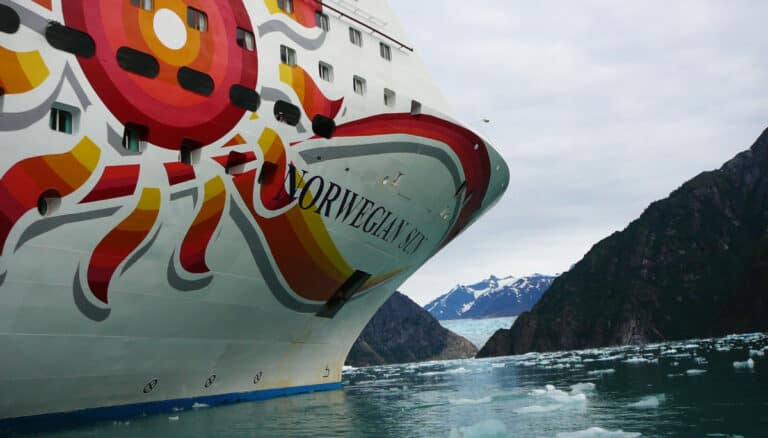
Norwegian Sun Cruise Ship in Alaska (Photo Credit: SebZet / Shutterstock)
The ship is already docked in Seattle awaiting guests. Undoubtedly the vessel’s 906 international crew members are ensuring the ship is refreshed, cleaned, and fully stocked for its upcoming sailing.
Guests on upcoming sailings are unlikely to notice anything different about the vessel, as the repairs have been completed and cosmetic repairs – refreshing scraped paint on the hull – have also likely been finished.
Damage Minor, but Caution Warranted
The Sun-class vessel struck the iceberg – classified as a growler, a relatively low berg of small to moderate size, roughly equivalent to a grand piano or pickup truck – on June 25. Because much of the impact was below the waterline, the extent of the damage was uncertain and the ship needed proper inspections to certify its condition.
The hull was not breached with the impact and damage to the vessel was minor, but did require repairs out of an abundance of caution.
There were no injuries to guests or crew members as a result of the iceberg impact, and onboard services and operations were not affected.
Photo Credit: SebZet / Shutterstock
To provide time for the repairs to be completed, Norwegian Cruise Line canceled the June 30 and July 5 sailings for the vessel. This helped ensure not only could the repairs be completed properly, but that all necessary supplies would be available for the most suitable repair options.
Guests on the impacted sailings were provided full refunds, as well as Future Cruise Credit (FCC) compensation due to the last-minute cancelations.
Consideration was also given for reimbursement of airline change or cancelation fees, though those reimbursements had to be considered individually after guests submitted the necessary receipts or other claim paperwork.
Norwegian Sun weighs in at 78,309 gross tons and has a capacity of 1,976 guests at double occupancy, and up to 2,400 passengers when fully booked. She is one of five Norwegian Cruise Line vessels offering Alaska sailings this year, along with Norwegian Bliss, Norwegian Encore, Norwegian Jewel, and Norwegian Spirit.
After finishing the Alaska season in October, Norwegian Sun will first return to Miami, then New York, and eventually Lisbon, where she will spend the winter offering a variety of European sailings to destinations around Spain, Portugal, Morocco, and the Canary Islands.
Norwegian Sun will return to Seattle for the 2023 Alaska season in May.
Have you ever run out of space while packing? Perhaps you get to your Disney cruise or Caribbean cruise and realize that you’ve forgotten something, or you simply didn’t have enough room.
These cruise packing hacks will help you both plan for your cruise vacation and maximize cabin space. Each cruise tip will help you simplify how you pack and keep you organized.
There are many hacks out there that no one considers when packing for their cruise trip. Most cruisers pack their suitcase with what they feel are the essentials.
We tend to overpack, anticipating every conceivable situation, and later wonder where we are going to put all our stuff. Not all cruise line cabins are roomy, and keeping them clutter-free makes your trip more enjoyable.
Storage Ideas and Organization
Storage tends to be the last thing that cruisers consider when packing for their trip. We assume there is enough space in the cruise cabin to hold all our belongings. While this may be true for some cruises, sometimes cabins can be smaller than you realize.
Even if they are spacious, you will want to organize your items in a way that you can easily find everything. Keep in mind that you will not have the organization that you have at home, and you may be sharing limited counter space. It can get crowded very quickly.
Photo Copyright: Emrys Thakkar
These cruise packing hacks will enable you to quickly organize your items and view them briefly, making your daytime routine effortless. Furthermore, packing everything up becomes easy.
Over-Door Shoe Holder – While many people may chuckle thinking this is great for toting women’s shoes, it has a greater application and packs tightly in a suitcase. Over-door shoe holders will provide an area to organize shoes, flat irons, hair dryers, hats, snorkel gear, and luxury items for easy access during your cruise holiday.
It will keep you organized, you can quickly see what is there, and you can keep the room free of clutter.
Heavy Magnetic Hooks –This is a great way to hang lanyards, charging cables, wet bathing suits, or anything else in your cabin. Since the doors and walls are metal, they can be placed anywhere and used for a variety of applications.
USB Port Extender and Outlet – Cruise ships have EU and U.S. options. However, most of these outlets are limited to only two by the vanity or desk area. Two outlets are often not enough since many people take cell phones, laptops, and smart watches. All these items will require charging.
Outlets are located at the top of a counter and are mounted low. The ideal outlet is one that is narrow and long. If you want something different, ensure that you buy one that is a non-surge. If it isn’t, the crew may remove it until the cruise has ended.
Compressible Backpacks – These backpacks are water-resistant and thin. They pack small yet are large enough to hold a beach towel – issued from the cruise ship – or a bottle of spirits. It will allow you to carry purchases made on the island, as well as beach essentials, when you are at various cruise ports.
Useful Tools
There are items that we don’t necessarily think we need on our cruise. The most important thing to any person traveling will be their cell phone. How are you protecting yours from accidental damage?
Cellphone Case (Waterproof) – Phones are a necessity in today’s age, and accidents can happen in a second. To keep your cell phone dry and clean at the beach or pool, use a waterproof case.
Waterproof Phone Pouch with Cruise Lanyards
Prior to taking it on your excursion, do a water test to make sure it works. With a transparent case, your cell phone can easily double for an underwater camera. It is perfect to capture breathtaking snorkeling adventures. Many have wrist straps for additional safety.
You can also use a waterproof case that surrounds the phone. This will prevent scratches, accidental drops, nicks/chips, and water damage.
Health
No one anticipates getting sick while traveling. For months, travellers look forward to the trip with heightened anticipation, never thinking about the what-ifs. Sickness, no matter how major or minor, can strike at any time. It is better to be prepared, to have it and not need it than the other way around.
Pop-up Hampers/Laundry Bags – This is a useful item to gather dirty laundry and to keep dirty clothes separate from clean ones.
Hospital Grade Disinfectants – These wipes can disinfect drawers, shelves, desktops, nightstands, bathroom counters, and doorknobs to keep your cabin virus-free. These wipes will prevent bugs like the Rota and Norovirus that can be prevalent on cruise ships.
Small First Aid Kit/Over-the-Counter Medications – While you hope that you won’t get sick on your cruise, you should still come prepared.
Cruisers should bring medication for:
Diarrhea
Headaches
Motion sickness
Indigestion
And supplies such as:
Butterfly closures
Band-aids
Sunburn gel
Antibiotic ointments
Getting in to see a nurse or doctor while on board may not always be easy or fast. Furthermore, you may be paying an elevated fee for these items while on board. Also, while traveling, be sure to take several bottles of travel-sized sunscreen. They pack easier in your luggage and decrease your backpack weight when traveling at a port.
Miscellaneous
These are a few items that people tend not to think about that have practical applications. Many of these hacks are designed to keep you healthy, save space, or keep you comfortable while you’re on your cruise. You want to enjoy your trip, not be frustrated at things occurring around you.
Ziplock Freezer Bags/Space Saver Bags (Gallon) – These bags are ideal for leaky bottles, wet clothing, perfumes, aerosols, collecting seashells, and keeping items dry and sand-free. Space saver bags are handier to use and more substantial, especially when you’re returning home.
Hand Sanitizer/Liquid Hand Soaps – Both items are better than using cabin soap. While you may have washed your hands in your cabin or after entering the restaurant, you will still touch menus, other surfaces, and serving spoons prior to eating.
It is recommended to disinfect your hands with a sanitizer prior to eating, as cruise ships – even reputable ones like Alaskan Cruise or Royal Caribbean – can spread a variety of viruses.
Sea Pass Neck Lanyards – Your sea pass is required no matter where you go on a cruise. It needs to be kept on you at all times. Lanyards are more convenient than digging it out of the bottom of your bag when needed.
Cruise Lanyards with ID Holder, Retractable Badge & Waterproof Card Holders
Bubble Wrap – This is perfect for protecting and packing fragile souvenirs that you purchased on your journey. You could use clothing, but most of it will probably be dirty, and who wants that touching your new items?
Highlighters – There are many uses for highlighters when you are on board. They will allow you to mark activities and events, plan your itinerary, and even fill in a BINGO card.
Portable Fan – Many ships contain a vibrant nightlife that runs to the wee hours of the morning. People aren’t always mindful of those around them. Voices can become loud and feet can be heard navigating the hallways at all hours. A lightweight fan will block out the noise heard at night.
Ear Plugs – While you may be a sound sleeper, packing ear plugs will guarantee you get a good night’s sleep just in case.
Bleach Pens/Tide – Stain removers are vital when you need to remove accidental stains or spills.
Tips for How to Pack to Maximize Suitcase Space
It seems to be inevitable. You run out of room in your suitcase, yet you need certain items while you are on board. You never know what the weather will be, what events you may decide to attend at the last minute, or what you may feel like wearing on any given day.
Photo By: Melissa Mayntz
There are always extras, and it may be difficult to pare down what you take. However, what if we told you that you may be able to pack everything you need and then some if you follow these packing hacks?
Roll Your Clothes Instead of Folding Them – Whether you are using a backpack, duffle bag, or suitcase, roll your clothes while packing. It is the best way to avoid wrinkles and optimize space. It also allows you to pack more.
Pack Dryer Sheets – Place dryer sheets in with your clothes. It will keep them smelling fresh when you unpack. There is nothing more refreshing than the fresh scent of your clean clothes.
Hack for Collared Shirts – To retain the shape of a collared shirt, roll a belt and put it inside the collared shirt. This will save you time from pressing and ironing when you arrive.
Pill Container Purpose – Empty pill containers allow you to neatly store jewelry. It will allow you to remain organized and be more selective in what you take. Containers can be found anywhere, including any dollar store.
Plastic Wrap – If you are taking a toiletry bag with bottles, then you may want to either wrap it in plastic wrap or place it in a zip-lock bag to prevent spills. This is especially useful for any liquids like shampoos, conditioners, perfume, or liquid soaps that you may want to take with you.
Comfy Shoes in Shower Caps – While it may seem obvious, you will need to pack comfortable shoes. You will be on your feet, and those fashionable high heels won’t be comfortable after being on your feet all day.
Shoes should be put in a bag to keep them from getting your clothes dirty. Wrap them in a shower cap instead of a bulky plastic bag.
Fill All Available Space But Leave Some Room – Maximize your packing space by filling every nook and cranny. If you are taking a spare bag or purse for travel, you can stuff it with small items. While every bit of space counts, remember that you may buy souvenirs or other items. You will want to leave a bit of room for purchases that you may find on your cruise.
Bring Layers – Even if it’s warm during the day, night air can be cool on the water. Pack a cover-up or extra layers to keep warm. You can always remove layers if you get hot as opposed to not having any and getting a chill.
Final Thoughts on Cruise Packing
The best thing to do when packing is to be practical. This may be difficult, but it will prevent you from overpacking. Try to incorporate some neutral colors in clothing or shoes whenever possible. You will still look great, but you won’t be packing your entire closet, either.
Depending on your location, bring lightweight layers. As mentioned, you can always remove a layer if you get hot. Being cold may ruin a lovely evening and spoil your day. By anticipating cooler nighttime temperatures, you will always be prepared.
Furthermore, it isn’t just the night that you may need to be concerned about. When stopping at ports, you may not know what the weather will be like. Lightweight layers are easier to pack because they aren’t as bulky and can be easily removed without carrying extra weight. Furthermore, they pack easier and can be shoved into a backpack.
These cruise packing hacks will be incredibly useful for your next cruise. You will probably find them more useful than you realize, and many of them are things that we don’t often consider when traveling.
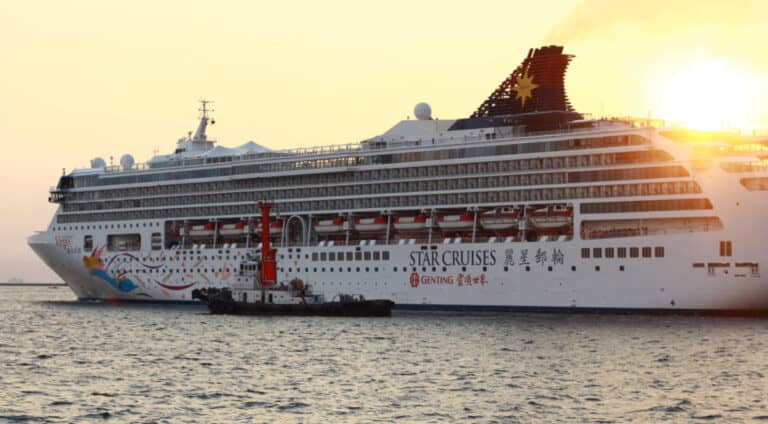
Star Pisces, one of the final ships in service for the former Genting Hong Kong’s cruise line Star Cruises, has arrived in India to be scrapped. The cruise ship is currently anchored off the coast in Alang, one of the largest ship-breaking yards in the world.
Star Cruises went out of business with parent-company Genting Hong Kong earlier this year, resulting in all ships in the fleet, including Superstar Aquarius, SuperStar Gemini, and Star Pisces being offloaded for scrapping.
Star Pisces To Be Scrapped
According to the Cruise Ship Tracker, Star Pisces arrived off the coast of Alang, India, where she is sitting at anchor waiting to be beached. The vessel will then eventually be scrapped.
After the Genting Hong Kong Group filed for insolvency, the end came quickly for Star Cruises and its fleet of cruise ships, Superstar Aquarius, SuperStar Gemini, and Star Pisces. While the cruise line had reached and long surpassed its high point many years prior, many guests still enjoyed sailing onboard smaller ships from a series of Asian homeports.
Photo Credit: Igor Grochev / Shutterstock.com
Star Pisces spend most of her lifetime with Star Cruises sailing from Hong Kong on short cruises, especially popular as casino cruises.
Star Pisces was built in 1989 at the Masa shipyards in Turku, Finland, better known now as the Meyer Turku yard, as the RORO ferry MS Kalypso. Its first owner, Rederi AB Slite, went bankrupt in early 1993, at which point Star Cruises acquired the vessel and converted it to be used as a cruise ship in Asia.
The vessel sailed her first cruise from Singapore in April 1994, after which the vessel spent her time making day and night cruises from Hong Kong. After parent company Genting Hong Kong declared insolvency earlier this year, Star Pisces never sailed again, marking an end to 30 years of service.
Genting Hong Kong’s Rise and Fall
Lim Kok Thay started his cruise ferry and gambling ship business in 1993 in Hong Kong and turned it into one of Asia’s biggest cruise operators. Its first ships were all second-hand, and it was only during the Asian Financial Crisis in the late 1990s that it started purchasing new ones.
Photo Credit: T. Schneider / Shutterstock
In 2000, Star Cruises acquired Norwegian Cruise Line, including Orient Lines and the Norwegian Capricorn Line. The move made it the largest globally operating cruise company.
Over the years, Genting Hong Kong extended its business beyond Star Cruises, partly by acquiring other cruise lines and partly by selling Norwegian for a healthy profit. It bought Crystal Cruises in the U.S. and set up Dream Cruises in Asia. The company even started buying up shipyards to be able to build its newest ships cheaply.
However, the pandemic signaled the end for Star Cruises and its parent company Genting Hong Kong. With cash running out, the company’s shipyard, MV Werften in Germany, filed for insolvency first, followed by Genting Hong Kong itself and Crystal ships facing arrest in the United States.
With Star Pisces being scrapped, the Crystal cruise ships sold to Silverseas and Abercrombie & Kent,World Dream II heading to the scrapyard, and uncertainty about what will be happening with World Dream I, there isn’t much left of the former giant.
However, don’t feel bad for Lim Kok Thay. The former CEO and owner quickly jumped ship after Genting Hong Kong filed for insolvency. He has since started a new cruise company under his Resorts World brand of companies, Resorts World Cruises.
Many travelers enjoy experiencing different foods and tasting different dishes from around the world, and cruise lines are renowned for their delicious culinary offerings in the various regions they sail, from pastas in Italy to seafood in Alaska to tropical tastes in the Caribbean.
In addition to curated menu offerings, many cruise lines offer full gastronomical experiences, and none is more popular than the intimate Chef’s Table of Carnival Cruise Line.
About Chef’s Table
By early January 2011, the culinary experience was featured across the entire Carnival fleet, and continues to be popular with each new vessel.
The Chef’s Table experience is an selective, exclusive event onboard Carnival ships, with just 12-16 guests at each opportunity enjoying a multi-course meal. The event was first introduced aboard Carnival Dream and Carnival Ecstasy in 2009, with great success, and was rolled out to an additional six vessels in 2010 – Liberty, Sensation, Imagination, Inspiration, Pride, and Fascination.
On older ships and when the Chef’s Table was first introduced, the meal was prepared and served in unusual locations, such as the ship’s library, conference center, smaller lounges, or even the galley itself. Newer ships, such as Mardi Gras, feature an exclusive space for the event and are able to offer more seatings for the wildly popular experience.
Photo Courtesy: Carnival Cruise Line
One of each ship’s Executive Master Chefs hosts the VIP event, beginning with a private champagne reception, cocktails, and hors d’oeuvres. A private tour of the galley is typically included, followed by an elaborate and mouth-watering full-service meal with the best of the best taste creations and superb dish presentations.
Different specialty chefs participate throughout the meal, sharing their insights and signature dishes.
Chef’s Table Menus
The Chef’s Table meal includes several appetizers, entrees, and desserts that are not part of the ship’s regular menu, and each course is carefully curated and prepared for exquisite taste and visual appeal.
While the Chef’s Table menu varies depending on the individual ship, sailing region, and season, popular options include:
Mango Sphere with Rosemary Biscuit
Spring Peas & Matcha Soup
Beef Carpaccio on and Air Pillow with Chocolate Bacon and Apple Ribbons
Crab Stack with Corn Custard and Passion Caviar
Olive Oil Poached Sea Bass
Sirloin Aged 36 Days with Almond Potato Puree
Pan-Grilled Duck with elderflower cider onion and dark cherry glaze
Veal with Crushed Green Apples and a Light Cheese Broth
Citrus Cream with Lime Snow and Elderflower Caviar
Photo Courtesy: Carnival Cruise Line
Guests who have food allergies, specific preferences, or other special dietary needs and are interested in Chef’s Table should contact Carnival Cruise Line before booking to ensure their needs can be met appropriately without sacrificing the quality of the experience. The chefs do make every effort to accommodate dietary needs during the event.
Wine is included with the meal, with different options to suit different courses as needed.
During a Chef’s Table Meal
Throughout the Chef’s Table meal, guests are not only treated to amazing tastes and exclusive menus, but also insights into how different dishes are prepared, as well as fun trivia about cruise ship culinary operations and training, from ordering massive quantities of food needed for the length of the cruise to how so many meals are prepared each day.
The Chef’s Table meal is prepared right at the event, giving participants an intimate look at the skills involved in crafting such outstanding treats.
On some occasions, a hands-on cooking lesson gives guests an interactive treat as part of their Chef’s Table experience, depending on the dishes planned, available space, and current protocols. Often the cooking lesson is for Carnival’s famous warm chocolate melting cake, the cruise line’s most popular dessert!
Photo By: Carnival Cruise Line
Another event that may be part of a Chef’s Table event is a table presentation by a traveling magician, performing intricate sleight-of-hand for guests and challenging their perceptions of tricks just as much as the evening’s food challenges and delights their taste buds.
Group photos are often taken to commemorate the experience as well.
The event can take 2-4 hours, so guests should be prepared for a longer, more luxuriant meal that is truly an experience and not just ordinary dining. The recommended attire is cruise casual, but guests can feel free to dress up for a more elegant experience if they wish.
One note on attire – close-toed, flat shoes are required, as the event includes an active galley tour and the floor may be slippery.
Reservations for Chef’s Table
The Chef’s Table is a specialty experience and ranges from $90-150 per person, depending on the ship and the menu involved, and an additional 18% gratuity will be added to each reservation.
Photo Courtesy: Carnival Cruise Line
The price was raised early in 2022 and again in late 2023. Chef’s Table is limited to guests age 12 and older.
Because the experience is so exclusive, reservations do fill up quickly and guests interested in Chef’s Table should book early to secure their space. Reservations can be made online prior to sailing, or at the Guest Services desk once travelers have boarded their ship if any space remains.
If guests must cancel their reservations after booking, they may be charged a $25 fee if the cancelation is within 24 hours of the scheduled Chef’s Table event.
Is It Worthwhile?
Guest feedback on Chef’s Table has always been phenomenal. Even Carnival cruisers who aren’t self-proclaimed “foodies” have enjoyed the experience, and it is a great way to taste unique foods and flavor combinations that might not be found elsewhere, as well as to see, up close, the outstanding presentations of truly five-star, top-notch dishes from some of the best chefs on the seven seas.
Beyond the food, however, Chef’s Table is a complete event where you can interact with expert chefs and get behind-the-scenes insights into cruising, meet new people with similar interests, and make amazing memories of your cruise vacation.
While every individual needs to decide whether or not Chef’s Table is of interest and should be part of their Carnival cruise schedule, it is certainly an event to remember and enjoy, no matter what your food preferences or tastes.
The accident between the Norwegian Sun and a growler in Alaska has an even more significant impact than initially expected. Besides canceling the voyage during which the vessel hit the iceberg and the sailing due to depart yesterday, June 30, the July 5 cruise has now been canceled.
Although the vessel sustained only minor damage, and the hull had not been breached, repairs will take some time, with the cruise line taking precautionary measures.
Norwegian Cruise Line had already been forced to cancel the voyage during which the vessel hit the growler and a subsequent cruise due to depart on June 30.
Norwegian Sun only arrived back in Seattle on Thursday. The ship returned to Washington State with reduced speed from Juneau, where the cruise line and the US Coast Guard assessed the damage.
Photo Credit: SebZet / Shutterstock
The nine-night July 5 sailing was due to depart from Seattle, Washington, featuring some of the most popular Alaskan destinations. Stops included Juneau, Icy Strait Point, Hubbard Glacier, Skagway, Sitka, Ketchikan, and Victoria, British Columbia.
Katty Byrd, Senior Vice President of Guest Services, states the following: “During the afternoon of June 25, 2022, Norwegian Sun made contact with ice, while transiting to Hubbard Glacier in Alaska. All guests and crew are safe, and the ship was deemed safe to return to Seattle for further assessment and repairs.“
“However, as a precautionary measure, Norwegian Sun’s July 5, 2022, sailing has been canceled. We sincerely apologize for the inconvenience this may cause.“
The NORWEGIAN SUN cruise ship hit an iceberg near Hubbard Glacier on Saturday, June 25. The cruise ship docked in Juneau on Monday. pic.twitter.com/e2rTgY4K5g
— GOLDENPROPELLER.COM (@GOLDENPROPELLE1) June 28, 2022
While the collision certainly seemed significant, the Norwegian Sun did not suffer much damage from the crash. This can be deduced from the US Coast Guard allowing the vessel to return to Seattle with all guests onboard.
If the small iceberg had done too much damage, the Coast Guard would have ordered all guests and crew off the vessel until repairs had been made.
Guests To Be Reimbursed
With Norwegian Cruise Line canceling the sailing, guests can look forward to getting a full refund of all monies paid for the voyage, including a $300 reimbursement for any airline-imposed change/cancelation fees. Guests booked through a Future Cruise Credit (FCC) will be refunded 100% of the FCC used.
Photo Credit: SebZet / Shutterstock
“Due to this unfortunate event, you will receive a full refund that will automatically be returned to the original form of payment provided at the time of your current reservation. If your most current reservation was paid via a Future Cruise Credit (FCC), 100% of the FCC used will be re-applied to your Latitudes account.”
In addition to the 100% refund or full return of the FCC, guests will receive an FCC valued at 50% of the voyage fare paid for the current sailing.
Is it Common for a Cruise Ship to Hit an Iceberg?
Of course, everyone knows the story about the Titanic, but is it common for a ship to hit an iceberg? Although scary, no, it is pretty rare for a cruise ship to hit an iceberg during a cruise.
Norwegian Sun’s collision happened during heavy fog. The iceberg that the vessel collided with was a growler. These small icebergs are notoriously hard to spot, as the top of the berg is no more than a meter, or three feet, above the waterline.
Besides the size of the berg, most cruise ships hardly ever sail in areas where icebergs are expected, or if they do, they tend to stay well out of the way.
Those ships that do venture into icy conditions, such as expedition cruise ships sailing in the Arctic and Antarctic, have hulls designed to come into contact with ice and are equipped with equipment capable of detecting ice in the water.
So, there is no need to worry about your upcoming cruise, whether in Alaska, Greenland, Chile, or other areas where glacier cruising is a feature.