Key Aspect:
- A sick guest was airlifted from Serenade of the Seas on Monday, September 14, 2026, roughly 480 miles northwest of Vancouver.
- The 442 Transport and Rescue Squadron of the Royal Canadian Air Force responded to the request for a medical evacuation.
- Tthe operation was carried out efficiently and safely in apparent windy conditions, and the guest was transported to Port Hardy.
Just days after a medical airlift of an injured crew member from Disney Wonder and another airlift from an undisclosed ship, the same squadron of emergency personnel has performed another airlift from a cruise ship in the same region northwest of Vancouver.
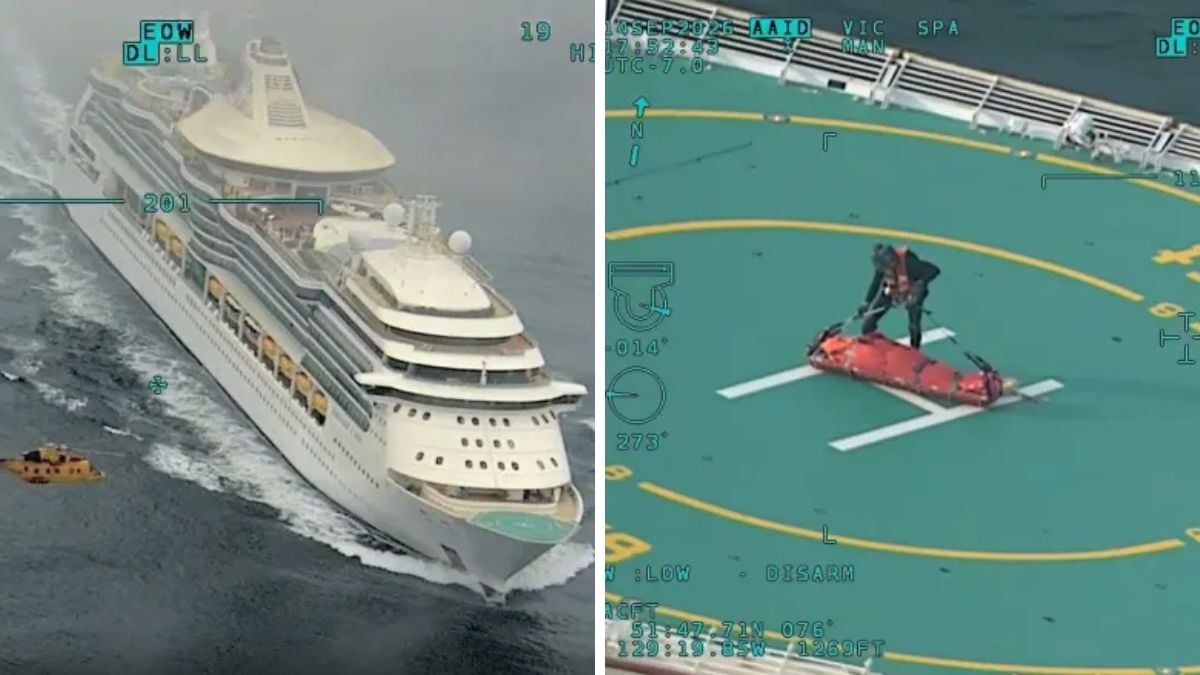
According to CHEK News, the incident happened on Monday, September 14, 2026, when a request for a medical evacuation of a sick guest came in from Royal Caribbean’s Serenade of the Seas roughly 280 miles northwest of Port Hardy (approximately 480 miles northwest of Vancouver).
Serenade of the Seas had departed Vancouver the day before for a 7-night Alaska sailing, with visits planned for Sitka, Juneau, Ketchikan, and Prince Rupert.
The 442 Transport and Rescue Squadron of the Royal Canadian Air Force (RCAF), based out of 19 Wing Comox in British Columbia, responded to the emergency assistance request and reached the 2,143-guest cruise ship just before 6 p.m., according to time stamps on photos shared by 19 Wing Comox.
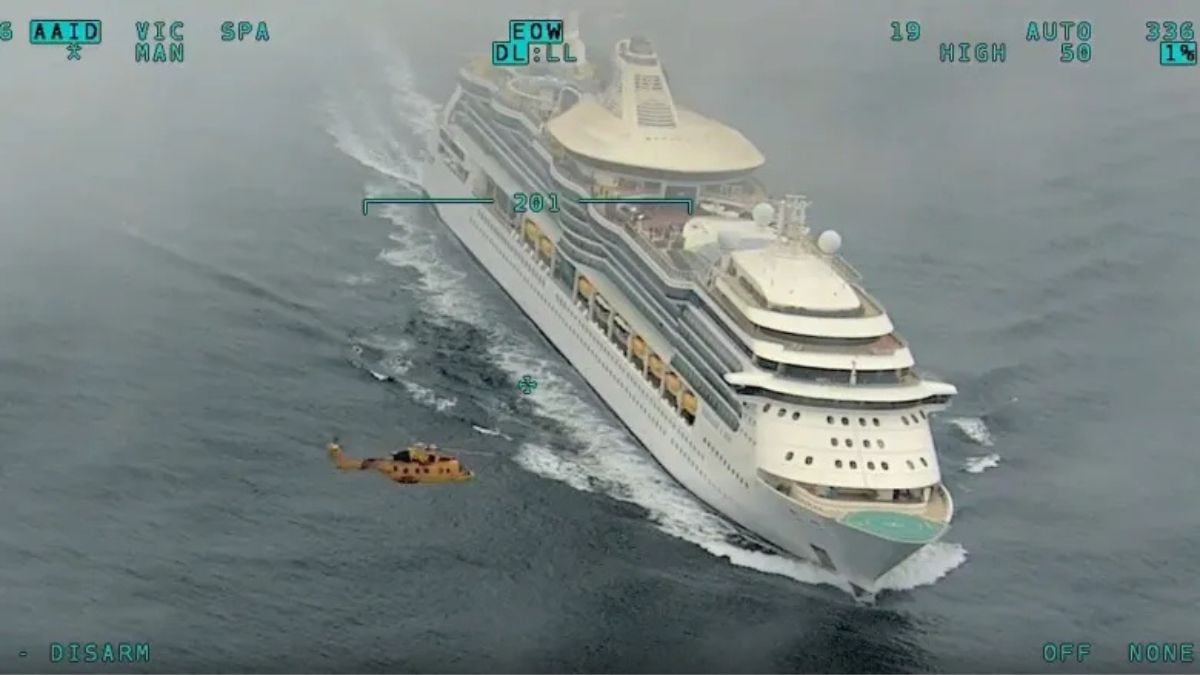
A CH-149 Cormorant helicopter and a CC-295 Kingfisher plane coordinated the rescue, with the plane monitoring, communicating with the ship’s captain, and filming while the helicopter lowered two search and rescue technicians onto Serenade of the Seas.
Coordinating with the ship is especially important to create the safest, most stable conditions for the airlift.
“When the helicopter arrives, slow to a minimum steerage speed into the wind,” the flight crew directed in a video shared by the RCAF.
The sick guest was brought to the ship’s bow where the helipad is located and the litter was lowered to bring them up to the helicopter. The technicians secured the litter and guest, and guided the litter onto the helicopter under what appeared to be breezy conditions, according to the video.
Guide wires were used to help stabilize the litter as it was lifted, keeping the patient as level as possible during the extraction.
Following the successful airlift, both the helicopter and the cruise ship offered thanks and appreciation for the assistance, as well as safe journeys to both the aircraft and the ship.
From the ship, the helicopter flew to Port Hardy, where the guest was transferred to paramedics for further transport to the appropriate medical facilities.
No details about the guest, including their name, age, or why they required the medical evacuation, have been released. This helps safeguard the privacy of individuals and their family members, friends, and traveling companions at a very stressful time.
The rescue from Serenade of the Seas was performed by the same squadron that airlifted an injured crew member from Disney Wonder on September 8. Furthermore, the squadron also airlifted a sick guest from an undisclosed cruise ship on Saturday, September 12.
Approximately 200 personnel are part of the squadron, including maintenance personnel, pilots, navigators, and the search and rescue technicians, among others.
Cruise Hive is grateful that such personnel remain highly dedicated to their rescue missions, wherever and whenever cruise guests and crew members may require such emergency assistance.
Why Share Such Videos?
It can be curious to guests why videos of airlifts are released publicly, particularly when announcements are often made onboard not to film or photograph during rescue operations to avoid distracting the rescue team at critical moments.
Captain Steve Davies explained to CHEK News why the videos are valuable, not just for training and review. He noted that seeing the operations can help the public understand the dedication of the teams, including just how precise such operations must be.
“You are vulnerable out over the ocean for protracted periods,” Davies said. “Naturally the planning that goes into them is quite intense. Whether it’s at night or in the day, and the weather you’re going to encounter en route will drastically change the complexity.”
By better understanding how the teams coordinate and what is necessary for a successful rescue, guests can better appreciate the extensive training, professionalism, and expertise these teams offer with every rescue operation.