Blog Page 584

Living on a Cruise Ship: What You Need to Know

Few people would turn down a getaway at sea. After all, imagine sailing into the sunset on a stunning cruise ship. It’s a glamorous way to vacation and a unique experience for anyone wanting to explore the world.  

But while it’s true that cruises are a great way to vacation, have you ever thought about living on a cruise ship full time? Choosing to retire on a cruise ship or to simply call a cruise ship home and live life at sea can be an extremely rewarding and unique experience. 

If this sounds like something you’re interested in, then this guide is for you. Keep reading and let’s take a look at this unique opportunity, what it’s like, and how to turn it from a dream into reality.

What It’s Like Living on a Cruise Ship

Living on a cruise ship might sound like a dream to some of us, but the reality is that there’s a lot more to retiring on a cruise ship than just packing your bags and setting sail. Here are the pros and cons of living on a cruise ship that you should know about.

Worth Reading: What is the Passenger Vessel Services Act and How Does it Impact Cruises?

The Pros

One of the biggest benefits of living on a cruise ship is that you get to explore the world – and we literally mean the world. On normal cruises, you typically visit one or two countries.

However, as a permanent cruiser, you’ll be able to visit as many different countries as you want, getting to see the whole world in your retirement. Talk about adventure!

What’s more, once you’re in port you’ll have the opportunity to participate in numerous shore excursions. Long-term cruises often offer shore excursions at lower prices or even completely free, making the change to participate in unique excursions far more possible.

Cruise Shore Excursion
Cruise Shore Excursion (Photo Credit: shorex.koss / Shutterstock.com)

Outside of seeing new places and getting a taste of adventure, there are also some practical reasons why you should choose to live on a cruise. Life on a cruise can actually save money because you don’t have to worry about purchasing food, paying for gas, or covering other land-based expenses. 

On a cruise, all your food and entertainment are included in the cost of the cruise. While you pay a lot upfront, you can actually end up saving money by doing away with monthly car payments and gas bills, utility costs, and grocery bills. 

The Cons

Unfortunately, it’s not all sunshine and seashells onboard a cruise. There are a few downsides to living on a cruise and being aware of them is important for staying comfortable and enjoying life at sea. 

One of the first downsides is that living on a cruise ship can be fairly expensive. That doesn’t just mean the cost of your living space, either. Tips, excursions, medical care, and premium dining options can quickly take a toll on your wallet. 

Over Packed Suitcase
Over Packed Suitcase (Photo Credit: Kostikova Natalia / Shutterstock)

Another thing that you’ll be making a dent in when you choose to live on a cruise is your belongings. Since there is limited space onboard cruise ships, you won’t be able to bring all your personal items with you. That can mean either downsizing or renting storage space on land where you can store your extra possessions. 

Finally, when you choose to live on board a cruise ship, you won’t have access to the same type of medical care as you could get on land. While there are medical facilities onboard, they may not be equipped to assist with certain conditions.

Be sure to clear it with your doctor before signing up to live or retire on a cruise ship. Doing so can prevent you from getting sick on a cruise and being stuck at sea without access to the help you need.

How to Live on a Cruise Ship

To make life on a cruise ship a reality, there are several options available to you. Knowing these options is the first step to giving up your life on land and setting sail for the foreseeable future.

Snowbirds in Residents

If you’re wanting to live on a cruise but aren’t ready to permanently sell your home or transition away from life on land, snowbird cruises are a great choice. These cruises allow you to set sail for the winter months but return to shore for the spring and summer. 

Snowbird cruises can range anywhere from 58 days to 116 days, allowing you to stay at sea for as much or as little time as you’d like. The costs for these cruises start at $16,000 per guest but can go as high as $250,000. However, these cruises include a number of additional benefits including:

  • Free economy airfare up to $499 per guest
  • Free pre-paid gratuities up to $1,656 per guest
  • Free beverage packages
  • Up to $4,200 in ship credit
  • Up to 42 free shore excursions

While the initial cost might seem high, these extra amenities and credits can make life at sea far more affordable. And, they will make it more enjoyable, too!

Buy a Cruise Residence

Another option for anyone looking for a permanent shipboard residence is to buy a cruise residence. Ships such as The World offer private studios, one, two, and three-bedroom apartments on board.

The World Cruise Ship
The World Cruise Ship (Photo Credit: Aleksandr Samoilov / Shutterstock.com)

To call one of these ships home, you’ll be expected to pay anywhere from $352,000 to $36 million. On top of that, residents are required to pay yearly maintenance fees as part of their budget. 

When choosing a cruise residence, you can also look for ships that are built for your purposes. For example, The World is tailored toward retirees, while Storyline Cruises are tailored towards digital nomads and working professionals to call home.

Book Continuous Back-to-Back Cruises

If you want to take more of a DIY approach to living on a cruise, you can follow in the footsteps of Mario Salcedo and simply book back-to-back cruises. With this plan, you’ll need to be prepared to fly from port to port every now and then. 

Docked Miami Cruise Ships
Photo Credit: Felix Mizioznikov / Shutterstock.com

Most cruise lines publish itineraries for up to two years in advance, meaning that you’ll be able to book your cruises well into the future before needing to schedule your next booking. 

Plus, most cruise lines offer rewards and loyalty programs for regular cruisers. That makes it easier for you to hop on board and set sail without racking up too many costs. 

Tips for Life on a Cruise Ship

So, you’re ready to take the plunge and live on a cruise ship? To make the transition to a life on the high seas, we’ve put together a few tips. Follow these suggestions to make your transition to your new lifestyle smooth sailing. 

Test it Out

Before you commit to living on a cruise line, try going on cruises with a few different cruise lines. Setting sail with various cruise lines will not only help you figure out whether you actually like this lifestyle, but it will also help you compare which cruise lines you like best. 

You could try doing a world cruise, a grand voyage that lasts longer than a month, or simply book numerous back-to-back cruises to see if you actually enjoy full-time cruising. Doing so will help you get a feel as to whether living onboard a cruise ship would be a viable option for you.  

Talk to a Financial Planner

It’s no mystery that cruise ships are expensive, and if you’re planning to live onboard a ship permanently you need to be prepared for those extra expenses. Meeting with a financial planner can help you determine what you can afford and can offer you budgeting tips for keeping your finances in check while you sail.

Budgeting for Living on a Cruise Ship
Budgeting for Living on a Cruise Ship (Photo Credit: Natalia Danchenko / Shutterstock)

Make sure you also think about any monthly bills that you’ll still be responsible for while at sea. Perhaps you’ll need to pay for a phone bill. Or, you might have an insurance policy that you need to keep up with. 

Speaking with a financial planner ahead of time will help you maintain your living expenses on land without going overboard at sea. Both of these strategies will make it easier for you to switch to living on the cruise line full time. 

Talk to an Agent

Once you’ve figured out whether or not cruising full-time is a smart choice for you financially, it’s a good idea to speak to a travel agent. He or she will be able to help you create a personalized cruising experience that helps you live the lifestyle you’re looking for on your cruise. 

On top of that, travel agents are able to get you some sweet deals. They might be able to help you save some money during your cruising experience or to hook you up with some upgrades while you cruise. 

Pre-Plan Your Medical Care

Remember how we said that medical care on cruise ships can be a little hairy? Before you commit to living full-time on a cruise ship, you’ll want to talk to your primary care provider. He or she will be able to help you get any critical medication filled before you head onboard. 

You should also note that most standard US insurance plans don’t work at sea. You’ll want to get special insurance policies if you’re planning to live on a cruise ship full time. 

Stay Social Onboard

When you spend a year at sea, it can be easy to feel lonely. Your friends and family are far away and letters can be few and far between thanks to the remote nature of living at sea.

Cruise Passengers

If you’re planning to stay full-time onboard a cruise ship, make sure to take the time out of your day to socialize with other passengers. Partner up with someone at a card game event or invite a guest to join you for a shore excursion. No matter how you choose to do it, make sure to stay social while onboard.

Make a Schedule

While you can certainly choose to take a go-with-the-flow approach to cruising, this can often lead to getting into a rut. Plus, if you’re working, it can make it tough to stay focused and stay on task while cruising. 

If you’re planning to live on a cruise full-time, creating a schedule can help you fit into the cruising lifestyle. You can also make new friends by attending the same activities and socializing with the same group of people. 

Think About Your Eating

It’s no secret that cruises are a foodie’s paradise, offering a number of unique dining options that leave cruisers’ mouths watering. However, all that fine dining and rich cuisine will quickly go to your waistline if you’re not careful. 

If you’re planning to live full-time on a cruise, you’ll need to make good nutrition a priority. You can try asking for sauces on the side or swatching out the fries for a plate of salad. However you choose to do it, it’s important to make your health a priority.

Set Sail and Live on a Cruise Ship

Living on a cruise ship can be an amazing experience. It’s the perfect opportunity to explore the world in safety and style, taking advantage of all types of amenities that you wouldn’t be able to experience in an on-shore residence.

Also Read: Cruise Ship Lingo – Bow vs. Stern, Aft vs. Forward Cruise Terminology

Whether you’re looking to retire on a cruise or simply set sail on a year-long cruise, this guide makes it clear that living on a cruise can be a reality if you want it to be.
What is the Passenger Vessel Services Act and How Does it Impact Cruises?

Can you think of an industry that takes in $150 billion in revenue with a million employees because of roughly 300 ships? Well, there’s only one, and it’s cruise ships.

Subject to some of the biggest regulations, cruise lines often have to pay massive fines for things you may have never heard about. Well, that doesn’t have to be the case anymore. Let’s talk about the Passenger Vessel Services Act (PVSA) and how it relates to your cruise vacations.

What Is the Passenger Vessel Services Act?

The PVSA is a law in the United States that came into play in 1886 relating to what was known as “cabotage,” which is the transportation of goods or passengers within one country while the transport owner or operator is from another country.

The idea behind this legislation was to rid the country of certain fees that were interfering with the operations of American vessels and to fix some of the broken laws from the time that interfered with US industrial transportation.

Whether you’re a first-time cruiser or a seasoned veteran, you’ve likely never heard of the PVSA, so let’s see what the law actually is before we discuss its relation to cruise ships.

The Law

To know what the law is about, it’s important to know the definition. The long title of the act is essentially a law to abolish certain fees for services to American vessels and to amend any laws related to shipping commissioners, operators, and owners of vessels, as well as for other purposes.

It also states that no foreign vessel larger than 5 tons, including ferries and other ships, shall transport passengers from one port within the US to another or face a penalty of $762 per passenger that was successfully transported and landed. The price at the time was $200 but has since been raised to $762 per passenger, where it currently stands.

These laws cover any navigable waters in or around the United States that offer transport to other countries, including oceans and The Great Lakes. States such as Hawaii and Alaska, as well as other US territories, are included in the same way as the mainland US. This law is still in place today and creates many logistical challenges for both cruise lines and passengers alike.

What Is Not Covered

There are important exceptions to this legislation that are worth noting. The law does not include vessels that depart from and land at the same US port, presuming they landed at another foreign port between.

Princess Cruise Ship in the U.S. Following the Passenger Vessel Services Act (Photo Credit: Mary at T-Comms / Shutterstock.com)

The law does not prohibit foreign ships that are departing from a US port, who are then visiting a distant foreign port, and then continuing to a different US port. However, in order to travel in a US port and land in a second US port, the vessel must visit a distant foreign port outside North America or the Caribbean.

There were other specific exemptions. Canadian vessels were able to carry passengers from Rochester, NY to Alexandria, NY, as well as between certain ports in Alaska. This was only until the US was able to take over the market for this. Later on, ports between islands in Hawaii were also made into exceptions to this law.

Who Requests The Fines?

While the Passenger Vessel Association is responsible for overseeing the cruise industry in the United States, they are not responsible for charging or receiving these penalties.

The Customs and Border Protection (CBP) will deliver and accept fines from passenger vessels who violate the PVSA. There may be circumstances where CBP agents do not pursue a fine for a violation on the grounds that they see fit. However, this is a rare occurrence.

How The PVSA Affects Cruise Ships

Of course, when we think of passenger ships, cruise lines come to mind. However, this law didn’t come into play because of cruise ships, as cruises have only been around since the 1960s.

However, no exceptions were ever made to the PVSA in regard to cruise ships once they became popular, so how are they affected by the law?

The two biggest cruise lines in the US are Royal Caribbean and Carnival, and neither of them operates with US flags on their ships. Their ships always have foreign flags and registrations because of the advantageous laws and business opportunities in other countries, mostly within Latin America.

Cruise Ships Docked in New York City (Photo Copyright: Cruise Hive)

The next down the list is Norwegian Cruise Line (NCL) and Disney Cruise Line. NCL only has one single ship registered in the US, and Disney has all of theirs in the Bahamas. So, do they have to pay $762 per passenger when they arrive at another port in the US? Let’s start by talking about why they use different flags.

“Flag of Convenience”

Many cruise lines are accused of flying a “flag of convenience” as opposed to a flag of the company’s origin. This is simply because it’s true, and few companies would bother to deny it.

This is a long-standing practice that was started by passenger liners and ferries because of prohibition laws in the 1920s when American-flagged ships couldn’t serve alcohol. Using a different flag allowed them to serve alcohol in international waters.

However, the reason they do this today is to figure out which country will give them the most advantageous regulations for their routes. Since most cruise ships take fairly consistent routes, there may be a certain country that gives them the most convenient deal for that route.

Mardi Gras Flag
Photo Credit: Carnival Cruise Line

Because of this, cruise lines work to determine which country will be the most convenient for their registration when it comes to worker compensation and rights, alcohol and gambling laws, tax advantages, and more.

Now, with some of the COVID restrictions, foreign-flagged ships were not allowed to continue service while American-flagged may be able to, which makes you wonder why they don’t just change their flags. That brings us to the reason they have “flags of convenience.” They can’t.

To become an American ship, the entire ship must be assembled in the US and hold primarily US crews. That’s a ship that sailed a long time ago, if you’ll pardon the pun.

This is important to know in order to understand why the PVSA affects the cruise industry. The majority of cruise ships fall under the umbrella of foreign-flagged ships, even if they have headquarters domestically.

Also Read: U.S. Passport Card vs. Book: What’s the Difference?

What Happens If A Cruise Line Violates The PVSA?

Cruiselines will typically be diligent about planning their routes, but there’s no way to guarantee 100% effectiveness when avoiding fines. Even if they do plan it perfectly, there are still situations where this will happen.

For example, if somebody on board needs medical attention and needs to be dropped at the nearest port in Washington before arriving at their foreign destination in Vancouver. In this example, the cruise line will be fined $762 for that single passenger and nothing else.

Cruise Ships in Miami, Florida
Cruise Ships Docked in Miami, Florida (Photo Credit: VIAVAL TOURS / Shutterstock.com)

If there is inclement weather that stopped someone in Florida from reaching their destination in the Dominican Republic and the cruise was canceled after leaving the port, they will be fined the $762 per passenger that is dropped off at the US port.

However, in a circumstance like this, the cruise line would try to negotiate the fee with the CBP for a lower rate, as this was not a planned landing. This is because if some of the largest passenger vessels have a serious emergency and need to get off, the fines could be steep, while the cruise lines will still have to refund their passengers.

If a cruise ship has 3,000 people on board and has to dock, it could be facing a fine of over $2.2 million. In these situations, fines will likely be reduced but not eliminated.

How Does It Apply To Back-To-Back Cruises?

If the cruise ship stops at a foreign port before its passengers land, there will be no fines, regardless of the type of cruise route. However, if there are two or more trips combined into one and passengers land without stopping at a distant foreign port, then yes. This will trigger a violation on a per-passenger basis.

Let’s say somebody goes from Seattle to Vancouver on a cruise but then stops in Alaska afterward. They started in Seattle and will eventually need to return there. If they use the same ship and go straight there without stopping at a Canadian port, they will be subject to a fine.

Are Certain Cruise Ships Exempt?

Pride of America Calling at Kailua-Kona
Pride of America Calling at Kailua-Kona (Photo Credit: Wirestock Creators)

Yes. We mentioned that at least one NCL ship is American, but there are plenty more. Many smaller cruise lines and other passenger vessels are American-made, flagged, and operated and are not subject to these penalties.

However, there is only one mainstream cruise ship, Norwegian Cruise Line’s Pride of America, that is registered and flagged in the US. The rest are small passenger vessels that may act as “cruise ships,” and they will not be subject to these fines.

Jones Act vs Passenger Vessel Services Act

When people bring up the PVSA, the Jones Act is often mentioned. The Jones Act was initiated in 1920 as part of the Merchant Marine Act, and it bars ships from transporting goods from US port to US port unless they are built, flagged, and operated domestically.

The intent of this law was to secure a merchant marine fleet, most likely for national defense. Not only does this affect cruise lines and other passenger vessels, but all vessels not built and flagged in the US. Because of this, passengers don’t necessarily need to get off the ship for cruise lines to incur fines for docking.

Fines for violating these laws are also under the discretion of CBP, and there is no specific dollar amount for violations. They are incurred on a case-by-case basis and are often steep.

There have been several occasions where the Jones Act has been amended or revised throughout its history. It’s also been waived on several occasions, usually due to natural disasters requiring ships within the US to provide assistance.

PVSA News for Cruise Lines

Because of the Covid restrictions, cruise lines were given a temporary pass when it came to Alaska. This allows them to skip the foreign port requirement without receiving a fine.

This was because of Canada’s laws about foreign cruise ships at the time, and Vancouver and other ports are common destinations for Alaskan cruises.

In June of 2021, a US Senator from Utah introduced three bills to allow cruise ships the freedom to operate this way permanently, arguing that the law only benefits Canada and Mexico with increased maritime revenue while disadvantaging the US.

Bill Signed to Exempt Cruise Ships Temporarily from the Passenger Vessel Services Act
Bill Signed to Exempt Cruise Ships Temporarily from the Passenger Vessel Services Act (Photo Courtesy: Senator Murkowski Office)

The first bill introduced was called the “Open America’s Ports Act,” which would repeal the PVSA, allowing passenger vessels to freely transport from US port to US port. 

The second was called the “Safeguarding American Tourism Act,” which was aimed at exempting large passenger vessels from PVSA requirements. The third was the “Protecting Jobs In American Ports Act”, aimed at repealing the requirement that ships be US-built to avoid these restrictions. Believe it or not, there hasn’t been a large cruise ship built in the US since 1958.

Since that bill was killed, Senator Lisa Murkowski announced a follow-up bill on September 15th called the Cruising For Alaska’s Workforce Act and is currently making its way through congress. The bill is primarily aimed to allow ships from the mainland US to reach Alaska without being subject to PVSA regulations.

PVSA FAQ

As a passenger, could I be fined under PVSA laws?

No, the fines are targeted and designed for the owner/operator of the vessel. Cruise ships will not charge you.

If they have to pay fines, why don’t they register in the US?

Again, the cruise industry leaders majorly believe that the benefits of using foreign flags outweigh the risks. Norwegian seems to believe there is enough benefit to having one ship registered in the US, but no other major cruise line has followed suit.

Is the law obsolete?

That’s for you to decide. Lawmakers are currently trying to determine that as we speak. It clearly has not kept the largest companies within the industry to use American equipment and crew and would need some adjusting to accomplish that goal.

Do these laws make cruises more expensive?

Some, yes. There are many instances where ships have to take detours or plan routes differently than they otherwise would have, and they do pass some of those expenses along to consumers.

Keep On Cruising!

Now that you know about the Passenger Vessel Services Act and how it affects the cruise industry, you should be able to make more sense of the routes and other practices within the cruise industry. We’ve got more helpful guides on cruising over on our Cruise Tips section.

How Fast is a Knot and What Does it Mean?

Just as your airline pilot offers useful snippets of information such as cruising altitude and speed, cruise ship captains love to regale passengers with similar insights.

In the exciting world of marine navigation, it’s fair to say that most of us don’t have a handle on all the terminology. For the most part, this doesn’t really matter – until we set foot on the deck of a cruise ship.

Suddenly we want to understand how fast is a knot, and what is a nautical mile anyway? If these nautical terms have always puzzled you, then read on. We have explored them in detail below.

Nautical Navigation Unpacked

You may rightly question why distance and speed are measured differently at sea compared to land. This is an excellent question and forms the basis of all nautical navigational reasoning. 

At the very root of it, land and sea travel differ in one key area: the sea has no landmarks. At no point can we turn left onto 51st Street and continue until we get to the T-junction.

Cruise Navigation
Cruise Navigation (Photo Credit: Solomakha / Shutterstock)

This means that tracking our position on the water relies on a different map, that being the latitude and longitude coordinates of the earth. These measurements are ideal for long-distance travel and take into account the earth’s curvature when establishing an accurate position. 

So, to fully understand how fast a knot is, we need a bit more information on exactly how ocean travel is measured. The basics are as follows:

  • A statute mile is another name for a land-measured mile
  • A nautical mile is a distance measurement equating to 1.1506 statute miles
  • One nautical mile equals one minute of latitude

How Fast Is a Knot?

Now that we have a grasp on how sea-faring folk measure distance, we can better understand the answer to the question, “How fast is a knot?”

A knot is a measure of speed and equates to one nautical mile per hour. (Approximately 1.15 statute miles.) Therefore the ratio of knots vs. mph is 1:1.15.

Why, though, would sailors use the term “knot” when referring to speed? The answer lies in history, around the 17th century to be exact. Minus the modern tech that we enjoy today, sailors used a “common log.” This beautifully simple solution consisted of a rope with knots tied at regular intervals and connected to a piece of wood. 

Dry red floats with a rope for speed measurement
Dry red floats with a rope for speed measurement (Photo Credit: Tatyana Blinova / Shutterstock)

The rope was tossed overboard behind the vessel, and the able seamen would then flip an hourglass to measure a specific amount of time. Once the time was up, they would pull up the rope and count the knots between the wood and the boat. This gave them a measurement of speed hence the term knots or knot speed.

It may not have been the most accurate measurement, but it was enough to allow ancient mariners to navigate with sufficient accuracy to get to where they were going. 

Summing Up

We answer the FAQs on this fascinating topic below.

What is a knot?

A knot is a measurement of speed equal to one nautical mile per hour.

How fast is a nautical mph?

One nautical mile per hour equates to 1.15 land miles per hour.

How do I convert knots to mph?

Converting knots to mph is a simple multiplication of mph by 1.15

How fast is 20 knots?

Using our working above you can determine that 20 knots equates to 23 mph, which is the average speed of a cruise ship.

See You Onboard!

In this article, we hope that we provided you with the necessary details to better understand what your ship captain is telling you during your next cruise.

Also Read: How Fast Do Cruise Ships Go?

So, when he tells you that you’re traveling at 21kn and your fellow passengers look at you and ask, “How fast is a knot?” you can speak with conviction. And then, possibly deep dive into unpacking “How fast is 21 knots?”

Royal Caribbean Extends Operations in Italy to Build New Cruise Terminal

Royal Caribbean Group, the parent company for Royal Caribbean Cruise Line, Celebrity Cruises, and Silversea, will build a new cruise terminal in Ravenna, Italy. The city is located in the northeast of Italy on the Adriatic coast. It is an excellent base of operations for the eastern Mediterranean, Adriatic Sea, and the Western Mediterranean.

The company was awarded the tender to construct and operate the innovative new 10,000-square-meter, 27 million euro, cruise terminal in Porto Corsini, a short drive from the center of Ravenna.

Royal Caribbean Partnership with Ravenna Port Authority

The tender to build a new terminal building in Ravenna is the first step for Royal Caribbean, private investment company VSL Club SpA and the port authority in Ravenna to operate and revitalize the port area in the city.

The partnership seeks to transform the port area into a new terminal building, a Park of Dunes green space project, 12 hectares of landscaping, entertainment areas for visitors and residents, and a focus on making the entire area sustainable. The new terminal building will also have the capability for shore-power, enabling ships to turn off their engines in port.

Royal Caribbean Cruise Ship
Photo Credit: Joe Hendrickson / Shutterstock.com

With the negative impact of large cruise ships in Venice and the negative public perception that has given to cruising, the industry has been searching for new initiatives in the area. Ravenna will be ideally suited to act as a homeport for cruise ships when it is completed in 2024.

Located just 140 km from Venice, the historic city can still be part of a cruise visit, either as a pre-or post-cruise experience or as a port of call. Other important ports such as Split and Dubrovnik in Croatia, Kotor in Montenegro, and the Greek Islands and other Italian ports are all within easy reach of the new terminal building.

The amount of passengers passing through the terminal is expected to increase to 300.000 per year, making it not just an exciting investment opportunity for the Royal Caribbean Group. The terminal will be able to offer significant employment opportunities for locals; estimates are between 100-200 people who will find employment during homeporting operations.

Royal Caribbean Expects Strong Tourism Rebound

The Royal Caribbean group is well known for investing and developing areas that they believe can play a significant role in the rebound of cruising this year and the following years. Although a majority of cruise ships are operational right now, the industry is expected to take some time to return to pre-pandemic numbers. Yet significant growth will be possible with investments such as in Ravenna, Royal Caribbean believes:

“We are so honored to partner with the Ravenna Port Authority on this exciting cutting-edge project which will return growth to Ravenna and bring a new era of cruising to the region. Royal Caribbean has assembled a world-class team that is committed to a high-quality experience through sustainable development while embracing the extraordinary natural beauty and warm hospitality this region has become so well known for.” said Joshua Carroll, vice president, Destination Development at Royal Caribbean Group.

Port Ravenna
Photo Credit: Port Ravenna

At a press conference in Ravenna this week, Daniele Rossi, president of the Ravenna Port Authority, said:

“The fact that an international cruise operator of such worldwide importance as Royal Caribbean Group has decided to invest in our port is an important signal for the entire Ravenna area. I’d particularly like to underline in this regard that the professionalism and reliability of Royal Caribbean Group are, among other things, demonstrated by the fact that the proposal presented takes into the greatest consideration the issue of environmental sustainability and is based on a very thorough analysis of the territorial context in which it will have to be inserted.

Atelier(s) Alfonso Femia and engineering consultants at RINA Consulting will design the new terminal building. When the terminal is not facilitating cruise ships, the terminal and walkways will be accessible to the public. It will also function as a multifunctional building housing sports competitions, artistic and literary presentations, and much more.

Costa Maya, Mexico: What to Do During Your Visit

The cruise industry is already above 80% of what 2020’s numbers were. While continuing to lag behind the number of people who traveled in 2019, this is a promising sight to see in an industry that many of us thought might not prevail. 

Now that we can reschedule those cruises once more, where are some popular destinations?

Mexico has always been a hot spot for tourists. Costa Maya, Mexico is a beautiful port that gets swept under the rug by Cancun and other, more popular areas including the cruise destination of Cozumel, just 130 miles away. However, it sports all the beauty and wonders Mexico has to offer. 

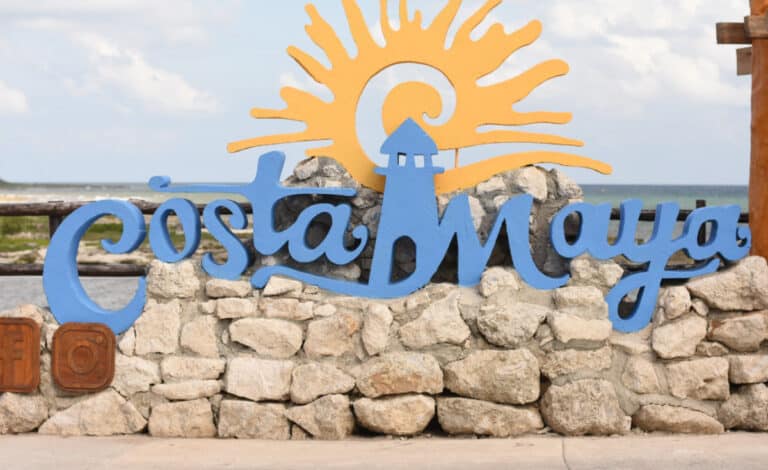
Costa Maya

Where is Costa Maya exactly? It sits just south of Cancun about 80 miles and has seen a spark in the tourist industry since the mid-2000s. Before then, Costa Maya was just a sleepy Mexican fishing village. 

Now it boasts a healthy influx of tropical cruises and tourists, all vying for a glimpse of hidden tropical beauty. 

Costa Maya encompasses dense jungles, Mayan ruins, and world-renowned diving. We won’t find sky-rise buildings like downtown Cancun hidden in the reprieve of Costa Maya. 

In fact, the Mexican port prides itself on a small-town Mexican village atmosphere with pristine waters and authentic villages. Sitting just north of Costa Maya lies the UNESCO Heritage Site of Sian Ka’an Reserve.

Costa Maya, Mexico
Costa Maya, Mexico (Photo Credit: NAPA / Shutterstock)

Making the drive or tour excursion there is well worth our time. The over 1 million acre refuge is full of rainforests, monkeys, and lagoons. Many tour operators schedule day trips to the region. 

While this is a great opportunity to see the wonders of the nature of Mexico, Costa Maya is also surrounded by local Mayan villages.

We remember the famous Chichen Itza, right? It is a wonderful site to see the extent of the architectural capabilities of Mayans if visiting the northern portion of the Yucatan. 

However, Chichen Itza isn’t the only lasting Mayan influence. Many Mayans still live in Mexico and scheduling tours through local villages near Costa Maya gives the local people a chance to profit off of tourism (an income for them) and we get a chance to see local cultures. 

Puerto Costa Maya

The Puerto Costa Maya port started construction around the 1990s, although as noted earlier, tourists didn’t start arriving until the early to mid-2000s. Hotels started to dot the beachside property, although it still took a while for tourism to really kick up and make it all worth it. 

Roads and electricity were a bit further to lag behind, surprisingly. Initially, the closest shops to the beach were running on diesel or gas generators. 

The port known also as Puerto Costa Maya was born out of the idea of establishing this port for tourism and that is exactly where the name came from.

Cruise Ship Docked at Costa Maya
Cruise Ship Docked at Costa Maya (Photo Credit: Nazar Skladanyi / Shutterstock.com)

Tourism has largely kicked up in the port and trickled out to the surrounding areas. The emphasis has always been on “eco-tourism” meaning we won’t find any of those high-rise hotels. Most places still have an architecture that hints at simpler times. 

Nowadays, taxis and buses are parked at the port to take tourists on various tours. We also favor renting four-wheel-drive vehicles if visitors are craving the need for a little bit of added adventure. 

With the roads now paved, it is easier to navigate to the highways and there shouldn’t be any problems finding major sites, such as the Mayan ruins.

Worth Reading: Useful Things To Know About Cozumel Cruise Ports

The top two main goals of developing Costa Maya’s port are to improve the golf industry and dive or water businesses. By sitting right on top of the world’s second-largest barrier reef, Costa Maya should not have any problem in boosting their diving tourist industry. 

Hurricane Dean

In 2007, a massive hurricane wreaked havoc through the Yucatan region. It devastated Costa Maya for a while, with many cruise ships having to cancel their stops at the once pristine port.

At the time, it was the second busiest port in Mexico. Mahahual experienced the most damage from Hurricane Dean which topped out as a Category 5 hurricane. 

They lost hundreds of buildings from damage and the Costa Maya port lost another 50% of its infrastructure. Part of this included three ship berths. The initial estimate was that the port would be closed for at least half a year to rebuild.

Building in Mahahual
Building in Mahahual (Photo Credit: VIDEOLIFT / Shutterstock)

Unfortunately, that was a much too positive estimate and it took Costa Maya longer to rebuild its port and city. When the first cruise ships started to come back, the economy was being devastated by the housing market crash and tourism dropped.

Combined with an increasing gang and drug violence, it took a few more years for Costa Maya to get back on its feet. After crashing into the spotlight in the early 2000s, Costa Maya was knocked back down in 2007.

However, as time would tell—the port and region ended up recovering and it is still a booming cruise ship destination today. 

Diving or Snorkeling

It would be a shame to mention all of the wonders of Costa Maya without highlighting one of its best features. 

As we roll into port in Costa Maya it is hard not to be awe-struck by the beautiful waters. What causes such pristine waters?

The Mesoamerican Barrier Reef System encompasses over 1,000 kilometers and provides divers an experience of a lifetime. The famous diving spots of Belize are part of these waters.

Snorkel Bay at Costa Maya
Snorkel Bay at Costa Maya (Photo Credit: CathyRL / Shutterstock.com)

What we have not yet heard about is the secret diving spots of Costa Maya. With similar beauty to its neighboring countries and dive spots, Costa Maya is every diver’s dream. If scuba diving is of interest, check out the dive shops in Mahahual and Xcalak. 

Mahahual is a great place for us as we travel on Mexican cruises. It is also the closest beach area. It is only about two miles away and you can get there on a shuttle or taxi.

Diving is a must for seeing clear blue waters, abundant marine life, and shipwrecks.

Many of us are not equipped with proper certifications or training to handle the deeper dives. Not to worry—Costa Maya boasts a plentiful amount of snorkeling spots for the more relaxed tourist. 

Mayan Ruins

If we aren’t feeling like diving in the deep blue, heading into the dense jungles for Mayan ruins sounds like an appealing alternative. Many cruises to Mexico highlight Mayan ruins and we don’t have to look far.

The Temples of Chacchoben is a fairly new restoration project that dates back to as early as 200 B.C. Although it was discovered in the mid 20th century, it wasn’t fully renovated until 1994. Additionally, it wasn’t available to the public until cruises started to dock at the Costa Maya, Mexico port in 2002.

Chacchoben Mayan Site
Chacchoben Mayan Site (Photo Credit: Nenad Basic / Shutterstock)

We have the option at Chacchoben to hire a guided tour or wander around ourselves. However, sometimes it is difficult to understand quite what is going on because of limited signs and information. 

The ruins include three temples and are sure to leave us wanting to see more of the incredible Mayan architectural sites. A smaller village lies off of Highway 307. Limones is a much smaller site but also has a pyramid that is easily spotted. 

Bacalar

On our adventure, we can travel outside of Costa Maya to visit the lakeside town of Bacalar. This mystical village sits right on the beautiful Laguna de Bacalar lake. We can choose to wander the streets in search of local boutiques and restaurants or head over to one of the most famous cenotes in Mexico.

Bacalar Lake and Cenotes
Bacalar Lake and Cenotes (Photo Credit: Rubi Rodriguez Martinez / SHutterstock)

A cenote is a sinkhole that often holds aqua blue waters and is very common in the Yucatan Peninsula. Bacalar hosts one of the deepest cenotes in Mexico, called the Cenote Azul.

The nice thing is we don’t have to be scuba certified and if diving freaks us out (it does for a lot of us) then relaxing in a cenote is a great replacement. One thing is for certain, at just a short drive from the Costa Maya port, Bacalar is teeming with potential for a boost in tourism. 

Mahahual

Mahahual is Costa Maya’s largest town—although large is relative in this instance. At a population estimate of less than a thousand, Mahahual is relatively unknown in Mexico. 

What once was a small fishing village has now extended industry to include tourists from Mexican cruises. 

Aerial view Malecon de Mahahual Costa Maya
Aerial view Malecon de Mahahual Costa Maya (Photo Credit: XAMAN / Shutterstock)

Mahahual is a great place to explore. It has anywhere from pristine beaches to world-class scuba diving. It also houses some great authentic Mexican food, and let’s be honest—who doesn’t love that?

When heading to Mahahual, be sure to check out some paddle boarding or kayaking over some of the most amazing azure blue waters we have seen.

If we want to relax, then how about a hammock over the ocean? The local beach clubs will usually let visitors camp out on the beach all afternoon if they purchase drinks or food. For us, that is well worth the bargain. 

Mahahual
Mahahual (Photo Credit: Nailotl / Shutterstock.com)

The local shops are something fun for the whole family to explore and adding on a bike rental can make the experience even more memorable. By wandering the streets and local vendors, there is plenty of hand-crafted Mexican souvenirs that can be purchased. 

Not only does buying from locals help their economy and livelihood but then there will be something memorable to remember the area by. Mahahual may no longer be just a small, quaint fishing village in the future—be sure to check it out before the rest of the world finds out.

Costa Maya Port Activities

The namesake of Costa Maya comes from this Mexican port where multiple cruise ships are often found docking. 

Surprisingly, many people opt to not get off of cruise ships when they port or they simply don’t want to wander too far. While much of Costa Maya’s beauty is in the surrounding area of the port, there is still a lot to do close to the cruise ship.

Costa Maya Port Area
Costa Maya Port Area (Joe Pace / Shutterstock.com)

We love to hang out by the water and drink in the beautiful sights—which always should include a pina colada. 

The aviary is also close by and lets tourists take a closer look at some exotic birds while seeing the sights of the Costa Maya Port from higher up. Additionally, there are dolphins right in the port area for an up-close encounter. And let us be honest, who doesn’t love dolphins?

This is also a great opportunity for kids to have something fun to do while close to the cruise ship. 

Lastly, the Mayan Healing Rituals lets tourists be a part of the authenticity of the Mayan culture without needing to venture all the way to Chaccoben.

FAQ

Can I currently book a cruise to Costa Maya

Yes. Cruise lines have resumed operations to Costa May, Mexico including Carnival Cruise Line which offers more itineraries to the port than most others.

Is Costa Maya kid-friendly?

Definitely! There are plenty of things close to the port such as shops, dolphin encounters, and beaches. You don’t have to venture far to find something for everyone.

Will my excursion cover the cost of transportation?

If you don’t want to tax places, then look towards excursions for all-inclusive packages. They typically include transportation, entry cost, and sometimes food or drinks.

Cruises to Mexico

Costa Maya is a great place for the whole family to have something to do. Better yet, it is still relatively unknown to the rest of the world. In a world where social media is bound to expose some neat wonder, take advantage of the opportunity to go somewhere absolutely pristine. 

In this hectic world we live in, we want our travel plans to be made easy. Having one place that is up to date on cruise ships will make trip planning and the experiences worth it. 

Norwegian Prima to Homeport in Galveston and Feature Three-Level Racetrack

Big news from Norwegian Cruise Line with the announcement that Norwegian Prima will homeport in Galveston, Texas in 2023 and 2024 following the ship’s inaugural season.

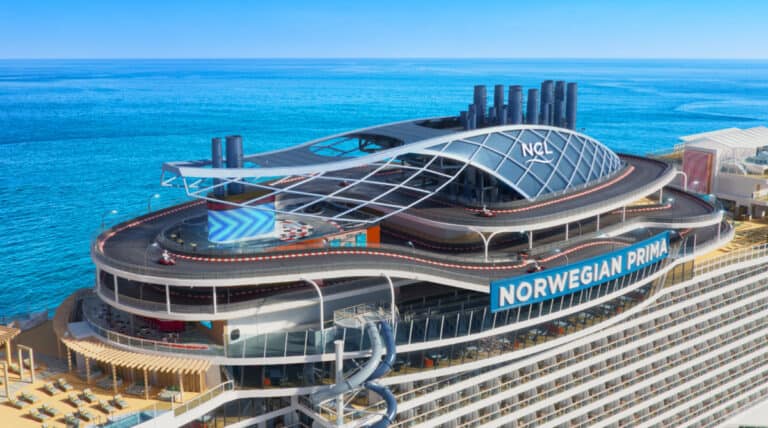
The company also announced a massive amount of entertainment options that will feature onboard, including the first-ever three-level 1,378 feet long racetrack with the Prima Speedway and its first-ever freefall drop dry slides.

Norwegian Prima to Homeport in Galveston for 2023 & 2024

Norwegian Cruise Line becomes the next cruise line to homeport one of its newest ships in Galveston, Texas. The cruise port is becoming more and more popular, and from 2023 Norwegian Prima will be visiting the port to embark new guests every week.

The ship is still under construction in Italy but is expected to cost the cruise line $850 million when completed. The 142,500 gross ton vessel will have space for 3,215 guests at double occupancy.

Norwegian Prima will sail on her maiden voyage on August 17, 2022, on an itinerary from Amsterdam, the Netherlands, to Reykjavik, Iceland, with stops in Zeebrugge, Bergen, and Geiranger in Norway, and Akureyri and Isafjordur in Iceland.

On further cruises, the ship will be calling in a wide variety of ports in the UK, Belgium, and France before heading to Bermuda, New York, and Miami. She will then sail to her new homeport of Galveston.

From Galveston, the ship will be the only vessel offering Western Caribbean cruises to Costa Maya and Cozumel, Mexico; Harvest Caye, in Belize, which is exclusive to guests of NCL; and Roatan Island, Honduras. As guests expect from Norwegian Cruise Line, all visits will include between eight and nine hours in port.

New Entertainment and Acitvites on Offer

NCL doesn’t seem to be taking it easy on its newest ship by revealing some impressive expanded and new features onboard.

First Three-Level Racetrack at Sea
First Three-Level Racetrack at Sea (Rendering Courtesy: Norwegian Cruise Line)

NCL already features a racetrack onboard Norwegian Encore but is taking it one step further onboard Norwegian Prima. The new track will be 1378 feet long (420 meters) and cover three levels. The Prima speedway will go around and through the vessel’s funnel, feature 14 turns for 15 drivers in go-karts that will reach 30mph.

“We’re not just elevating the guest experience, we’re giving it an adrenaline rush and multisensory overload,” said Harry Sommer, president, and CEO of Norwegian Cruise Line. “When we launched Norwegian Prima, we aimed at going beyond expectations, providing our guests with more wide-open spaces, elevated service, thoughtful design and a variety of unforgettable experiences, and this latest unveiling of our entertainment and onboard activities lineup is going to have the wow-factor they’ve yearned for in a much-anticipated cruise vacation.”

The Drop slide on Norwegian Prima
The Drop slide on Norwegian Prima (Rendering Courtesy: Norwegian Cruise Line)

The racing doesn’t stop there though; the ship will have the world’s first freefall dry slide called The Drop, where users will experience a 10-story plunge reaching the highest G-forces of any cruise line and two more dry slides called The Rush where passengers can race each other down the slides.

Norwegian Prima Open Deck with Water Slides
Norwegian Prima Open Deck with Water Slides (Rendering Courtesy: Norwegian Cruise Line)

Making its splashing first appearance on Norwegian Prima as part of the ship’s Aqua Park and Main Pool area, will be the Brand’s first Tidal Wave waterslide featuring gushing surfs where guests can ride an innertube to catch the perfect wave. Guests looking to relax can do so in either one of two infinity hot tubs or under the area’s cascading water feature.

Onboard entertainment comes in the form of “Summer: The Donna Summer Musical.”, brought by the production team that introduced “Jersey Boys” to Norwegian Bliss guests. The Musical will feature a score of more than 20 of Summer’s mega-hits and will last for 75 minutes.

Norwegian Prima Multi-Purpose Venue
Norwegian Prima Multi-Purpose Venue (Photo by andrewmacrobert.com)

There will be a state-of-the-art multi-purpose venue which will be a theater and a nightclub. The three-level venue will be groundbreaking with seamlessly converting spaces with a customized layout and moving LED screens. Norwegian Prima will also feature interactive real-life game shows including “The Price Is Right,” “Supermarket Sweep,” and much more. One thing is for sure; guests will not be bored onboard!

The new-class vessel is currently under construction at the Fincantieri shipyard in Marghera. The ship is already in the final outfitting phase after floating out of its dry dock in August.

Cruise Hive’s Annual Cruise Ship Awards Are Back!

With the cruise industry making a comeback, so are Cruise Hive’s annual Cruise Ship Awards. Voting has opened, and readers can now choose their favorite. This is now the seventh consecutive awards, but voting remains open for a limited time, with the results announced towards the end of the year.

Cruise Ship Awards 2021 Now Open

Cruisers don’t just have the return of cruise ships to look forward to, but also the 2021 Cruise Ship Awards. The annual Cruise Hive awards are fully open, where readers can vote once in each of the seven categories. Voting will remain open until towards the end of December, with the results announced before the year’s end.

It follows a tough time for the industry after most cruise lines remained suspended for most of 2020 and at least half of 2021.

However, with many cruise lines now having multiple cruise ships back sailing, including Royal Caribbean, Carnival Cruise Line, Norwegian Cruise Line, and MSC Cruises, it’s now a great time to get voting and begin getting excited about all the stunning destinations and cruise ships.

Cruise Ship Awards
Cruise Ship Awards 2021

For the 2021 awards, there are seven categories, including Best Cruise Line, Most Anticipated New Cruise Ship for 2022, Best New Cruise Ship of 2021, Best Cruise Ship Feature, and Best Cruise Homeport in the U.S.

There’s also a new category where voters can enter their favorite cruise ship so we can find out which cruise ship is ultimately the best in the industry. With cruise line private islands becoming an important part of cruise itineraries, the new Best Cruise Line Private Island & Destination category is also added.

Also Read: Mardi Gras Voted Most Anticipated New Cruise Ship for 2021

The 2021 Cruise Ship Awards also has the option for voters to add their own choice if it’s not already on the list. This opens the door to cover the entire industry. And if there are any suspicious votes, they will be removed.

For some more insights into the awards, you can also backtrack back to 2014, the year we first started with the awards, which was named The Great Cruise Vote. Over the years, categories have been adjusted to cater to an ever-changing industry, and in the years to come, there are already plans to expand with more categories.

Cruise Ship Lingo: Bow vs. Stern, Aft vs. Forward Cruise Terminology

Embarking on a cruise can have you feeling as though you are entering a strange foreign land with a whole new language to learn and decode. English is the onboard language used most often but the cruise ship terminology and lingo used can leave you unable to decipher what is being spoken about.

Thankfully, there is an easy way to get your head around this foreign tongue. This quick guide with on cruise lingo such as Bow vs. Stern and Aft vs. Forward will help you to find your way around these foreign terms and have you familiar with the lingo before you step aboard. Read on to navigate the language of the seven seas with confidence.

Cruise Ship Terms

Aft and Forward: The aft of a ship is the rear, while the front of the ship is referred to as forward.

Atrium: This is a multi-deck area of a cruise ship that is located in the central part of the ship, near to shops, cafes and elevators. The atrium can be of any length and varies from two to even ten decks in height.

Bow vs. Stern: The very front of the ship is referred to as the bow. The bow has been designed for it to easily glide through water. The shape that a bow takes is determined by the type of boat or ship, the speed of the vessel and the type of water it needs to navigate.

The stern is at the rear of the ship or boat and is located at the opposite end from the bow, the front of the vessel. It refers to the area that is constructed around the sternpost, the principal upright post at the rear end of a ship.

Bridge: The bridge is the area from which the captain steers and navigates the ship and from which the ship is commanded.

Grand Princess Cruise Ship
Photo Credit: Ceri Breeze / Shutterstock.com

Crossing: A crossing refers to the voyage a ship takes across water to get to a particular destination.

Deck Plan: The deck plan refers to the plans that show what type of staterooms are located on every deck on a cruise ship, as well as the other facilities and rooms on deck including elevators, shops, restaurants and theaters.

Departure Port: This is the port or point from which your cruise begins and ends.

Galley: The galley is the location of the ship’s kitchen. Cruise ships usually have many galleys because of the large number of meals they need to prepare daily.

Gangway: The ramp that you’ll utilize to enter the ship as well as to disembark.

Gratuities: These monetary amounts are an expression of thanks from passengers for the service they received throughout a cruise. Gratuities for groups are usually included along with the passenger’s final payment.

Hull: The hull is the ship’s exterior.

Keel: This is the middle and central part of a ship that extends from the bow to the stern.

Lido Deck: “Lido” refers to beach in Italian and the lido deck on a ship encompasses the deck that has swimming pools and bars. Much programming based on swimming pool activities happens on this deck and it is one of the upper-most ship’s decks.

Open Seating: This refers to being able to sit anywhere where there are unoccupied tales in the ship’s dining areas. It is an alternative seating arrangement to fixed dining table arrangements.

Port: This is the ship’s left side when viewed from the perspective of it facing forward. The left-hand side and the port side of the ship both mean the same thing.

Port of call: A port of call refers to one of the destinations on a cruise where you will most likely be able to disembark and experience shore excursions.

Port Expenses: Every port of call that you arrive at on your cruise will levy a charge that is based on local taxes and fees. These charges usually come as an additional cruise expense, as cruise companies don’t usually charge for port expenses and other taxes.

Portholes: These are the circular windows in ship’s cabins.

Porthole Cruise Ship Cabin
All Photos By: Melissa Mayntz

Promenade: The promenade is the open area that extends over the entire length on either side of a cruise ship. Some ships have decks that completely encircle the ship.

Repositioning Cruise: A repositioning cruise occurs when a cruise liner has to move from one part of the world to another. These cruises often occur with a change in seasons and are also frequently economically priced.

Single Supplement: This is an additional amount that is charged because cruise fares are based on double occupancy. Some cruise ships can charge double the rate for a single fare while others have a few single cabins available that will cost single travelers the same as double occupancy rates.

Starboard: Starboard refers to the right side of the ship when viewed from the position of the ship facing forward.

Thruster: This is a propulsion device that is fitted either on the bow or the stern of a ship. They are smaller than the ship’s propellers and allow for greater maneuverability at lower speeds, making docking easier. Large ships can have a number of bow and stern thrusters.

Also Read: Port and Starboard: Which Side Is Which?

Cruise Ship Dining Terms

Cruise Casual: This is the term referred to for the dress code at dinner on most nights onboard a cruise ship. Men can wear casual wear such as slacks, jeans, dress shorts and sports shirts. Women are able to wear casual dresses, pants, capri pants as well as dressy jeans.

Cruise Elegant: On these nights it’s advised that passengers wear more formal wear such as dress pants, dress shirts, and sport coats for men. Women should wear cocktail dresses, skirts and more formal pantsuits.

Formal Night: On longer cruises, there will be at least two formal dressing nights. These involve wearing formal suits or tuxedos for men and evening gowns for women. This dress code is not an absolute requirement although it is appreciated.

Construction Begins on First Sphere-Class Princess Cruise Ship

Construction has officially started on the first next-generation Princess cruise ship by Italian shipbuilder Fincantieri. The new vessel will be powered by Liquefied Natural Gas (LNG) and the first of two 175,000 gross-ton cruise ships.

First Sphere-Class for Princess Cruises

Even though Princess Cruises and parent company Carnival Corporation has been heavily hit by the suspension of operations, the cruise line continues to move forward with new ships. It’s a major milestone on September 3 as the first steel cutting took place at the San Giorgio di Nogaro (Udine) facility at Centro Servizi Navali. It’s not the shipyard as this is the company specializing in sheet metal production for Fincantieri.

It does now mean that physical construction has now started rather than just the design and planning stage. The ship will be the first Sphere-class for Princess Cruises and take the cruise line into a new era of ship design powered by LNG, the marine industry’s most environmentally friendly fuel technology, and the world’s cleanest fossil fuel.

Other Carnival cruise brands, including AIDA Cruises, Costa Cruises, P&O Cruises, and Carnival Cruise Line, already operate new LNG-powered cruise ships, a new trend across the industry as new ships are constructed.

Steel Cutting for Sphere-Class princess Cruise Ship
Steel Cutting for Sphere-Class princess Cruise Ship (Photo Credit: Fincantieri)

So the yet-to-be-named Sphere-class vessel will be 175,000 gross tons and will have a guest capacity of 4,300. The cruise line has yet revealed no other details. The new ship is currently scheduled to be completed in November 2023. A second identical vessel will also be completed in 2025.

Princess Cruises operates 14 cruise ships currently, including the newest ship in the fleet, Enchanted Princess, which joined the fleet in 2020. Five Royal-class ships are currently the newest class in the fleet, but they are not powered by LNG and have a gross tonnage of around 145,000 depending on the ship.

The cruise line was forced to sell two of its older vessels due to the global pandemic that hit the cruise industry hard. Sun Princess and Sea Princess were both sold in 2020 and are not operated under new owners.

Cruise Hive will keep readers updated as Princess Cruises reveals more details about its first new Sphere-class cruise ship, including first renders, itineraries, and ship features.