Key Aspects:
- US citizens are required to present REAL IDs in order to board domestic flights, which includes cruisers traveling to and from ports.
- Starting in February 2026, travelers who don’t have REAL IDs may need to pay $45 before going through a TSA checkpoint.
- Even then, there is a possibility for delays or not being cleared by TSA agents at all.
Every cruise guest knows that it’s important to verify and bring the correct documentation to their cruise ports, or else they could be denied boarding.
However, US citizens who will be flying to their next departure port now need to make extra sure they have another form of identification: Their REAL IDs.
If you missed the memo, the REAL ID is a state-issued driver’s license or ID card that doubles as a federally accepted form of identification that complies with stricter security standards.
In most US states, these cards are identifiable by a white star in a yellow circle.
REAL IDs have been required for domestic flights since May 7, 2025, but TSA agents will be enforcing this with a financial penalty starting next year.
As of February 1, 2026, guests who are flying without a REAL ID or another acceptable form of identification will be required to pay a $45 fee online.
The fee was originally proposed at $18, but the final amount is more than double this rate.
According to the Transportation Security Administration (TSA), 94% of people already use REAL IDs or other approved forms of identification, but the remaining 6% still equates to hundreds of thousands of vacationers.
Read Also: Cruise Like a Pro: 20 Mistakes Newbies Always Make
“Beginning February 1, travelers who do not present an acceptable form of ID at our security checkpoints and still want to fly can pay a $45 fee and undergo the TSA Confirm.ID process,” said Adam Stahl, Senior Official Performing the Duties of Deputy Administrator for TSA.
“This fee ensures the cost to cover verification of an insufficient ID will come from the traveler, not the taxpayer,” Stahl added.
How the Process Works
Starting in February, those traveling without REAL IDs or other suitable identification must pay the $45 to the TSA online prior to traveling.
Every transaction is good for a 10-day travel period before non-REAL ID users have to pay the fee again.
While it’s possible to complete the process from the airport, it’s highly recommended that the fee is paid in advance.
The process can take upwards of 30 minutes – and that’s assuming there are no glitches.
After paying the fee, travelers will need to present an email confirmation to the TSA agent before being allowed to pass through the security checkpoint.

But even then, it’s possible that TSA agents could still refuse to let these travelers pass through the security checkpoint if they can’t verify their identities for any reason.
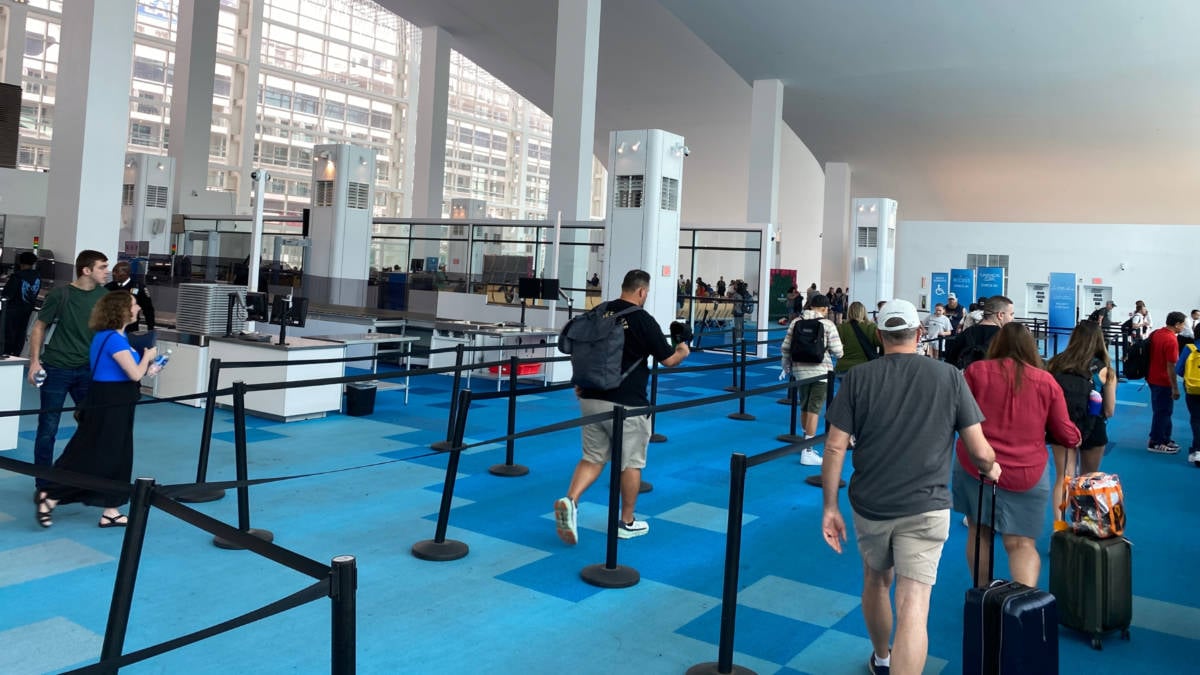
As another unfortunate side effect, this extra step could make lines even longer at airports servicing busy cruise ports like PortMiami and Port Canaveral.
“The security of the traveling public is our top priority, so we urge all travelers to get a REAL ID or other acceptable form of ID as soon as possible to avoid delays and potentially miss flights,” Stahl continued.
This is another reason to support why we always recommend flying to your cruise port at least one day early, as the ship will not wait for you if your original travel plans are delayed or cancelled for a reason like this.
Passports as an Alternative
On the bright side, the TSA accepts passports as an alternative form of identification, which is also the preferred form of identification for the major cruise lines.
With the exception of closed-loop and domestic cruises, passports are almost always required to set sail.
That said, it’s always smart to confirm what documentation is needed for your specific voyage with your cruise line before leaving home and with enough time to obtain documents that you might not have.
US citizens who travel with a passport but do not have a REAL ID are able to pass through TSA checkpoints without paying the $45 fee.
Other additional forms of identification that have been approved by the TSA include US passport cards, DHS trusted traveler cards, permanent resident cards, Veteran Health Identification Cards, and foreign government-issued passports.
A complete list of acceptable forms of ID can always be found on the TSA website.