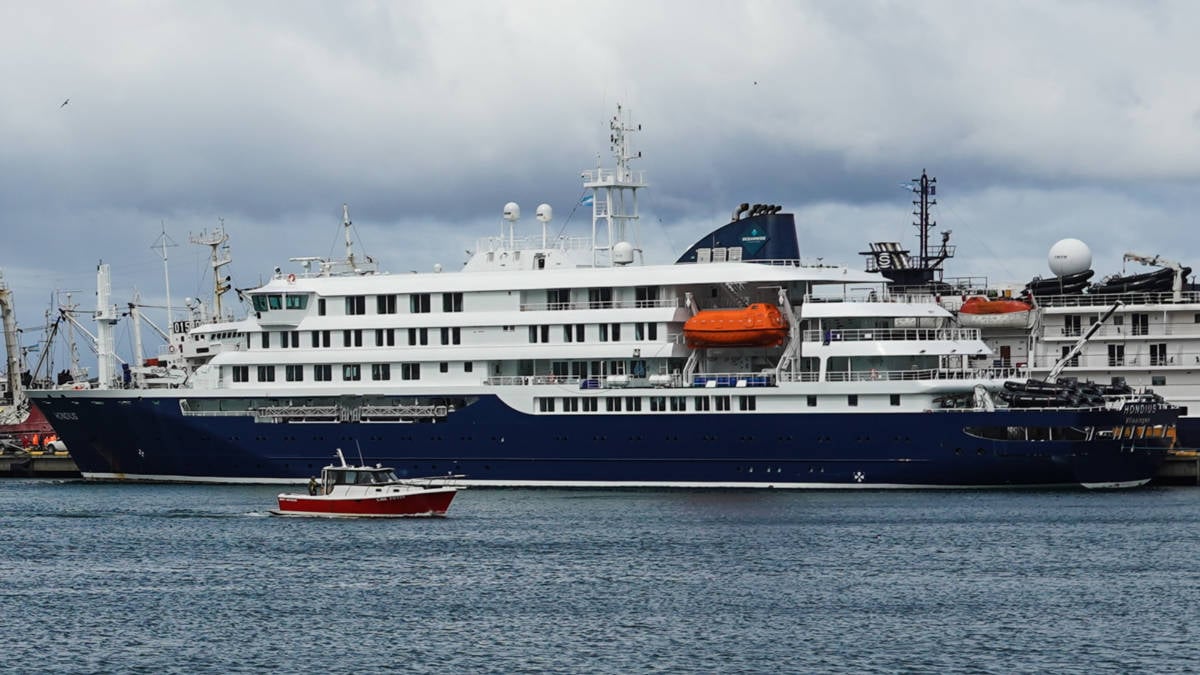
Key Aspects:
- MV Hondius, which is currently navigating a hantavirus outbreak that has claimed three lives, won’t be able to disembark as planned in Cape Verde, Africa.
- Instead, Spain is preparing to safely welcome the ship and disembark passengers.
- Once medical evacuations for several critical guests are complete, the expedition ship will begin the journey to the Canary Islands.
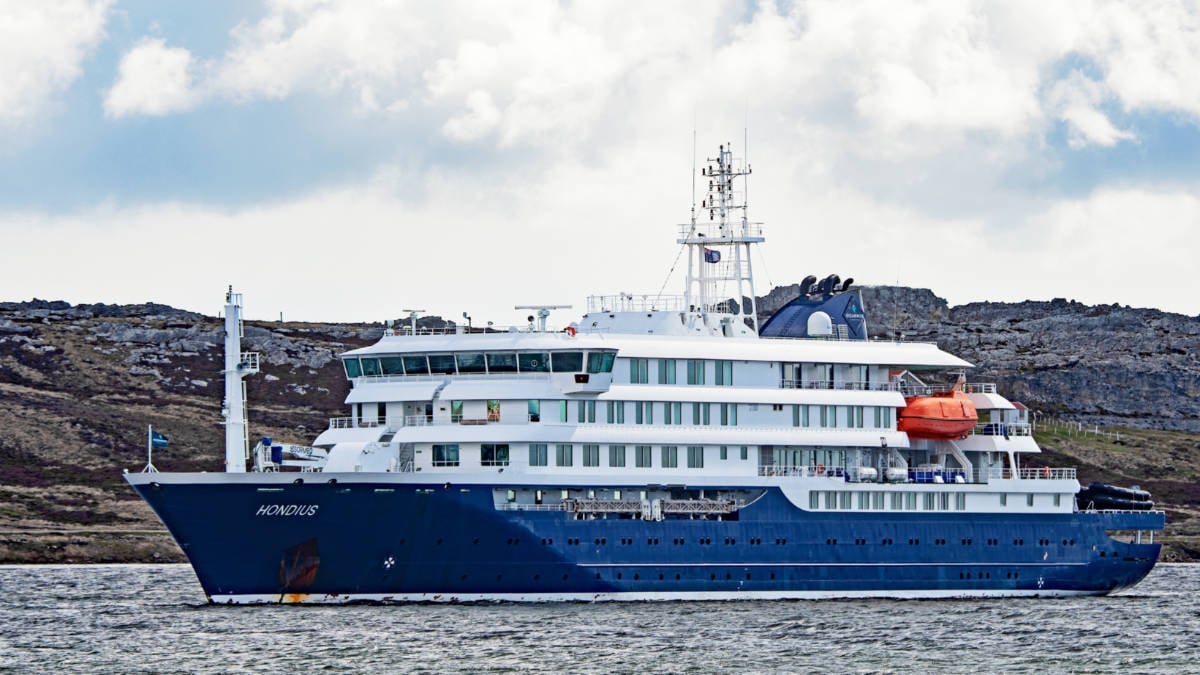
An end may be in sight for the approximately 150 people stranded onboard Oceanwide Expeditions’ MV Hondius, who are living through an unprecedented hantavirus outbreak that has already led to three deaths.
The small vessel, which left Argentina on April 1, 2026, to begin a voyage to Antarctica, is currently stuck off the coast of Cape Verde, Africa, with guests prohibited from disembarking due to a rare hantavirus outbreak.
According to Spain’s Ministry of Health, Spain has now stepped up to receive the 5,590-gross ton vessel through a coordinated effort with the World Health Organization (WHO) and the European Union.
WHO determined that Cape Verde is not equipped to safely disembark passengers and that Spain’s Canary Islands are the closest location with the necessary resources and capabilities to undertake this unusual operation.
The health authority asserted that Spain has a moral and legal obligation to assist the ship, which has at least 13 Spanish nationals onboard. There are also 17 Americans, 19 British nationals, and others from a variety of countries, including Canada, Australia, Japan, the Netherlands, and Argentina.
No hantavirus outbreaks aboard cruise ships have been reported to the CDC in at least the past three decades according to archived data. This means that the situation is really unprecedented and requires careful thought and planning.
Spain’s government is currently working with WHO and the European Centre for Disease Prevention and Control (ECDC) to determine a health and safety protocol to keep everyone as safe as possible as guests and crew members are disembarked, assessed, and likely quarantined.
The health organizations want to ensure that healthcare personnel stay safe and that no passengers have any contact with the local population. Authorities will share prompt updates as a protocol is determined and implemented.
What Comes Next?
On May 5, 2026, the ECDC conducted a thorough review of the vessel to determine which individuals required urgent evacuation.
As of the time of publication, Cruise Hive is aware of three deaths and four additional passengers who are suffering from severe respiratory symptoms. Lab testing has definitively confirmed two cases of hantavirus so far.
In an update from Oceanwide Expeditions issued on May 5, the cruise line confirmed that two individuals requiring urgent care would be evacuated using a specialized aircraft, as well as a companion to a guest who died on May 2.
“The medical evacuation of two individuals currently requiring urgent medical care, and the individual associated with the guest who passed away on 2 May, will occur using two specialized aircraft that are en route to Cape Verde,” the update stated.
The cruise line said that the evacuees would be bound for the Netherlands, though Spain’s Ministry of Health stated that the Canary Islands would accept the ship’s doctor on behalf of the Netherlands following a formal request to do so.
The doctor is allegedly in serious condition and is being flown to the Canary Islands on a hospital aircraft on or around May 5.
Once medical evacuations are complete, the ship will sail toward Spain’s Canary Islands, although it’s not clear which specific cruise port they will dock at yet. It will most likely be Gran Canaria or Tenerife.
The journey is expected to take around three days once it begins, though the exact timeline is still unclear.
“Once these three individuals have been safely transferred from the vessel and are in transit to the Netherlands, the m/v Hondius will begin repositioning. Our plan is to proceed to the Canary Islands, either Gran Canaria or Tenerife, which will take 3 days of sailing,” the cruise line continued.
Steps have been taken to care for the remaining guests onboard and to prevent additional spread, including enhanced sanitation and cleaning, screening for symptoms, and enforcing quarantines and social distancing.
Outbreak is Under Investigation
Hantavirus is extremely rare and people are usually only infected after coming into contact with rodents, especially when exposed to their urine, droppings, or saliva.
Oceanwide Expeditions has released a tentative timeline of how the medical emergency has evolved thus far, but this is a developing situation and the cause of the outbreak is still under investigation.
While the leading theory is that at least one passenger contracted hantavirus in Argentina before boarding MV Hondius, there is some suspicion of human-to-human transmission happening onboard.
That said, transmission between humans is incredibly rare. If this is happening onboard, it would be on a very limited basis between people with very close contact, such as with the married couple who died during the outbreak.
“We do believe that there may be some human-to-human transmission that’s happening among the really close contacts, the husband and wife, people who’ve shared cabins,” Maria Van Kerkhove, WHO’s director of epidemic and pandemic preparedness and prevention, told CBS News.
An investigation, quarantine protocols, and contact tracing efforts are in progress to definitively determine the source of the outbreak and mitigate further spread. Cruise Hive will continue to issue updates as soon as they are available.