

Planning a cruise can feel overwhelming, especially when it comes to choosing a cabin. If you’re having a difficult time deciding, it can help to know what to avoid.
The worst cruise ship cabins are those that have obstructed views or too much noise, and those located near high-traffic areas or at the bow or stern. These are the ones you want to steer clear of.
I’ve cruised in dozens of different cabin types, some of which barely felt like a vacation. To help you avoid a headache and get the most out of your cruise, I’ll give you the ultimate guide for which cruise ship cabins to avoid and why.
In This Article:
- 1. Obstructed-View Cabins
- 2. Cabins Above and Below Noisy Venues
- 3. Cabins Near Elevators, Stairwells & High-Traffic Areas
- 4. Interior Cabins
- 5. Aft (Rear) Cabins
- 6. Forward (Bow) Cabins
- 7. High-Deck Cabins
- 8. Cabins with Poor Privacy
- 9. Adjoining Cabins
- 10. Guarantee Cabins
- So, What’s the Best Cabin to Book?
1. Obstructed-View Cabins
Several things can obstruct your view from your cabin. For example, a lifeboat can block your window and make your space darker and/or give you a disappointing view. Sometimes, even the most spacious and luxurious cabins have something that interferes with the view.
Many cruisers, including myself, have been tempted by reduced prices for obstructed-view cabins. And in all honesty, there are times when obstructed views are worth it.
When I’m cruising the Caribbean on a Carnival or Royal Caribbean ship, I have no problem booking a budget-friendly obstructed view. For me, these cruises are always more about the onboard entertainment.

However, if I’d prioritized a bargain over a balcony view for my Alaska cruise, I would’ve been disappointed. The upgrade in cost was well worth it.
If your budget is tight and your goal is simply to get away for a few days, a low-priced, obstructed-view cabin can be sufficient. The same is true if you aren’t particularly interested in seeing the ocean and would rather enjoy the ship’s amenities or participate in excursions.
But if you’re hoping to enjoy peaceful sunsets from your room or you love the idea of people-watching in port from your balcony cabin, you’ll want to avoid obstructed-view cabins.
Always check deck plans when booking and be wary of cabin descriptions that mention “partial-view” or “obstructed-view.”
2. Cabins Above and Below Noisy Venues
Most passengers will also want to avoid a cabin near a noisy venue. These are located directly under or above the ship’s nightclubs, casino, theaters, buffets, bars, and lounges.
While the amount of noise that comes from these locations varies from cruise to cruise, in general, you’re taking a risk staying close to these areas.
This may not be as much of a concern if you’re cruising with a premium line known for its more mature (and quieter) cruisers, including Cunard or Princess Cruises. The noisier lines, like family-friendly Disney or party ships like Carnival, are best to avoid if noise is a concern.

In addition to the nightlife venues on the ship, you’ll also want to avoid cabins underneath the gym. They tend to be busiest early in the morning, and no one likes to be awakened by the sound of banging weights at 6 A.M. Additionally, avoid cabins near areas that are popular with kids, such as play areas or pools.
Another example is the balcony cabins that overlook the Boardwalk neighbourhood on Oasis-class cruise ships. It’s the same case on the Icon class.
These cabins can work for people who are heavy sleepers or who intend to enjoy the nightlife on board the ship themselves. However, if your goal is to get a good night of sleep or to avoid noisier areas in general, you’ll want to opt out of this type of cabin.
Did you find a rate that’s too good to resist for a cabin near a noisy area?
Consider packing a white noise machine to drown out voices, music, and more.
3. Cabins Near Elevators, Stairwells & High-Traffic Areas
Although you might know to steer clear of cabins near loud bars and nightclubs to avoid overnight noise, you might not think of other high-traffic areas, including stairwells, elevator banks, and busy hallways.

In addition to overhearing conversations and footsteps, you’ll also be hearing elevator sounds and slamming doors day and night.
When should you consider cabins near these high-traffic areas?
When the convenience of getting to the stairs or elevator outweighs your desire for peace and quiet.
4. Interior Cabins
Interior cabins often tempt cruisers, especially first-time travelers, because they’re available for a better price. If you’re looking for value, they aren’t a terrible option. However, they’re not your best option, and they tend to be disappointing unless you intend to use your cabin only for sleeping.
Interior cabins have no windows, which means no natural light, and they tend to be very small. Some ships’ interior cabins are unbelievably small, such as Royal Caribbean’s Interior State Rooms with cabins less than 200 square feet.

It won’t surprise you to know that many cruisers, including me, describe small interior cabins as claustrophobic and disorienting. You can feel the movement of the ship but can’t see the motion of the waves, which can contribute to seasickness.
Most Royal Caribbean ships have a decent number of interior cabins, some more troublesome than others. For example, the Royal Caribbean Symphony of the Seas features just over 500 interior rooms. These staterooms are typically easier to book, especially for last-minute getaways.
If you do get lured into an interior cabin, make sure you pack light. You won’t have much storage space.
5. Aft (Rear) Cabins
The plus side of a rear cabin is you’ll get one of the best views on the ship from your balcony, but unfortunately, it comes at a price. These cabins tend to have multiple drawbacks, including increased motion, noise from the ship’s engine, and a lot of vibration. Some even smell of exhaust.
If you aren’t sensitive to unpleasant smells or motion, or you intend to spend very little time in your room, aft cabins can work. But for the vast majority of travelers, this is a cabin to avoid.

Also, keep in mind that these cabins can be marketed as luxury options and still be problematic. For example, high-end or premium aft cabins on certain ships can have heavy vibration and motion, but you’ll likely only hear about the great views from these rooms in promotional materials.
I’ve ended up in a few rear cabins that seemed nice at first, but throughout the trip, tested my patience. Even if you aren’t sensitive to motion or smells, several days in this type of cabin can get to you.
6. Forward (Bow) Cabins
Forward or bow cabins are what I consider a hit-or-miss option. If you’re blessed with a calm sea during your cruise, these cabins can be a great option.
Of course, conditions are unpredictable, and if you happen to hit stormy or rough seas, you’ll experience a greater pitching motion in these cabins. All of the noise associated with pulling into a port and lowering the anchors can also be annoyances you’ll deal with in bow cabins.

If you are cruising an area that’s rarely rough or you have just a short voyage, forward cabins can work well. That said, I’d recommend avoiding these cabins unless you’re an experienced cruiser who knows how to evaluate the various issues that affect bow cabins.
The good news is there usually aren’t a lot of extreme bow cabins on a ship. For example, on the Grand Princess, you’d most want to avoid Deck 9 (Dolphin), the D106-D114 cabins.
7. High-Deck Cabins
It might surprise you to see high-deck cabins on this list, but let me explain.
These cabins are on the higher levels of the cruise ship and do offer benefits, like better views and access to upper-level entertainment, but those benefits are quickly erased if you get motion sickness.
And because high-deck cabins tend to come with greater sway, more wind, and exposure to weather conditions, motion sickness is a much higher risk.

Experienced cruisers who know for sure they won’t get motion sickness might still want to give these cabins a go if you find a great rate. There’s still risk, but you know your tendency toward motion sickness, and you can judge whether or not it’ll work for you.
First-time cruisers could be asking for trouble when booking a high-deck cabin. If you’re new to cruising and you aren’t sure whether you’re prone to motion sickness, you’re better off choosing something that exposes you to less motion.
And if you know motion sickness is an issue? Always avoid these cabins.
8. Cabins with Poor Privacy
Privacy might not seem like an important consideration when booking your cabin, but once you’re on board, a lack of privacy can ruin the trip for a lot of cruisers.
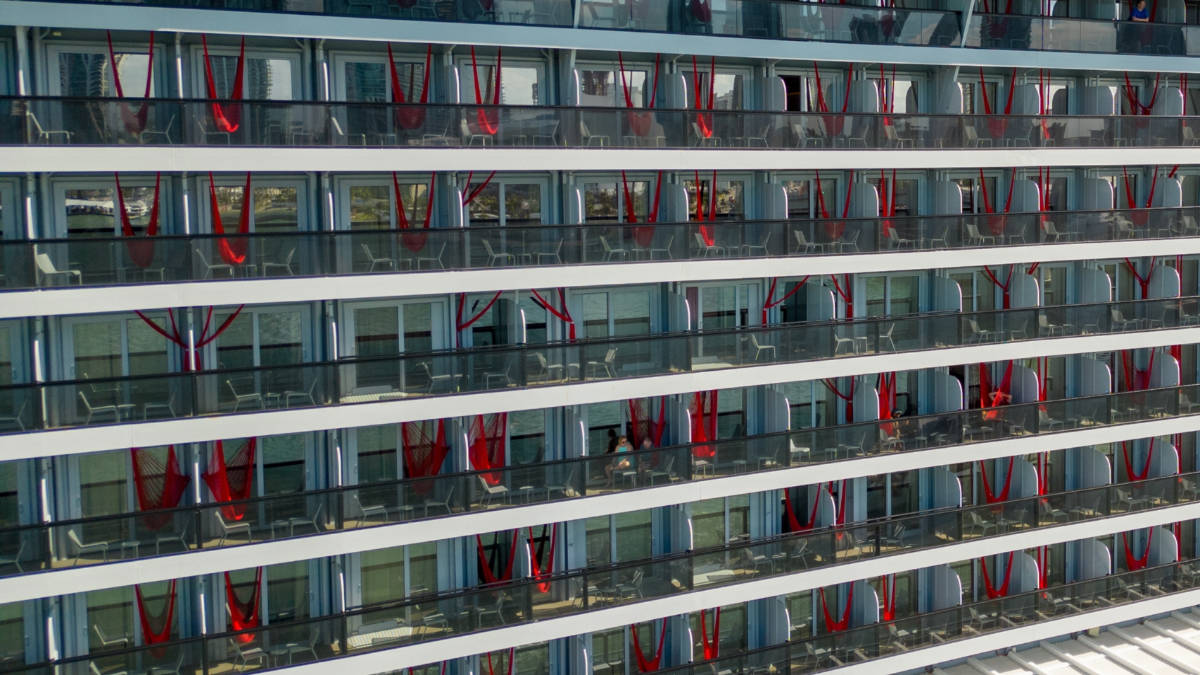
Look out for balconies that are overlooked by other decks or promenade levels. Some also have transparent partitions or doors that face public areas.

The price might make these less-private options more appealing. However, before you act on that great deal, make sure you’re comfortable with sacrificing some privacy while traveling.
In my experience, I’ve been happy with so-called poor privacy cabins on a few ships. It often depends on your fellow cruisers. You’d be more likely to have a good experience with the higher-end luxury lines, such as Viking or Silversea, than you would with the more family-friendly lines.
9. Adjoining Cabins
If you’re traveling with friends or teens who you want to be close to while still having separate spaces, adjoining cabins can be a great option. However, these are rarely a good idea when traveling alone or as a couple.
Adjoining cabins are common on all cruise ships and are typically marketed as ideal for family or friends traveling together. They’re also available across a variety of different types of rooms, including balcony and interior cabins, and can be located on various decks.

For instance, the official Carnival Vista deck plan lists 26 connecting cabins on Deck 1 (Riviera Deck) and 4 connecting cabins in the Family Harbor area on Deck 2 (Main Deck).
These cabins tend to lack privacy and are noisier because of the thin connecting doors. Consider these cabins more of a family option, and stay away if you don’t know your neighbors.
10. Guarantee Cabins
Last up on the list are Guarantee Cabins. These are a budget-friendly option that means you don’t choose your cabin when booking, and you leave your accommodation to the cruise line’s discretion. You’ll be assigned a cabin based on availability, which means you could end up in one of the worst locations.

The trade-off?
You get a great deal on a cabin, but you’re taking a huge gamble.
Experienced cruisers who want to save money may consider this option, understanding that it comes with some sacrifices. And if you can’t afford to book the cruise of your dreams without some trade-offs, Guarantee Cabins can get you a great rate.
But if you’re looking for comfort and privacy, even if it means paying up? Guarantee Cabins are best avoided.
So, What’s the Best Cabin to Book?
Now that you know the cabins to avoid, what’s left? What type of cabin should you book?
If years of cruising have taught me anything, it’s that you need to know your cruising style. Travelers have different priorities, and what’s ideal for one person or couple might not work for everyone.

For instance, if you’re going on a cruise with a large family or group of friends, you might prefer some of the usually less desirable cabins. Adjoining rooms might be fantastic if you need space and closeness.
Or for a large family or friends trip, you might want to book a block of rooms close to one another. Some travelers can pay less, and their reduced privacy or noise risk is less of a factor because they’re near their travel party.
All of that said, in general, there is one type of room that tends to appeal to the majority of cruisers.
Midship cabins
Midship cabins are on a lower to mid-level deck, typically decks 5 to 8 on larger ships. This means you experience less motion and feel more like you’re staying in a hotel room.
In addition to avoiding the sway and pitch of the ship, you’ll also get a quieter room that’s insulated from the pool decks and engine rooms. Midship means there are plenty of rooms above and below you to block out the noise.
These staterooms are also convenient. They offer easy access to stairwells and elevators without being right next to them.
Midship cabins tend to give you a great balance of comfort and value. They aren’t as expensive as suites and cabins with specialty balconies, but you still get plenty of comfort by avoiding the problems associated with obstructed cabins or extreme aft or forward cabins.
And my final piece of advice:
Check the cruise ship deck plan before booking. This allows you to spot potential problem areas and avoid them.
You might also realize that one of the less-optimal cabins on a particular ship actually isn’t that bad and is available for a great rate.
Big savings means more chances to cruise, and that’s always a good thing!


