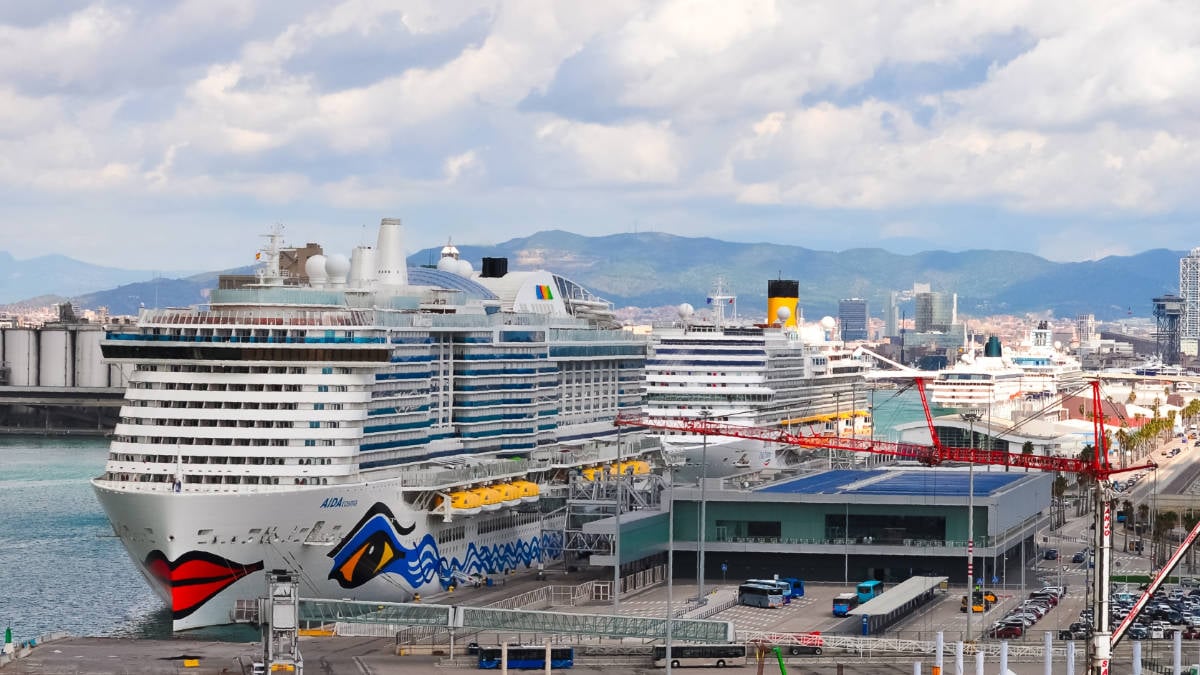
Key Aspects:
- Barcelona’s city council has decided to accelerate what should have been a gradual increase in taxes on visiting cruise guests.
- Officials have pledged to increase the daily tax for cruise passengers to €24, the legal maximum.
- The purpose of the tax is to encourage homeporting operations while mitigating overcrowding from short port calls.
Barcelona’s plan to slowly raise its taxes on cruise passengers is simply not fast enough for local officials.
Metropoli Abierta reported that the local government agreed to immediately increase municipal taxes to the daily maximum of €24 (About $27.39 USD) during a meeting of the Economy and Finance Commission on July 15, 2026.
As previously reported by Cruise Hive, the current city tax of €4 (approximately $4.57 USD) was originally supposed to double to €8 ($9.13 USD) in 2025. The cruise guest tax would then gradually increase over several years before reaching the legal maximum in 2029.
Additionally, cruise guests will still be required to pay a €6 (or $6.85 USD) regional government fee, meaning the daily per-person total is actually €30 (about $34.24 USD).
The fee will apply specifically to cruise guests visiting the capital of Catalonia for less than 12 hours on single-day port calls. Homeporting passengers, who begin and end their vacations in Barcelona, will be exempt from the tax.
To be clear, this is a fee that each individual passenger will be required to pay, though the cruise lines typically collect and pay the taxes on behalf of their guests.
While local authorities have already approved the new fee, it must officially be enacted into law, which is expected to coincide with fiscal meetings happening at the end of 2026.
Why is Barcelona Raising Taxes?
The purpose of the tax increase is to encourage homeporting operations while reducing the number of port calls that arrive in the city to mitigate overcrowding.
Supporters of the new tax order argued that the current cruise ship activity in Barcelona is unsustainable and that the number of cruise tourists still needs to be reduced. They said raising the tax was justified because of unsustainable overcrowding.
Currently, city leaders are also discussing an annual cap of 3.5 million cruise passengers, with the port welcoming nearly 4 million guests each year on average.

Previously, Barcelona implemented a partial cruise ban that forbids vessels from docking at the Northern docks (Muelle Barcelona Norte to the World Trade Center), primarily to mitigate pollution within the city center.
In 2025, the city cut the number of cruise terminals available at Barcelona’s Adossat Wharf from seven to five in an attempt to curb overcrowding.
And in an effort to modernize infrastructure, terminals A, B, and C will be demolished and replaced with a single larger and more efficient cruise terminal. This is expected to occur by 2030.
European Destinations Block Cruise Ships
Barcelona isn’t alone in its efforts to limit cruise tourism. Several other European destinations have attempted to deter cruise ships through increased taxes, bans and passenger caps, or all of the above.
Staying within Spain, Ibiza only allows a maximum of two cruise ships to dock at one time. Meanwhile, Palma (Majorca) has a daily maximum of three cruise ships per day, only one of which can be a mega-ship carrying over 5,000 passengers.
The Greek Isles, which have also struggled with overcrowding, implemented a seasonal cruise tax that took effect in summer of 2025.
Additional limitations have been implemented at destinations throughout Italy, France, Croatia, and the Netherlands.