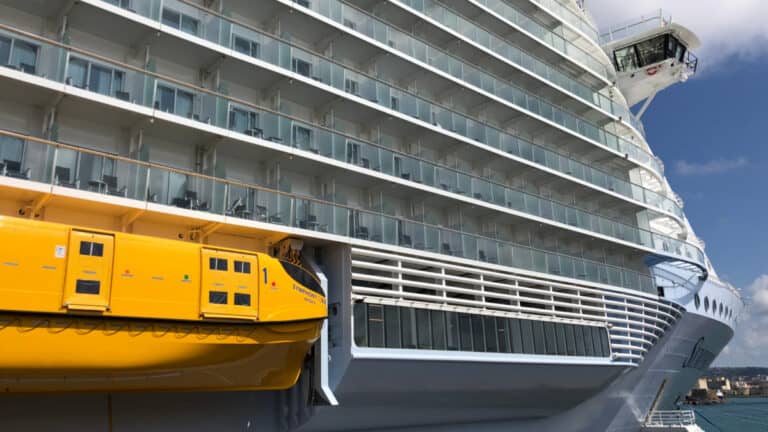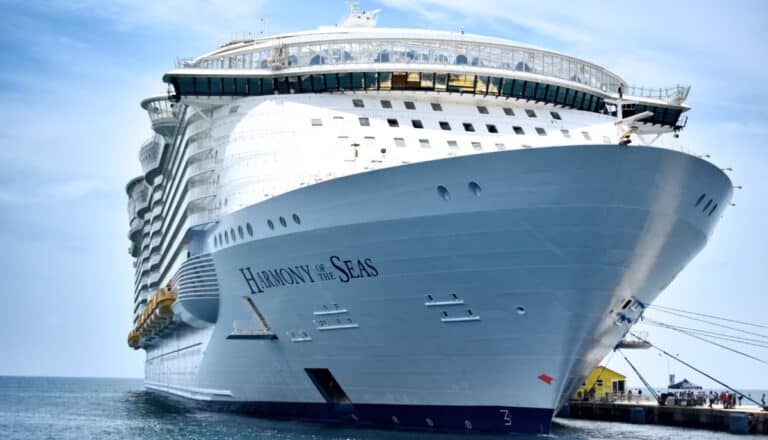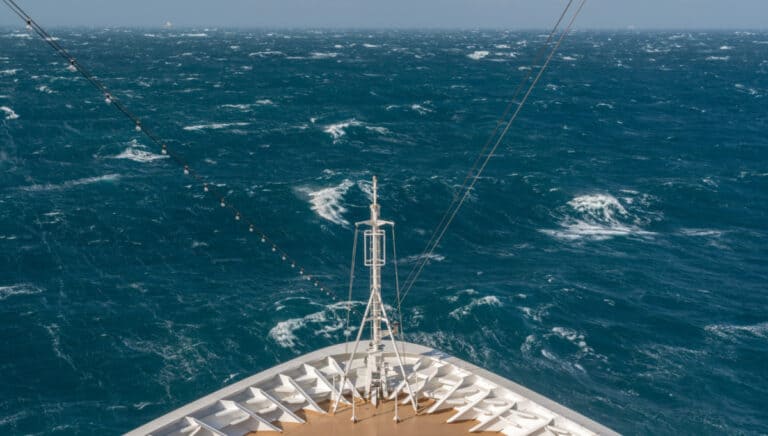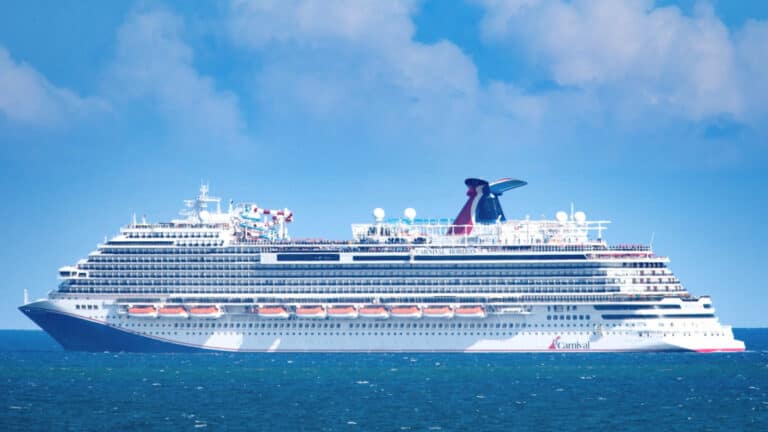
A cruise ship passenger has sadly been killed by a bull shark while snorkeling in The Bahamas. The passenger, a guest from Royal Caribbean International’s Harmony of the Seas, was participating in an independent excursion when the incident occurred, and succumbed to upper body injuries.
Harmony of the Seas was visiting Nassau on New Providence Island from 8 a.m. to 5 p.m. on Tuesday, September 6, 2022. The 58-year-old woman and her traveling party booked an independent snorkeling excursion through the Seas the Day tour company – not booked through the cruise line – that took them to Green Cay.
Photo Credit: YULIYAPHOTO / Shutterstock
“The family was reportedly snorkeling in waters and that area is known for visitors to snorkel,”Royal Bahamas police chief Chrislyn Skippings said in a news conference.“It is further reported that family members observed a bull shark attacking the female.”
Tour employees and family members rescued the woman and quickly returned to New Providence Island for emergency medical care, but the woman was pronounced dead.
The victim was a resident of Pennsylvania. To preserve the family’s privacy, her name has not been released.
“Royal Caribbean International is providing support and assistance to the guest’s loved ones at this time,”a spokesperson from the cruise line stated.
The area of the attack has now been closed to visitors indefinitely, and authorities have not said when or if the area may reopen. Shark attacks have been noted in the same area previously, including a fatal incident in 2019 when a 21-year-old woman from California was killed. That incident did not involve cruise ship guests.
Shore Tour Safety
It must be noted that any wildlife interactions can be unpredictable, and such an incident could occur whether on an independent tour or when booked through the cruise line. Shark attacks, however, are exceedingly rare considering the popularity of snorkeling excursions and other watersports.
Tour operators typically scout suitable snorkeling locations before arriving with guests, to ensure safe water conditions, but bull sharks can swim as quickly as 25 miles per hour (40 kilometers per hour), and could easily enter a snorkeling area at any time.
When snorkeling, it is best to not overestimate one’s swimming abilities, and to always remain with a group and close to the boat if possible, in case of any emergency situation.
About Bull Sharks
The bull shark (Carcharhinus leucas) is found worldwide, most often in shallow, warm, coastal waters. Measuring an average of up to 8 feet (2.4 meters) long and weighing as much as 290 pounds (131 kilograms), the shark is known for its aggressive nature. They are a highly territorial species with little tolerance for being disturbed.
This makes bull sharks more likely to bite humans, and because of this, they are considered one of the most dangerous shark species.
Bull Shark in the Bahamas (Photo Credit: Michael Bogner / Shutterstock)
While exact numbers of bull shark attacks are unknown due to the lack of positive shark identification in many cases, bull sharks have been responsible for several fatalities off the Atlantic coast of Florida, as well as in Virginia, Hawaii, and Texas.
Bull sharks are also tolerant of fresh water and are frequently sighted in larger freshwater rivers, but interactions with humans are rare in freshwater areas.
No Cruise Ship Delay
There have been no delays reported to Harmony of the Seas‘ schedule, and the ship has continued on its 7-night Western Caribbean sailing.
The Oasis-class vessel departed Port Canaveral on Sunday, September 4, and visited the cruise line’s private island, Perfect Day at CocoCay, on Monday before visiting Nassau on Tuesday.
Wednesday is a day at sea, followed by port visits to Falmouth, Jamaica and Labadee, Haiti on Thursday and Friday, respectively. After another day at sea, the ship will return to Port Canaveral on Sunday, September 11.
Harmony of the Seas can host as many as 5,479 guests at double occupancy, and up to 6,687 passengers when fully booked.
Cruise Hive’s deepest condolences are with the victim’s family members and loved ones at this difficult time.
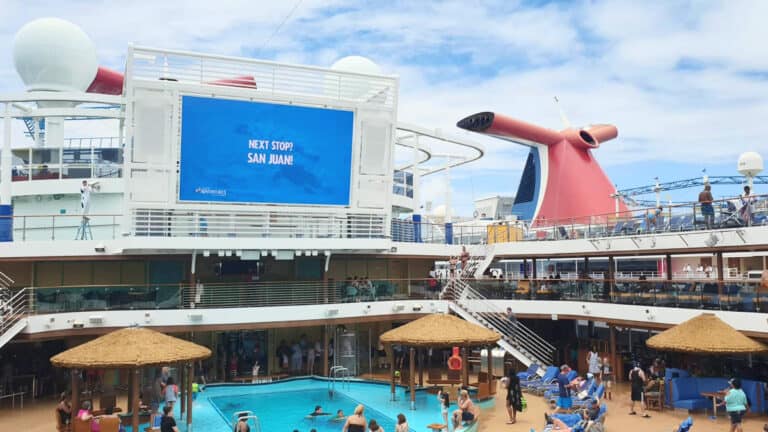
In a surprising change to its Minor Guest Policy that applies to passengers under 21 years of age, Carnival Cruise Line has instituted an onboard youth curfew for all its vessels.
The curfew will only apply to travelers 17 years of age and younger, and goes into effect immediately across the entire fleet.
Curfew for Young Guests
Outlined on the cruise line’s Minor Guest Policy page, the new curfew is as follows:
“Guests 17 years of age and under who are not accompanied by an adult in their traveling party, 21 years of age or older, must be clear of all public areas by 1:00am each evening unless involved in a Club 02 or Circle C teen activity.”
Cruise passengers have long been divided on the subject of young cruisers, with some travelers reporting younger guests taking over elevators, playing in hallways or stairwells, pounding on stateroom doors, or otherwise causing excess noise and disturbance, particularly late at night.
The last day of a cruise, when youth programs have typically concluded, is often a more raucous night for young cruisers and their newly-made onboard friends before they part ways the next morning.
Carnival Cruise Line brand ambassador John Heald clarified the consequences of violating this new policy on his popular Facebook page.
“Any guest in violation of the curfew or whose behavior contradicts our rules could be disembarked in the next port at their own expense and not be allowed to have a cruise with us again,”Heald said.
This does not mean, however, that young travelers would be put off the ship without their parents or guardians.
Any reported incident is sure to be investigated before consequences are applied, and it is likely that a warning could be issued before such drastic action is taken, depending on the individual circumstances and the severity of the incident.
Furthermore, the curfew will not apply when young cruisers are involved in a supervised Club O2 or Circle C activity, or when they are accompanied by their parents or another member of their immediate traveling party over 21 years of age.
More Emphasis on Respect
This change comes just days after Carnival Cruise Line updated its “Know Before You Go” information to emphasize respect, courtesy, and other values expected of its guests.
“No one will ever confuse a Carnival Cruise Line ship with a school library, but our experience has taught us that everyone has a better time when children are supervised, noise in the hallways is kept to a minimum, guests follow queues, and that a spirit of community and neighborliness is shown by all,”the new policy reads.
Similarly, the consequences for excessively disruptive behavior is the same as for breaking the new curfew: disembarkation at the next available port at the guest’s expense, and a ban from sailing with Carnival in the future.
Photo Copyright: Cruise Hive
It has not been clarified as to whether a guest could also be banned from all Carnival Corporation & plc cruise lines, which would also include multiple other popular lines, including Princess Cruises, Holland America Line, and Costa Cruises.
These changes come after there has been a rise in onboard incidents in recent weeks, with physical altercations between groups of guests that escalate to violence.
In June and July, separate incidents occurred aboard Carnival Magic from New York and Carnival Elation from Jacksonville, Florida. Such incidents, however, are not confined to Carnival Cruise Line. Royal Caribbean International’s Navigator of the Seas had a similar incident in early July.
Furthermore, smaller incidents that involve fewer parties and are quickly broken up are rarely reported, but do happen on occasion when guests may be involved in misunderstandings or other unfortunate circumstances.
In many cases, excess alcohol consumption and the uninhibited atmosphere of a cruise vacation may contribute to such incidents, though all cruise lines do take steps to ensure a safe, enjoyable getaway for everyone onboard.
A cruise line may require people to “tender” to be able to go on land. There have been several cruise lines – like Royal Caribbean, Disney Cruise Line, and Norwegian Cruise Line – that have had to implement this, and many passengers find it fun.
There are advantages and disadvantages to cruise ship tendering, and while not all itineraries have a tender port, there are a few that contain multiple ones.
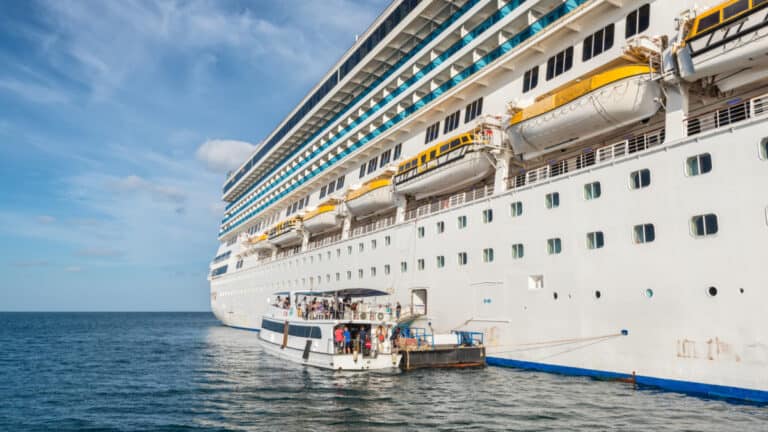
Tendering is when smaller passenger ships or lifeboats are used to transport passengers from the cruise ship to a port. It occurs when the cruise ship is too large to dock in a port, or if the port is already occupied by another ship. Passengers can find out prior to booking a cruise if it is tendered, as this is outlined in the itinerary.
Guests Going on Tender (Photo Credit: Yingna Cai / Shutterstock)
The reasons for using a tender boat are that large ships may not be able to fit into certain ports. While this doesn’t prevent them from visiting these destinations, a tender is provided so guests can cross to land. They are also used for small ports where mid- or large-sized ships can’t fit. Lastly, there may be shallow waters, and safety is always a top priority.
Will You Know Prior to Booking Your Cruise if There Is Tendering?
If you’d rather not tender from a cruise line, you can view the itinerary prior to booking excursions to see if they are tendered or docked. You can avoid cruises that use tendering if you go to city ports, where the chances are you will not have to tender.
Top 6 Pro Tips for Cruise Ship Tendering
Here are some tips to follow when tendering on a cruise ship.
Tip #1: Don’t Be Quick to Go on the First Tender
We recommend that you disembark slowly. This allows you to enjoy a leisurely breakfast aboard the ship and go exploring after the rush of guests has left. Tendering is more enjoyable when you aren’t facing a long line up.
If you sign up for an organized shore excursion, you will probably meet on your ship before tendering together. In other situations, you may need to meet on land. You will need extra time to do this.
Also, listen to the announcements on your ship carefully. Collecting a tender ticket prior to boarding is one way to keep minimal waiting times.
Tip #2: Go to the Top Deck or Front of the Tender if You are Prone to Motion Sickness
If you are prone to seasickness, place yourself in the front of the tender at the top or by the windows. The breeze will make you feel much better. When embarking on your tender, crews will direct you to a seat if you request to be placed at the top or front of the boat.
Photo Credit: Solarisys / Shutterstock
Furthermore, if you do get motion sickness while on small boats, it is advisable to take medication one hour prior to tendering.
Tip #3: Refrain from Taking the Last Tender to Return
Avoid coming back one or two hours prior to the last tender, as this is the busiest time. If you can return a few hours earlier, you can skip the queues. You can do this last minute for the last tender, but it isn’t advisable.
Tip #4: Avoid Booking Independent Excursions with Early Starts
If you do not have priority tendering, you may want to avoid any excursions with an early start, as you may not get an early tender.
Photo Credit: Ihor Koptilin / Shutterstock
Without being able to reach land, there is a chance that you may miss your activity. This is where priority tendering comes in handy – passengers are not left behind when it comes time to disembark.
Tip #5: If You Have Mobility Issues, You May Not Want to Tender
There is usually a gap when transferring between boats. Some people don’t have the ability to step across safely. Therefore, if you aren’t sure footed, don’t have a long stride, or use a wheelchair, you may want to avoid tendering. Most boats are not wheelchair accessible.
If you do have issues with mobility, let the crew know in advance if you require assistance. Some cruises can’t transfer those in wheelchairs due to safety reasons but they will try to accommodate people with mobility challenges.
Tip #6: Sit on an Exposed Upper Deck
If there is an upper deck, grab a seat in this location. The view is unobstructed and breathtaking. Tender boats tend to be a ship’s lifeboats. However, tendering can be arranged through an outside company. With tendering, there may be several tenders going simultaneously.
Passengers are usually required to queue onboard before being loaded into the tenders upon arrival. A lifeboat itself can carry 150-200 passengers. They aren’t cramped, and the largest ones are tendered.
How Does Tendering Work?
Most cruise lines have a ticket system if you would prefer to exit shortly after anchoring. This system provides a tender time to disembark from the ship. If you wait one or two hours, you may not require a ticket and are able to tender when you would like. Some cruise lines offer loyalty status, which enables passengers to receive priority tendering.
There is no ticket system to return to the ship. Guests return to where they got off, display their cruise card, and patiently await the next boat.
Advantages of Tendering
The advantages are that you can take gorgeous photos of the cruise ship, explore small islands and remote ports, and get a free boat trip!
Disadvantages of Tendering
Transit times to and from the boat are not long. However, when you consider wait times, loading, and other things, the entire experience takes time. The process is slower compared to traditional docking where you simply walk off the ship.
Holland America Line Life Boats Being Used at Tenders (Photo Credit: Wangkun Jia / Shutterstock)
Additionally, the boats aren’t all that comfortable, and you will need to wait in a queue to get a return tender.
What if I Have Mobility Issues?
When transporting someone from the cruise ship to the tendered boat, there are several steps involved. There is also a gap to step across from the ship to the boat. For those with limited mobility, this can be difficult.
With some cruise lines, passengers may be required to prove they can step over a set distance prior to entering. This may be the same for those with babies and small children.
Do Tenders Operate in Poor Weather?
If a port is tendered, there is a higher chance of it being skipped in poor weather conditions. The boats are small and won’t provide a pleasant trip in strong winds. Cruise lines cannot take a chance on guests leaving the ship and being unable to return. It’s better to err on the side of caution.
Cruise ship tendering can be an enjoyable experience if you know how to navigate through the process properly. If you booked an early excursion, ensure that you have priority tendering. After all, you don’t want to miss your activity, so you will need to be sure you get on the boat right away. Keep in mind the other helpful tips we’ve given for a leisurely and enjoyable tender experience.
The former Celebrity cruise ship Celebrity Horizon has arrived at the Aliaga ship-breaking yard in Turkey to be broken up as scrap metal. The vessel with the distinctive shape has been sitting at an anchorage in Greece for the last two years, awaiting her fate.
Horizon, as she was called for the last couple of years, was last operational in 2020 for Pullmantur Cruises. As the Royal Caribbean part-owned cruise line filed for financial reorganization in 2020, CEO Richard Fain stated that the vessel, along with the other ships in Pullmantur’s fleet, would be sold.
Celebrity Horizon Arrives In Turkey To Be Scrapped
After a week’s journey, the 1990-built cruise ship Celebrity Horizon arrived in Aliaga, Turkey, where she will slowly be broken up as scrap metal. She becomes the next in a long line of cruise ships that have been scrapped in the last two years.
The cruise ship with the distinctive and unusual exterior sailed for Celebrity cruises for fifteen years. Built in 1990 at the world-famous Meyer Werft in Papenburg, Germany, she was the first-ever new-build ship for Celebrity Cruises.
Photo Credit: Photomarine / Shutterstock
The 46,811 gross tons Celebrity Horizon had space for some 1,828 passengers at double occupancy. The vessel had played a role in several initiatives for parent company Royal Caribbean. This includes undergoing five name changes, and sailing for several different operators focused on the European cruise markets.
Busy Service After Celebrity Cruises
After sailing from 1990 to 2005 for Celebrity, she was transferred to a newly formed cruise line, Island Cruises, which focussed on the UK-family market. After some extensive refits, the Horizon operated in the Caribbean and Mediterranean through 2008, when Royal Caribbean Group pulled out of Island Cruises.
The vessel was transferred to Pullmantur Cruises, focused on Spanish-speaking guests, for the first time in 2009, a company she sailed for as Pacific Dream from 2009 to 2010, and renamed Horizon again in 2010. In 2012, the ship was transferred again.
Photo Credit: Roger Utting / Shutterstock
Another new venture for the Royal Caribbean Group, CDF Croisières de France, operating under Pullmatur Group, took over operations from Pullmatur in 2012. Sailing as l’Horizon with a focus on the French market, she operated in the Caribbean and Northern Europe through 2017.
In 2017, Pullmatur closed offices in France and CDF Croisières de France ceased operations. Sailing again for Pullmantur, Horizon operated for a short period in the middle east before the pandemic simultaneously brought the end to Pullmantur and Horizon.
Since the start of the pandemic, Horizon has been sitting at anchor in Greece, awaiting a new operator. With record-high steel prices, the choice was made to scrap the 32-year-old cruise ship.
On August 25, 2022, the ship left her anchorage in Eleusis under tow from two tug boats sailing toward Turkey. She joins several other cruise ships that have been sold for scrap in the last two years. Most recently, this included the former Cunard Princess, which arrived in Aliaga in July of this year.
Earlier this year, the former Norwegian Cruise Line ship Seaward wasbeached; Carnival Sensation was beached, and Carnival Cruise Line announced it had started preparations for the departure of Carnival Ecstasy.
In a quiet shift of beverage offerings, Norwegian Cruise Line has switched from PepsiCo to Coca-Cola sodas. Guests onboard different Norwegian Cruise Line ships have noticed the change in recent weeks, which is now hinted at on the cruise line’s website.
Changing Soda Companies
Norwegian Cruise Line ships will now be serving Coca-Cola soft drink products, including Coke, Diet Coke, Sprite, and more. The exact beverages offered aboard individual ships will likely depend on the supplies and stock availability as the switch is made, as well as different drinks’ popularity and the ability to meet demand.
For years, Norwegian Cruise Line has offered exclusively PepsiCo products (Pepsi, Diet Pepsi, Sierra Mist, Mountain Dew, etc.). Now, recent guests have noted Coca-Cola products being served onboard different Norwegian cruise ships, including Norwegian Breakaway, Norwegian Epic, and Norwegian Joy.
Recent renderings of Norwegian Prima have also shown what appear to be Coca-Cola products stocked in bars, but this is far from definitive confirmation of the company’s complete beverage options and may just be for representational purposes.
Image Courtesy: Norwegian Cruise Line
Coca-Cola products were noted as available during the christening festivities for Norwegian Prima on Saturday, August 27 in Reykjavik, Iceland.
This changeover will likely include different options not only for soft drinks, but also bottled water, which is typically supplied by the same soda company that provides the carbonated beverages. PepsiCo’s bottled water is Aquafina, while Coca-Cola’s bottled water is Dasani.
Teas and sports drinks available onboard Norwegian ships may also change as the soda options are switched.
Why the Change?
There has been no official announcement or explanation offered for the shift in soda offerings for Norwegian Cruise Line. These types of changes are often made based on negotiations between beverage providers and the cruise line, with exclusive suppliers offering greater incentives and profit margins in different markets.
Photo Credit: hbw_pictures / Shutterstock.com
It is not unusual for different venues such as theme parks, sports stadiums, hotel chains, or similar markets to offer just one brand of cola beverage, or to switch to a different company when fiscally viable.
It is possible that recent supply chain issues may be a factor in this change, though such temporary disruptions do not usually have as long-lasting impacts as completely changing the available drink brands.
Norwegian Cruise Line’s website – which previously listed beverage options from the PepsiCo brand – now uses generic terms such as “cola” “diet cola” and “lemon lime soda” when describing its beverage packages. While this could indicate a permanent change, it could also be a sign of more flexible options depending on available supplies.
Soda Wars
The choice between Coke and Pepsi can be a contentious one for dedicated soda drinkers. While some people claim the two beverages have no discernable differences between them, many soda connoisseurs can easily taste which drink is Coke and which is Pepsi.
Photo Credit: Marco Verch Professional Photographer / Flickr
Pepsi products are generally regarded as sweeter, while Coke products tend to have a bolder flavor with more “bite” to the taste.
Because of these differences, cocktails that include a cola or lemon-lime soda as part of the mix can taste markedly different depending on whether Coke or Pepsi is used.
Which Cruise Lines Serve Which Sodas
Different cruise lines have different soda options available to guests. Carnival Cruise Line, for example, used to serve Coca-Cola products exclusively, but switched to PepsiCo products in January 2020.
Disney Cruise Line, on the other hand, has an exclusive partnership with Coca-Cola aboard all its ships, including the line’s brand new flagship, Disney Wish. This is not surprising, considering Coca-Cola products are also served in Disney theme parks.
Pepsi Sodas (Photo Copyright: Cruise Hive)
Royal Caribbean International also serves Coca-Cola products, including the popular Freestyle machines that permit guests to create unique flavor combinations.
Some cruise lines may offer both types of beverages, depending on which market or region a specific ship is sailing in and which drinks are available in that area.
Cruise passengers who have a specific taste preference for either Coke or Pepsi should investigate which soft drinks different cruise lines offer before booking.
If the drinks aren’t to their taste, many cruise lines do permit guests to carry on limited quantities of alternative beverages, but policies and permitted amounts vary by cruise line.
According to their Cruise FAQ, however, Norwegian Cruise Line does not permit guests to bring aboard any beverages, either in carryon or checked luggage, a policy which has been in place since July 2016. The only exceptions are purified water for medical devices or infant formula, or sealed wine bottles subject to security screening and a corkage fee.
Harsh waves lapping at a cabin window, water drenching the deck, and the vigorous rocking of a ship are all images that our mind conjures up when we think about a cruise ship going through a storm.
Although it’s impossible to control the weather, cruise ships prioritize safety above all else. We show you how captains navigate through rough seas on a cruise ship.
If you’ve ever watched a horrifying reality show on television, you might be a little concerned about all the things that could go wrong when you travel. Might you be faced with the same possibilities? How are these extreme circumstances handled?
The good news is that cruise ships will rarely travel through a rough sea. They are equipped with the latest in weather tracking information and navigation systems so they can avoid any potential storm or heavy seas.
Often, when there are rough seas or storms ahead, the captain charts another course around the weather so that they avoid the rough water altogether.
This might mean the ship takes longer to reach port or that there is a delay in the schedule. However, it also means that every passenger on board is kept safe. This is their No. 1 priority.
Rough Seas on a Cruise Ship: Can the Ship Handle it?
Cruise ships are made of heavy steel. When there is a full capacity of passengers, plus the crew, the weight will allow it to easily roll with the high seas and high winds.
In the roughest seas, the ship may tilt to one side. However, this is highly unlikely since shipbuilders vigorously test the center of gravity and buoyancy while constructing the vessel.
Photo Credit: Toni Arsovski / Shutterstock
This testing included putting scale models of the cruise ship through storm simulations to see how it holds up. These ships are designed to handle all types of storms, even hurricanes.
Weather Is Always Monitored
As mentioned, the captain constantly monitors the weather. This is an important function since they never know when they may need to change course. Cruise lines contain the latest weather forecasting equipment, with technology that is far more advanced than what you have on your phone.
The bridge holds a wide range of storm satellite images, weather maps, and computer models. The crew works with third-party meteorologists and always monitors the weather forecasting equipment.
In addition to the latest in monitoring equipment, many cruise fleets also take added precautions. Royal Caribbean hired meteorologist James Van Fleet in January 2017. They were the first in the cruise ship industry to hire a dedicated meteorologist. Prior to this, Van Fleet was employed as a television meteorologist for over 20 years.
During typhoon and hurricane seasons (from June to November), Van Fleet is at Royal Caribbean’s Miami headquarters monitoring their 25-foot weather wall screens. He shares information with its 26 cruise ships plus the executive team.
Van Fleet is frequently able to see storms building as early as ten days before it strikes. His job is to advise each ship on how to avoid them.
Carnival Cruise Line Miami Monitoring Center
Carnival Cruise Line monitors the weather using a multi-million dollar command center. This 35,000-square foot center is staffed around the clock. It contains 74’ long video walls containing 57 LED screens.
These screens show the status of all the ships in the fleet. It includes information on itineraries, weather, and safety updates. Some of these are captured by Argos, which is an in-house management tool.
Sometimes Cruise Ships Are Rerouted
While generally, a cruise ship will continue on to its destination if poor weather conditions can be avoided, there are sometimes exceptions. A modern cruise ship is equipped with stabilizing technology for when it encounters rough seas. However, if the storm is more serious, the ship may attempt to avoid or outrun it.
For most storms, the command center will try to move the ship to a better weather location. Yet, there are situations where the cruise ship may not have a choice other than going through the rough weather, such as when it’s crossing the North Atlantic during the fall. In these instances, the ship will attempt to find a calm patch of sea.
Photo Credit: Ramunas Bruzas / Shutterstock
If they are unable to avoid the weather, the cruise line can change the itinerary. This may mean switching a Bermuda cruise to one along the coast of Canada or New England. They may also lengthen or shorten the cruise by a couple of days.
Decisions are made with input from the captain, with safety and comfort at the forefront. To avoid heavy rains, a ship may remain at sea and arrive at the port a little later than planned.
Ports can also be skipped if the seas prove to be too rough to handle. This usually happens in circumstances where there is not a deep-water dock and guests need to board a smaller tender ship to arrive on shore.
Ships will choose to dock using an alternate port, change the port’s order, or find a sunny location at sea.
What Happens If You Experience Poor Weather?
If the cruise ship you’re on encounters rough seas, listen to the instructions from the captain and crew. They will place non-slip mats on slippery surfaces and put up signage to remind guests to use caution when walking.
Listen to the daily captain’s report from the bridge, as it will contain a description of the conditions on the sea and help you decide what you need to prepare for the day.
If you are prone to motion sickness, you may want to prepare yourself with medications, prescriptions, or homeopathic remedies.
Photo Copyright: Cruise Hive
Attractions like waterslides and pools may be closed, or the outdoor decks can be shut down altogether. It is rare for a captain to advise all guests to remain in their cabin, but this can happen.
Generally, guests will experience rolling, but that is usually the extent of it.
When it comes to rough seas on a cruise ship, these massive vessels are well equipped to handle anything nature can throw at them. Testing during the construction phase ensures that the ship can remain buoyant and not capsize in the event of poor weather.
Advanced weather stations provide excellent communication to each cruise ship in a fleet so they know what to expect. They will also help the captain and crew successfully navigate away from potentially bad weather using a variety of methods.
Cruise ships always keep passenger safety as their top priority so you can have a worry-free vacation.
You have finally booked your cruise with your favorite cruise line – whether it’s on Disney Cruise Line, Carnival Cruise Line, or Princess Cruises – and are wondering which is the best deck on a cruise ship.
Perhaps you suffer from motion sickness and are concerned about the ship’s movement. You may want a great view, or you may just want the most memorable experience possible. We discuss how to select the best deck and things to consider so that you have the best trip ever!
If you are concerned about getting seasick, the best deck on a cruise ship is in the lowest part of the ship, near the central areas. If these rooms are already taken, select a room that is still in the center of the ship and as close to the lower decks as you can get.
In this location, you will feel less rolling and swaying of the ship. If you are prone to motion sickness, this is the best area for you.
The areas most affected by a cruise ship’s movement are the upper deck, the end, and the forward parts of the ship. Therefore, avoid balcony cabins and cabins on the higher decks.
Finding the best deck allows you to have a more enjoyable trip and provides the opportunity to make it a memorable experience rather than a less-than-enjoyable one. We discuss which deck and cruise ship cabin is best for traveling, along with other factors to help you in your selection.
Going on a cruise – whether it’s a river cruise or an ocean venture – should be a wonderful adventure and an experience you will always cherish. But if you are seasick, uncomfortable, or surrounded by noise, then you will not enjoy it. For this reason, choosing the best cabin on the best deck is very important.
How Many Decks Are There on a Cruise Ship?
Cruise ship decks are the floors that a ship contains. If you compare it to a building, then the decks on a ship would be the storeys. Cruise ships tend to have 12 – 16 decks.
Their numbering is based on its primary deck. Decks above the ship’s primary deck (#1) can be numbered as #A2 (A for Above), while those below are #2, #3, etc.
Best Deck for Seasickness and Access to Amenities
The best location to book your cabin will be in the center of the cruise ship and on the lower deck. The lower you go down, the less rocking you will experience during your trip. If you suffer from any motion sickness, this area is ideal for you.
You will also be more stable on your feet and can easily attend to anything you may need to do. Since the location is central, you will have easy access to all areas of the deck and are never far away from activities and amenities.
However, if you are not prone to becoming seasick, you can select a cabin located in the midship area on the upper decks. Stairs can be used to take in the fresh sea air or to relax in the morning sun.
Best Deck for Relaxation and Peace
If you want to relax and get away from the noise from the nightlife aboard the cruise, select a deck away from the lounge, pool, bar, nightclub, engine rooms, casinos, and other areas where people congregate. In this case, the best cabin is located near other cabins rather than close to activity areas.
Other passengers in this area will either be socializing away from their cabin or resting. You’ll have a much better chance of getting a good night’s rest and not being kept up all night.
Keep in mind to avoid family cabins if you want a more secluded, quiet experience. Big, extended family vacations mean a lot more children. Children will have the potential to make more noise by being active or crying.
The area near the engine room on a ship should also be avoided. It frequently produces a loud, roaring sound. Therefore, avoid booking your cruise ship cabin near this location. Having an experience that is private, safe, and restful while you are at sea will be important when enjoying your cruise.
Best Deck for Those with Mobility Concerns
If you have issues with mobility, you will want a deck close to elevators or something similar. Should you enjoy things like sunbathing or swimming, you can choose a cabin on a deck close to the pool or sun deck for easier access.
Photo Credit: Vintagepix / Shutterstock
Visitors with mobility challenges may appreciate being closer to the activities as opposed to having to walk greater distances to participate in an event. Guests will have an easier time getting around the cruise ship on these decks rather than booking on other ones.
If you require wider hallways and more spacious accommodations, the best deck for you will be the lower decks. These decks are more spacious, and the hallways allow people with mobility equipment to pass through easily.
Best Deck for Scenery
The rear area of a ship is perfect for those who want to bask in the beauty of nature without being distracted by large gatherings of people. Most passengers can be found near the forward (bow) cabins. By booking your cabin in the back of the ship, you will have more space to move around and less traffic.
In determining the best deck, it comes down to personal choice. You need to first think about what type of experience you will enjoy the most and what you are looking for. If you suffer from motion sickness, you will want to factor that in.
Photo Credit: Jeff R. Clow / Shutterstock
If this is your first time on a cruise and you are unsure about seasickness, you may want to book a cabin with less rocking to be sure that the trip is enjoyable.
There really is no “perfect” deck. The perfect cabin will come down to what type of experience you want. You may have to prioritize your expectations to enjoy your trip fully.
What Decks Should be Avoided
Top decks contain pools, sun decks, hot tubs, slides, outdoor facilities, and water parks. People will be occupying these spaces at all hours, so they will be noisier. If your cabin is at a deck below this area, you may experience more disturbances and noise throughout your trip.
Noises may be from loud, booming voices, chairs scraping, water splashing, boisterous giggling, conversations, and cheering. The only advantage to booking in this area is that, within minutes, you are close to all amenities.
Photo Courtesy: Carnival Cruise Line
You can choose this deck if you really want to enjoy the nightlife, want to be close to the activities, and aren’t bothered by excessive noise.
There are also cabins on certain decks that have obstructed views of scenery. This may be a disadvantage to those who want to take in the view. If the scenery is irrelevant, then you can choose these cabins.
Upper decks should be avoided if you have motion sickness as you will feel the ship’s rocking more. If you do suffer from this, the lower and central decks would be best suited to you.
Upper Deck: Advantages and Disadvantages
Your needs will dictate the best deck for you. To help in your decision, we will examine the advantages and disadvantages of each location.
Advantages
Close to Entertainment/Amenities – Upper decks are frequentlyused for attractions like sports courts, entertainment areas, and additional amenities. If you enjoy entertainment and watersports, and if noise doesn’t bother you, then select the upper deck.
Best Panoramic View – This area contains the best views on the ship. Guests can easily view the surrounding areas in spectacular detail on these decks. The higher you go, the better able you will be to take in the scenery. Journalists, photographers, and artists find these decks inspiring.
View From Upper Balcony (Photo Credit: Eliza Olarean / Shutterstock)
Disadvantages
Far from the Main Dining Room, Lobby, and Embarkation/Disembarkation – Guests may need to choose between being close to the main lobby and dining rooms and being close to entertainment hubs. Entertainment hubs and pools are found on the upper deck, but the lobby and main dining rooms are located on lower decks. You may have to travel farther each way.
Less Stable – As mentioned, this area isn’t as stable as the lower decks. So, if you suffer from motion sickness, the upper decks will just exacerbate the situation. You will also not want to book a cabin in this area if you aren’t stable on your feet.
Lower Decks: Advantages and Disadvantages
The lower decks have some benefits and drawbacks as well. While they tend to be best if motion sickness is a concern, the views may not be as great, and some floors can be noisy.
Close to Dining Rooms and Disembarkation/Embarkation – Cruise ships have their embarkation/disembarkation and dining rooms on the lower decks. Being close to a main dining room is a major advantage as snacks and meals are consumed there three times per day. This area also allows you to be closer when getting on and off the cruise ship. This is a benefit if mobility is a concern.
More Stable – As mentioned, lower decks are more stable. They experience less motion compared to the upper decks on a ship.
Close to Main Lobby – Inquiries can be placed without the need to go very far. There may be service centers that aren’t found in the upper decks.
Spacious Hallways – If you have a physical disability or are travelling with someone who does, consider booking a cabin in this area since the hallways are wider.
Better View of the Ocean – While guests will not be able to see scenery, they will see the beauty of the ocean and the creatures found within it. Visitors can watch schools of fish swim by or dolphins through their cabin window.
Lower Deck (Photo Credit: David Fadul / Shutterstock)
Disadvantages
Closer Views May be Concerning – Depending on your perception, some people may find the view alarming. For those who have experienced water mishaps, they may be scared by ocean waves beating against their window. Near collisions with sea rocks may be alarming as well. If this is a concern, avoid booking on a lower deck.
Lower Decks Hold the Engine Room – The engine rooms are located on the lower decks. Some passengers may find them noisy.
Things to Consider with Cabin Selection
Once the best deck has been selected, it is time to find the best cabin. In finding the best one for you, there are seven factors to consider.
View – Do you want a room with a view? Should this view include scenery/nature or underwater delights? Guests may need to figure out what they would like to see when they look out their cabin window. This needs to be established while booking your trip as changing cabins later on is difficult. Additionally, some cabins have large windows, and some have none. Find one with a view you want.
Space – How many people are traveling with you? Furthermore, you will need to factor in seniors and anyone with mobility challenges. Both will affect which deck you choose. Also, families will affect your cabin size and location. Make sure your whole group has ample space and your beds have adequate leg room.
Ambiance – Does the cabin feel homey and comfortable to you? Do you like the arrangement?
Amenities – Learn about what is provided with the cabin. Are their free snacks, breakfasts, memberships, or extra services available? Which ones do you need? Is there a personal butler or freebees that you can use? Prior to booking a cabin, become familiar with what is included to avoid any surprises during the trip.
Security and Safety – Your cabin needs to make you feel safe so that you can relax. Make sure there is an escape route in case of emergency. Prior to selecting a cabin, make sure to check safety and security features.
Price – Large, fully furnished cabins cost more. The cost is even higher if room service and a butler is included.
Convenient Location – Is the location close to areas you need to access or amenities that you frequently utilize? Does the room provide basic amenities? Make sure you have everything you need. For items that are not included, budget accordingly with a little extra just in case.
Conclusion
The best deck on a cruise ship doesn’t have a one-size-fits-all answer. It will depend on the individual and their preferences. If you are traveling in a group, make sure you take each person’s needs and preferences into consideration so that everyone will have an enjoyable and memorable experience.
Cruise ships are so massive that it is natural to be curious as to what the lowest deck on a ship is like and whether there are any advantages to traveling on the lowermost deck.
Surprisingly, there are some benefits to skipping the main deck or the upper deck and an interesting history behind the name.
The lowest deck on a ship is known as the orlop. This is the area where cables tend to be stowed, and it’s usually located below the water line. It is suggested that the name “orlop” originates from the over-looping of cables.
It may also reference a corruption of the word overlap, which references an overlapping balcony half deck that consumed part of the lowest deck space.
How Are Decks Numbered?
Cruise ships tend to be numbered going from the bottom up. It begins with Deck 1 and can go up as high as Deck 20-plus. On most ships, the lowest deck isn’t accessible to guests. Passengers tend to board a cruise ship on Deck 4 or 5.
Cruise Ship Deck Number (Photo Credit: Bjoern Wylezich / Shutterstock)
Some vessels have deck names in addition to numbers. An example is the MSC Grandiosa, where decks contain the names of famous artists like Van Gogh and Monet. On Costa Deliziosa, they’re named after ornamental flowers.
What Is the Lowest Deck for Passengers?
For some ships, Deck 1 is the lowest deck of the ship. For others, Deck 1 is the lowest deck that is accessible to guests. With Disney Cruise Lines and Carnival Cruises, cabins can be booked on Deck 1. For others, the lowest cabins are found on Deck 3 or 4.
Photo Copyright: Cruise Hive
Below guest cabins, the crew cabins, engine rooms, laundry, medical center, and jail can exist. Some ships choose to label these as Decks 1 and 2. On cruise ships containing passenger cabins on Deck 1, the lower levels may be labeled Decks A, B, and C.
Are There Benefits to Staying on a Lower Deck?
For some passengers, having a cabin on the lowest passenger deck is the best way to prevent seasickness. The top of a cruise ship will sway side-to-side more than the bottom decks. To avoid the effects of motion sickness, select a cabin close to the waterline.
If motion sickness is of great concern, book a cabin that contains a balcony. Guests who can sit on their balcony and view the sea may feel less nauseous than when resting on a bed in a windowless cabin. With a windowless cabin, passengers are more likely to feel each motion than when they are outdoors.
Photo Credit: Pau Peset / Shutterstock
If a balcony stateroom isn’t in your budget, book a room that contains a window. These are located on the lowest decks. They will enable you to view the horizon and enable your brain to cope with motion. This will help with the queasiness through rough seas.
Additionally, if you have difficulties with mobility, accessible cabins are usually on lower decks since they are closer to disembarkation and embarkation.
They are also closer to theaters, lobbies, and main dining rooms, making them more accessible. They can be roomier in the halls, which makes moving around easier for those in wheelchairs.
Are There Any Downsides to the Lowest Deck?
If you are a passenger, cabins in this area are the cheapest. It can be quite noisy residing in the lowest part of a ship. You may hear the humming of the engine, clanging of anchor chains, and blast of bow thrusters.
Costa Smeralda Cruise Ship (Photo Credit: Stefano Garau / Shutterstock)
Depending on the cruise ship, some people report they feel vibrations that are severe enough to make hangers rattle. However, not all low decks are noisy. Yet, at certain times, during bad weather and when a ship is going in and out of ports, guests can hear more noise on lower decks than on higher ones.
Summary
When asking the question “what is on the lowest deck of a ship?” you may have to clarify whether you want to know the absolute lowest deck on a ship or the lowest passenger deck. There may be differences in the answer depending on how the person is interpreting your question.
Some people will interpret the question to be the absolute lowest level on a ship. That would be the orlop, which holds the cables found below the waterline. This is what this area is referenced as unless you are discussing ships that are very old.
In terms of passenger levels, the lowest deck would be the level above the engine. One is a more technical answer, while the other is more of a passenger reference. When it references passenger levels, there are pros and cons to having a cabin in this area. Each advantage and disadvantage varies according to the cruise line.
Many people marvel at the sheer size of cruise ships. They secretly wonder how something so large and heavy could move so easily in water or how something that massive could even float in the first place! In this post, we’ll explain how cruise ships float.
The answer to this question boils down to materials, design, water displacement, and buoyancy. So, in short, a combination of design and physical elements.
Cruise ships were designed to be massive yet displace the same amount of water that is equivalent to their mass. The ocean’s pressure, at the same time, pushes against the hull of the ship, countering the downward force of the mass of the cruise ship. This downward force in conjunction with the ocean’s upward force work in tandem to make the cruise ship buoyant.
The Science Behind It
This concept is known as Archimedes’ Principle. Archimedes’ Principle teaches that when an item floats, the weight of the displaced water equals the weight of the object. Surrounding fluid will push back with a force that is equal to the displaced amount. When the two forces are equal, the object will float.
In other words, while a cruise ship rests in water, it provides room for its mass by displacing water outward and downward. The opposing forces’ balance is what causes it to float.
Additional Features Supporting Buoyancy
Displacement and buoyancy aren’t the only factors keeping cruise ships floating. There are additional factors in play as well.
Design and Material
To achieve any type of buoyancy, cruise ships must be made of sturdy, lightweight materials that are denser than water, for example, extra-strength steel. Plus, these materials must be used with a design allowing them to displace the weight in water prior to it being submerged.
Most of the design tends to be incorporated into the hull. The hull is the shell or body of the vessel that rests below the main deck. It pushes the water out of the way when the cruise ship is in motion and permits it to float.
Photo Via: Meyer Werft
Through years of experimentation, engineers discovered that if they created a wide, rounded, and deep hull, it better disperses the cruise ship’s weight across the body. A large cruise ship will have a hull shaped like a “U.” It permits water to flow away from the cruise ship, creating a smooth ride, dissipating drag, and keeping the cruise ship on schedule.
Other Safety Features and Double Hulls
Cruising smoothly and remaining afloat is not enough for a vessel. The hull design needs to protect guests against reefs, icebergs, and sandbars. These underwater hazards are capable of easily ripping apart a ship’s outer layers, causing damage or sinking it.
To protect against this, builders use extra-strength steel. This is used to build vessels containing double hulls (one hull is located inside the other) to provide additional protection. Vessels also have bulkheads helping them float in case the cruise ship receives major damage.
Cruise Ship Hull (Photo Credit: Andrew Pridmore / Shutterstock)
The watertight divider is installed through the ship’s interior. It can be closed to prevent water from rushing in if the hull is damaged. Limiting the inflow of water prevents cruise ships from sinking and flooding.
How Does a Ship Stay Standing Up?
With cruise ships testing the limits of height and weight, one must wonder what prevents them from capsizing. The answer to this question rests in the design of the hull. However, to appreciate this, you must first comprehend the differences in a ship’s center of buoyancy and center of gravity.
More Science … Shifting Center of Buoyancy
The center of gravity of a ship (central focus points for gravity’s push downward) can’t be changed. Therefore, a cruise ship’s U-shaped hull is created so the center of buoyancy shifts naturally as the vessel tilts sides. This change in center of buoyancy helps to push the ship back to its upright position, no matter how large it is.
Cruise Ship Buoyancy (Image Credit: Fouad A. Saad / Shutterstock)
Center of Gravity
If everything contained on a ship weighed the same, the center of gravity should be in the middle. However, engines, machinery, and fuel weigh much more than things like passenger spaces, cabins, or theaters.
This creates an effect where the center of gravity is placed downward. The center of gravity for a cruise ship is toward the bottom half of the vessel.
Maintaining Centerline
When ships are upright, the force pushing it can swing past the centerline, causing it to tilt to the opposing side. This is known as rolling, which can cause passengers to experience seasickness. To address this issue, cruise lines contain several features limiting the roll of the ship.
Photo Credit: J. Helgason / Shutterstock
This includes stabilizing fins located below water and an active ballast tanks/anti-heeling system. An anti-heeling system rapidly pumps the sea water located below the waterline into holding tanks found on one side to the other. This will correct sideways leans.
Conclusion
The stabilizing features of cruise ships are very effective. In fact, these vessels are so well made that it is rare for guests to experience or feel side-to-side motion. Even more so, cruise ships never turn over despite being so huge and heavy.
Witnessing a large cruise ship slice gracefully through a calm, blue ocean can be quite fascinating. What is more remarkable is learning how these modern marvels are equipped to float on water. When examining how cruise ships float, the answer truly lies in a mixture of scientific principles and design.
Cruise ships were created with not only physics in mind, but also with how to make the ship more durable. While we learned many years ago that no ship is indestructible (Titanic, anyone?), engineers have learned how best to protect passengers on board. This enables the cruise ship to be safe while gracefully gliding through even the most turbulent waters without capsizing.
While the movement looks effortless, there is a great deal of engineering beneath the surface keeping it afloat.