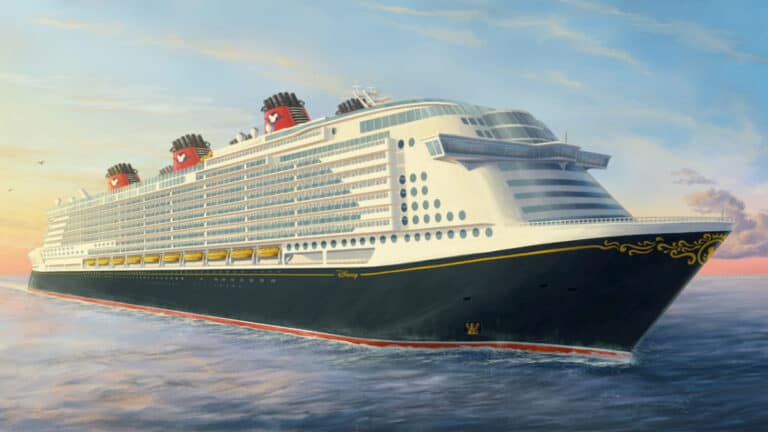
Disney Cruise Line has announced that it has indeed purchased the 6,000-passenger, partially finished Global Dream cruise ship. The vessel, currently in the Wismar shipyard in Germany, was formerly owned by the now-bankrupt Genting Cruise Lines.
This confirmation comes following rumors that Disney was interested in taking over the ship’s construction.
Disney Purchases Global Dream Cruise Ship
We finally know the outcome of the much talked aboutGlobal Dream cruise ship, which had a very unclear future for many months. Disney Cruise Line has now confirmed that it has purchased the vessel, which will join the Disney fleet in 2025.
The Global Dream was under construction at the Wismar shipyard for the former Asia-based Genting Cruise Lines. However, in early 2022 the cruise company, owned by Tan Sri Lim Kok Thay, went bankrupt, and the future of the giant cruise ship was unknown.
Speculation not only included the idea of another line purchasing the vessel, but also that the ship might have been scrapped before it was ever completed. Now, the finishing will be completed according to Disney Cruise Line’s specifications.
Her sister ship, also under construction but not nearly as completely finished, is to be scrapped.
Global Dream Cruise Ship
“Our cruise ships give us the unique opportunity to bring Disney magic to fans no matter where they are, and the addition of this ship will make a Disney Cruise Line vacation accessible to more families than ever before,”said Josh D’Amaro, chairman, Disney Parks, Experiences and Products.
Disney Cruise Line will take over the ship’s construction with the popular Meyer Werft shipbuilding company based in Germany. The vessel construction will be adjusted to have the signature Disney look, along with features and experiences for which the cruise line is well-known.
The ship, which has not yet been named for Disney Cruise Line, will include the iconic Mickey-Mouse-inspired colors and the classic Disney funnels, just like the other five ships in the fleet.
Disney has confirmed that the vessel will be based outside the U.S. market and that further itinerary details will be revealed in the future.
The ship will join the Disney Wish, which debuted in June 2022 and was also constructed by Meyer Werft but at the Papenburg shipyard. Other ships in the fleet include Disney Magic, Disney Wonder, Disney Dream, and Disney Fantasy.
A Bargain for Disney
With Genting falling under earlier this year, the Global Dream has become an attractive option for Disney as it was able to secure the new vessel at a bargain price, though the final price of the purchase has not been revealed.
The purchase also ensures the continued employment of hundreds of workers who were formerly employed by the MV Werften shipyard, which is where the vessel was under construction before being paused.
Photo Credit: MV Werften
Global Dream had an initial construction price of 1.6 billion Euros ($1.66 billion USD) and is already 75% complete.
The ship was originally scheduled to be already sailing in 2022 under Genting’s Dream Cruises brand and as one of the largest cruise ships in the world, rivaling Royal Caribbean’s Oasis-class vessels.
Now under the guidance of Meyer Werft, the vessel is still set to be an impressive 208,000 gross tons, with an approximate guest capacity of 6,000 at double occupancy and as many as 9,500 passengers when fully booked.
If these numbers remain accurate after finishing the vessel for Disney’s specifications, the new ship could easily become the largest ship in the world according to passenger capacity.
Nearly 2,300 international crew members will provide service on the vessel.
She will not be named Global Dream and will adopt a new name that Disney will announce at a later date.
The ship, which will also be the largest for the cruise line, will be fueled with green methanol, among the lowest-emission fuels available.
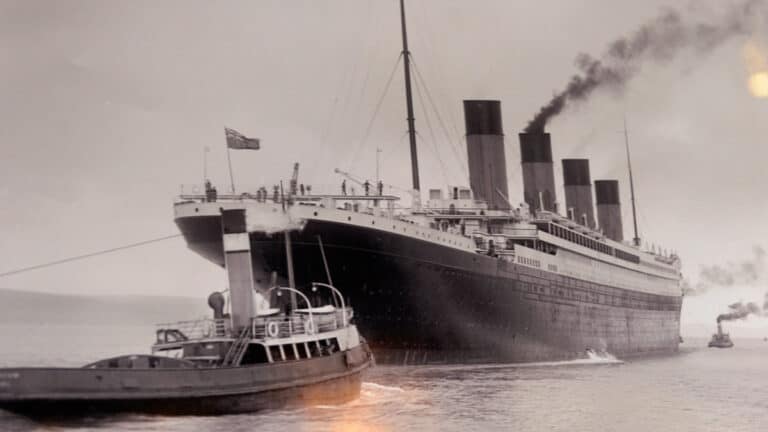
Known as the unsinkable ship and appearing in countless movies and documentaries, the Titanic is history’s most infamous ship. Many people have wondered how something that was designed with so much thought and detail could have possibly met such a tragic end on its maiden voyage. Did its size contribute to its unfortunate fate? Just how tall was the Titanic?
Interestingly, the builders of the Titanic never actually said it was unsinkable. That was a bold claim made by the 1997 movie about Jack Dawson’s ill-fated journey from the United Kingdom to New York City. However, the builders did declare it was “
practically” unsinkable. At launch, the Titanic was the largest ship to move on water, but it was not built for speed.Cunard’s Mauretania and Lusitania were built to be faster. While the Titanic was the largest ship of its time, it was not the fastest.
The Titanic had some impressive statistics for its time. Compared to the modern mega cruise ships we know today, the Titanic would seem unimpressive. However, for its day, it was awe-inspiring.
Render of the Titanic (Image Credit: lightmax84 / Shutterstock)
Accommodations on the cruise ship were spacious and luxurious. Even the third-class cabins offered a better standard than other ships, but there were still lines that were better than the Titanic at the time. What was impressive about this liner was the amenities: a swimming pool, squash courts, gymnasiums, Turkish baths, and a barbershop.
Dimensions:
Height: 104 feet (base of keel to top of bridge)
Length: 882 feet 9 inches
Breadth: 92 feet 6 inches
Tonnage: 46,329 gross, 21,831 net
Specs:
Number of decks: 7
Engine: 2 triple-expansion with eight-cylinder engines, one low-pressure turbine, capable of 6,906 horsepower (46,000 total horsepower)
Average speed: 21 knots
Estimated top speed: 23-24 knots
In its day, the Titanic was deemed a marvel. It was seen as futuristic regarding travel capabilities as it had newly emergent technology. The Titanic promised a luxurious ocean crossing for those who could afford it.
Did Titanic’s Size Cause Its Demise?
To answer this question, we must go into the history and construction of this massive vessel. A great deal of ambition, detail, and thought went into the Titanic.
During the early 20th century, only a handful of companies constructed ships. Cunard Line, which also built the Lusitania, was one of them. White Star began construction on their most ambitious vessel, the RMS Titanic. (RMS stands for Royal Mail Service, which was also on board).
Titanic (Image Credit: Limbitech / Shutterstock)
The Titanic’s name came from Greek mythology. The Titans were large, powerful gods, and the Titanic was designed to be a “floating behemoth,” the largest passenger ship in the world upon launch.
Construction began in 1909 in the Harland and Wolff shipyard in Belfast. The liner took about three million rivets and 3,000 workers to complete. The ship cost $7 million to build, which equates to $200 million in today’s currency.
The Titanic’s size is one-third shorter and half as wide as our modern cruise ships. However, at the time, it was a record-breaker. White Star planned to construct 60,000-ton ships, with the Titanic weighing in at only 46,000 tons.
However, it was still the largest ship built for that era. Shipbuilders were not thrilled with the Titanic’s size. They warned that it might be too big to dock.
How Size Could Have Hastened Sinking
White Star vice president Phillip Frank boasted there was no danger of the Titanic sinking. The ship line exploited the size and added luxury amenities to attract wealthy patrons. While the builders of the Titanic didn’t spare any expense when it came to attractions, the ship fell short on what it ended up needing the most: lifeboats.
Infamously, on April 14, 1912, the Titanic hit an iceberg. Of the approximately 2,200 passengers and crew on board, more than 1,500 people died. There were simply not enough lifeboats for everyone.
Titanic Next to Iceberg (Photo Credit: Mr Privacy / Shutterstock)
Modern experts feel the Titanic sank more quickly than perhaps it should have. The reason may have been because of its size. Despite containing several below-deck compartments created to take on water if there was a breach, they were not watertight. Each compartment took more water than the vessel could handle, quickly sinking it.
Size may have worked against the large passenger liner in another way as well. Redirecting and slowing such a large ship requires more time and distance than the crew had once realized they were headed for an iceberg.
Without adequate distance to clear the object, the liner sideswiped the iceberg, damaging 100 meters of the right side of the ship’s hull below and above the waterline.
As the front filled with water and began to sink, the rear pulled downwards on the opposite end. The three massive propellers weighed down the back end, causing the vessel to almost split in half.
Lessons Learned: Does Size Matter When Constructing a Ship?
This horrific accident busted the myth of the unsinkable ship. After it sank, Harland and Wolff made drastic changes to the RMS Olympic and HMHS Britannic. They added a second internal hull, higher bulkheads, fireproof materials, and more lifeboats.
Titanic Construction (Photo Credit: Anton_Ivanov / Shutterstock)
Today, modern cruise ships contain safety features and protocols to prevent sea disasters. A 2021 report from Allianz Global Corporate & Specialty indicated that the number of lost ships had decreased year after year.
Only 54 ships in the global fleet (shipping vessels included) sank in 2021 compared to the 127 that sank ten years ago. During Titanic’s area, the overall loss of vessels was 10% or 1 in 10.
Still, we haven’t “arrived” when it comes to engineering. Improvements are constantly being made even today. The biggest lesson learned from the Titanic disaster was that no ship is unsinkable.
Final Thoughts
When we consider how tall the Titanic was–a whopping 104 feet–and compare it to today’s ships, our cruise ships are taller and heavier than the Titanic. The average weight of Royal Caribbean’s fleet is 133,000 tons, and many cruise ships are twice the height of the Titanic, proving that large cruise ships can sail safely. Size alone is not a factor in whether a ship sinks or floats. It ultimately was the maneuverability and testing the limits of its speed that caused the Titanic to sink.
The unfortunate demise of the Titanic on her maiden voyage across the Atlantic Ocean to New York over one hundred years ago remains a topic of fascination with people.
People have been studying this well-known passenger liner for decades, wondering what it was like to be on this voyage. We discuss how much ticket prices for the Titanic were and how they relate to today’s prices.
A ticket to set sail on this luxury liner cost 7 pounds for a third-class ticket in 1912. For a first-class suite, the cost was 870 pounds. With today’s inflation rate, a third-class ticket would cost 850 pounds and to travel first-class would cost 105,000 pounds.
When translated to United States dollars, the exchange rate in 1912 swung wildly. Most of the time, it was $5 per British pound, so third-class tickets would cost $35 in 1912, with first-class accommodations coming in at $4,000.
Titanic Tickets Ad (Photo Credit: chrisdorney / Shutterstock)
Even when you account for inflation, the cost is staggering. It would cost $133,132 to travel in a first-class suite on the Titanic. First-class berths would cost $4,591, second-class would be $1,834, and third-class accommodations $1,071.
A calculated estimation of the Titanic concludes that the total number of first-class travelers was 324. It isn’t known how many booked standard first-class berths or upgraded to suites.
Of those who booked second class, there were 284 on board, with 709 traveling third-class. There were 107 kids on board, and most were third-class passengers.
The number of passengers and potential passengers breaks down as follows:
The maximum capacity, if fully booked, was 3,547 people, including passengers and crew
The number of guests the vessel was capable of transporting was 2,566
The total number of those on board was between 2,208 and 2,240 (sources vary on this stat)
The number of passengers was 1,317
49% of guest spaces were unused
A reported 20 people canceled plans to set sail on the Titanic after having a dream it would sink
If we take these statistics and assume all first-class passengers paid 30 pounds in berth fare, the total fare was 18,091 pounds or $90,455 in 1912. In today’s money, it would equal 2.2 pounds or $2.75 million.
Interestingly, survivors sued the White Star Line for $16 million. White Star Line only paid $664,000.
What Was the Most Expensive Titanic Ticket?
It is believed the most expensive suite contained two bedrooms plus a sitting room. The occupant was Charlotte Drake Cardeza, a patron of the American arts. Charlotte was traveling with her maid, valet, and 36-year-old son, who all survived. However, they left behind 14 trunks of their luggage in addition to other items.
Photo Credit: Everett Collection / Shutterstock
First Class Accommodations
First-class rooms had the same standards as many high-end hotels of the era. Several onboard facilities were available exclusively for these guests, such as squash courts, gyms, Turkish baths, a swimming pool, shuffleboard, and chess.
First-class passengers could have meals in the main dining room. Dinner was traditionally served between 7:00 to 8:15 pm. Those traveling first-class could also pay a bit extra to eat in an a la carte restaurant.
Titanic First Class Cabin (Photo Credit: Anton_Ivanov / Shutterstock)
Food was high class. It included oysters, canapes, expensive cuts of meat (like duckling and lamb), and various cheese boards and French pastries for dessert. The menu tended to be primarily French cuisine. However, there were American and British options available as well.
Second Class Accommodations
Those traveling second-class had more comfort compared to third-class. They had private cabins with shared bathrooms. They had access to a library, men-only smoking rooms, and promenade decks where they could enjoy the fresh sea air.
Other dining rooms could accommodate all the guests simultaneously. The menu was more limited, but there was still a good variety.
Third Class Accommodations
Tickets for third-class rooms were 7% of a skilled working man’s average annual salary in England. Many in third-class were looking to set sail to begin a new life in America and build their future.
There were two dining rooms for those in third-class, an outdoor deck space, and communal rooms. They didn’t have dinner but ate tea and supper, as dinner was only for the upper classes.
So, how much was a ticket on the Titanic? The cost was dependent on what class of ticket the patron was purchasing. Either way, this luxury passenger liner cost more than that era’s average price. However, no matter what class you traveled in, you were treated well while you were on board.
The Titanic was the most well-known passenger liner of all time. Some promoted it as the “unsinkable ship,” despite engineers claiming it was probably unsinkable. It was the largest passenger ship globally when it sailed for its maiden voyage with an impressive length of 882’, the height of 175’, and width of 92’. But how much did the Titanic weigh?
How Much Did the Titanic Weigh?
The Titanic’s total weight was 52,310 tons or 47,454.834 metric tons. Due to its sheer size, it needed 6,000 tons of coal daily to keep the ship moving. The coal was loaded into the Titanic’s furnaces by groups of 170 workers. The Titanic produced 100 tons of ash daily, which was dropped into the North Atlantic Ocean.
What Was the Displacement?
Since the RMS Titanic weighed 52,310 tons, it would have a mean draught of 34’ 7”. The seawater weight that a ship displaces is an estimate of actual weight compared to enclosed space. The Titanic was cited to be 66,000 tons, but this is inaccurate.
The actual displacement is a bit more because of the larger beam and other modifications made to the design, as well as the actual weight of 52,310 tons.
Displacement and buoyancy are two of the most important factors when designing a ship. You must always consider weight as it affects displacement in water and how the ship floats. If any of these measurements are out, it affects the vessel.
The Weight of the Iceberg
The massive iceberg that is responsible for the sinking of the infamous vessel on April 15, 1912, was estimated to weigh 75 million tons. Professor Grant Bigg estimated it to be 100,000 years old, if not more. During this era, no legal requirements dictated that the ship needed enough lifeboats for every passenger, nor were there any established safety measures as we know them today.
Titanic (Image Credit: Denis—S / Shutterstock)
The Titanic was transporting 1,317 guests at the time of its sinking. It didn’t have enough lifeboats to safely evacuate all passengers. Since the ship was considered “unsinkable,” no one thought the emergency vessels would be needed.
However, the pressure put on the ship during its first voyage cost people their lives. The captain increased the speed to get ahead of schedule. He was convinced the ship could handle it and wanted the publicity that would result if they arrived at their destination, not just on time, but sooner than expected. What could go wrong?
“Iceberg ahead!” was the answer to that question. However, the ship’s speed wasn’t the only factor that led to its demise. Well, not entirely, anyway.
What Contributed to the Titanic Disaster?
Speed was just one of the issues that caused the ship to sink. Everyone thought that the Titanic could handle anything the sea could throw at it. However, there were several flaws in the methodology.
Titanic (Image Credit: Limbitech / Shutterstock)
Going Too Fast
People frequently blamed Captain E.J. Smith for sailing the ship at 22 knots through an area they were told hours before was laden with icebergs. Some believed Captain Smith wanted a better crossing time. However,further evidence suggests that they may have been trying to control a fire in the ship’s coal bunker.
Dismissed Iceberg Warning
The SS Californian radioed another ship in the area an hour before the Titanic hit the iceberg, indicating an ice field was ahead. Since the warning didn’t have the prefix MSG (Master’s Service Gram) requiring the Captain to acknowledge the receipt, the radio operator considered the warning non-urgent. He never passed it along.
Wrong Turn?
Louise Patten, the granddaughter of Charles Lightoller, who was the highest ranking surviving officer on the Titanic, wrote in her book that the crew may have panicked when hearing a hard-a-starboard turn, which would have cleared the iceberg. Since ships operate on different steering systems, they may have been confused and made a wrong turn.
Cost Cutting
When the Titanic was located in 1985, investigators discovered that the ship had not been intact when it sank after striking the iceberg. It was broken apart on the surface, possibly due to using subpar rivets to hold together the steel plates of the hull.
Rivets at Shipyard (Photo Credit: Everett Collection / Shutterstock)
The rivets were examined and had a high concentration of smelting residue that splits metal. It may have weakened the hull, which broke the vessel apart after it hit the iceberg.
So, What Does This Have to Do With Weight?
If displacement and buoyancy were factors, this might explain the weakening of the ship, since both these factors are essential to safety. Furthermore, if what was discovered about the rivets was true, it was far from an unsinkable ship. However, the designers may not have known this at the time.
Despite these possible contributing factors, we know that the Titanic sank at least in part because of its fast speed and lack of maneuverability. A large ship needs more time and slower speed to maneuver around an obstacle and avoid hitting it at full speed. Had the Titanic been equipped with the propellers that are on modern cruise ships, the vessel would have probably tried to reverse.
A massive, weighty object like a cruise ship travelling at full speed would find it difficult to avoid an iceberg if it wasn’t given plenty of warning. It takes a long time to turn a ship the size of the Titanic because of the weight and the engines that lack today’s technology.
The massive weight of the Titanic was highly impressive for the era, but the “unsinkable” ship was obviously flawed. It appears a combination of poor engineering and navigating decisions combined with the laws of physics led to its ultimate demise.
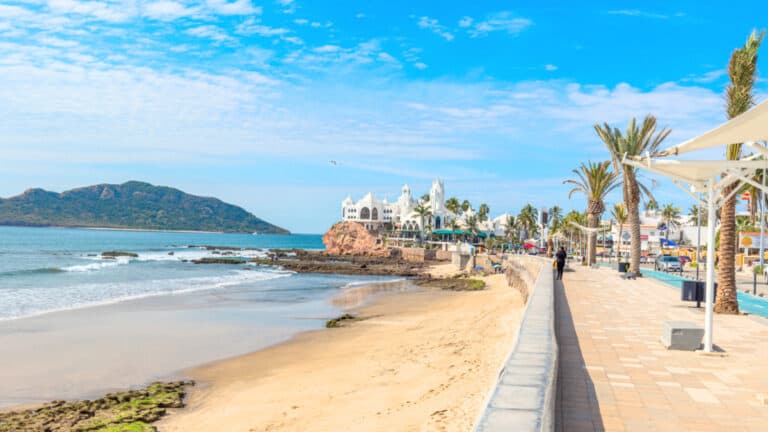
To make the most of your time in this port of call, it is useful to have a guide to the best Mazatlán beaches. What is special about this cruise destination is twofold. First, there are many, many beaches from which to choose.
Along this coast, you will find over 20 miles of beaches – “playas” in Spanish. This often means that the crowds are dispersed; and, you have the opportunity for quality oceanside fun with your family.
Second, the beaches are not all the same. While we love the sandy shoreline (and there are some great choices for this), “the beach” in Mazatlán will look and feel unique depending on which one you visit. Sometimes this is based on the geography and sometimes the culture.
Other times the indigenous flora and fauna and human priorities have shaped the landscape. Regardless of where you choose to spend time on the beach though, it will be an adventure. Let’s explore.
Playa Los Pinos
Make this your destination beach for the unique experience of tide pools. When the ocean recedes at low tide, little puddles of seawater are left behind in the rocky areas of this beach.
Every day this creates the chance to get a close look at creatures that you might not otherwise see. Search at Playa Los Pinos during low tide for starfish, sea anemone, sea urchins, barnacles and more.
Playa Los Pinos Beach (Photo Credit: Gustavo Osuna / Shutterstock)
Take your fishing gear and try your luck from the rocky outcroppings or come by in the early morning to purchase seafood right from the ocean. Also, there are delicious cooked favorites from the sea sold by the local street vendors at this beach.
This is a good location to ride some waves, too. With several levels of ocean activity, beginners can choose a spot to learn and more intermediate surfers can challenge their skills. The beach lies on a gentle incline and water temperatures range from warm to cool.
Playa Cerritos & Playa Bruja
Our guide to the best Mazatlán beaches includes Playa Cerritos and Playa Bruja at the northern end. The former is a nice, quiet stretch of sand with rocky outcroppings dotting the surroundings. Located on a piece of land jutting northwest into the ocean, this location has a relaxed feel. It only takes about 20 minutes to get here from downtown.
For a more rugged beach experience, go to Playa Bruja just south of our first beach. Crashing into the craggy rock formations at this destination are some challenging waves. The undertow is strong here, and there are no lifeguards. So, only the strongest swimmers, surfers and body boarders should brave the waters.
Playa Cerritos Beach (Photo Credit: Andrea Izzotti / Shutterstock)
Translated as Witch Beach, this location is rich with local lore. Stop by one of the traditional palapa restaurants for fresh seafood meals, and ask about the witch doctors!
One nice benefit of these beaches is the lack of visitors. If you would like some privacy to soak in the scenery, breathe in the ocean air, listen to the waves and collect seashells, then these are the destinations for you. Or, take your tackle to what is considered some of the best fishing spots in the area. The exact location is rumored to be the rocky shelf jutting into the sea at Playa Bruja.
Playa Isla De La Piedra
If you are looking for a quiet beach with calm waters, Playa Isla De La Piedra makes this guide to the best Mazatlán beaches. Hop a five-minute water taxi to this destination (Stone Island Beach) and leave the crowds behind. This is where locals go to get away from it all – so, we know it is a terrific destination.
Playa Isla De La Piedra/Stone Island Beach (Photo Credit: Manuela Durson / Shutterstock)
Once on the peninsula (not geographically an island), you will find the warm shallow waters extend over twelve feet out into the ocean. Protected from the dramatic waves and currents of the Pacific, this sheltered cove is a great spot to take the kids.
Grab a bite from the many eateries located right on the beach. It might be a difficult decision where to eat and relax since several of the restaurants have decades-long histories of serving topnotch seafood and local fare. And, in keeping with a downhome vibe, there are not many fancy or luxury distractions – just sand, sun and fun.
Enjoy other activities such as a banana boat ride, live music, or a horseback or ATV ride. Playa Isla De La Piedra is also a popular spot for snorkeling.
Playa Sabalo
Spend the day in the water at Playa Sabalo at the north end of Mazatlán’s Golden Zone. Islands protect the waters at this location, making them calm and welcoming for all kinds of activities. You can take a sailing trip or a banana boat ride. Wade, swim or bodysurf near the shore. Or, fly over in a parasailing adventure.
A Beach in the Golden Zone, Mazatlan (Photo Credit: eskystudio / Shutterstock)
There are horses for a ride along the beach and few crowds here. The firm sand makes for a nice early morning, late afternoon or moonlight stroll. And, take your camera. The islands dotting the horizon offshore are picturesque, particularly at sunrise and sunset.
It will take a taxi ride and a short walk to reach the public beach. There are plenty of restaurants (also, a bit of a walk away) and lots of other amenities in the area. The beach is located on the oceanside of a couple of resorts and it is definitely worth the trip.
Playa El Verde Camacho
For my fellow wildlife enthusiasts, Playa El Verde Camacho is in this guide to the best Mazatlán beaches. The four-mile pristine strip of sand is located in one of the country’s most important eco-reserves. It is a certified conservation area with restrictions on development to protect the flora and fauna and their habitats.
Turtle on Beach (Photo Credit: akramer / Shutterstock)
One of the most popular animals to see here is the Olive Ridley Sea Turtle. Its shell is heart-shaped and its species is the second smallest in the world. There are also more turtle species, birds and plant life to see. Learn about efforts to protect these beautiful turtles and other wildlife in this critical environment.
The best way to see all that this area has to offer is via a guided tour. This guards against inadvertently damaging the land and controls the number of visitors to this treasured beach.
Playa Norte
Take a stroll along Mazatlán’s longest beach, named Playa Norte (North Beach). For three miles, beginning at the famous Fisherman’s Monument, this beautiful strip of white sand has been one of the most popular destinations for decades. Yet, it is surprisingly uncrowded on most days – except for holidays. Rent a deck chair and just hang out beside the blue sea.
Mazatlan North Beach (Photo Credit: Tyler Boyes / Shutterstock)
The water is warm and the waves are mild – the perfect combination for relaxing at the beach. There is even a local swimming club that meets here for activities in the sea. As a visitor, you can go fishing, boating or rent a jet ski for fast fun on the water.
With a bit of good timing, you can see the fishermen coming in from the ocean and the Sea of Cortez with the day’s catch. Their harvest is likely to be on your plate when you eat at one of the many local restaurants conveniently located here.
Playa Olas Atlas
The surf is calling at Playa Olas Atlas, which translates to “Beach of the Big Waves.” This destination was one of the first places “discovered” by tourists in the 1940s. And, remains a top spot to visit today. Although swimming is not recommended here, you can rent surfing equipment and even take some lessons while visiting.
Mazatlan Playa Olas Beach (Photo Credit: Antonio Tanaka / Shutterstock)
Located at the south side of The Malecón, it is the closest beach to access by land from the cruise terminal. Enjoy great views of the islands. Also, photo opportunities for stunning sunsets happen every day when the weather is clear. Just a few steps away is the Centro Historico – the historic area of town that has served as the commercial center since 1847.
Surfers come from around the globe to charge the waves here. And, others stroll one of the longest elevated walkways in the world (The Malecón) to see the area. For the rest of us, sitting comfortably on the beach with a cool drink and watching the live surfing show is THE best way to enjoy this beach!
Playa Las Gaviotas
Located in the city’s Golden Zone, Playa Las Gaviotas is a ‘sister beach’ with the adjoining sands of Playa Camaron. While these destinations make all the travel guides paired together, these are actually two quite distinct beaches. Each has its own characteristics that draw visitors for different reasons.
Playa Las Gaviotas (Photo Credit: StefanMaximilian / Shutterstock)
Translated as “seagulls beach,” our first stop at the northern side is busy with parties. It is also one of the easiest places to book excursions, rent gear for water sports or shop in local retail establishments. And, there are a couple of restaurants and bars that will come to the beach to take orders for food and drinks.
The lay of the land is gently sloping silky sand. You can almost always count on a gentle breeze to keep you cool. And, the waves are soft and low. For the treasure hunters, this beach of golden sand is a place to start hunting for seashells. It is conveniently located near the Museo de Conchas (shell museum) for a reason!
Playa Camaron
Our second destination at the southern part of this strip is Playa Camaron. Meaning “shrimp beach,” this part of the larger area is also a great place to hunt for seashells. But, that is about the extent of its similarity to Playa Las Gaviotas.
Here the beach becomes quite narrow – and, even more so at high tide. The waves also have a different personality. While they are subtle at Playa Las Gaviotas, they break quickly and return to the open sea with a greater urgency here. This calls to all the people who enjoy bodysurfing and body-boarding to give it a try at this location.
The coarse sand is deep here. So, there are better places for beach walking. However, it is a good spot to stroll along The Malecón, grab a bite to eat and watch the water fun.
Isla de Venados
If you want to visit a place near the hustle and bustle of Mazatlán yet worlds away, then Isla de Venados is the right beach for you! While it is not often mentioned in tourism brochures, this small getaway at “Deer Island” is “one of the more pristine beaches that can be accessed from the city.”
Photo Credit: ackats / Shutterstock
The best way to enjoy this destination beach is to book a tour. Typically included in these adventures are the boat ride to and from the island, a meal, drinks and some type of activity like snorkeling. For the athletically inclined, take a paddle (with a group) out to the island – it’s that close to the shore. Once there, you can also scuba dive at a reef.
On the island, which is a designated Nature Reserve, take a hike up to the top to get a one-of-a-kind view of the city. Keep an eye open for the 43 species of birds, iguanas, snakes, bats and 13 land mammal species, including, of course, white-tailed deer. Be advised that facilities are limited; so, pack your supplies accordingly.
Playa Marlin
A visit to Playa Marlin is in any guide to the best Mazatlán beaches for the quintessential seashore experience. Rent a chair and beach umbrella and sink your toes into the sugar sand. While the waters can be a little rough for swimming (strong waves and powerful undertows), spend the day watching the parasailers and walking along the water’s edge.
Photo Credit: Nuvanta Filmworks / Shutterstock
Mazatlán waters are known as the “billfish capital of the world” of which marlin are member species. So, a visit here should include time at this namesake beach. It is located close to the shopping mall, restaurants and souvenir shops.
Additionally, the many street food vendors offer local flavors for inexpensive prices. The south end of this beach has a sheltered cove where local fishermen land their skiffs. Also, a great way to see the local culture of this seaside city.
While docked in Panama City, Panama on Tuesday, the gangway of Norwegian Encore collapsed and several guests were reported injured by the incident. Emergency responders arrived quickly on the scene, and work began immediately to clear the damaged gangway.
Gangway Collapses
Guests onboard Norwegian Encore reported hearing emergency codes announced over the ship’s loudspeakers at approximately 1:30 p.m. local time on Tuesday, November 8, while the ship was docked in Panama City, Panama.
Photos shared on social media have shown the gangway collapsed on the dock and damage to the handrails, as well as multiple ambulances responding to the accident.
I’m on the Norwegian Encore in Panama – a gangway from deck 6 to the pier 2 decks below has collapsed while passengers were walking on it.
Several guests were assisted via stretchers and wheelchairs to the emergency vehicles, apparently with injuries, though no names or details have been confirmed.
Cruise Hive reached out to Norwegian Cruise Line for a statement, and received this response:
“On Nov. 8, 2022, during Norwegian Encore’s call to Panama City, Panama, a guest gangway collapsed. Several guests sustained injuries and were immediately sent for treatment at a nearby medical facility. We have dispatched our CARE Team to Panama City to offer additional support to these guests. This is all of the information we have to share at this time.”
The gangway was apparently quite steep at the port and appears to have bent due to a lack of underlying support. Guests were walking across the gangway at the time of the collapse.
A 6th ambulance has arrived. Have so far seen 9 passengers taken away on stretchers or in wheelchairs with leg and arm injuries. #developingpic.twitter.com/bfhPLcE7OI
There is no report of damage to the cruise ship, though minor cosmetic damage is likely at the point where the gangway was attached to the vessel.
Norwegian Encore Sailing
The Breakaway-Plus-class Norwegian Encore, the largest ship in Norwegian Cruise Line’s fleet, is currently on a 21-night one-way repositioning cruise.
The ship left Seattle on Sunday, October 23, 2022, having just concluded the Alaska season, and is due to arrive in Miami on Sunday, November 13, where she will be homeported for the winter, offering primarily 7-night Caribbean itineraries.
Photo Courtesy: Norwegian Cruise Line
Tracking data shows the ship has now left Panama City and is transiting through the Panama Canal, en route to her next port of call in Cartagena, Colombia.
No information is available about whether the ship left port on schedule, but it does not appear there will be any delays to the remainder of the ship’s itinerary and she should arrive in Miami as planned.
The 169,116-gross-ton vessel has a guest capacity of 3,998 at double occupancy, with 1,735 crew members. The ship entered service in November 2019.
Cruise Hive has reached out to Norwegian Cruise Line for more details on this developing story, and we’ll update this post as more details are confirmed.
One of the top questions for planning your next cruise to the Mexican Riviera is: When should I go? A quick online search will show that “during dry season from November to June” is the correct answer. BUT, is that the right answer for you? Let’s find out!
The Mexican Riviera, or the Pacific Ocean side of the country, is hundreds of miles long. Also, there are some 20 coastal cities located here – 10 of which are popular ports of call for cruise vacations.
These include (north to south): Ensenada, Cabo San Lucas, Mazatlán, San Blas, Puerto Vallarta, Manzanillo, Ixtapa, Acapulco, Puerto Escondido, Huatulco and Salina Cruz.
All of these locations, along with the larger questions of weather, culture, nature adventures and food, will determine the best time of year to take this cruise. In order to decide which of these ports and their accompanying attributes should be part of your itinerary, there are a few aspects to consider. Let’s explore!
The landscape of the Mexican Riviera varies widely from mountains, valleys and deserts to tropical ecosystems. This has an impact on the weather and could influence your decision based on what you would like to experience while in port – particularly for shore excursions and activities.
Starting in the northern part, Baja California, our first stop at Ensenada will have an average temperature of 70° during their driest months of June to September. They also have mild winters. Within the peninsula, you can even find mountains and valleys with snow and extremely arid desert areas.
Cruise Ship and Rainbow in Puerto Vallarta (Photo Credit: Alexey Stiop / Shutterstock)
Further down the Baja in Cabo San Lucas, you will find a tropical desert climate. Winds can cool the summer heat and because of its location, very little rain falls throughout the year.
Once you travel further south to the mainland, there will be a noticeable difference in weather – hot temps in summer and mild winters both have high humidity. However, there are measurable differences in the mean daily hours of sunshine depending on the port. Also, the tropical savanna climates found in this region are characterized by grasslands dotted with trees rather than lush jungles.
Depending on which main season you select for your travels – summer or winter, rainy or dry – be sure to pack accordingly. All your usual cruise attire will be perfect during summer and dry seasons.
However, you will want to have a light jacket and maybe a long sleeve shirt with some pants for the cool winter evenings. And, in the rainy season, you will be glad to have a rain jacket and/or small umbrella along for the trip.
Cruise Ship in Ensenada (Photo Credit: Darryl Brooks / Shutterstock)
As with the planning of any cruise, the “monster” weather consideration is hurricane season – or the annual tropical cyclone season of the Pacific Ocean. While the potential for dangerous storms exists all along the Mexican Riviera, the propensity of hurricane origins has largely happened only from Puerto Vallarta to the south in the past.
Staying up to date on weather forecasts (and taking some additional hurricane and travel insurance coverage policies) will help with planning and peace of mind.
Festivals and Local Culture
Another reason to choose a particular time to cruise the Mexican Riviera is the culture. The port cities and the surrounding countrysides are rich with opportunities to explore what makes this area special – the people and their celebrations.
If you would like to be in the midst of the third largest extravaganza in the world, for example, plan to attend Carnival de Mazatlán during the six days prior to the religious day of Lent (March-April depending on the year).
Day and night the cities are filled with the sounds of brass bands and Tambora. Giant colorful figures lead the parade on the Malecón (waterfront esplanade); families gather to socialize in the streets; awards are given for art and literature; and, royalty is crowned.
Mexico Independence (Photo Credit: Roberto Galan / Shutterstock)
To watch the Day of the Dead festivals, you will want to schedule a port of call at the end of October through the first couple of days in November. These elaborate events date back to some of the country’s earliest civilizations. Families plan for months to honor those who have gone before and celebrate the continuity of all lives.
Cinco de Mayo is also an important holiday filled with costumes, music, dancing, fireworks, parades and arts and crafts vendors on the streets. May 5th of each year is the date. Another day of celebration is Día De La Independencia. It happens every year on September 16th and commemorates the country’s independence from Spain. Enjoy traditional foods, watch fireworks and parades and marvel at all the green, white and red decorations.
For a more spiritual experience plan your cruise between March and April for Semana Santa – or Holy Week. Floats and reenactments along with flowers and palm crosses are everywhere during this celebration.
If Puerto Vallarta is one of the ports you would like to visit, consider the week before and leading up to December 12th for another religious celebration. The pilgrimage to the Church of Our Lady of Guadalupe has deep importance and a 400-year history.
When planning your cruise dates, keep in mind that all of these festivals and celebrations are highly popular. They have important and even sacred meaning for locals while drawing large crowds of visitors at the same time. Therefore, booking early for a cruise during these times is recommended.
Time it for Wildlife
One unique opportunity that you have with a cruise vacation (rather than simply flying somewhere) is the chance to see all manner of animal species. The Mexican Riviera has an amazing array and number of options for wildlife watching. But, in order to have a terrific nature experience, you should coordinate the timing of your cruise.
For example, this area welcomes the gray whale back from its migration thousands of miles to the Arctic. To see these amazing animals, you’ll need to book an authorized tour during the peak months of January to March. There are also humpback whales and three species of dolphin in this area of the ocean. If you’d like to see (or swim with) the peaceful whale sharks, come between November and April for the largest concentrations.
To learn and volunteer with sea turtle conservation efforts (and watch the cute little hatchlings go out to sea), August to November is the time. Six of the seven species in the world call this area home. Near Puerto Vallarta, witness over 300 species of birds, including rare migrants in the spring and fall. You might even see some of the last Green Macaws on the planet. Specifically, a trip to the largest wetland waterway in the country, Teacapan Estuary awaits.
All of these experiences can be scheduled with local ecotour companies who offer authentic and environmentally responsible trips into nature.
Activities
The great news about trying to decide when to go on a Mexican Riviera cruise is that any and all activities you enjoy in the summer will still be available in the winter. The beaches are warm; the stores are open; the tours are going; and, you can even ride a camel on the beach in Cabo!
The Season Impacts Local Food
Restaurants and meals on your cruise will be exceptional. There are often multiple cuisine choices representing foods from around the world. Also, today’s cruise lines have chef-inspired as well as chef-executed gourmet quality creations on their vessels. For all my fellow foodies, however, eating onshore is one of the best perks of travel.
Timing is important in this aspect of planning the best cruise vacation. Why? Because arriving during certain seasons opens a whole world of culinary experiences!
Let’s begin with the best season to find the freshest farm-to-table dishes. This concept means that locally grown produce and livestock is brought fresh to the restaurants, prepared and brought to your table. The taste and nutritional value of these foods well exceeds anything that has been processed or frozen.
Photo Credit: schlyx / Shutterstock
Let’s eat! Our first stop, “the Napa Valley of Mexico” – Ensenada. While you can take tours of this region year-round, plan a summer stop here to get up-close-and-personal with the vineyards. It is a heady experience to walk amongst the vines, heavy with fruit. The region produces 90% of the country’s wine, and vintner history dates back to the 16th Century.
During the summer months, local fare will be created with the familiar vegetables and fruits like corn, squash, potatoes, mango, papaya and, of course, peppers. While in a port of call, however, you might just find some amazing meals that include fresh nopal and prickly pear cacti, black sapote (sweet and creamy similar to pudding), jicama (apple-like, served with chili, salt, lime), pitaya (dragon fruit), tomatillo, passionfruit and more.
While in port, look for local vendors serving refreshing (and fresh) fruit drinks. And, be on the lookout for a special beverage called Jamaica. This is made from boiling hibiscus flowers (while producing from spring to late fall, the blooms are short-lived).
And, while on the Mexican Riviera, you can also enjoy sea-to-table foods. Every one of your ports of call have fleets of fishing vessels (largely individually owned by folks whose families have harvested seafood from these waters for millennia). Watching them come and go, bringing their fresh catches to market and to the local restaurants, is fascinating.
Photo Credit: Loes Kieboom / Shutterstock
Just as there are seasons to harvest fresh food on the land, there are seasons for fishing the oceans. Some species can be caught year-round, and others are available only during a particular window of time. With that said, the year-round species have seasons considered high or ideal for fishing. For seafood lovers, this could affect menu choices and prices at restaurants.
For example, one of the dishes you must try is marlin ahumado (smoked) tacos – particularly in Cabo San Lucas. May to October are the best months for catching this fish.
A favorite shellfish are the almejas chocolates (clams). They are said to be more flavorful from September to April. And, when in the shrimp capital of Mazatlán, order aguachiles. They are raw, marinated in green chiles and lime and served with cucumber and onions – all the definitions of fresh! The month of May to the end of the year is said to be the best shrimping time.
In Porto Vallarta, find a local eatery tossing coals and grilling huachinango zarandeado. This is red snapper marinated in a paste of ginger, oregano, cumin and chiles. This particular fish species may have a regulated season of June to September.
Then, go in search of the local sandwich shop for the tortas ahogadas – or drowned sandwiches. These can be made with any number of ingredients. So, create your own flavors and smother it in tomato and pepper sauce – but, be sure to check the heat index of those chiles!
Finally, take this opportunity to see what an actual tamale, tostada, enchilada (and other dishes that come with a familiar name) taste like while you are in the Mexican Riviera.
The best tip that all foodies use to discover actual cuisine at any location is to ask a local where they like to eat. This will not necessarily be one of your tour guides or your ship’s personnel – although they may know excellent restaurants. The ideal person to ask would more likely be a shop owner, local guide or the nice person sitting near you in the park.
Which Cruise Lines Sail the Mexican Riviera?
One final note about the best time to plan your cruise to the Mexican Riviera.
All the major cruise lines have either multiple ships and or itineraries to choose from throughout the year. These include Carnival Cruise Lines, Celebrity Cruises, Disney Cruise Line, Holland America, Norwegian Cruise Lines, Princess Cruises and Royal Caribbean.
However, other lines have either a limited number of ships or only sail here during specific times of the year. These include Cunard, Hapag-Lloyd Cruises, MSC Cruises, Oceania Cruises, Phoenix Reisen, Regent Seven Seas, Seabourn Cruise Line, Silversea and Viking Ocean.
One of the many highlights of taking a cruise vacation is the opportunity to visit new places like the Cabo San Lucas cruise port. The general phrase for these locations is a “port of call,” which are places along a route where ships make scheduled stops during the voyage.
While some folks like to simply come aboard and go wherever the ship sails, others enjoy a bit of info gathering prior to cruising.
As one of the latter travel nerds, I’d like to share with you the following tips and information about the Cabo San Lucas cruise port on the Mexican Riviera.
Where is (in the parlance of locals and frequent visitors) Cabo? To position yourself on the globe, first imagine the farthest southwestern point in the U.S. and look south. Here lies a peninsula, called Baja California, a state in Mexico comprised of five regions.
It is 775 miles long with widths ranging from 25 miles to 199 miles. To the east of the peninsula is the Sea of Cortez (Gulf of California) and to the west lies the Pacific Ocean.
There are over 2,000 miles of coastline around the edges of this landmass with some 65 islands dotting the edges. The southernmost half is called Baja California Sur (Spanish for “south). Our Cabo San Lucas cruise port lies at the very tip end in the Los Cabos region.
Cabo San Lucas, Mexico
(Cabo San Lucas translates to “St. Luke Cape” and Los Cabos translates to “the capes.”) Interesting tidbit: The archeological record indicates continuous human habitation on this peninsula for the last 10,000 years – at least!
This port of call is consistently rated in the top five tourist destinations in all of Mexico. At this location, passengers disembark and explore the town and culture; taste new foods; listen to local performance artists; learn about history; see new wildlife; and, pick up souvenirs.
Now let’s travel from the cruise ship to the shore.
Tender Transport
When your cruise ship arrives at a port of call, you will disembark the vessel in one of two ways. The first will be to walk via ramp or gangplank directly from the ship, which will be docked at the pier, onto the shore.
The second is via a smaller transport vessel called a “tender boat.” This method of transportation may occur when the port facilities are too small for the ship to dock at the shore or piers are not available.
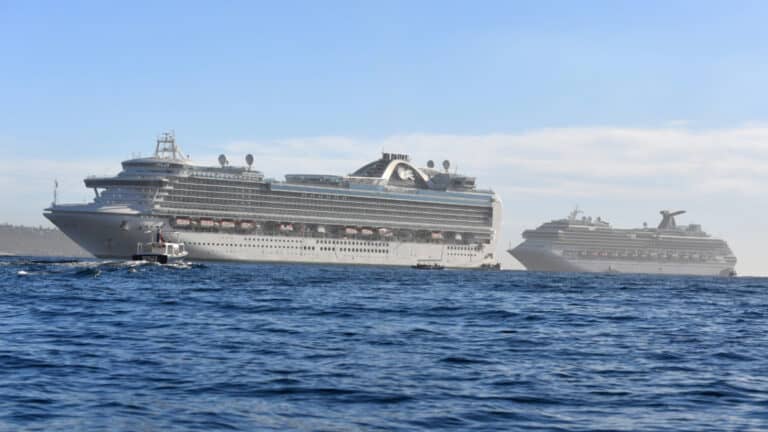
At the Cabo San Lucas cruise port, the second method is how you will reach the land. There is no dedicated cruise terminal, so your ship will be anchored offshore in deeper water.
Cabo San Lucas Tender Port (Photo Credit: Lester Balajadia / Shutterstock)
A ferry-type vessel will tender you to the inner harbor. This smaller boat will be enclosed or open depending on your cruise line and is designed for safe passage.
The transport will take only 10 to 15 minutes. However, you might have to wait in line for much longer on the ship. Our tip: Arrive early to join the queue. Or, in the alternative, wait until after lunchtime to tender ashore since lines are typically shorter then.
You will ride through the Bahía de Cabo San Lucas – watch for marine life on the way. The tender dock for cruise ships is located just inside the marina.
Money While in Port
Whenever you go ashore during a cruise, have a bit of cash with you. Paying with cards or digitally will not always be available, particularly in smaller establishments. There may also be a surcharge added by the merchant to the final cost for accepting these methods of payment.
Pesos are the preferred and appreciated legal tender with the local merchants. However, at this destination, U.S. dollars are accepted.
Cabo San Lucas Downtown (Photo Credit T-I / Shutterstock)
Prices on merchandise will be marked with US$ or simply the (double stroke) dollar sign if the cost is meant to be read in U.S. currency. Otherwise, the number you see on price tags will be the price in pesos. Bring smaller denomination U.S. currency to ease the process of making change.
If you are exchanging currency from dollars to pesos and back again, banks have the best rates. While ATM machines and booths on the street are open longer hours, they can exact a hefty fee for the convenience. And, since rates fluctuate daily, it is recommended that you only exchange what you might need. Also, it is much harder to change pesos back to U.S. dollars.
Getting Around
Once you arrive at the marina’s tender pier, you’ll see that it is different from other larger ports of call. There are only basic amenities here: a few vendors with souvenirs, snacks, drinks and so forth, an ATM and an information booth. Stop at the last one for a free map – a huge help in navigating Cabo.
While at this location, take a moment to look around at the yachts moored here. This is a popular destination for those who like to sail and travel on their private vessels. So, the array of ship styles and levels of luxury visible from the piers are impressive.
Downtown Cabo San Lucas (Photo Credit: Matt Gush / Shutterstock)
If you’d like to visit one of the famous beaches (and you definitely should!), there are several water taxis available for a budget-friendly ticket price at the dock. Also, if you’ve booked a shore excursion with the cruise line, you will likely be departing from this location.
You’ll have several options for getting around onshore. The first is simply to walk. Surrounding or in close proximity to the harbor are multiple shops, restaurants, bars, sightseeing spots and the huge Puerto Paraiso Shopping Mall.
Within walking distance, you can also find an arts and crafts market and the amazing experience of swimming with dolphins (only a five-minute walk away).
After you’ve studied the map, you may want to hire an eco-friendly bicycle taxi to carry you to attractions around the town. (Negotiate the price up front.) Or, for some exercise, there are bike rentals (both pedal and electric) located around the area.
Local Transport (Photo Credit: Lester Balajadia / Shutterstock)
There are also car rental businesses close by, if you’d like to drive about on your own. (A US driver’s license is valid – however, your insurance is not.) Additionally, there are now ride share options (like Uber and others) around the port.
You may also hop on a public bus and ride for a few pesos. Or, simply hail a taxi cab for a comfortable ride to your next stop in town.
Additionally, you can easily locate a tour operator for specialized or long-distance exploration. This will often mean traveling in air-conditioned vans or shuttles to and from sights.
And, if you have booked a big game fishing charter – and why wouldn’t you? This is the “Marlin Capital of the World”! – then you will board your tour vessel at this harbor, as well.
Basic Services and Info
Check ahead of time with your cellular service to see if roaming is available here. While there will almost certainly be additional fees, it is likely to be much cheaper than using your phone on the cruise ship.
(You can also charge your phone onshore since Baja electricity is compatible with U.S. standards of 110 volts.) There are also pay phones if needed. These usually take prepaid cards which can be purchased at many local shops and all money-exchange booths. The emergency number in Cabo is 911.
Photo Credit: T-I / Shutterstock
If you have the need for medical care, Cabo San Lucas now has an AmeriMed (American-style) hospital. The staff and doctors speak English. However, you will want to check with your health insurance company prior to leaving on your cruise to see if you have coverage. And, consider purchasing an additional health policy for your travels.
Should you want to pick up a few groceries while on land, there are multiple small stores along with several large supermarkets in town.
The average temperature here is a comfortable 78°F and rises into the low 90s during summer months. There is very little rainfall year-round. For summer cruises, expect some hot and humid days. Although, with the right breezes from the surrounding waters, the climate can be more pleasant. In the winter, you will have mild and sunny days with cool nights.
Cabo San Lucas Beach (Photo Credit: Scott Heaney / Shutterstock)
This area is on Mountain Time Zone – two hours behind the Eastern Standard Time zone. Daylight savings time is observed between the first week of April through the last week of October. This will be important since you need to know what time the final tender leaves to take you back to the ship.
Also, keep in mind that there may be a “ship time” and a “local time” during your stops at ports of call. It is likely that your voyage will pass through different time zones.
The question you should ask the concierge is whether your specific vessel will keep their clocks synchronized to the time at your departure port. Or, will they change the clocks based on the time zone of the current location. The ship will leave on schedule – and you want to be on it!
Stay Connected
Throughout the Cabo San Lucas cruise port are several places where you can access the Internet. Cafes, in particular, usually offer WiFi for their customers; and there are some WiFi hotspots located about.
Notes on Water
For folks visiting the Cabo San Lucas cruise port, it is advised that you not drink any unfiltered or tap water. Also, avoid ice cubes. Instead, fill you water bottle prior to leaving the ship. Or, purchase only bottled water and drinks during your visit on shore.
What cruise lines call on Cabo San Lucas
When thinking about taking a cruise in the future, there are several aspects to consider (other than the price!). What amenities are you looking for on a specific cruise ship? Where would you like your ship to depart from?
Cruise Ship Tendering in Cabo San Lucas (Photo Credit: Lester Balajadia / Shutterstock)
What ports of call destinations are on your ship’s route? For the latter, if you would like to spend a day or so in Cabo San Lucas – good news! There are multiple cruise lines with one or more ships that regularly anchor at this exciting spot.
To make the most of your vacation, take a few minutes to plan. The list below is a starting point to help narrow your search criteria. Pick your favorite cruise line, use the filter on their websites to find specific information on ships, ports and dates for sailing. All of these cruise lines are pre-scheduled for arrival (as of publication) at Cabo San Lucas cruise port.
Carnival Cruise Line
Celebrity Cruises
Cunard
Disney Cruise Line
Hapag-Lloyd Cruises
Holland America
MSC Cruises
Norwegian Cruise Line
Oceania Cruises
Phoenix Reisen
Princess Cruises
Regent Seven Seas
Royal Caribbean
Seabourn Cruise Line
Silversea
Viking Ocean
Beyond Cabo San Lucas Cruise Port
This harbor marina is the perfect launching point for a number of destinations across a wide variety of interests: wildlife watching, scuba and snorkeling, off-road and zip line adventures and even a “safari.”
When discussing naval architecture, the term “poop deck” has a particular meaning. Taken from the Latin word “puppis” and the French term “la poupe,” the term references theaft or back end of a sailing ship. The captain and sailors used the area for a specific purpose in its time.
Naval architecture describes a poop deck as the superstructure that contains the cabin’s roof in the rear, or stern, of a ship. It extends from the main deck by a few feet. It includes the roof of a cabin in the aft of a ship. Technically speaking, this area is called a stern deck for sailing vessels.
While navigating sailing ships through the water, a helmsman would steer the ship from the quarterdeck right in front of the area.
Because of its high position at the stern of the ship, the poop deck provided an elevated vantage point that was ideal for a captain or high-ranking officer to successfully navigate rough seas and observe crew members on board the vessel.
Why Is It Called the Poop Deck?
As mentioned, this elevated area’s primary purpose was navigation. When poop decks were still in use, navigation was based on maps, stars, compasses, and landmarks. Navigation could be done in the crow’s nest; however, getting up there was challenging, and the space was notoriously cramped. The area was more open and comfortable in comparison.
Crew members were also aware they were being monitored, so they tended to take extra care in their assignments.
The deck protected those at the wheel from the elements and acted as a roof over the captain’s cabin. Ropes controlling the spars (yards), the main or mizzenmast sails, and other sailing ship components were all located in this area.
Is the Term Still Being Used Today?
Poop decks are no longer incorporated as part of a ship’s design, as their usage is obsolete on modern ships. Engines replaced sails for power, and with technology, navigation systems evolved.
The bridge has replaced the use of the poop deck since it houses almost everything that the captain and crew require in dealing with various aspects of the ship.
The bridge is the command center of any ship. It has the navigation equipment necessary to travel safely from port to port and has various mechanisms to check the ship’s functioning. Therefore, the need for a separate area like a poop deck has become unnecessary.
The incorporation of the poop deck became obsolete when the Titanic set sail. The Titanic was the last known ship to contain this feature, and it wasn’t used as a vantage point to oversee activities on the ship. Third-class guests used it as an outdoor recreation area.
While theTitanic was on its infamous maiden voyage, its sister ship, the Britannic, was being designed. This cruise ship did not contain a poop deck, nor did any subsequent ships.
Why Do We Hear References to Swabbing the Poop Deck?
“Swab the poop deck” is a commonly heard phrase, but it may have been taken slightly out of context. You might hear the term in some cartoon shows as characters are seen cleaning the main deck.
Swabbing the Poop Deck (Photo Credit: Triin Kepler / Shutterstock)
While the cleaning part is correct (it means a person is to mop a stern deck), the cartoon characters probably weren’t seen cleaning the actual deck.
Crew swabbed the poop deck because this area needed frequent mopping. Mopping prevented the wood from drying out and becoming brittle. It kept the area damp, decreasing the fire risk created by guns, cannons, and gunpowder, and it slowed the decomposition of the wood. It also kept members busy on long trips and alleviated boredom.
Final Thoughts
If you are wondering what a poop deck is, the short version is that it is the raised area on the back of a ship where the captain and officers could navigate the ship and observe the sails and crew members. It provided an excellent place for overseeing the ship’s activities.