Key Aspects:
- The long-standing partnership between Seattle and Norwegian Cruise Line will continue for at least ten more years.
- Under the lease amendment, the cruise line must draw at least 325,000 revenue passengers to the port annually.
- Additionally, NCL will work with local authorities to improve sustainability and decarbonization efforts within the port.
The Port of Seattle has approved a new long-term lease amendment with Norwegian Cruise Line Holdings Ltd. (NCLH), extending the term of the agreement and pushing sustainability, community benefit, and economic opportunity to the forefront.
Norwegian Cruise Line’s decades-long partnership with Seattle dates back to 2000, and the extended agreement will ensure that the cruise line continues homeport operations in the Washington port through at least 2035.
Assuming continued decarbonization goes to plan and the cruise company continues to prioritize sustainability, there is also an option to extend the partnership through 2045.
“We’re proud to continue our long-standing partnership with the Port of Seattle,” said Dan Farkas, Executive Vice President, General Counsel, and Chief Development Officer at Norwegian Cruise Line Holdings.
“This agreement allows us to continue to invest in Seattle as a homeport, supports the ongoing growth of local jobs and businesses, and allows us to work collaboratively on practical sustainability initiatives through our Sail & Sustain program,” Farkas continued.
The partnership is meant to be mutually beneficial, with NCL securing a highly lucrative and strategic homeport for its Alaska voyages, and the port reaps economic benefits and aid in improving port infrastructure.

Additionally, the cruise company makes a commitment to the local community, including educational programs for local students and pledging to participate in anti-human trafficking efforts.
It’s also worth noting that Norwegian Cruise Line is one of two brands to enter into an agreement with the Port of Seattle. In 2024, Cruise Hive reported that Carnival Corporation entered into its own 10-year berthing agreement with the port.
The Economic Perks
In order to agree to the new amendment, there are two key things that Norwegian Cruise Line must do to benefit Seattle.
First, the cruise line must guarantee that it will bring a minimum of 325,000 paying passengers to Seattle each Alaska season to ensure the well-being of the local tourism, transportation, hospitality, and maritime industries.
Over the course of ten years, this should equate to an estimated $116 million in revenue for the Port, with the potential to bring in much more.
“The Port of Seattle’s cruise sector is a particularly bright spot in our business lines, with growing passenger numbers, revenues, and benefit for the community,” said Seattle Commissioner Sam Cho.
“Norwegian Cruise Line Holdings has been an outstanding partner to the Port of Seattle for more than a quarter of a century, and I am pleased to support this new agreement today,” Cho added.
This agreement comes soon after Seattle opened for its busiest season ever in April, with 330 ship calls and 2.1 million passengers expected during the 2026 Alaska season.
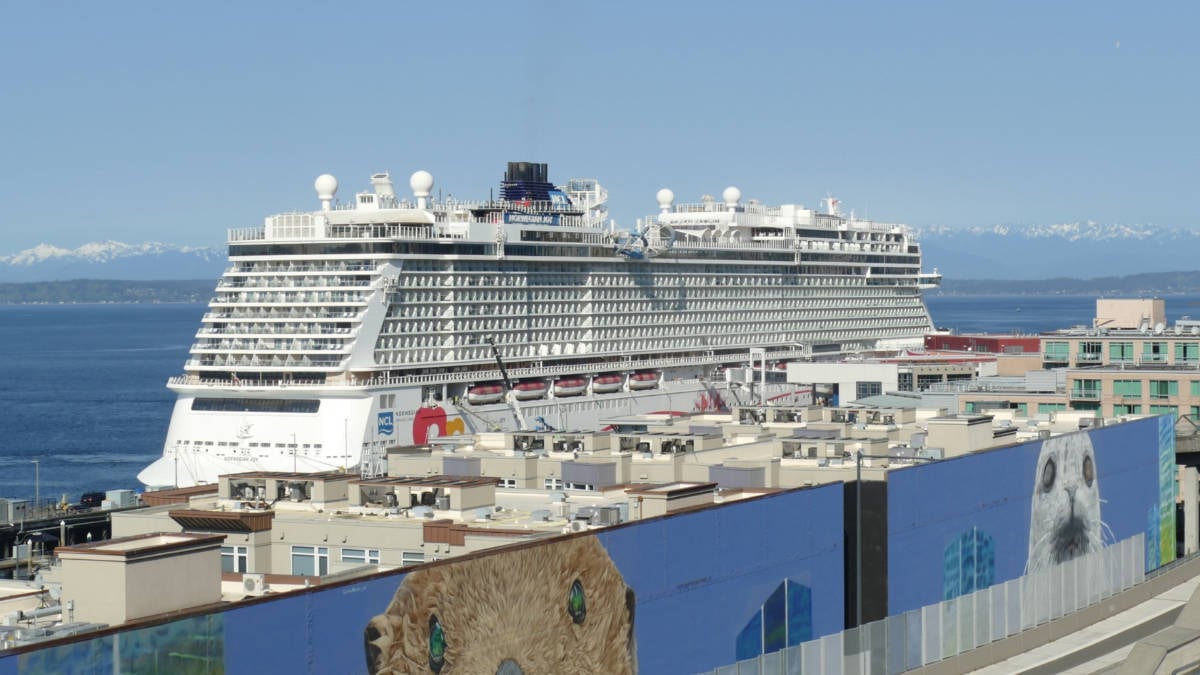
NCLH ships will make up more than 70 of the expected calls. Norwegian Bliss, Norwegian Encore, and Norwegian Joy are homeporting at Seattle’s Pier 66 for the duration of the current season.
Oceania Cruises, which is also owned by NCLH, has also made Seattle the home base for Oceania Riviera during its Alaska deployment.
Improving Sustainability
Seattle has always had the environment as a top priority, and in 2024, the cruise port even issued a mandate that all homeporting vessels must be shore-power capable by 2027.
This aligns with the goals of Norwegian Cruise Line, which has previously gone out of its way to reduce the carbon footprint of its fleet.
Through the revised agreement, the cruise line will help take sustainability to the next level by collaborating with local port authorities on a demonstration project to test the use of sustainable, non-fossil fuels in Seattle.
NCL leadership will meet with the Port to review decarbonization progress and develop a mutually agreed-upon methodology before the end of the year.
But beyond this, the cruise line will help identify the infrastructure, technology, and supply conditions needed to help more fleets make the transition to shore power.