Key Aspects:
- The US Supreme Court has overturned the appeals case that had dismissed $440 million in fines against major cruise lines.
- The case involves the use of the Havana Docks property when cruise lines visited Cuba from 2016 to 2019.
- Carnival Corporation, Royal Caribbean, Norwegian Cruise Line Holdings, and MSC Cruises are involved in the litigation.
Four major cruise lines may now be on the hook for a collective $440 million in fines as the US Supreme Court has overturned the appeal that initially threw out that significant fine related to years of sailings to Cuba involving seized property.
The Supreme Court’s 8-1 decision was handed down on Thursday, May 21, 2026 following more than a year of proceedings in the appeals case.
While the Supreme Court is not directly levying fines on the cruise lines, this decision does permit the lawsuit to move forward against Royal Caribbean, Carnival Corporation, Norwegian Cruise Line Holdings, and MSC Cruises.
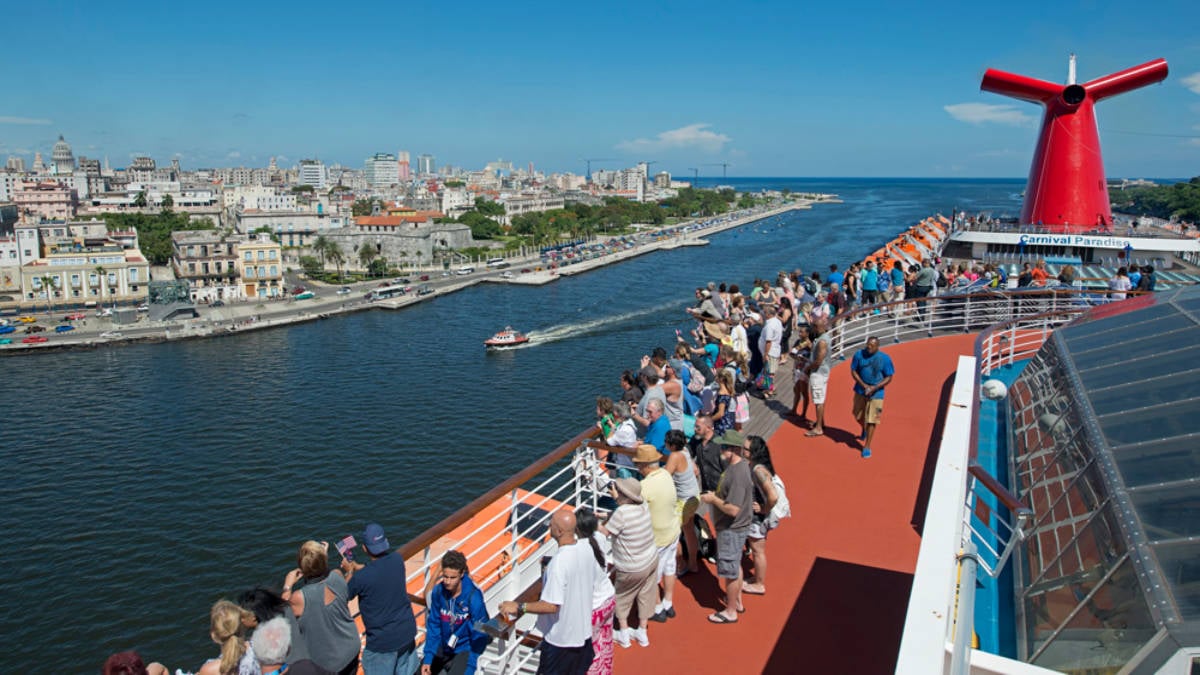
Those four cruise lines all operated sailings to Cuba from 2016 to 2019, using Havana Docks as the cruise terminal. It is that terminal and its ownership that is in dispute, owing to confiscation laws, who received compensation for the use, and whether the cruise lines were properly authorized for their visits.
“Havana Docks has shown that the cruise lines used confiscated property in which Havana Docks had a property interest and to which it owns a claim,” Justice Clarence Thomas wrote in the majority opinion.
That determination, that the American corporation Havana Docks owns a claim in the facility the cruise ships used, means the cruise lines may, in fact, be liable for the hefty fines. But how did this come about?
Who Owns and Owes What and When?
The case is a complex one, involving ownership rights, legal administration, lease expirations, and more. To break it down…
- 1905 – Havana Docks Corporation signs a 99-year lease on the cruise terminal property and builds the docks.
- 1959 – Fidel Castro’s communist regime seizes control of the property after the Cuban Revolution.
- 1996 – The Helms-Burton Act is passed, permitting Americans to sue companies that profited from seized property.
- 2004 – The lease between Havana Docks Corporation and Cuba expired, still under Castro’s communist regime.
- 2016 – Then-President Obama reopened cruise travel to Cuba under limited agreements.
- 2019 – President Trump, in his first term, reinstituted the travel ban, and cruise visits to Cuba ceased.
- 2022 – Initial federal court rulings determined that the cruise lines had engaged in trafficking by using seized property.
- 2024 – Appeals court overthrew the initial ruling and determined the cruise lines were not liable for the fines.
- 2026 – US Supreme Court overturns the appeal ruling, and cruise lines may again have to pay the applicable fines.
Initially, the logic for overturning the federal ruling in 2022 was because the Havana Docks lease on the Cuban property would have expired in 2004, more than a decade before cruise ships returned to Havana. Because that lease was not renewed, it appeared the company had no legal support for their trafficking claims.

Did Cruise Lines Visit Cuba Illegally?
During the time when cruise visits to Cuba were permitted, the four lines brought nearly one million passengers to the island nation. This was done as “people-to-people” travel and was completely legal at the time.
Now, however, the US Supreme Court is permitting the initial litigation to move forward. This does not yet mean the cruise lines must pay the fines, but only that legal arguments will continue until all appeal options are exhausted.
This type of convoluted lawsuit may continue for years as different subtle legal arguments are explored and defined for the case. At the moment, cruise lines are not permitted to return to Cuba and tensions between the US and the nearby communist nation are high.
The US Department of State lists Cuba as a Level 2 advisory, “Exercise Increased Caution,” due to extremely unreliable electrical power and increases in both violent and petty crime. Furthermore, US law completely prohibits tourist travel to Cuba at this time.