Key Aspects:
- Officials from Alaska’s Center for Biological Diversity are urging Royal Caribbean to reduce speed when traveling through whale habitats.
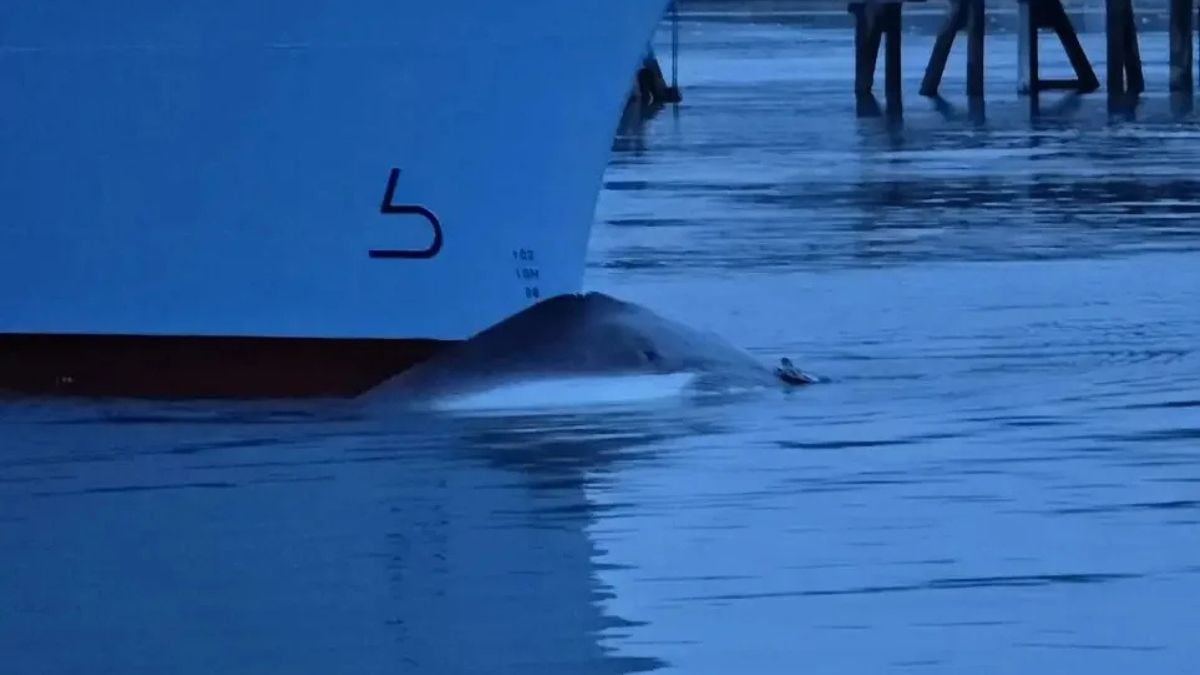
- The plea comes one week after Ovation of the Seas docked in Seward with a dead, pregnant fin whale on her bow.
- The death of the endangered whale is currently under federal investigation.
Alaskan officials are calling for Royal Caribbean to make a major policy change in the wake of a recent incident in Alaska.
Cruise Hive recently reported that the 168,666 gross ton Ovation of the Seas arrived in Seward, Alaska on June 19, 2026 with a deceased fin whale on her bow.
In response to this event, Alaska’s Center for Biological Diversity is calling for accountability and change.
“I’m infuriated that this supersized cruise ship hit an endangered whale in such a horrific way,” said Cooper Freeman, Alaska director at the Center for Biological Diversity. “Royal Caribbean must be held accountable for this gruesome death and take immediate action to avoid this happening again.”
In a letter addressed to Royal Caribbean Group Executives, including President and CEO of Royal Caribbean International, Michael Bayley, as well as Chairman and CEO of Royal Caribbean Group, Jason T. Liberty, the organization urged the cruise industry giant to adopt a policy of reducing its ships’ speed to 10 knots in known whale habitat areas.
“The best available science establishes that vessel speed is the single most important factor affecting both the probability of a whale strike and the lethality of that strike.” the letter reads. “Adopting 10 knots as a mandatory speed limit for your cruise ships will therefore better protect large whales from suffering deadly ship strikes…”
The organization has long fought for legally mandated speed reductions in such regions, and currently has a pending lawsuit against the U.S. Coast Guard for failing to protect whales in shipping lanes.
No official response from Royal Caribbean has been issued.
The Aftermath of the Incident
The incident occurred on the final day of Ovation of the Seas’ one-way, 7-day Alaskan cruise that departed from Vancouver, British Columbia on June 12, 2026.
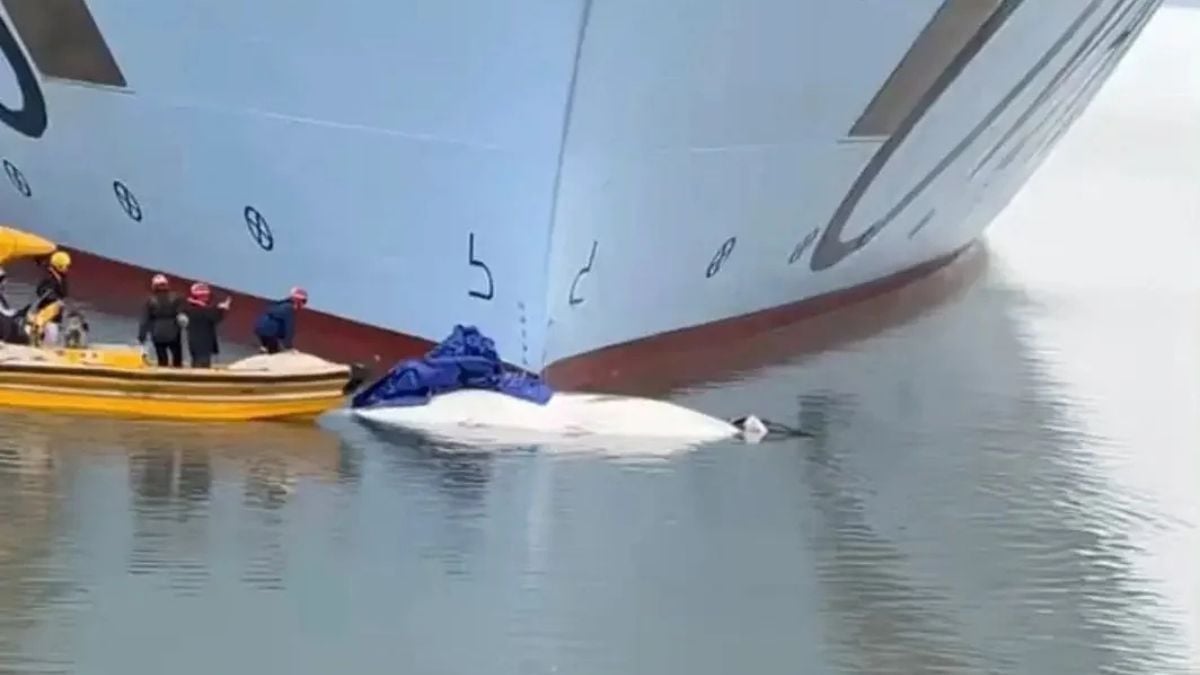
Once the ship was docked, the carcass was initially covered by a tarp until proper measures could be taken to safely relocate the remains.
In the immediate aftermath, many speculated on how such an incident could have happened and whether the whale was killed by the Quantum Class ship, or by natural causes, making contact with the ship post-mortem.
Preliminary necropsy findings by the National Oceanic and Atmospheric Administration, working with Alaska SeaLife Center revealed that the whale in question was pregnant, and had suffered blunt force trauma to the spine, ribs and jaw, consistent with a ship strike.
As an endangered species, it is illegal, under the Marine Mammal Protection Act and the Endangered Species Act to kill a fin whale, even accidentally.
That being said, according to the Center for Biological Diversity, ship strikes are the leading cause of death for endangered whales, which their letter to Royal Caribbean also highlights.
Federal investigations are currently underway for the June 19 incident. It is unknown what consequences, if any, Royal Caribbean may face as a result.